
Commercial Exterior Cleaning (Hub)
Commercial Exterior Cleaning in Miami: The Property Manager's Complete Guide
September 12, 2026 · 11 min read
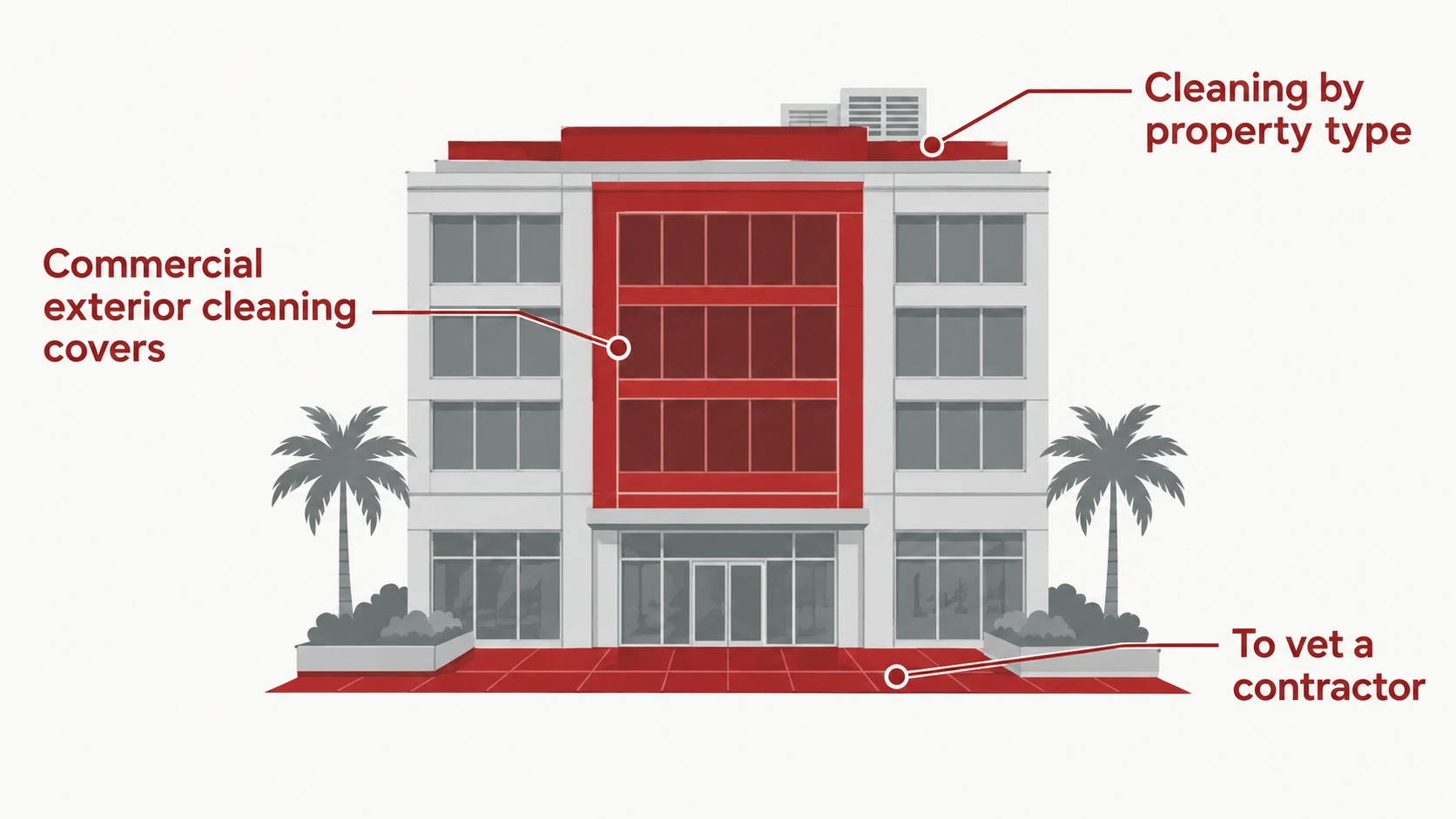
Commercial pressure washing is the process of using high-pressure water to remove dirt, grime, and other contaminants from the exterior surfaces of commercial buildings. This guide covers the essential aspects of commercial exterior cleaning, organized by property type, to help you make informed decisions for your building's maintenance.
What commercial exterior cleaning covers
Commercial exterior cleaning encompasses the cleaning of various exterior surfaces and elements of a commercial property. This includes walls, roofs, windows, sidewalks, parking lots, and any other exposed areas that are prone to dirt, mold, algae, and other contaminants. The goal is to maintain the aesthetic appeal and structural integrity of the building, ensuring it remains a welcoming and safe environment for occupants and visitors.
The six services and when each applies
Commercial pressure washing is one of six key services that property managers and facility leads should consider. Each service is tailored to specific needs and conditions:
-
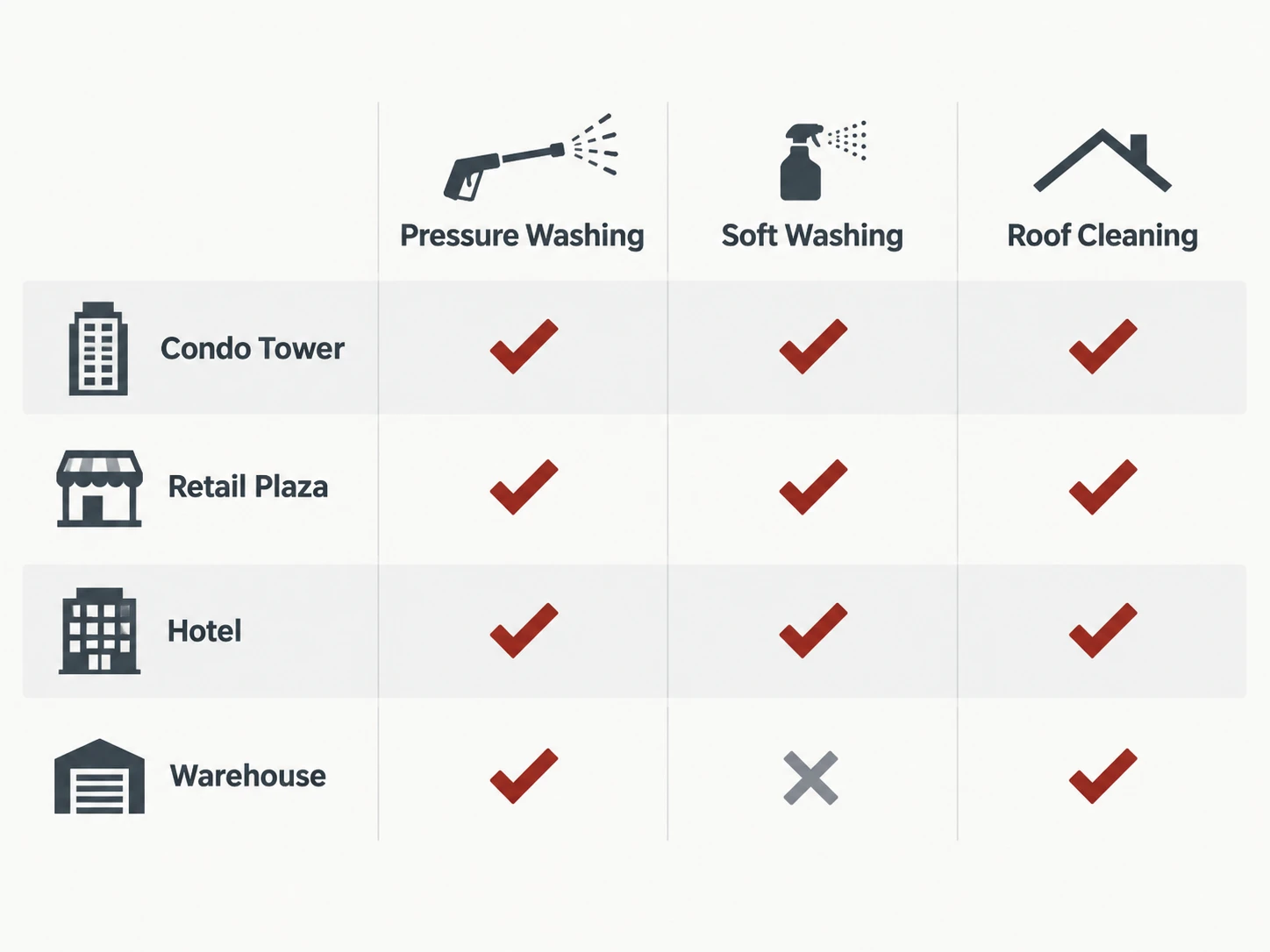
Pressure Washing: Best for hard surfaces like concrete, brick, and stucco. It removes stubborn dirt, grime, and algae without damaging the surface. Pressure washing is ideal for areas with heavy foot traffic or exposure to industrial pollutants.
-
Soft Washing: Suited for more delicate surfaces such as wood, vinyl siding, and painted surfaces. Soft washing uses a lower pressure and a biodegradable cleaning solution to effectively clean without causing damage. It's perfect for areas with sensitive materials or where high pressure could be harmful.
-
Roof Cleaning: Specifically designed to remove algae, moss, and fungi from roofs. This service is crucial for maintaining the integrity and lifespan of the roof, especially in humid climates like South Florida. The ARMA recommends using sodium hypochlorite with a gentle rinse, but warns against high-pressure washing, which can damage asphalt roofing.
-
Paver Sealing: Protects and enhances the appearance of pavers by sealing them against stains and wear. Sealing is particularly useful for high-traffic areas like walkways and patios, as it helps prevent damage from moisture and chemicals.
-
Window Cleaning: Keeps windows clear and free of streaks, ensuring a professional appearance and unobstructed views. Regular window cleaning is essential for maintaining the building's curb appeal and the comfort of its occupants.
-
Commercial and HOA programme work: Bundles the services above into a scheduled programme across a property or a portfolio, so surfaces are cleaned on an interval that suits each elevation rather than reactively, and a board or manager has one scope and one schedule to approve.
Each service has its own best use cases, and the choice depends on the specific needs of your property. For example, a retail plaza might benefit more from pressure washing and window cleaning, while a condo tower might need regular roof cleaning and paver sealing.
Cleaning by property type
Different property types have unique cleaning needs and challenges. Here’s a breakdown of what each type typically requires:
Condo towers
Condo towers often have a mix of surfaces, including stucco, brick, and glass. Regular pressure washing and window cleaning are essential to maintain the building's appearance and prevent damage from mold and algae. The ARMA recommends gentle roof cleaning to address algae issues, but warns against high-pressure methods. Additionally, paver sealing can protect walkways and patios from stains and wear.
Retail plazas
Retail plazas see a lot of foot and vehicle traffic, making them prone to dirt and grime. Pressure washing is crucial for keeping sidewalks, parking lots, and the building facade clean. Soft washing can be used for painted surfaces and signs. Regular window cleaning ensures that storefronts remain attractive and inviting to customers.
Hotels
Hotels need to maintain a high standard of cleanliness to attract guests. Pressure washing can keep the exterior and parking areas clean, while soft washing is suitable for painted surfaces and wood features. Window cleaning is essential for guest rooms and common areas. Regular roof cleaning helps prevent water damage and extends the life of the roof.
Warehouses
Warehouses often have large, flat surfaces that can accumulate dirt and grime. Pressure washing is highly effective for cleaning concrete floors, walls, and loading docks. Soft washing can be used for painted surfaces and metal structures. Loading docks and service yards usually set the interval, because that is where traffic film and spills build up fastest.
Medical facilities
Medical facilities require a high level of cleanliness to meet health and safety standards. Pressure washing and soft washing are both useful for maintaining the exterior and ensuring that surfaces are free of contaminants. Regular window cleaning helps maintain a professional appearance and clear views. Roof cleaning is crucial to prevent the growth of algae and fungi, which can pose health risks.
Dealerships
Dealerships need to maintain a clean and professional appearance to attract customers. Pressure washing can keep the exterior and parking areas clean, while soft washing is suitable for painted surfaces and signage. Regular window cleaning ensures that vehicles and showrooms remain visible and attractive.
What South Florida's climate does to a building envelope
South Florida's climate poses unique challenges for building maintenance. The humid, subtropical conditions are ideal for the growth of algae, moss, and fungi, which can quickly deteriorate exterior surfaces. The ARMA notes that the organism Gloeocapsa magma is a common cause of roof discoloration and recommends gentle cleaning methods to address this issue.
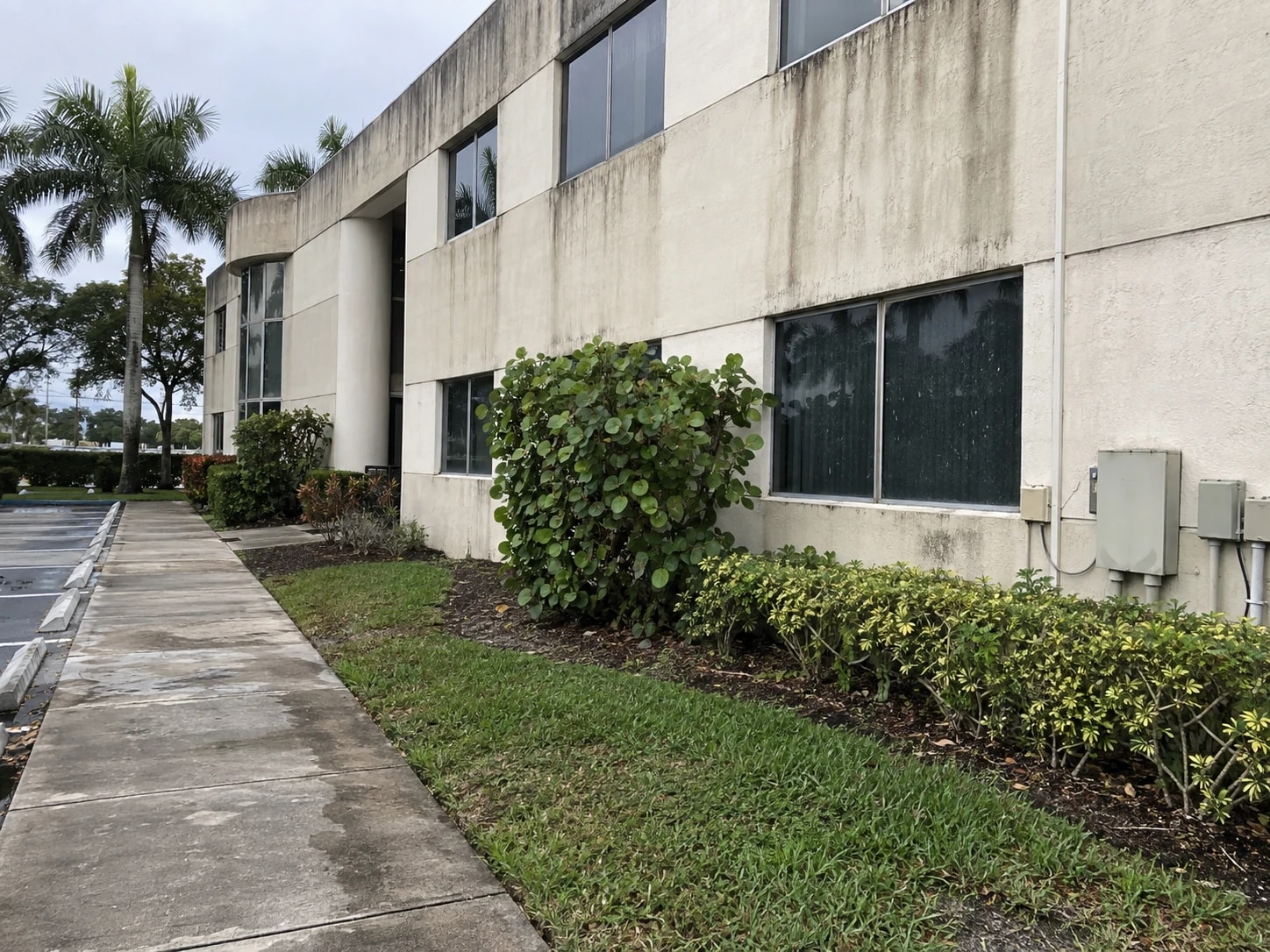
Additionally, the Atlantic hurricane season, which runs from June 1 to November 30, with a peak around September 10, brings the risk of severe storms and heavy rainfall. This can lead to water damage, mold growth, and structural issues if not properly managed.
Regular cleaning and maintenance are essential to combat these challenges. Pressure washing and other exterior cleaning services can help prevent the buildup of contaminants, maintain the integrity of the building envelope, and ensure that your property remains safe and attractive throughout the year.
For more information on how commercial pressure washing can benefit your specific property type, visit our commercial HOA services or pressure washing services pages. If you're in the Miami area, explore our service areas to see how we can support your maintenance needs.
How scope and frequency are set
The scope and frequency of commercial exterior cleaning depend on the property type, its location, and the specific surfaces that need attention. For instance, a high-rise condo tower in Miami will have different cleaning needs compared to a warehouse in a more industrial area. The goal is to create a cleaning schedule that maintains the property's appearance and functionality while staying within budget.
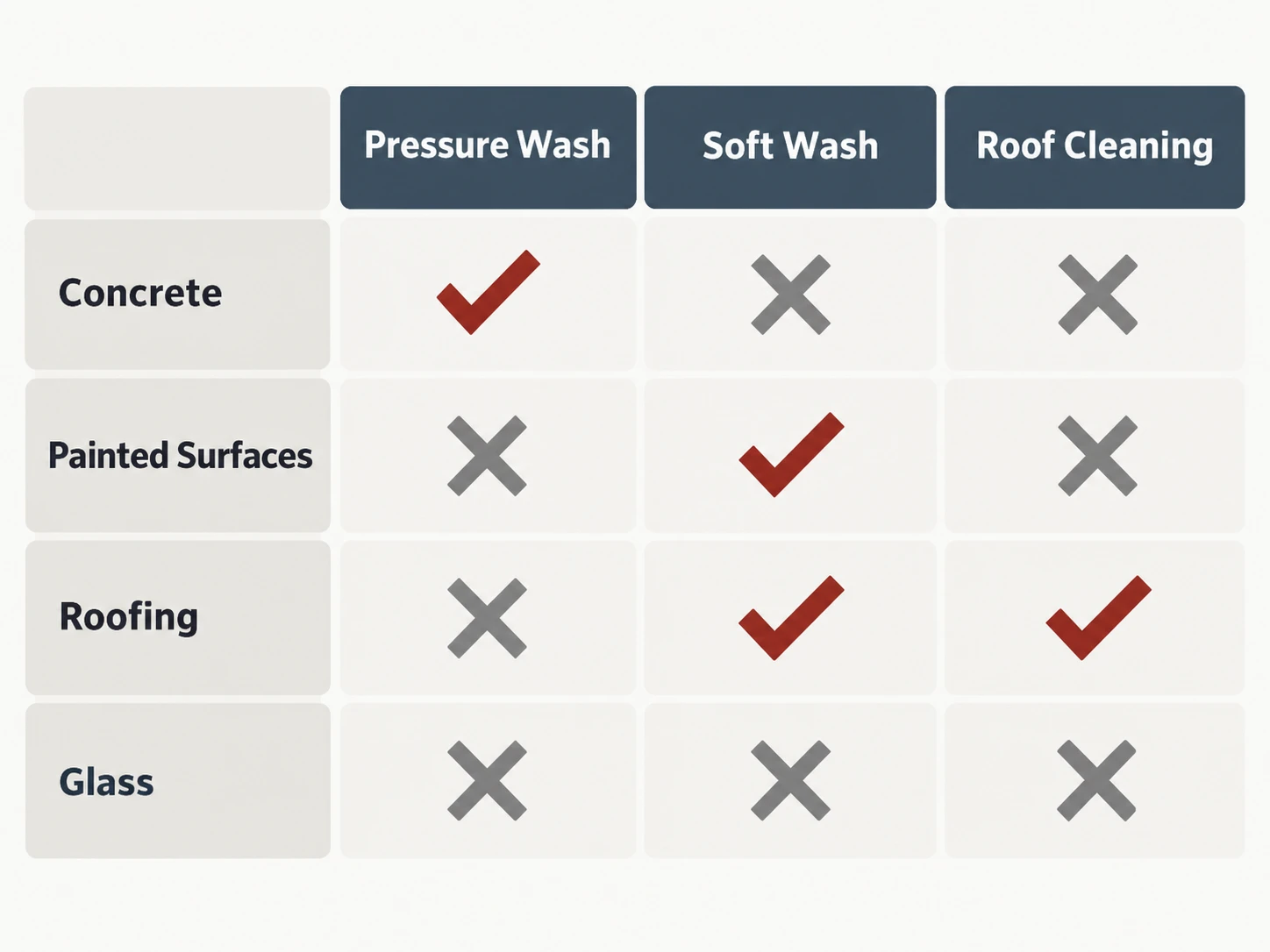
Service-to-property-type matrix
This matrix helps you understand which services are most relevant to each property type. Use it to guide your decisions on what to include in your cleaning scope.
| Property Type | Pressure Washing | Soft Washing | Roof Cleaning | Paver Sealing | Window Cleaning |
|---|---|---|---|---|---|
| Condo Tower | Yes | Yes | Yes | Yes | Yes |
| Retail Plaza | Yes | Yes | Yes | Yes | Yes |
| Hotel | Yes | Yes | Yes | No | Yes |
| Warehouse | Yes | No | Yes | No | No |
| Medical | Yes | Yes | Yes | No | Yes |
| Dealership | Yes | Yes | Yes | Yes | Yes |
Frequency-by-surface table
This table provides a general guide for how often different surfaces should be cleaned to maintain their appearance and integrity.
| Surface | Frequency |
|---|---|
| Exterior Walls | Quarterly to Bi-Annually |
| Roofs | Annually |
| Pavers | Bi-Annually to Annually |
| Windows | Quarterly |
| Sidewalks | Monthly to Quarterly |
What it costs and what drives price
The cost of commercial exterior cleaning varies based on several factors, including the size of the property, the type of surfaces being cleaned, the level of dirt and grime, and the frequency of service. Larger properties or those with more intricate designs will generally cost more to clean. Additionally, the condition of the surfaces and the extent of the cleaning needed can significantly impact the price.
Factors driving cost
- Property Size: Larger properties require more time and resources, increasing the overall cost.
- Surface Type: Different surfaces, such as brick, concrete, or metal, may require specific cleaning methods and materials, affecting the price.
- Dirt and Grime Levels: Heavily soiled surfaces may need more intensive cleaning, which can be more expensive.
- Frequency: Regular, scheduled cleaning can be more cost-effective than sporadic, on-demand services due to the reduced buildup of dirt and grime.
- Location: Properties in areas with higher labor costs or more stringent regulations may see higher cleaning prices.
Understanding these factors can help you budget more effectively and negotiate better contracts with cleaning providers.
How to vet a contractor
Choosing the right commercial exterior cleaning contractor is crucial for maintaining your property's appearance and protecting your investment. Here are some key steps to help you vet potential contractors:
Experience and reputation
Look for contractors with a proven track record in commercial exterior cleaning. Check their portfolio and ask for references from other property managers or facilities leads. A contractor with extensive experience in your specific property type is more likely to deliver high-quality results.
Equipment and methods
Ensure the contractor uses appropriate equipment and methods for the surfaces you need to clean. For example, pressure washing is suitable for hard surfaces like concrete, but soft washing is better for more delicate surfaces like stucco. Refer to industry guidelines, such as the ARMA technical bulletin on algae discoloration of roofs, which recommends sodium hypochlorite with a gentle rinse and warns against using high-pressure washing on asphalt roofs.
Licensing and insurance
Ask every contractor you are considering for a current certificate of insurance and confirm it directly with the insurer named on it, rather than accepting a copy at face value. Check that the coverage is active on the dates your work is scheduled and that the policy limits are appropriate to the height and access method your building needs.
Pricing and contracts
Request detailed quotes from multiple contractors to compare pricing and services. Ensure the contract clearly outlines the scope of work, pricing, payment terms, and any warranties or guarantees. A transparent and well-documented contract can help prevent misunderstandings and disputes.
Service areas and availability
Consider the contractor's service areas and availability. A local contractor like 2Clean, with a strong presence in [service-areas/miami], may be more responsive and reliable. Check their availability to ensure they can meet your scheduling needs.
Compliance you are responsible for
As a property manager, HOA, or condo board member, you are responsible for ensuring that your property complies with relevant laws and regulations. This includes maintaining the common elements of the property, as specified in Fla. Stat. 718.113(1). Understanding and adhering to these requirements is crucial to avoid legal issues and maintain the property's value.
Common element maintenance
Under Florida law, the association is responsible for maintaining the common elements of the property, with the exception of limited common elements assigned to individual owners. This includes tasks such as pressure washing, soft washing, roof cleaning, and window cleaning. Failing to maintain these elements can lead to deterioration, safety hazards, and decreased property values.
Environmental regulations
Be aware of any environmental regulations that may apply to your cleaning activities. For example, the use of certain chemicals or the disposal of cleaning waste may be regulated to protect local ecosystems. Ensure that your contractor is familiar with these regulations and follows best practices to minimize environmental impact.
Safety standards
Safety is paramount in commercial exterior cleaning. Ensure that your contractor follows all relevant safety standards and protocols, such as those set by OSHA. This includes using appropriate personal protective equipment (PPE) and following safe working practices to prevent injuries and accidents.
Hurricane season preparedness
Given the Atlantic hurricane season, which runs from 1 June to 30 November, with a peak on 10 September, it is essential to have a cleaning and maintenance plan in place. Regular cleaning can help reduce the risk of damage during storms and ensure that your property is ready to handle the increased activity between mid-August and mid-October.
By staying compliant and proactive, you can protect your property and ensure its long-term value. For more information on specific compliance requirements, consult the relevant statutes and guidelines, such as Fla. Stat. 718.113(1) and the NOAA National Hurricane Center.
Sources
Frequently asked questions
How do I prepare my commercial property for pressure washing?
Clear the area of any loose items such as furniture, plants, and decorations. Cover or move any sensitive equipment or fixtures. Ensure that all windows and doors are closed and sealed to prevent water intrusion. Notify tenants or residents in advance to avoid any disruptions.
How much does commercial pressure washing cost?
The cost of commercial pressure washing varies based on the size of the property, the surfaces to be cleaned, and the extent of the dirt or grime. For an accurate estimate, contact a professional commercial exterior cleaning company.
What is commercial pressure washing?
Commercial pressure washing is a method of cleaning large surfaces using high-pressure water to remove dirt, grime, and contaminants. It is commonly used on commercial properties to maintain a clean and professional appearance.
What surfaces does it cover?
Commercial pressure washing can be used on a variety of surfaces, including concrete, brick, stucco, metal, and wood. It is effective for cleaning sidewalks, driveways, patios, building exteriors, and parking lots.
How is it different from residential?
Commercial pressure washing typically involves larger, more powerful equipment and is performed by professional teams trained to handle extensive and complex cleaning tasks. It is designed to meet the specific needs of commercial properties, which often have more extensive and varied surfaces.
Who is responsible for scheduling it?
According to Florida Statute 718.113(1), the maintenance of common elements is the responsibility of the association, except for limited common elements assigned to owners by the declaration. Therefore, the property manager, HOA, or condo board is typically responsible for scheduling commercial pressure washing.