Commercial Exterior Cleaning (Hub)
Commercial Paver Sealing for South Florida Plazas and Entry Drives
October 16, 2026 · 9 min read
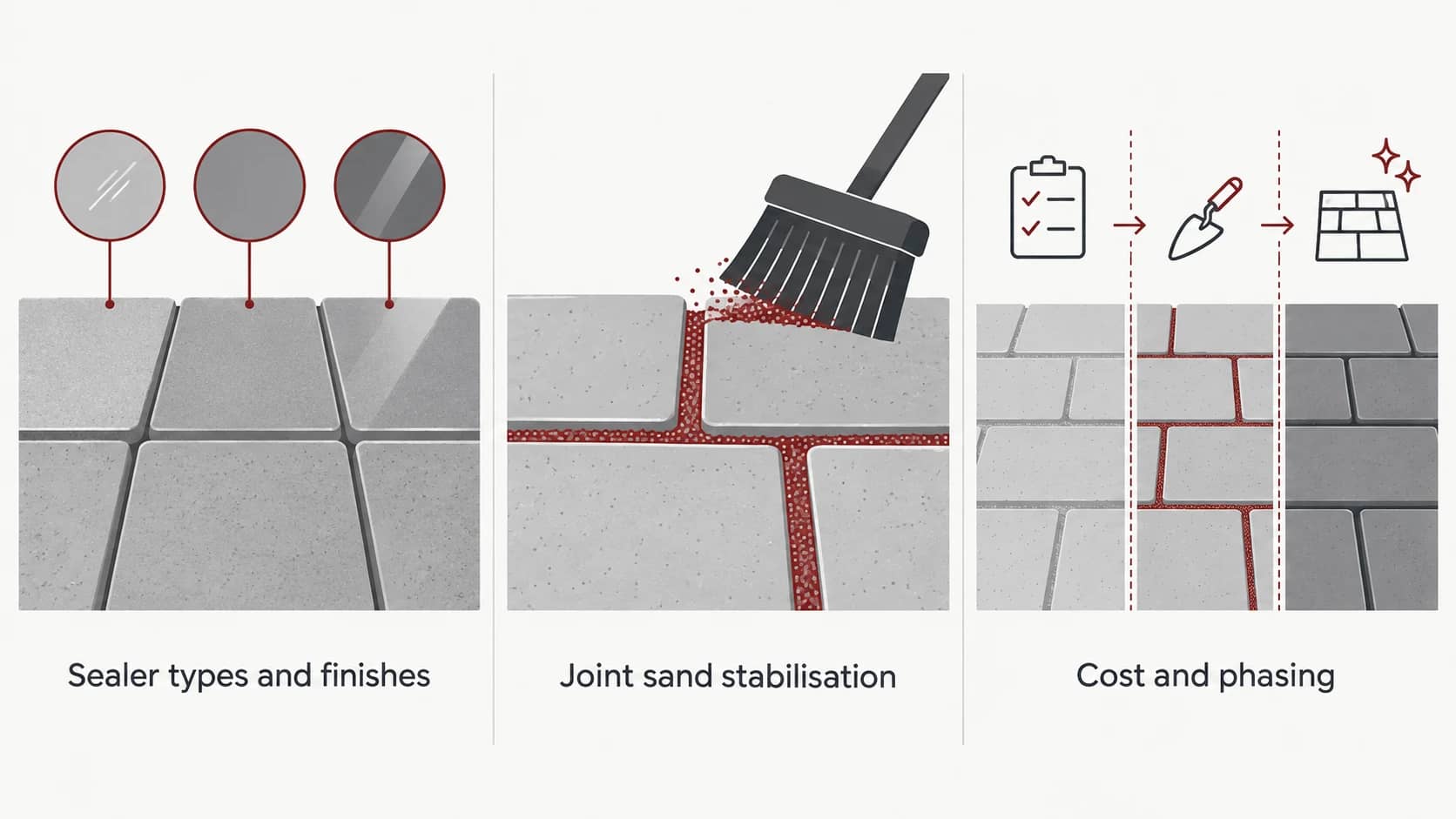
Commercial paver sealing is worth considering when a South Florida plaza, courtyard, or entry drive needs better stain resistance or a refreshed finish. It is not a repair for loose pavers, poor drainage, or failed joints. A sound decision starts with the pavement's condition, expected traffic, wet-weather traction, and the maintenance the property can support.
When commercial paver sealing makes sense
Sealing makes the most sense when the pavers are sound and the property has a clear reason to protect or change the surface. Common reasons include recurring food or vehicle stains, uneven color after cleaning, and a desire for easier routine maintenance.
Start with a walk-through after rain as well as in dry weather. Mark ponding, loose units, sunken edges, persistent stains, and areas where joint material is missing. Those observations separate work a sealer may help with from repairs that need their own scope. A coating cannot correct a low spot or make a shifting pavement stable.
A heavily used entrance may justify a different finish from a decorative courtyard on the same property. Record where people turn, queue, or step from vehicles, and where irrigation reaches the pavement. This gives bidders a shared picture of the conditions instead of asking them to recommend a product from square footage alone.
Match the approach to traffic and exposure
Traffic determines where a finish must withstand wear and where traction deserves the closest review. A pedestrian plaza, a hotel drop-off, and a service drive may share the same pavers but present different cleaning and safety demands.
At entrances, watch the transition from pavement to interior flooring. Rainwater, irrigation, tracked-in grit, and turns made by pedestrians can expose a slick finish quickly. In drives, identify oil deposits, tire marks, and places where vehicles brake or turn. These uses affect the stain protection and finish you ask a contractor to demonstrate.
Consider adjacent surfaces too. Overspray or cleaning runoff can reach planting beds, doors, walls, and drains. If the work is part of a wider maintenance plan, the commercial exterior cleaning guide for Miami property managers can help place pavement care alongside other exterior work.
Slip resistance comes before the finish choice
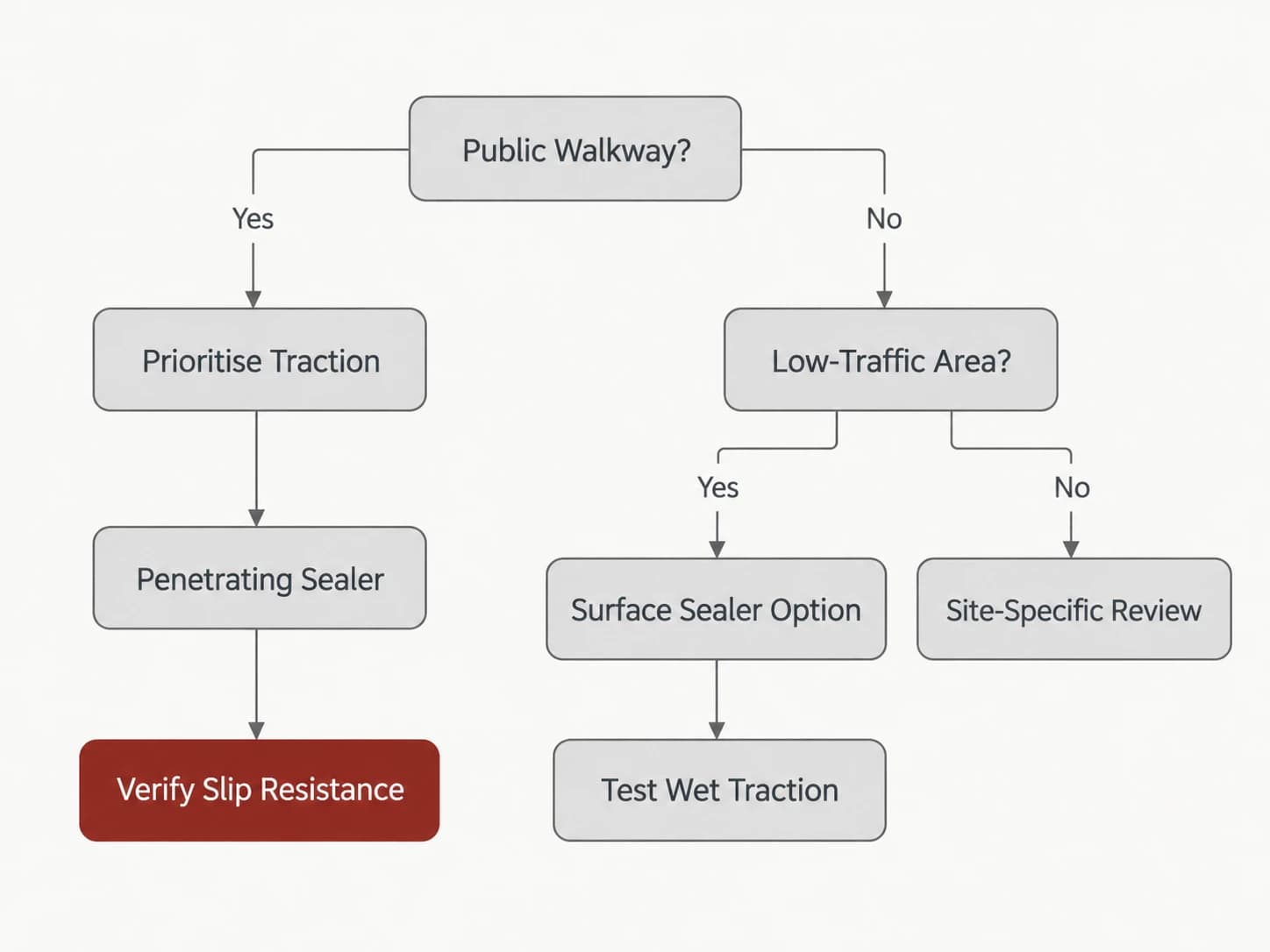
A finish should be assessed where people will actually walk, including when the pavers are wet. Gloss and color enhancement can be useful design choices, but a coated surface may feel different underfoot from an unsealed one. A product label alone does not establish how the finished walkway will perform.
The US Access Board's ADA Standards require floor and ground surfaces to be stable, firm, and slip resistant. The same requirement applies to walking surfaces and ramps. That is a performance requirement, not an endorsement of a particular sealer or finish. OSHA also requires workplace walking surfaces to be inspected and maintained in a safe condition.
Ask for a sample on the property's actual pavers, prepared and applied as the full job would be. Review its appearance after drying, then assess it under the wet conditions the location normally sees. Include ramps, shaded approaches, and entrances in that review. If the proposed finish raises traction concerns, discuss another product or finish before approving the full area.
Choose a sealer for the surface and desired appearance
Penetrating and film-forming sealers solve different problems. A penetrating product generally aims to reduce absorption while leaving a more natural appearance; a film-forming product leaves a visible surface finish that can deepen color or add sheen.
Neither category is automatically right for every commercial property. The paver material, existing coatings, stain exposure, desired look, and cleaning routine all matter. Some products are intended for particular substrates or require specific preparation. Ask the contractor to identify the proposed product, its intended use, and what the manufacturer requires before application.
A sample also helps the board or facilities team make an appearance decision without relying on marketing terms such as "natural" or "wet look." View it in daylight and shade, beside untreated pavers. Confirm that the finish remains acceptable after it is wet and cleaned, since those are normal conditions for an outdoor commercial surface.
Treat joint sand as a separate decision
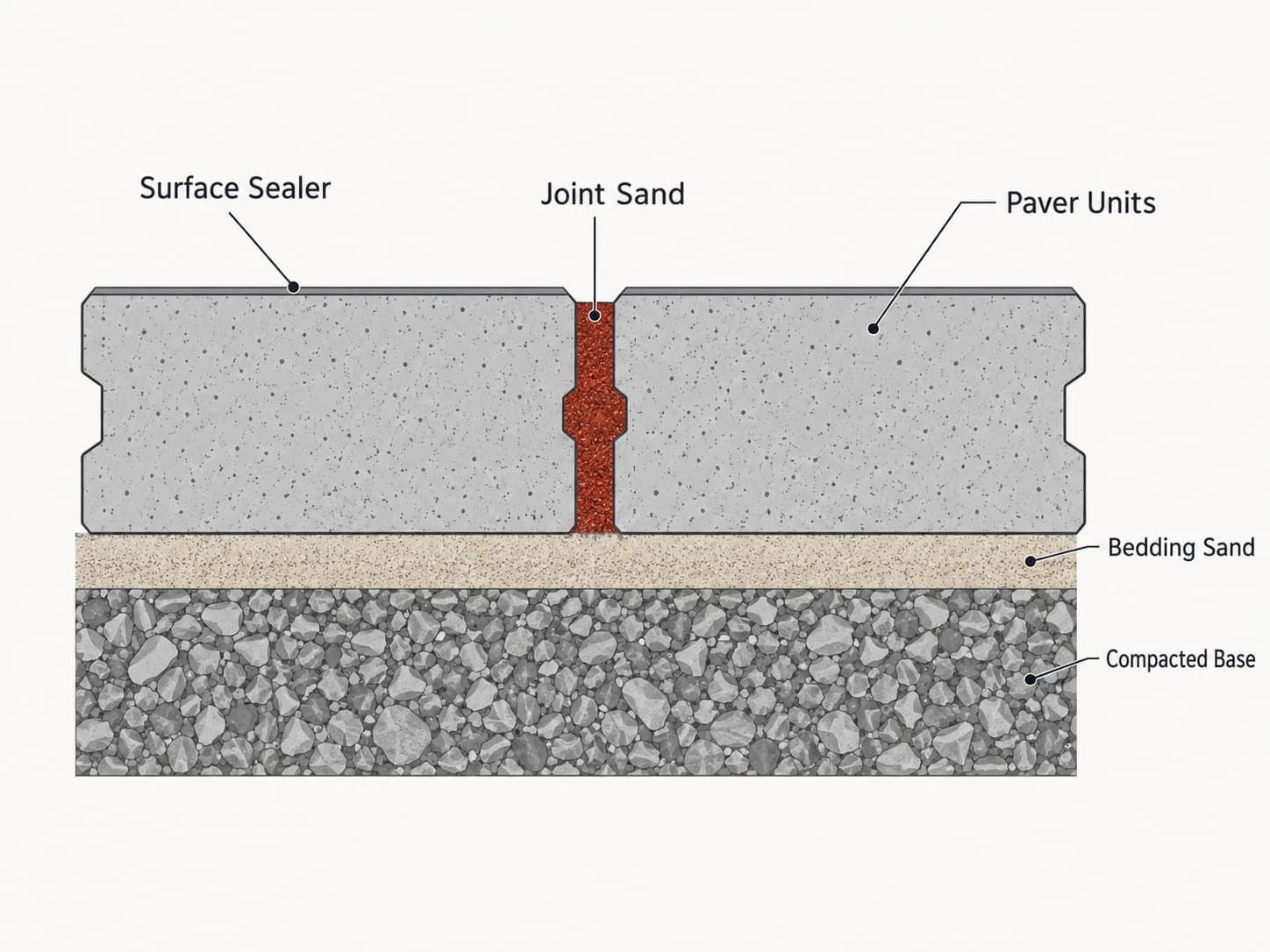
Joint sand supports the paver system, while sealer treats the exposed surface. A sealing quote should say whether joints will be inspected, replenished, or left as they are. Sealer alone should not be presented as a fix for widespread joint loss or moving pavers.
Missing sand may reflect washout, cleaning practices, drainage, or movement. Identify the cause before refilling the joints, especially where water repeatedly crosses a plaza or collects near an entry. Pavers that rock, settle, or lift need assessment and repair before the finish work proceeds.
If a stabilizing joint product is proposed, ask how it will be installed and how it interacts with the selected sealer. Excess material left on the face of a paver can affect the appearance of the finished surface. Require the contractor to follow the joint product and sealer manufacturers' instructions, including their preparation and waiting requirements.
Specify cleaning and preparation in the scope
A good sealing result depends on what is underneath the sealer. The scope should identify existing coatings, stains, efflorescence, biological growth, joint condition, and any repairs needed before application.
Ask how the contractor will clean the pavers without dislodging sound joints or damaging adjacent finishes. Oil, gum, and other localized contamination may need targeted treatment. If old sealer is failing, simply coating over it can preserve the defect beneath a new finish. The contractor should explain whether removal or another corrective step is needed and test the approach where the outcome is uncertain.
The cleaning plan should also address wash water. Under 40 CFR 122.34(b)(3), municipal stormwater permittees must effectively prohibit non-stormwater discharges into storm sewer systems. Ask where water and removed material will go, especially near curb inlets. The guide to commercial pressure washing services explains why cleaning method and runoff handling belong in the work scope.
Finally, require an application plan tied to the product's instructions. The pavers must be in the condition the manufacturer calls for before coating, and nearby surfaces need protection. A written preparation sequence makes competing bids easier to compare.
Compare bids on scope, not headline price
Paver sealing cost depends on the condition of the pavement and the work included. A bid covering cleaning, repairs, joint treatment, coating, and access management cannot be compared fairly with one that names only an application area.
| Scope item | What the bid should state | Why it matters |
|---|---|---|
| Existing condition | Stains, failed coating, loose pavers, and drainage concerns | Reveals work that may need a separate repair |
| Preparation | Cleaning method, stain treatment, and removal of old coating if needed | Determines what the new finish bonds to or penetrates |
| Joints | Inspection, replacement material, and application method | Prevents assumptions about joint work |
| Sealer | Product, finish, sample area, and application requirements | Makes appearance and performance review possible |
| Access | Areas closed, pedestrian routes, and return-to-use criteria | Helps the property operate during the work |
| Acceptance | How appearance and incomplete areas will be reviewed | Gives both parties a clear completion check |
For budgeting questions specific to plazas and drives, see the commercial paver cleaning and sealing cost guide. Invite bidders to flag uncertain repair or stripping work separately. That is more useful to a board than a low total that leaves major conditions undefined.
Phase the work around property use
Phasing protects access while giving the team a chance to review the result. Divide a large site by entrances, walking routes, or operational zones, then agree on which areas must remain open throughout the project.
A sample area should be large enough to show the finish across typical pavers and joints. Review it before extending the application. Once work starts, coordinate pedestrian detours, vehicle movements, deliveries, and irrigation with the contractor's preparation and curing requirements. Reopening an area should follow the product instructions and the site plan, rather than an assumed schedule.
Keep a record of the products used, treated areas, and conditions at completion. That record will help the next facilities lead distinguish normal wear from a localized drainage, cleaning, or application problem.
Inspect wear before deciding to reseal
There is no single resealing interval that fits every South Florida property. Sun exposure, rain, traffic, cleaning methods, the paver itself, and the product all affect how a finish changes.
Inspect representative areas during routine pavement checks. Look for uneven water absorption, renewed staining, worn traffic paths, peeling or cloudiness where a film was used, and changes in wet traction. Compare those observations with a sheltered area and the original sample if it remains available.
If only one zone is failing, identify why before scheduling another full application. Cleaning residue, trapped moisture, a previous coating, or concentrated wear may call for different preparation. Resealing over a defect can make the next correction harder.
Recognize problems before they spread
Cloudiness, patchy sheen, tackiness, and a slick feel when wet are reasons to pause and investigate. They may relate to preparation, product compatibility, application, or site conditions; their appearance alone does not prove which cause is responsible.
Document the affected locations and when the problem appears. A finish that looks sound in dry sun but changes after rain needs a different investigation from one that never cured as expected. Avoid applying another coat until the contractor has identified a compatible remedy.
Also distinguish surface defects from pavement defects. A sealer cannot resolve settlement, rocking pavers, or repeated joint washout. Addressing those conditions first gives any subsequent sealing work a sounder starting point.
Frequently asked questions
Commercial properties often need to decide on sealing alongside repair, access, and budgeting work. These answers address the questions most likely to affect a scope.
Does a paver patio need to be sealed?
A patio does not automatically need sealer, and the same is true of a commercial courtyard. Sealing may help when stain resistance or a particular appearance is a clear goal and the pavement is sound. First check drainage, loose pavers, joints, and wet-weather traction. Those conditions may deserve attention before any finish is selected.
How long to wait to seal pavers after polymeric sand?
Follow the joint material and sealer manufacturers' instructions rather than a universal waiting period. The sand must be installed and prepared as specified, and the pavers must meet the sealer's application conditions. Ask the contractor to name both products and show how their instructions fit the proposed work schedule before approving it.
How much does paver sealer cost?
The product is only one part of a commercial bid. Cleaning, stain treatment, removal of failed coating, joint work, repairs, access control, and the selected finish can change the scope substantially. Request an itemized proposal with those tasks stated separately, then compare bids against the same site conditions and sample requirements.
Does sealing make pavers slippery?
It can change how a surface feels underfoot, particularly when wet, depending on the product, finish, paver, and application. Do not assume that a penetrating product or a matte label guarantees adequate traction. Review a properly prepared sample in wet conditions and give ramps, entrances, and other busy walking routes particular attention.
How often should commercial pavers be resealed?
Inspect the finish and decide from its condition rather than a fixed interval. Look for worn traffic paths, renewed staining, uneven absorption, coating defects, and changes in traction. If deterioration is concentrated in one area, investigate its drainage, cleaning, and traffic before specifying work across the whole property.
Sources
The accessibility, workplace safety, and stormwater requirements cited above come from these primary sources.
If you are planning work for a plaza, courtyard, or entry drive, 2Clean's paver sealing service is a starting point for discussing the surface condition and a scope suited to the property.
Custom Commercial & HOA Walkthroughs
Need a scope tailored to your South Florida property?
Every building, plaza, and community has its own surface mix, access windows, and drainage layout. We quote by walkthrough rather than fixed rate sheets so your proposal matches your exact property. Call us directly at (904) 826-9806 or request a written scope online.
Related services & tools
Paver Sealing by South Florida city:
Commercial property scopes: