
Industry Verticals
Self Storage Facility Exterior Cleaning Curb Appeal Guide
October 18, 2026 · 9 min read
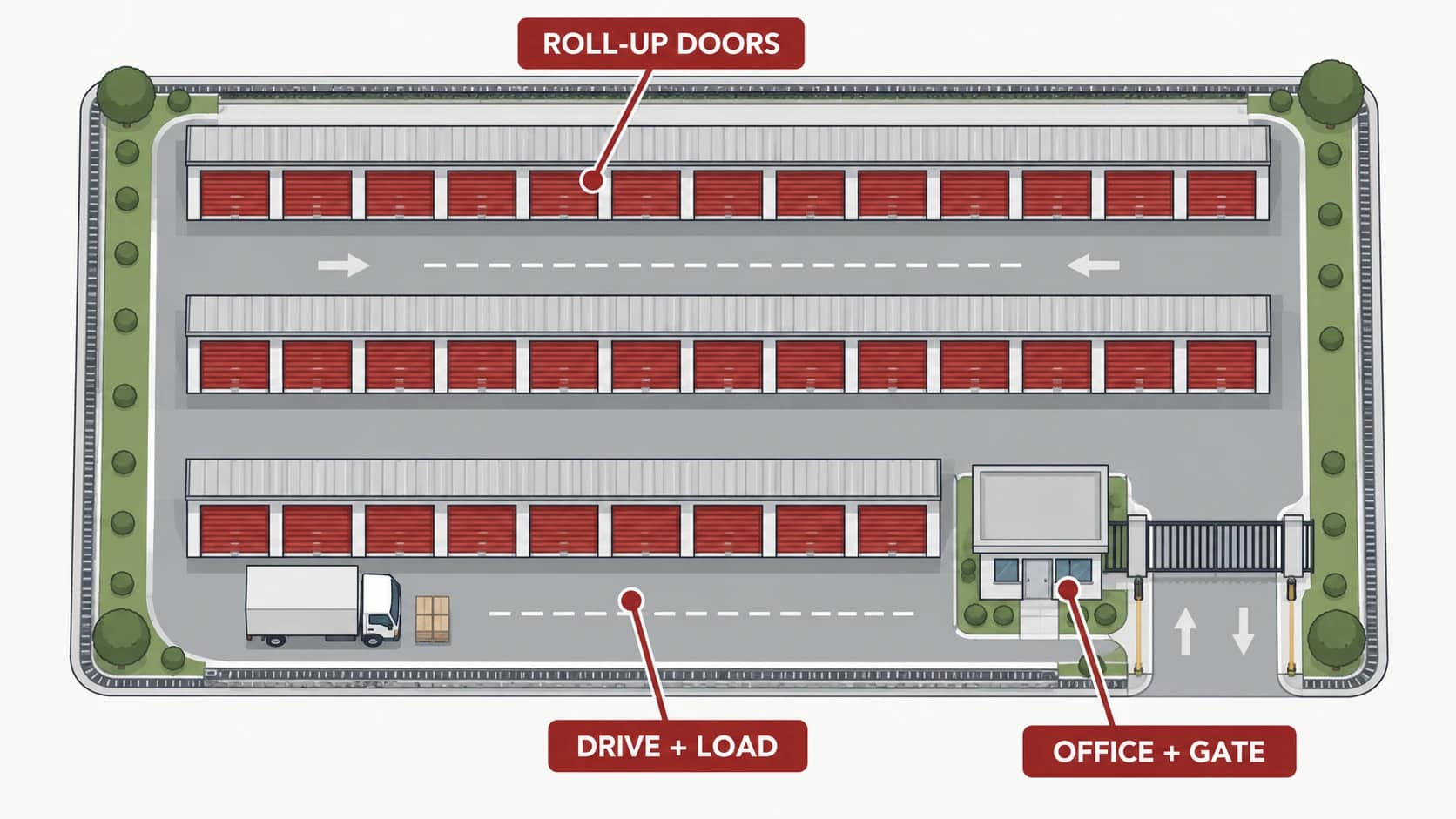
For self storage facility exterior cleaning curb appeal, start with the entry, office, roll-up doors, loading areas, and drive aisles. Match the method to each surface, protect tenant access and drainage, and schedule work when visible soil warrants it. A clean exterior supports a credible first impression, but it cannot substitute for working gates and sound maintenance.
Self storage facility exterior cleaning curb appeal: where to start
Start with the route a prospective renter follows from the street to a unit. A tidy sign or freshly cleaned wall has limited value if the gate approach, office entrance, and loading area still look neglected.
Walk or drive that route in daylight and note what is visible from a vehicle, what tenants touch, and where they walk. Look for algae or soil on paving, debris at gate tracks, streaks below metal panel joints, stained roll-up doors, and residue around loading bays. Check whether vegetation or stored items block a surface before adding it to a cleaning scope.
Separate appearance issues from repair issues as you go. Washing can remove appropriate surface soil, but it will not straighten a damaged door, restore failing paint, or fix a gate that sticks. Record those defects for maintenance so the cleaning contractor can work around them and the property team can address the underlying problem.
South Florida conditions make this a recurring inspection task. NOAA identifies the Atlantic hurricane season as June through November, so a facility may need attention after windblown debris or prolonged wet weather. Conditions at a coastal site can also differ from those farther inland. For a broader property plan, see this Miami commercial exterior cleaning guide.
Prioritize the facility by zone
A useful cleaning plan names each zone, its surface, and the result you need. This makes a walkthrough more productive and helps prevent a broad instruction such as "wash the exterior" from overlooking the places renters actually use.
| Zone | Check during the walkthrough | Cleaning approach to discuss |
|---|---|---|
| Street entrance and sign area | Visible soil, stains, blocked sightlines, and debris | Clean suitable surfaces while protecting signs, lighting, and landscaping |
| Office frontage and walkways | Glass, touch points, tracked dirt, algae, and wet walking areas | Use surface-specific cleaning and keep a usable entrance open |
| Roll-up doors and metal panels | Streaks, residue near seals, damaged coatings, and rust | Test a gentle method before cleaning broad panel areas |
| Drive aisles and loading zones | Tire marks, oil, loose debris, and drainage paths | Treat stains as needed, then clean suitable paving with water control |
| Gate and perimeter | Debris at tracks, splash marks, fence soil, and access conflicts | Coordinate cleaning with gate operation and tenant movement |
Use the table to build a scope, not as a promise that every stain will disappear. Old oil, rust, coating failure, and biological staining may need different treatment or may remain visible. Ask the contractor to identify those limits before work begins.
Roll-up doors and metal panels
Roll-up doors and metal panels need a method that respects their coatings, seams, hardware, and seals. Their large, repeated surfaces make uneven cleaning easy to notice, so a small test area is useful before work spreads across a row.
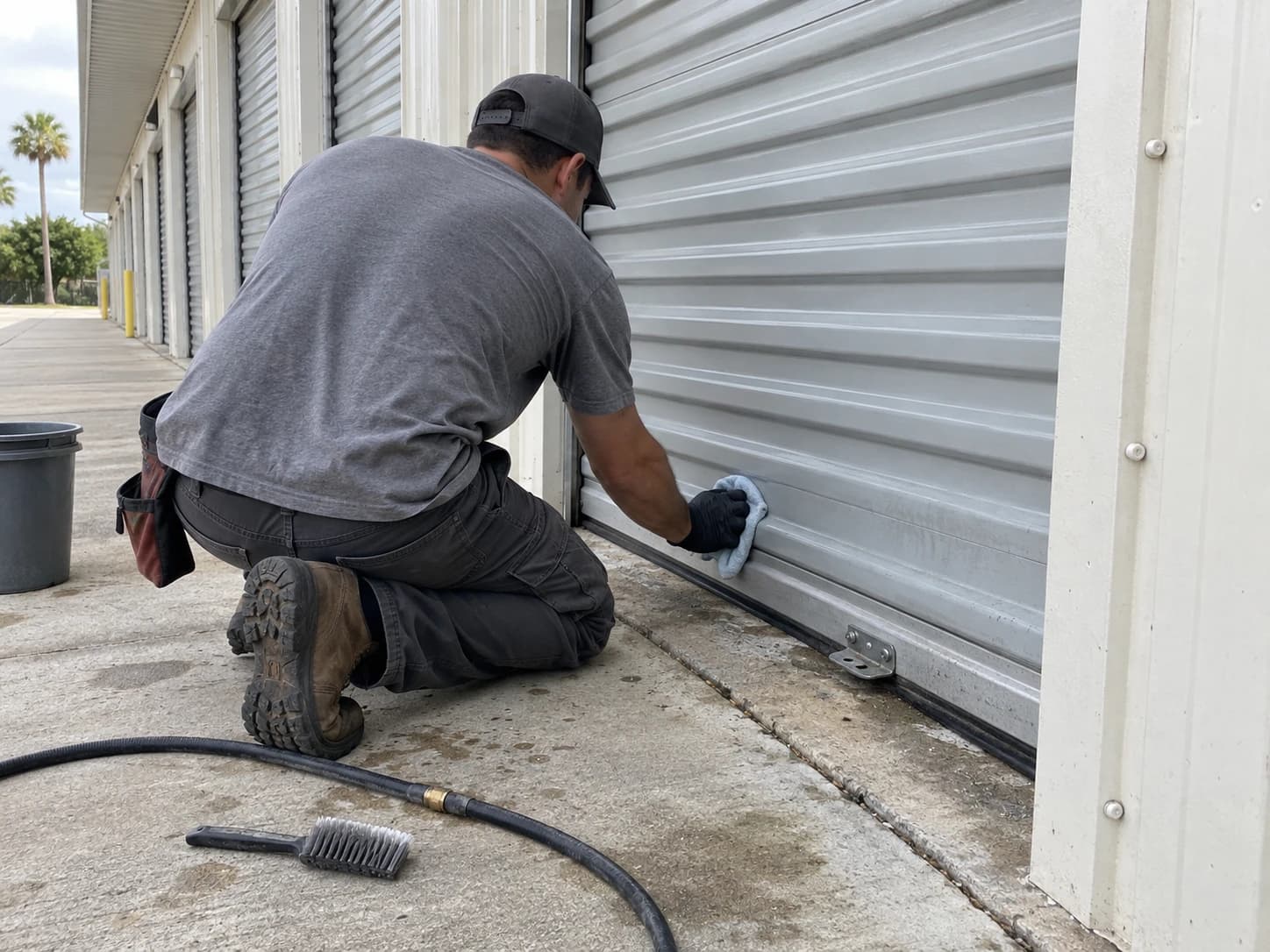
Loose grit can be rinsed away, while adhered soil may need an appropriate cleaner and gentle agitation. Keep water from being driven into door tracks, panel joints, electrical fittings, or occupied units. Painted or weathered finishes call for particular care because aggressive pressure can remove a weak coating along with the dirt.
Inspect rust before cleaning rather than assuming washing will correct it. A rust-colored streak may come from a fastener or an exposed edge; removing the stain without addressing its source leaves the cause in place. If paint is peeling or metal is corroded, document it for repair and agree on a reasonable cleaning outcome.
Plan access with the site team. Tenants may need a door while crews are working, and an open unit should be protected from spray and cleaning solution. The work sequence should let staff identify which doors are available and which area is temporarily being cleaned.
Drive aisles and loading zones
Drive aisles and loading areas collect vehicle soil, loose debris, and spills. Clean them with attention to tenant movement and where the wash water will go, since a visually clean aisle is of little use if the work leaves a wet entrance or pushes residue into a drain.
Remove loose material before washing. Identify oil or other concentrated stains separately so the cleaner can select a suitable treatment and set expectations for any remaining marks. On appropriate paving, commercial pressure washing can lift general soil efficiently, but pressure, nozzle choice, and dwell time should reflect the surface condition.
Keep a clear route for renters moving carts or vehicles. OSHA requires walking and working surfaces to be kept clean and free of spills, while the ADA Standards call for stable, firm, slip-resistant walking surfaces. Those requirements reinforce the practical need to manage wet work areas, especially near office entries and loading doors.
Drainage belongs in the plan before cleaning begins. Federal MS4 rules require permittees to address illicit, nonstormwater discharges to storm sewer systems. Ask how runoff will be contained, collected, or otherwise managed for the site rather than assuming a nearby inlet is an acceptable disposal route. The same planning matters for other large paved properties, as discussed in this warehouse exterior cleaning guide.
Office frontage, gate, and perimeter
The office and gate form the facility's arrival point. Clean glass, readable signs, clear walkways, and a gate approach free of debris make the site easier to use and assess.
Clean the office frontage according to its materials. Glass, painted frames, paving, and signs may need different products and levels of pressure, and runoff from an upper surface can mark an area already cleaned below. Sequence the work so the final walkthrough reflects the finished condition.
At the gate, remove debris without forcing water into controls, motors, or tracks. Coordinate any temporary closure with the facility team and confirm that access equipment operates after the area is clean. A spotless gate housing should never be treated as evidence that the gate itself is secure or functioning correctly.
Perimeter fences and walls may be less visible from the office, but they can show streaks or trapped litter from the street. Include the exposed sections that affect the arrival view, then identify any damaged panels or openings as maintenance items.
Choose a method for the surface
Choose the cleaning method after identifying the material and its condition. The question is how to remove the soil without damaging a finish, pushing water into a building, or creating a drainage problem.
Controlled pressure is useful on suitable hard paving and some robust masonry. It is a poor default for loose paint, aging sealant, delicate signs, and door assemblies with openings. Soft washing uses cleaning solution and a lower-pressure rinse, which can suit some vertical surfaces when the product is compatible and nearby plants and materials are protected.
Ask for a test area where coatings or stains are uncertain. A test can show whether soil releases, whether a finish changes color, and whether runoff carries residue onto adjacent surfaces. It also gives the manager a chance to agree on the expected result before a full row or elevation is cleaned.
Keep roofs outside a general wall and paving wash scope unless they have been assessed separately. For asphalt roofing, the Asphalt Roofing Manufacturers Association advises against a power washer or brush because high pressure is likely to damage the material. Its guidance also notes that algae treatment results are temporary. Roof condition, access, and material should be reviewed before selecting a separate roof-cleaning method.
Set a schedule from observed conditions
There is no useful single cleaning interval for every storage facility exterior. Set a baseline by inspecting the arrival route and high-use surfaces, then adjust the schedule when soil returns or conditions change.
A gate approach near heavy traffic may show grime before a sheltered wall does. Shaded paving may develop visible growth while sun-exposed areas remain presentable. Coastal exposure can leave residue on metal, and busy loading zones may need spot attention between broader cleaning visits. Record the condition by zone so the next decision rests on what changed.
Use routine site walks and dated photos to distinguish a recurring problem from a one-time spill. Photograph the same viewpoints at the entrance, office, door rows, and loading area. This helps managers describe the scope consistently, compare outcomes, and identify surfaces that need repair rather than repeated cleaning.
Weather also affects sequencing. After major rain or wind, clear debris and check drainage before planning a wash. During active tenant hours, smaller sections may be easier to manage than closing a long drive aisle. For more on how local exposure changes the work, see Miami pressure washing conditions.
Build a scope that can be checked
A cleaning quote should identify surfaces, methods, access constraints, and exclusions. That gives the manager a way to compare proposals and check the completed work without relying on a vague promise of curb appeal.
List the door rows, panel elevations, paving areas, gate structures, and office surfaces included. Note occupied-unit precautions, work areas that must stay open, landscaping or equipment that needs protection, and how wash water will be handled. Identify stains, corrosion, and coating defects that may limit the result.
Agree on how completion will be reviewed. Consistent photos of the scoped zones can be useful, but they should show enough context to identify the location. An on-site check can then focus on missed areas, residue left at edges, and whether entrances and drains were left clear.
Curb appeal is one part of the facility's presentation, not a measurable occupancy guarantee. Cleaning can make signs, doors, and access routes look cared for and help staff notice defects. Rental decisions also depend on factors beyond exterior condition, so treat cleaning as a defined maintenance task rather than a promised increase in occupancy or rates.
Frequently asked questions
Exterior cleaning works best when the manager separates recurring soil from surface damage and access problems. These answers address the decisions that usually shape a storage facility cleaning scope.
How often should a self-storage facility exterior be cleaned?
Inspect the entrance, office frontage, door rows, and drive aisles regularly, then clean each zone when soil affects its appearance or use. A fixed interval may be too frequent for a sheltered wall and too slow for a busy loading area. Use repeat photos and tenant-facing observations to decide what needs attention.
Can roll-up doors be pressure washed?
Some door surfaces may tolerate a carefully controlled rinse, but high pressure can threaten coatings, seals, tracks, and openings into units. Check the door condition and manufacturer guidance, then test a small area. A gentle cleaner and rinse may be the better choice for painted or weathered doors.
How should oil stains in loading areas be handled?
Identify the stain and paving material before selecting a treatment. Oil often needs targeted cleaning rather than a general rinse, and an older stain may remain visible after treatment. The work plan should also address tenant access and keep contaminated wash water from flowing into a storm drain.
Does exterior cleaning improve security?
Cleaning can make a facility look maintained and reveal defects that grime had hidden. It does not test a gate, repair a camera, or prove that access controls work. Review those systems separately, and document any damaged fence, door, or lighting fixture found during the cleaning walkthrough.
What should a property manager ask for in a cleaning quote?
Ask for a zone-by-zone scope naming the surfaces, proposed methods, stain limitations, access plan, and wash-water approach. Request clarity on what will be excluded or needs repair first. A written completion check, using identifiable site photos or a walkthrough, makes it easier to confirm that the agreed work was done.
Sources
The guidance above uses these sources for seasonal timing, surface safety, stormwater planning, and asphalt-roof cleaning. Site-specific methods still depend on the facility's materials and condition.
If you are planning work across a storage property in South Florida, request a site-specific exterior cleaning quote with the zones and access needs you want covered.
Custom Commercial & HOA Walkthroughs
Need a scope tailored to your South Florida property?
Every building, plaza, and community has its own surface mix, access windows, and drainage layout. We quote by walkthrough rather than fixed rate sheets so your proposal matches your exact property. Call us directly at (904) 826-9806 or request a written scope online.
Related services & tools
Pressure Washing by South Florida city: