Industry Verticals
Car dealership lot showroom exterior cleaning: A practical plan
October 15, 2026 · 10 min read
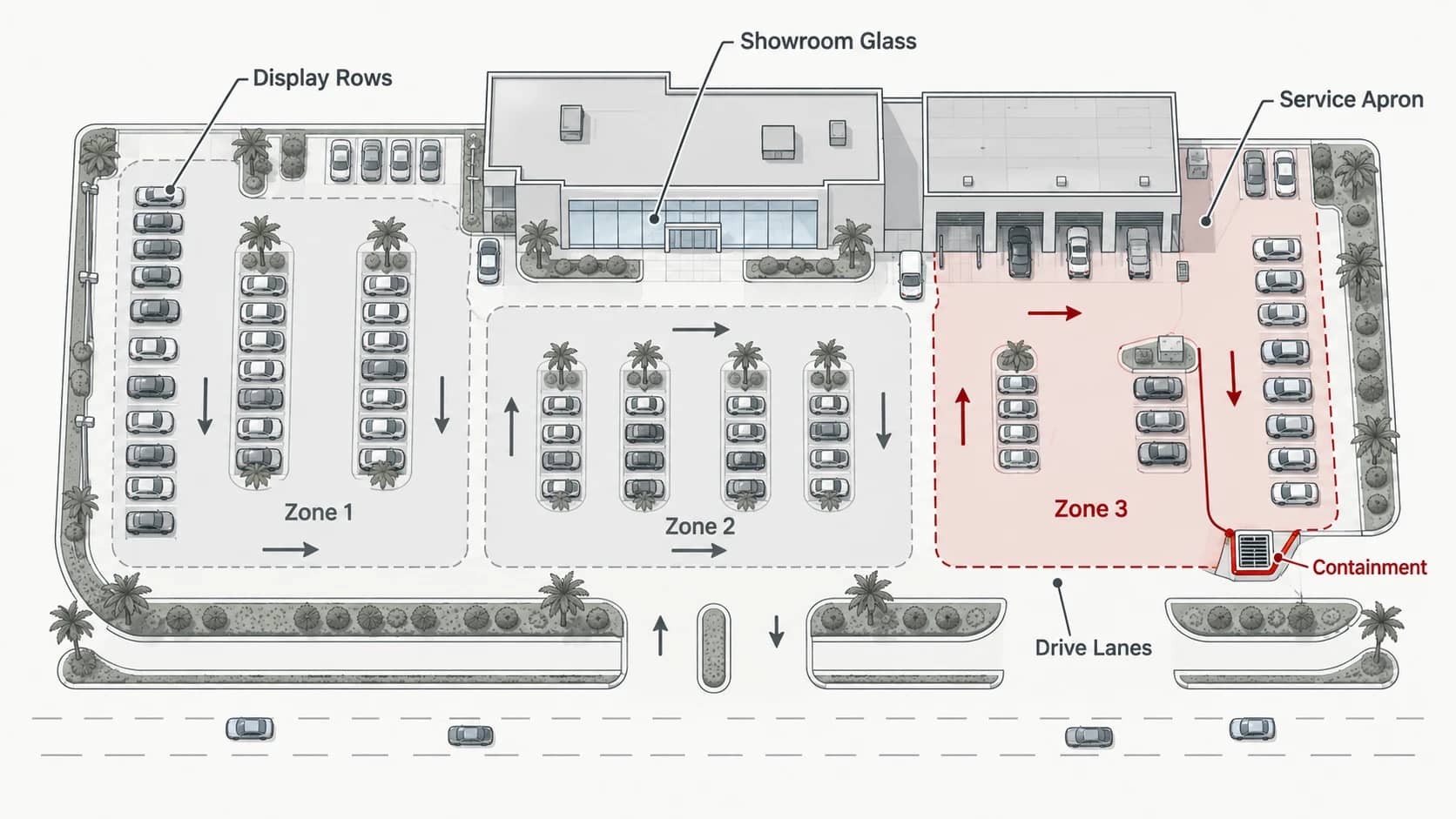
Car dealership lot showroom exterior cleaning works best as a zone-based programme. Clean the customer arrival route and showroom glass when presentation slips, schedule larger paved areas around inventory moves, and treat service lanes separately because automotive fluids change the wash-water plan. Set the cadence by observed conditions, not a single schedule for the whole property.
Car dealership lot showroom exterior cleaning: what belongs in the scope
A useful scope separates the display lot, customer entrance, showroom glazing, building exterior and service approach. Each surface collects different soil and has a different tolerance for water, chemicals and equipment near vehicles. A single instruction to "pressure wash the dealership" leaves too many decisions to the day of work.
Walk the customer route first: the entrance drive, parking spaces, accessible paths, doors and glass. Then inspect the display rows, perimeter paving, signage, facade and service bay aprons. Note oil spots, tire marks, algae, irrigation staining, bird droppings and loose debris by location. These observations help distinguish routine presentation work from stains that need separate treatment or may not fully come out.
Match the method to the material. Commercial pressure washing can suit appropriate hard paving, while a lower-pressure approach may be needed for delicate facade materials, painted surfaces and areas close to seals or electrical fittings. Glass needs its own cleaning method and access plan. Ask the contractor to identify sensitive surfaces and likely stain limits in the estimate.
For a broader property planning framework, see the commercial exterior cleaning guide. At a dealership, the additional constraint is movable inventory: the cleaning plan must state which vehicles can move, who authorizes the move and when the area is ready for vehicles to return.
Zone frequency matrix for the lot and showroom
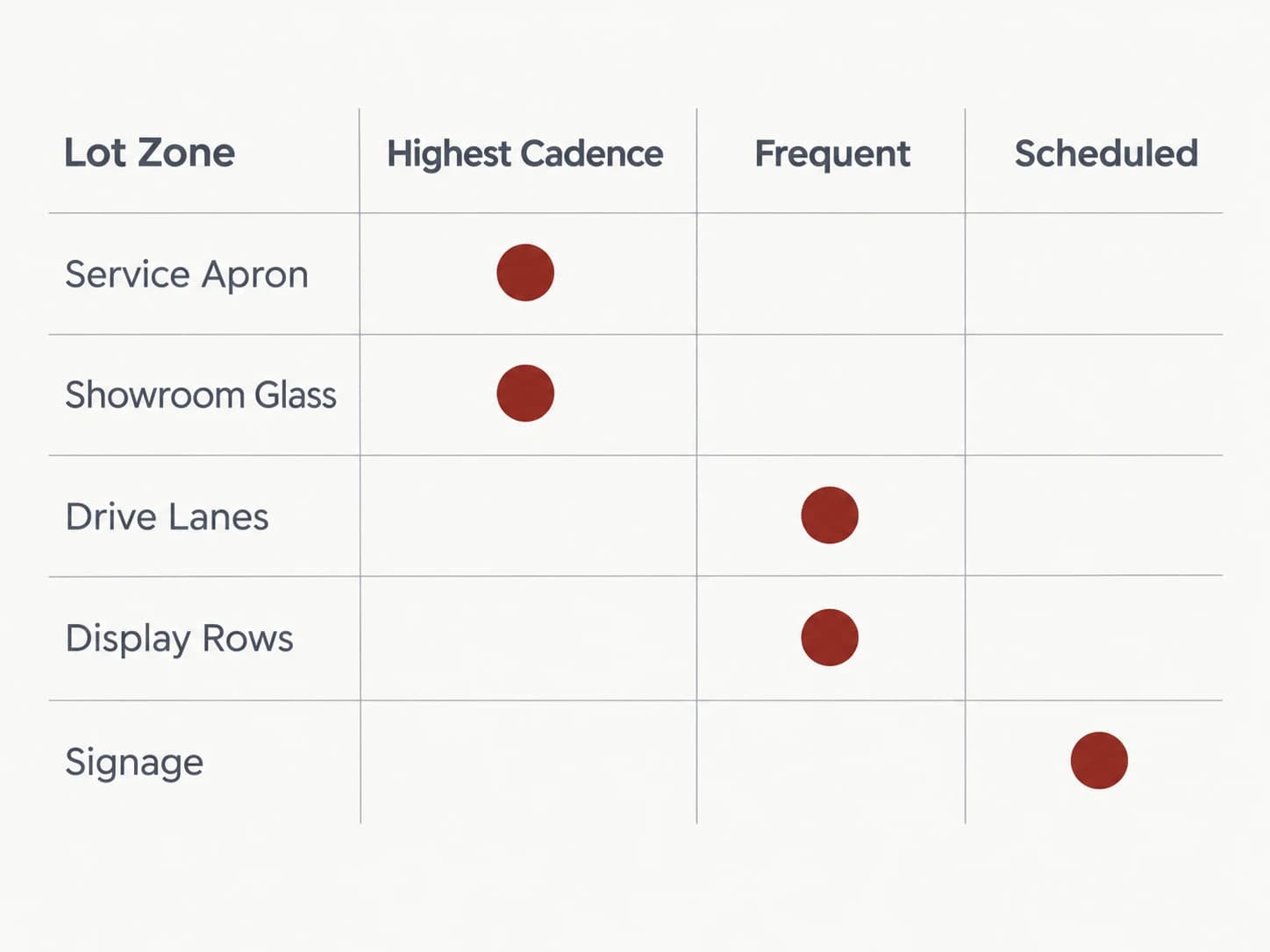
A zone matrix makes the cleaning schedule easier to manage than a property-wide interval. Review each area for appearance, traffic, soil type and operational disruption, then set a cadence that matches what you actually see. The matrix below is a planning checklist, not a fixed frequency rule.
| Zone | Watch for | Scheduling trigger | Planning note |
|---|---|---|---|
| Customer entrance and accessible paths | Tracked soil, slippery residue, visible staining | Presentation or walking conditions decline | Keep a usable pedestrian route open |
| Showroom glass and doors | Hand marks, spotting, frame runoff | Marks become visible from the arrival route | Coordinate glass with adjacent paving |
| Display rows | Tire marks, leaf litter, algae and stains | Rows lose a consistent appearance | Pair work with planned inventory moves |
| Service bay aprons | Oil, coolant, grease and tire soil | Soil builds up or a spill needs attention | Assess fluid handling before washing |
| Perimeter, signs and light poles | Bird droppings, growth and weathering | Visibility or appearance declines | Check access and nearby vehicles |
Record what each inspection finds and adjust the schedule. A shaded row may need attention sooner than an exposed row, while a busy entry can look worn before the wider lot does. South Florida weather also changes how quickly surfaces soil, so a calendar alone is a poor substitute for a site walk.
Use a separate plan for events or a major inventory change. The aim is to clean the areas visitors will see without repeatedly shifting vehicles or closing the same lane. If a zone still looks sound, leave it on its normal inspection cycle.
Phase the display lot around inventory
Cleaning a display lot in zones reduces vehicle moves and helps keep sales access clear. It also makes overspray control easier because the crew and dealership team can agree on a defined work area. The trade-off is that untouched spaces beneath parked vehicles may remain until those vehicles move.
Start with a current lot map and mark display rows, customer parking, test-drive exits, pedestrian paths, drains and equipment access. The dealership should identify who can move inventory and which spaces must stay available for sales or deliveries. Before a zone begins, confirm that vehicle windows are closed and that fragile displays or temporary signs are clear of the work area.
Release each zone only after the pavement is rinsed as planned, standing water is addressed and the route is ready for use. Document spaces that could not be reached. This gives the property lead a clear choice: accept those exclusions, move the vehicles during a later visit, or adjust the next inventory rotation.
Avoid assuming that equipment can clean fully beneath parked cars. Working too close raises the chance of spray reaching paint, trim, open windows or customer belongings, while still leaving an uneven result. A smaller clear zone usually gives a better outcome than trying to wash an entire occupied row.
Containment setup for fluids and wash water
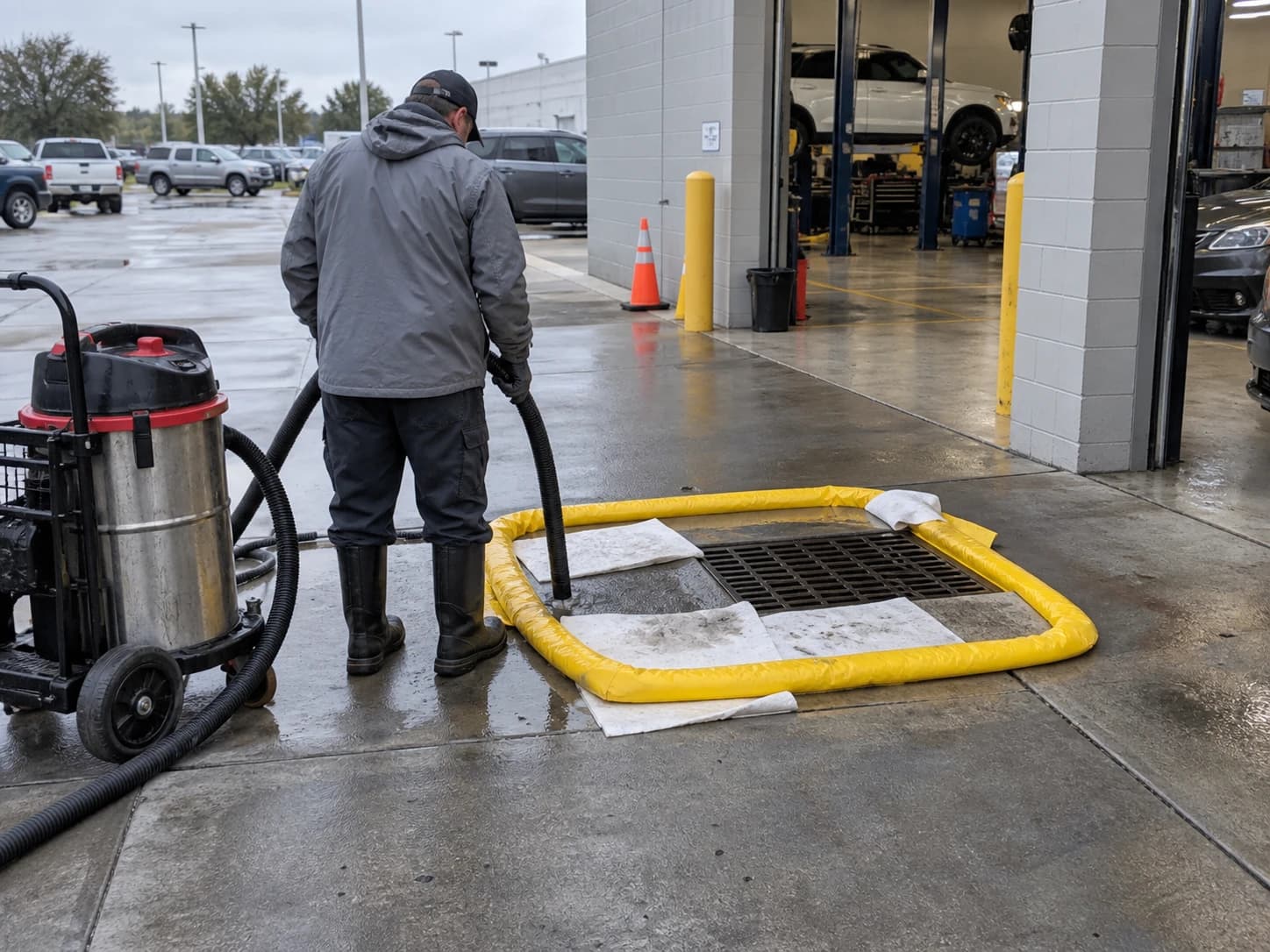
The containment plan starts with the drains and the type of soil on the pavement. Service areas and display spaces with leaking vehicles need closer review than ordinary tracked dirt. Identify the likely water flow before equipment is set up, then choose barriers, collection and disposal methods suited to the site.
US EPA regulation 40 CFR 122.34(b)(3) requires municipal storm sewer permittees to effectively prohibit non-stormwater discharges and run an illicit discharge detection and elimination programme. The EPA model illicit discharge ordinance exempts non-commercial vehicle washing, not commercial wash water. Miami-Dade County Code section 24-42 also prohibits discharges into county waters that cause water pollution or a nuisance.
For a dealership, the practical instruction is to keep contaminated wash water out of storm drains and confirm the approved handling method before work starts. Locate drain inlets, slope changes and low points during the site walk. Mark visible oil or fluid stains for separate treatment; washing over a leak without addressing its source can spread the material across the lot.
Containment equipment must suit the water volume and pavement layout. Barriers can redirect flow, while collection equipment can remove water where capture is required. The scope should say who supplies the equipment, where collected material goes and who checks that the setup remains effective as the work shifts between zones.
Showroom glass, doors and curtain wall
Showroom glass deserves its own plan because it is prominent from both the street and the sales floor. Clean the glazing, door glass and accessible frames together so runoff from an overlooked edge does not mark a finished pane. The frequency should follow visible fingerprints, spotting and weather exposure rather than the lot washing schedule.
Confirm the glass type, coatings, frame condition and safe access method before cleaning. A large curtain wall may include seals, joints and finishes that should not receive direct high-pressure spray. If facade washing is planned, sequence it before final glass cleaning so residue does not run onto completed panes.
The customer arrival view also includes the pavement below the glass. Coordinate window cleaning with entrance paving work to avoid fresh splash marks. The same principle applies to a retail storefront: storefront pressure washing and glass work need a shared sequence, even though the dealership has the added constraint of nearby inventory.
Ask the provider to distinguish exterior glass from interior touchpoints in the scope. That keeps the estimate clear and prevents a polished exterior from being mistaken for a complete showroom cleaning programme.
Service bay aprons and drive lanes
Service bay aprons need a separate cleaning decision because automotive fluids can be present. Inspect the paving for active leaks, older stains, drain locations and pedestrian crossings before choosing a method. Where a leak is active, address the source before routine washing.
These areas also carry vehicles and people through a confined space. OSHA's walking-working surface rule calls for surfaces to be kept clean, orderly and free of spills. Cleaning can help manage buildup, but a wet work zone needs access control until it is ready for traffic again.
Schedule the apron with the service manager so bay openings, tow access and customer drop-off remain workable. Mark the exact limit of the work area and keep the wash-water plan tied to the drains serving that area. If a stain has penetrated the pavement, describe the expected improvement honestly instead of treating complete removal as assumed.
Drive lanes may need a different cadence from display rows because tire soil and turning movements make wear more visible. Inspect them together, but quote and schedule them as distinct zones. That lets the dealership prioritize the route customers use without closing the whole lot.
Facade, signage and light poles
Facade and sign cleaning should protect finishes, electrical components and nearby vehicles. The right method depends on the material and access, so inspect signs and poles before adding them to a general wash scope. Bird droppings or streaking may justify focused work even when the broader facade still looks presentable.
Identify painted panels, lettering, fixtures, exposed wiring and aging seals during the walk-through. A lower-pressure method may be appropriate for some surfaces, but the cleaning agent and dwell time still need to suit the finish. Test an inconspicuous area when material response is uncertain.
Plan overhead work when the spaces below can be cleared. Water and loosened soil can fall onto inventory or freshly cleaned paving, so complete upper surfaces before the final ground-level pass. Note any sign face or fixture that cannot be safely accessed within the agreed scope.
Schedule work around sales and deliveries
The best work window is the one that gives crews enough clear space while preserving customer access. Coordinate with sales, service and inventory leads before setting the sequence. A quiet period helps, but the zone release plan matters more than a proposed start time alone.
Check delivery routes, test-drive movements, service appointments and any event setup. Give staff a simple map showing active zones, alternate routes and vehicle move responsibilities. If weather changes the work, reassess the containment setup and whether the cleaned area can be released safely.
For a pre-event visit, prioritize the arrival route, showroom glass and the display rows guests will see. Defer lower-visibility perimeter work if doing it would interfere with preparation. For a wider maintenance visit, allow enough room to address drains, stains and the less visible edges of the property.
What to include in a dealership cleaning quote
A useful quote defines surfaces, methods, access assumptions and wash-water handling. It should also identify exclusions and the conditions that would change the scope. That detail makes bids easier to compare than a single line for "lot cleaning."
| Confirm in the scope | Why it matters |
|---|---|
| Zones and surfaces included | Distinguishes paving, facade, signs and glass |
| Vehicle move responsibilities | Prevents work from stalling beside occupied rows |
| Access and customer routes | Keeps sales and service operations workable |
| Stain treatment and limits | Sets a realistic expectation for oil and older marks |
| Drain protection and water handling | Establishes the plan before washing begins |
| Inspection and release process | Clarifies when each area returns to use |
Ask bidders to walk the site and note damaged paving, sensitive finishes and hard-to-reach areas. Compare the proposed sequence as well as the cleaning method. The lowest-disruption plan may involve several smaller zones, while a fully cleared area can be more efficient when the dealership can move inventory.
Keep the estimate and site notes together. If the condition of a surface changes before work begins, the parties can revisit the affected zone without losing track of the original agreement.
Frequently asked questions
How much does it cost to clean a car dealership?
Cost depends on the paved area, number of zones, glass and facade access, stain treatment, inventory moves and wash-water handling. A site-specific quote should state which surfaces are included and whether the dealership or contractor moves vehicles. Compare quotes against the same scope, especially where service bay fluids or hard-to-reach glazing add work.
Does car detailing include exterior cleaning?
Vehicle detailing can include cleaning a car's exterior, but it does not ordinarily describe cleaning the dealership property. Lot and showroom exterior cleaning covers surfaces such as paving, building walls, exterior glass and signage. If both services are being arranged, keep their scopes and vehicle protection responsibilities clear so neither team assumes the other handles the surrounding area.
What does an exterior detail include?
For a vehicle, an exterior detail generally concerns the vehicle's paint, glass, wheels and trim. For a dealership property, "exterior cleaning" means the site surfaces around those vehicles. Use precise terms in a request for proposals: name the lot zones, service aprons, entrance, facade, signs and showroom glazing you want assessed.
Do vehicles need to move for lot cleaning?
Some vehicles may need to move if the goal is an even clean across parking spaces and beneath display rows. A crew can clean accessible pavement around parked inventory, but the covered areas will remain. Agree on a zone map, move responsibilities and any accepted exclusions before scheduling so staff know what the finished work will include.
How often should showroom glass and the lot be cleaned?
Set separate schedules. Showroom glass may show hand marks or spotting before the wider lot needs washing, while service lanes can need attention for fluid soil that is absent from display rows. Inspect each zone for visible condition and use those findings to adjust the cadence, including after weather or an inventory change.
Sources
The cited rules address walking surfaces and the handling of discharges. The cleaning frequencies and zone priorities above are site planning guidance, so confirm them against the dealership's actual conditions.
For a scope built around your inventory layout and customer routes, request a 2Clean quote.
Custom Commercial & HOA Walkthroughs
Need a scope tailored to your South Florida property?
Every building, plaza, and community has its own surface mix, access windows, and drainage layout. We quote by walkthrough rather than fixed rate sheets so your proposal matches your exact property. Call us directly at (904) 826-9806 or request a written scope online.
Related services & tools
Pressure Washing by South Florida city: