
Methods, Surfaces & Failure Modes
Natural Stone Sealing in South Florida: Travertine, Coral Stone and Keystone
October 29, 2026 (updated) · 9 min read
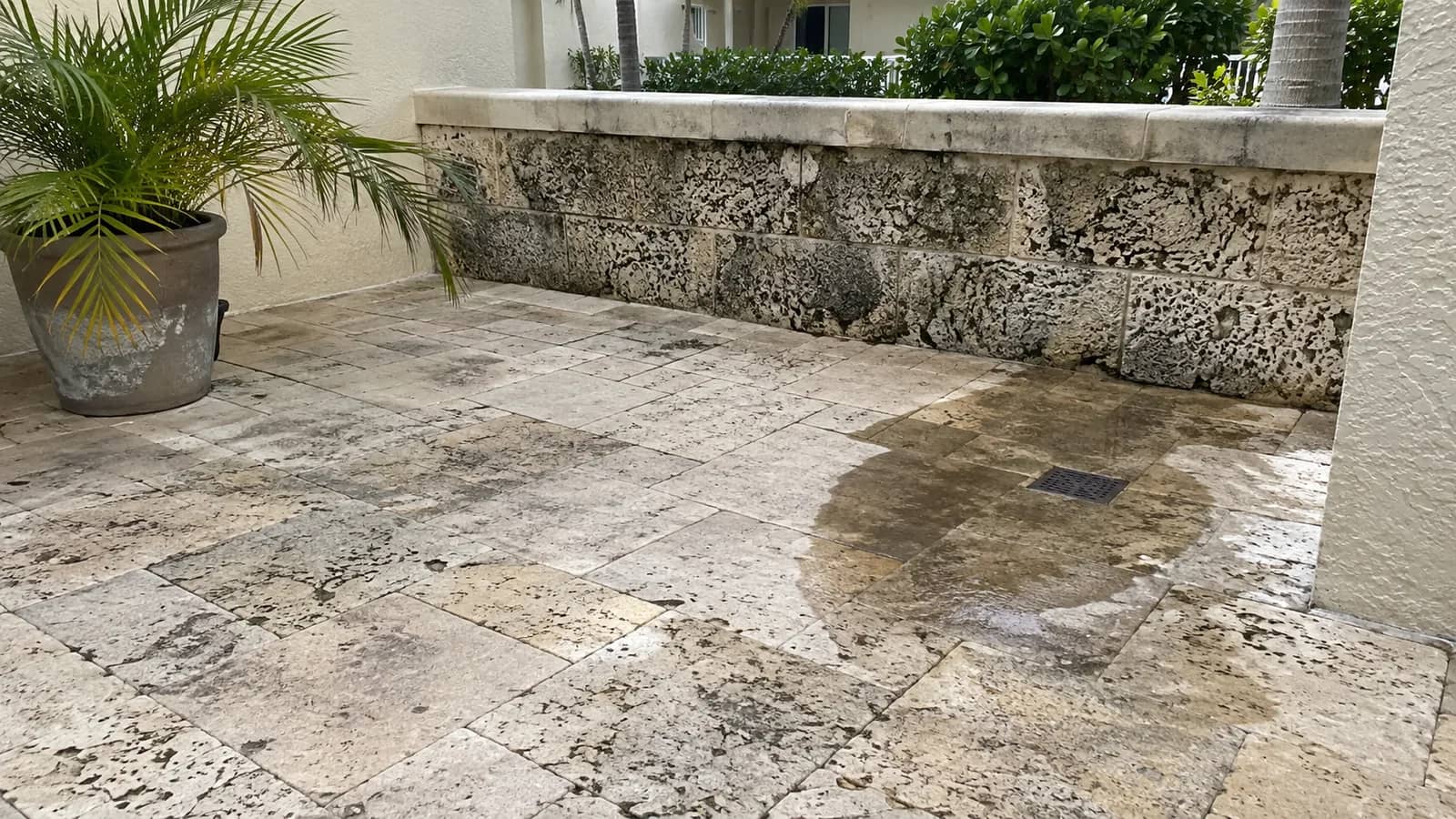
Natural stone sealing can make travertine, coral stone and keystone easier to maintain, but the right method depends on the stone, its finish and where moisture can escape. For a South Florida commercial property, the decision starts with a cleaned, dry test area and a clear choice between a breathable penetrating sealer and a surface coating.
For a property estimate, start with our paver cleaning and sealing scope in Miami. Identify the stone and existing coating first so suitability can be discussed before sealing is included.
When natural stone sealing helps a commercial property
Natural stone sealing is useful when a sound, properly drained surface absorbs spills or rain readily and becomes difficult to clean. It is less useful when persistent dark patches come from moisture rising through the paving, failed drainage or water entering from an adjacent structure. Those conditions need diagnosis before a sealer is specified.
An impregnating sealer enters the stone and reduces liquid absorption near the surface while allowing some vapor movement. It buys time to remove tracked-in soil and spills; it does not stop staining altogether. The level of protection depends on the stone, the product and the way the area is used.
That distinction matters at hotel entrances, restaurant terraces, pool approaches and condo walkways. A manager may see darkening after rain and assume the surface needs another coat. If the darkening follows a drain line, remains in shaded joints or returns beneath an intact treatment, adding sealer may conceal the symptom without addressing the water source.
Treat cleaning and sealing as separate decisions in the property's commercial exterior care plan. Cleaning removes contamination so the surface can be assessed. Sealing follows only when the stone and site conditions support it.
Match travertine, coral stone and keystone to the sealer
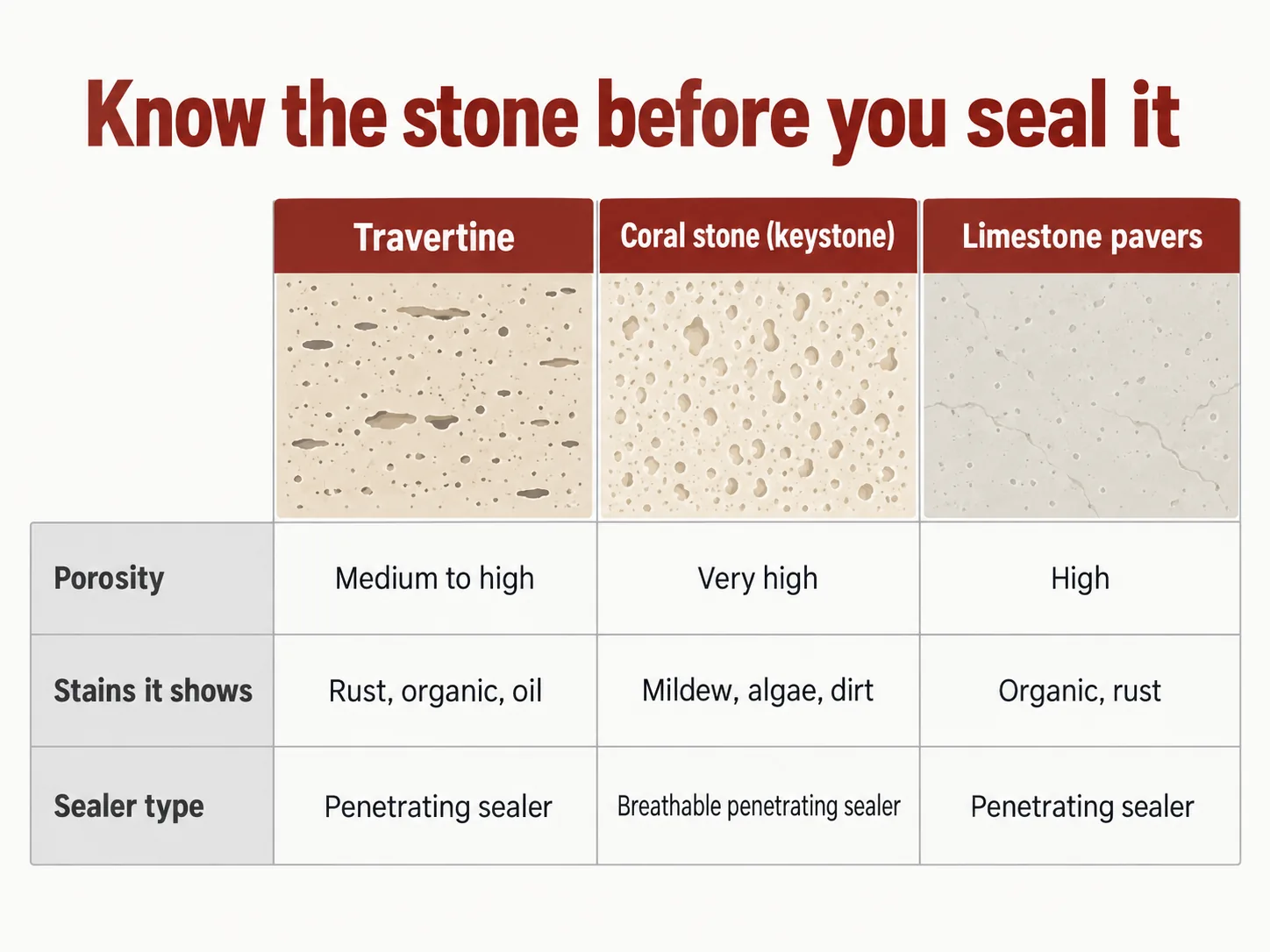
Travertine, coral stone and keystone should not be treated as interchangeable paving. Their pore structure, finish, fillers and previous treatments affect both absorption and appearance, so each distinct surface needs its own test patch. Product labels and small samples provide a more reliable specification than the stone name alone.
| Surface | What to check before sealing | Practical starting point | Main trade-off |
|---|---|---|---|
| Travertine | Filled or open pores, honed or textured finish, loose filler and existing polish | Test a compatible penetrating sealer on the actual finish | A color-enhancing product may deepen the tone or reveal uneven repairs |
| Coral stone | Open texture, embedded soil, biological growth and damp areas | Clean gently, allow thorough drying, then test a penetrating sealer | Heavy application can leave residue in the surface texture |
| Keystone | Stone composition, cut, finish and variation between pieces | Identify the supplied stone and test representative pieces | Absorption may vary across the installation, making a uniform result harder to achieve |
Travertine sealing calls for particular attention to filled holes and worn edges. A sealer can change how the stone absorbs spills, but it cannot secure loose filler or flatten an uneven walking surface. Repairs should be assessed before the test patch so the finished area does not show a patchwork of different absorption rates.
Coral stone sealing has a different challenge: its texture can hold dirt, cleaning solution and excess product. The contractor needs a cleaning method that reaches the texture without eroding it, followed by a way to remove surplus sealer before it dries on the surface. A residue that looks minor on a sample can become conspicuous across a courtyard.
"Keystone" can describe stone sold in different finishes and compositions. Ask for the supplier's identification where available, then compare pieces from sunny, shaded and frequently wet areas. The specification should account for the installation in front of you, including old treatments, rather than assume every piece will take the same amount of product.
Diagnose the surface before choosing a method
A sound sealing plan begins with the cause of the staining or darkening. Map where water arrives, where it drains and how long the stone remains visibly damp compared with nearby areas. This helps distinguish surface absorption from a condition that sealing will not solve.
Walk the area after normal cleaning and again after rain. Look for dark joints, standing water, white deposits, soft filler, flaking, prior coating residue and spots that dry much more slowly than the surrounding stone. Record differences between covered and exposed sections rather than treating an entire plaza as one surface.
Existing coatings require special attention. A penetrating sealer cannot perform as intended through an intact film, and a new coating may adhere poorly to old material. The contractor should identify what remains, determine whether removal is practical and test the proposed preparation on an inconspicuous area.
At a commercial entrance, contamination is often uneven. Grease, gum and traffic film may need targeted treatment before the stone can be evaluated; the guide to cleaning high-footfall entrances explains why one wash method does not suit every deposit. After cleaning, the stone must be allowed to return to a stable dry appearance before the sealer test is judged.
Choose protection without creating a surface problem
For exposed walking surfaces, a compatible penetrating sealer is generally the first option to test. It reduces absorption without deliberately building a film over the texture. The trade-off is that it may provide less resistance to a persistent spill than a coating marketed for stronger surface protection.
Topical coatings can alter sheen and color, and some are chosen precisely for that look. They also place a wear layer between shoes and stone. In a wet entry or poolside area, that change needs a careful slip assessment, especially where an older coating has become patchy or smooth. Neither "natural look" nor "wet look" on a label establishes how the installed surface will behave underfoot.
The US Access Board's ADA Standards require floor and ground surfaces to be stable, firm and slip resistant. OSHA's walking-working surface rule also requires workplace surfaces to be maintained in safe condition. These requirements are reasons to evaluate the completed walking surface, not reasons to assume a particular sealer will meet every site's needs.
Water-based and solvent-based products may differ in odor, appearance, application conditions and compatibility with an existing treatment. The useful question is which specific product performs acceptably on the cleaned stone sample. Require the proposed product instructions and judge the test after it has dried, including its appearance under the lighting and wet conditions the property normally sees.
Prepare, test and apply in a controlled sequence
Good preparation is more important than applying extra sealer. Remove the soil and treatment residues that would block penetration, use a stone-compatible cleaner and rinse away what the cleaning process leaves behind. Do not use acidic cleaners on travertine, coral stone, keystone, marble or limestone: these calcium-based stones are etched by acid, and the damage cannot be washed off.
Protect adjoining finishes and plan how wash water will be contained. US EPA's stormwater rule requires municipal storm sewer permittees to address illicit discharges; Florida DEP administers the state's municipal stormwater program. The cleaning plan should identify where the water will go before work begins.
Once the stone has dried, test the full proposed sequence on a representative area: cleaning, any needed repairs and the chosen sealer. Include an edge, joint or textured piece if those are likely to behave differently. Check for color change, uneven sheen, tackiness and visible residue after the product's stated cure period.
Application should follow the product instructions for that stone and finish. Work in manageable sections, keep coverage even and remove material that the stone does not absorb. More product is not automatically more protection; surplus left on the face can dry as a haze or film. Keep the area out of use for the period required by the product instructions and site conditions.
Plan around South Florida weather and occupancy
South Florida's wet season runs from May through October, making dry preparation and a dependable application window harder to arrange. The NOAA National Hurricane Center places the Atlantic hurricane season from June 1 through November 30. Neither season rules out sealing, but both make weather review and a workable postponement plan important.
Salt air, windblown debris and frequent rain also affect what happens after the work. Salt and soil can collect in joints and textured stone, while shaded areas may stay damp longer than sunny ones. A courtyard that appears dry at the entrance may still have moisture in its sheltered sections.
For a hotel or retail property, include pedestrian routing and deliveries in the schedule. For a condo or HOA, coordinate resident access, pool use and notices before closing a shared walkway. Splitting work into areas can preserve access, but transitions between sections need care so the final appearance remains consistent.
Condominium boards should also distinguish routine surface care from building maintenance obligations. Florida Statutes section 718.113 assigns maintenance of common elements to the association, except limited common elements assigned to owners by the declaration. Confirm responsibility under the property's documents before approving work on shared stone or adjacent waterproofing.
Maintain the result and know when to reassess
A sealed surface still needs cleaning, prompt spill removal and inspection. Use cleaners compatible with both the stone and the sealer, and avoid assuming that stronger chemicals or higher pressure will fix every mark. Abrasive cleaning can change a finish even when the underlying stone remains sound.
There is no useful universal resealing date for a South Florida property. Exposure, foot traffic, cleaning practices, product choice and the condition of the original stone all affect service life. Record the product used and the tested sample area, then compare the surface's appearance and absorption during routine inspections. Repeated dark patches near a drain call for investigation, not an automatic recoat.
Where growth returns, determine whether the cause is shade, retained debris, drainage or a cleaning gap. The guide to identifying mould, mildew, algae and lichen can help frame that inspection. A maintenance plan should also say who reports changes, how affected areas are documented and when the contractor should revisit the surface.
For budgeting, request a scope that separates cleaning, repairs, old-coating removal if needed, test patches and sealing. That lets the board or facilities lead compare methods and understand what the treatment is expected to improve. It also makes any excluded staining or moisture problem visible before approval.
For a written price for your property, call or text a photo to (904) 826-9806, or request a property walkthrough. Include the surfaces, location and access requirements so the scope can be reviewed.
Frequently asked questions
Should you seal a natural stone?
Seal natural stone when a compatible test shows that reduced absorption will help maintain a sound surface. Some stones and finishes may gain little from treatment, while persistent dampness or a failing old coating needs investigation first. On commercial paving, consider appearance and wet walking conditions alongside stain resistance before approving the product.
What is the best penetrating sealer for sandstone?
There is no single best penetrating sealer for every sandstone. Sandstone varies in composition, pore structure, finish and exposure, so the choice should follow the product maker's stone guidance and a test on the installed surface. For an exterior walkway, assess absorption, color change and wet use after the sample has dried.
How long does stone sealer last?
Service life depends on the stone, sealer, exposure, traffic and cleaning methods. Instead of relying on a fixed resealing interval, keep the product record and inspect representative high-use and sheltered areas. If absorption changes, test whether cleaning restores the surface before applying more sealer. Persistent dampness should be diagnosed separately.
What can you seal marble with?
Marble can be tested with a product specifically identified as compatible with that stone and its finish, often a penetrating impregnating sealer. Sealing may reduce absorption, but it does not prevent etching from acidic substances or repair a worn polish. Test for color and sheen changes before treating a visible commercial installation.
Can you seal stone that stays damp after rain?
Wait until the cause is understood and the stone meets the chosen product's drying requirements. A shaded area may simply need more drying time, while moisture rising through paving or collecting because of poor drainage may require repair. Sealing over persistent moisture can produce an uneven appearance and may leave the underlying problem in place.
Sources
The cited requirements and climate dates inform the site assessment; product selection still depends on testing the installed stone.
For a site-specific assessment, ask 2Clean to review the stone, moisture conditions and access needs through its paver sealing service.
Custom Commercial & HOA Walkthroughs
Need a scope tailored to your South Florida property?
Every building, plaza, and community has its own surface mix, access windows, and drainage layout. We quote by walkthrough rather than fixed rate sheets so your proposal matches your exact property. Call us directly at (904) 826-9806 or request a written scope online.
Related services & tools
Paver Sealing by South Florida city:
Commercial property scopes: