
Industry Verticals
High Rise Window Cleaning for Office Towers: Access, Frequency and Curtain Walls
October 16, 2026 · 10 min read
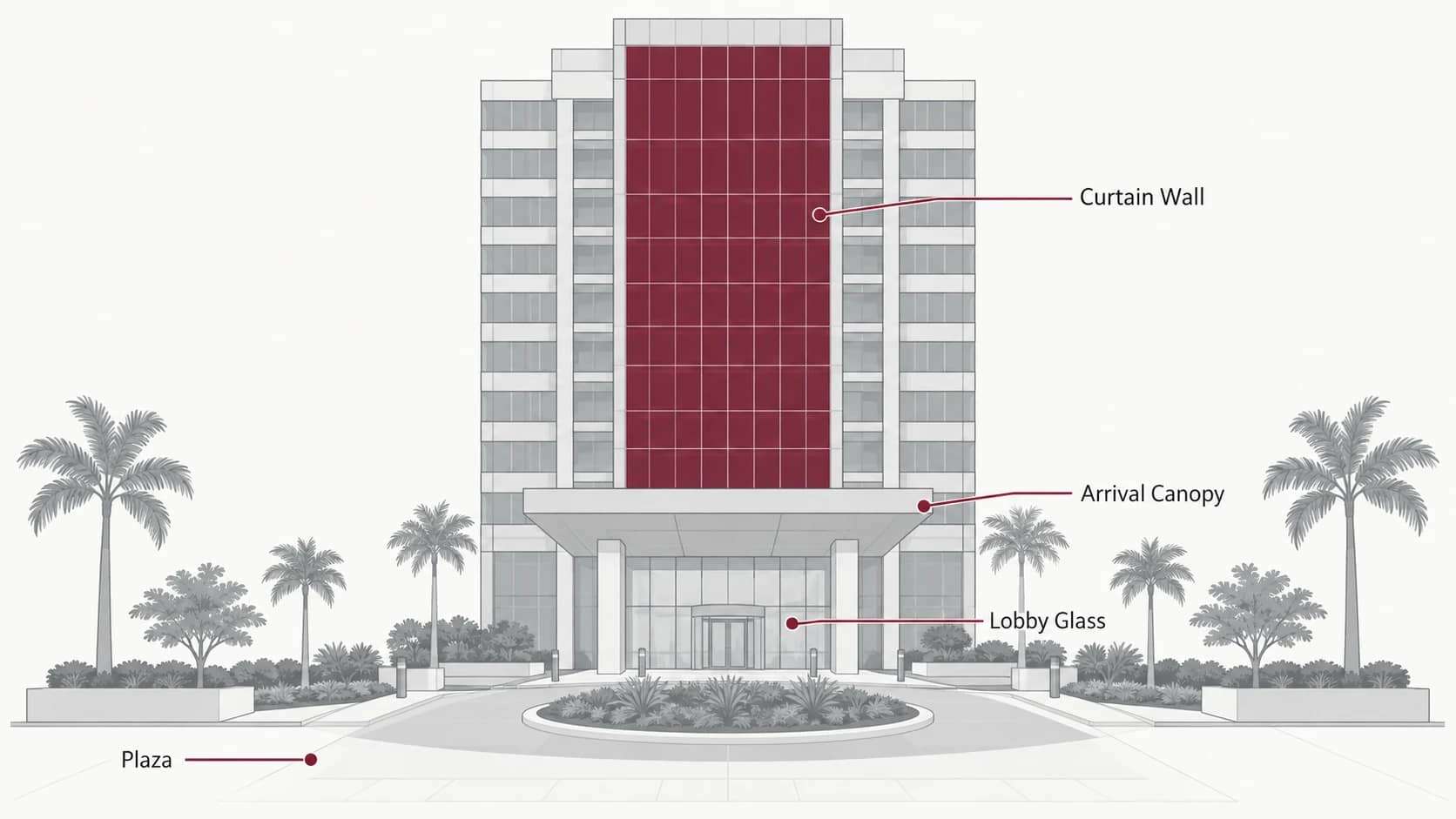
High rise window cleaning for an office tower starts with a facade survey, an access plan and a scope that separates upper curtain wall glass from entrances and other reachable areas. Cleaning frequency should reflect how quickly each elevation becomes visibly dirty, while the work plan accounts for roof access, people below and tenant activity.
What an office tower window cleaning plan should cover
An office tower plan should identify every glass area to be cleaned, how crews can reach it and what must happen at ground level while they work. It should also state the expected finish and how the property team will report a missed area.
Start with a facade map that distinguishes the main curtain wall from lobby doors, entrance glazing, canopy glass and any recessed or sheltered sections. Mark areas where projecting fins, setbacks or other features could interrupt access. A description such as "clean all exterior windows" leaves too much room for different interpretations, especially where glass continues behind a canopy or around a corner.
The plan should also say whether the work includes accessible interior glass, frames, sills or visible deposits that may need separate treatment. Ordinary washing may remove loose soil without removing mineral staining or marks already bonded to the glass. Record those conditions before work begins so a property manager can compare the proposed scope with the completed result.
This article focuses on access, scheduling and curtain walls at office towers. For a broader discussion of building types and service considerations, see the guide to commercial window cleaning in South Florida.
Access methods by tower height and facade design
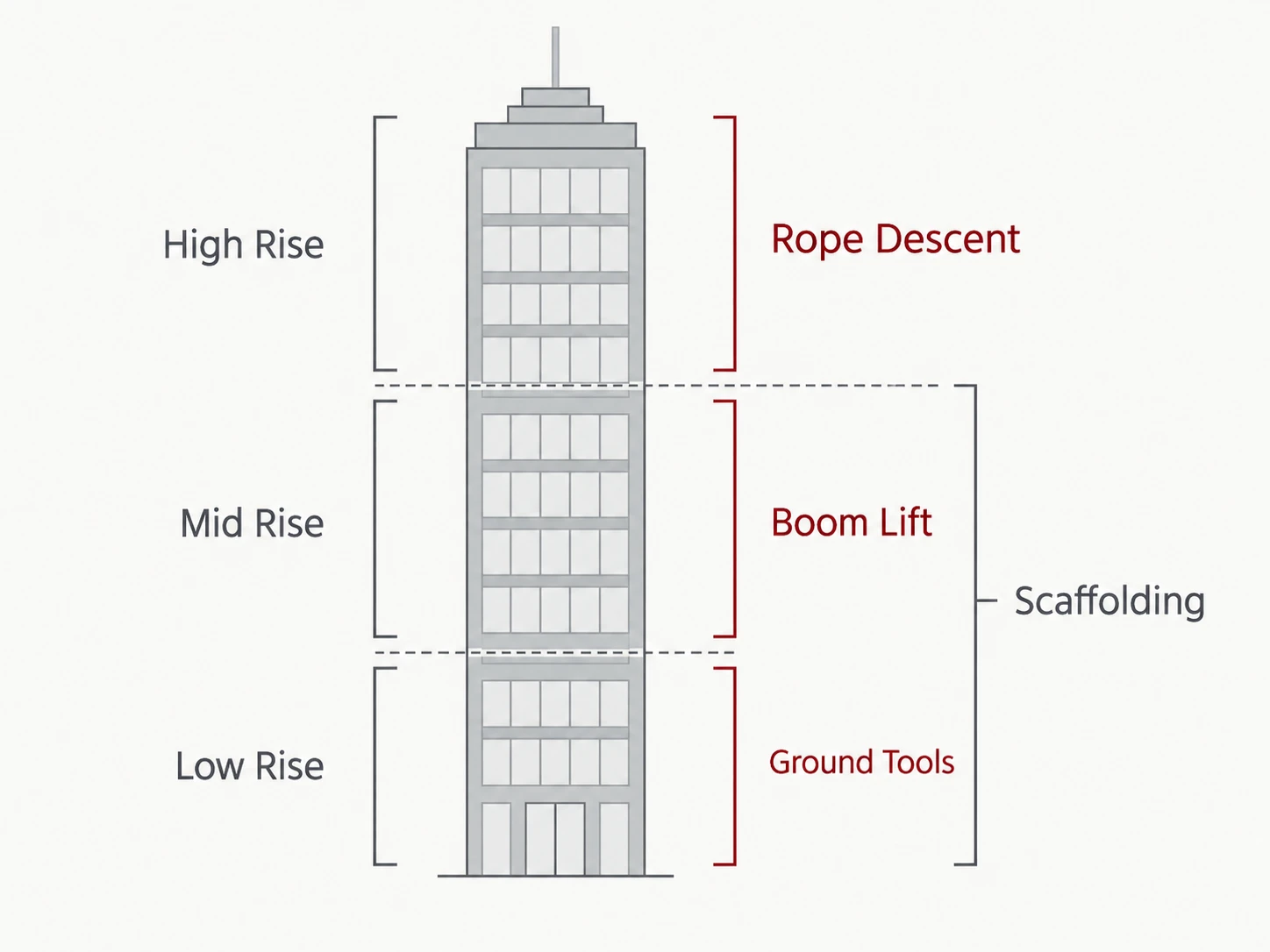
Height helps narrow the options, but it does not determine the access method on its own. The roof, facade shape, available ground space and activity below the work area all affect whether a suspended platform, rope descent, lift or reachable ground method is practical.
| Access method | Where it may fit | Main planning trade-off |
|---|---|---|
| Building maintenance unit or suspended platform | Broad, relatively continuous elevations where the building has suitable equipment or support | Confirm the equipment's reach and how it will move past setbacks or projections |
| Rope descent | Elevations that can be reached from suitable roof access and anchor locations | Review anchor documentation, roof routes and a plan for interruptions or rescue |
| Boom lift | Lower sections, canopies or areas a vehicle can reach from firm ground | Check the lift's reach, ground conditions and space needed around the work area |
| Reachable ground method | Entrances and other low glass | Keep pedestrians clear of hoses, tools and wet walking areas |
A tower may need more than one method. A suspended platform could cover a broad face while a lift serves a canopy that the platform cannot reach. The illustration shows access concepts; the building survey determines which are workable at a particular property.
Ask a prospective provider to explain the chosen method by elevation, including how workers reach recessed panes and how the area below will be controlled. Ask the building team to provide available information about roof access and installed equipment before proposals are finalized. The International Window Cleaning Association works on window cleaning safety, education and research; its role alone does not establish that a particular crew or access plan is qualified for your tower.
Curtain wall cleaning needs its own scope
Curtain wall cleaning should identify the glass and adjacent components that will receive attention. A curtain wall is not simply a collection of identical panes: framing, joints, projections and drainage paths can change both the cleaning method and the result a manager can reasonably expect.
Map different glass types and finishes before choosing products or tools. Soil may collect beneath horizontal framing, while runoff from an upper surface can leave marks on clean glass below. A test area can help the property team agree on the finish and identify staining that routine washing does not remove.
Specify whether the scope includes exterior frames, visible ledges and glass behind architectural features. Keep facade washing separate from window washing in the proposal: a method suitable for an adjacent wall surface may be inappropriate for glass, seals or a delicate finish. The guide to choosing a commercial building washing method provides context for those neighboring materials.
The final inspection should follow the same map used to price the work. Check representative areas from useful viewing positions, then record the exact elevation and location of any missed pane or remaining mark. This makes a correction request clearer than a general report that the facade "looks streaky."
Build a cleaning calendar around visible soil
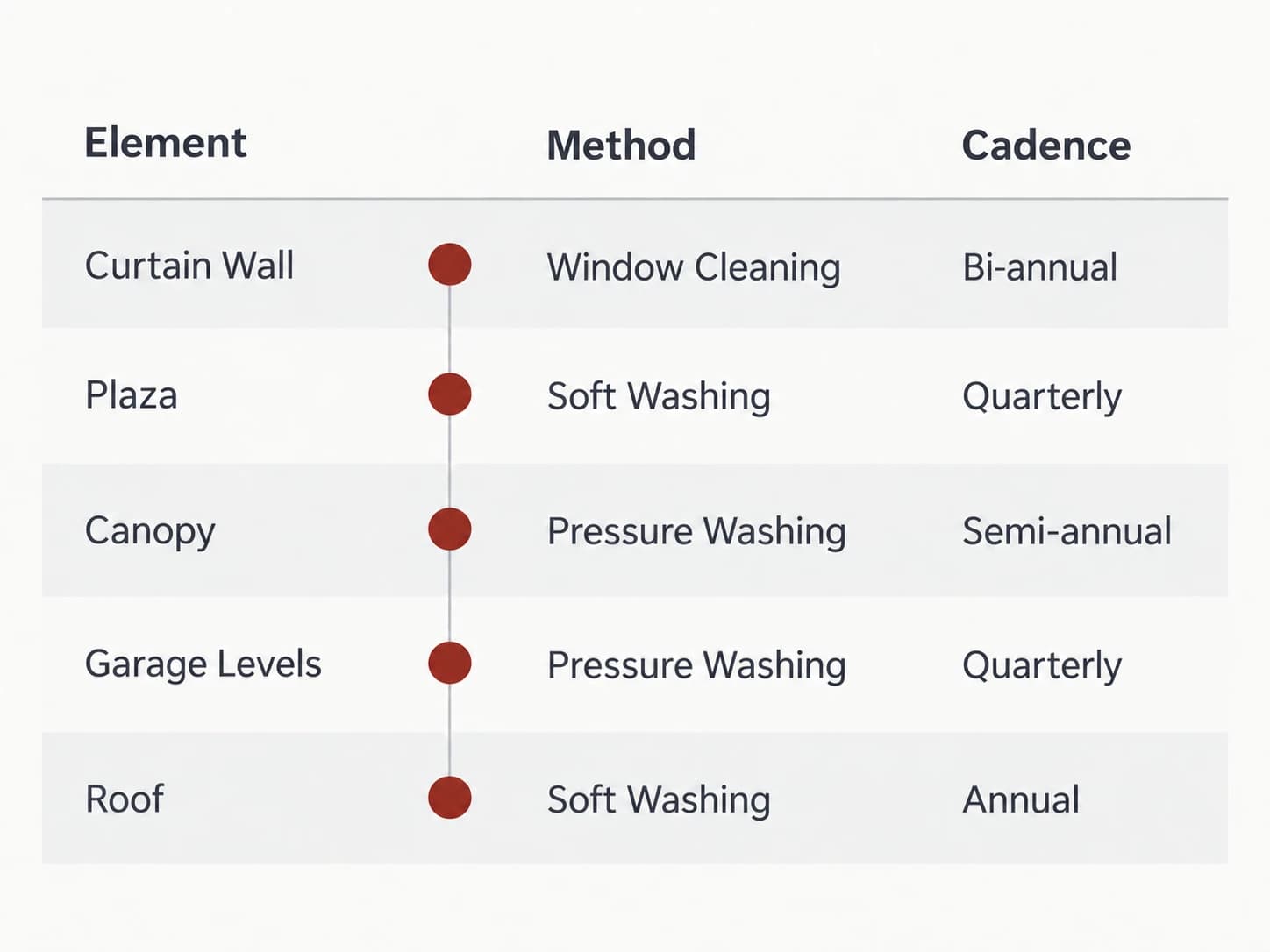
A useful calendar separates facade work from entrance and lobby touch-ups. Upper glass may stay acceptable longer than doors and canopy glass, so one interval for the entire building can leave prominent areas dirty between major visits.
Begin with the building's current condition and its recent cleaning history. Note which elevations show salt film, rain marks, bird activity or runoff first, then review those observations after service. That evidence gives property managers a better basis for changing the schedule than a blanket frequency copied from another tower.
The calendar should also show dependencies. A planned facade wash, construction activity or canopy cleaning can put soil onto glass that was just cleaned. Coordinate the order of work where possible, and make clear whether a separate visit is included if another project soils the windows afterward.
South Florida weather adds uncertainty to exterior schedules. NOAA identifies the Atlantic hurricane season as running from June 1 to November 30, with its climatological peak on September 10. Treat that as a planning consideration, not a prediction that a particular cleaning date will be lost. The schedule should explain how the property team and provider will communicate when conditions require work to pause or move.
Tell tenants what will happen near their windows
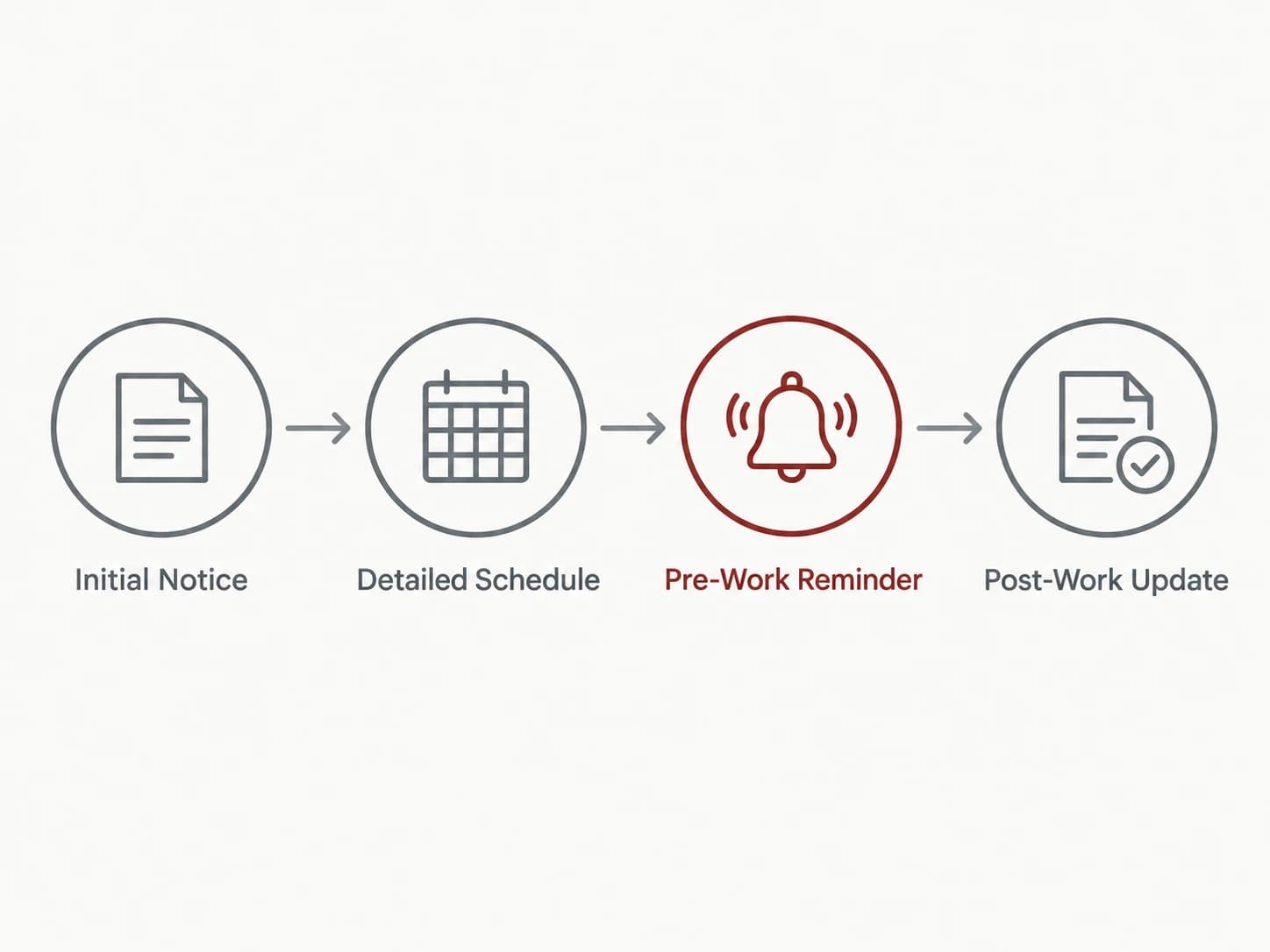
Tenant notices should name the affected elevations and explain what occupants may see or hear. A useful notice also says where access will change and whom tenants should contact about a concern during the work.
Give the property team a sequence it can adapt to the building:
- Confirm the work areas, likely dates and any ground-level closures with the provider.
- Tell tenants which sides of the building are affected and whether crews may pass their windows.
- Send an update if the sequence changes, particularly when an entrance or shared outdoor area is affected.
- Report completion and provide a way to identify a specific missed location.
Coordinate separately with lobby staff, security and any tenant responsible for an entrance-facing space. A notice to office occupants alone may not reach the people directing visitors at street level. If canopy work changes the usual route into the building, state the alternate route plainly.
The notice should avoid promising an exact time for each pane. Access can be interrupted by weather or conditions found on the building. A sequence by elevation gives tenants useful information while leaving room to communicate a change accurately.
Define the scope before comparing proposals
Comparable proposals use the same list of glass areas, access assumptions and finish expectations. Without that common scope, a lower total may reflect excluded elevations, different treatment of entrance glass or a different plan for difficult access.
Use the checklist below when requesting office building window cleaning proposals.
| Scope item | What to confirm |
|---|---|
| Glass areas | Which elevations, entrances, canopy sections and recessed panes are included? |
| Sides of glass | Is the work exterior only, or is any reachable interior glass included? |
| Adjacent components | Are frames, sills, ledges or visible runoff marks included? |
| Access | Which method is proposed for each area, and what building information is needed? |
| Ground level | How will pedestrian routes and entrances be managed during work? |
| Staining | Which deposits need assessment or separate treatment? |
| Schedule | Which areas receive full service, and which receive interim touch-ups? |
| Completion | How will the manager inspect the work and report a missed area? |
Request clear exclusions in writing. Architectural glass can have conditions that cleaning will not correct, and an access method may not reach a feature that looks accessible from the street. If the property is preparing for a handover, the post-construction exterior cleanup guide covers the separate planning needed when construction residue is present.
Review price in the context of access and scope
A window cleaning price is meaningful only when it is tied to a defined scope. Access complexity, facade layout, staining and the amount of ground-level coordination can change what a provider must plan and supply.
HomeGuide's window cleaning price guide (Jan 26, 2026) lists commercial cleaning at $0.50 to $2.50 per square foot and $6 to $20 per window. Angi's window cleaning cost guide (Oct 8, 2026) lists $15 to $40 per window for high-rise or special access above three stories. These are third-party guide figures, not a price for a particular tower or a substitute for a site-specific proposal.
Ask bidders to state what they measured or counted, which elevations their price covers and how they will handle glass that requires more than routine washing. Compare the proposed access and completion process alongside the total. A proposal that leaves the method or exclusions unclear is difficult to manage after work starts.
Keep access and public areas in the work plan
The work plan should address both the people cleaning the facade and the people using the property below it. Roof entry, equipment routes, entrances and pedestrian movement need to be reviewed together before the first elevation begins.
Ask how the provider will check the planned access against the building's available equipment and documentation. The property team should identify roof restrictions, loading areas and spaces that cannot be closed without coordination. If one method cannot reach an area, resolve that gap in the proposal instead of discovering it during the final inspection.
At ground level, confirm where equipment, hoses and workers will be positioned and how people will be directed around the work. OSHA's walking-working-surface rule, 29 CFR 1910.22, requires covered surfaces to be kept clean, orderly and sanitary, free of spills, regularly inspected and maintained in a safe condition. A site plan should account for wet areas and changing pedestrian routes while cleaning is underway.
Frequently asked questions
How often should high rise office windows be cleaned?
Set a schedule after reviewing how quickly each elevation loses its acceptable appearance. Upper curtain wall glass and entrance glass may need different intervals because people see them from different distances and the surfaces collect soil differently. Review the results after each service and adjust the calendar when visible conditions or nearby work change.
How are upper floors reached for window cleaning?
The method depends on the tower's roof, installed equipment, facade shape and available space below. Suspended platforms and rope descent may suit upper elevations, while a lift may be useful around a lower canopy or an awkward section. A provider should explain how its proposed method reaches each included area before the scope is approved.
How to clean high up windows from inside?
First identify whether the glass can be safely reached using the building's intended access and the manufacturer's care instructions. Do not assume an operable window makes an exterior face reachable from an occupied office. For inaccessible glass, ask the property team to arrange an appropriate professional access method rather than having occupants lean outside or improvise with tools.
What is a fair price to charge for window cleaning?
A fair office tower quote covers the stated glass areas, access method, ground-level controls and expected finish. HomeGuide's window cleaning price guide (Jan 26, 2026) lists commercial cleaning at $0.50 to $2.50 per square foot, while Angi's guide (Oct 8, 2026) lists $15 to $40 per window for high-rise or special access above three stories. Compare those published figures only after confirming that proposals describe the same work.
Does curtain wall cleaning include frames and staining?
Only if the proposal says so. Routine glass washing, frame cleaning and treatment of mineral deposits can involve different work, and some visible marks may not come out through cleaning. Ask the provider to identify included components and assess questionable areas before the property team agrees on a finish standard.
Sources
For lower-level glass, entrances and canopy sections, 2Clean's window cleaning service can scope the work; ask any bidder to confirm in writing which elevations and access methods it will cover.
2Clean does not publish a price list: every property is priced individually. For a written price, call or text a photo to (904) 826-9806, or request a quote online.
Custom Commercial & HOA Walkthroughs
Need a scope tailored to your South Florida property?
Every building, plaza, and community has its own surface mix, access windows, and drainage layout. We quote by walkthrough rather than fixed rate sheets so your proposal matches your exact property. Call us directly at (904) 826-9806 or request a written scope online.
Related services & tools
Window Cleaning by South Florida city: