Environmental Compliance & Liability
Pressure Washing Wastewater Rules in Miami-Dade: What the Clean Water Act Actually Requires
September 14, 2026 · 7 min read
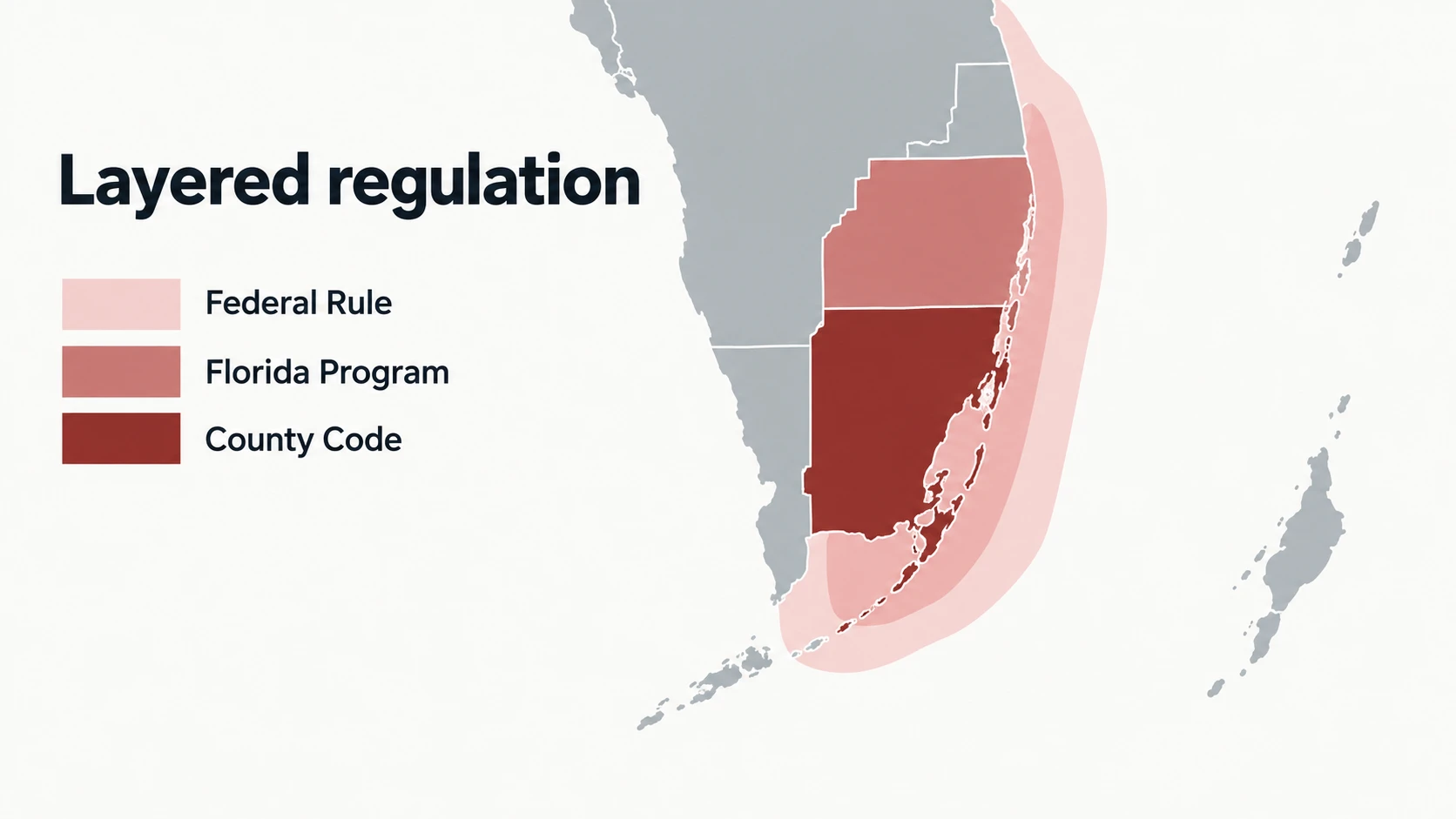
Wash water from pressure washing cannot go into a storm drain. Property owners are liable for any illicit discharge from their site, not just the contractor. This article will cover the specific requirements of the Clean Water Act, what constitutes an illicit discharge, and the regulations in Florida and Miami-Dade County.
Direct answer: wash water cannot go to the storm drain
Wash water from pressure washing must not enter storm drains. Any discharge of non-stormwater into the storm sewer system is prohibited by federal and local regulations. Property owners are responsible for ensuring that their contractors comply with these rules, as they can be held liable for any violations.
Property managers, HOA or condo board members, and facilities leads must be vigilant about this, as the liability extends beyond just the contractor. Ensuring compliance is not just about following the rules; it's about protecting your property and avoiding costly fines and legal issues.
What the Clean Water Act and 40 CFR 122.34 require
The Clean Water Act, specifically 40 CFR 122.34(b)(3), mandates that MS4 (Municipal Separate Storm Sewer System) permittees must "effectively prohibit" non-stormwater discharges into the storm sewer system. These permittees are required to run an illicit discharge detection and elimination program to identify and stop unauthorized discharges. This federal regulation is the underlying basis that makes it unlawful for wash water to enter storm drains.
The Clean Water Act is enforced by the US EPA, and violations can result in significant penalties. Property owners should be aware that they can be held liable for any illicit discharges that occur on their property, even if a contractor is performing the work. This underscores the importance of selecting a reputable and knowledgeable vendor who can ensure compliance with all relevant regulations.
What an illicit discharge is
An illicit discharge is any unauthorized release of non-stormwater into a storm sewer system or water body. This includes wash water from pressure washing, which often contains pollutants such as dirt, chemicals, and oils. Illicit discharges can harm the environment, contaminate water sources, and violate local and federal laws.
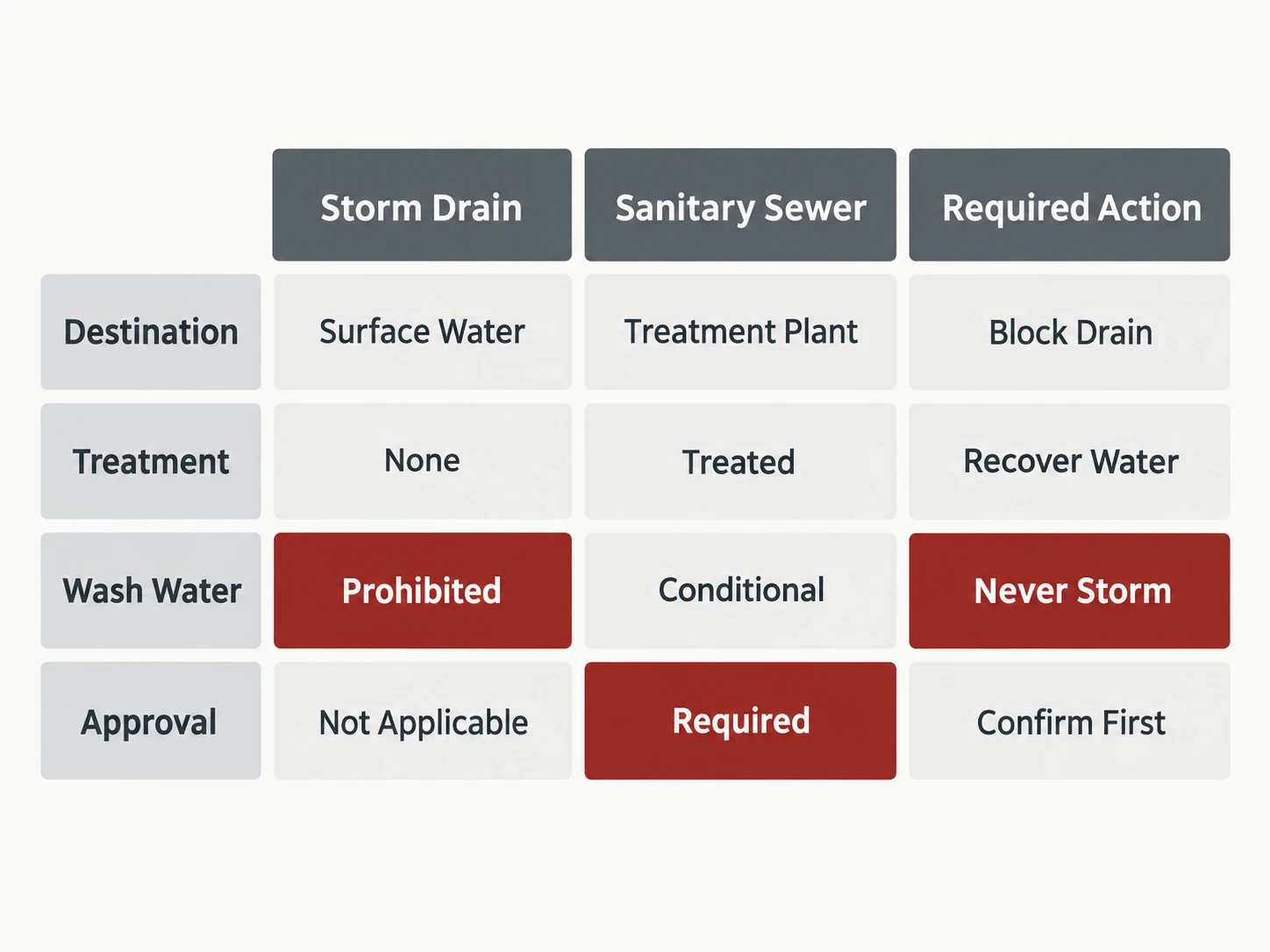
Illicit discharges are a serious concern because they can lead to water pollution and ecological damage. Property owners are responsible for preventing these discharges, and they can face legal and financial consequences if they fail to do so. Understanding what constitutes an illicit discharge is crucial for managing your property's environmental impact and avoiding legal issues.
The commercial exemption that does not exist
There is a common misconception that commercial vehicle washing is exempt from the rules against illicit discharges. However, this is not the case. According to the US EPA's Model Illicit Discharge Ordinance, only non-commercial vehicle washing is exempted. Commercial wash water, including that from pressure washing, is not exempt and must be managed properly to avoid entering storm drains.
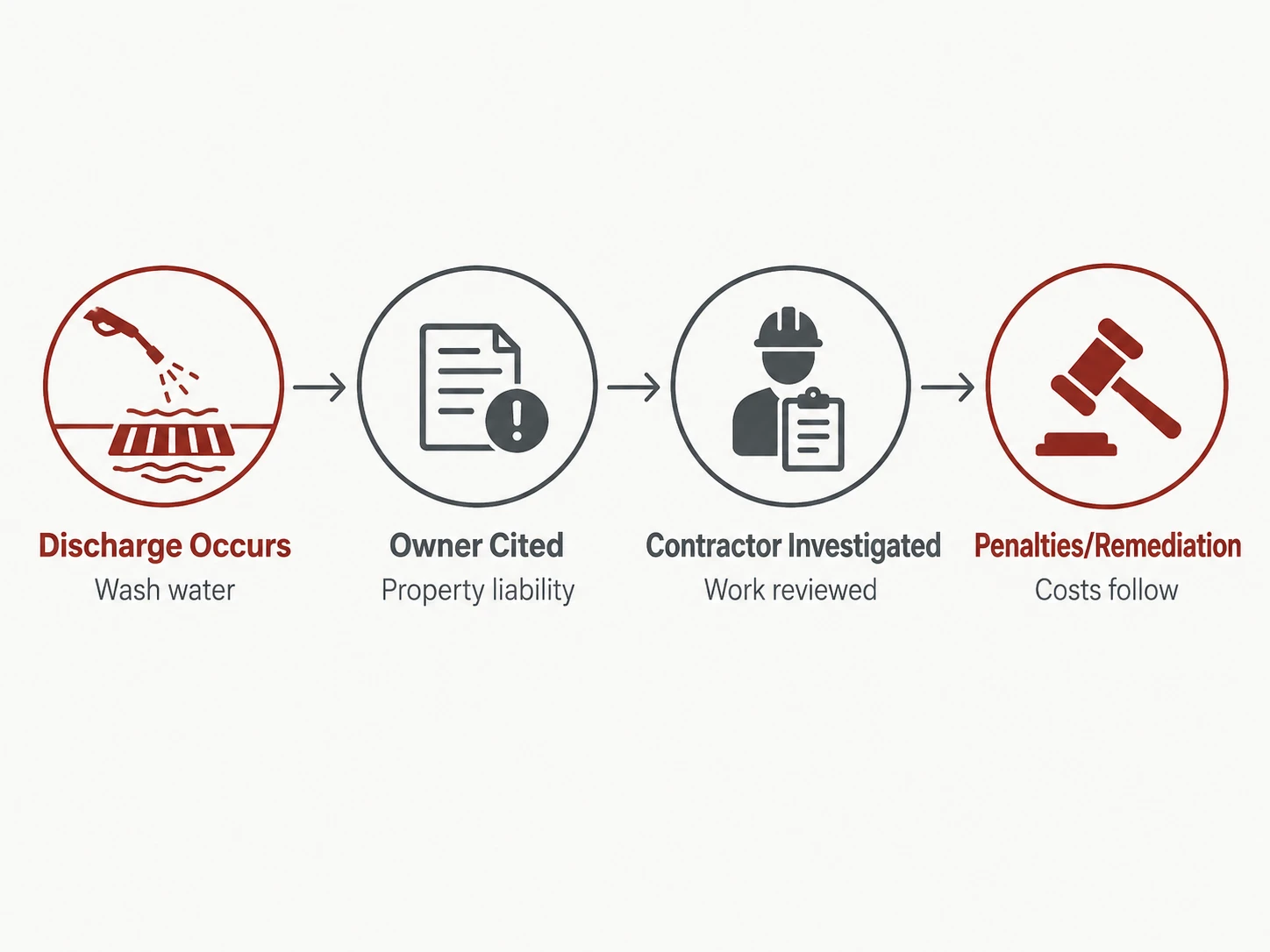
This means that property managers and HOA board members must ensure that any commercial pressure washing activities on their property comply with the regulations. Choosing a vendor who understands these requirements and has the necessary equipment and procedures in place is essential to avoid legal and environmental issues.
Florida DEP and Chapter 62-624
In Florida, the Department of Environmental Protection (DEP) administers the National Pollutant Discharge Elimination System (NPDES) stormwater program under F.A.C. Chapter 62-624. MS4 operators in Miami-Dade County must obtain permit coverage to discharge to waters of the state. This state-level regulation reinforces the federal requirements and adds additional layers of oversight and enforcement.
The Florida DEP plays a crucial role in ensuring that stormwater management practices are effective and compliant with environmental standards. Property owners should be aware that violating these regulations can result in fines and other penalties. By working with a reputable and knowledgeable vendor, you can ensure that your pressure washing activities are conducted in a manner that meets all legal and environmental requirements. For more information on our services and how we can help, visit our services page.
Miami-Dade Code 24-42
Miami-Dade County Code section 24-42 explicitly states that it is unlawful to discharge any substance into county waters that causes water pollution or a nuisance. This includes pressure washing wastewater, which can carry contaminants like dirt, chemicals, and oils. Non-compliance can result in fines and legal action against the property owner, not just the contractor.
To help you understand the regulatory framework, here is a summary of the regulations from federal to county level:
| Regulation Level | Specific Rule | Source |
|---|---|---|
| Federal | MS4 permittees must "effectively prohibit" non-stormwater discharges into the storm sewer system | US EPA, 40 CFR 122.34(b)(3) |
| State | MS4 operators must obtain permit coverage to discharge to waters of the state | Florida DEP, F.A.C. Chapter 62-624 |
| County | Unlawful to discharge into county waters anything causing water pollution or a nuisance | Miami-Dade County Code section 24-42 |
Who is liable: owner or contractor
The property owner is ultimately liable for any non-compliant discharges that occur on their property. While a contractor is responsible for following best practices and regulations, the property owner can still face legal and financial consequences if a violation occurs. This is because the discharge originates from the owner's property, and local and federal laws hold property owners accountable for maintaining compliance.
For example, if a contractor fails to properly contain pressure washing wastewater and it enters the storm drain system, the property owner can be cited for violating MS4 permit requirements. This liability extends to both commercial and residential properties, as commercial vehicle washing is not exempted under the US EPA's Model Illicit Discharge Ordinance.
What compliant containment looks like
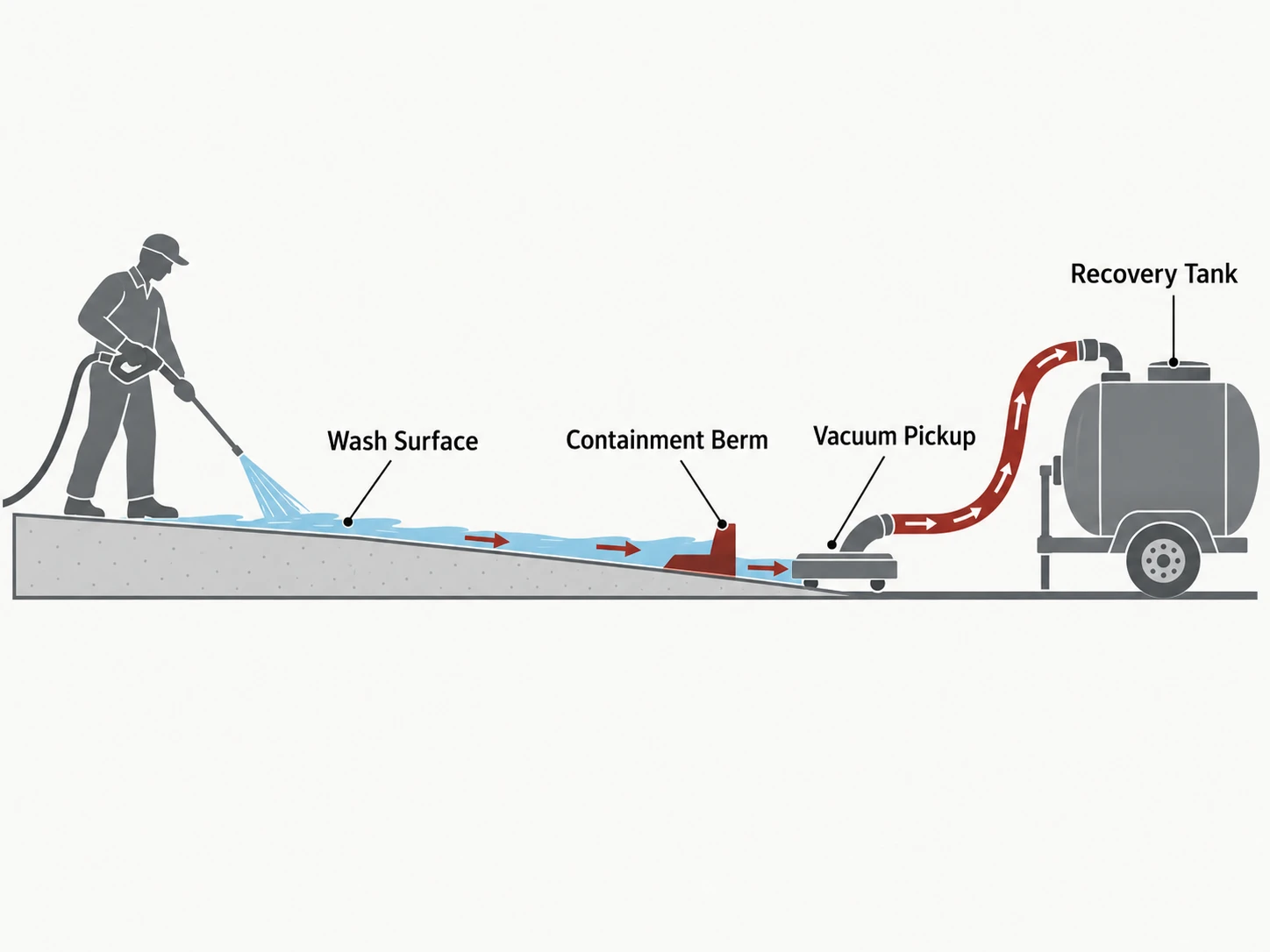
Compliant containment involves a series of steps to ensure that pressure washing wastewater does not enter the storm drain system or other water bodies. Proper containment can include the use of berms, sump pumps, and absorbent materials to collect and contain the wastewater. Once collected, the wastewater must be disposed of in an approved manner, such as through a sanitary sewer system or a permitted treatment facility.
Here is a comparison of compliant and non-compliant practices:
| Compliant Practice | Non-Compliant Practice |
|---|---|
| Use of berms and absorbent materials to contain wastewater | Allowing wastewater to flow freely into storm drains |
| Collection and disposal of wastewater through a sanitary sewer system | Discharging wastewater into the ground or water bodies |
| Regular inspection and maintenance of containment equipment | Neglecting to inspect or maintain containment equipment |
| Training and certification of staff on proper containment methods | Lack of training or certification for staff |
Ensuring that your contractor follows these practices is crucial for maintaining compliance and protecting your property from legal issues.
Questions to ask a contractor
When selecting a contractor for pressure washing, it is essential to ask specific questions to ensure they are knowledgeable and compliant with local regulations. Here are some key questions to consider:
-
Do you have experience with pressure washing in Miami-Dade County?
- Understanding local regulations and best practices is crucial for compliance.
-
What methods do you use to contain and manage wastewater?
- Look for detailed answers that include the use of berms, sumps, and absorbent materials.
-
How do you ensure that wastewater is disposed of properly?
- Proper disposal through a sanitary sewer system or permitted facility is required.
-
Can you provide references or examples of previous compliant jobs?
- While we cannot provide specific past jobs, references can help validate their compliance record.
-
What training do your staff receive on containment and disposal practices?
- Certified and trained staff are more likely to follow best practices and regulations.
By asking these questions, you can better assess a contractor's commitment to compliance and reduce your liability as a property owner. For more information on our services and how we ensure compliance, visit our commercial HOA services page or explore our guarantee.
Sources
Frequently asked questions
Can pressure washing water go down a storm drain?
No, pressure washing water cannot go down a storm drain. Under federal and local regulations, discharging wash water into storm drains is prohibited to prevent water pollution and protect the environment.
Do you need a permit to pressure wash commercially?
Yes, you need a permit to pressure wash commercially. Commercial pressure washing activities are regulated to ensure compliance with stormwater management and environmental protection standards.
Can wash water go into a storm drain?
No, wash water cannot go into a storm drain. Federal and local regulations prohibit the discharge of non-stormwater, including wash water, into storm drains to prevent pollution and protect water quality.
What is an illicit discharge?
An illicit discharge is any unauthorized release of non-stormwater into a storm drain system. This includes wash water, chemicals, and other pollutants that can harm the environment and violate local and federal regulations.
Is a permit required?
Yes, a permit is required for commercial pressure washing activities. This ensures that the activity complies with stormwater management and environmental protection regulations.
Who is liable, the contractor or the property owner?
Both the contractor and the property owner can be held liable for violations of stormwater regulations. It is important for both parties to ensure compliance with local and federal laws to avoid penalties and legal issues.