Commercial Exterior Cleaning (Hub)
Commercial Pressure Washing Services: What Is Included?
October 14, 2026 (updated) · 9 min read
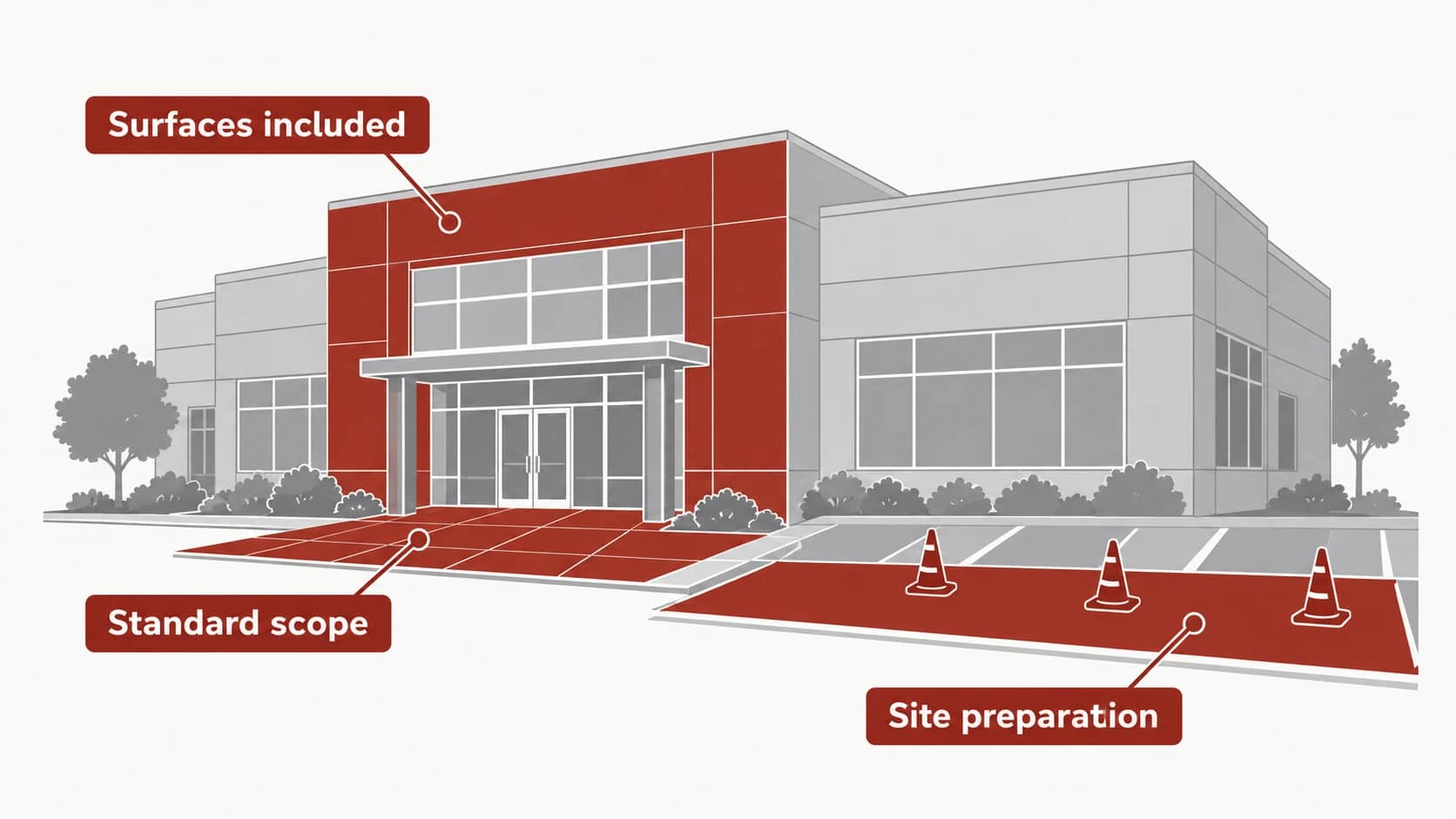
Commercial pressure washing services clean agreed exterior surfaces such as concrete walkways, entrances, loading areas, and suitable building walls. The service should also specify the cleaning method, site access, water arrangements, and any exclusions. Roofs, windows, stain removal, and delicate finishes need separate assessment rather than an assumption that they are included.
What commercial pressure washing services typically include
The usual scope is cleaning specified outdoor surfaces to remove loose soil, organic buildup, and surface grime. It may cover ground-level paving and selected building exteriors, but a property-wide wash is not an automatic part of the service. The written estimate should identify the areas closely enough that both sides can check the finished work.
For a South Florida property manager, that may mean the main entrance and pedestrian paths while leaving the parking structure, service yard, and upper walls for another visit. A hotel might prioritize guest approaches and outdoor seating areas. A condo board might ask for common walkways and a pool-deck perimeter, subject to the surface material and access rules.
| Area or surface | Common scope decision | Detail to confirm |
|---|---|---|
| Concrete sidewalks and entrances | Often included | Exact paths, edges, and areas kept open for pedestrians |
| Loading areas and dumpster pads | Often quoted as distinct areas | Grease, heavy stains, and wash-water handling |
| Pavers and patios | May be included | Joint condition and whether sealing is a separate service |
| Building walls | Depends on the finish | Material, height, access, and suitable cleaning method |
| Parking areas | Depends on size and operations | Vehicle moves, traffic control, and sections to be cleaned |
| Roofs, windows, and screen enclosures | Usually outside a standard pressure-washing scope | Whether a separate service or method is appropriate |
"Included" should describe a location and a cleaning task, rather than promise that every mark will disappear. Oil, rust, paint, and deeply set discoloration can need separate treatment or may remain visible. Ask the provider to identify those limits during the site review so the board or facilities team can approve a realistic scope.
Pressure washing is one part of a broader commercial exterior cleaning plan. If several surfaces need different methods, grouping them into one site review can make the boundaries clearer even when the work is quoted separately.
How the cleaning method changes by surface
The method should follow the material and the type of buildup. Controlled pressure can clean durable concrete, while softer finishes may need a low-pressure application and rinse. More force is not a substitute for choosing the right process.
Concrete paths often tolerate a method that would be unsuitable for painted trim or a vulnerable wall coating. Stucco, EIFS, aging mortar, and other sensitive finishes call for a closer assessment of the surface condition and water entry points. The building-washing method guide explains why a single setting should not be applied across every facade.
Commercial soft washing uses low-pressure application with a cleaning solution, followed by a gentle rinse. It can be appropriate where organic growth needs treatment and force could damage the finish. The trade-off is that the provider must account for the solution, surrounding plants, runoff, and any surfaces that should not receive it. See the commercial soft-washing guide for surfaces that warrant this approach.
Ask the provider to record the proposed method for each material, especially where walls meet doors, vents, electrical fixtures, or existing damage. A useful scope also distinguishes cleaning from repair. Washing can reveal a failed coating or deteriorated joint, but it does not fix one.
Client preparation checklist
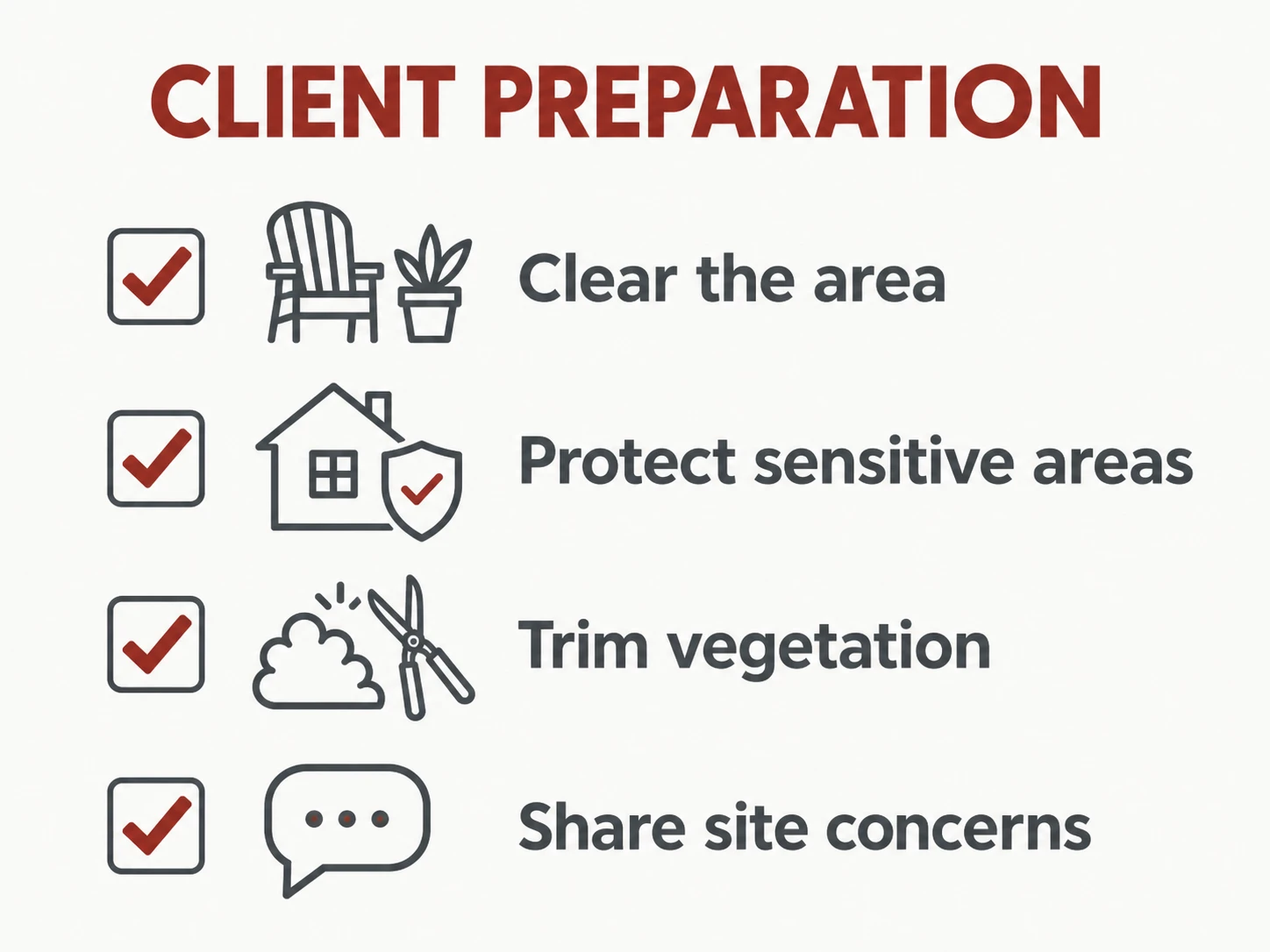
The client's main preparation task is to make the agreed areas accessible and identify what must stay dry or undisturbed. A short walk-through with the provider can settle responsibilities for vehicles, furniture, doors, and tenant communication. Record anything that cannot be moved before the work is scheduled.
| Before the visit | What to check |
|---|---|
| Confirm the marked work areas | Share a site plan or walk the boundaries with the provider. |
| Clear movable items | Arrange for furniture, planters, bins, and stored goods to leave the work zone. |
| Plan vehicle access | Identify spaces or lanes that must be empty and any loading activity that continues. |
| Check doors and openings | Make sure doors and windows in the work area close properly; flag known leaks. |
| Identify sensitive equipment | Point out outlets, lighting, cameras, signs, and equipment that need protection. |
| Coordinate occupants | Tell residents, tenants, staff, or vendors which entrances and paths may be affected. |
| Confirm site contacts | Name the person who can answer access and scope questions during the visit. |
For an occupied property, preparation is also a circulation problem. A clean walkway is of little use if residents or customers are directed through the active work area. Agree on an alternate route and how it will be communicated, particularly near entrances, ramps, and deliveries.
Do not assume the client must personally cover every fixture or decide which chemicals are suitable. Ask the provider what protection they will supply and what they need the property team to handle. This division belongs in the work plan, especially where landscaping or tenant equipment sits close to the cleaning area.
Water access and wash-water handling
A provider needs a workable water supply, a place to set up equipment, and a plan for where the used water will go. Confirm these details before the visit because hose routes and runoff can affect the areas that remain open. The estimate should state whether the property supplies water or a different arrangement is required.
Show the provider the available connection and any restrictions on using it. Identify locked utility areas, long hose routes, irrigation controls, and places where equipment could obstruct deliveries. If the property has no suitable connection, raise that during estimating rather than assuming water can be brought to the site.
Wash water deserves its own discussion. The EPA's storm-sewer rule requires municipal stormwater permittees to address illicit non-stormwater discharges, and Florida DEP administers the state's municipal stormwater program. The practical question for a cleaning job is how the provider will keep wash water from entering a storm drain where that discharge is prohibited.
Ask where nearby drains lead and how runoff will be contained or directed for the planned work. Cleaning a flat courtyard presents different challenges from washing a sloped loading area beside a drain. The Miami-Dade wash-water guide gives more context for discussing a site-specific plan.
What happens on the job day
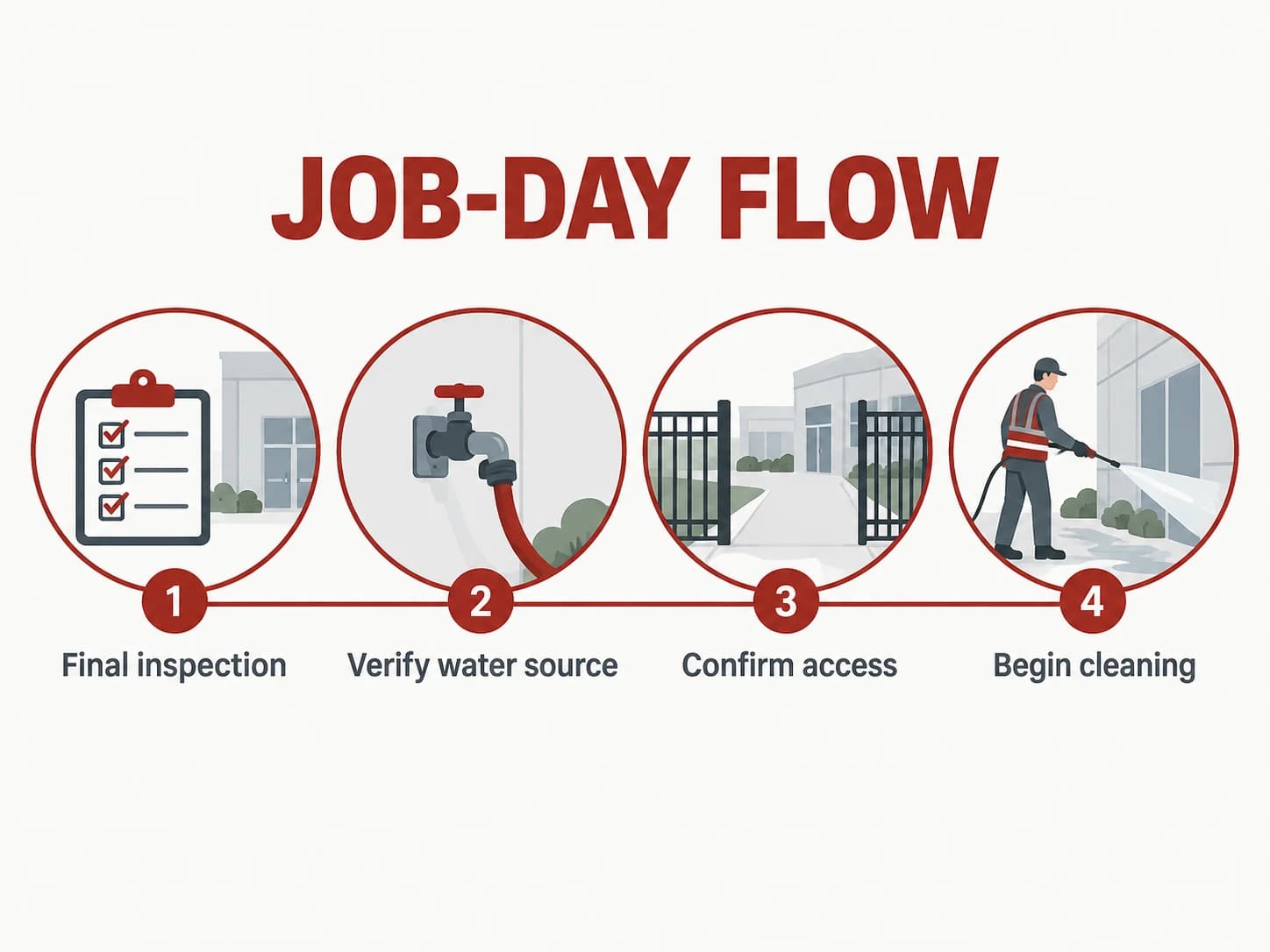
The job should start with a scope and access check, move through surface protection and cleaning, and end with a review of the agreed areas. The sequence may change around occupants, deliveries, or weather. A site contact should be available when a condition differs from the estimate.
First, the provider confirms the surfaces, water connection, access routes, and any areas that must remain in use. They should flag newly visible damage or a surface that calls for a different method before cleaning it. This is the point to resolve a blocked parking bay or a tenant item that has not been moved.
Next comes setup and cleaning by area. Work may be divided so people can still enter the property safely, with hoses and wet surfaces managed around those routes. Some buildup may require a cleaning solution or additional attention, while stains identified as unlikely to come out should remain documented as limitations.
Finally, the provider checks the cleaned areas and clears equipment. For a large or occupied site, a representative of the property should compare the result with the marked scope before the work is signed off. If an area was skipped because access was unavailable, record it as unfinished rather than treating it as an unexplained cleaning miss.
No generic timeline fits every commercial property. The area, soil level, surface condition, water access, and number of active entrances all affect sequencing. Ask for a schedule tied to the actual site, including which spaces need to be clear and when they can be used again.
What is usually excluded
A standard pressure-washing quote usually excludes work that needs another method, specialist access, repair, or a separate price. The exclusion list should be specific to the property. It prevents "building exterior" from being read as every surface from the sidewalk to the roof.
Roof cleaning is a separate decision. For asphalt shingles, the Asphalt Roofing Manufacturers Association's algae bulletin warns against power washing or brushing because high pressure is likely to damage the roofing material. Roof material and condition need their own assessment; do not add a roof to a ground-level pressure-washing scope by implication.
Window washing is also distinct from rinsing nearby walls. Clean glass may require different equipment, access, and attention to spotting. Painted finishes and screen enclosures should not be listed as pressure-washing surfaces. Graffiti removal, sealing, coating, repairs, and removal of deep stains likewise need an explicit agreement if requested.
Read the exclusions alongside the inclusions. "Parking lot" might mean traffic lanes but not oil treatment in individual spaces; "facade" might mean reachable walls but not signs or glazing. A clear estimate names those boundaries and explains any likely remaining marks before work starts.
How to review the finished work
Review the job against the surfaces and limitations agreed before cleaning. Check for missed sections, visible residue that should have been addressed, and areas left inaccessible or unfinished. Give the provider a chance to explain whether a remaining mark is a stain limitation or a cleaning miss.
Walk the route a visitor or resident would take, then check less visible corners named in the scope. Look at transitions between cleaned and uncleaned sections, around fixed objects, and along edges where buildup can remain. Confirm that equipment and temporary protection have been removed and that access routes are usable.
Photographs and a marked site plan can make the discussion precise, especially for a board or facilities team reviewing work across several buildings. If a new problem is found, identify its location and the agreed task it relates to. Keep any request for additional stain treatment or repair separate from correction of the original cleaning scope.
Frequently asked questions
What is included in commercial pressure washing?
It usually includes cleaning the exterior areas named in the estimate, commonly concrete walks, entrances, loading areas, parking sections, and suitable building surfaces. The quote should identify each area, the method proposed, and any stain limitations. Roofs, windows, sealing, repairs, and delicate finishes should be assessed separately instead of assumed to be included.
What is the cost of pressure washing?
Commercial pressure washing cost depends on the measured area, surface material, soil or staining, access, water arrangements, and work needed to manage an occupied site. A useful comparison looks beyond the total and checks which areas and tasks each quote includes. For a closer look at pricing factors, see the Miami commercial pressure-washing cost guide.
Do building walls need pressure washing or soft washing?
The wall material and its condition determine the method. Durable surfaces may allow controlled pressure, while coatings, stucco, EIFS, and other sensitive finishes may call for a lower-pressure approach. Ask for the proposed method by surface and for any areas with loose material, open joints, or water entry concerns to be assessed before cleaning begins.
Are roofs included in a commercial pressure-washing service?
A roof should be treated as a separate scope with a method suited to its material. In particular, ARMA warns that power washing is likely to damage asphalt roofing. If roof discoloration is a concern, ask for a roof-specific assessment rather than adding it to a walkway or facade cleaning request.
How should a property prepare for the visit?
Clear the agreed work areas, coordinate parked vehicles and movable items, and tell the provider about sensitive equipment, leaks, and restricted access. Confirm the water connection and identify an on-site contact who can resolve questions. At an occupied property, communicate any changes to entrances, walking routes, and loading areas before work begins.
Sources
For a property-specific scope, review 2Clean's pressure-washing service and request a quote that identifies the surfaces, access needs, and exclusions.
Custom Commercial & HOA Walkthroughs
Need a scope tailored to your South Florida property?
Every building, plaza, and community has its own surface mix, access windows, and drainage layout. We quote by walkthrough rather than fixed rate sheets so your proposal matches your exact property. Call us directly at (904) 826-9806 or request a written scope online.
Related services & tools
Pressure Washing by South Florida city: