Commercial Exterior Cleaning (Hub)
Exterior Building Cleaning: Choosing Methods for Stucco, EIFS, Concrete and Glass
October 14, 2026 (updated) · 11 min read
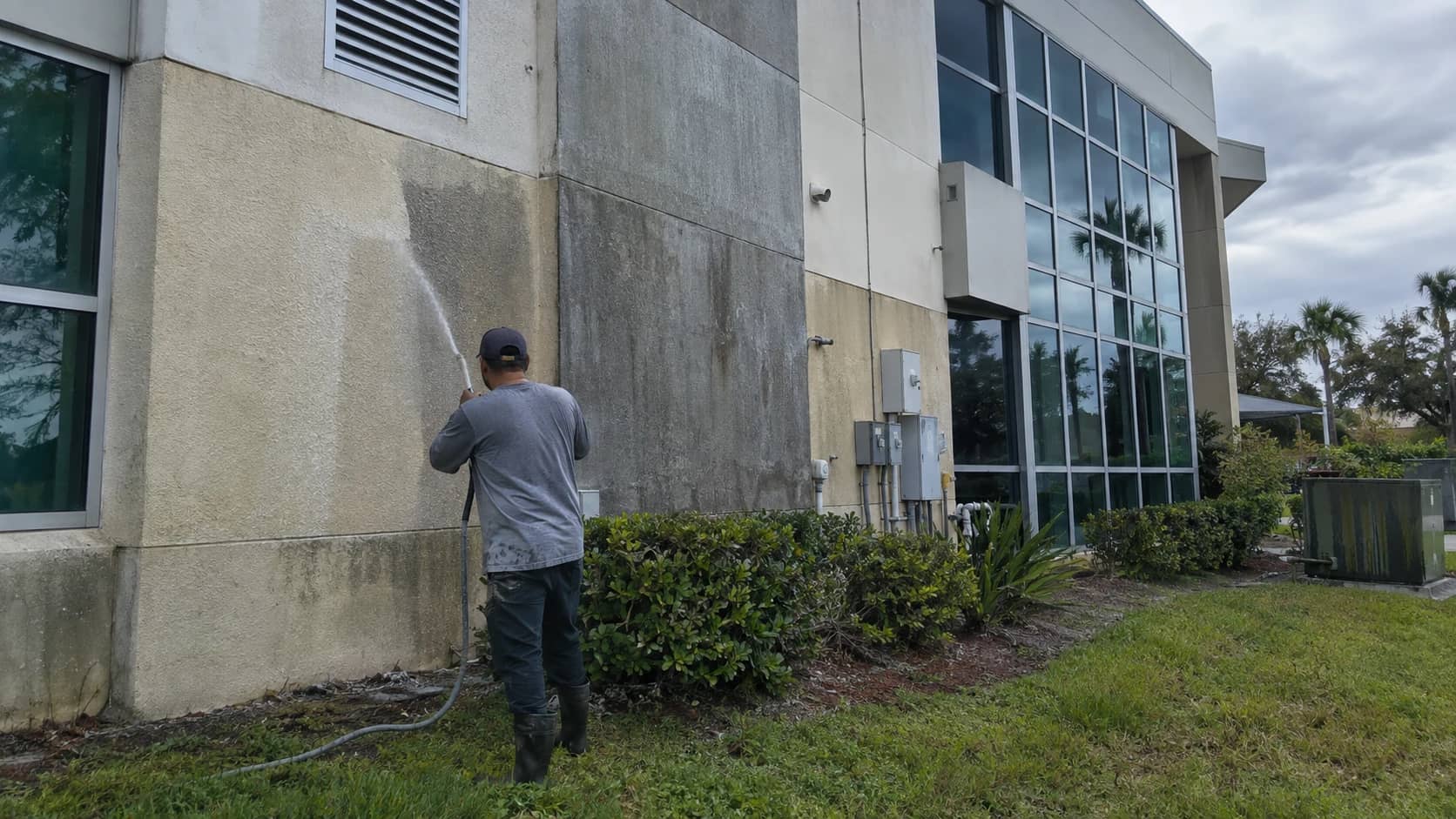
Exterior building cleaning works best when the method follows the surface, its condition and the type of soil. Stucco and EIFS usually call for controlled, low-pressure cleaning; sound concrete may tolerate more mechanical force; and glass needs its own process. Identify each material and test the proposed method before washing a whole facade.
Exterior building cleaning methods by surface
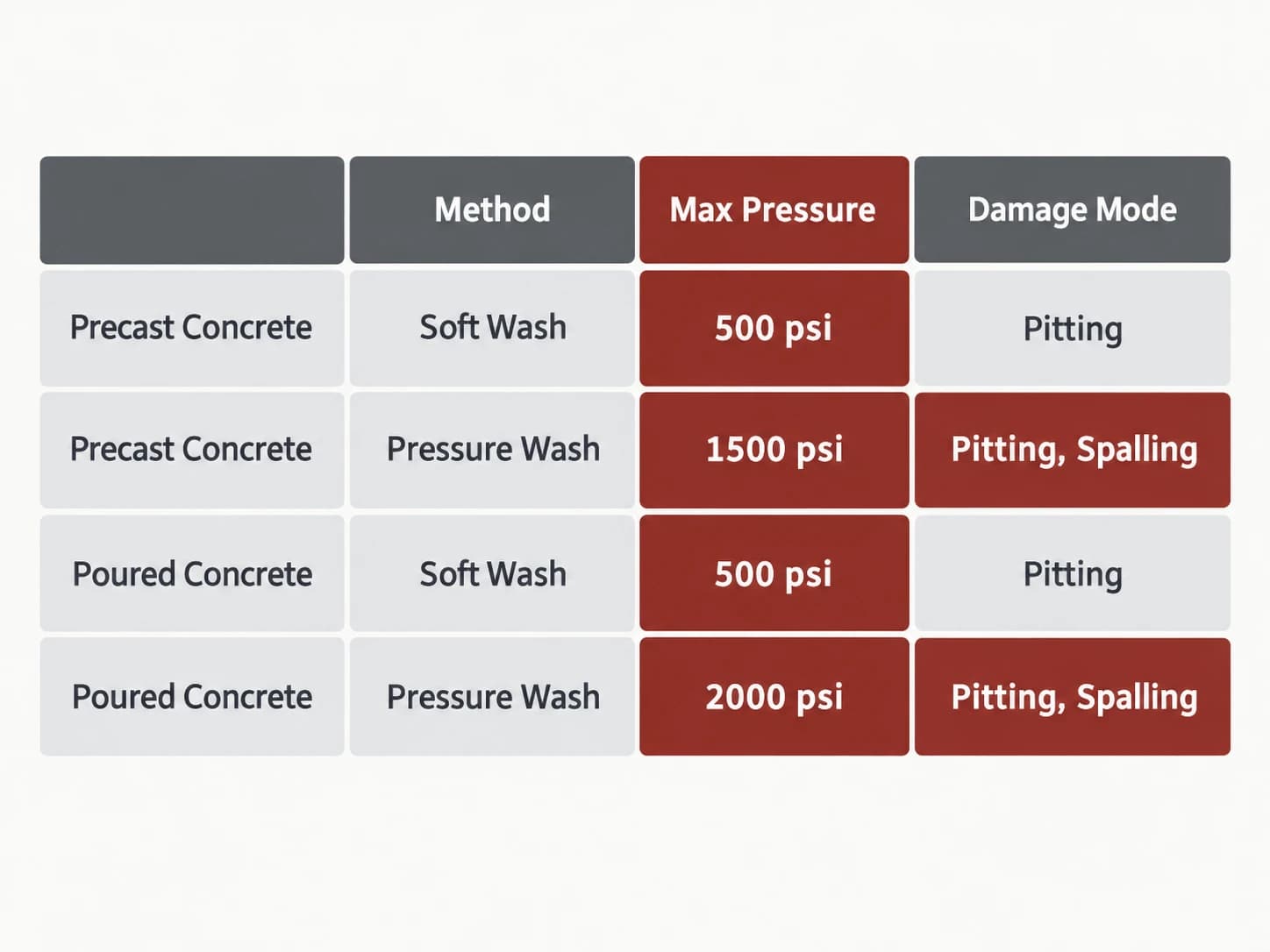
The useful starting point is a surface-by-surface method choice, not a single pressure setting for the whole building. Pressure at the machine does not tell you what the wall experiences: nozzle choice, distance, spray angle and the condition of the finish all affect the result. The matrix below is a planning guide, subject to the wall system manufacturer's instructions and a test area.
| Surface | Starting method | Main risk to check |
|---|---|---|
| Painted or traditional stucco | Suitable cleaner and a controlled, gentle rinse | Loose paint, worn texture and water entry at cracks |
| EIFS | Manufacturer-compatible cleaner and low-pressure application and rinse | Damage to the finish coat, joints or existing repairs |
| Sound, uncoated concrete | Test a cleaner and controlled pressure where needed | Etching, exposed aggregate and weakened areas |
| Glass curtain wall | Glass-compatible cleaning with separate attention to frames and seals | Scratches, residue and chemical contact with adjacent materials |
| Anodized aluminum | Finish-compatible cleaner and gentle agitation where approved | Discoloration or damage from an unsuitable cleaner |
A stained wall may need more chemical dwell time or careful agitation rather than more force. A cracked or peeling wall may need repair before cleaning at all. For a broader view of how washing fits into a property plan, see the commercial exterior cleaning guide for Miami property managers.
Identify the wall system before cleaning
A visual survey can locate changes in finish, but appearance alone may not establish what is beneath a coating. Confirm the wall assembly from drawings, maintenance records or the manufacturer when those records are available, especially where a textured finish could be either traditional stucco or EIFS. Mark uncertain areas for closer inspection before the crew sets a method.
Traditional stucco is a cement-based finish applied over a supporting assembly. EIFS is a layered system with insulation beneath a comparatively thin reinforced finish. Both can have a similar texture or paint color, so a quick look from the ground is a weak basis for treating them alike.
Walk the elevations and record cracks, failed sealant, peeling paint, patches, staining beneath openings and places where water may already be entering. Note which marks are surface soil and which appear to come from leaks or corrosion. Cleaning can remove the former, but the latter may return until its source is addressed.
Ask the contractor to explain how they identified each surface and where they will make a test area. The test should show the expected appearance after drying, including whether cleaning reveals uneven paint, repairs or older staining. Photographing the same area before and after the test gives the board or facilities team a useful basis for approving the full scope.
Stucco cleaning and painted finishes
Stucco cleaning should remove growth and deposited soil without cutting into the texture or forcing water through cracks. On painted stucco, the paint condition matters as much as the underlying material. A low-pressure application of a compatible cleaner, followed by a controlled rinse, is a sensible starting method.
A rough surface can hold soil in its recesses. That does not mean a narrow, forceful spray is appropriate: it can leave visible lines, loosen weak paint or erode the finish. A cleaner needs enough contact time to work, but it should not dry on the wall. The crew should work in manageable areas and adjust the process based on the test result.
Check walls below windows, balconies and roof edges before approving washing. Streaks in these locations may reflect an ongoing drainage or sealant problem. If paint is already chalking or peeling, record that condition and agree on what cleaning can reasonably remove without pulling away more coating.
The phrase "pressure wash the building" is too broad for a stucco scope. Request a description of the cleaner, application method, rinse method and precautions at cracks, openings, vents and electrical fittings. The commercial soft washing guide explains where low-pressure methods fit within a larger exterior maintenance plan.
EIFS cleaning and visible damage
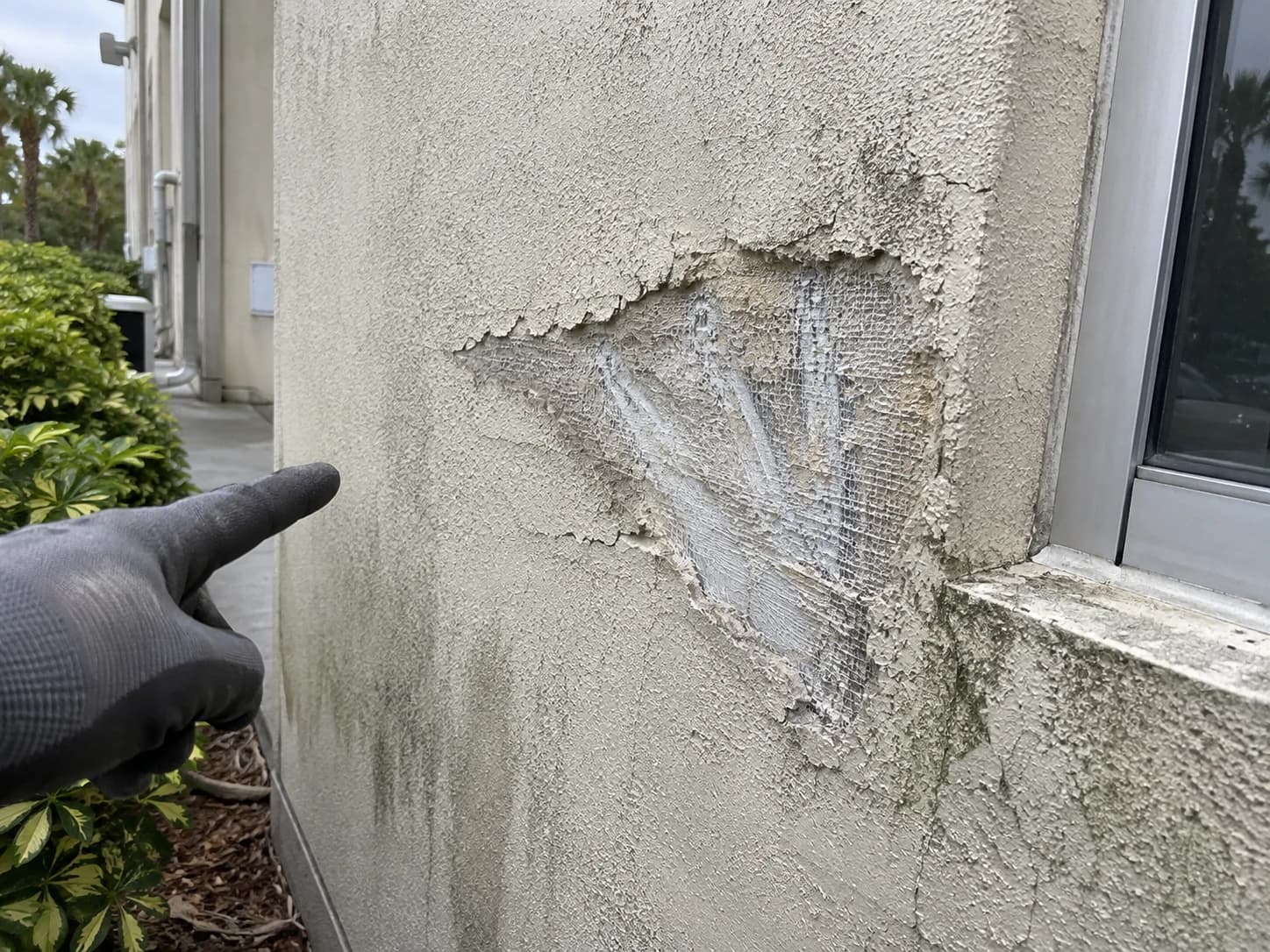
EIFS cleaning needs a method compatible with the specific wall system and its condition. A concentrated spray can damage the thin finish coat or exploit an existing crack, joint failure or repair. Treat visible damage as a reason to pause and assess the wall, not as a stain to wash more aggressively.
EIFS is an assembly, so the consequences of a poor method extend beyond appearance. If water reaches a vulnerable opening, cleaning can add moisture where the wall was not designed to receive it. Dark streaks around windows, joints or penetrations deserve inspection before a crew applies cleaner across the elevation.
Obtain the manufacturer's maintenance instructions where possible. Ask the contractor to identify the proposed solution, how it will be applied, how long it will remain wet and how it will be rinsed. A small test area should confirm that the finish stays intact and that the cleaner does not change its color or texture.
Low pressure is a method description, not permission to ignore chemistry or detail work. An unsuitable solution can still affect a finish, while a gentle rinse cannot correct a failed sealant joint. The soft washing service page describes the type of cleaning approach to discuss, with the final method governed by the wall's specifications and condition.
Precast and poured concrete
Sound concrete can often accept more mechanical cleaning than stucco or EIFS, but its finish and condition still set the limit. Begin with the soil: biological staining, exhaust deposits and loose dirt may need different cleaners or agitation. Test the least aggressive approach that achieves an even result.
Precast panels may have an architectural finish that a forceful spray can mark. Poured concrete may include repairs, coatings, exposed aggregate or weathered areas that respond differently from the surrounding wall. A method that cleans one section evenly can leave another with visible bands or a changed texture.
Inspect joints and cracks before work begins. Directing water into an opening does not fix the opening, and removing surface soil may make old repairs more noticeable. Where a panel has spalling or loose material, isolate that area for assessment rather than treating it as ordinary dirt.
The scope should distinguish vertical concrete walls from sidewalks, loading areas and other flatwork. They have different soils, finishes and runoff paths. The guide to commercial pressure washing services can help define which surfaces belong in a washing proposal.
Glass curtain walls and metal frames
Glass curtain walls need a cleaning plan for glass, frames, seals and nearby finishes. A method suitable for the pane may leave residue on anodized aluminum or carry cleaner onto a sensitive wall below. Specify the materials separately and check the facade manufacturer's care instructions.
On glass, the aim is to lift soil without dragging grit across the surface or leaving spotting. Frames and gaskets need attention to cleaner compatibility and rinse control. Avoid assuming that an exterior wall wash automatically includes the level of detailing expected from window cleaning.
Access also shapes the method. The contractor should describe how each elevation can be reached and how adjacent entrances, planting and pedestrian routes will be protected. For buildings with extensive glazing, the South Florida commercial window cleaning guide covers access and salt-air considerations in more detail.
Plan facade cleaning by elevation and exposure
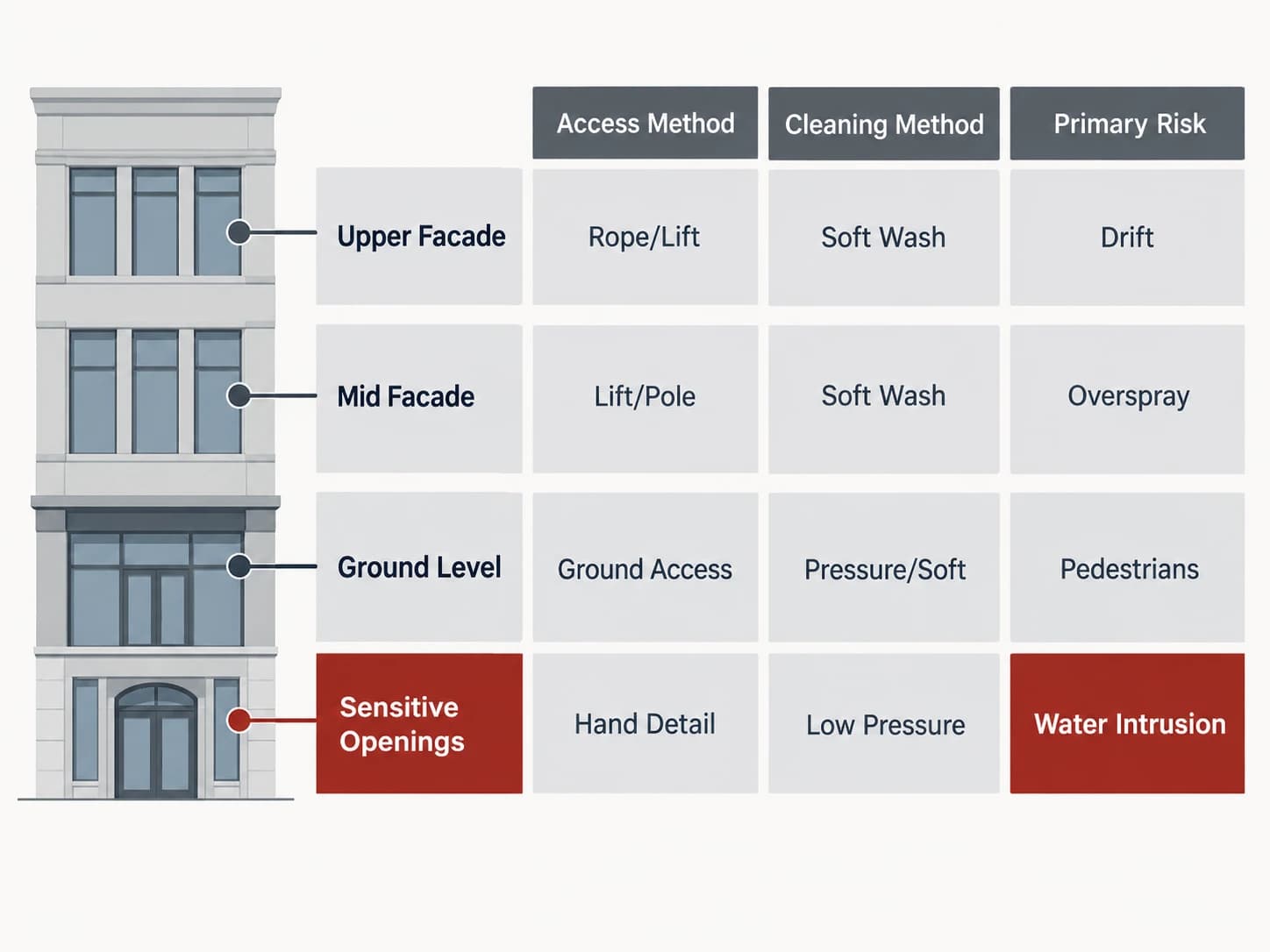
Divide the facade into zones before choosing a sequence of work. One elevation may combine stucco, EIFS, concrete bands, glass and metal, while another has different shade, runoff or access conditions. A zone plan helps the crew change methods where materials change and helps the property team review the proposal.
Mark entrances, balconies, signs, loading areas, landscaping and places where runoff will travel. Include areas beneath ledges and around openings, where staining may be heavier. The plan should identify sensitive surfaces below the work so a cleaner used above does not wash onto an incompatible finish.
South Florida exposure can make one side of a property look different from another. Shade and persistent moisture may favor visible growth, while road-facing areas may collect more deposited grime. Treat those observations as reasons to inspect and tailor the cleaning, not as a basis for assuming every stain has the same cause.
Plan access and occupant communication around the zones. Hotel, retail and condo properties may need clear pedestrian routes and protected entrances while work proceeds. Confirm who moves furniture or other items from the work area and who checks that the area is ready to reopen after rinsing.
Choose cleaners, dwell time and runoff controls
A cleaner should match the soil and the surface, then be given enough wet contact time to work as its label and the material guidance allow. More pressure cannot compensate for an unsuitable solution. Test the complete process, including the rinse, on each distinct finish.
Ask how the contractor will keep cleaner from drying on hot or exposed sections and how they will prevent overspray onto glass, metal, plants and painted details. Dwell time is a controlled part of the method, not a fixed promise that applies to every wall. The test area can reveal whether a solution leaves residue or changes the finish.
Wash water also needs a route that has been considered in advance. US EPA rules require municipal storm sewer permittees to address illicit non-stormwater discharges, and Florida DEP administers the state's municipal stormwater program. The contractor should explain how runoff will be contained or managed for the site rather than assuming a nearby storm drain is an acceptable destination.
Chemical selection should remain specific to the building. A roof-cleaning bulletin, for example, is not a stucco or EIFS specification. Use the wall system instructions and cleaner label for compatibility, and have the contractor explain any proposed substitution before application.
What the cleaning scope should specify
A useful scope tells the property team what will happen at each surface and what conditions could change the work. It should name the substrates, the soils being addressed, the proposed method and the areas excluded pending repair or further inspection. "Wash all exterior walls" leaves too much to interpretation.
| Scope item | Detail to request |
|---|---|
| Surface map | Materials and cleaning zones on each elevation |
| Existing condition | Cracks, loose coatings, failed joints and known leaks |
| Test area | Location, approval process and expected appearance after drying |
| Method | Cleaner, application, agitation and rinse approach for each surface |
| Protection | Openings, glass, metal, landscaping and occupied areas |
| Runoff | Where wash water will go and how it will be managed |
| Closeout | Inspection process and treatment of areas that remain stained |
Ask for limitations in plain language. Some stains may be embedded in a coating, caused by active water entry or associated with material damage. A contractor should say which marks are unlikely to come out before work begins so the board can distinguish a cleaning result from a repair need.
The scope should also state who approves a change if the test area exposes loose paint, damaged EIFS or a different substrate than expected. That decision point prevents an unsuitable method from being carried across the facade. It gives the property manager a record of why a zone was cleaned, adjusted or deferred.
Frequently asked questions
What is best to clean outside of a house?
The same principle used on commercial buildings applies: identify the siding or wall finish, check its condition and choose a compatible cleaner with a gentle rinse as the starting point. Stucco, EIFS, painted surfaces, glass and concrete should not automatically receive the same treatment. Test a small area, and address cracks or loose coatings before washing across them.
Can stucco be pressure washed?
Stucco can be damaged by a concentrated spray, especially where paint is loose or the surface is cracked. A controlled, gentle rinse with a compatible cleaner is usually the better starting point. If a contractor proposes more mechanical force for a particular stucco finish, ask them to demonstrate the result on a test area and explain how they will protect openings.
Can EIFS be pressure washed?
EIFS should be cleaned according to the wall system manufacturer's guidance, using a method that protects its finish and joints. Do not treat it like bare concrete. Before cleaning, identify cracks, damaged patches and failed sealant that could admit water. A low-pressure application and rinse may be appropriate, but the cleaner and the condition of the wall matter too.
What is the difference between soft washing and pressure washing?
Soft washing relies on a compatible cleaning solution and a low-pressure application and rinse to loosen and remove soil. Pressure washing uses more mechanical force from water and may suit some sound, durable surfaces. Neither term is a complete specification: the cleaner, nozzle, distance, dwell time, surface condition and test result determine whether the proposed process fits the facade.
How often should a commercial building exterior be cleaned?
Set the schedule from inspections rather than applying one interval to every elevation. Soil, shade, drainage, material, nearby traffic and the appearance standard of the property all affect when cleaning is useful. Record which zones become stained first and check whether recurring streaks indicate a leak or drainage issue. Cleaning that underlying cause may matter more than washing more often.
What chemicals do professionals use to clean roofs?
The answer depends on the roofing material and its manufacturer's guidance. For asphalt roofing affected by algae, the Asphalt Roofing Manufacturers Association describes a sodium hypochlorite solution followed by a gentle rinse and warns that power washing is likely to damage the roofing. That roof guidance should not be transferred to stucco, EIFS or glass without checking each material's requirements.
Sources
For a surface-by-surface proposal for a South Florida property, review 2Clean's commercial and HOA exterior care and share the building's materials, condition and access needs.
Custom Commercial & HOA Walkthroughs
Need a scope tailored to your South Florida property?
Every building, plaza, and community has its own surface mix, access windows, and drainage layout. We quote by walkthrough rather than fixed rate sheets so your proposal matches your exact property. Call us directly at (904) 826-9806 or request a written scope online.
Related services & tools
Pressure Washing by South Florida city: