Cost & Budget
Commercial Pressure Washing Cost in Miami: Rates, Scope and Bid Comparison
October 29, 2026 (updated) · 11 min read
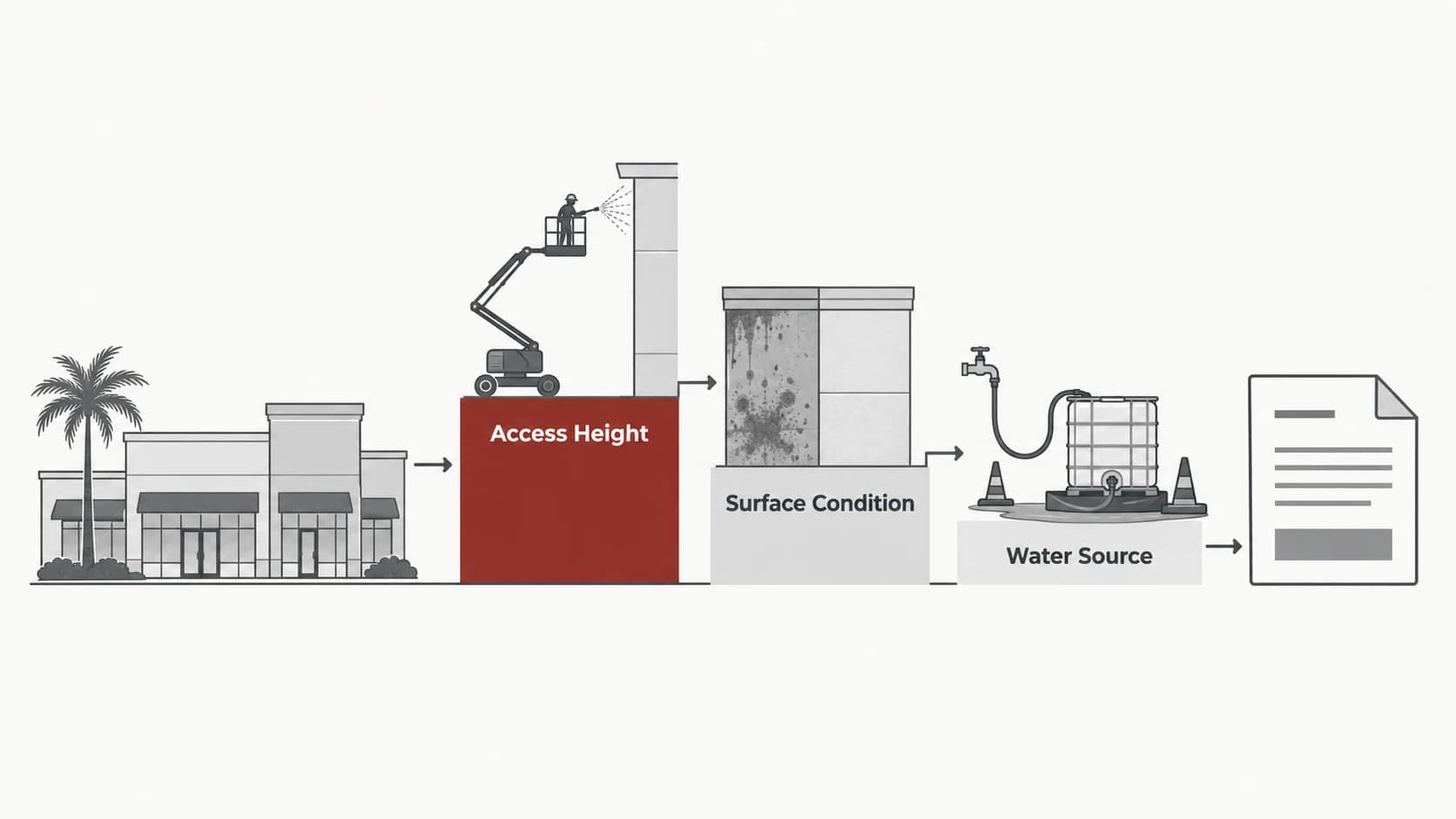
Commercial pressure washing cost starts with the area and work required. HomeGuide's commercial price guide (Oct 9, 2025) lists $0.10 to $0.35 per square foot for basic work and $0.40 to $1.00 for intensive cleaning. These are third-party benchmarks, not Miami quotes; access, stains, water handling and scheduling determine the bid for your property.
Ready to scope an actual property? Review our commercial pressure cleaning in Miami for surfaces, access and recurring-work questions. 2Clean provides a written property estimate after reviewing the scope.
Commercial pressure washing cost by surface
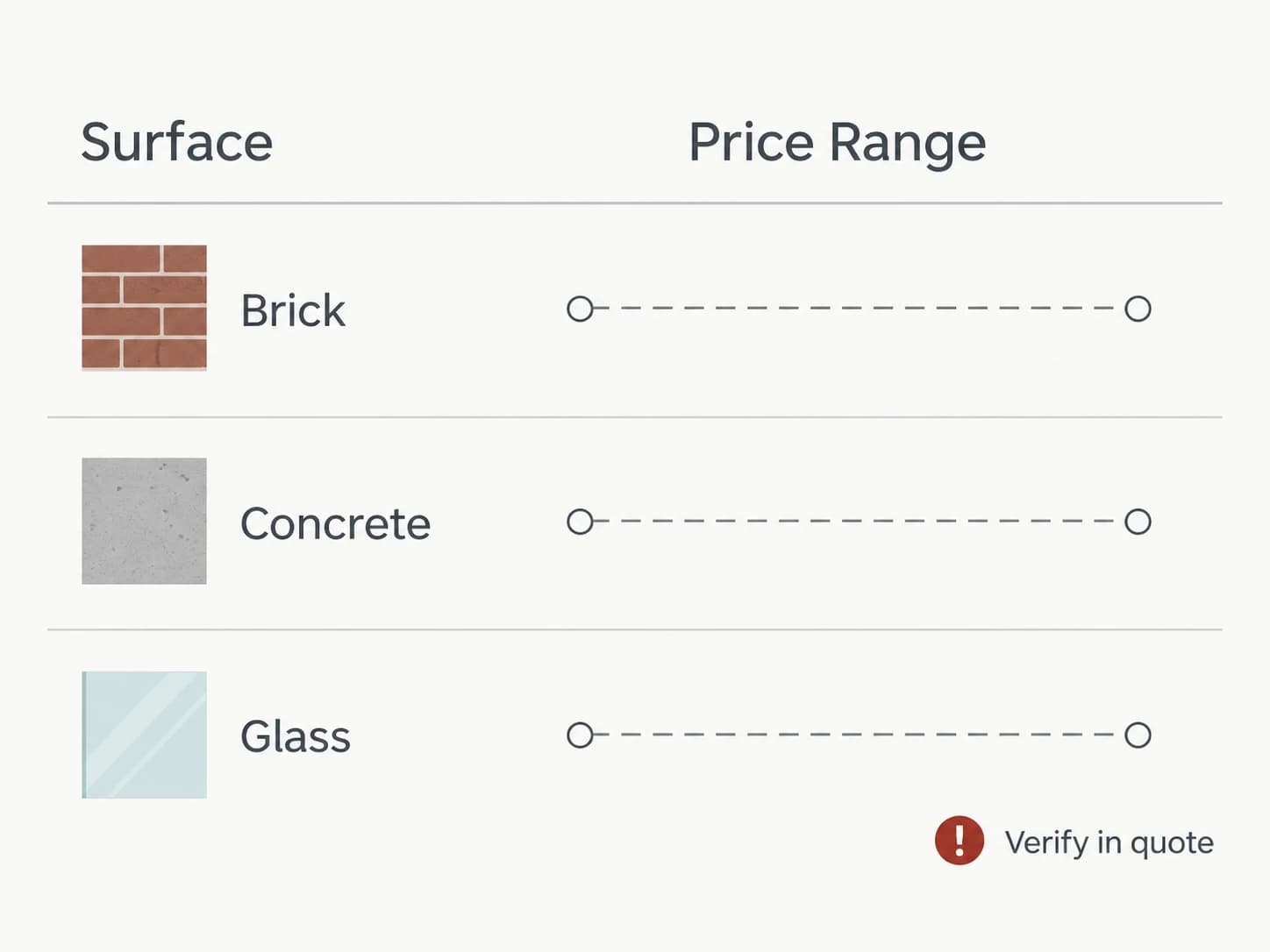
Pressure washing prices per square foot for commercial properties change with the surface and the work needed to clean it. HomeGuide's commercial price guide (Oct 9, 2025) publishes the ranges below; they are broad reference points, not rates offered by 2Clean.
| Area or work | Published benchmark | What to check in the scope |
|---|---|---|
| Basic commercial cleaning | HomeGuide (Oct 9, 2025) lists $0.10 to $0.35 per square foot. | Confirm which sidewalks, storefronts and exterior walls are included. |
| Intensive cleaning | HomeGuide (Oct 9, 2025) lists $0.40 to $1.00 per square foot. | Identify grease, graffiti or heavy staining before bids are prepared. |
| Sidewalks and walkways | HomeGuide (Oct 9, 2025) lists $0.10 to $0.30 per square foot. | Mark entrances, covered walks and areas obstructed by furniture. |
| Building exteriors | HomeGuide (Oct 9, 2025) lists $0.15 to $0.90 per square foot. | Specify the wall material, height and cleaning method. |
| Parking garages | HomeGuide (Oct 9, 2025) lists $0.10 to $0.25 per square foot. | Define levels, drainage, vehicle access and oil-stained areas. |
| Dumpster pads | HomeGuide (Oct 9, 2025) lists $0.75 to $1.00 per square foot. | Define the pad boundary and how wash water will be managed. |
Those categories should stay separate in a budget. A mostly open walkway and a grease-stained service area may have similar measured areas but require different preparation, cleaning and water handling. Combining them under one square-foot rate hides that difference.
The same caution applies to material. Concrete flatwork may be suitable for pressure washing, while a painted wall or delicate finish may call for another method. Ask what result the contractor expects on each surface and what staining may remain. For the broader scope choices, see the commercial exterior cleaning guide.
How contractors measure the area
The rate means little until you know what area it covers. Ask for the measurement basis beside every square-foot line item, then check that the drawing or marked photographs match the surfaces you want cleaned.
For flatwork, the measured area is generally the surface to be washed. A quote should show whether planters, parked equipment, covered sections and inaccessible corners are included or excluded. Irregular areas can be divided into simpler shapes, but bidders should use the same boundaries.
For a facade, building footprint and wall area describe different things. The footprint measures the building's ground-level outline; it does not measure all the wall surface above it. A facade quote should identify the elevations and cleaning limits, including how windows, doors and recessed areas were treated in the measurement. Neither measurement is useful on its own if the actual work is unclear.
Some bids are more sensibly priced by the job or by time. That can apply where equipment setup dominates a small area, or where mixed surfaces and difficult access make an area rate misleading. HomeGuide's commercial price guide (Oct 9, 2025) lists $50 to $150 per hour for inaccessible or mixed jobs, while HomeGuide's operator pricing guide (Dec 17, 2025) lists minimum job charges of $150 to $400. A flat or hourly bid still needs a clear scope and a stated basis for additional work.
What changes a Miami commercial quote
The main cost drivers are access, surface condition, cleaning method, water handling and the available work window. Describe these before contractors bid so differences in their totals reflect their proposed work rather than different assumptions.
| Cost driver | What to tell bidders | Why it changes the work |
|---|---|---|
| Access | Identify upper elevations, narrow passages, vehicle conflicts and restricted staging space. | Reaching and protecting the work area may require more setup or equipment. |
| Surface condition | Point out grease, gum, algae, graffiti and stains you especially want addressed. | These may need targeted treatment or more time than general soil. |
| Material and finish | List concrete, pavers, stucco, brick, painted areas and other relevant surfaces. | The method must suit the material; stronger pressure is not always appropriate. |
| Water and drainage | Show available water connections and where runoff can travel. | Supply and water management may change the setup and scope. |
| Work window | State tenant, guest, delivery and vehicle restrictions. | Limited access hours can affect staffing, sequencing and completion. |
South Florida sites also differ in exposure and use. A shaded walkway, a busy hotel entrance and an open parking area can collect different soils even when they sit on the same property. A site walk lets bidders identify those differences and propose a method for each area. The guide to Miami pressure washing conditions explains why local conditions belong in the scope.
Ask how the contractor will deal with wash water before accepting a bid. The US EPA's stormwater rule requires municipal storm sewer permittees to address illicit non-stormwater discharges. Site drainage and the planned cleaning method determine what water controls need to be discussed; a line saying "pressure wash all areas" does not answer that question.
What an itemised quote should show
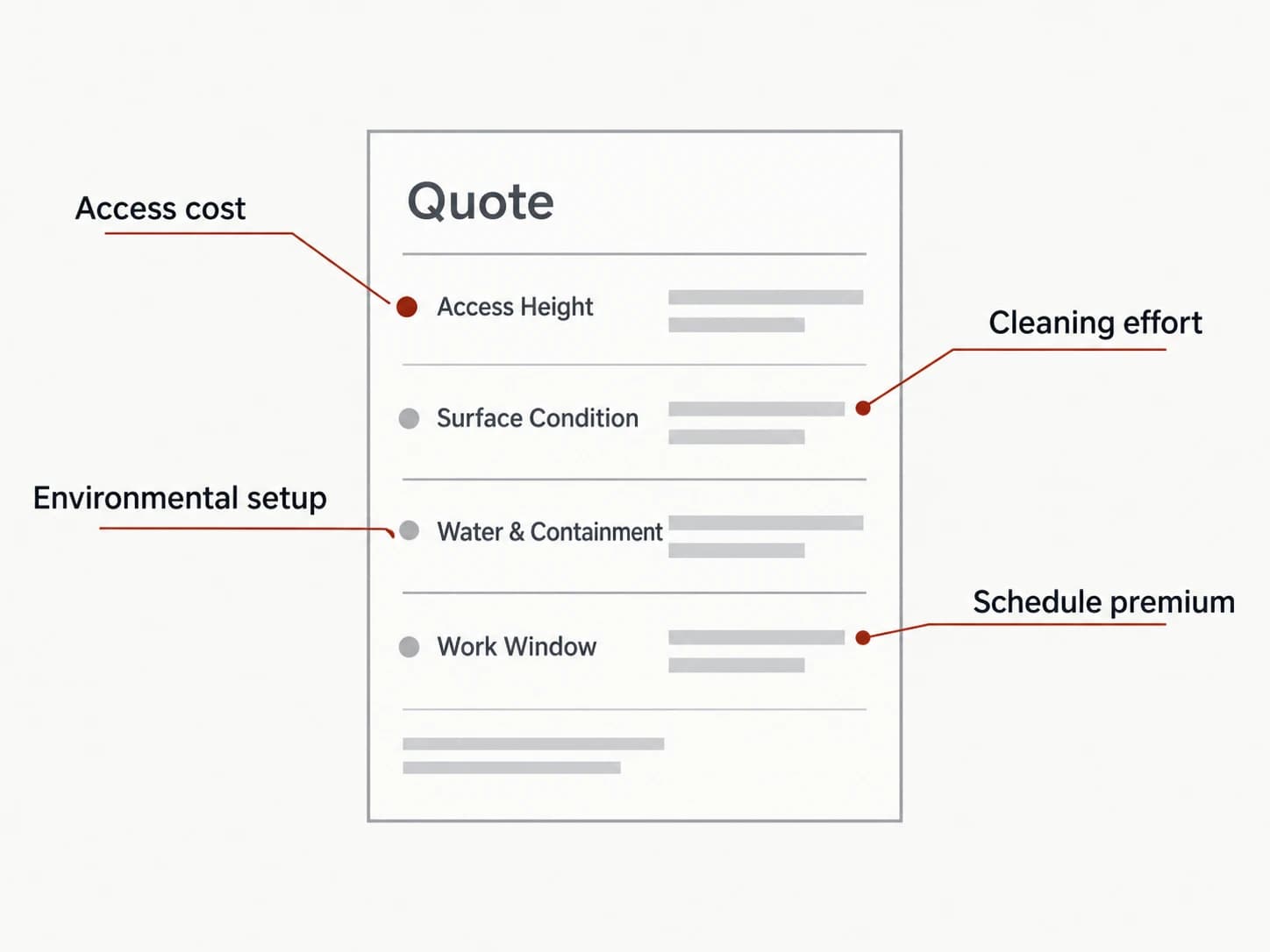
An itemised quote should connect its total to defined surfaces and tasks. It need not charge separately for every small action, but you should be able to see what is included, what is optional and what would require a scope change.
Start with a property map or marked photographs. The quote should name each cleaning area, its measurement or other pricing basis, the surface material and the proposed method. It should identify stains receiving special treatment and state whether the aim is routine cleaning or a more intensive result. If a stain may remain, that limitation should be explained before the work is approved.
Next, look for access and operating assumptions. These include any lift or other access equipment, areas that must be cleared, water availability, drainage or containment arrangements, and the hours in which the crew can work. A hotel entrance that cannot close during guest traffic is a different assignment from an empty service yard, even if the surfaces measure alike.
Finally, separate related work. Paver sealing, roof cleaning and window cleaning should be named as separate services when requested, with their own scope. Washing a wall does not automatically include cleaning its glass. The same applies to sealing pavers after cleaning. The pressure washing service page describes the core service; your written quote should define its boundaries for the property at hand.
A useful quote also says how changes are handled. Hidden damage, inaccessible sections or added areas may justify a revised scope, but the manager should be able to review the change before the work proceeds. That makes the estimate a practical approval document, not merely a total at the bottom of a page.
How to get comparable bids
Send every contractor the same brief and ask them to mark exceptions in writing. That gives your board or facilities team a clearer comparison than collecting totals from separate site conversations.
Use this checklist before requesting bids:
| Put this in the bid brief | Ask the bidder to return |
|---|---|
| Marked areas to clean, including exclusions | A matching area list and measurement basis |
| Surface materials and known sensitive finishes | The cleaning method proposed for each |
| Priority stains and desired result | Treatment assumptions and likely limitations |
| Water connections, drains and site restrictions | Water handling and access plan |
| Available work hours and areas that must stay open | Proposed sequence and any scheduling charge |
| Optional services requested | Separate prices and scopes for those options |
Arrange a site walk where photographs cannot show access, drainage or the condition of a surface. Share the same answers to follow-up questions with all bidders. If one contractor proposes soft washing a wall and another proposes pressure washing it, compare the reasons and expected finish before comparing their totals. The commercial soft washing guide explains where a gentler method may be appropriate.
When bids arrive, compare the included area, proposed method and total for each line. Flag a missing wall elevation, a different garage boundary or an allowance that has not been defined. A low square-foot figure can become a higher project total once omitted work is added; a higher figure may already include difficult access or stain treatment. Ask for revised bids against one settled scope if the differences are material.
Work windows, minimum charges and separate services
Small jobs and restricted schedules can make a simple area calculation unreliable. Ask whether the quote has a minimum charge, whether the requested hours affect it, and what can be cleaned while the property operates.
A compact storefront area still requires travel, setup, protection and cleanup. HomeGuide's operator pricing guide (Dec 17, 2025) lists minimum job charges of $150 to $400. That published range explains why multiplying a small area by an advertised square-foot rate may produce an unrealistic budget; it is not a minimum charged by 2Clean.
Night or weekend work may change a quote, but there is no sound universal premium to add to a spreadsheet. Some properties need work after guest or customer traffic; others can provide clear daytime access by closing a section in stages. Give bidders the permitted hours and ask them to show any scheduling effect in the written total. This keeps the decision tied to actual disruption at your site.
Separate services also need separate comparisons. Paver cleaning followed by sanding and sealing has a different scope from washing alone. Window cleaning may be measured by glass area or window count, while roof cleaning requires its own material-specific plan. For those decisions, use the commercial paver cleaning and sealing budget guide and ask each bidder to state exactly where the pressure washing scope ends.
Worked bid comparison: a parking garage
A real public bid comparison shows why a manager should investigate a spread in totals before selecting a price. The City of Coral Gables' parking garage notice (Dec 6, 2024) reports bids of $38,000, $64,321 and $172,930 for the same solicitation, with the lowest bid recommended.
The notice does not provide square footage, so those totals cannot establish a usable rate for another garage. Nor does the spread, by itself, tell us why each bidder chose its number. It does show the value of reading the scope and bid qualifications alongside the total.
For your own garage, begin with the levels and surfaces included. Check whether ramps, stairs, walls, drains, oil-stained bays and adjoining walks appear in each proposal. Confirm when vehicles must be moved and whether sections can reopen as work progresses. Ask how wash water will be handled at low points and near drains.
Then compare methods and assumptions. A proposal aimed at routine surface soil may differ from one that includes concentrated treatment of oil staining. If a bidder excludes a difficult corner or assumes access to a water connection that is unavailable, the apparent price difference may narrow once the scope is corrected. Use the same written questions for every bidder so the final comparison is based on equivalent work.
Budgeting for multiple properties
A portfolio budget should begin with a separate scope for each property. Combining square footage before accounting for surface condition, access and operating hours can make one site look cheaper than it will be to clean.
Keep a record of each property's cleaning areas, measurement basis, methods, exclusions and previous scope changes. This lets you compare future bids against the same work and spot additions that belong in a separate line. It also helps an HOA or condo board distinguish recurring common-area cleaning from an exceptional stain-removal project.
For a proposed multi-property agreement, ask for both the property-level totals and the combined total. Confirm how scheduling, travel, site contacts and optional services would work across the group. A combined agreement may simplify administration, but any savings should appear in the written proposal rather than be assumed. The HOA pressure washing budget guide offers a framework for discussing recurring work with a board.
Keep the unit price in context when reviewing later visits. If the cleaned area changes, the rate alone will not show whether the budget changed because of area, condition or scope. A consistent property record makes those differences easier to explain to owners, tenants and finance teams.
For a written price for your property, call or text a photo to (904) 826-9806, or request a property walkthrough. Include the surfaces, location and access requirements so the scope can be reviewed.
Frequently asked questions
How much does commercial pressure washing cost per square foot?
HomeGuide's commercial price guide (Oct 9, 2025) lists $0.10 to $0.35 per square foot for basic commercial work and $0.40 to $1.00 for intensive work. Those are published benchmarks, not a quote for your property. Ask bidders to identify the measured surfaces, cleaning method, access needs and water handling behind their rate.
Why do commercial pressure washing prices vary between bids?
Bidders may measure different areas, include different stain treatments or assume different access and work hours. One may include water handling or equipment setup that another leaves out. Ask each contractor to mark exclusions and assumptions against the same written scope. If the scopes differ, request revisions before comparing totals.
Should a building facade be priced by footprint or wall area?
The quote should use a measurement that reflects the work being performed and explain it clearly. Footprint describes the building's ground-level outline; it does not capture all vertical wall surface. For facade work, ask which elevations are included, where cleaning stops and how openings or recessed sections were counted. Compare bids only after those boundaries match.
Is a per-square-foot quote always the best way to buy the work?
No. A square-foot rate is useful for a clearly defined area with a consistent method, but it may obscure setup, difficult access or intensive spot treatment. A small or mixed job may be quoted as a flat fee or by time. In either case, request a defined result, exclusions and a process for approving added work.
Should roof, window and paver work be included in the same price?
Ask for separate scopes even if one contractor can provide several services. The surfaces require different methods, measurements and expectations. In particular, ARMA's roof-cleaning bulletin warns that high-pressure washing is likely to damage asphalt roofing. Separating the services makes the methods and totals easier to review.
Sources
For a property-specific scope, share the areas, surfaces and access restrictions through 2Clean's free quote page.
2Clean does not publish a price list: every property is priced individually. For a written price, call or text a photo to (904) 826-9806, or request a quote online.
Custom Commercial & HOA Walkthroughs
Need a scope tailored to your South Florida property?
Every building, plaza, and community has its own surface mix, access windows, and drainage layout. We quote by walkthrough rather than fixed rate sheets so your proposal matches your exact property. Call us directly at (904) 826-9806 or request a written scope online.
Related services & tools
Pressure Washing by South Florida city: