Procurement & Vendor Selection
Cleaning Scope of Work Template for Exterior Property Care
October 14, 2026 (updated) · 10 min read
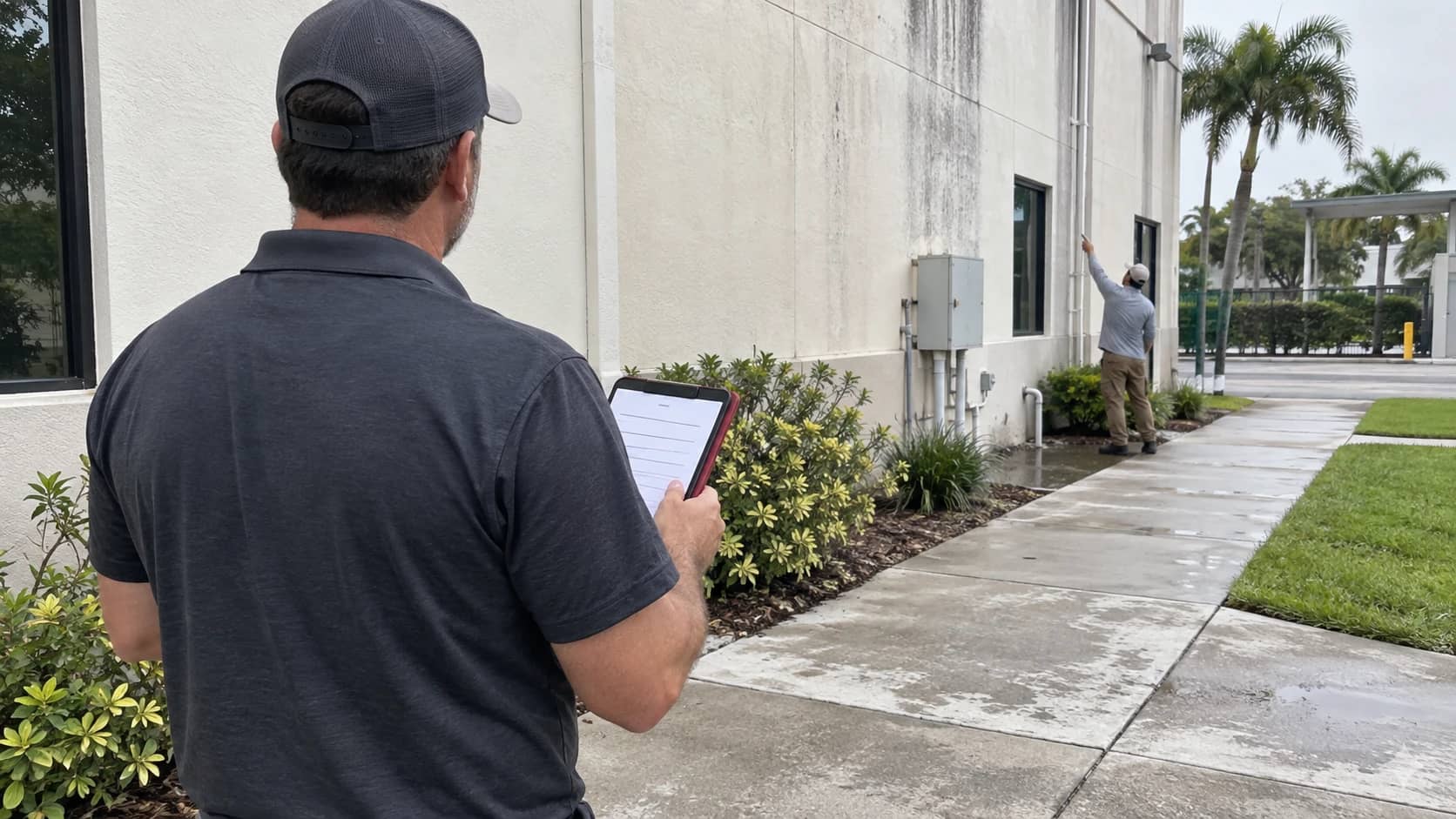
A cleaning scope of work template gives every contractor the same description of what needs cleaning and how the finished work will be checked. For an exterior property, it should identify each surface and its square footage, the permitted method and chemicals, wash water handling, work hours, access, occupant notice, and an acceptance walk-through.
Build a surface inventory before requesting bids
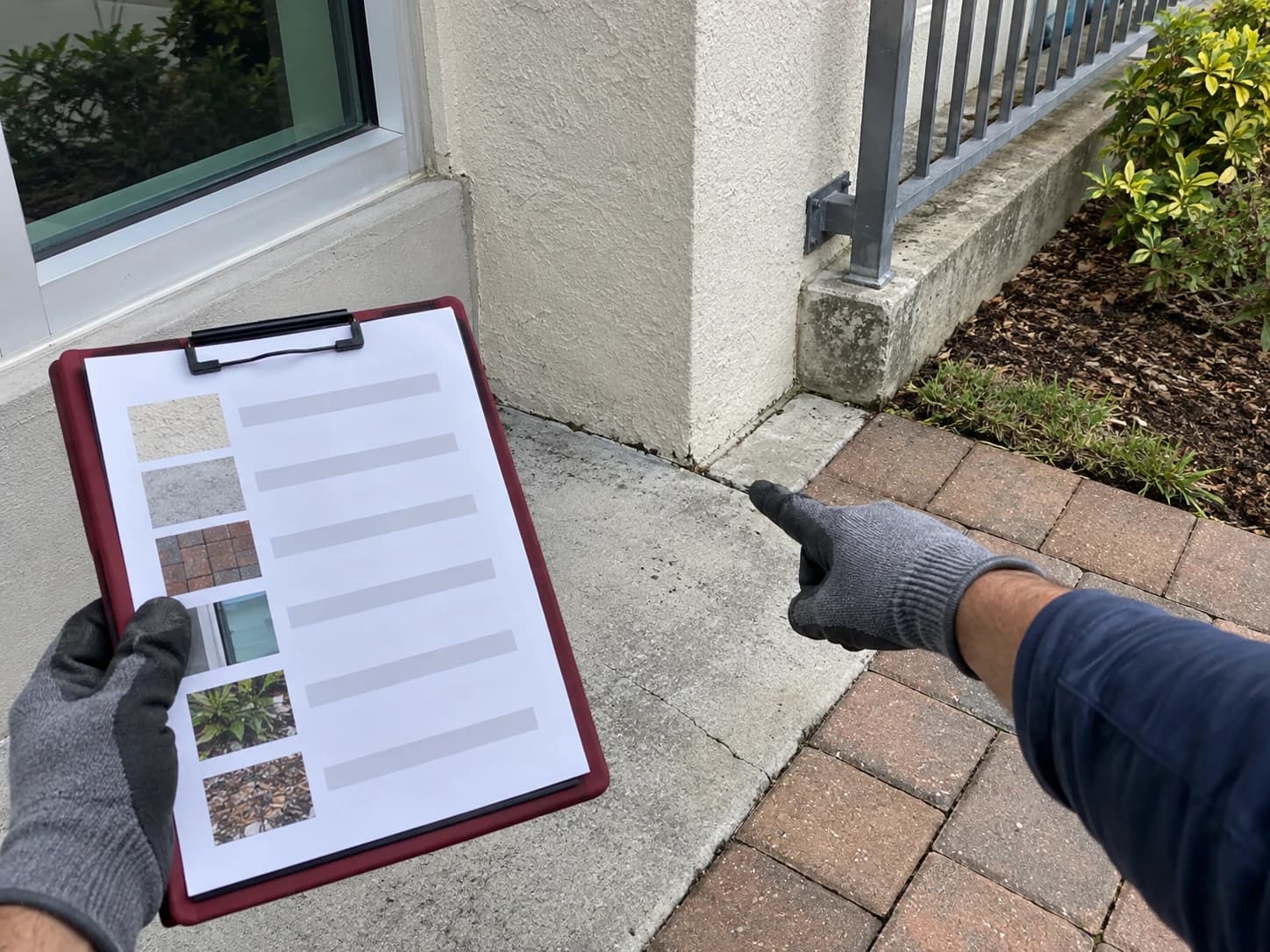
A surface inventory turns a broad request such as "clean the exterior" into areas a contractor can inspect and price. Walk the property with a site plan, record each material and location, and separate areas that require different methods or access.
List building walls by elevation and finish. Separate exposed concrete from coated concrete, pavers from poured walkways, and glass from its frames. Identify roof material if roof cleaning is in scope. Note stained areas, loose coatings, damaged joints, standing water, landscaping, electrical equipment, and surfaces that must be excluded or protected. These observations tell bidders where routine cleaning may need a different approach.
Record square footage for each surface or ask bidders to verify a shared estimate during the site visit. State who will resolve a measurement difference before pricing closes. A single total for "all walkways" can hide a remote path, loading area, or courtyard that one bidder includes and another misses.
Photographs help define boundaries, especially where one finish meets another. Mark the start and end of each area on the site plan and give all bidders the same version. For a broader inventory of recurring exterior tasks, use the South Florida commercial property exterior maintenance checklist alongside the worksheet.
Copy the cleaning scope of work template
The template below is an exterior cleaning scope of work that a property manager or board can paste into an RFP. Fill in the site details after the walk-through, then issue the same completed scope and attachments to every bidder.
EXTERIOR CLEANING SCOPE OF WORK

Property:
Property address:
Owner or association contact:
Site contact during work:
Site plan and photo attachment:

SURFACE INVENTORY
For each line, enter:
Location and surface:
Material and existing condition:
Approximate square footage:
Included edges, fixtures, and adjacent areas:
Excluded or protected areas:
Required cleaning result:
Permitted method for this surface:
Method or equipment restrictions:
Proposed chemicals, dilution, and dwell approach:
Rinse approach:
Wash water containment and recovery:
Frequency, if recurring:

Repeat the surface entry for every distinct area or material.

CHEMICALS AND PROPERTY PROTECTION
Contractor shall identify proposed products before work begins and provide
product information requested by the property contact.
Protect plants, finishes, doors, vents, electrical equipment, occupants,
and neighboring areas. Record any surface that needs a test area and obtain
approval of that test area before treating the full surface.

WASH WATER AND DEBRIS
Describe how wash water and debris will be kept out of storm drains.
Identify collection equipment, recovery method, and disposal destination.
Identify any location where water cannot be fully captured and propose
a site-specific approach for approval before work begins.

SCHEDULE WINDOW
Permitted work days and hours:
Blackout dates or tenant events:
Proposed sequence by area:
Weather or access rescheduling procedure:
Completion date or recurring service dates:

ACCESS AND NOTIFICATION
Entry points, keys, escorts, and loading areas:
Water and power availability:
Parking and equipment staging:
Pedestrian and vehicle routing during work:
Areas that must remain open:
Who sends occupant notices:
Required notice content and delivery method:
Contact for complaints or unexpected conditions:

ACCEPTANCE WALK-THROUGH
Property representative:
Contractor representative:
Areas and expected results to inspect:
Pre-existing conditions documented before work:
How misses or damage will be recorded:
How corrections will be scheduled and checked:
Final sign-off method:

BID RESPONSE
Price by surface or work area:
Assumptions and exclusions:
Proposed method or chemical substitutions:
Wash water plan:
Schedule and access assumptions:
Requested insurance documents:
Optional work priced separately:
Keep the completed scope as the common reference for the site visit, bids, and final agreement. If a contractor suggests a safer method or spots a missing area, send the clarification to every bidder. That preserves a fair comparison while allowing practical improvements.
Specify methods by surface and condition
"Pressure wash everything" is not a usable method specification. State the result you need, identify vulnerable materials, and require bidders to explain the equipment, application, and rinsing they propose for each area.
Pressure washing can remove soil from sound, durable hardscape, but force and spray direction matter near joints, coatings, doors, and landscaping. Soft washing relies more on an applied cleaning solution and controlled rinse, which may be better suited to finishes that forceful spray could damage. It requires careful product selection, protection of adjacent areas, and a plan for the resulting wash water.
For walls, distinguish painted stucco, bare masonry, EIFS, and glass. A bidder should assess the finish and propose a test area where staining, coating condition, or adhesion is uncertain. The guide to cleaning stucco, concrete, EIFS, and glass explains why one method does not suit every elevation.
Roof work needs its own line item and material-specific method. The Asphalt Roofing Manufacturers Association advises against power washing or brushing asphalt shingles because high-pressure cleaning is likely to damage them. Its guidance describes a chemical treatment with a gentle rinse for algae discoloration and notes that the result is temporary. Do not transfer a shingle method to tile or metal without a material-specific assessment.
Ask bidders to name their proposed chemicals and explain what nearby plants, metal, painted surfaces, and occupied spaces need for protection. A product described only as "eco-friendly" does not tell a board how it will be applied, contained, or rinsed. For a proposed substitution, require a written explanation before approving it.
Define wash water handling at each drain and low point
Wash water planning belongs in the scope because water moves beyond the surface being cleaned. Show storm drains, gutters, slopes, planted areas, and low points during the site visit so each contractor can propose controls for the actual property.
Under 40 CFR 122.34(b)(3), municipal storm sewer permittees must effectively prohibit non-stormwater discharges into their systems and run illicit discharge detection and elimination programs. Florida DEP administers the state's municipal stormwater program. Your scope should require a site-specific plan to prevent cleaning water and debris from entering storm drains, with the contractor identifying how water will be contained, recovered, and disposed of where needed.
Avoid writing "capture all water" without checking whether the proposed method can accomplish it on every elevation and slope. Ask the bidder to identify difficult locations, such as a garage ramp or walkway that pitches toward a drain, and explain the controls for each. Resolve those exceptions before award, not while water is already moving across the site.
The same plan should address solids such as leaves, grit, and removed residue. Name who will inspect drain protection during work and who will restore the area afterward. If the property has its own site rules or permit conditions, attach them to the bid package.
Set the RFP and work schedule
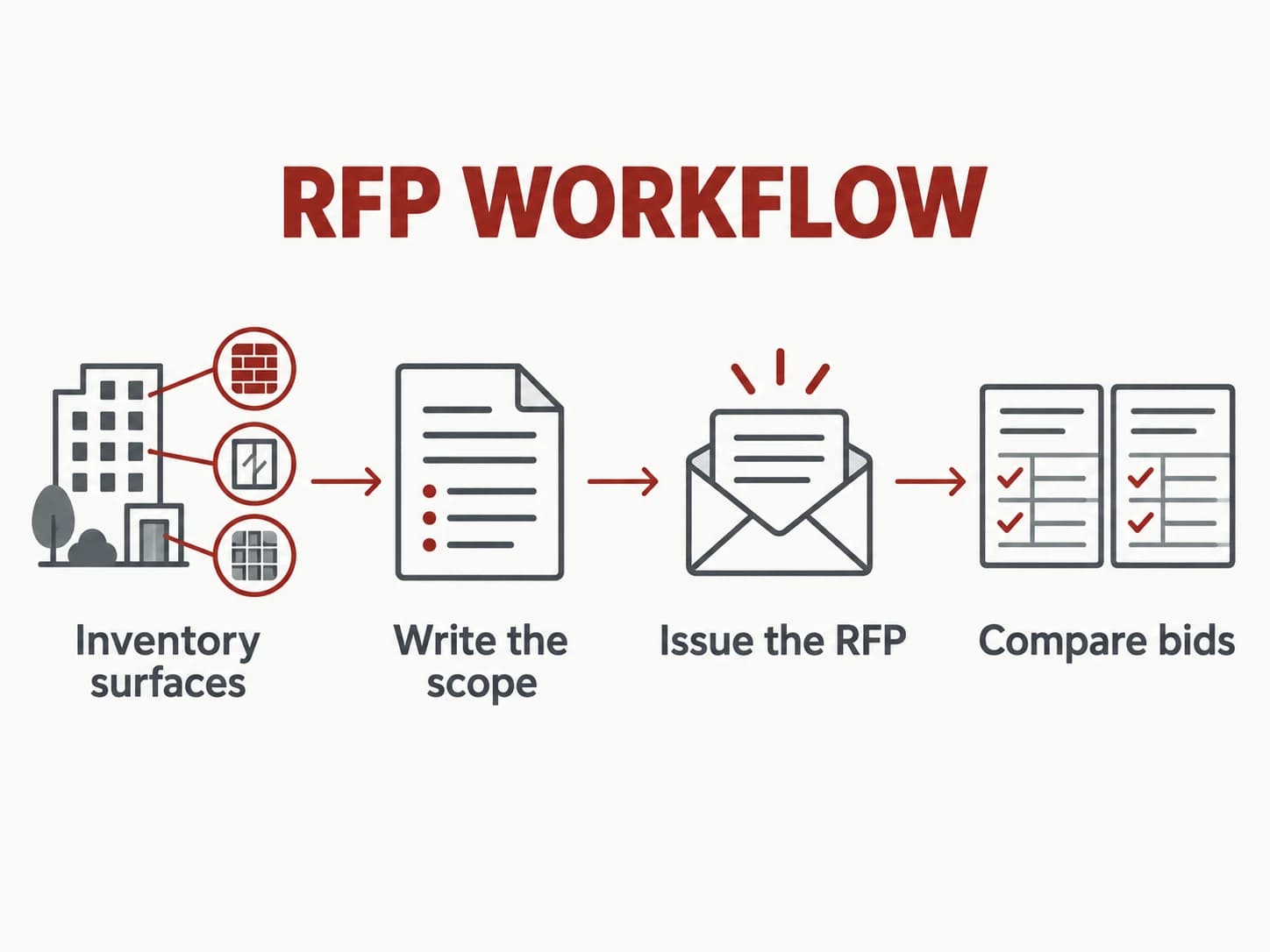
A useful RFP schedule gives bidders time to inspect the property, ask questions, and price the same final scope. Set dates for the site walk, written questions, shared answers, bid submission, selection, and the proposed work window.
Use a single contact for bidder questions and send each written answer to everyone invited to bid. If the site walk reveals a new surface or access restriction, revise the scope and give bidders the same revision. Record the scope version on the bid form so the board knows which document each price covers.
The work schedule should identify acceptable days and hours, blackout dates, and areas that must remain accessible. In South Florida, weather and occupied-property events can disrupt exterior work. State how the contractor will notify the site contact of a delay and how a revised sequence will be agreed upon. Do not let an undefined "flexible schedule" conceal a plan to block entrances during peak use.
For recurring service, specify which surfaces repeat and which are cleaned only after inspection or approval. A calendar alone cannot account for every material or exposure. It is more useful to pair an agreed review point with the work required when cleaning is authorized.
Record access, occupant notice, and property protection
Access requirements affect labor, equipment choice, and how safely the property can stay open. Give bidders the same information about gates, escorts, water and power, staging, parking, and any areas that cannot be reached from normal ground access.
Tell bidders which walkways, loading bays, guest routes, or storefront entries must remain open. Ask for a sequence that shows when each area will be closed, protected, cleaned, rinsed, and reopened. If a lift, roof access, or special escort is needed, identify who arranges it and where the equipment may stand.
Name the party responsible for notices to residents, tenants, hotel staff, or retailers. A useful notice gives the affected location, planned work window, expected access changes, and a property contact. It should also tell occupants whether they need to move vehicles or items from balconies, patios, or nearby storage areas.
Document existing cracks, loose coatings, stained panels, or damaged pavers before work. Ask the contractor to protect doors, vents, cameras, landscaping, electrical equipment, and neighboring finishes. A pre-work record helps both sides distinguish an existing condition from a concern raised during cleaning.
Define the acceptance walk-through
Acceptance criteria tell the contractor what completion means. Describe the expected visible result by surface, then inspect the work with the contractor before closing the job.
A scope can require removal of accessible surface soil and organic staining while acknowledging that rust, mineral deposits, paint failure, or deeply set marks may need separate treatment. Require the bidder to identify likely exceptions during the site visit and say up front what may remain. This is more useful than demanding an undefined "like new" finish.
Name the person who can accept the work and the contractor contact who will attend. Walk the listed areas against the inventory and photographs. Record misses, damage concerns, and areas that could not be reached, then agree on how each item will be checked after correction.
Keep the sign-off tied to the written scope. An acceptance walk-through should verify the agreed cleaning, protection, and site restoration, including removal of temporary barriers and collected debris. For ongoing work, retain the record so the next inspection starts with a clear account of what was completed.
Compare bids against the same scope
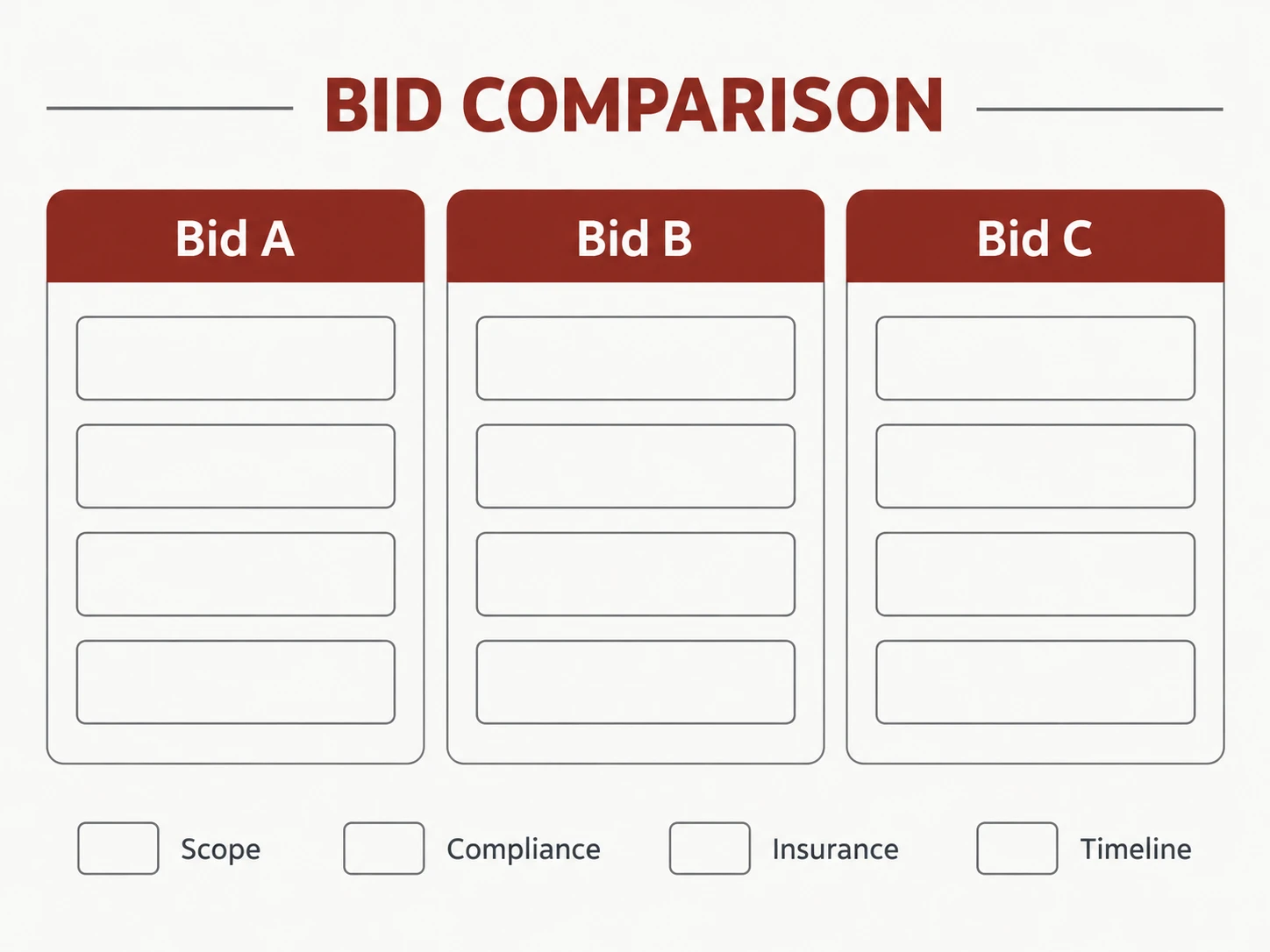
A bid comparison matrix shows whether a low or high price reflects a real difference in work. Compare scope coverage, method, wash water controls, schedule, exclusions, and documentation before comparing the totals.
| Review item | What to look for in each bid | Clarification to request |
|---|---|---|
| Surface coverage | Each inventory line is priced or clearly included | Which measured areas or edges are excluded? |
| Method and chemicals | A method is proposed for each material | What will be tested or changed if a finish reacts poorly? |
| Wash water | Drain protection, recovery, and disposal are explained | How will the plan work at the listed low points? |
| Access and schedule | The sequence fits the property's open areas and hours | What access or utility assumptions affect the price? |
| Acceptance | Expected result and correction process match the scope | Which stains or conditions may remain? |
| Documentation | Requested insurance and site documents are supplied | Are any documents pending before work begins? |
| Price | Surface prices and optional work are separated | What event would change the quoted amount? |
A commercial cleaning proposal template can help a contractor present these answers, but the board's completed scope should remain the common basis for every response. Ask bidders to mark exceptions instead of quietly rewriting the scope in their proposals. The guide to reading commercial cleaning proposals offers a closer look at assumptions that can be easy to miss.
Request insurance documents appropriate to the property and work, then have the association's adviser or manager check them against its requirements. Do not treat a statement in a proposal as a substitute for the documents. The certificate of insurance guide for Florida boards and property managers explains what to review.
Carry the accepted scope into the agreement
The scope describes the work; the proposal records the contractor's offer; the service contract sets the agreed terms. Before signing, make sure all three refer to the same surfaces, methods, schedule, exclusions, price breakdown, and acceptance process.
Attach the final scope version and any shared clarifications to the agreement. If a bidder proposed a different method or excluded an area, decide whether to accept that change and write it into the final documents. Resolve who may authorize additional work and how a genuine scope change will be priced before it starts.
Keep site rules, notice duties, wash water controls, and access arrangements in the final package. A board should be able to hand the agreement to the property contact and contractor supervisor and have both understand what will happen on site. For the agreement stage, see what a commercial pressure washing contract should contain.
Frequently asked questions
What is an example of a scope of work?
An exterior cleaning scope might identify the south stucco elevation, its measured area and condition, a proposed low-pressure application and rinse, protected landscaping, the permitted work window, and the expected result. It would also say how wash water will be managed and who will inspect the finished elevation. The copyable template above gives a format for repeating that description across the property.
Can you provide an example of a cleaning service description?
"Clean the listed concrete entrance walks to remove accessible surface soil and organic buildup. Protect adjacent doors and planting, keep wash water out of storm drains, maintain the designated pedestrian route, and review the finished walks with the property representative." Add the measured area, proposed method, schedule, and any known stains or exclusions before sending the description to bidders.
What should an exterior cleaning scope of work include?
Include an inventory with location, material, condition, and square footage for every area. Then state the permitted method, chemical disclosure, property protection, wash water plan, schedule, access, notices, and acceptance criteria. Ask bidders to price each area and list exceptions. Those details make the document useful during bidding and during the final walk-through.
How do I make commercial cleaning bids comparable?
Give each bidder the same inventory, site access, work window, and deadline for written questions. Share clarifications with all bidders and require prices by surface or work area. Use a comparison matrix to identify exclusions, method changes, and wash water assumptions before weighing totals. The lowest total may cover less work than the others.
What is the 5-5-5 rule for cleaning?
However the 5-5-5 rule is described, it is not a specification for exterior property work. It does not define surfaces, safe methods, wash water controls, or acceptance. For a board or facilities team, use a measured inventory and a written scope so contractors can inspect and price the actual property.
What is the 6 to 10 cleaning list?
However the 6 to 10 cleaning list is described, it is not a standard for commercial exterior cleaning. It cannot tell a contractor which finish is present, how large an area is, or where runoff may travel. Use the surface inventory and acceptance criteria in the template to describe the job instead.
Sources
If you want to turn a completed scope into a property-specific exterior cleaning proposal, share it with 2Clean through the commercial and HOA service page.
Custom Commercial & HOA Walkthroughs
Need a scope tailored to your South Florida property?
Every building, plaza, and community has its own surface mix, access windows, and drainage layout. We quote by walkthrough rather than fixed rate sheets so your proposal matches your exact property. Call us directly at (904) 826-9806 or request a written scope online.
Related services & tools
Commercial & HOA by South Florida city: