Procurement & Vendor Selection
In-House vs Outsourced Exterior Maintenance: Which Actually Costs Less
October 5, 2026 · 9 min read
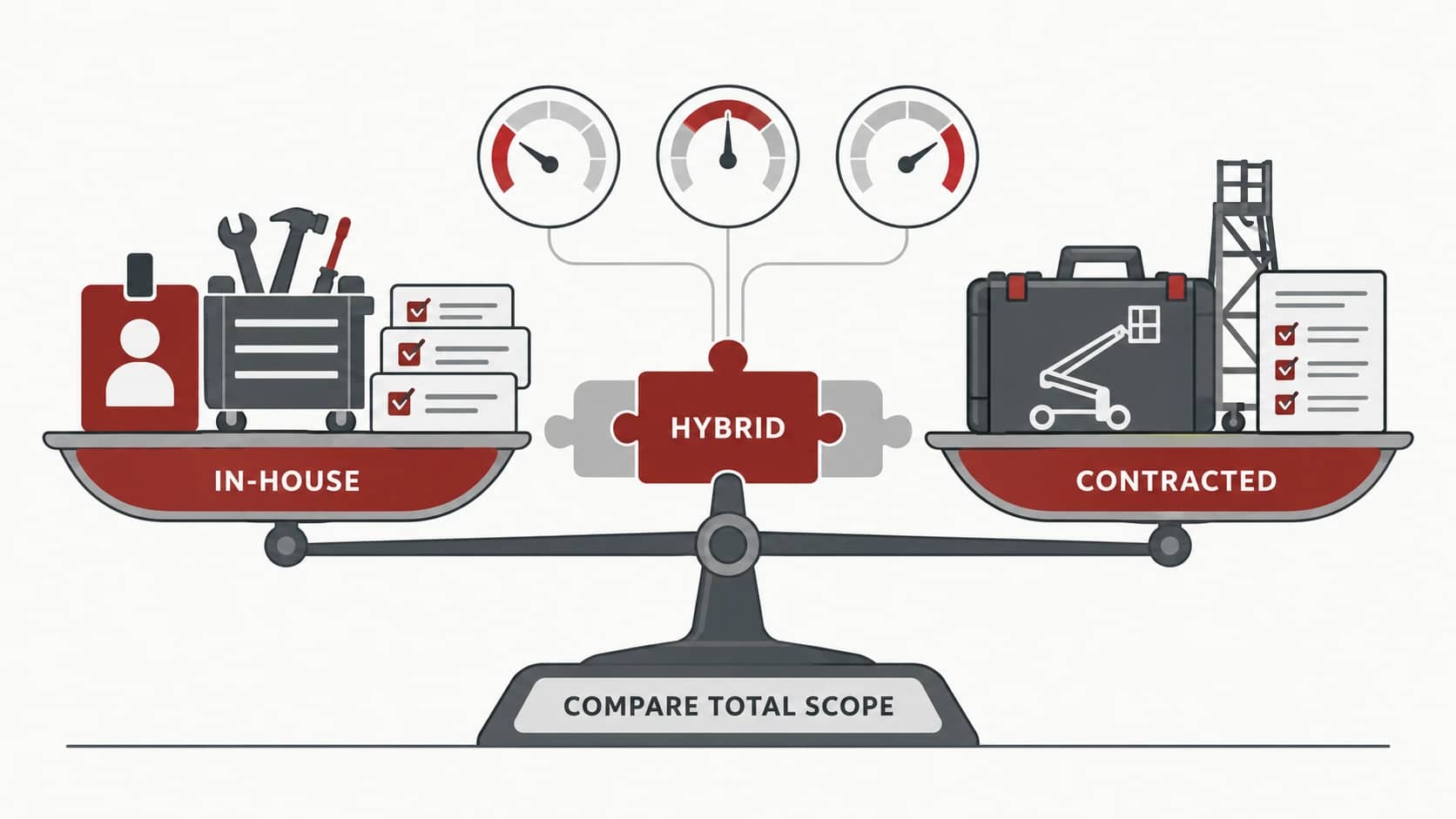
In-house exterior maintenance is cheaper only in specific scenarios, such as large campuses with daily light-duty tasks. For most properties, outsourcing is more cost-effective due to equipment, training, insurance, and compliance costs. This article will explore the true costs of each approach and help you decide which is right for your property.
Direct answer: it depends on three variables
The cost-effectiveness of in-house versus outsourced exterior maintenance hinges on three key variables: the size and nature of your property, the frequency and type of maintenance required, and your budget for specialized equipment and training. For large properties with daily light-duty tasks, in-house teams can be more economical. However, for most commercial properties, the hidden costs of equipment, training, and compliance often make outsourcing the better choice.
In Miami-Dade, Broward, and Palm Beach counties, the high humidity and frequent rainfall during the May to October wet season can accelerate the growth of mold, mildew, and algae on exterior surfaces. This organic growth not only detracts from the appearance of your property but can also pose safety risks. According to OSHA 29 CFR 1910.22, walking-working surfaces must be kept clean, orderly, and sanitary, free of spills, and maintained in a safe condition. Additionally, the US EPA, under 40 CFR 122.34(b)(3), mandates that MS4 permittees effectively prohibit non-stormwater discharges into the storm sewer system, making it crucial to manage wash water properly.
True cost of in-house: equipment, training, insurance
In-house maintenance involves significant upfront and ongoing costs. Equipment such as pressure washers, soft wash systems, and safety gear can be expensive to purchase and maintain. According to the Power Washers of North America, specialized equipment can range from a few hundred to several thousand dollars, depending on the quality and features. By comparison, HomeGuide's commercial pressure washing cost guide (dated Oct 9, 2025) puts outsourced commercial service contracts at $100 to $600 per month and basic commercial flatwork and wall cleaning at $0.10 to $0.35 per square foot, while 2Clean quotes every property individually — call or text (904) 826-9806 with a photo for a written price.
Training is another significant expense. Ensuring that your staff is properly trained in the use of equipment and safety protocols is crucial. OSHA 29 CFR 1910.22 mandates that walking-working surfaces must be kept clean, orderly, and sanitary, free of spills, and inspected regularly. Training programs from the Power Washers of North America require paid course enrollment and renewal per employee, whereas HomeAdvisor's pressure washing cost guide (updated Jun 17, 2026) notes that professional crews already bundle trained labor at $50 to $100 per hour per crew member.
Insurance is also a critical consideration. In-house teams need comprehensive coverage for liability and workers' compensation. The cost of insurance can vary widely based on your location and the risk profile of your property. When evaluating vendor proposals, reviewing a contractor's certificate of insurance and workers' compensation endorsements transfers operational risk that would otherwise sit on the association's or building owner's policy, and a single incident can result in significant claims.
The compliance burden you inherit
When you opt for in-house maintenance, you inherit the full burden of regulatory compliance. The US EPA's 40 CFR 122.34(b)(3) requires MS4 permittees to "effectively prohibit" non-stormwater discharges into the storm sewer system and run an illicit discharge detection and elimination program. This means that any wash water entering a storm drain is unlawful. Ensuring that your in-house team adheres to these regulations can be complex and time-consuming.
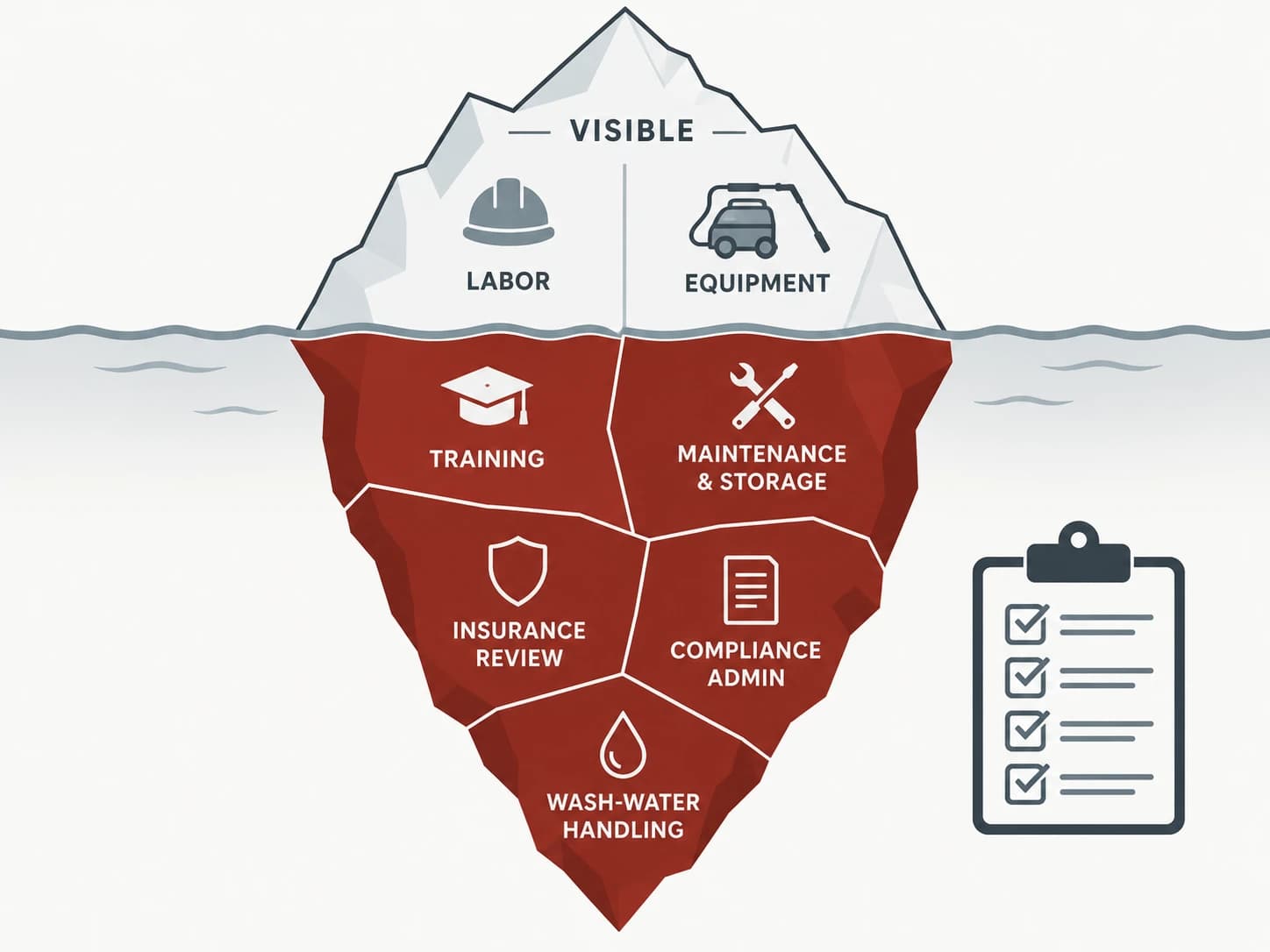
Compliance also extends to OSHA regulations, such as 29 CFR 1910.22, which mandate safe working conditions. Non-compliance can result in fines, legal action, and reputational damage. Outsourcing to a professional service like 2Clean can help you navigate these regulations more efficiently, as they are typically well-versed in the latest compliance requirements.
Height access and specialist work
Handling height access and specialist work in-house can be particularly challenging. Equipment like aerial lifts and scaffolding is expensive to rent or purchase and requires specialized training to operate safely. The Power Washers of North America offers certification in house washing, roof cleaning, flatwork, and fleet washing, but the training and certification process can be extensive and costly.
For properties with complex facades or high-rise buildings, outsourcing to a professional service is often the safer and more cost-effective option. These services have the necessary equipment and trained personnel to handle high-risk tasks, reducing the likelihood of accidents and the associated costs. Additionally, they can often complete the work more quickly and efficiently, minimizing downtime and disruption to your property.
By understanding these key variables, you can make a more informed decision about whether in-house or outsourced exterior maintenance is the best fit for your property. For more detailed information on the services we offer, visit our commercial HOA cleaning page or use our writing an exterior cleaning scope of work guide to structure vendor bids.
Where in-house genuinely wins
In-house teams are the right choice for large campuses and daily light-duty work. Their familiarity with the premises and the ability to handle minor issues promptly make them cost-effective for routine maintenance. However, the model's success depends on the specific conditions and the type of tasks involved.
Large campuses with a steady volume of daily light-duty tasks, such as cleaning small areas or maintaining common spaces, benefit from in-house teams. These tasks are repetitive and require minimal specialized equipment, making them ideal for staff who can be trained in basic cleaning techniques. In-house teams can also respond immediately to issues, reducing downtime and improving overall facility management.
However, in-house teams may struggle with specialized tasks that require advanced equipment or expertise. For example, high-rise window cleaning or roof maintenance often necessitates specialized training and safety protocols. In these cases, the initial investment in equipment and the ongoing cost of training and compliance can outweigh the benefits of in-house labor.
Hybrid models
A hybrid model combines the best of both in-house and outsourced maintenance. This approach allows property managers to leverage the strengths of each method while mitigating their weaknesses. By assigning routine tasks to in-house staff and outsourcing specialized or infrequent jobs, property managers can optimize their budget and resource allocation.
Hybrid models are particularly effective for properties with a mix of routine and specialized maintenance needs. For instance, in-house staff can handle daily cleaning and minor repairs, while an outsourced contractor can tackle high-rise window cleaning, pressure washing, and roof maintenance. This division of labor ensures that each task is performed by the most qualified and cost-effective team.
Another advantage of hybrid models is flexibility. Property managers can adjust the balance of in-house and outsourced work based on the current needs and budget constraints. During periods of high demand or limited in-house resources, additional outsourcing can provide a temporary boost in capacity.
To implement a successful hybrid model, clear communication and coordination are essential. Property managers should establish a system for tracking tasks and ensuring that both in-house and outsourced teams are aligned with the overall maintenance plan. Regular performance reviews and feedback sessions can help identify areas for improvement and maintain high standards of service.
A break-even framework
A break-even framework helps property managers evaluate the cost-effectiveness of in-house versus outsourced exterior maintenance. By comparing the total costs and benefits of each approach, managers can make informed decisions that align with their budget and maintenance goals.
Cost comparison model
The following table outlines key cost factors to consider when comparing in-house and outsourced maintenance:
| Cost Factor | In-House Costs | Outsourced Costs |
|---|---|---|
| Labor | Salaries, benefits, training | Contractor fees, bid rates |
| Equipment | Purchase, maintenance, storage | Included in contractor fees |
| Training and Compliance | Initial and ongoing training, permits | Included in contractor fees |
| Safety Gear | Purchase, replacement, compliance | Included in contractor fees |
| Insurance | General liability, workers' comp | Included in contractor fees |
| Permits and Licenses | Application fees, renewal costs | Included in contractor fees |
| Supplies | Purchase, storage, replacement | Included in contractor fees |
| Waste Disposal | Disposal fees, compliance | Included in contractor fees |
| Liability | Higher risk, potential legal costs | Lower risk, contractor liability |
This table highlights the direct and indirect costs associated with each maintenance approach. In-house maintenance involves ongoing expenses such as salaries, equipment maintenance, and compliance training, while outsourced maintenance typically bundles these costs into a single fee. Property managers should consider the total cost over time, including the initial investment and ongoing expenses, to make an accurate comparison.
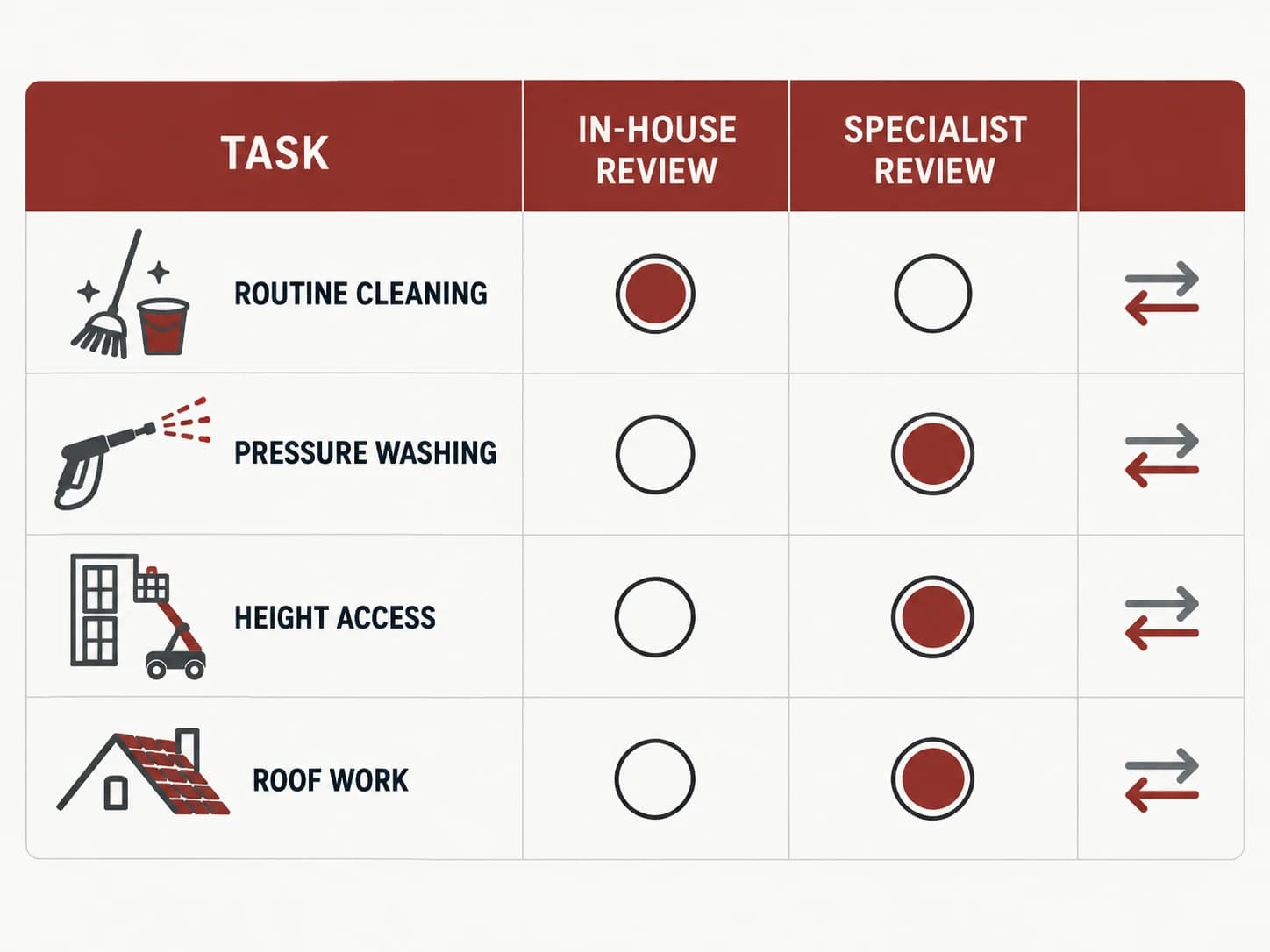
Task suitability: in-house vs contracted
The following table categorizes common exterior maintenance tasks based on their suitability for in-house or outsourced teams:
| Task | In-House Suitable | Outsourced Suitable | Reasoning |
|---|---|---|---|
| Daily Cleaning | Yes | No | Routine, low-skill, immediate response required. |
| Pressure Washing | No | Yes | Requires specialized equipment and expertise, especially for large or complex surfaces. |
| High-Rise Window Cleaning | No | Yes | High risk, specialized equipment and safety protocols. |
| Roof Maintenance | No | Yes | Specialized knowledge, safety risks, potential for water damage. |
| Paver Sealing | No | Yes | Specialized equipment and chemicals, expertise in application and curing. |
| Gutter Cleaning | Yes | No | Routine, can be handled by in-house staff with basic tools. |
| Landscaping | Yes | No | Routine, can be managed with in-house landscaping team. |
This table provides a clear guide for property managers to determine which tasks are best suited for in-house teams and which should be outsourced. By aligning tasks with the strengths of each approach, managers can optimize their maintenance operations and reduce costs.
In summary, the break-even framework helps property managers make data-driven decisions by comparing the total costs and benefits of in-house and outsourced maintenance. By using the cost comparison model and task suitability table, managers can identify the most cost-effective approach for their specific needs. For more detailed information on our commercial HOA services, visit our commercial HOA services page or compare annual maintenance contracts vs one-off quotes.
Sources
Frequently asked questions
Should we hire in-house or outsource exterior maintenance?
Outsourcing can often be more cost-effective and efficient, as it allows you to leverage the expertise and specialized equipment of a dedicated cleaning company without the overhead of hiring and training staff.
Is in-house cheaper?
In-house maintenance can be cheaper for small, routine tasks, but for larger or specialized projects, outsourcing can reduce costs by avoiding the need to purchase and maintain specialized equipment and train staff.
What equipment is needed?
For in-house exterior maintenance, you would need power washers, safety gear, ladders, and possibly specialized equipment for tasks like roof cleaning or fleet washing.
What are the liability differences?
Outsourcing can reduce liability, as the contractor is responsible for their employees and equipment. In-house teams, however, require more oversight and compliance with safety regulations, increasing potential liability.
When does in-house make sense?
In-house maintenance makes sense for small properties with minimal exterior needs, where the cost of hiring and training staff is justified by the frequency and simplicity of the tasks.
Do we need special insurance?
If you choose to hire in-house, you will need to ensure your property insurance covers liability for maintenance activities. Outsourcing can transfer some of this liability to the contractor, but it's important to verify their insurance coverage.
Custom Commercial & HOA Walkthroughs
Need a scope tailored to your South Florida property?
Every building, plaza, and community has its own surface mix, access windows, and drainage layout. We quote by walkthrough rather than fixed rate sheets so your proposal matches your exact property. Call us directly at (904) 826-9806 or request a written scope online.
Related services & tools
Commercial & HOA by South Florida city: