Cost & Budget
Dumpster Pad Cleaning Cost, Frequency and Bundled Service
October 17, 2026 · 10 min read
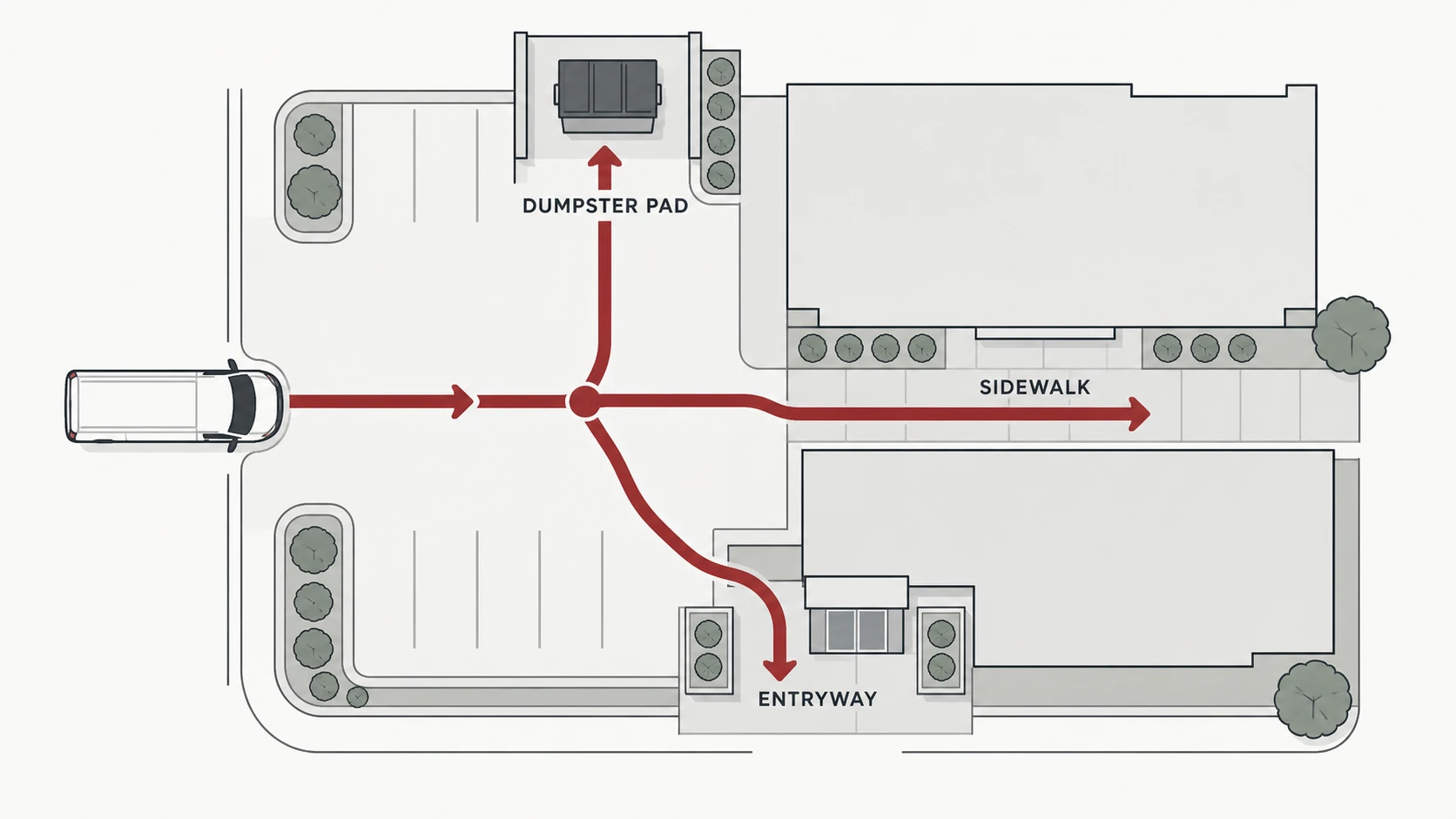
Dumpster pad cleaning costs depend on the pad's condition, the work needed to control wash water, and the size of the visit. For a South Florida property, start with a schedule based on waste volume and visible residue. Then ask for a separate price for the pad and a combined price for any nearby sidewalk or entry work.
What dumpster pad cleaning should include
Dumpster pad cleaning should remove loose waste and surface buildup from the ground around the container, with the enclosure added when it is in scope. A dumpster pad cleaning service should also explain how it will manage greasy wash water before work begins.
The pad is only one possible surface. Food residue may collect at the container's wheels, along curbs, behind gates and where a leaking bag or bin has left a trail. Ask the provider to identify which of those areas the estimate covers. Otherwise, a clean central pad can sit beside an untreated source of odour.
The method should fit the material and the soil. Loose debris needs to be picked up before washing. Greasy residue may need a suitable cleaner and controlled rinsing, while a lightly soiled concrete walkway may need less intensive work. Ask what can be removed and what staining may remain, especially where residue has sat for a long time.
Keep container washing separate in the scope. Cleaning the concrete beneath and around a dumpster does not necessarily include washing the container itself, moving it, or cleaning inside an enclosure. That distinction makes competing estimates easier to compare.
Dumpster pad cleaning cost: what published figures can tell you
Published prices give you a starting point for a budget, not a price for your property. The strongest comparison is an itemised estimate that shows pad cleaning, any adjacent work and the handling of wash water.
HomeGuide's commercial pressure washing price guide (Oct 9, 2025) lists dumpster pads at $0.75 to $1.00 per square foot. Hometown Dumpster Rental's commercial dumpster cleaning cost guide (updated Jan 19, 2023) lists $50 to $200 per cleaning. The sources use different pricing units, so they should not be treated as matching quotes for the same scope.
Small jobs can also carry a visit minimum. HomeGuide's guide to charging for pressure washing (Dec 17, 2025) lists a $150 to $400 minimum job charge. That figure helps explain why a small pad may not price as its measured area multiplied by a square-foot rate. It is a published market reference, not a 2Clean rate.
For budgeting, ask each provider to show what drives the proposed dumpster pad cleaning cost: pad and enclosure area, grease or food buildup, access around the container, water availability, wash-water collection and the requested schedule. A description of the work is more useful than a single total when a board or facilities team needs to compare bids. For broader exterior-work pricing context, see the commercial pressure washing cost guide.
What a bundled visit includes and how to compare it
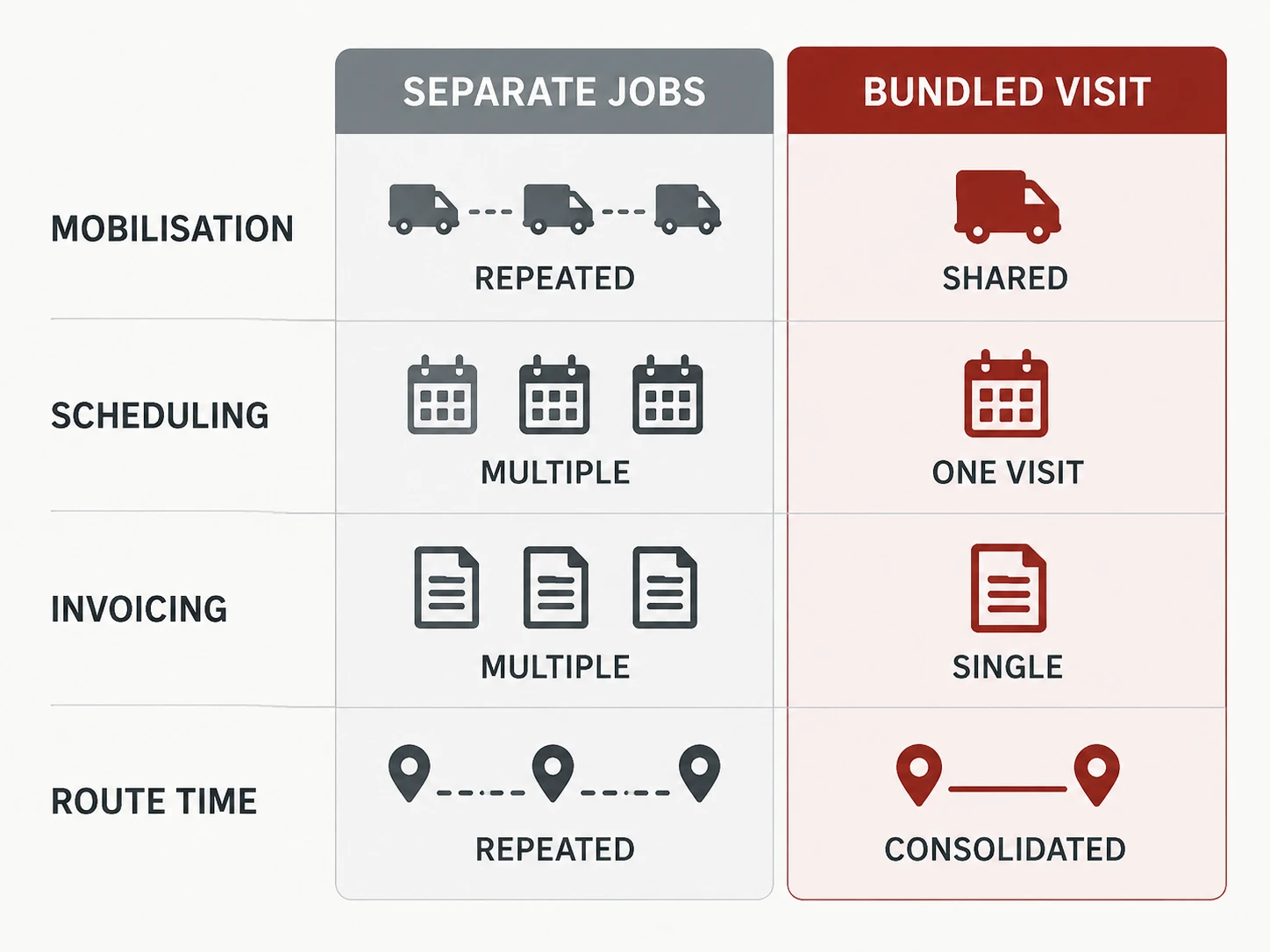
A bundled visit can reduce repeated travel and setup when the dumpster pad, nearby sidewalk and entry can be cleaned together. The saving depends on the actual scope, so request both separate and combined estimates rather than assuming a discount.
The comparison should show more than a total. It should state which surfaces are included, how often each will be cleaned, and whether access or wash-water controls differ between them. A short entry walkway beside the enclosure is a more natural addition than a distant area requiring a separate setup.
| Compare in each estimate | Pad-only visit | Combined visit |
|---|---|---|
| Surfaces | Pad and any specified enclosure surfaces | Pad plus named sidewalk and entry areas |
| Preparation | Debris removal and access around the container | Preparation for each included area |
| Wash water | Collection or containment plan for the pad | Plan for runoff from every included area |
| Schedule | Pad interval based on its condition | Each surface's interval stated separately |
| Price | Pad scope and any visit charge identified | Combined price and scope changes identified |
A provider may also suggest commercial and HOA exterior care when several shared areas need coordinated maintenance. Keep the written scope specific even if those areas sit under one agreement. That lets you remove an area, change its schedule or compare a later renewal without guessing what was included.
How a cadence calendar handles different cleaning intervals
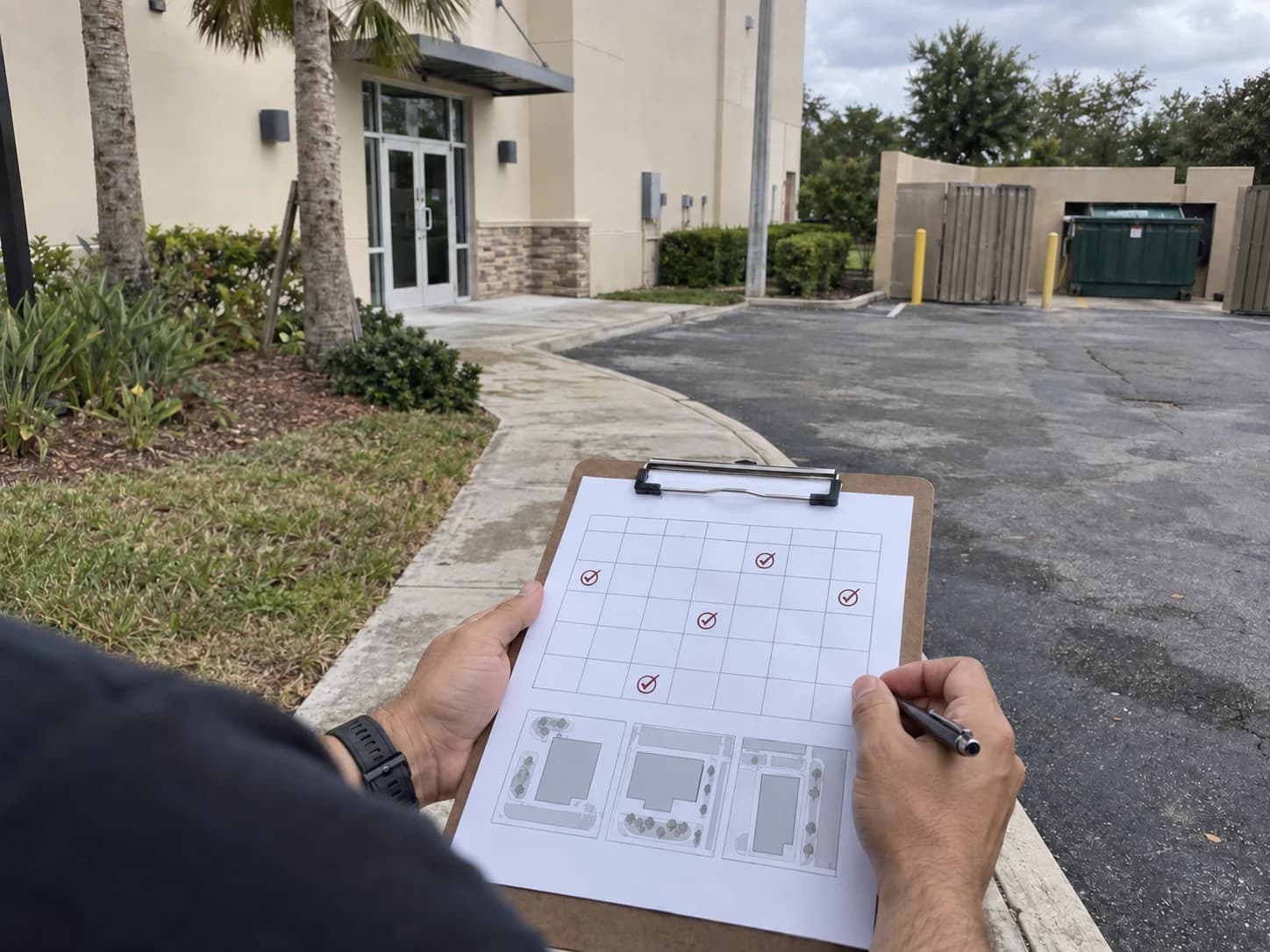
A cadence calendar should show when each area is due, then identify visits that can be combined. The dumpster pad does not have to wait for the sidewalk or entry if waste residue builds up faster there.
Use a monthly or quarterly interval as a planning proposal, then adjust it after observing the site. A restaurant with frequent food waste may need the pad checked and cleaned more often than a retail property with mostly dry packaging. Neither label guarantees that a particular interval will control odour or visible buildup.
Ask the site contact to note recurring spills, grease, leaking containers, standing residue and complaints between visits. Those observations help distinguish a schedule problem from a container or waste-handling problem. Cleaning can remove residue, but it cannot stop a damaged container from leaking again.
For restaurant sites, coordinate the pad schedule with waste collection and access to the enclosure. The restaurant exterior cleaning guide discusses how grease and dumpster areas fit into a wider maintenance plan.
When to shorten or lengthen the schedule
Shorten the interval when residue or odour returns before the next planned visit. Keep the schedule tied to conditions you can inspect, rather than treating a fixed calendar as a cleanliness standard.
Food waste, grease and repeated spills tend to make the pad more demanding than dry, contained waste. A busy enclosure may also need its gate, curb edges and surrounding pavement included so that the next visit addresses where material actually accumulates. If a pad stays visibly clean between visits, ask whether the interval can be extended and monitor the result.
Cleaning should sit alongside basic waste management. Closed container lids, sound bins and prompt removal of loose rubbish reduce what reaches the concrete. If those conditions change, reassess the cleaning scope before simply adding visits.
For HOA and condo boards, put the pad on the same inspection list as other shared exterior areas, while retaining its own cleaning trigger. The commercial exterior cleaning guide for property managers provides a wider framework for planning those inspections.
Wash water and access belong in the scope
The provider should identify where wash water will go and how it will be kept out of storm drains. That plan may affect equipment, setup time and price, particularly when grease or food residue is present.
US EPA's 40 CFR 122.34(b)(3) requires municipal separate storm sewer permittees to effectively prohibit non-stormwater discharges into the storm sewer system and operate an illicit discharge detection and elimination programme. Florida DEP administers the state's municipal stormwater permit programme. Miami-Dade County Code section 24-42 also prohibits discharges into county waters that cause pollution or a nuisance. Ask for a site-specific wash-water plan rather than assuming every pad needs the same equipment.
Access matters just as much to the work plan. Confirm whether the container can be moved, who can authorise that move, where equipment can park and whether the enclosure can be closed during cleaning. If the container stays in place, the estimate should make clear which surfaces remain inaccessible.
Nearby walkways deserve attention when residue can be tracked out of the enclosure. OSHA's 29 CFR 1910.22 requires workplace walking surfaces to be kept clean, orderly and sanitary and free of spills. Cleaning supports that maintenance duty, but a provider should avoid promising that washing alone will resolve every slip concern.
When bundling helps the budget
Bundling helps most when the areas are near one another and can be completed during the same practical visit. It may help less when the tasks need different schedules, access arrangements or wash-water controls.
A combined estimate should show the added work clearly. HomeGuide's commercial pressure washing guide (Oct 9, 2025) lists sidewalk cleaning at $0.10 to $0.30 per square foot, but that published range does not establish the price of adding a particular sidewalk to a pad visit. Condition, access and the provider's scope still matter.
Avoid stretching the pad interval solely to keep every task on one invoice. If the entry stays clean longer, the agreement can specify pad cleaning on more visits and entry cleaning on selected visits. Ask how a skipped area, added surface or change in frequency affects billing before the schedule starts.
The same principle applies when the scope grows. Adding a gate or a short walkway may be straightforward; adding a remote plaza could require substantially different preparation. A revised estimate should identify the new work and any genuine change to the visit plan.
What to put in a request for a dumpster pad cleaning service
Give each provider the same site description so their estimates answer the same question. A short, complete brief is more useful than asking for a pad price without describing the enclosure or the adjacent areas.
Include the pad location, approximate area if known, surface material, current buildup and any recurring leak or odour. Identify the enclosure walls and gates you want cleaned, and name the sidewalk or entry areas you want priced as optional additions. Photos can help show access, drains and staining, though an on-site assessment may still change the proposed method.
Ask the estimate to state preparation, cleaning method, wash-water handling, exclusions and proposed cadence. Request a pad-only option and a combined option if bundling is under consideration. For the cleaning method and adjacent concrete work, the pressure washing service page provides the relevant 2Clean service context.
Before approving recurring work, agree on how the property will report a missed area and how changes to scope are authorised. That keeps routine maintenance predictable for the facilities lead and makes later budget reviews easier for a board.
Frequently asked questions
What are dumpster pads?
Dumpster pads are the paved areas beneath and around commercial waste containers. They may sit inside an enclosure with walls and gates, but the pad and enclosure are separate cleaning surfaces. When requesting a quote, identify whether you need only the ground cleaned or also the curb edges, gates, walls and nearby pavement.
How do you clean a dumpster?
Container cleaning and pad cleaning are different tasks. For the pad, loose waste is removed first, then the surface is cleaned with a method suited to its residue and material while wash water is controlled. Washing the dumpster container itself may require separate access and equipment, so ask whether it is included before booking.
How often should a dumpster pad be cleaned?
Choose an initial interval based on waste type, spills and visible buildup, then inspect between visits. Food residue, grease or odour returning before the next service is a reason to shorten the interval or address a leaking container. A lightly used pad that stays clean may need less frequent work. There is no universal calendar that fits every property.
How much does dumpster pad cleaning cost?
HomeGuide's commercial pressure washing guide (Oct 9, 2025) lists $0.75 to $1.00 per square foot for dumpster pads. Hometown Dumpster Rental's cost guide (updated Jan 19, 2023) lists $50 to $200 per cleaning. Those are third-party references using different units, not a quote. Request an itemised estimate covering buildup, access, enclosure surfaces and wash-water handling.
Does bundling a pad with sidewalk and entry cleaning save money?
It can, when the work shares a visit and setup. Ask for pad-only and combined estimates with the same pad scope, then compare the total and each area's cleaning interval. A lower combined price is useful only if the proposed schedule still addresses residue as it appears. Keep any optional walkway or entry work named in the estimate.
Must wash water be kept out of a storm drain?
Ask the provider for a plan that prevents contaminated cleaning water from entering a storm drain. US EPA's 40 CFR 122.34(b)(3) addresses non-stormwater discharges to municipal storm sewer systems, and Miami-Dade County Code section 24-42 prohibits discharges into county waters that cause pollution or a nuisance. The appropriate containment and disposal method depends on the site and the work.
Sources
For a site-specific pad scope and an optional combined visit, request a 2Clean quote with photos of the enclosure and the nearby areas you want considered.
2Clean does not publish a price list: every property is priced individually. For a written price, call or text a photo to (904) 826-9806, or request a quote online.
Custom Commercial & HOA Walkthroughs
Need a scope tailored to your South Florida property?
Every building, plaza, and community has its own surface mix, access windows, and drainage layout. We quote by walkthrough rather than fixed rate sheets so your proposal matches your exact property. Call us directly at (904) 826-9806 or request a written scope online.
Related services & tools
Pressure Washing by South Florida city: