
Methods, Surfaces & Failure Modes
How to Remove Graffiti from Concrete, Brick and Painted Walls
October 14, 2026 (updated) · 10 min read
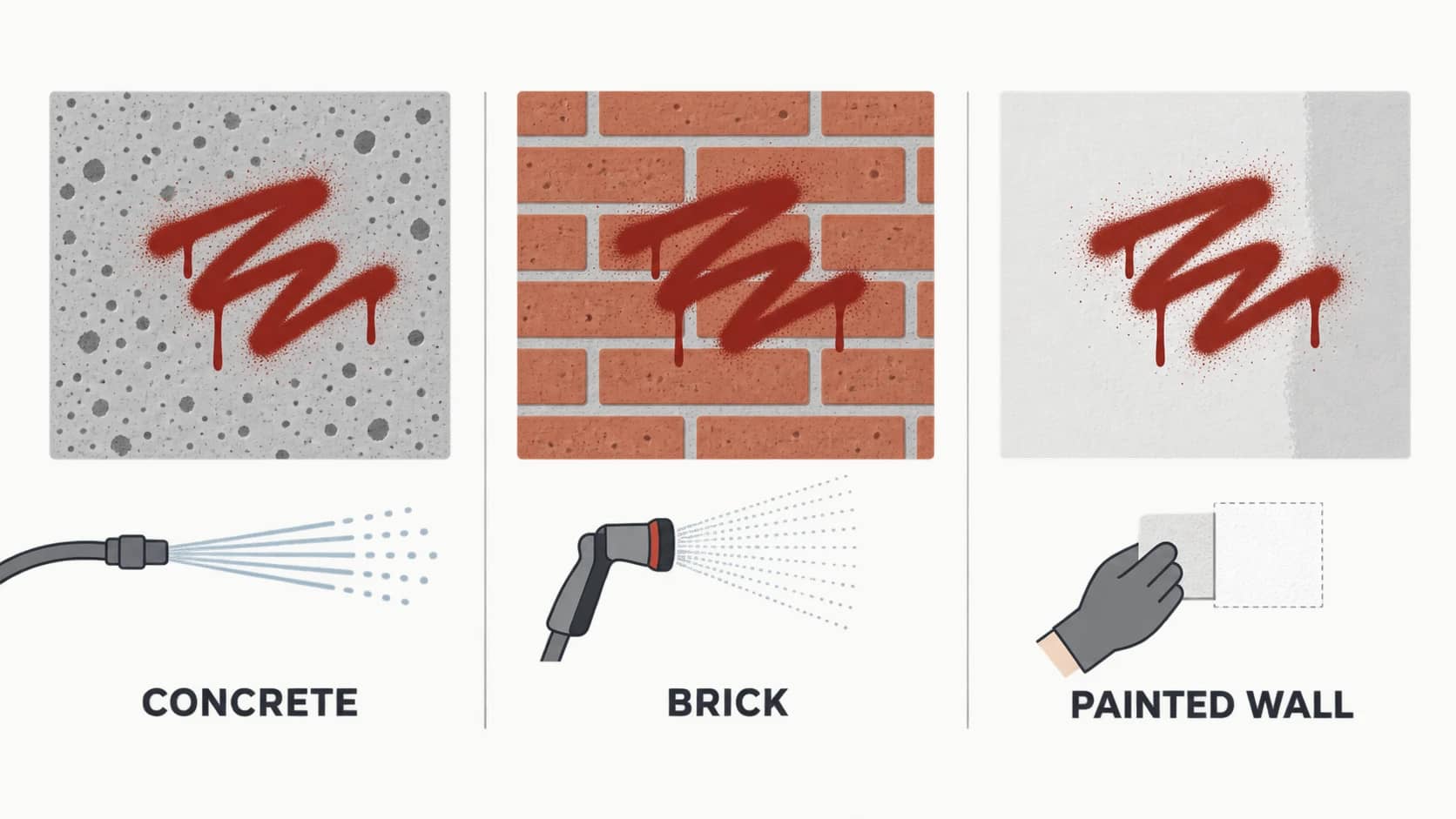
For property managers asking how to remove graffiti from concrete, start by identifying the paint and testing a concrete-safe graffiti remover in an inconspicuous spot. Let the product work as directed, gently agitate if needed, then rinse with controlled pressure while collecting wash water. Inspect the dry surface before repeating treatment.
How to remove graffiti from concrete
On bare commercial concrete, a concrete-safe graffiti remover followed by gentle agitation and a controlled rinse is a practical starting method. The aim is to break down the paint before rinsing it away, rather than using water pressure to cut into the concrete.
First, photograph the tag and identify the surface. Bare cast concrete, precast panels, sealed walkways and painted concrete may look similar from a distance, but they do not tolerate the same cleaner or rinse method. Check for previous repairs, a protective coating and loose or weathered areas. A commercial building washing method guide can help when the tag crosses more than one facade material.
Choose a graffiti remover whose label permits use on that surface and on the type of mark present. Test a small, inconspicuous area, including the planned rinse method. Let the test area dry before judging it: wet concrete can hide a pale patch, remaining pigment or a change in surface texture. If the product changes the color or finish, stop and choose another method.
Apply the remover according to its instructions and keep it within the marked area as much as practical. Allow the specified dwell time, then use a suitable soft brush if the label calls for agitation. Rinse at the lowest effective pressure, keeping the spray controlled around joints, edges and adjacent finishes. Collect the runoff rather than allowing cleaner and loosened paint to travel across the site.
Check the result after the concrete dries. Remaining color may call for another compatible treatment; a roughened or unusually light patch is a reason to stop, not to increase pressure. A small test area is especially useful on a prominent entrance wall, where an unevenly cleaned rectangle may be as noticeable as the original tag. For routine hard-surface maintenance beyond the marked area, see commercial pressure washing.
Choose the method by surface and finish
Use the least aggressive method that removes the mark without changing the underlying material. Porosity determines how deeply pigment can travel, while paint, sealers and architectural finishes determine what the cleaner might remove along with the graffiti.
| Surface | Starting approach | Main risk | When to stop and reassess |
|---|---|---|---|
| Bare concrete or precast | Test a concrete-safe remover, gently agitate and rinse with controlled pressure. | Etching, exposed aggregate or a lighter cleaned patch. | The surface becomes rough or the test area changes color. |
| Unsealed brick or porous masonry | Test a masonry-compatible remover and use a gentle rinse. | Pigment remaining in pores or damage to mortar and brick faces. | Mortar loosens or the brick face starts to shed. |
| Painted concrete, stucco or wall panels | Test whether the graffiti can be lifted without softening the base coat. | Loss of the intended paint or a visible repair patch. | The base color transfers to the cloth or rinse water. |
| Coated or sealed surface | Check the coating guidance before selecting a cleaner. | Stripping or clouding the protective finish. | The coating loses its appearance or water behavior. |
Treat that table as a starting point, not a substitute for a test patch. A tag may span a concrete column, painted wall and metal door frame. Each part needs its own method, and runoff from one part can stain another. Where a site has recurring exterior stains, a broader commercial exterior cleaning plan can record finishes and past cleaning methods so the next assessment starts with better information.
Why a graffiti shadow remains after cleaning
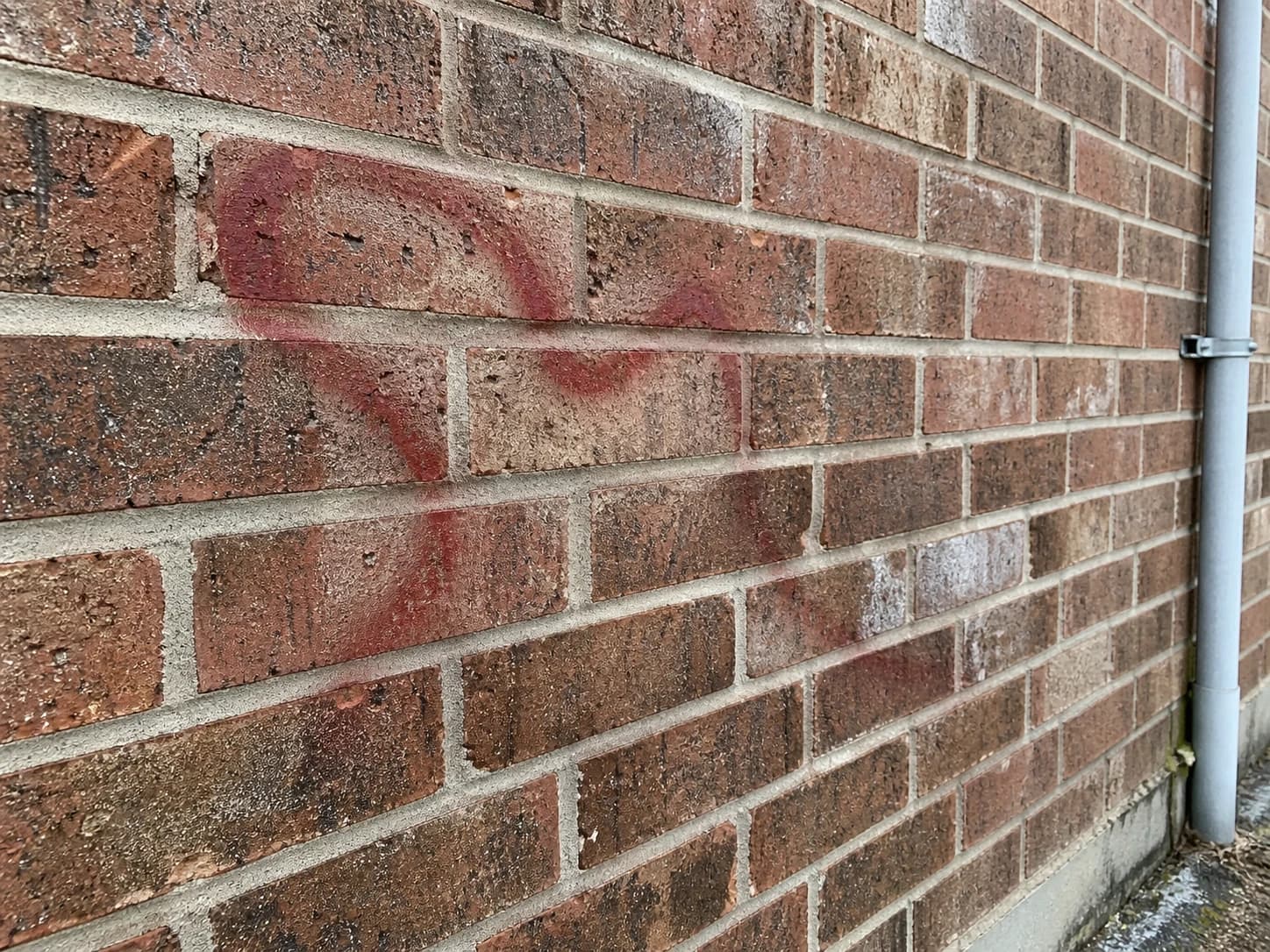
A shadow can remain when pigment has moved into pores below the material's surface. It can also appear when cleaning changes the surface around a tag, leaving a lighter or rougher patch; the next step depends on which condition you see.
Let the area dry completely before deciding that paint remains. If the texture is intact and colored pigment is still visible, a second treatment with a product suited to porous masonry may help. Test that treatment first. Repeated wetting or stronger pressure without a clear reason can spread residue or make the cleaned area stand out.
If the surface is already etched, abraded or stripped, more graffiti remover will not restore its original texture. A repair may require a finish decision, such as a larger blended cleaning area, a compatible coating or repainting. On a highly visible commercial elevation, agree on the acceptable appearance before treating the full tag. Complete pigment removal and a uniform facade are related goals, but they may call for different work.
Brick needs particular care because both the brick face and mortar are exposed. Avoid assuming that a method tested on concrete is safe for brick. A gentle rinse can remove dissolved paint while preserving the masonry, but a deeply absorbed mark may still require further assessment. The same distinction matters for oil stains on commercial concrete: what remains below a porous surface often needs a different treatment from residue sitting on top.
Painted walls need a coating-first decision
On a painted wall, determine whether the graffiti can come off without removing the wall's intended finish. If the base paint softens during testing or is already weathered, repainting the affected area may produce a more even result than repeated chemical cleaning.
Start with the coating type and condition, then test the mildest compatible cleaner in a discreet spot. A cleaner that works on bare concrete may lift architectural paint. Likewise, a water stream that seems gentle on a sidewalk can peel a weak coating at a seam or existing chip. Watch for base color on the applicator, changes in sheen and softened edges.
If cleaning succeeds, assess the wall after it dries and in normal daylight. A clean patch can still differ from surrounding paint that has faded or collected soil. If repainting is the sensible option, decide whether a small repair can blend into the wall or whether a natural break, such as a corner or control joint, provides a better boundary. Record the paint information for future maintenance if it is available.
The same caution applies to coated metal and sealed panels. Smooth materials often release graffiti more readily than porous masonry, but their factory or field-applied finishes can be sensitive to a remover. Test the finish rather than assuming the underlying metal determines the method.
Plan the rinse water and protect the work area
Decide how the rinse water will be contained before applying a remover. Graffiti cleanup can carry dissolved paint and cleaning product across a walkway or toward a storm drain, so the cleaning method and water plan belong in the same scope.
The US EPA's MS4 rule requires permittees to effectively prohibit non-stormwater discharges into storm sewer systems and maintain an illicit discharge detection and elimination program. Florida DEP administers the state's NPDES stormwater program. Those rules make it important to identify nearby drains, agree on containment and confirm how collected water will be handled at the particular property. Do not assume that rinsing a wall into the nearest inlet is acceptable.
Pedestrian access also needs attention. If the tag is near a hotel entrance, storefront or condo walkway, arrange a work area that keeps people clear of wet pavement, hoses and cleaning product. OSHA requires workplace walking surfaces to be kept clean and maintained in a safe condition. Schedule the work around the property's actual access needs, then inspect the route before reopening it.
Ask for the proposed cleaner, test location, rinse method and water-control plan in the scope. These details make it easier for a manager or board to compare approaches and understand what result is realistic. For contractor documentation on a larger exterior project, the certificate of insurance guide provides a separate review checklist.
Set up a practical graffiti response
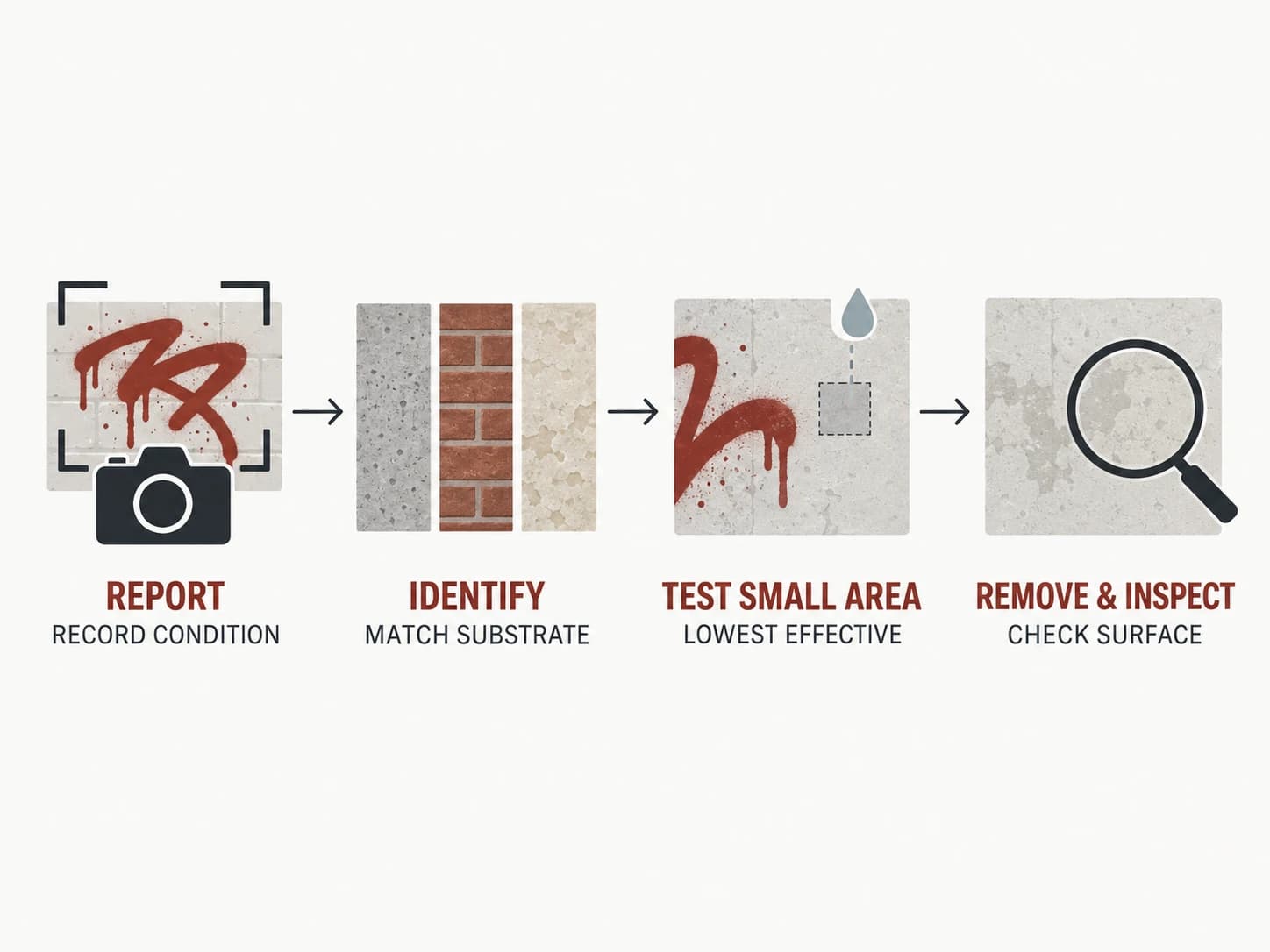
A useful response plan tells staff how to report a tag, who approves the work and what surface information the cleaner needs. Prompt reporting gives the property more options, but the method should still be tested before the full area is treated.
Have the person who discovers the tag photograph its location and the surrounding surface. Record whether it crosses brick, bare concrete, paint, signage or a coating, and note nearby drains and public access. Preserve any documentation the property needs before cleaning begins. A location photo also helps distinguish old staining from the new mark when the area is inspected later.
Keep a simple finish record for frequently tagged walls. It can list paint colors, known coatings, previous repairs and any cleaner that visibly changed the surface during a test. For recurring incidents, decide in advance who can approve a test patch, a full removal attempt or repainting. That avoids making a rushed method choice at the wall.
Set an appearance standard that matches the material. On bare, weathered concrete, the target may be removal of the visible mark without creating a sharply brighter patch. On a painted wall, it may be a uniform repaint between natural boundaries. Ask the contractor to say up front if a porous surface is likely to retain a shadow, and inspect the area after it dries before closing the job.
Consider a protective coating for repeat locations
A compatible anti-graffiti coating can make future cleaning easier on a repeatedly tagged surface. It still needs a test area, an appearance review and a maintenance plan, particularly on porous masonry where changes in color or sheen may be visible.
Some systems are designed to be removed and reapplied after graffiti cleanup; others are intended to remain while the mark is cleaned from their surface. Neither description tells you how a particular coating will look on your wall or which cleaner it requires. Request the manufacturer's instructions and test the complete cycle: application, graffiti removal and the resulting finish.
Evaluate the location before coating an entire facade. A small, repeatedly marked service wall may justify a different treatment from a prominent brick entrance. Check how the proposed coating meets adjacent uncoated areas and whether future repairs will be noticeable. The best choice is the one the property can maintain consistently without compromising the material's appearance.
Frequently asked questions
The right answer starts with the surface, its finish and a small test. These common questions cover what a manager can assess before approving a full removal method.
Can you remove spray paint on concrete?
Yes, spray paint can often be removed from bare concrete with a remover labeled for concrete, followed by gentle agitation and a controlled rinse. Test both the product and rinse method first. Because concrete is porous, some pigment may remain after the surface paint is gone. Judge the result only after the area dries.
Does rubbing alcohol remove graffiti?
Rubbing alcohol may affect some fresh marks, but it is not a reliable general method for spray paint on porous concrete. It can also affect an existing coating or painted finish. If someone proposes using it, test a small hidden area and check the finish after it dries. A product specified for the mark and substrate is a better starting point for a commercial wall.
What removes marking paint from concrete?
First confirm what kind of marking paint is present and whether the concrete is bare, sealed or painted. Test a concrete-compatible paint or graffiti remover and follow its label, including the recommended dwell and rinse method. Marking paint may be embedded in the surface texture, so avoid escalating pressure simply because color remains after the first pass.
What is the best way to remove paint from concrete?
For an unwanted painted mark on bare concrete, start with a compatible remover and a test patch, then rinse at the lowest effective pressure. The best method changes if the paint covers a large area, the concrete has a sealer or the paint is part of the intended finish. Define what should remain before choosing a product.
How do you remove graffiti from brick?
Test a remover intended for porous masonry on both the brick and mortar. Follow its instructions, gently rinse and inspect the area after it dries. Brick can hold pigment below the face, so a faint shadow may remain even when surface paint is gone. Stop if the brick face sheds or mortar begins to loosen.
Sources
The regulatory and workplace safety points above come from the following primary sources. Product choice and application should follow the instructions for the cleaner and the specific surface being treated.
For a property-specific method and scope, ask about 2Clean's commercial and HOA exterior care program.
Custom Commercial & HOA Walkthroughs
Need a scope tailored to your South Florida property?
Every building, plaza, and community has its own surface mix, access windows, and drainage layout. We quote by walkthrough rather than fixed rate sheets so your proposal matches your exact property. Call us directly at (904) 826-9806 or request a written scope online.
Related services & tools
Pressure Washing by South Florida city: