
Maintenance Scheduling
Sidewalk Pressure Washing for South Florida HOAs and Commercial Frontage
October 29, 2026 (updated) · 9 min read
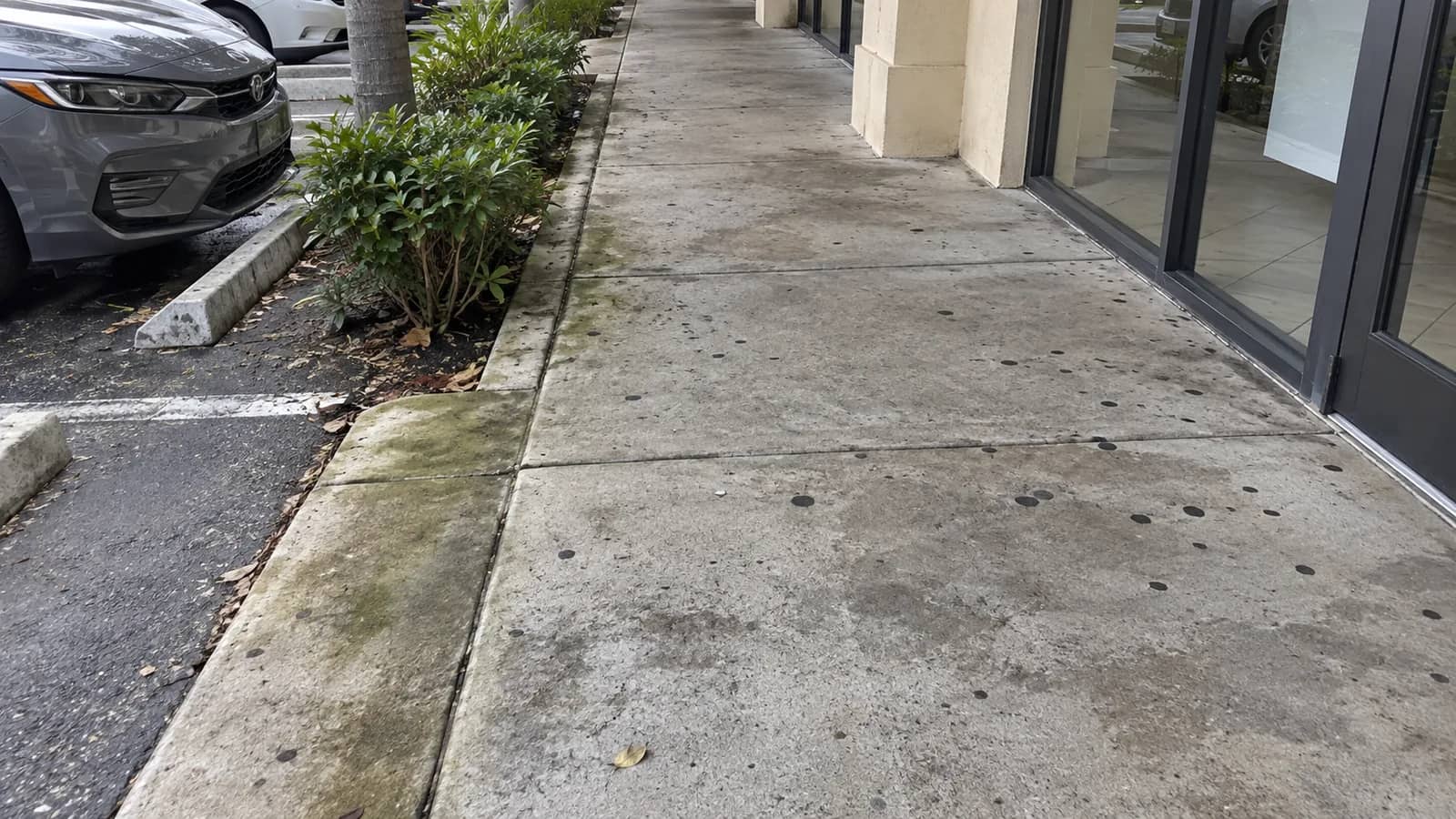
Sidewalk pressure washing works best as a planned maintenance task, with high traffic entrances, shaded walkways, and stained areas assessed separately. For a South Florida HOA or commercial frontage, the right method also depends on the surface, nearby landscaping, pedestrian access, and where the wash water will go.
Planning work for shared entrances and walkways? Our commercial pressure washing and HOA scope explains the surfaces, access arrangements and management responsibilities to agree before scheduling.
Where sidewalk pressure washing belongs in a maintenance plan
Sidewalks need attention when buildup affects appearance, leaves a slick film, or makes an entrance look neglected. A fixed propertywide schedule can be a useful starting point, but site conditions should determine which sections receive attention first.
In South Florida, the wet season generally runs from May to October. Shade from buildings and planting beds can keep sections damp longer, while salt air, windblown grit, irrigation spray, and frequent foot traffic affect exposed frontage in different ways. A walkway beside a shaded planter may show green buildup well before an open stretch of concrete does.
Treat the sidewalk as part of the wider exterior plan. An entrance that is washed just before nearby facade work or landscape cleanup may need another visit sooner than expected. The South Florida commercial property exterior maintenance checklist can help place walkway work alongside those other tasks.
For a first assessment, walk the route a visitor actually takes. Look at arrival points, accessible paths, curb ramps, trash areas, outdoor seating, and transitions to parking. Record what is on the surface and where water naturally flows. Photos taken from consistent positions make it easier to see whether a problem is spreading or simply returning in the same damp spot.
Map sidewalk cleaning zones before setting frequency
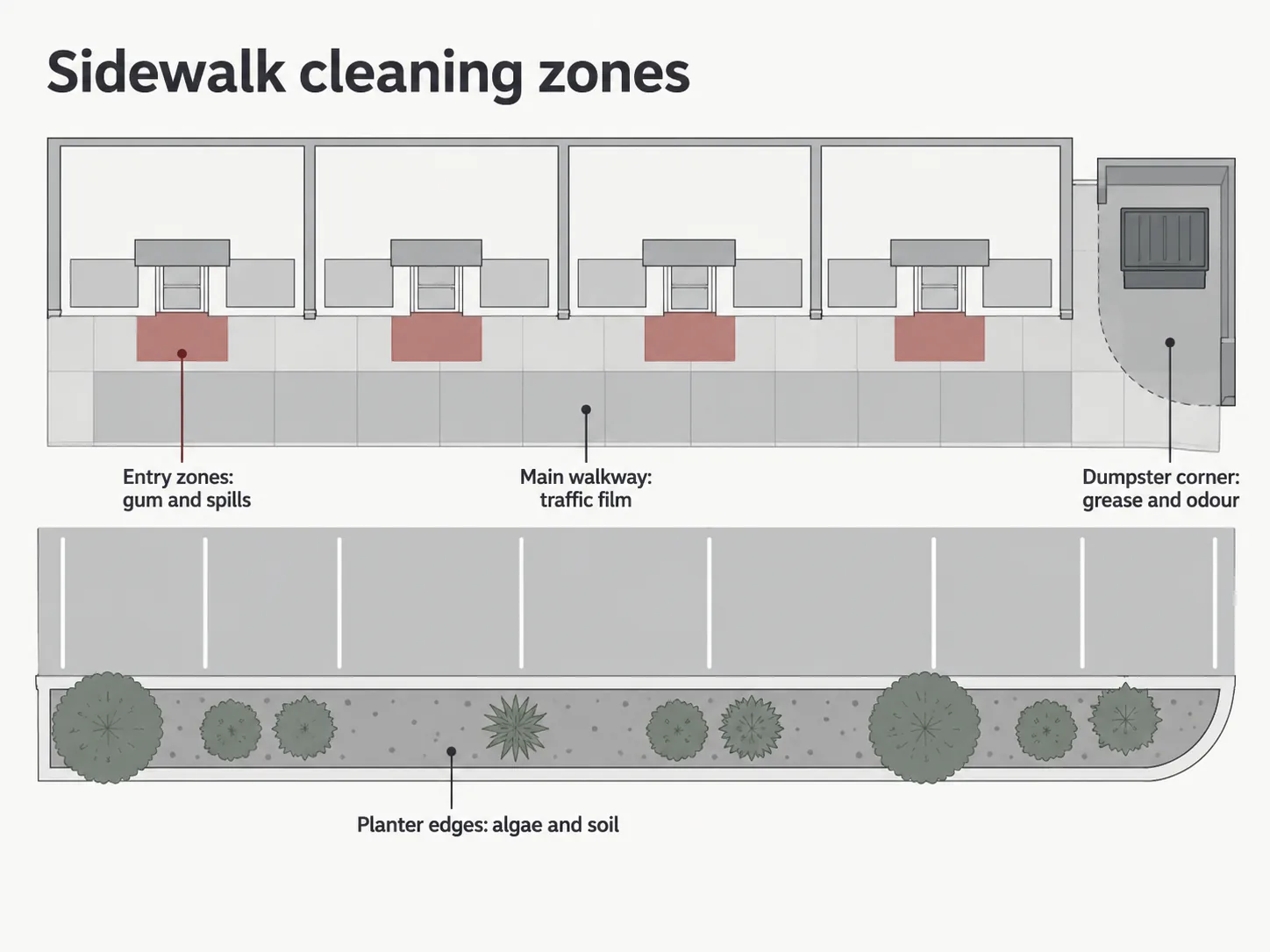
Divide the frontage into zones based on use and the kind of buildup present. This gives a property manager a clearer scope for a contractor and helps a board understand why one walkway may need more frequent service than another.
| Zone | What to look for | Scheduling response |
|---|---|---|
| Entrances and accessible routes | Heavy foot traffic, tracked soil, food spills, or slick patches | Inspect often and prioritize visible buildup before it spreads across the route |
| Shaded walks near planters | Green film, irrigation marks, damp edges | Check after sustained rain and address the moisture source where practical |
| Retail seating and pickup areas | Gum, grease, drink spills, concentrated staining | Plan stain treatment separately from general washing |
| Open perimeter walks | Windblown grit, salt residue, uneven weathering | Group into routine cleaning unless conditions change |
| Drainage low points | Sediment, standing water, runoff toward inlets | Clear the underlying drainage issue and plan wash water control |
The zone map should also mark doors, loading times, power sources, delicate landscaping, and places where pedestrians can be redirected. For occupied properties, notifying tenants and residents about exterior cleaning work helps people plan around temporarily closed paths.
Frequency is a decision to revisit, not a promise made from a photo. Start with the observed condition, clean the priority zones, and compare how they look on later walks. If only a few sections deteriorate quickly, targeted visits may make more sense than washing every square foot at the same interval.
Choose the method by surface and stain
Broad, sound concrete usually suits controlled pressure washing with a surface cleaner. The tool covers a wider area more evenly than a narrow spray wand, while edging and spot work still require separate attention. Its benefit is consistency; its limit is that it does not identify or remove every stain by itself.
Pre-treatment can help loosen organic growth or oily soil before rinsing, but the product must match the contaminant and surrounding materials. Gum often needs focused removal. Rust and irrigation stains may need a specific treatment rather than more pressure. A contractor should identify the stain first, test a discreet area when appropriate, and explain what may remain.
More pressure is not automatically better. On weak concrete, exposed aggregate, older repairs, or damaged joints, an aggressive pass can leave visible marks or dislodge material. Pavers add joint sand and possible sealer to the decision. The same setting that looks acceptable on one section may be wrong a few steps away.
Soft washing relies on a suitable cleaning solution and a gentler rinse. It can be useful around vulnerable finishes or for organic buildup, but chemical selection, dwell time, plant protection, and runoff still matter. A mixed frontage may call for pressure washing on durable flatwork and a different process at adjacent painted or delicate surfaces.
Ask the contractor to separate three parts of the proposed work: general surface cleaning, stain treatment, and any restoration or repair. Cleaning can improve a darkened sidewalk, but it cannot correct a broken slab, a persistent drainage defect, or all discoloration embedded in the material.
Keep pedestrians and wash water in the plan
A sidewalk cleaning plan has to account for the route while it is wet and while equipment is in use. Schedule work so people can reach occupied entrances through a clearly identified alternate path, and avoid directing rinse water across the route they are expected to use.
OSHA's walking surface rule calls for workplace walking surfaces to be kept clean, inspected, and maintained in a safe condition. The ADA Standards call for floor and ground surfaces to be stable, firm, and slip resistant. Those standards support paying attention to slick buildup and accessible routes, but cleaning alone does not establish that a route meets every applicable requirement.
Wash water needs its own plan. The EPA's municipal storm sewer rule requires permittees to address illicit non-stormwater discharges, and Florida DEP administers the state's municipal stormwater program. Local site and permit conditions affect the appropriate controls. Before work starts, identify nearby storm drains and ask how the crew will contain, recover, or otherwise manage runoff, particularly when detergents or stain removers are used.
That discussion is useful for comparing proposals. A scope that names the cleaning method but says nothing about entry access, adjacent plants, or drainage leaves important work decisions unresolved. For larger properties, include those details in the service map or work order so the person opening the site and the cleaning crew are working from the same plan.
Account for South Florida weather and shared-property duties
Weather should shape the timing of sidewalk cleaning without turning every rain event into a service call. Inspect shaded and low lying sections during the May to October wet season, then review what accumulated when conditions change.
The Atlantic hurricane season runs from June 1 to November 30, according to NOAA. Before a storm, the useful sidewalk task is clearing loose debris and checking that drains and pedestrian routes are accessible. After a storm, inspect for sediment, displaced materials, pooled water, and physical damage before arranging cleaning. The building exterior hurricane preparation guide covers how that inspection fits into the wider property plan.
For condominium property, Florida Statutes section 718.113 generally assigns common element maintenance to the association, subject to the declaration's treatment of limited common elements. HOA responsibilities depend on the governing documents and the particular walkway. A manager should confirm who controls each section before placing shared walks, storefront approaches, or adjoining public areas into a contract.
Condo milestone inspections and structural integrity reserve studies address separate statutory requirements for qualifying buildings. Routine sidewalk cleaning does not replace either process. If a walkway shows settlement, cracking, drainage failure, or another condition beyond surface soil, document it for the appropriate maintenance or professional review rather than treating it as a washing issue.
Scope commercial and HOA sidewalk cleaning so bids are comparable
A useful scope describes the actual walkways, their condition, and the expected access constraints. It should distinguish routine cleaning from gum removal, rust treatment, stain work, and any surfaces that need special care.
Measure or map the sections to be included, then note material changes, drains, landscape borders, furniture, operating hours, and places where vehicles or pedestrians could interrupt the work. If after hours access would reduce disruption, weigh that against the extra coordination it requires. The guide to night and after hours exterior cleaning explains that trade-off for occupied sites.
Ask bidders to state how they would clean each surface, protect nearby areas, manage runoff, and reopen the route. Also ask which marks they expect to improve and which may remain. That makes the proposals easier to compare than a single line for "sidewalk washing" and gives the board or facilities lead a practical basis for approving the work.
For an HOA sidewalk cleaning programme, keep the zone map and condition photos with the service record. They help distinguish recurring organic growth from a one-time spill and show when a drainage or landscape change deserves attention. On a commercial frontage, the same record helps coordinate cleaning with tenant activity and other exterior work.
For a written price for your property, call or text a photo to (904) 826-9806, or request a property walkthrough. Include the surfaces, location and access requirements so the scope can be reviewed.
Frequently asked questions
What should I spray on my sidewalk before pressure washing?
Use a product selected for the surface and the material causing the stain. Organic buildup, grease, gum, and rust do not respond equally to one cleaner. Check nearby plants, metal, painted finishes, and the runoff path before applying anything. On a managed property, have the contractor explain the proposed product and rinse plan rather than prescribing a treatment from appearance alone.
How to use a pressure washer surface cleaner?
A surface cleaner is used on suitable flat areas to make overlapping passes at a controlled pace. Loose debris should be removed first, and the operator should check the concrete's condition and test the setup before covering the full walk. Edges, corners, gum, and embedded stains still need separate work. Excessive pressure or lingering in one spot can leave an uneven finish.
How to clean a dirty sidewalk without a pressure washer?
For a small area, start by sweeping away loose grit, then use a surface appropriate cleaner, agitation, and a controlled rinse. Keep the rinse water away from storm drains and occupied walking routes. This can address light soil or a fresh spill, but large areas, persistent organic film, and deeply set stains usually need a more deliberate method and access plan.
How often should commercial sidewalks be cleaned in South Florida?
Set the initial schedule from traffic, shade, drainage, and the type of soil present, then adjust it after inspecting the cleaned areas. Entrance paths and damp planter edges often need attention sooner than open perimeter walks. The most useful record is a zone map with repeat photos, because it shows which sections change and whether cleaning or a site repair is needed.
Does pressure washing remove every dark mark from concrete?
No. Surface soil and some organic buildup may clean well, while rust, oil, irrigation staining, old repairs, and wear can remain visible. A contractor may recommend a separate stain treatment or explain that removal is uncertain. Ask for that distinction in the scope so an improved surface is not mistaken for a promise of uniform color.
Sources
For help turning a sidewalk zone map into a propertywide scope, see 2Clean's commercial and HOA exterior care.
Custom Commercial & HOA Walkthroughs
Need a scope tailored to your South Florida property?
Every building, plaza, and community has its own surface mix, access windows, and drainage layout. We quote by walkthrough rather than fixed rate sheets so your proposal matches your exact property. Call us directly at (904) 826-9806 or request a written scope online.
Related services & tools
Pressure Washing by South Florida city: