Commercial Exterior Cleaning (Hub)
Commercial Roof Cleaning in South Florida: Choose the Method by Roof Type
October 29, 2026 (updated) · 10 min read
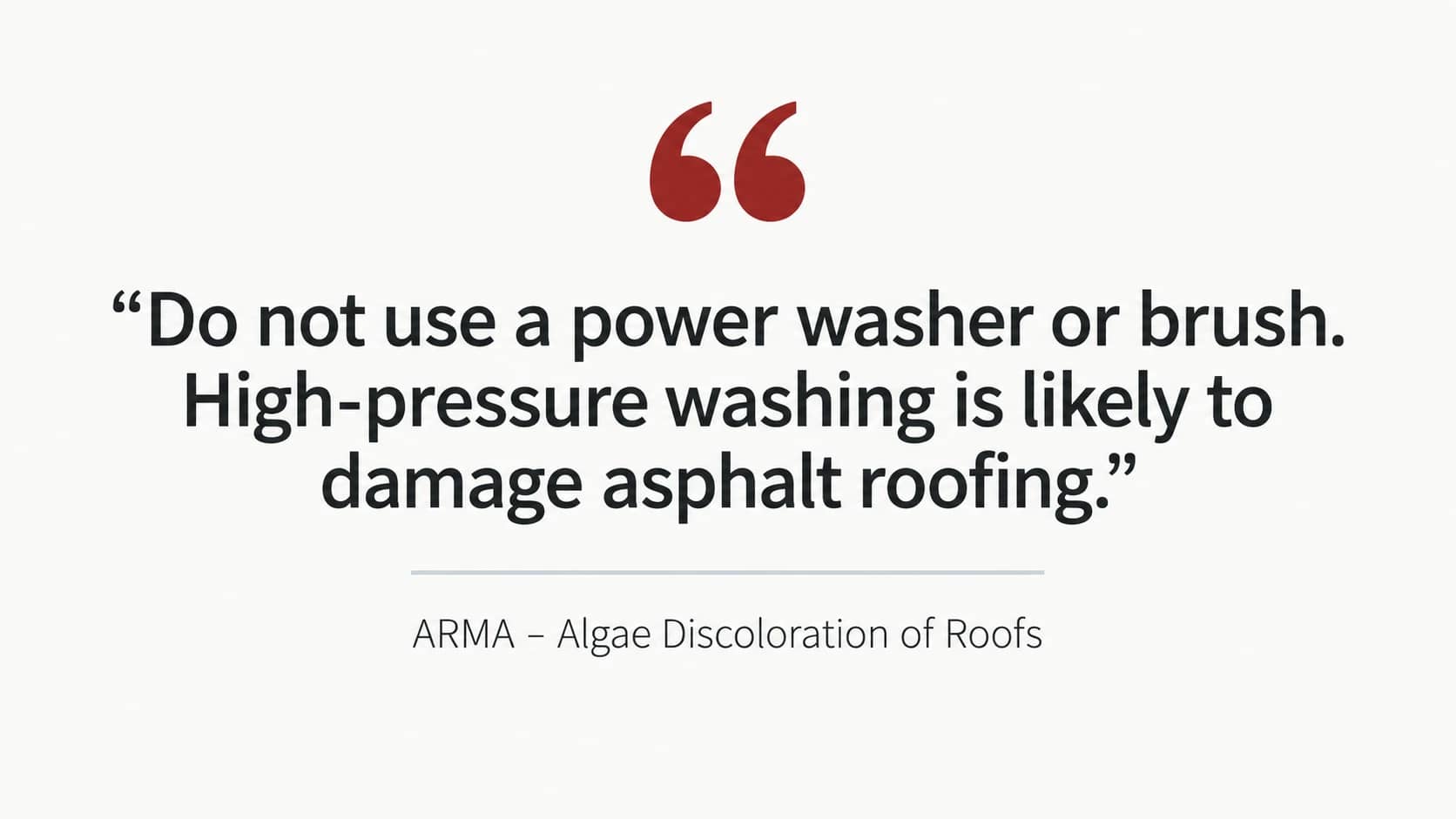
Commercial roof cleaning should start with the roof material and the reason for cleaning. For asphalt roofing, the Asphalt Roofing Manufacturers Association (ARMA) recommends a cleaning solution and gentle rinse, and warns that high-pressure washing is likely to cause damage. Other commercial roofs need their own manufacturer-approved methods, with drainage and rooftop equipment accounted for before work begins.
For a managed Miami building, review our roof-cleaning scope in Miami, covering roof material, access, preparation and the exclusions to confirm before scheduling.
Commercial roof cleaning starts with the roof system
The right cleaning method depends on what the roof is made of, how it drains and what the building needs removed. A dark stain on asphalt shingles calls for a different decision from standing debris around a low-slope roof drain. Ask the contractor to identify the roof system before describing the treatment.
For a property manager, the first distinction is between appearance and function. Algae staining may be chiefly an appearance concern, while debris that blocks drainage needs attention regardless of how the roof looks from the ground. Neither observation, by itself, tells you that the entire roof needs a chemical wash.
A roof can also contain more than one surface. An asphalt section, coated metal canopy, membrane roof and tile entrance feature may share a building but require separate methods. Rooftop units, exposed sealant, repairs and drainage points add limits to where a solution can be applied and how it can be rinsed away.
That is why a proposal reading only "clean roof" leaves too much unresolved. It should name the surfaces to be cleaned, the staining or debris being addressed, the proposed method for each surface and any areas excluded pending inspection. The commercial exterior cleaning guide for property managers places roof work in the wider maintenance plan; the roof scope still needs its own detail.
How the cleaning method changes by roof type
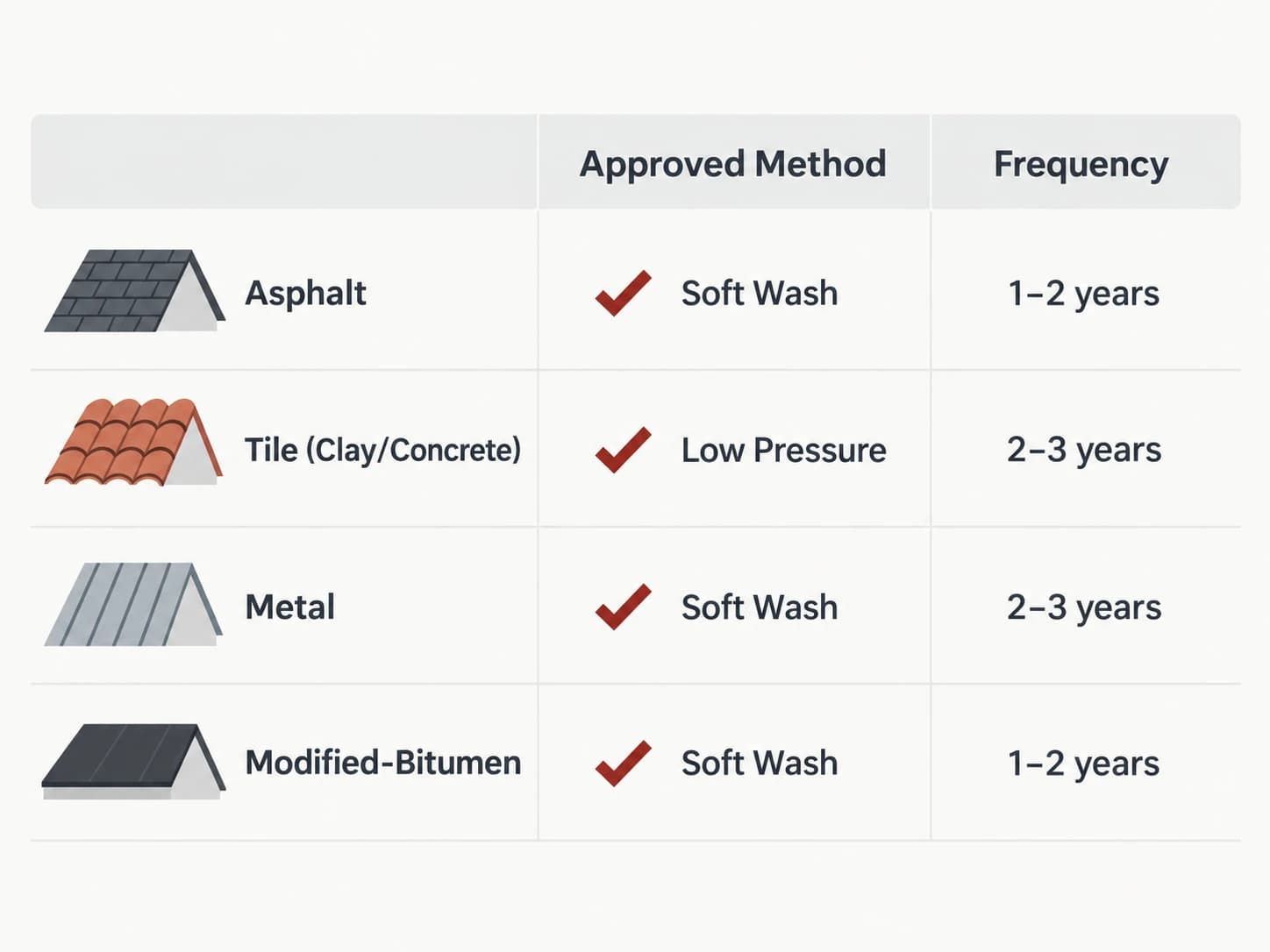
Roof type determines which cleaning advice applies. ARMA's warning concerns asphalt roofing; it should not be presented as a universal instruction for tile, metal or every low-slope membrane. For those systems, obtain the roof manufacturer's cleaning guidance and assess the condition of the installed roof.
| Roof surface | Starting point for the cleaning scope | Check before work |
|---|---|---|
| Asphalt roofing | Follow ARMA's guidance for algae discoloration: an appropriate sodium hypochlorite solution and gentle rinse. | Identify worn areas, repairs and places where runoff needs control. |
| Clay or concrete tile | Decide whether washing is needed at all; professional low-intensity washing is an option if desired. | Check for loose or broken tile and plan access without unnecessary foot traffic. |
| Coated metal | Use the panel and coating manufacturer's approved cleaner and rinse method. | Check the coating condition, seams and nearby materials that may react to the cleaner. |
| Low-slope membrane or modified bitumen | Follow the specific roof-system manufacturer's instructions and address loose debris separately. | Locate drains, seams, penetrations, repairs and rooftop equipment. |
The table is a scoping guide, not permission to use one solution across an entire property. A cleaner suitable for one finish may be unsuitable for another, and a roof with visible damage may need a roofer's assessment before cleaning. Ask for the product and application method in the proposal so those choices can be checked against the roof documents.
High pressure should not be used as a shortcut for heavy staining. On asphalt roofing, ARMA says not to use a power washer or brush because high-pressure washing is likely to damage the material. On other surfaces, the question is what the manufacturer permits and what the roof's current condition can tolerate.
What ARMA says about asphalt roof stains
ARMA identifies Gloeocapsa magma as the organism associated with dark algae discoloration on asphalt roofing. Its Algae Discoloration of Roofs bulletin recommends a sodium hypochlorite solution followed by a gentle rinse. It also says not to use a power washer or brush because high-pressure washing is likely to damage asphalt roofing.
This guidance is useful when an asphalt roof has the familiar dark streaking that prompted a cleaning request. It supports a specific treatment for a specific material and condition. It does not establish that every dark patch on every commercial roof is algae, or that an asphalt-roof solution belongs on a membrane, metal coating or tile feature.
ARMA also describes the cleaning result as temporary. That matters when a board or facilities lead is deciding whether a stain justifies work: cleaning can improve appearance, but the same exposure that allowed staining may allow it to return. A proposal should explain what visible change is expected and what may remain after treatment.
South Florida's warm, humid coastal conditions make recurring staining a practical maintenance consideration. Rather than promising a fixed interval between cleanings, document the roof's condition and inspect it as part of the property's maintenance routine. Photos taken from consistent viewpoints can help a manager distinguish a returning stain from a new drainage or repair concern.
Low-slope commercial roofs and tile roofs need different decisions
A low-slope commercial roof usually calls for a close look at drainage, membrane condition, penetrations and rooftop equipment. Tile cleaning is more often a decision about whether its appearance warrants washing. Treating both as a routine whole-roof wash can miss the reason work is needed.
On a low-slope roof, loose debris around a drain may need removal even when the membrane does not need a cleaning solution. Dirt or biological staining elsewhere may justify cleaning only if the roof-system manufacturer's instructions allow the proposed product and method. A stained area near a seam or repair also deserves inspection before anyone tries to wash it away.
The Tile Roofing Industry Alliance describes clay and concrete tile as essentially maintenance-free. It says professional low-intensity pressure washing can be done if desired. That is a narrower position than saying tile must be washed regularly, and it does not justify aggressive pressure or careless access over fragile or already damaged sections.
For a mixed-use South Florida property, these distinctions affect budgeting. A tile entry roof may be left alone if its appearance is acceptable, while a low-slope section may need debris cleared from drainage paths. The decision should come from the condition and purpose of each roof area, not a single property-wide cleaning schedule.
How a soft wash works and where its limits are
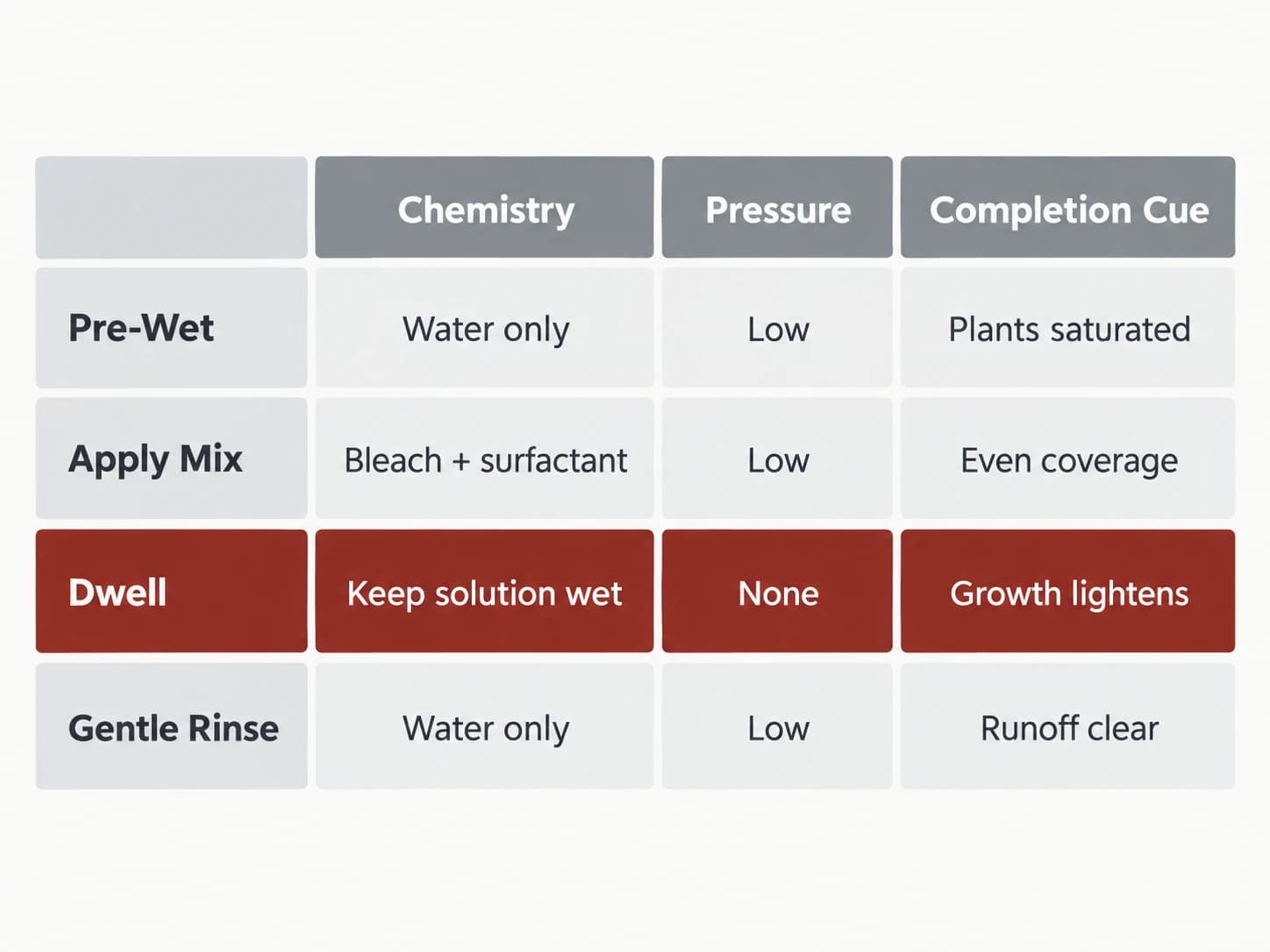
A soft wash applies a suitable cleaning solution, gives it time to act on organic staining and removes the residue with a gentle rinse. The chemistry does the cleaning that a forceful water stream might otherwise be asked to do. That approach still requires a product and process appropriate for the particular roof.
For asphalt algae discoloration, ARMA's bulletin supplies the relevant starting point: sodium hypochlorite and a gentle rinse. The contractor should explain the proposed mixture, where it will be applied, how adjacent materials and landscaping will be protected, and where rinse water will go. "Low pressure" alone does not answer those questions.
Dwell time is a practical trade-off. Rinsing before the solution has worked may leave staining behind; leaving an unsuitable product on a surface can create a different problem. The crew needs to follow the product directions and roof manufacturer's instructions, then adjust the work to the roof's condition rather than promising that every stain will disappear.
Commercial soft washing also applies to other delicate exterior surfaces, but those methods should not be copied onto a roof without checking compatibility. A roof has seams, drainage paths and equipment that a wall does not. Cleaning near an intake, drain or exposed repair calls for particular care.
What a useful roof-cleaning proposal should specify
A useful proposal gives the property team enough detail to approve the work and check the result. It identifies the surfaces, the cleaning goal and the method, then states how access, equipment and runoff will be handled. It should also say which conditions require the crew to stop and seek direction.
| Ask for | Why it matters |
|---|---|
| Roof material and areas included | Prevents a single method being applied to different roof systems. |
| Condition notes and photos | Separates staining and debris from possible repair issues. |
| Cleaner, application and rinse method | Lets the manager compare the plan with manufacturer guidance. |
| Access and equipment protection | Accounts for rooftop units, coatings, penetrations and vulnerable areas. |
| Drainage and runoff plan | Shows where debris and cleaning water will travel. |
| Expected result and exclusions | Makes persistent stains or pre-existing damage clear before work starts. |
Ask who will assess questionable seams, loose tile or damaged coatings. A cleaning contractor can document and flag these conditions, but cleaning should not stand in for a roofing diagnosis or repair. If the roof documents are unavailable, identifying the manufacturer and system may be the necessary first step.
The site plan matters too. Hotel guests, retail tenants and residents may be affected by access restrictions or water moving from the roof to entrances and walkways. Coordinate the work with other exterior maintenance so the team knows which areas need protection and when they can be reopened. For broader responsibility questions, the guide to what exterior building maintenance covers can help frame that discussion.
How to plan timing, frequency and cost
Clean when an inspection shows a clear reason, such as objectionable staining, accumulated debris or a drainage concern. There is no single cleaning interval that fits asphalt, tile, metal and low-slope systems across South Florida. Reinspect after weather exposure and compare current conditions with previous records before ordering another wash.
That approach helps separate roof cleaning from roof maintenance. A blocked drain may call for prompt debris removal. Recurring staining may support a planned appearance treatment. Loose tile, an open seam or a deteriorated coating calls for evaluation of the roof itself before a cleaning scope is approved.
Cost follows the work required, not just the roof's footprint. Access, material, staining, debris, rooftop equipment, runoff handling and the number of distinct roof areas all affect a quote. Ask bidders to describe those assumptions so you can compare the work behind the totals; an unexplained low figure is hard to evaluate.
If the roof is part of a larger exterior project, coordinate its scope with wall and ground-level cleaning. That may simplify site access and communication, while each surface still receives its appropriate method. The guide to commercial pressure washing cost in Miami explains broader exterior-cleaning cost drivers; a roof quote should remain specific to the roof system.
How to review the finished work
Review the result against the approved scope, not against an assumption that every mark will vanish. Confirm that agreed debris was removed, treated areas received the specified method, drains are clear of cleaning residue and protected equipment or adjacent surfaces were left as planned. Compare photographs from before and after the work where visibility from the ground is limited.
Persistent discoloration does not always mean the cleaning was skipped. Some marks may be staining rather than removable growth, and an aged surface may not return to a uniform color. The estimate should have described those limits before work began so a board or facilities team can judge the outcome fairly.
Record any area that needs follow-up, including a new concern exposed during cleaning. Keep those notes with the roof's inspection and repair history. That record gives the next contractor a clearer starting point and helps the property team decide when another cleaning is useful.
For a written price for your property, call or text a photo to (904) 826-9806, or request a property walkthrough. Include the surfaces, location and access requirements so the scope can be reviewed.
Frequently asked questions
These questions cover the decisions that most often affect a commercial roof-cleaning scope. The roof material and manufacturer guidance remain the starting point for any specific property.
Can you pressure wash a commercial roof?
It depends on the roof material and the method meant by "pressure wash." ARMA recommends against power washers on asphalt roofing because high-pressure washing is likely to cause damage. The Tile Roofing Industry Alliance says professional low-intensity washing of tile can be done if desired. For a membrane or coated metal roof, check the roof-system manufacturer's instructions and current condition before approving a method.
Do I need to pressure wash my metal roof?
No routine pressure wash follows simply from having a metal roof. First identify the panel finish, the material to be removed and any coating or seam concerns. Then use the manufacturer's approved cleaner and rinse method. If dirt is mainly gathering at drainage points, targeted debris removal may address the immediate need without washing the entire roof.
What is the average cost of cleaning a roof?
An average is a poor basis for a commercial roof budget because access, roof system, debris, staining and runoff handling change the scope. Ask for a site-specific quote that names the areas included and the method for each one. Compare exclusions and expected results alongside price so each proposal covers the same work.
How often should a commercial roof be cleaned?
Use inspection findings rather than a fixed calendar. Tile may need no cleaning for routine maintenance, while debris near a low-slope drain may need attention as soon as it is found. For appearance work, record when staining becomes significant to the property and review whether the proposed treatment follows the roof manufacturer's guidance.
Will soft washing remove every black roof stain?
No cleaning method can promise that without identifying the stain and checking the roof's condition. ARMA describes a treatment for algae discoloration on asphalt roofing and says its results are temporary. Other marks may remain, particularly on an aged or damaged surface. Ask the contractor to state the expected result and any visible limitations in the estimate.
Sources
For a roof-specific scope, 2Clean's roof cleaning service is a place to discuss the material, condition and cleaning goal.
Custom Commercial & HOA Walkthroughs
Need a scope tailored to your South Florida property?
Every building, plaza, and community has its own surface mix, access windows, and drainage layout. We quote by walkthrough rather than fixed rate sheets so your proposal matches your exact property. Call us directly at (904) 826-9806 or request a written scope online.
Related services & tools
Roof Cleaning by South Florida city: