
Commercial Exterior Cleaning (Hub)
Commercial Window Cleaning in South Florida: A Building Manager's Guide
October 14, 2026 (updated) · 11 min read
Commercial window cleaning in South Florida should be scheduled around what is happening on the glass, not a fixed distance from the coast. Start with a site inspection, then set the exterior cleaning interval according to salt deposits, spotting, visibility and tenant needs. Confirm access, glass condition and interior scope before requesting comparable quotes.
Set a cleaning frequency from the building's exposure
A coastal map can help identify buildings that deserve closer inspection, but it cannot prescribe a cleaning calendar. Wind direction, surrounding buildings, rainfall, landscaping and the position of each facade all affect how quickly windows show deposits. Treat the bands in the diagram as a planning prompt, then check the actual glass.
For a Miami-Dade, Broward or Palm Beach property, walk the exterior before setting the next service date. Look at the windward and sheltered elevations separately. Record salt film, water spots, construction residue, runoff marks and any areas where tenants report impaired views. A hotel facing open water may need attention sooner than a nearby building protected by other structures, even if both sit in the same map band.
Set an initial interval that fits the property's appearance standard and budget. After each visit, ask whether the glass was still acceptable just before cleaning or had been visibly overdue. Shorten the interval when deposits return early; lengthen it if the glass remains clear. This gives a board or facilities team a reason for its schedule that can be checked on site.
Exterior and interior glass may need different intervals. Salt, rain and irrigation affect the outside, while fingerprints and indoor activity affect the inside. Entrance doors, restaurant glazing and retail storefronts can also need touchups between full building visits. Keep those touchups separate in the scope so the recurring service is easy to compare and approve.
The Miami commercial exterior cleaning guide explains how window care fits into a broader maintenance plan. For windows, the useful decision is simpler: inspect the facades, agree on the acceptable condition and adjust the schedule when the evidence changes.
Choose access by facade, not a height chart
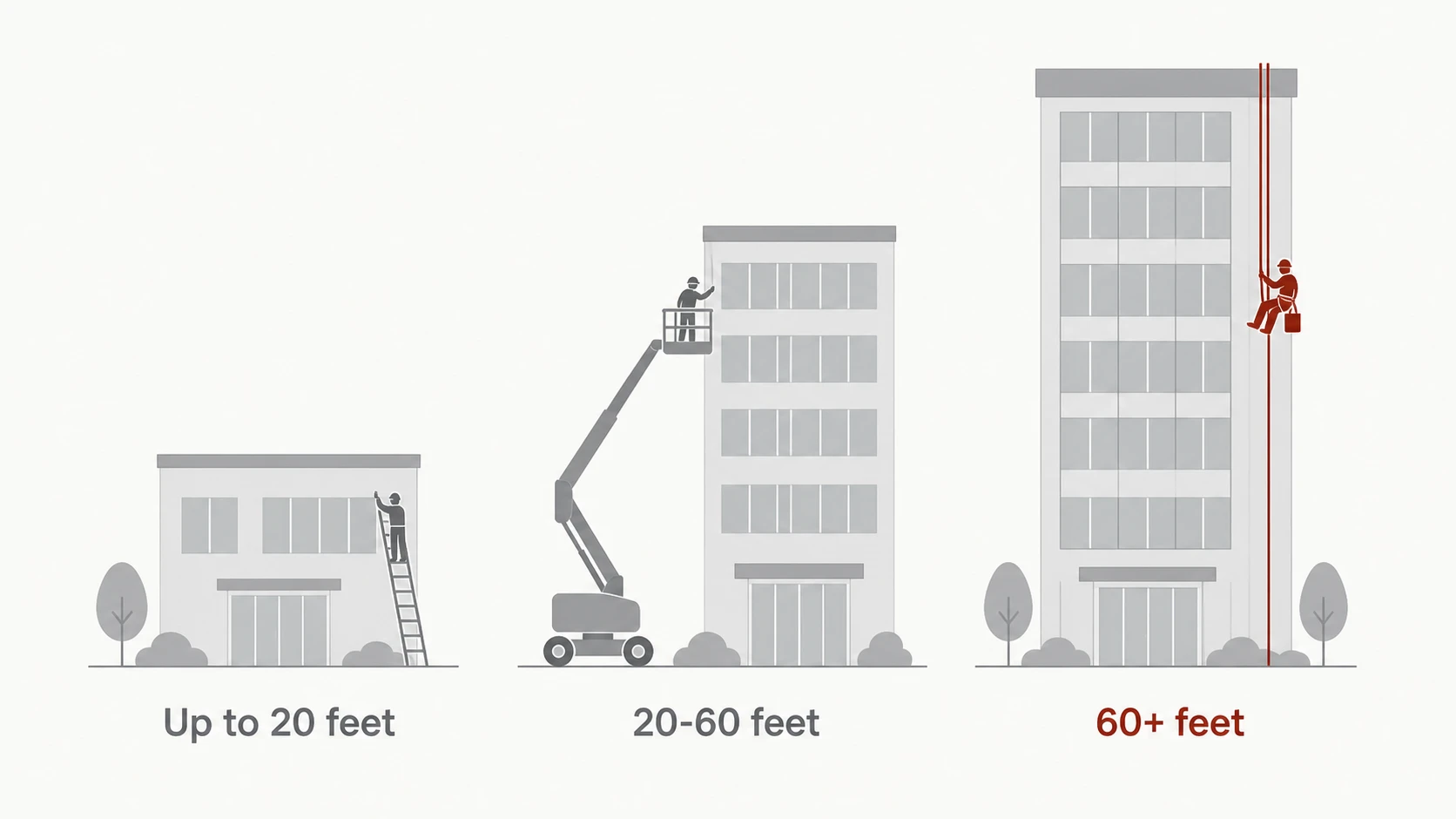
A building's height narrows the access options, but it does not select one on its own. The contractor also needs to know whether equipment can reach the glass without blocking entrances, damaging landscaping or crossing areas used by tenants. Ask for a proposed method for each facade rather than one method for the entire property.
Water-fed poles can be practical where technicians can work safely from the ground and reach the glass with purified water. They can reduce the need to place equipment against the building, but they may be unsuitable for recessed panes, heavy bonded deposits or areas where runoff would create a problem. The crew still needs room to work and a plan for water near doors and walkways.
Lifts can serve windows that are beyond ground-based reach when the site has suitable access and a stable place to position the equipment. Their reach and movement may be constrained by canopies, trees, parked vehicles and loading areas. A lift plan should identify where it will enter, stand and move, along with the tenant spaces that will be affected.
Rope access may be considered for facades that cannot be reached efficiently from the ground or by lift. Its suitability depends on the building's approved attachment points, roof access, facade geometry and a site-specific work plan. The International Window Cleaning Association works on industry safety, education and research and holds an OSHA Alliance. Association membership, however, is not a substitute for reviewing the proposed method for your building.
| Site condition | Access option to discuss | Question for the site walk |
|---|---|---|
| Reachable glass with clear ground access | Water-fed pole | Where will rinse water go, and can pedestrians use the area? |
| Elevated glass with room for equipment | Lift | Can the equipment enter and stand without obstructing operations? |
| Facade with limited ground access | Rope access | Are suitable building access and attachment arrangements available? |
| Recessed or obstructed panes | A method chosen for that elevation | Can the crew reach and clean the entire pane and frame? |
This table is a discussion aid, not an access plan. Before approving a scope, ask the contractor to identify exclusions such as glass above a canopy, panes behind signs or areas that require tenant access. Those details matter more than a generic promise to clean every window.
Recognize deposits before they become a glass problem
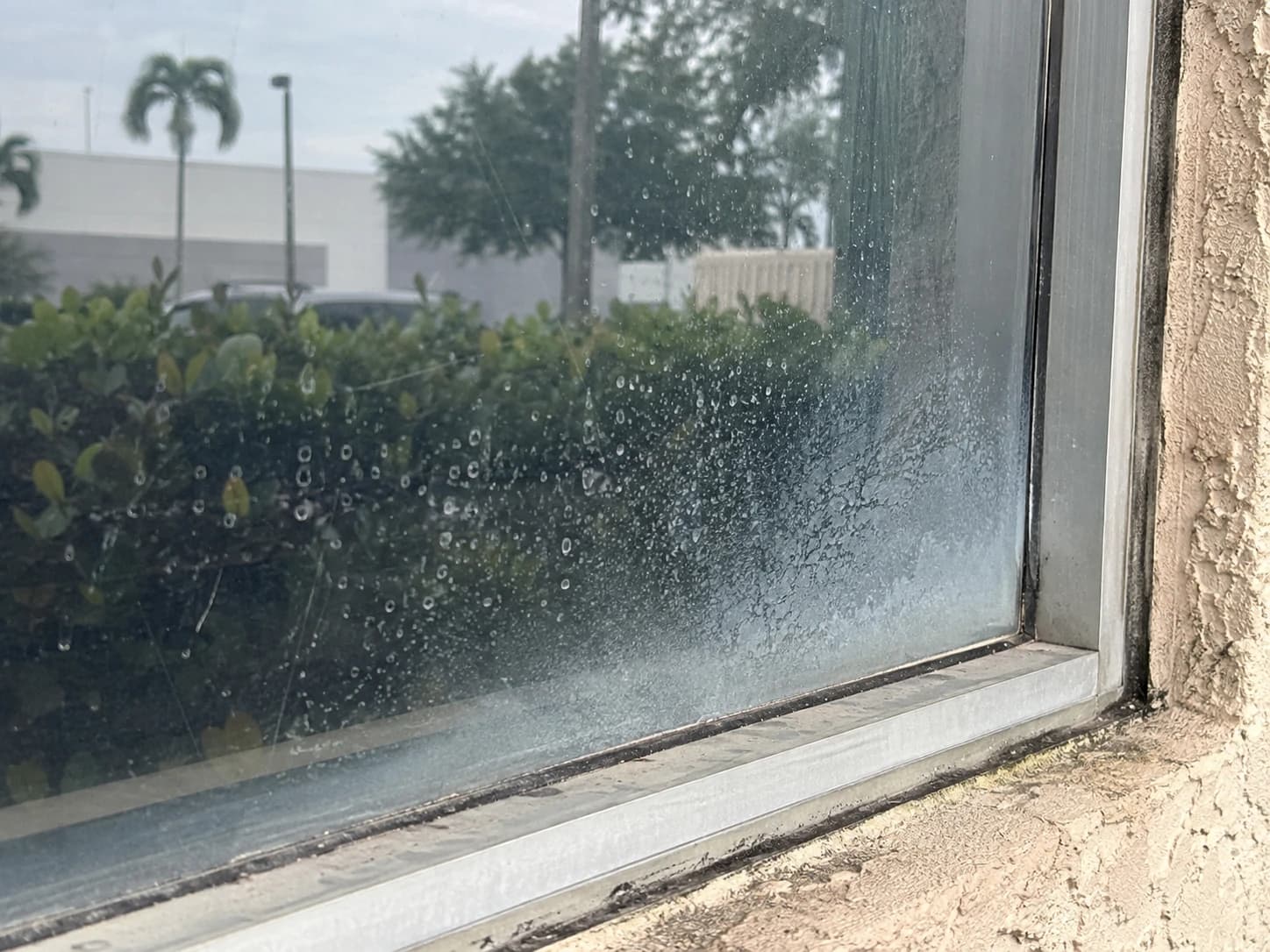
A cloudy pane is not automatically etched, and routine cleaning cannot be assumed to remove every mark. Salt film, mineral deposits, residue and damage can look similar from a distance. Ask for a close inspection and a small test area before approving stain removal or glass restoration across a facade.
Coastal glass collects airborne deposits. Sprinkler overspray, facade runoff and nearby work can add marks with different causes and different removal needs. If a standard cleaning clears the pane, the issue was surface contamination. If haze or spotting remains, the next step is to identify the glass type, coatings and likely source of the marks before trying a stronger process.
Careless removal can worsen the problem. Scraping, abrasive pads or unsuitable chemicals may damage a coating or scratch glass, particularly when the material on the surface has not been identified. A proposal for stubborn deposits should explain the test method, the limits of the expected result and who will approve further work after the test.
Document visible defects before cleaning begins. Photographs of existing scratches, cloudy areas, failed seals or runoff stains give the manager and contractor a shared record. They also help distinguish a maintenance issue from a condition that needs evaluation by a glass or facade specialist. If the contractor cannot identify a mark confidently, leave it out of any promise of complete removal.
Cleaning regularly helps prevent deposits from building up, but it is not a guarantee against permanent staining or damage. For a board, the sound approach is to maintain the glass, investigate recurring marks and address their source where possible. Cleaning the same runoff stain repeatedly without examining the facade above it may leave the underlying issue unresolved.
Define the glass and surrounding surfaces in the scope
A useful window cleaning scope says exactly what will be cleaned on each side of the glass. It should also name adjacent items such as frames, sills, tracks and screens, because bidders may otherwise include different work under the same service name. Clear boundaries make both the price and the finished job easier to assess.
Start with a window inventory. Separate exterior facade glass from entrance doors, interior partitions, balcony glass and storefront panes. Mark any areas that require access through occupied suites or private spaces. If an HOA or condo board is arranging common-area work, check the governing documents before assuming which windows or balcony areas fall under its responsibility.
Specify whether the work includes frames and sills or stops at the glass. Dirt left on a sill can wash back onto a clean pane during rain, while clearing tracks and screens can require additional labor and access. The scope should also say how the crew will handle adhesive, paint, construction dust or other material outside ordinary maintenance cleaning.
Interior work calls for its own plan. Tenants may need to move items from windowsills or provide access to offices, guest rooms or retail displays. A contractor who can reach the exterior may still be unable to enter every interior space on the scheduled day. Agree on how inaccessible panes will be recorded and whether a return visit is included.
Window work should be coordinated with other exterior building cleaning when facade washing could leave residue on the glass. If another trade is working above the windows, confirm its timing before booking the final clean. That sequence can save a repeat visit without asking the window crew to solve unrelated facade problems.
Understand the commercial window cleaning cost drivers
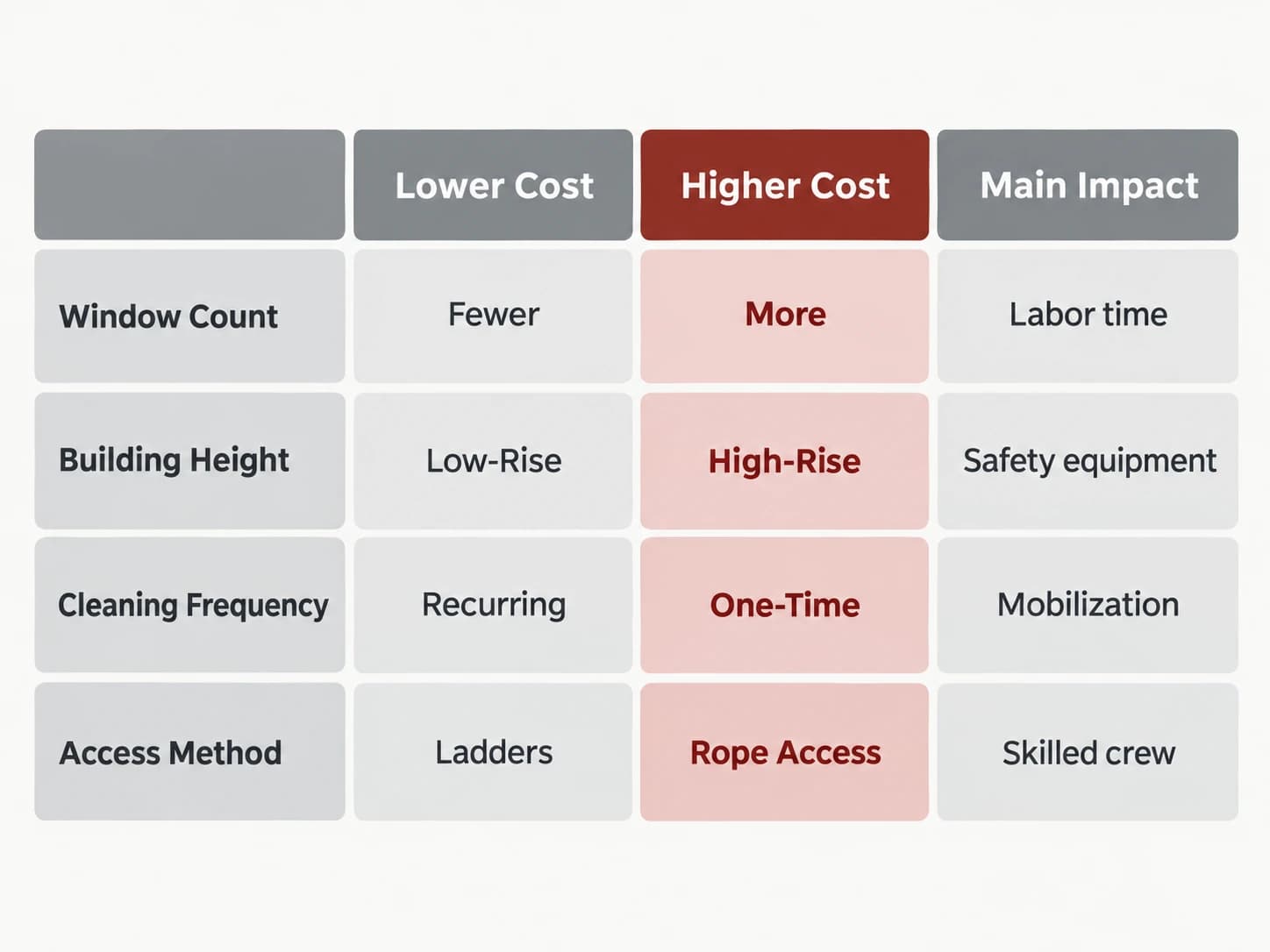
Commercial window cleaning cost depends on the work a crew must complete, the access it needs and the disruption the site can accommodate. A count of panes or a building-height label alone will not make quotes comparable. Give each bidder the same window inventory, service scope and site constraints.
Access often changes the work plan substantially. Ground-reachable storefront glass, lift-served elevations and rope-access facades require different setup and movement around the site. Obstructions, parking controls, roof access and occupied entrances can add coordination even when the amount of glass is modest.
Glass condition matters too. Routine soil and removable film are different from hard deposits, paint or persistent staining. If restoration is being considered, request a test area and a separate description of that work. This keeps an ordinary maintenance quote from silently absorbing an uncertain result.
The proposed frequency changes annual spending, but a longer gap can also leave more buildup for each visit. Compare the expected condition of the property across the year, not just the price of an individual cleaning. Ask bidders whether their scope covers touchups at entrances or only full scheduled visits.
For a closer look at how contractors may structure estimates, see the commercial window cleaning cost guide. On your own quote request, ask each contractor to state:
- Which interior and exterior panes are included.
- Which frames, sills, tracks or screens are included.
- The access method proposed for each elevation.
- Any exclusions or assumptions about tenant access.
- How existing stains and damage will be recorded.
- Whether spot treatment is included or quoted separately.
Review safety and insurance for the proposed work
Safety review should match the access plan and the property, especially where crews work above occupied areas. Ask the contractor how it will separate its work zone from pedestrians, protect entrances and manage equipment movement. Request the insurance documents your organization requires and have the appropriate manager or adviser review them.
Do not treat a trade association logo as proof that a particular site plan is safe. The International Window Cleaning Association is an industry resource, but a manager still needs to understand the method proposed for the building. For rope access, ask how the contractor intends to use the available building access and attachments. For lifts, ask where the equipment will travel and stand.
Wet ground deserves attention even when all cleaning happens from a pole. OSHA's walking-working-surface rule requires covered surfaces to be kept clean, orderly and sanitary, free of spills, inspected and maintained in safe condition. Ask how the crew will control water near doors, ramps and pedestrian routes while the work is underway.
Set expectations for a change in conditions. Wind, blocked access, an unexpected facade defect or a tenant event may make a planned area unavailable. The contractor should have a way to stop, document the issue and agree on a revised approach with the property contact. That is more useful than a quote that assumes every elevation will be accessible regardless of conditions.
Schedule around tenants and other exterior work
Good scheduling begins with the spaces affected by cleaning, not only the crew's arrival time. Identify entrances, valet areas, loading zones, balconies, guest-facing windows and retail displays before selecting work dates. Then tell tenants which areas need access and where equipment or runoff may be present.
Hotels may prefer to plan around guest activity. Retail properties may need storefront work arranged around deliveries and customer entry. Office and condo managers may need advance notices for interior access or balcony restrictions. Put these constraints in the bid package so each contractor prices the same working conditions.
Coordinate window cleaning with facade washing, repairs and nearby construction. If a facade will be washed, schedule final glass cleaning after that work. If sealant or painting work is planned, ask the responsible trade when adjacent glass will be ready for cleaning. The exterior building maintenance guide can help assign those related tasks.
After service, inspect a representative set of panes from inside and outside. Note any missed areas, access exclusions and persistent marks while the work is recent. Use that record to improve the next scope and decide whether the cleaning interval still fits the building.
Frequently asked questions
How often should commercial windows be cleaned in South Florida?
There is no reliable interval based on coastal distance alone. Inspect the glass on each elevation and choose a starting schedule based on visible deposits, tenant expectations and the property's appearance standard. Review its condition before the next visit, then adjust the interval if windows become noticeably dirty sooner or remain acceptable for longer.
What is a fair price to charge for window cleaning?
A fair commercial quote reflects the agreed scope and the conditions at the property. Pane count matters, but access, obstructions, glass condition, interior work and scheduling constraints also affect the job. Compare written proposals that describe the same panes, surrounding surfaces and methods. A low figure is difficult to judge if exclusions are unclear.
What is the best way to clean windows without streaking a home?
The same basic principle applies to commercial glass: remove loose soil, use a suitable cleaning method and avoid leaving dirty water or residue on the pane. The best method depends on the glass, deposits and access. Ask the contractor to test unfamiliar coatings or stubborn marks, and inspect the result from both sides where possible.
Can salt air permanently etch commercial windows?
Do not assume salt film has etched the glass simply because a pane looks cloudy. Surface deposits, mineral marks and permanent damage may look alike until the glass is cleaned and inspected closely. Have the contractor test a small area first. If haze remains, identify the glass and its coating before approving any abrasive or chemical treatment.
Who is liable if a window cleaner falls?
Liability depends on the facts, contracts and applicable law, so it should not be assigned in advance to one party. Before work starts, review the contractor's proposed access method, the site's known hazards and the insurance documents your organization requires. Ask your legal or insurance adviser to assess responsibility for a specific incident or contract.
Is water-fed pole cleaning suitable for every commercial building?
No single method reaches every pane or removes every type of deposit. A water-fed pole may suit accessible glass that can be cleaned from the ground, but recessed windows, obstructions and stubborn marks may call for another approach. Check where rinse water will flow and whether the crew can reach the frames and full pane included in the scope.
Sources
For a site-specific scope, share your window inventory and access concerns with 2Clean through its window cleaning service page.
Custom Commercial & HOA Walkthroughs
Need a scope tailored to your South Florida property?
Every building, plaza, and community has its own surface mix, access windows, and drainage layout. We quote by walkthrough rather than fixed rate sheets so your proposal matches your exact property. Call us directly at (904) 826-9806 or request a written scope online.
Related services & tools
Window Cleaning by South Florida city: