
Maintenance Scheduling
How Often Should Commercial Property Be Pressure Washed in South Florida?
October 14, 2026 (updated) · 9 min read
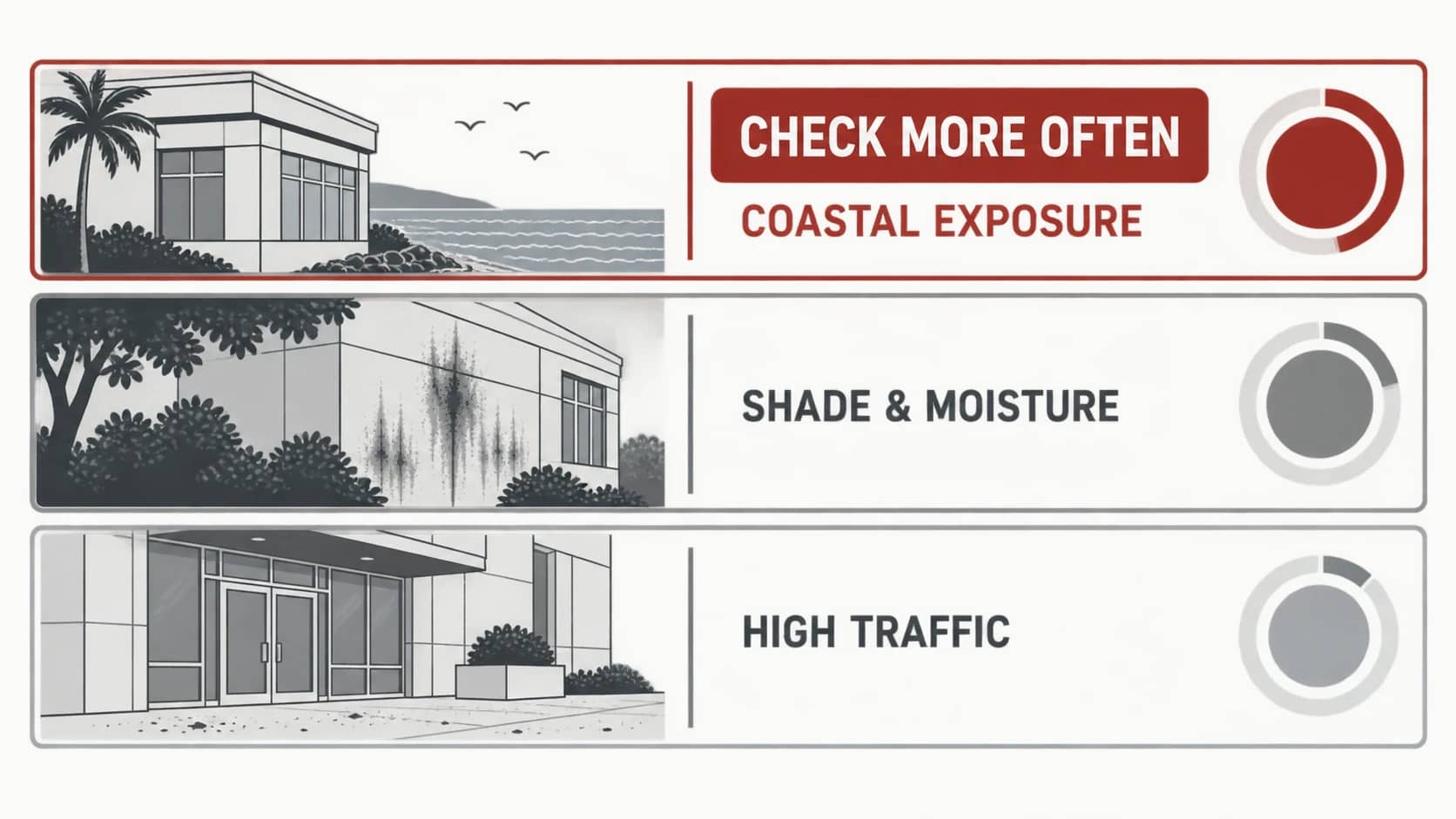
For South Florida managers asking how often should commercial property be pressure washed, there is no fixed rule, but 4 Pro Wash's guidance for property managers (Jun 30, 2026) suggests building exteriors about once a year and high-traffic concrete once or twice a year, with shaded, salt-exposed or busy areas needing more frequent attention. Dumpster pads often need more frequent cleaning. Inspect roofs and choose a cleaning method by roof type instead of putting them on a pressure washing cycle.
How often should commercial property be pressure washed?
Most South Florida commercial properties benefit from a planned exterior cleaning schedule, but the whole site rarely needs washing at once. Start with the intervals below, then revise them based on visible conditions, the surface material and how quickly soil returns.
| Surface | Typical South Florida planning interval | What should prompt an earlier visit |
|---|---|---|
| Building walls | About once a year, per 4 Pro Wash's property-manager guidance (Jun 30, 2026); adjust after inspection | Visible algae, staining, salt residue or persistent irrigation marks |
| Sidewalks and entries | Once or twice a year for high-traffic concrete, per 4 Pro Wash (Jun 30, 2026); busy or shaded entries may need more | Dark growth, tracked soil or slippery residue in walking areas |
| Dumpster pads | Set by inspection; usually more often than walls | Spills, grease, odor or staining that routine housekeeping cannot remove |
| Parking decks | Set by inspection and use | Concentrated tire marks, leaks, dirty pedestrian routes or drainage concerns |
| Roofs | Inspect regularly; clean when condition and material guidance call for it | Visible growth or drainage issues identified during inspection |
These are planning intervals, not performance promises or fixed rules for every property. A shaded hotel entry may need attention sooner than an exposed office wall. A clean, low-use parking level may go longer than its initial schedule suggests.
If you manage several buildings, divide the scope by surface and exposure. That makes it easier to clean a busy entrance without paying to wash every wall on the same visit. The broader commercial exterior cleaning guide for Miami property managers covers how those separate tasks fit into a sitewide plan.
How exposure changes the cleaning interval
Salt, shade and repeated wetting can make one side of a building soil faster than another. Walk the property by exposure zone before deciding how often to pressure wash a commercial building, and use the dirtiest recurring zones to set targeted visits.
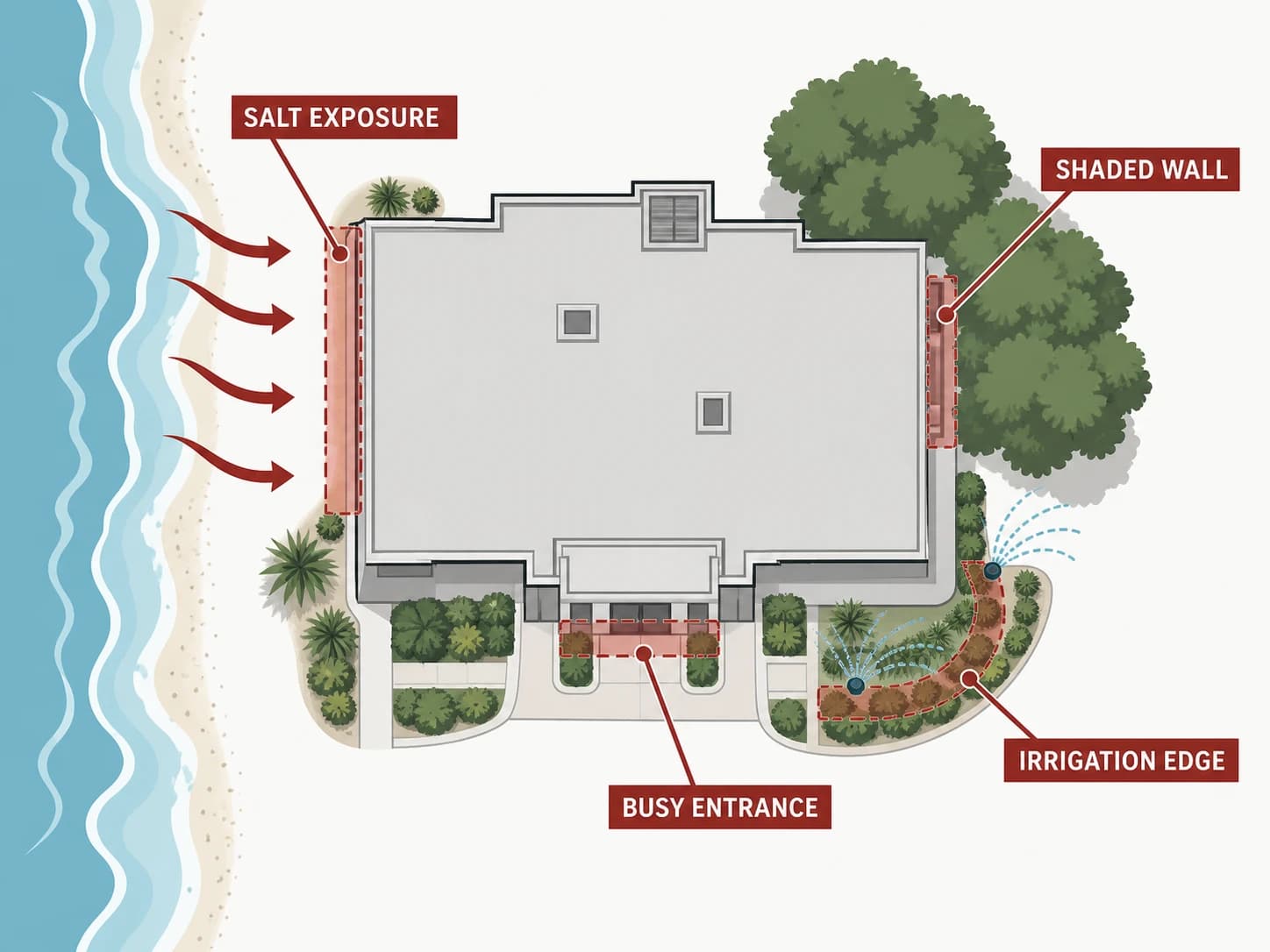
On coastal properties, check surfaces that face prevailing weather and collect salt residue. Focus on metal fixtures, ledges, glazing frames and wall areas where residue remains after rain. Cleaning can remove surface deposits, but it cannot repair existing corrosion, so flag damaged materials for the appropriate maintenance trade.
Shade changes the picture in a different way. Walls below trees and along narrow, poorly sunlit passages can stay damp and show growth before the main facade does. Irrigation aimed at a wall can create a distinct band of staining; adjusting the sprinkler may reduce how often that area needs cleaning.
Make a simple exposure map during a walkthrough. Mark the coastal-facing walls, shaded paths, irrigated borders, food service areas and high-use entries. After the next wash, note which areas visibly soil first. That record gives a contractor a clearer scope and gives your board or facilities team a reason for any shorter interval.
Match the washing method to the surface
Cleaning frequency and cleaning method belong in the same decision. A schedule is only useful if each visit removes the soil without wearing down the surface, forcing water into vulnerable joints or damaging nearby finishes.
Concrete walks and many parking surfaces can often be cleaned with controlled pressure and appropriate equipment. A painted wall, delicate coating, EIFS or some facade details may call for a gentler process. The guide to washing stucco, concrete, EIFS and glass curtain walls explains why the method should follow the substrate rather than a single pressure setting for the whole building.
For organic growth on suitable walls, a cleaning solution and low-pressure rinse may be more appropriate than relying on force alone. Ask the provider to identify the material, proposed method and any areas that should be excluded. The soft washing service page describes that approach for surfaces that need gentler treatment.
Treat roofs separately. The Asphalt Roofing Manufacturers Association says not to use a power washer or brush on asphalt roofing because high pressure is likely to damage it; its guidance describes a cleaning solution followed by a gentle rinse. Other roof materials have different guidance. Roof access, drainage, condition and manufacturer instructions should determine whether cleaning is appropriate, not the date of the last wall wash.
Let traffic and use set priorities
Foot traffic and daily operations usually change the schedule for ground-level surfaces first. A clean facade can still sit above an entrance with tracked grime or a service area with recurring spills, so inspect those areas separately.
For an office property, the main entrance, accessible routes and shaded walks may need attention before the upper walls. At a hotel or retail site, check guest approaches, outdoor gathering areas and loading routes during normal use. At a food service property, inspect the dumpster pad and nearby paths for spills that need prompt housekeeping as well as periodic washing.
Do not treat a slippery or contaminated walkway as something to leave until the next scheduled wash. OSHA's walking-working surface rule calls for surfaces to be kept clean and maintained in a safe condition. Its rule does not prescribe a pressure washing interval; it supports inspecting the surface and addressing the condition you find.
A useful walkthrough note names the location, the type of soil and whether it has returned since the last cleaning. That helps distinguish a recurring wash need from a leak, drainage issue or operating practice that should be corrected first. Repeatedly washing a path without fixing the source of a spill gives only a short-lived result.
How South Florida seasons change the schedule
No single month suits every commercial property in South Florida. Schedule routine work around access and site conditions, then leave room for inspections after severe weather and for areas where growth or debris returns sooner.
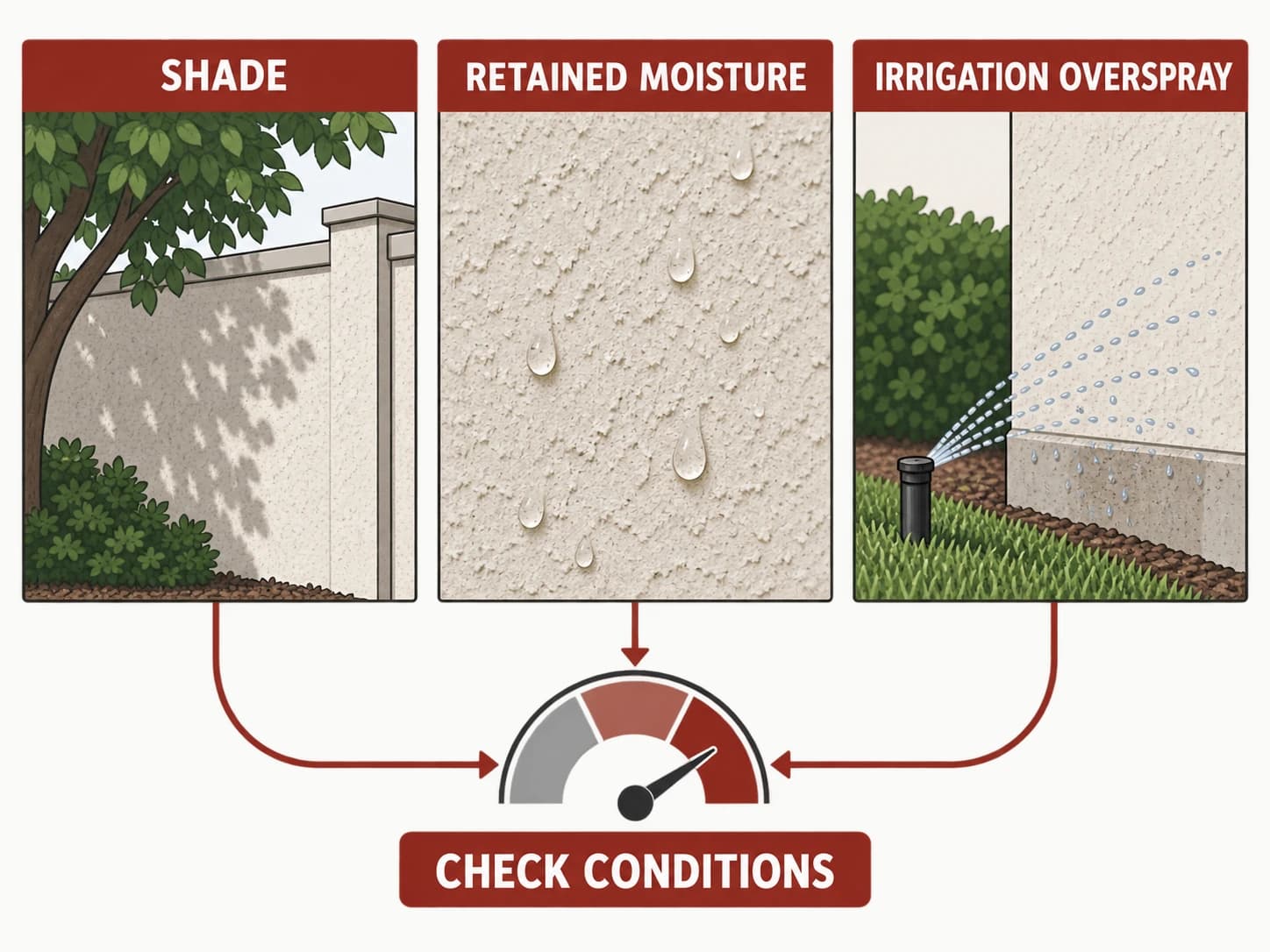
The National Hurricane Center places the Atlantic hurricane season from June 1 to November 30. That is a reason to plan flexible access and post-storm inspections, not a reason to avoid all washing for those months. After a storm, check for debris, blocked drainage, displaced materials and new staining before deciding what needs cleaning.
For routine planning, many managers pair an exterior walkthrough with other property inspections. Record conditions before setting the next wash date, especially on shaded walls, pedestrian routes and areas near irrigation. If a surface remains acceptably clean, the calendar alone need not trigger another full wash.
Weather also affects execution. A contractor needs safe access, suitable conditions for the cleaning method and a way to manage runoff. If rain or site operations prevent proper work, reschedule that area rather than treating the original date as more important than the result. The building exterior hurricane checklist offers a related inspection framework.
What happens when cleaning is deferred
A missed cleaning date does not automatically mean surface damage. The practical concern is allowing a known condition, such as slippery growth, recurring grease or heavy staining, to remain until it becomes harder to manage or affects how people use the property.
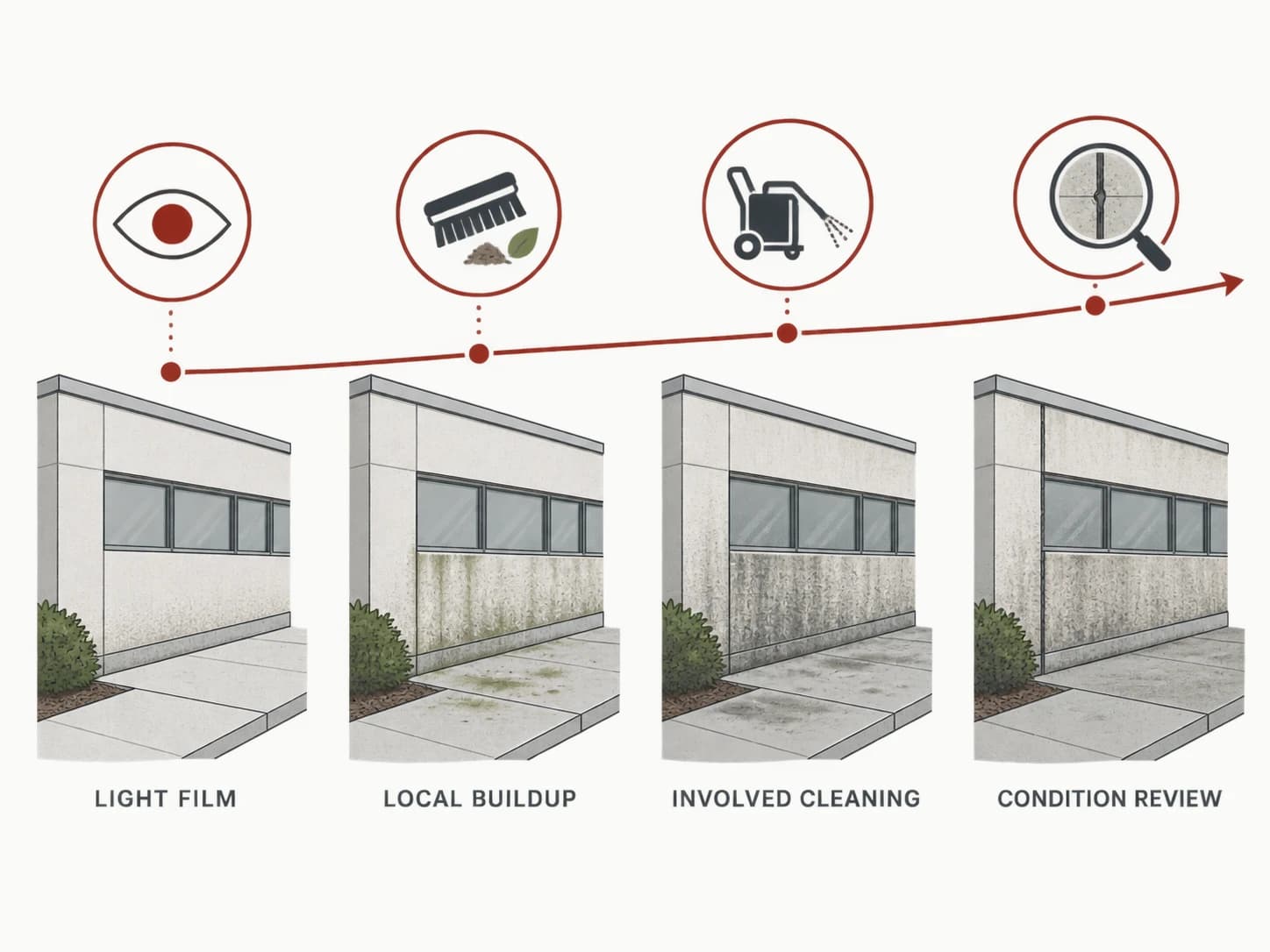
The cost of delay depends on what is on the surface and why it is there. Loose soil may wash away readily later. Oil, rust-colored staining or deposits left by a continuing leak may require more investigation and a different treatment. Cleaning cannot correct a failed coating, water intrusion or damaged concrete.
Walking routes deserve earlier attention when growth or residue makes them slick. OSHA requires covered walking-working surfaces to be maintained in a safe condition, and the US Access Board's ADA Standards describe accessible floor and ground surfaces as stable, firm and slip resistant. Neither source supplies a universal washing frequency, so use observed conditions to decide when action is needed.
Keep photographs and short inspection notes when work is postponed. Record whether the issue is appearance, access, a spill or suspected material damage. That makes the next decision more precise: clean the surface, remove the source of contamination, request a repair assessment or combine those steps.
Build a schedule the property can budget
Budget by repeatable scopes rather than one annual wash for everything. Separate routine facade work from frequent entry, walkway and service-area cleaning, then define what an inspection can add or remove from the next visit.
For each scope, record the surface and approximate area, access limits, cleaning method, water source, nearby landscaping and how wash water will be managed. Those details help contractors quote the same work and help you explain why one area has a different interval from another. The commercial pressure washing cost guide for Miami covers factors that change a quote.
Wash-water handling belongs in that scope discussion. Federal rules require municipal storm sewer permittees to address illicit non-stormwater discharges, so ask how runoff will be contained or managed where the work is proposed. The answer can affect equipment, access and the timing of a visit.
Review the schedule after each service. Note what was cleaned, what remained, any material concerns and when visible soil returned. If the entrance needs another visit well before the walls do, split the future scopes. If a wall stays clean beyond its planned interval, use the next inspection to decide whether washing is needed.
Frequently asked questions
How often should a commercial building be pressure washed?
There is no fixed rule; 4 Pro Wash's guidance for property managers (Jun 30, 2026) suggests building exteriors about once a year as a starting point. Entrances, walks and service areas may need shorter intervals because they collect more soil or remain damp. Inspect each surface between visits and adjust the schedule to its exposure, use and material.
Should all surfaces be washed on the same visit?
They can be grouped when access and site operations make that efficient, but they do not need the same cleaning frequency or method. A facade may still look clean when an entry path needs attention. Separate scopes let you address that path without repeatedly cleaning sound, lightly soiled walls.
Can commercial building pressure washing be done during hurricane season?
Yes, when weather, access and the surface condition permit safe, effective work. The Atlantic hurricane season runs from June 1 to November 30, but that date range is not a washing prohibition. Inspect the property after severe weather and reschedule work when conditions interfere with proper cleaning or runoff management.
How often should a commercial roof be cleaned?
Use inspections to decide whether the roof needs cleaning, then follow guidance for its material and condition. Do not place every roof on a routine pressure washing cycle. For asphalt roofing, ARMA advises against power washing or brushing and describes a gentler cleaning approach because high pressure is likely to damage the material.
What should trigger an earlier cleaning than the planned date?
Look for slippery growth on pedestrian routes, recurring spills, visible algae, salt residue or staining that is spreading. First check whether irrigation, drainage, a leak or daily operations are causing the problem. Cleaning the surface and correcting that source may give you a more stable schedule than simply shortening every interval.
Sources
If you are setting a propertywide schedule, 2Clean's commercial and HOA programmes provide a place to discuss the surfaces, cleaning methods and visit frequency your site needs.
Custom Commercial & HOA Walkthroughs
Need a scope tailored to your South Florida property?
Every building, plaza, and community has its own surface mix, access windows, and drainage layout. We quote by walkthrough rather than fixed rate sheets so your proposal matches your exact property. Call us directly at (904) 826-9806 or request a written scope online.
Related services & tools
Pressure Washing by South Florida city: