Industry Verticals
Storefront Pressure Washing for Retail Plazas: Scope, Scheduling and CAM
October 29, 2026 (updated) · 10 min read
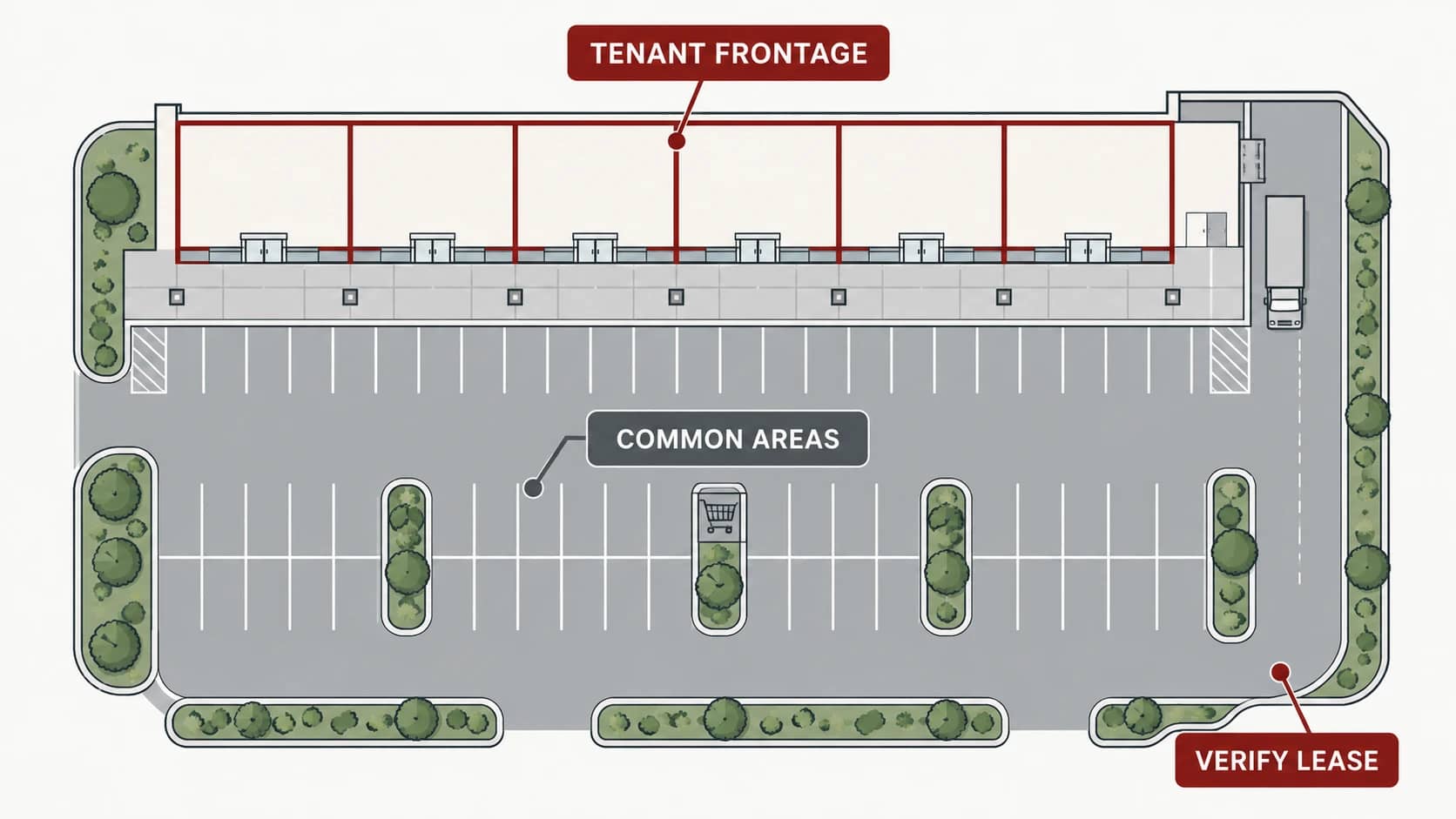
Storefront pressure washing works best as part of a plaza-wide cleaning plan, with methods chosen for each surface and visits scheduled around visible soil and customer traffic. Property managers should separate shared walkways from tenant-controlled frontage, document who pays for each zone, and keep wash water away from storm drains.
Planning work for an occupied retail property? Review our shopping plaza exterior-cleaning scope for tenant access, shared entrances and the details needed for a walkthrough.
What storefront pressure washing should cover
Storefront pressure washing usually addresses the hard surfaces customers cross or see on arrival: entry pavement, shared sidewalks, curb edges and suitable portions of the building exterior. A useful scope names each surface, its boundaries, the cleaning method and any exclusions so the manager and contractor are discussing the same work.
Start with a walk of the plaza. Note gum and food spills at entries, dark growth in shaded pedestrian areas, staining near planters, and soil carried from the parking field. Photograph representative conditions and mark the affected zones on a site plan. This gives bidders a basis for pricing and gives managers a record for checking the finished work.
Do not specify high pressure for every surface. Sound concrete may tolerate a controlled pressure-washing approach, while painted finishes, delicate cladding, awnings and some signage need a gentler method or a separate specialist. The trade-off is straightforward: stronger mechanical cleaning can lift stubborn soil, but it can also damage finishes or drive water into joints. The guide to commercial soft washing explains where a low-pressure approach belongs.
A plaza-wide scope should also distinguish washing from related tasks. Sweeping removes loose debris before wet cleaning. Window cleaning addresses glass and frames without treating them like pavement. Gum removal, oil treatment and stain work may need to be named separately because routine washing does not produce the same result on every mark.
CAM recovery flow and zone responsibility
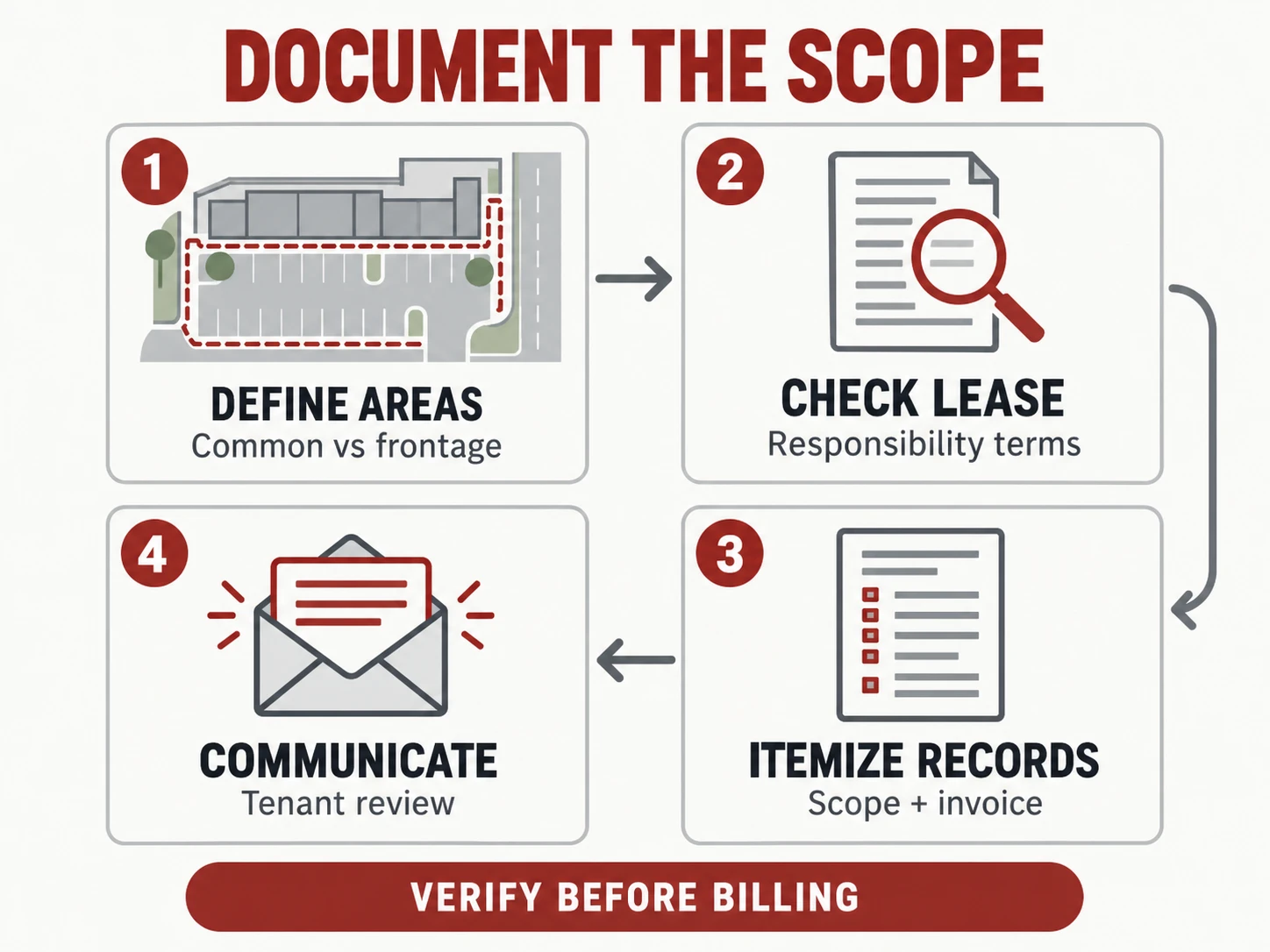
CAM recovery starts with a boundary: identify the area cleaned, check the governing lease language, then assign the cost to the appropriate account. A storefront can face a shared walkway while its awning, sign and glass remain tenant responsibilities, so physical proximity alone does not settle who pays.
Mark common sidewalks, shared entries, parking areas and cart corrals separately from tenant-specific facades and fixtures. Then compare that map with the leases, any rules for tenant alterations, and the plaza's existing CAM schedule. If the documents leave a boundary unclear, resolve it before work is ordered or allocated. A cleaning contractor can describe surfaces and methods, but the manager should make the lease and accounting decision.
For a CAM-supported job, retain a scope that shows the shared areas cleaned, the agreed frequency or trigger, and any separately approved stain treatment. Keep tenant work identifiable on the estimate and invoice. That makes it easier to explain a charge and prevents a tenant-specific request from disappearing into a general common-area line.
The same map helps prevent gaps. An entry may be used by everyone but sit beside a tenant's leased frontage. If no one has assigned its upkeep, soil accumulates while each party assumes someone else owns it. The broader commercial exterior cleaning guide for Miami property managers can help place this zone map within a property-wide maintenance plan.
Frequency matrix for a retail plaza
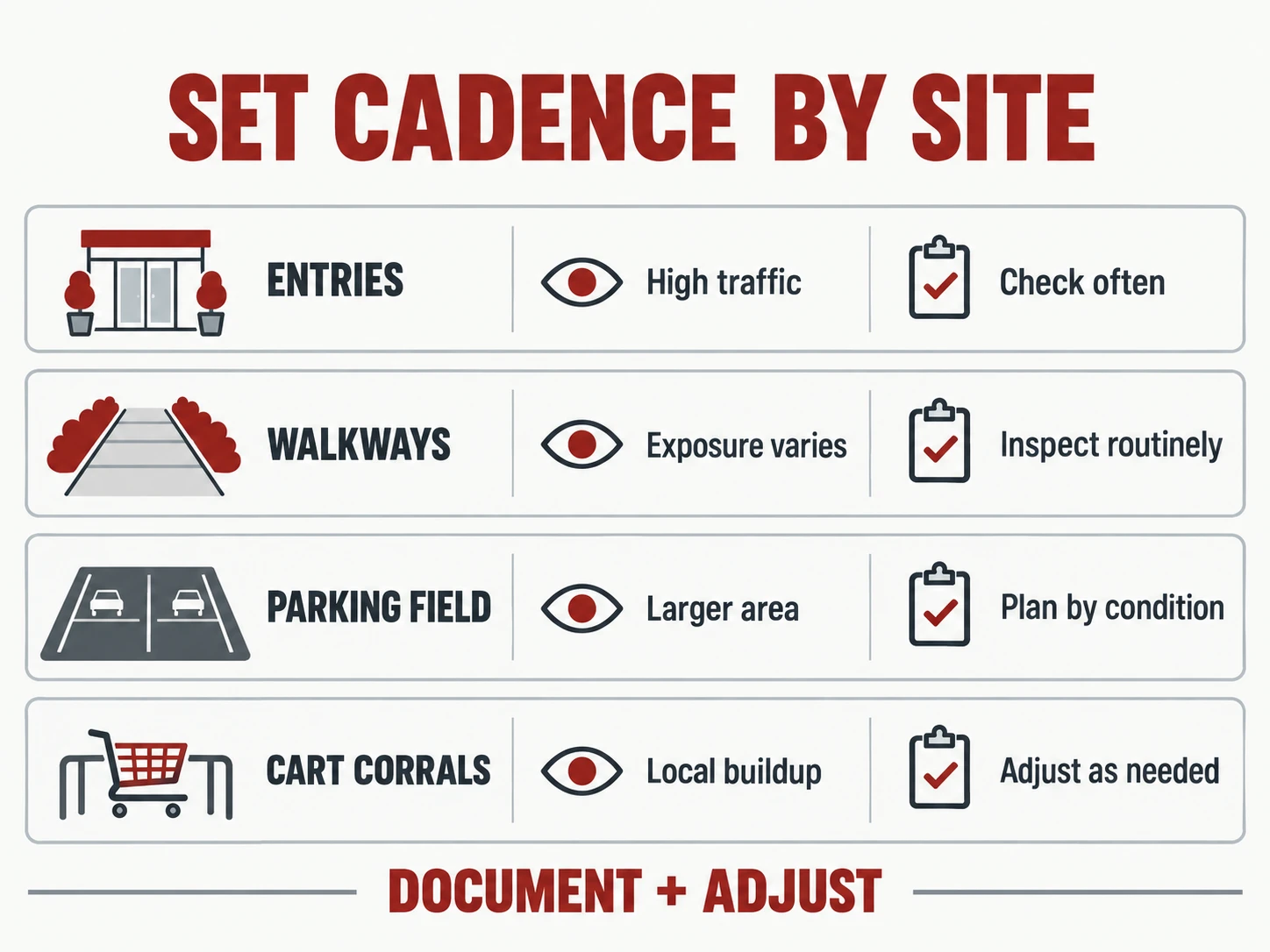
A frequency matrix should match attention to conditions, not impose one interval on every surface. Entries with food traffic may need prompt spot cleaning, while a sheltered facade may only need washing when inspections show visible buildup.
Use the matrix as a starting point for site walks and service planning. After each cleaning, record which areas became dirty first and whether the chosen method removed the soil without harming the surface. Adjust the next scope from those observations.
| Zone | What to inspect | Planning response |
|---|---|---|
| Store entrances and pedestrian routes | Gum, spills, tracked soil and slippery-looking residue | Remove fresh hazards promptly; schedule washing when routine cleaning no longer keeps the route presentable. |
| Shared sidewalks and plaza courts | Shaded growth, staining, planter runoff and uneven appearance | Group adjoining sections so the finished area looks consistent. |
| Facades, awnings and signs | Streaks, biological growth, fading and fragile materials | Choose a surface-specific method and confirm exclusions before washing. |
| Parking field and cart corrals | Loose litter, oil, tire marks and drainage paths | Sweep first; identify stains that need separate treatment and a wash-water plan. |
| Storefront glass | Water spots, fingerprints and runoff from nearby washing | Coordinate window cleaning after adjacent wet work. |
Inspections matter more than a calendar copied from another property. Tenant mix, shade, landscaping, vehicle activity and exposure all change where soil appears. Miami, Fort Lauderdale, Boca Raton and West Palm Beach sites can therefore need different attention even when the buildings look similar.
A manager can still set recurring visits for budgeting and access. Treat those visits as opportunities to inspect and perform the work the site needs, then document any change in scope. That avoids repeatedly washing a clean facade while a busy entry waits for attention.
Choose the method by surface
Method selection should follow the material and the kind of soil on it. Commercial pressure washing is useful for suitable hard surfaces, while lower-pressure cleaning, hand work or window cleaning may be more appropriate close to storefront finishes.
Ask the contractor to identify pavement material, coatings, loose joints, sealants, electrical fixtures, plants and drainage before work begins. A small test area can show whether the proposed method cleans evenly. It can also reveal a finish that should be excluded or a stain that will remain after routine washing.
Gum may require focused removal before a wider pavement wash. Oil staining needs its own assessment; water pressure alone may spread residue rather than solve it. Shaded biological growth can return, so removing it once should not be treated as a permanent fix. The goal is a repeatable method that cleans the surface without creating damage or unnecessary runoff.
Keep pressure equipment away from storefront glass as a default planning assumption. Water driven into frames, seals or nearby fixtures can create problems that are difficult to see during the wash. Schedule commercial window cleaning as a coordinated task when glass needs attention, ideally after adjacent facade and pavement work that could splash it.
Protect access and manage wash water
Cleaning should leave customers a clear route and prevent dirty water from crossing it. Before approving a work window, identify the pedestrian detour, tenant deliveries, occupied parking spaces, electrical equipment and the direction runoff will travel.
The US Access Board's ADA Standards require floor and ground surfaces to be stable, firm and slip resistant, including applicable walking surfaces and ramps. OSHA's walking-working-surface rule also calls for clean, orderly surfaces and regular inspection. Neither source supplies a universal washing schedule. They support a practical response: inspect routes, address spills and residue, and reopen cleaned areas only when they are suitable for use.
Wash-water handling belongs in the scope, especially near parking-lot drains. Under 40 CFR 122.34, municipal storm sewer permittees must address illicit discharges and effectively prohibit non-stormwater discharges. Florida DEP administers the state's municipal stormwater permit programme. Ask how water and removed soil will be contained or collected, where they will go, and whether the proposed process fits the site's drainage rules.
Check nearby doors and tenant operations as carefully as the pavement. Water under an entrance can disrupt trading even when the exterior looks clean. A pre-work walk should identify vulnerable thresholds, merchandise displays, outdoor seating and any area that must stay dry.
Schedule around tenants and trading hours
The best cleaning window is the one that gives crews safe access without pushing customers through active work. Confirm it against each tenant's opening pattern, deliveries and events rather than assuming the entire plaza is quiet at the same time.
Advance notice should state the affected zones, expected access changes and who tenants should contact about a conflict. Sequence the work so a cleaned route is available while another section is closed. Coordinate sweeping, stain treatment, washing and window cleaning so later tasks do not soil completed areas.
After-hours work can reduce foot traffic, but it may bring poor visibility, noise concerns or limited access to water and power. An early opening window may be easier for one plaza and disruptive for another. The site walk should settle these trade-offs before the date is confirmed.
Weather also matters. Heavy rain can make a planned pavement wash ineffective or complicate runoff control. In South Florida, build room to move work around storms and inspect entrances again after severe weather. A schedule is useful only if the property can respond to what visitors actually encounter.
Build a scope that can be checked
A clear scope tells the contractor what to clean and gives the manager a way to verify it. It should name the zones, surface materials, method, special stains, access limits, wash-water approach and finish standard.
Use a checklist during bidding and after the visit:
| Scope item | What to record |
|---|---|
| Boundaries | A marked site plan showing shared and tenant-specific areas. |
| Methods | The proposed approach for pavement, facade, awnings, signs and glass. |
| Exclusions | Delicate finishes, inaccessible areas and stains that may remain. |
| Access | Tenant notice, work window, pedestrian routing and delivery conflicts. |
| Water | Drain locations and the plan for containment or collection. |
| Completion | Representative photos and a walk-through of entries and other priority zones. |
Ask for exceptions to be written down before work starts. "Clean storefronts" is too vague to establish whether it includes tenant glass, an awning or the shared sidewalk. A marked scope also makes later changes easier to price and approve.
For budgeting, compare proposals with the same boundaries and method assumptions. A lower quote may cover less pavement or omit stain treatment. The guide to commercial pressure washing cost in Miami explains the scope factors worth comparing without treating another property's price as a quote for yours.
Plan for seasons and special events
Seasonal planning should identify the conditions that change a plaza's cleaning needs. Holiday shopping, outdoor promotions, storms and landscape work can all shift soil toward entrances, sidewalks or parking areas.
Before an event, inspect the arrival route and decide whether spot work is enough or a wider clean is justified. Afterward, remove loose litter first, then assess spills and tracked residue. This order keeps routine washing focused on soil that sweeping cannot address.
Storm preparation and recovery need a similar distinction. Clear debris that could obstruct access or drainage, then inspect for deposited silt and staining when conditions allow. Do not automatically wash everything after a storm; first confirm that surfaces are intact, water has somewhere appropriate to go, and tenants can keep operating safely.
Document the condition that prompted extra work. That record helps explain an exception to the usual schedule and supports a useful conversation with tenants about future events. It also keeps the next maintenance plan grounded in what happened at this property.
For a written price for your property, call or text a photo to (904) 826-9806, or request a property walkthrough. Include the surfaces, location and access requirements so the scope can be reviewed.
Frequently asked questions
How often should a storefront be pressure washed?
There is no single interval that fits every storefront. Inspect entries, shared sidewalks and facades for visible soil, spills and shaded growth, then set recurring visits around the zones that change fastest. Use prompt spot cleaning for an isolated problem. Review the schedule after each visit so low-traffic areas are not washed simply because busy areas need attention.
Who pays for storefront pressure washing in a retail plaza?
The lease and the property's CAM documents control the allocation. Shared sidewalks or parking areas may sit within a common-area scope, while a tenant's sign, awning or glass may be assigned differently. Map the zones, check the applicable documents and keep tenant-specific work separate on the estimate and invoice. Do not infer responsibility from where a surface sits.
Can I use a pressure washer to clean my windows?
Storefront glass and its frames are better treated as a separate cleaning task. Directing pressure at a window can push water toward seals, frames and nearby fixtures, while pavement-washing methods can leave spotting. Have the contractor describe the glass method and sequence window cleaning after adjacent wet work. The surrounding facade may also need a gentler approach.
What should be included in a storefront cleaning quote?
A useful quote identifies the exact zones, surface materials, cleaning methods and access window. It should distinguish routine washing from gum removal, oil treatment, awning care and window cleaning, and explain how wash water will be handled. Ask for exclusions and likely remaining stains in writing, plus a marked plan when boundaries between common areas and tenant frontage are unclear.
Should storefronts be washed during business hours?
They can be, if the work can be isolated without blocking entrances or sending customers across wet pavement. The manager should confirm tenant deliveries, pedestrian routes, noise constraints and nearby outdoor uses before choosing a window. Advance notice helps tenants prepare. For a busy entry, a quieter period may provide safer access and a more consistent clean.
Sources
If you are planning a plaza scope, share the site zones and access constraints when asking 2Clean about pressure washing services. A surface-by-surface discussion can help turn that information into a workable cleaning plan.
Custom Commercial & HOA Walkthroughs
Need a scope tailored to your South Florida property?
Every building, plaza, and community has its own surface mix, access windows, and drainage layout. We quote by walkthrough rather than fixed rate sheets so your proposal matches your exact property. Call us directly at (904) 826-9806 or request a written scope online.
Related services & tools
Pressure Washing by South Florida city: