
Environmental Compliance & Liability
Slip Fall Risk from Algae Grease: A Cleaning Cadence for South Florida Properties
October 14, 2026 (updated) · 8 min read
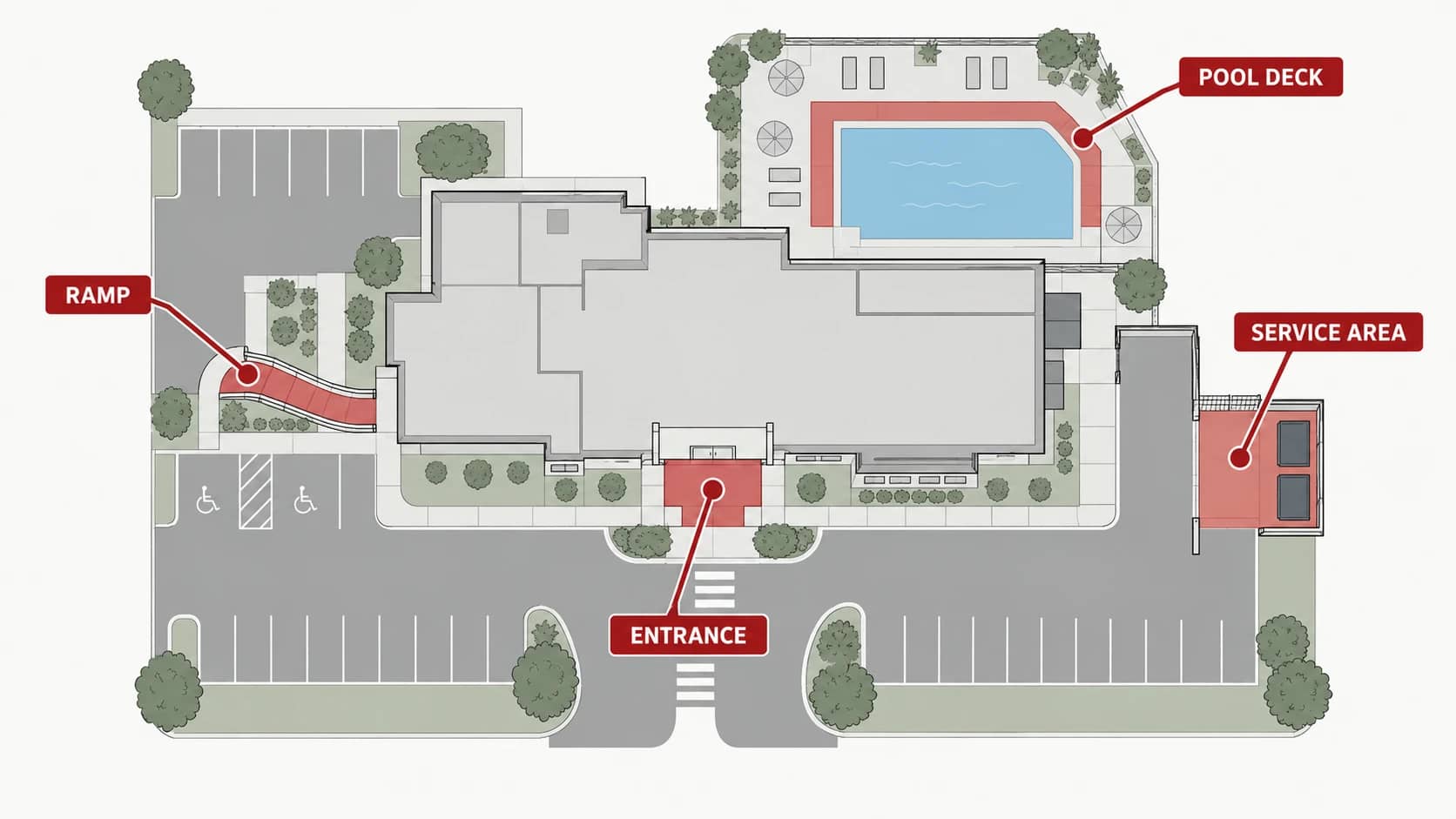
To manage slip fall risk from algae grease, inspect the places where moisture or food waste reaches walking surfaces, remove buildup with a method suited to the material, and record what you found and did. Set cleaning frequency by how quickly each zone becomes hazardous, then adjust it when conditions change.
Where slip fall risk from algae grease develops
Algae and grease create different maintenance problems, but both can leave a film between a shoe and the walking surface. A useful inspection plan follows the paths people take and the places contaminants collect, especially entries, ramps, pool decks, service routes, and dumpster areas.
Algae is more likely to persist where a surface stays damp or shaded. Look beyond the middle of a walkway: edges beside landscaping, joints between pavers, areas beneath downspouts, and transitions from a covered path into an exposed one may change condition at different rates. A dry-looking patch nearby does not tell you whether the damp section has adequate traction.
Grease often starts near food handling or waste areas and travels on shoes, cart wheels, or runoff. Inspect the route from a dumpster pad or loading area to a public entrance, not just the source of the spill. The restaurant exterior cleaning guide covers the related cleaning concerns around grease and dumpster pads.
Water can make either film harder to notice and can leave a recently cleaned surface hazardous while it dries. When someone reports a slippery area, have the team check it directly. Do not wait for the next scheduled exterior wash to decide whether the area needs attention.
Cleaning cadence by zone
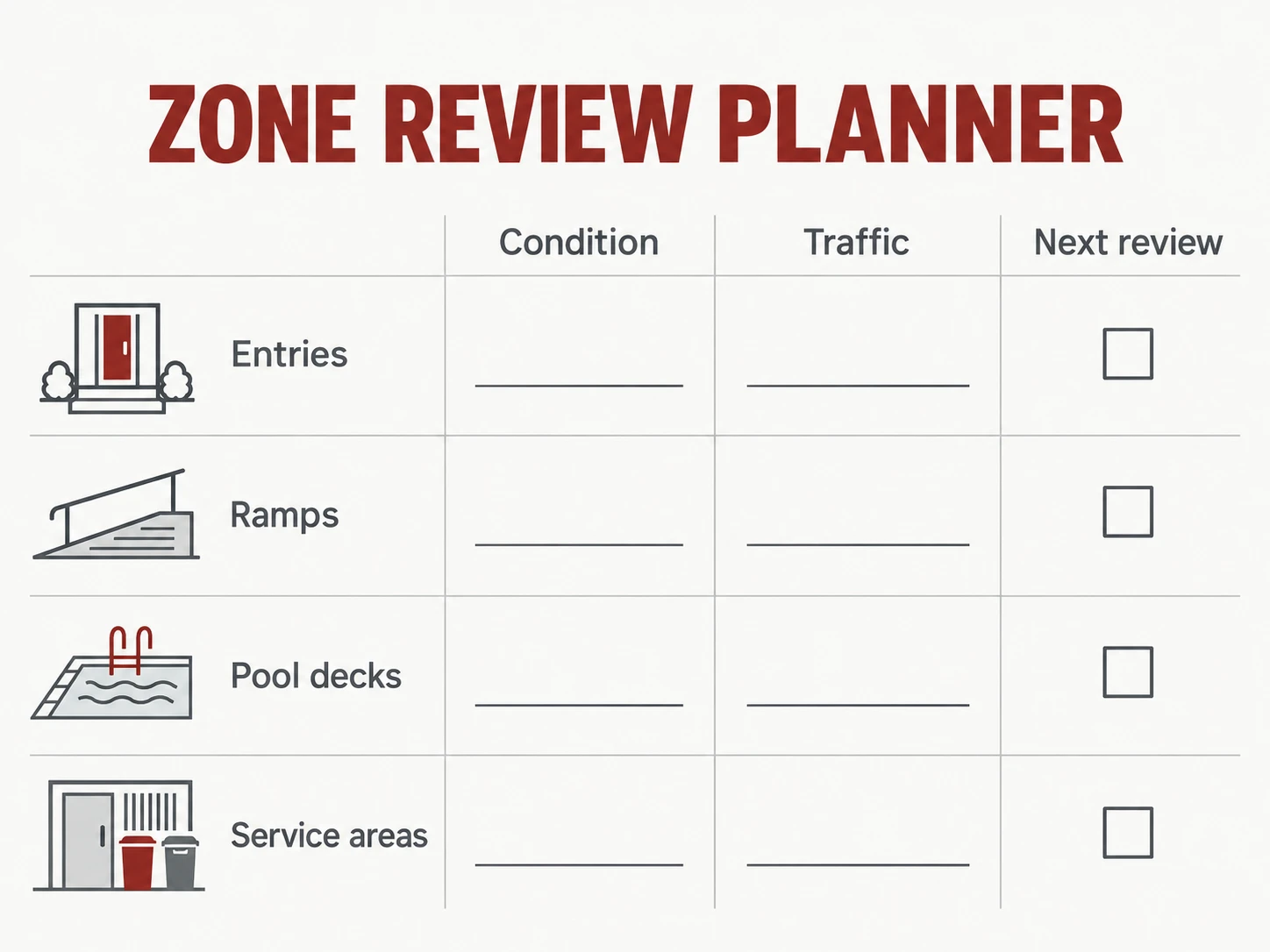
A cleaning cadence should reflect how each zone is used, how it gets wet, and how quickly buildup returns. Begin with routine inspections, arrange planned cleaning around observed conditions, and allow for extra work after a spill, rain, drainage problem, or complaint.
| Zone | What to check | When to inspect or clean |
|---|---|---|
| Public entries and adjacent walks | Tracked grease, algae at shaded edges, standing water, and changes in surface condition | Check during normal property rounds and after conditions that wet the route. Clean when film or residue appears. |
| Ramps and accessible routes | Damp patches, runoff paths, residue at landings, and drainage | Include in routine route inspections. Address contamination promptly and revisit after cleaning. |
| Pool decks and nearby paths | Algae in persistently wet areas, residue, and water that does not drain | Inspect as part of pool-area operations. Adjust planned cleaning to the rate at which buildup returns. |
| Dumpster pads and service routes | Grease, food residue, leaks, and material tracked toward occupied areas | Check during waste-area rounds and after leaks or spills. Clean the source and affected travel path. |
The table is a planning guide, not a universal interval or a substitute for inspecting conditions on site. A shaded walkway with recurring algae may need attention more often than an exposed walkway made of the same material. A well-cleaned dumpster pad may still require immediate work if a new leak reaches the service path.
Map the zones on a site plan so staff and contractors use the same names. If an inspection repeatedly finds the same hazard before planned cleaning, shorten the interval or investigate its source. Poor drainage, overspray, a leaking bin, or an unsuitable surface may need a separate fix; cleaning alone may not keep the route clear.
For a wider property plan, the commercial exterior cleaning guide explains how managers can organize exterior work across building surfaces and common areas.
Match the cleaning method to the surface
The method should remove the film while preserving the walking surface and controlling runoff. Start by identifying the contaminant and material, then discuss water pressure, cleaning solution, drainage, and how the area will be kept clear until it is ready for use.
Grease may need a suitable degreaser and collection of the resulting wash water. Algae on hard paving may need a cleaning treatment followed by a controlled rinse. A contractor should assess delicate finishes, joints, and nearby landscaping before choosing equipment; forceful washing can dislodge material or move contamination into another walking area.
Ask where the water will go before work starts. Storm drains carry a different risk from a sanitary disposal route, and the federal MS4 rule requires permittees to address non-stormwater discharges into storm sewer systems. The pressure washing wastewater regulations guide explains why containment and disposal should be part of the job scope.
For hard exterior surfaces, a pressure washing scope should identify the areas, contaminant, method, runoff controls, and any surfaces that need a different approach. After cleaning, inspect the full travel path, including where rinse water or loosened residue may have moved.
What ADA and OSHA say about walking surfaces
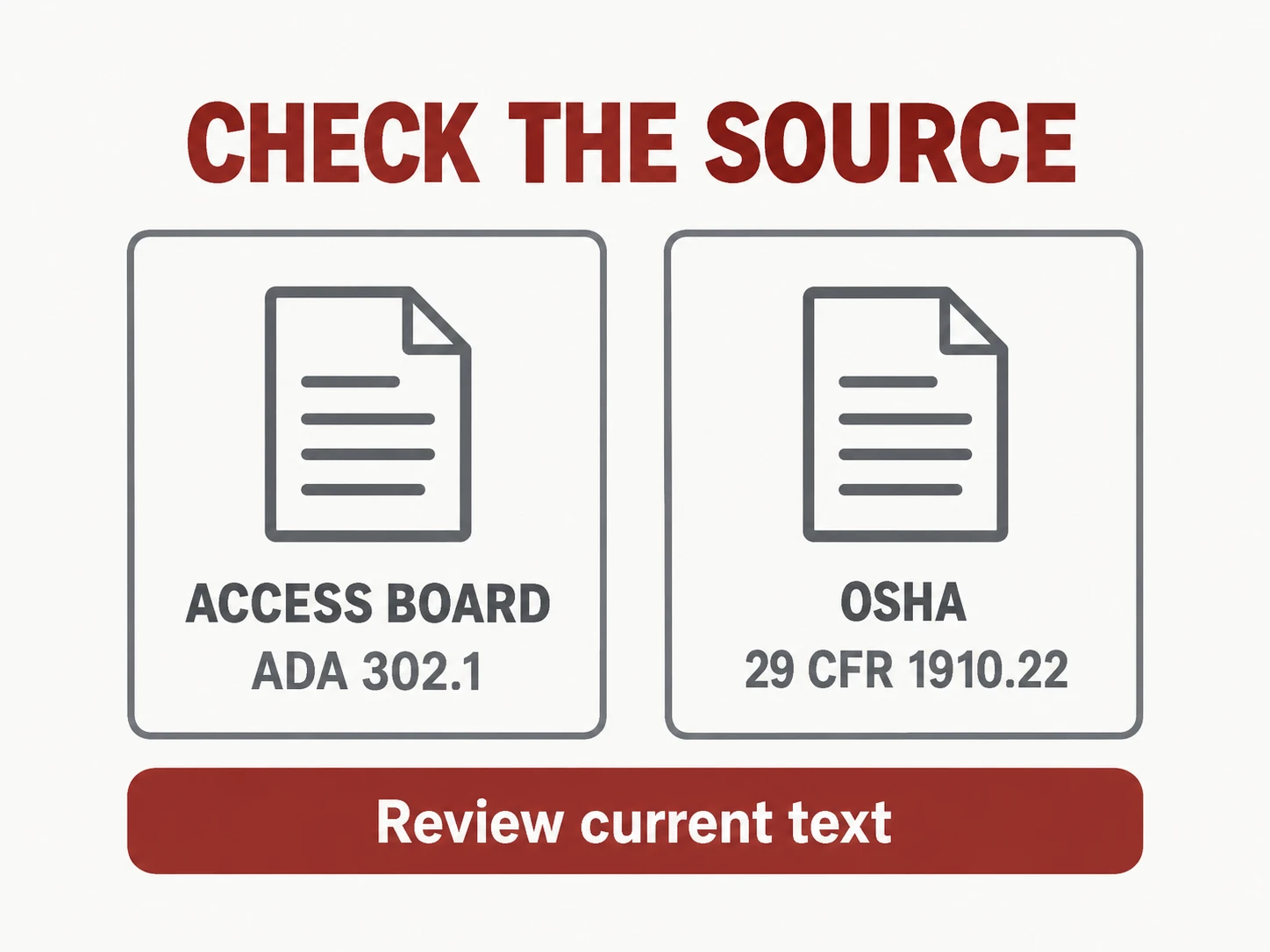
The ADA Standards require floor and ground surfaces covered by section 302.1 to be stable, firm, and slip resistant; sections 403.2 and 405.4 apply that requirement to accessible walking surfaces and ramps. OSHA 29 CFR 1910.22 requires walking-working surfaces to be kept clean, orderly, and sanitary, free of spills, inspected regularly, and maintained in a safe condition.
These provisions are useful when setting inspection and maintenance practices, but they do not give this property a cleaning interval. ADA accessibility requirements and OSHA workplace requirements also serve different purposes. Avoid treating either citation as proof that a particular surface is safe after washing or that a cleaning log resolves a premises-liability claim.
Focus instead on the condition people will encounter. If algae reappears on a ramp, check why it stays wet and whether the cleaning plan addresses that cause. If grease crosses a staff route, identify where it originates and whether the response covers the whole affected path. Seek a qualified assessment when the surface itself, rather than removable buildup, appears to be the problem.
Documentation checklist for inspections and cleaning
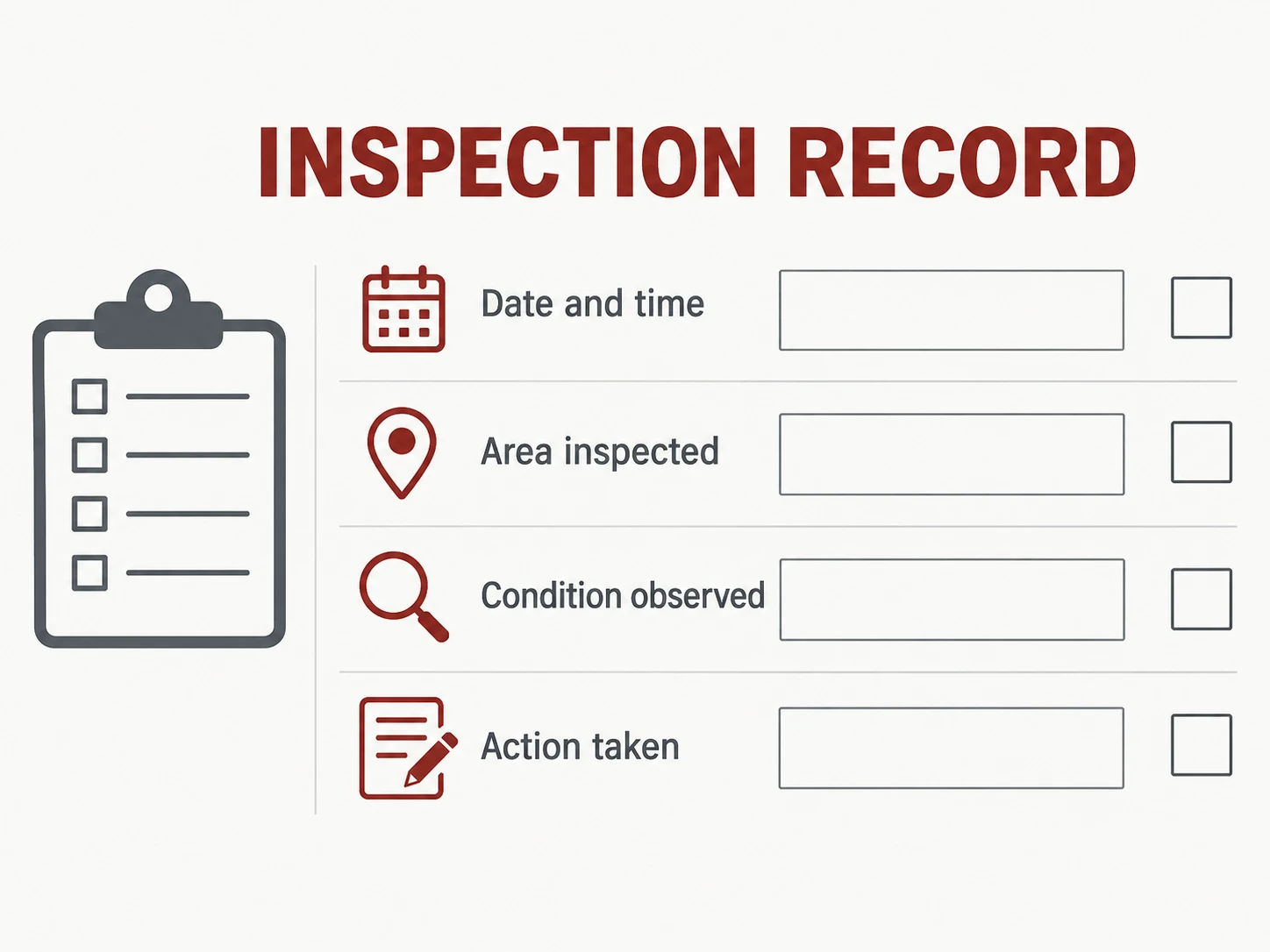
A useful record shows what condition was observed, where it was found, and what happened next. It helps the team spot recurring hazards and explain its maintenance decisions, but the record has value only if the inspections and corrective work actually occur.
| Record | Useful detail |
|---|---|
| Location and time | The named zone, specific spot, and when it was inspected or serviced |
| Observed condition | Algae, grease, pooled water, a spill, or no visible hazard |
| Immediate response | Cleaning, access control, a warning, or a work request |
| Work performed | Method used, area covered, and any runoff controls |
| Follow-up | Whether the condition cleared and whether drainage or another cause still needs work |
| Responsibility | Who inspected, performed the work, and accepted the follow-up |
Keep routine inspections and contractor service records together, using the same zone names. Photos can help show the location and condition, especially when a problem returns, but add a written description so the record remains understandable without the image. Note an incomplete job or an area that still needs repair rather than marking the whole zone clear.
Make the handoff explicit when one team identifies a hazard and another team cleans it. A work order left open does not show that the walking route was restored. The person closing it should record what was checked afterward, including any nearby area affected by runoff or tracked residue.
If an incident occurs, preserve the relevant inspection and service records under the property's normal incident process. Those records describe what the team observed and did; they should not be described as a guarantee against a claim or as a substitute for advice about a specific dispute.
What to do when a hazard appears between cleanings
Act on the condition when it is found, then decide whether the schedule needs changing. A planned visit may be appropriate for gradual buildup, while a fresh grease spill or visibly slick entry needs a response before people continue using the affected route.
First, identify the affected area and keep people away from it as the property's procedures allow. Check where the substance came from and how far it has spread. A small patch near a dumpster may also have reached a cart route or doorway.
Arrange cleaning with a method suited to the surface, then inspect it again before restoring normal access. Record the observation, response, and follow-up. If the same condition returns, review the source, drainage, and inspection timing with the staff or contractor responsible for that zone.
This sequence also helps managers scope recurring service. Instead of asking only for a general wash, describe the contaminant, the specific walking path, the conditions that trigger extra attention, and how completion will be checked.
Frequently asked questions
The questions below address common descriptions of slip hazards and how to manage them. A site inspection is still needed to decide what action a particular surface requires.
What type of hazard is a slip?
A slip is an incident that can occur when a person's foot loses traction on a walking surface. Algae, grease, spills, and standing water are conditions that may contribute to it. For property maintenance, identify the specific condition and location rather than logging only "slip hazard." That gives the team a clearer task and a way to check whether the response worked.
Why is algae slippery?
Algae can form a slick film on a surface, particularly where moisture remains. The risk depends on the condition of the walking surface as well as the buildup, so inspect the affected route in person. Remove the growth using a method suited to the material, then look for the drainage or shade conditions that allow it to return.
What kind of hazard is a wet floor?
A wet floor can present a slip hazard, especially when water combines with algae, grease, or cleaning residue. Find out why it is wet and whether the affected route can be kept clear while the condition is addressed. After cleaning, check that runoff has not carried residue to another part of the path.
Which of the following environmental hazards could cause slips, trips, and falls?
On an exterior property route, algae, grease, spills, standing water, and debris can contribute to a fall. They do not all call for the same response: a grease leak needs source control, while recurring algae may point to persistent dampness. Record the condition you found, address it, and check the walking route again.
How often should a property clean algae or grease from walkways?
Set the interval from inspections and the rate at which buildup returns in each zone. Clean a spill or visible slick film when found instead of waiting for planned service. If the same spot repeatedly becomes hazardous between visits, change the inspection or cleaning cadence and investigate the cause.
Sources
These primary sources support the standards and stormwater points cited above. They do not set a universal exterior cleaning schedule.
For help scoping recurring exterior care around your property's walking routes, see 2Clean's commercial and HOA services.
Custom Commercial & HOA Walkthroughs
Need a scope tailored to your South Florida property?
Every building, plaza, and community has its own surface mix, access windows, and drainage layout. We quote by walkthrough rather than fixed rate sheets so your proposal matches your exact property. Call us directly at (904) 826-9806 or request a written scope online.
Related services & tools
Commercial & HOA by South Florida city: