Commercial Exterior Cleaning (Hub)
Commercial Soft Washing: When Low Pressure Fits the Surface
October 29, 2026 (updated) · 8 min read
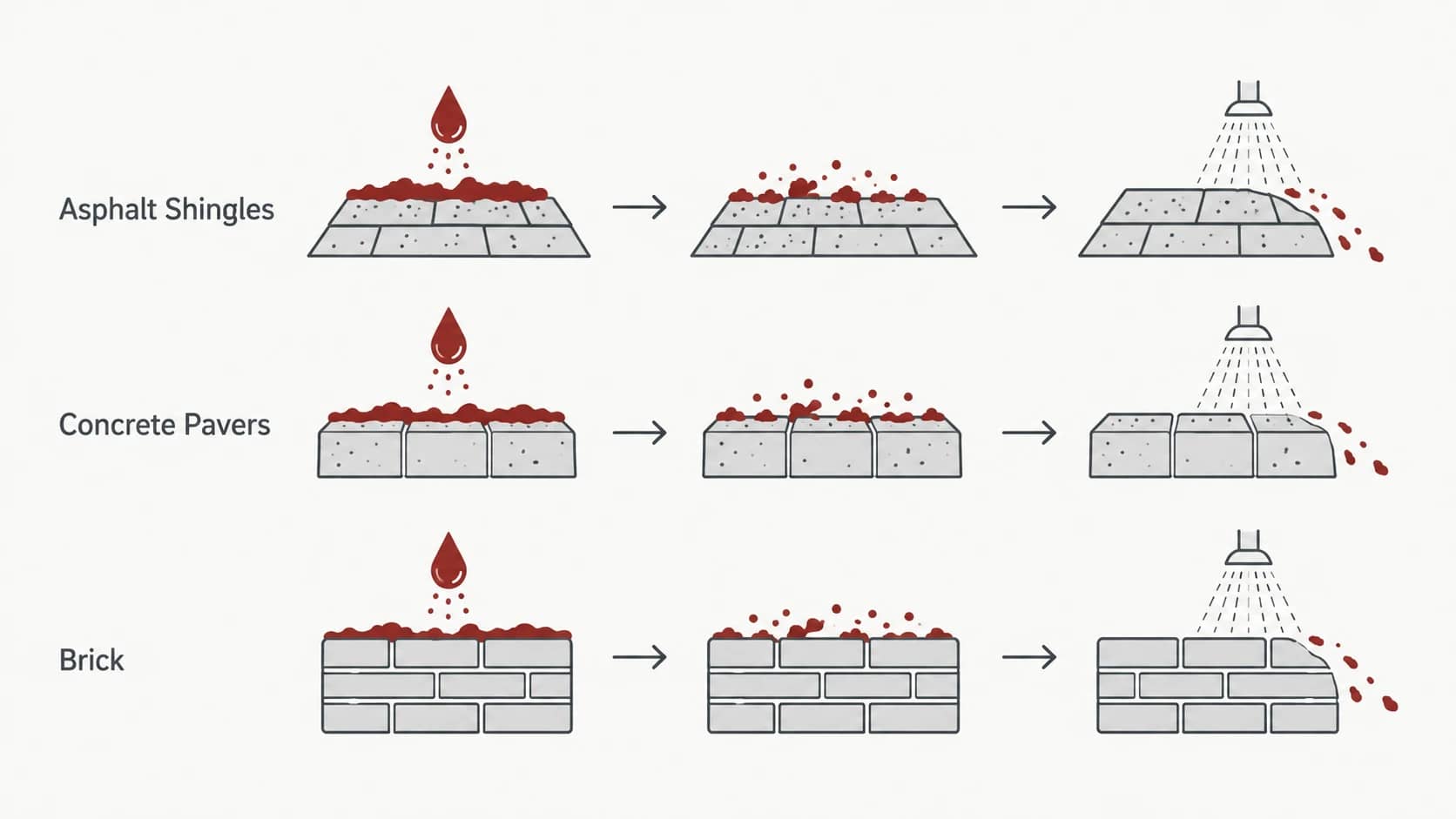
Commercial soft washing cleans exterior surfaces with a suitable cleaning solution, low-pressure application, controlled contact time, and a gentle rinse. It is often the right method for asphalt shingles, coated walls, and vulnerable cladding because high pressure can damage finishes or force water into joints. The method still requires surface testing, landscape protection, and runoff control.
Planning facade work for a business? Review our commercial soft-washing scope, including finish assessment, adjacent-area protection and the details needed for an estimate.
How commercial soft washing works
Commercial soft washing relies on a cleaning solution to loosen or treat contamination, so the rinse does not need the force used on durable flatwork. The useful distinction is how the contractor cleans a particular surface, not the name of the equipment on the truck.
A crew first identifies the substrate, coating, stains, nearby plants, drainage points, and openings where water could enter. It then selects a solution appropriate for the surface, tests an inconspicuous area, applies the solution, allows suitable contact time, and rinses as the material permits. The chemistry, concentration, contact time, and rinse all depend on the surface and site conditions.
Soft washing commercial buildings can involve several methods on the same property. A stained wall may call for soft washing while adjacent concrete flatwork may tolerate a different approach. A method chosen for the wall should not automatically be extended to entrances, pavers, glass, or roofing.
Which surfaces need a gentle method
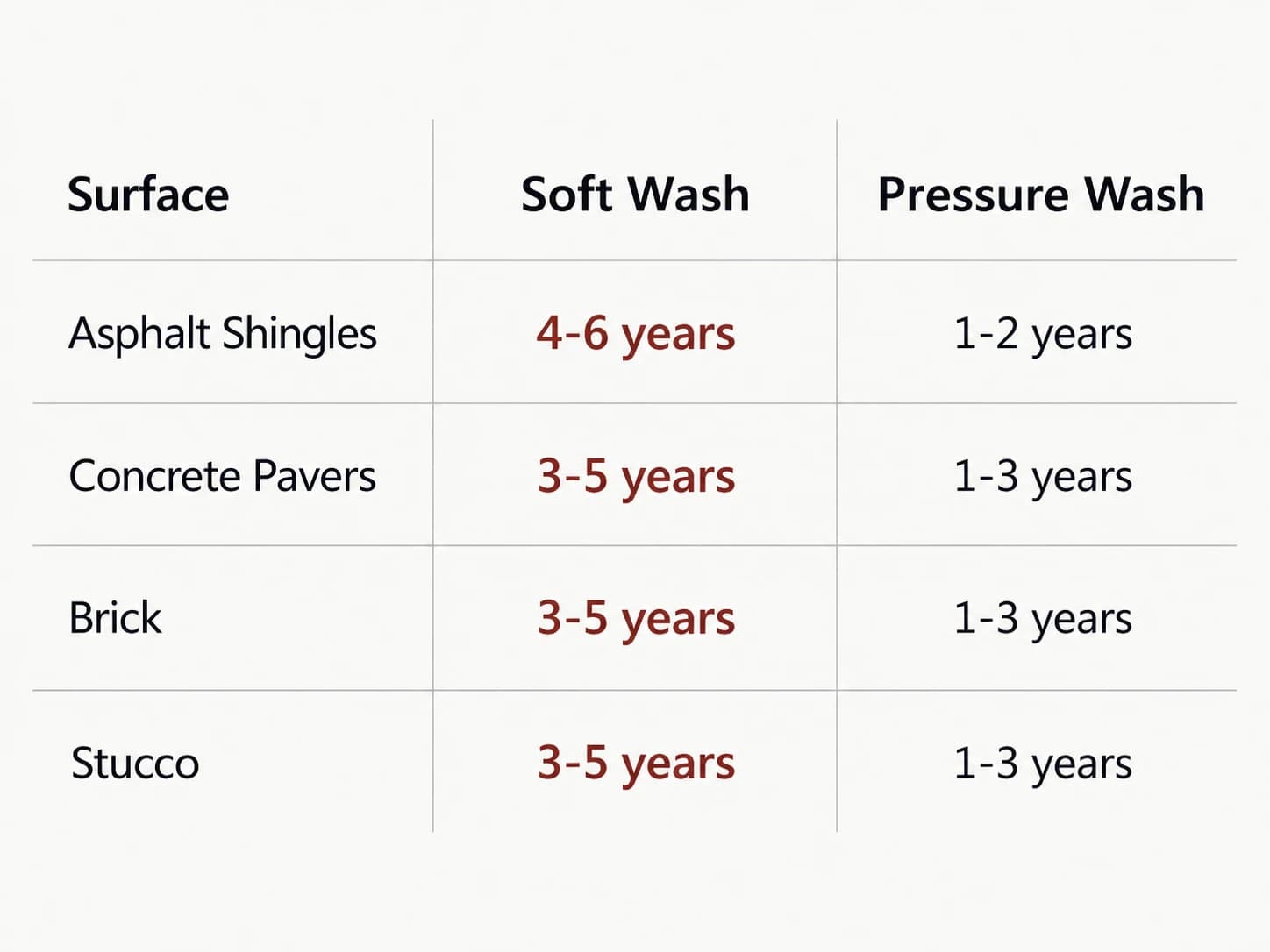
Asphalt shingles, painted finishes, and cladding with vulnerable joints deserve a low-pressure assessment before cleaning. Other surfaces may also benefit from soft washing, but their condition and manufacturer guidance matter more than a blanket rule.
| Surface | Why method selection matters | What to check before work |
|---|---|---|
| Asphalt shingles | High-pressure washing can damage the roofing material. | Roof condition, access, runoff path, and the proposed cleaning solution. |
| Stucco and painted masonry | Aggressive rinsing can affect weak coatings or drive water through defects. | Loose paint, cracks, repairs, and an inconspicuous test area. |
| EIFS and other wall systems | Joints, penetrations, and coatings can be vulnerable to water entry. | System guidance, sealant condition, openings, and rinse direction. |
| Vinyl or other siding | Pressure directed into overlaps can put water behind the cladding. | Panel condition, attachment, joints, and staining type. |
| Concrete flatwork | The surface may tolerate a different method than the wall beside it. | Surface condition, coatings, drainage, and pedestrian access. |
"Soft wash" does not mean every stain will disappear. Rust, mineral deposits, failed paint, and biological growth call for different treatments, and some marks may remain after cleaning. The commercial building washing method guide goes deeper on stucco, concrete, EIFS, and glass.
Chemistry and contact time
Cleaning chemistry does much of the work in a commercial soft wash. The solution must suit both the material and the contamination, while contact time must be long enough to work without allowing the product to dry or reach unprotected areas.
For organic staining, a contractor may use a sodium hypochlorite solution with surfactants to help it wet and cling to the surface. Sodium hypochlorite is not interchangeable with a general claim that a product is "eco-friendly." The relevant questions are what is being applied, where it can travel, how nearby materials will be protected, and how the surface will be rinsed.
There is no universal dwell time for an entire building. Sun exposure, surface temperature, porosity, staining, and the product instructions can change the process from one elevation to another. Ask the contractor to describe the planned test area and how the crew will respond if a coating reacts poorly or a stain does not lift.
Roofs need their own decision
An asphalt shingle roof should not be treated like a concrete walkway. The Asphalt Roofing Manufacturers Association, or ARMA, advises against using a power washer or brush for algae discoloration because high-pressure washing is likely to damage asphalt roofing. Its guidance describes a sodium hypochlorite treatment followed by a gentle rinse, and it says the result is temporary.
That guidance is specific to asphalt roofing. The Tile Roofing Industry Alliance says professional low-intensity pressure washing of clay and concrete tile can be done if desired. Roof type, condition, access, drainage, and manufacturer guidance therefore belong in the method decision; "all roofs require the same wash" is too broad.
If a building includes both roof and wall work, request separate methods and protection measures for each. The South Florida commercial roof cleaning guide covers roof-specific considerations in more detail.
Protecting landscaping and controlling runoff
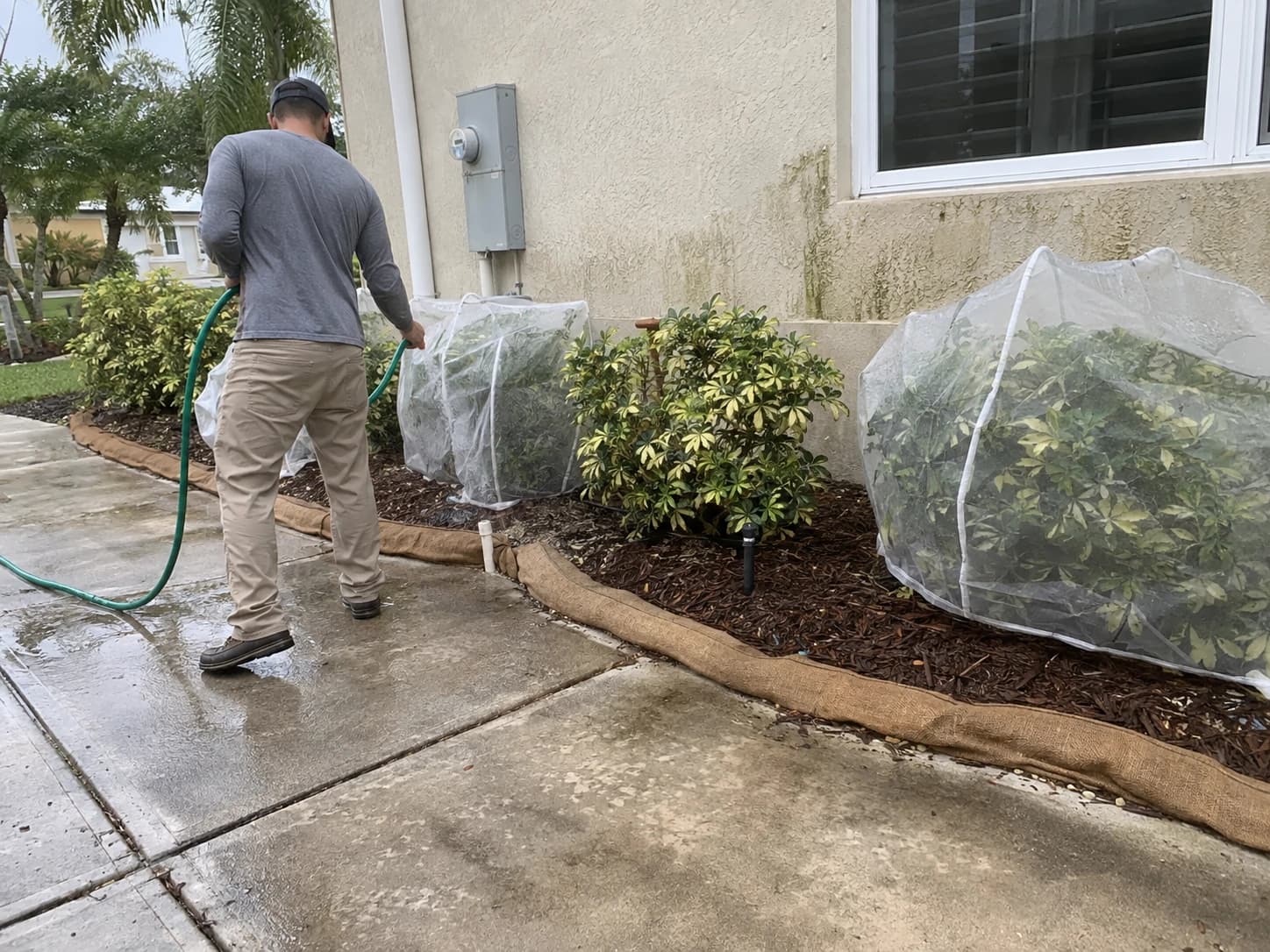
Low pressure does not make cleaning solution harmless to plants or acceptable in a storm drain. A commercial plan should show how the crew will protect planting beds, manage overspray, and keep wash water from flowing into sensitive areas.
Before application, identify irrigation controls, air intakes, decorative metals, water features, and plants directly below the work. Protection may include wetting vegetation before and after treatment, shielding sensitive areas, directing the application away from them, and monitoring runoff throughout the job. A tarp alone can trap heat or concentrate solution, so the contractor should explain how any covering will be used.
Drainage deserves a separate check. The federal MS4 rule requires permittees to effectively prohibit non-stormwater discharges into storm sewer systems. Site layout and local requirements determine the appropriate containment and disposal approach. The commercial wash-water recovery guide explains what to ask when runoff could reach a drain.
Working around tenants, guests, and storefronts
Occupied buildings need a cleaning sequence that accounts for people as well as surfaces. Low-pressure application can reduce the force of spray near vulnerable materials, but the work still involves wet areas, equipment, cleaning solution, and temporary access restrictions.
For a hotel, retail center, or condominium, identify entrances, loading areas, balconies, outdoor seating, and windows that must stay closed during nearby application. Agree on where crews will work first and how pedestrians will be directed around wet surfaces. Notify occupants about the affected areas and timing based on the actual scope, rather than assuming soft washing requires no coordination.
Ask who will inspect the work before an area reopens and how the crew will handle overspray on glass or adjacent finishes. A plan for the broader commercial exterior cleaning programme can help keep wall, roof, walkway, and window work from conflicting with one another.
How long results last
A clean appearance after soft washing does not establish a fixed maintenance interval. Return of algae and other staining depends on shade, moisture, nearby vegetation, surface condition, and what caused the original mark.
Chemistry can treat biological growth that a water-only rinse may leave behind, but it cannot stop new growth indefinitely. ARMA explicitly describes its asphalt roof algae treatment as temporary. Be cautious of a quote that assigns the same number of clean years to every roof, wall, and walkway without considering exposure or surface condition.
For repeat maintenance, compare photographs of the same areas over time and record where staining returns first. This gives a property manager a better basis for scheduling than a generic annual package. It also helps distinguish recurring growth from a leak, failed coating, or drainage issue that cleaning will not solve.
What to request in a commercial scope
A useful scope states where soft washing will be used, what it is expected to remove, and how surrounding areas will be protected. It should also identify exclusions so the board or facilities team can compare proposals on the same work.
Ask for a surface-by-surface method, the planned test area, protection for plants and adjacent materials, runoff handling, access needs, and the final inspection process. Request a clear distinction between routine organic staining and marks that may need another treatment or repair. If a wall has failing paint or open joints, cleaning may need to wait until those defects are addressed.
Price comparisons are meaningful only when the scopes match. A proposal that includes roof access, plant protection, runoff control, and occupied-area scheduling covers different work from a simple wall wash. Have each bidder identify the surfaces, preparation, exclusions, and cleanup included in its estimate.
For a written price for your property, call or text a photo to (904) 826-9806, or request a property walkthrough. Include the surfaces, location and access requirements so the scope can be reviewed.
Frequently asked questions
What is a soft pressure wash?
"Soft pressure wash" usually means cleaning with a solution and a low-pressure application or rinse rather than relying on a forceful water stream. The phrase is informal, so ask what the contractor will actually do on each surface. A commercial property may need gentle wall or roof cleaning alongside a different method for durable flatwork.
What is SH in pressure washing?
SH is trade shorthand for sodium hypochlorite, an ingredient used in some cleaning solutions for organic staining. The name alone does not tell you whether a proposed treatment suits your roof, wall coating, landscaping, or drainage setup. Ask the contractor to explain the planned solution, test area, surface protection, and rinse procedure for your property.
Is soft washing safe for plants?
Plants still need active protection. Cleaning solution and runoff can affect foliage or soil even when the application pressure is low. Ask which beds and trees are in the spray or drainage path, how they will be shielded or rinsed, and who will monitor them during the work. The answer should address the actual site layout.
Can soft washing remove every stain on a commercial building?
No. It is often suited to organic staining, but rust, mineral deposits, paint failure, and water damage may require a different treatment or a repair. A test area can show how a stain and the underlying finish respond before the full elevation is cleaned. The scope should say what improvement is expected and what may remain.
Is commercial soft washing always better than pressure washing?
No single method fits every surface. Soft washing makes sense where chemistry and a gentle rinse can clean without the risks of high pressure, especially on vulnerable roofs or finishes. Sound concrete flatwork may call for another method. Choose by material, condition, stain, access, and drainage, then document those choices in the scope.
Sources
The roofing and stormwater points above draw on the following industry and federal sources. They support the specific claims cited, not a universal method for every property.
For a surface-specific plan, ask 2Clean about soft washing and share the materials, staining, access needs, and landscape features at your property.
Custom Commercial & HOA Walkthroughs
Need a scope tailored to your South Florida property?
Every building, plaza, and community has its own surface mix, access windows, and drainage layout. We quote by walkthrough rather than fixed rate sheets so your proposal matches your exact property. Call us directly at (904) 826-9806 or request a written scope online.
Related services & tools
Soft Washing by South Florida city: