
Commercial Exterior Cleaning (Hub)
Exterior and Interior Building Maintenance: Scope and Responsibility
October 14, 2026 (updated) · 10 min read
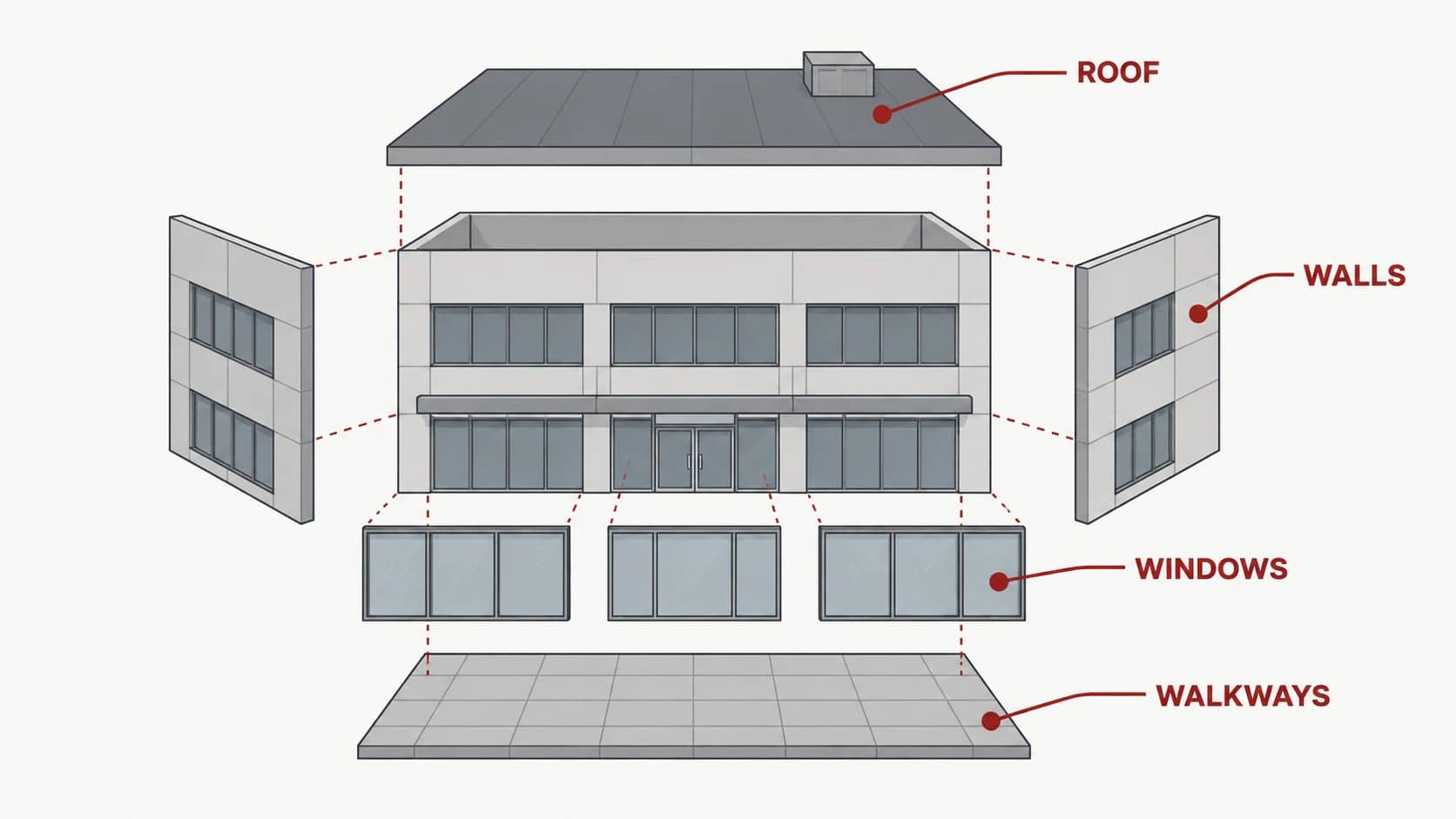
Exterior and interior building maintenance covers the routine care, inspection, cleaning, and repair of a property's outside surfaces, shared spaces, and building systems. The work ranges from washing walkways to tracking roof leaks and servicing equipment. Who arranges and pays for it depends on ownership documents, lease terms, and the area involved.
What exterior and interior building maintenance covers
Exterior and interior building maintenance is the ongoing work that keeps a property usable, safe, and presentable. The exterior plan covers the building envelope and surrounding grounds; the interior plan covers shared rooms, finishes, equipment, and systems. Both need a clear process for recording defects and assigning follow-up work.
On the exterior, a property manager may coordinate roof and drainage inspections, facade cleaning, window care, walkway cleaning, landscape upkeep, and repairs to damaged materials. Roofs, walls, windows, doors, joints, and sealants form the weather-facing envelope. Pavers, parking areas, and paths sit outside that envelope but still affect access, drainage, and appearance.
Inside a commercial building or condominium, the scope may include lobbies, corridors, elevators, restrooms, lighting, plumbing, ventilation equipment, and shared finishes. A tenant's suite or an owner's unit can fall under a different maintenance arrangement. Keep those boundaries visible in the work order system so a reported issue reaches the party who can authorize it.
A useful plan names the asset, its condition, the task, and the person responsible. For exterior work in South Florida, the commercial exterior cleaning guide for Miami property managers gives more detail on coordinating cleaning across a property.
Separate cleaning, inspection, repair, and replacement
These are different jobs, even when they concern the same surface. Cleaning removes contamination, inspection identifies a condition, repair corrects a defect, and replacement renews an asset that can no longer perform as needed. Separating them makes scopes and budgets easier to approve.
| Work type | Example | What it does not establish |
|---|---|---|
| Cleaning | Remove soil and organic growth from an exterior wall | That the wall is watertight |
| Inspection | Check a window perimeter for gaps or staining | That a leak has been repaired |
| Repair | Replace failed sealant after the cause is confirmed | That other openings are sound |
| Replacement | Install a new component where repair is unsuitable | That routine care can stop |
A clean roof can still leak, and a freshly washed wall can still have cracked sealant. Treat staining, recurring dampness, loose material, and failed joints as findings to investigate. Photograph the location, record when it was observed, and route it to the appropriate trade before cosmetic work hides the evidence.
Cleaning method also depends on the material. Controlled pressure may suit some hard surfaces, while a delicate facade may call for a lower pressure approach and a suitable cleaning solution. The guide to washing stucco, concrete, EIFS, and glass explains why one method should not be applied across every elevation. For surfaces that need gentler treatment, review the soft washing service when defining the cleaning scope.
Protect the building envelope without confusing appearance with performance
The building envelope is the roof, exterior walls, windows, doors, and their connections. Its job is to manage weather and separate indoor conditions from outdoors. Cleaning can make defects easier to see, but it cannot correct a leak, failed flashing, or damaged substrate.
Start with the paths water can take. Look at roof drainage, wall penetrations, window edges, door thresholds, and places where different materials meet. If staining returns after cleaning, note where and when it appears; that pattern may help a qualified contractor trace the source. Avoid assuming that visible growth alone identifies the underlying defect.
Method selection matters on roofs. The Asphalt Roofing Manufacturers Association says high-pressure washing is likely to damage asphalt roofing and advises against using a power washer or brush on it. Its guidance describes a gentle cleaning approach for algae discoloration and notes that the result is temporary. Other roof materials have different care requirements, so confirm the material and its guidance before specifying work.
For walls and glazing, ask what will contact the surface, how runoff will be handled, and which areas need protection. An aggressive wash may remove soil quickly but can disturb vulnerable finishes or drive water into openings. A lower pressure method may be better suited to those areas, although it still requires appropriate products, dwell time, rinsing, and protection of nearby materials.
Responsibility matrix by lease type
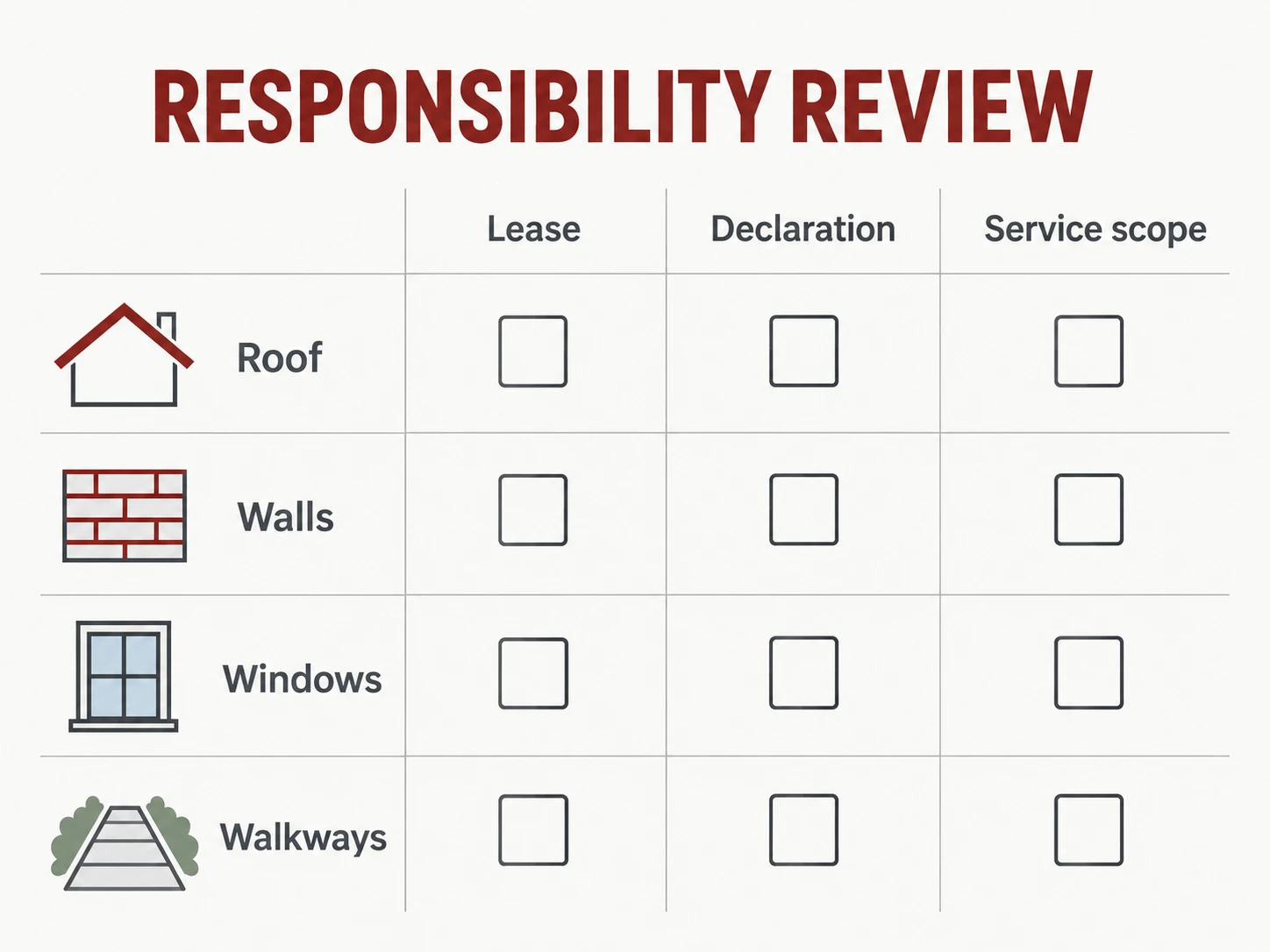
There is no universal rule assigning every exterior or interior task to a landlord, tenant, association, or owner. The controlling documents define the boundary, and the party responsible for arranging work may differ from the party that ultimately pays. Check both points before approving a scope.
| Property arrangement | Common starting point | Document to check |
|---|---|---|
| Gross commercial lease | Landlord commonly coordinates building and common-area work | Lease maintenance, operating expense, and alteration clauses |
| Triple-net commercial lease | Tenant may bear assigned maintenance costs | Exact lease language and any shared-area arrangements |
| Condominium | Association maintains common elements, subject to the declaration's treatment of limited common elements | Declaration, governing documents, and Florida law |
| Managed property with multiple occupants | Manager coordinates work on the owner's or association's behalf | Management agreement and underlying leases or declaration |
These are starting points, not substitutes for document review. A lease may assign storefront glass to a tenant while keeping the roof with the landlord. It may also make a tenant responsible for a cost without allowing the tenant to select a contractor or authorize work on a shared facade.
For Florida condominiums, section 718.113(1) of the Florida Statutes places common-element maintenance with the association, except where the declaration assigns limited common-element maintenance to unit owners. That does not make every balcony, window, or door an owner expense. Identify how the declaration classifies the specific component, then confirm who maintains it and who can approve access and repairs. The Florida condo and HOA exterior maintenance guide covers the governing-document questions in more depth.
Service interval timeline
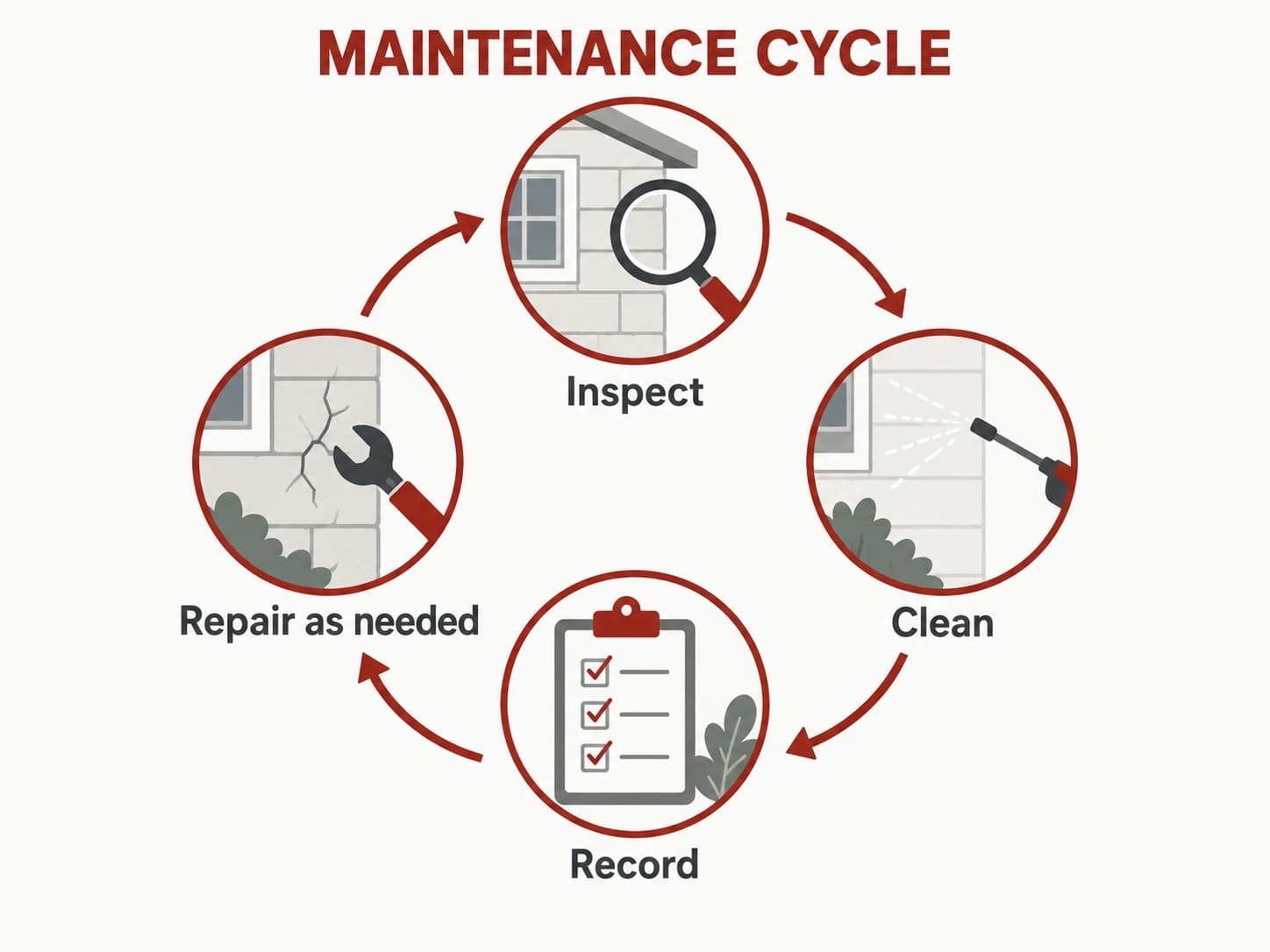
A service timeline should set review points and triggers, then adjust to what inspections show. Exposure, shade, foot traffic, material condition, and recent work all affect when cleaning or repair is useful. A fixed washing interval by itself can cause unnecessary work or leave a developing defect unnoticed.
| Area | Review for | Schedule work when |
|---|---|---|
| Roof and drainage | Debris, standing water, staining, damaged components | An inspection identifies a cleaning or repair need |
| Walls and exterior openings | Soil, growth, cracks, failed joints, water marks | Appearance warrants cleaning or a defect needs investigation |
| Windows | Salt residue, spotting, seal or frame concerns | Visibility and appearance decline, or an opening shows damage |
| Walkways and pavers | Slick residue, uneven units, loose joints, drainage problems | Use or condition calls for cleaning or repair |
| Shared interior spaces | Wear, spills, damaged finishes, equipment faults | Routine checks or occupant reports identify a task |
In South Florida, include a review before and after periods of severe weather. The National Hurricane Center identifies the Atlantic hurricane season as June through November. Use pre-season checks to find loose or obstructed exterior elements and post-storm checks to document new damage before routine cleaning resumes.
High-use walking areas need prompt attention when spills or debris appear. OSHA's walking-working surface rule requires surfaces to be kept clean, orderly, and sanitary, inspected regularly, and maintained in a safe condition. The ADA Standards also require floor and ground surfaces to be stable, firm, and slip resistant. Those requirements support condition-based attention; they do not supply a universal washing frequency.
Build a scope that a contractor and board can both use
A workable scope identifies the surface, its material, its condition, and the intended outcome. It also records access limits, nearby items to protect, runoff handling, and who will inspect the finished work. That level of detail helps a board compare proposals and helps a facilities lead separate cleaning from repair.
For each area, include:
- Location and material: Name the elevation, roof section, walkway, or room, and identify the surface where known.
- Observed condition: Record soil, staining, biological growth, damaged finishes, water marks, or another visible issue.
- Requested task: State whether the contractor is cleaning, inspecting, repairing, or recommending further investigation.
- Method limits: Flag delicate finishes, openings, landscaping, occupied entrances, and surfaces that need special care.
- Follow-up owner: Name who will review findings and authorize any work outside the agreed scope.
Water management belongs in the scope for exterior cleaning. Federal MS4 rules require permittees to address illicit discharges to storm sewers, and Florida DEP administers the state's municipal stormwater program. Ask the cleaning provider to explain how wash water will be managed for the particular site and job. Do not assume a nearby drain is an acceptable disposal point.
Keep a separate record of defects found during cleaning. If a crew encounters loose material, a suspected leak path, or damaged pavers, the report should identify the location and condition without presenting cleaning as the repair. The South Florida commercial property exterior maintenance checklist can help turn those observations into a property-wide review.
Budget for routine care and defects separately
An annual maintenance budget should distinguish predictable services from corrective work and larger renewals. Routine cleaning and inspections are easier to plan; a leak investigation or component replacement depends on what is found. Separate categories make it clearer when a proposal exceeds the approved maintenance scope.
A practical budget can track recurring cleaning, scheduled inspections, minor repairs, and major projects as distinct lines. Add an owner for each line and keep the supporting inspection notes or work orders. When a contractor recommends more work, compare that recommendation with the documented condition before moving funds between categories.
For applicable Florida residential condominiums, section 718.112(2)(g) identifies components covered by a structural integrity reserve study, including the roof, waterproofing and exterior painting, windows, and exterior doors. A cleaning plan does not replace that study or the association's reserve decisions. It can, however, give the board clearer condition records and help route observed defects to the right professional.
Frequently asked questions
What does a maintenance service include?
That depends on the contract. A cleaning service might cover specified walls, windows, roofs, or walkways, while a broader building maintenance agreement could include inspections, minor repairs, and coordination with specialist trades. Ask for a written scope that names the areas, methods, exclusions, access arrangements, and process for reporting damage or work that needs separate approval.
What are the different types of repairs and maintenance?
Routine maintenance includes recurring cleaning, checks, and servicing that help keep assets usable. Corrective repair addresses an identified defect, such as a failed seal or broken component. Larger replacement projects renew an asset when repair is no longer suitable. Classifying work this way helps managers assign the right trade and avoid treating a cosmetic improvement as proof that a defect is resolved.
What is an O&M building?
O&M means operations and maintenance. In a building context, it describes the procedures and records used to run and care for the property, including equipment information, service instructions, inspection records, and assigned responsibilities. An O&M plan helps staff know what to check, when to report a problem, and where to find the information needed for follow-up work.
Who pays for exterior building maintenance, landlord or tenant?
The lease decides how responsibility and cost are divided. A landlord may arrange work on shared elements while recovering some expenses through lease terms; a tenant may have direct duties for an assigned area. Read the maintenance and operating expense clauses together, then check who can authorize work. For a condominium, review the declaration and applicable common-element rules instead of applying a landlord-tenant assumption.
Does exterior building maintenance include the roof?
Yes. The roof is part of the building envelope and needs condition checks, drainage attention, cleaning when appropriate, and repair when defects are found. The correct cleaning method depends on the roof material. For asphalt roofing, the Asphalt Roofing Manufacturers Association warns that high-pressure washing is likely to cause damage, so a roof scope should identify the material before naming a method.
How often should exterior surfaces be cleaned?
There is no single interval that fits every property. Review surfaces regularly and schedule cleaning based on visible condition, use, exposure, and the material's care needs. Keep inspections separate from washing: a surface may need a repair even when it looks clean, while a sound surface may need cleaning sooner because shade, salt, or foot traffic affects its appearance.
Sources
If you are defining an exterior cleaning scope for a commercial property or association, 2Clean's commercial and HOA services provide a starting point for discussing the surfaces, access, and cleaning methods involved.
Custom Commercial & HOA Walkthroughs
Need a scope tailored to your South Florida property?
Every building, plaza, and community has its own surface mix, access windows, and drainage layout. We quote by walkthrough rather than fixed rate sheets so your proposal matches your exact property. Call us directly at (904) 826-9806 or request a written scope online.
Related services & tools
Commercial & HOA by South Florida city: