Methods, Surfaces & Failure Modes
Awning Cleaning for Commercial Fabric, Metal and Illuminated Canopies
October 19, 2026 · 10 min read
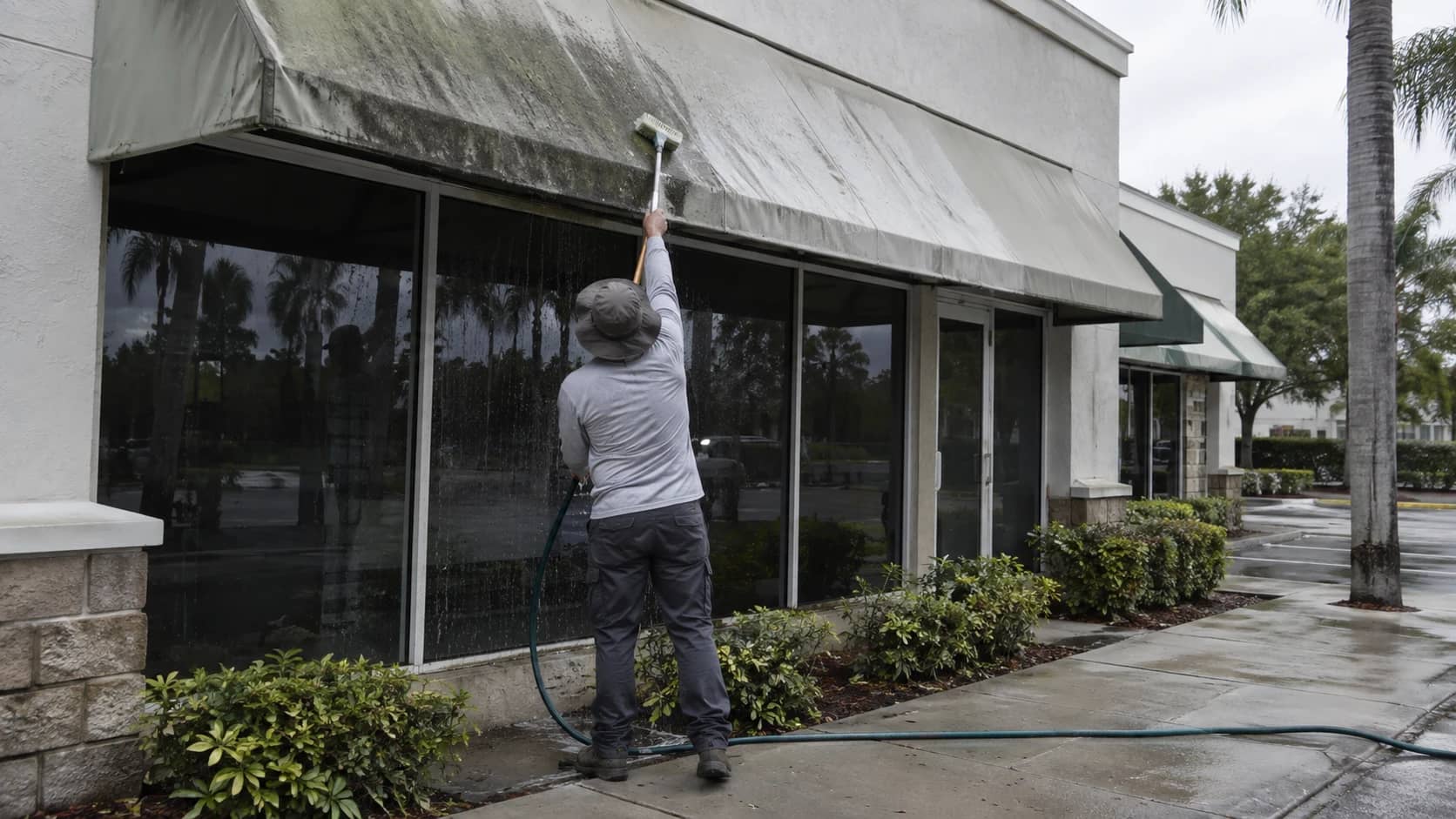
Commercial awning cleaning starts with identifying the covering, its finish and any nearby electrical equipment. Remove loose debris, test a suitable cleaner in a concealed spot, wash gently and rinse without driving water into seams or fixtures. Fabric, finished metal and illuminated canopies need different handling; cleaning cannot repair fading, failed coatings or damaged frames.
Awning cleaning methods by material
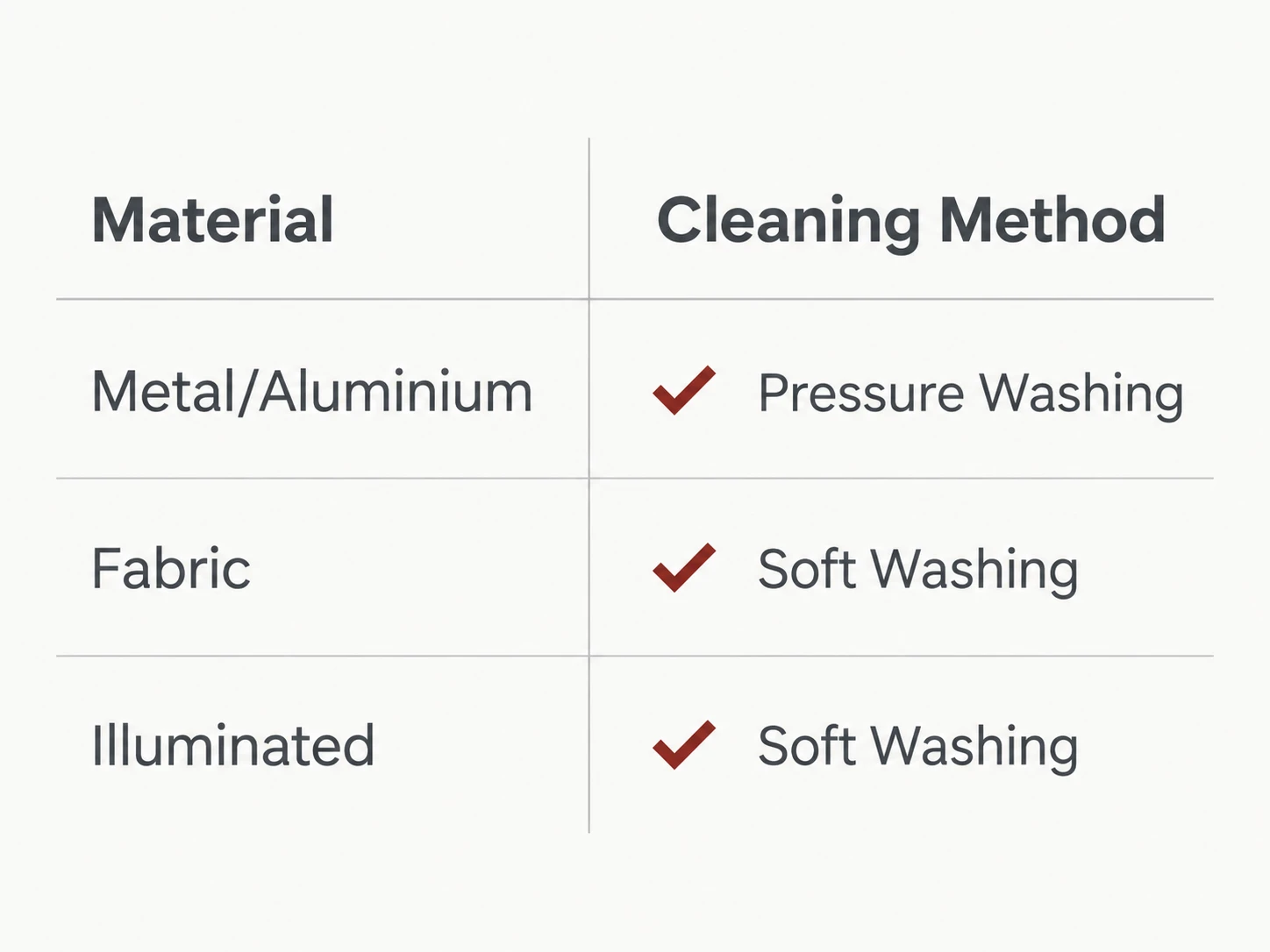
The safest method depends on the exposed material and the condition of its finish, not just the stain you can see. Begin with the maker's care instructions when available, then test the proposed cleaner and rinse method on a concealed area.
| Surface | Starting method | Main limitation |
|---|---|---|
| Woven acrylic fabric | Remove dry debris, use a mild cleaner approved for the fabric, gently agitate and rinse at low pressure. | Hard brushing can disturb the weave; leftover cleaner can attract soil or mark the fabric. |
| Vinyl or vinyl-coated fabric | Use a compatible cleaner, a soft cloth or brush, and a controlled rinse. | Solvents and abrasive pads can dull or damage the coating. |
| Coated polyester fabric | Check the coating and supplier guidance, then use a mild cleaner and gentle rinse. | A damaged coating may keep looking patchy after the dirt is gone. |
| Finished metal canopy | Wash with a finish-compatible cleaner and soft tools; rinse seams carefully. | Aggressive pressure or chemicals can damage paint, sealant and joints. |
| Illuminated awning or sign canopy | Arrange electrical isolation where required and clean the accessible exterior with controlled moisture. | Water can enter lamp housings, wiring routes and penetrations. |
These are starting points, not interchangeable recipes. An awning sold as "fabric" might have a coated face, a different underside and printed graphics. Treat each exposed surface separately, particularly where an older canopy has repairs or replacement panels.
Pressure washing can be useful on suitable hard exterior surfaces, but a fabric canopy is a poor place to assume that more force will work faster. A concentrated jet can stress stitching, lift graphics, push water through seams and leave a visibly uneven finish. The commercial building washing method guide explains the same principle across other exterior materials: the surface and its condition determine the method.
Inspect the awning before washing
An inspection tells you what cleaning can safely improve and what needs repair first. Record the material, finish, stains, seams, fasteners, drainage points and any lights or wiring before selecting a cleaner.
Look at the upper face and the underside. Dirt may collect at the front edge while moisture or deposits remain around wall connections, folds and support members. Note loose fabric, open seams, brittle patches, peeling graphics, flaking paint and corrosion; washing can make an existing defect more visible or worsen a loose edge.
For a retractable awning, check whether it moves freely before arranging cleaning. An unevenly tensioned cover, binding arm or faulty motor is a maintenance issue, not a stain. Keep the awning in the position recommended for cleaning and let the cover dry as its manufacturer directs before retracting it.
Also inspect what lies below. Storefront entrances, outdoor dining areas and accessible routes may need protection or temporary access arrangements. OSHA's walking-working surface rule, 29 CFR 1910.22, calls for surfaces to be kept clean and free of spills, so runoff control is part of the job rather than a cleanup afterthought.
Clean fabric without stressing seams or coatings
Fabric awnings generally need loose soil removed first, followed by a compatible cleaner, light agitation and a thorough low-pressure rinse. The aim is to lift contamination while keeping water and mechanical force away from weak seams, graphics and damaged coatings.
Start by brushing or vacuuming dry debris with a tool that will not snag the weave. Wetting gritty dirt immediately can turn it into an abrasive paste. Apply the selected cleaner according to the fabric supplier's instructions, working in manageable areas so it does not dry on the surface. Use a soft brush or sponge only where the material permits it.
Rinse from a position that carries soil off the cover without driving water under laps or toward the building connection. Inspect for soap residue, especially along hems and folds. Allow the fabric to dry before closing a retractable unit or reinstalling anything that traps moisture.
Stain removal has limits. A dark patch might be removable surface growth, but it could also be dye transfer, embedded pollution, coating failure or permanent discoloration. Test an inconspicuous patch before treating the whole canopy, and agree on the likely result if the mark remains after a safe trial. For an overview of where low-pressure chemical cleaning fits in commercial exterior care, see 2Clean's soft washing service.
Wash metal and aluminium canopies by finish
Metal canopies usually tolerate more handling than fabric, but their paint, powder coating, sealant and joints still set the cleaning limit. Use a cleaner compatible with the finish, soft tools and a rinse that does not force water behind panels.
Remove loose grit before wiping or brushing. Pay attention to the leading edge, underside and joints, where runoff can leave deposits. A pressure-based method may suit some sound, uncoated metal surfaces after assessment, but it is a poor default for painted panels, aging sealant, loose trim or canopies with hidden electrical components.
Orange or brown marks need diagnosis before treatment. Soil can wash away, while corrosion may require repair and a stain from another metal component may return until its source is corrected. Likewise, chalky or peeling paint is a finish problem. Stronger cleaning will not restore a failing coating and can leave a larger patch to refinish.
Protect illuminated awnings and nearby electrical equipment
An illuminated awning needs a cleaning plan that accounts for its electrical assembly. Identify light housings, sign faces, cable entries and switches, and have the responsible qualified person arrange isolation when the equipment or work procedure requires it.
Use controlled moisture on accessible exterior surfaces and keep rinse water away from penetrations, damaged seals and open housings. Do not direct a spray into a sign box or assume that an apparently sealed fixture is watertight. If a cover must be removed or a wiring area inspected, that work belongs in an electrical maintenance scope.
Printed sign faces add another constraint: an abrasive pad or incompatible solvent can permanently mark the graphics. Ask for a small test on a less visible area and confirm whether the proposed work covers the sign face, the fabric or metal shell, and the supporting frame. These parts can need different tools even though they appear to be one canopy from the street.
Address growth on the underside and the moisture behind it
Dark or green deposits on a canopy underside can often be cleaned, but the moisture source determines whether they return. Inspect drainage, leaks, shaded folds and places where the canopy meets the wall before treating the visible growth.
A suitable cleaner and gentle agitation may remove surface contamination. Avoid forcing water into the underside lining, wall connection or lighting assembly, then allow the cleaned area to dry. If staining remains inside a porous material or coating, repeated scrubbing may do more harm than good.
Look for the cause when the same area soils again quickly. A blocked drain, failed seal or dripping component may need repair before another cleaning will hold. The guide to black streaks on commercial buildings and roofs is useful when nearby surfaces show recurring biological staining, though the treatment for a roof must not be copied onto awning fabric.
Set a cleaning schedule from exposure and condition
There is no useful fixed interval for every South Florida storefront or hotel canopy. Inspect regularly and schedule cleaning when soil begins to hold moisture, obscure graphics, mark the entrance or become harder to remove safely.
Exposure varies even across the same property. A canopy beneath trees, beside a busy road or near food service may soil differently from one over a sheltered entrance. Check the upper face, underside, seams and runoff paths during routine exterior inspections, then record when a gentle clean stops producing an acceptable result.
Plan around the operation below the awning. Retail access, outdoor seating and hotel arrivals may affect work hours, pedestrian routing and drying time. NOAA identifies the Atlantic hurricane season as June through November, so use seasonal property checks to notice loose fixings and drainage issues as well as dirt. Cleaning does not substitute for a structural inspection or storm preparation.
Decide when repair or replacement beats cleaning
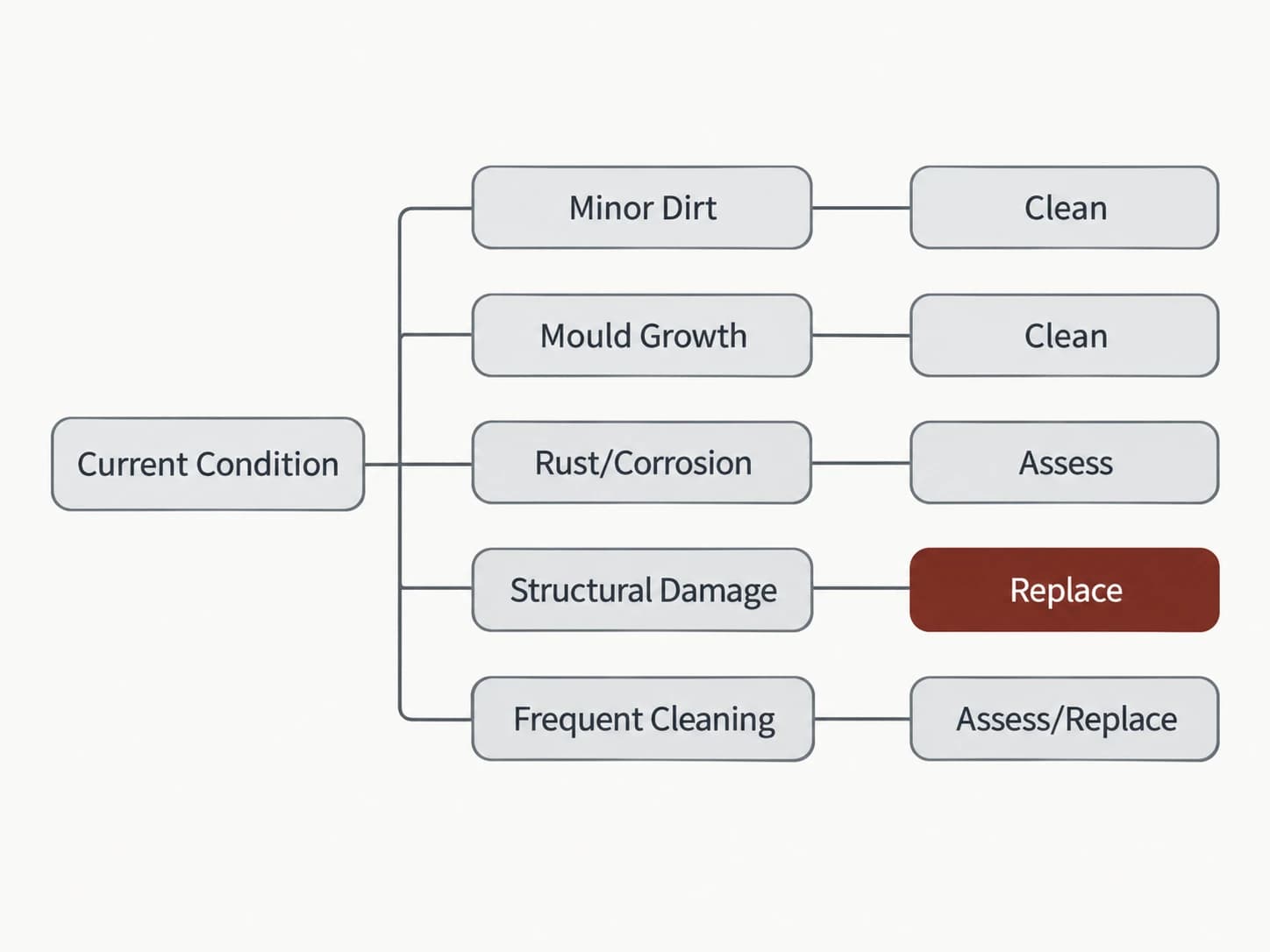
Clean a sound awning when the problem is removable soil. Request repair or replacement assessment when the material, finish, frame or electrical assembly has failed, or when a test clean shows that the visible defect is permanent.
| Observation | Sensible next step | Why |
|---|---|---|
| Loose dirt or removable surface growth on sound material | Clean and correct any source of repeated wetting. | The covering can remain in service if cleaning does not harm it. |
| Small tear, open seam or loose fixing | Assess repair before washing. | Water and brushing can enlarge the defect. |
| Fading, peeling graphics or failed coating | Discuss refinishing or replacement. | Cleaning removes soil, not lost colour or coating. |
| Corrosion, bent supports or unstable attachment | Arrange a qualified condition assessment. | Surface cleaning cannot establish structural soundness. |
| Damaged sign housing, wiring or water ingress | Address electrical maintenance before wet cleaning. | The cleaning scope cannot resolve an electrical fault. |
Ask for a test area when the choice is uncertain. Compare the cleaned patch with an unaffected part of the canopy in consistent light, and inspect it after drying. A wet surface can temporarily hide fading or chalking. If the improvement is slight, agree on repair or replacement options before paying to repeat the same process across the whole awning.
Specify the scope and manage wash water
A useful awning cleaning scope names each material, the proposed method, access needs, stain limits and the surfaces below. It also states who will protect signage and electrical equipment, manage runoff, and inspect the result after drying.
Ask the contractor to distinguish washing from repairs. The estimate should make clear whether frame cleaning, underside cleaning, stain treatment, graphics and nearby storefront surfaces are included. Photos of defects and a small test area can help a board or facilities team compare proposals against the same expected outcome.
Wash water needs a destination before work starts. The EPA's MS4 rule requires permittees to effectively prohibit non-stormwater discharges into storm sewer systems. Discuss containment and disposal for the site rather than letting cleaner and loosened debris run toward a drain. For a wider property plan, the Miami commercial exterior cleaning guide covers how awnings fit alongside other building surfaces.
Frequently asked questions
Awnings differ enough that a universal cleaner or washing schedule can cause avoidable damage. These answers cover the questions most likely to affect a commercial cleaning decision.
What can I use to clean my awnings?
Start with the awning maker's care instructions and a mild cleaner approved for the exposed material. Use a soft cloth, sponge or brush only if the finish permits it, and test a concealed area before treating visible panels. Rinse gently and completely. A coated fabric, printed sign face and painted frame may each require a different product.
What are the common problems with retractable awnings?
Common issues include soil trapped in folds, a cover that stays damp when retracted, uneven fabric tension, binding arms and motor faults. Cleaning can address surface soil but will not correct a mechanical problem or a torn seam. Check how the awning extends and retracts before washing, and refer movement or electrical faults for maintenance.
How much does it cost to clean awnings?
The cost depends on access, canopy size and shape, material, soil level, electrical precautions and the work included. A quote should distinguish routine washing from stain treatment, frame work and repairs, and explain any access or runoff arrangements. Compare proposals against the same scope and stated limits rather than assuming every contractor is pricing the same result.
Can you use vinegar to clean awnings?
Do not use vinegar as a universal awning cleaner. Its suitability depends on the fabric, coating, finish and the manufacturer's instructions, and it may not address the stain you are trying to remove. Identify the material first, choose a compatible product and test it discreetly. Avoid mixing household cleaners or applying an untested solution across printed graphics.
Will pressure washing damage a fabric awning?
It can. A concentrated jet may stretch fabric, disturb stitching, lift graphics or drive water through seams and into the assembly. Use a material-compatible cleaner, gentle agitation where permitted and a controlled low-pressure rinse. If a stain does not respond to that approach, assess the stain and the fabric condition before increasing force.
Sources
The external sources cited above support the points about walking surfaces, stormwater controls and hurricane season. Material selection and cleaning limits should also be checked against the specific awning maker's instructions.
If you are planning canopy work across a retail, hotel or association property, 2Clean's commercial and HOA services can help you define an exterior cleaning scope around the materials and access on site.
Custom Commercial & HOA Walkthroughs
Need a scope tailored to your South Florida property?
Every building, plaza, and community has its own surface mix, access windows, and drainage layout. We quote by walkthrough rather than fixed rate sheets so your proposal matches your exact property. Call us directly at (904) 826-9806 or request a written scope online.
Related services & tools
Soft Washing by South Florida city: