
Cost & Budget
Apartment Complex Pressure Washing: Cost, Scope and Scheduling
October 29, 2026 (updated) · 11 min read
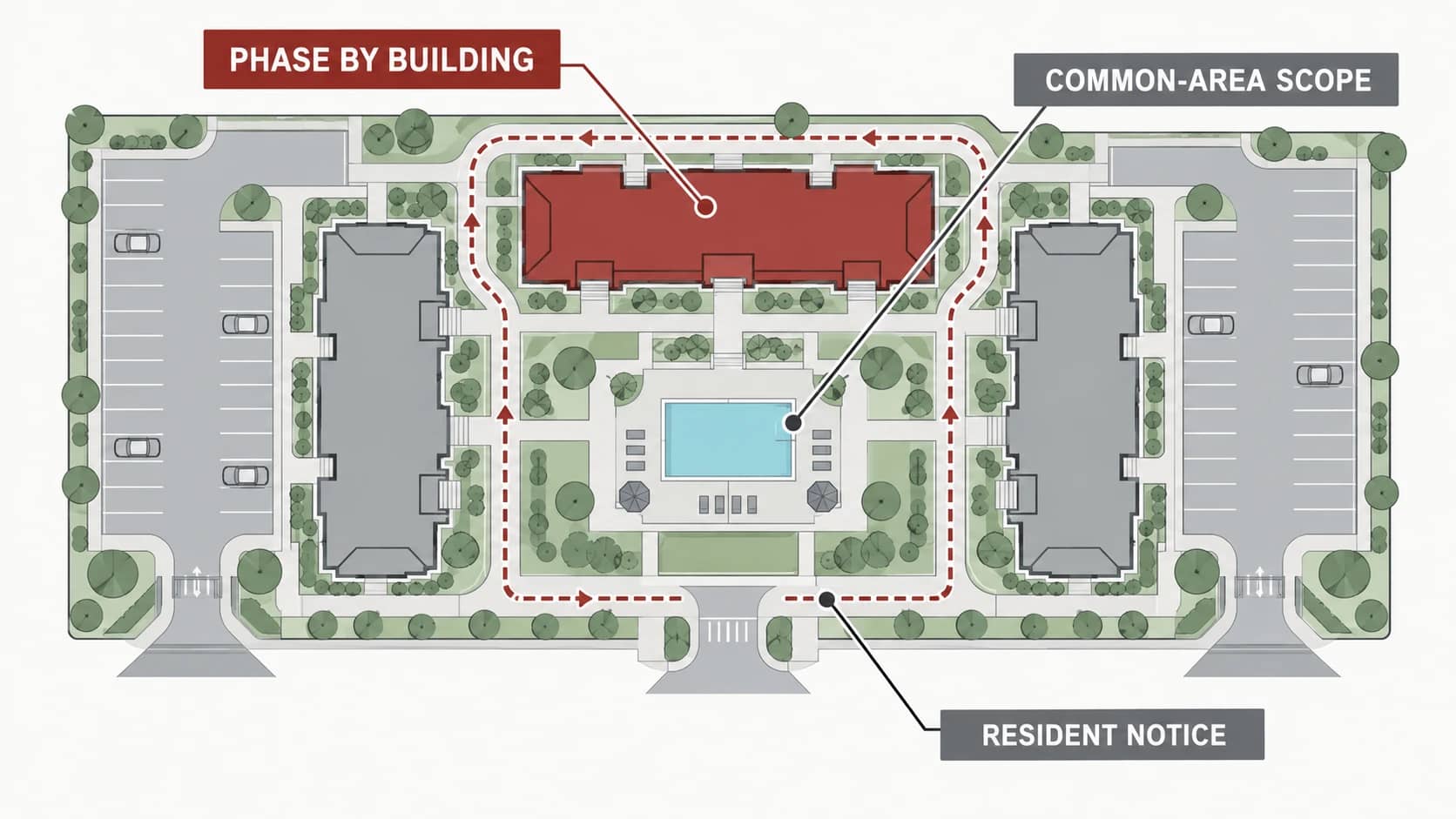
Apartment complex pressure washing costs depend on the surfaces measured, their condition and the access needed to clean them. HomeGuide's commercial price guide (Oct 9, 2025) lists $0.10 to $0.35 per square foot for basic commercial cleaning. Use that published range as a planning reference, then request a quote tied to your property's actual scope.
For a managed community, review our HOA and condo exterior-cleaning scope. Use it to separate the cleaning areas from resident notices, access permissions and sign-off responsibilities.
Apartment complex pressure washing cost by surface
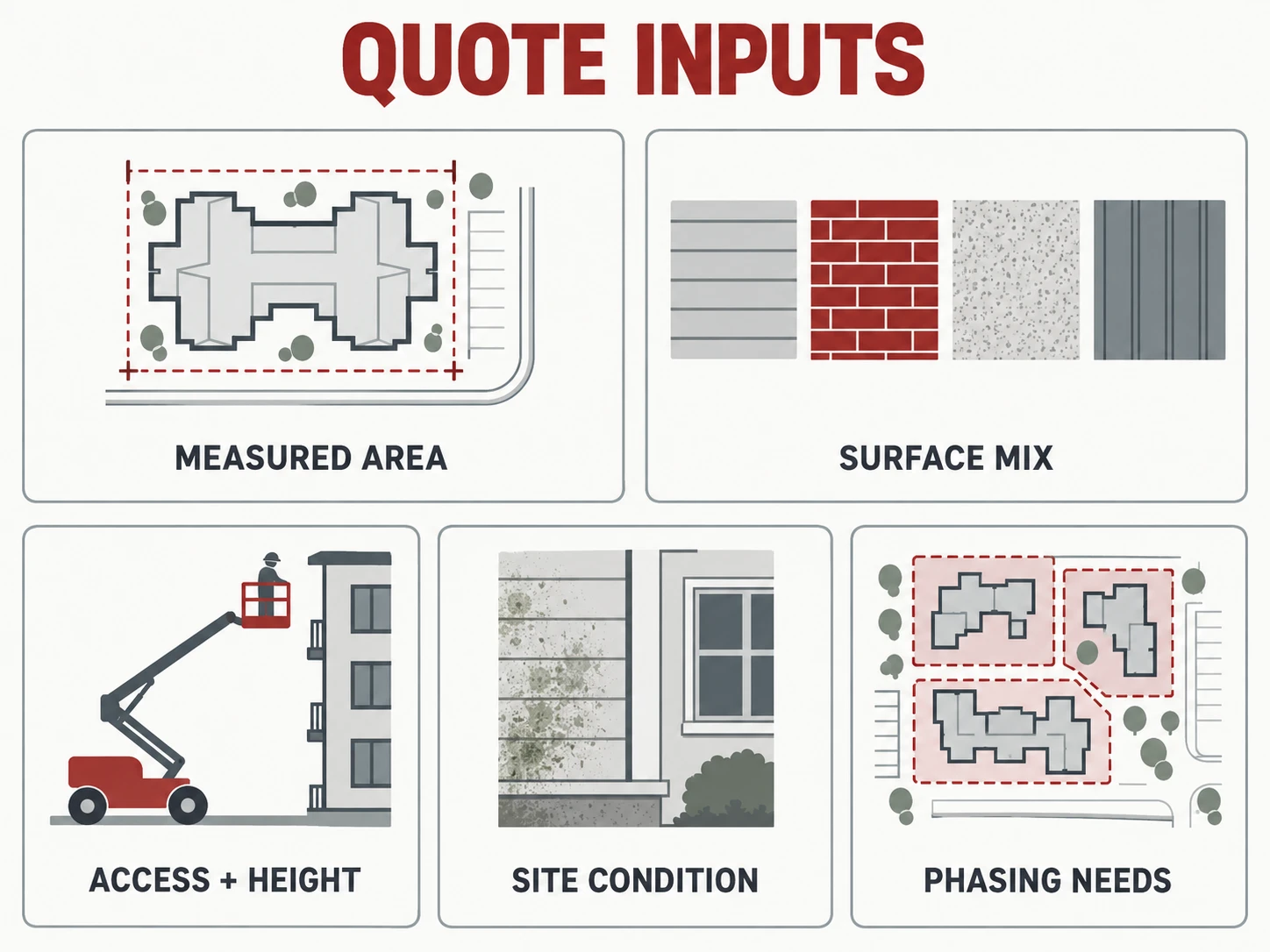
The cost to pressure wash an apartment complex starts with the surfaces included in the work. HomeGuide's commercial price guide (Oct 9, 2025) lists $0.10 to $0.35 per square foot for basic commercial cleaning of areas such as sidewalks, storefronts and exterior walls. That is a third-party guide range, not a price for an entire apartment property.
An apartment complex may combine flat concrete, painted walls, breezeways, stairs, parking areas and a dumpster pad. Those surfaces take different methods and amounts of preparation. HomeGuide's commercial price guide (Oct 9, 2025) lists $0.10 to $0.30 per square foot for sidewalks, $0.15 to $0.90 per square foot for building exteriors and $0.75 to $1.00 per square foot for dumpster pads. Each figure describes its own category; adding areas to the scope changes the total amount of work.
| Cost factor | What to confirm before requesting quotes | Why it changes the work |
|---|---|---|
| Measured area | Which walls, walkways, stairs and pads are included | Unit count alone does not describe the surfaces to clean |
| Surface and finish | Concrete, pavers, stucco, paint or other finishes | The cleaning method must suit the material |
| Soil level | Routine buildup, oil, grease or staining | Some conditions need different treatment or extra passes |
| Access | Heights, narrow breezeways, parked vehicles and water access | Crews may need more setup or a different work sequence |
| Resident restrictions | Parking, entrances, quiet periods and shared amenities | Available work windows can affect scheduling |
| Wash-water plan | Where water will flow and whether it must be contained | Drainage conditions can add setup and recovery work |
Ask each bidder to show measured quantities and identify any exclusions. The companion guide to commercial pressure washing cost in Miami covers broader pricing models, while the scope below makes an apartment quote easier to evaluate.
Define the common-area scope before comparing bids
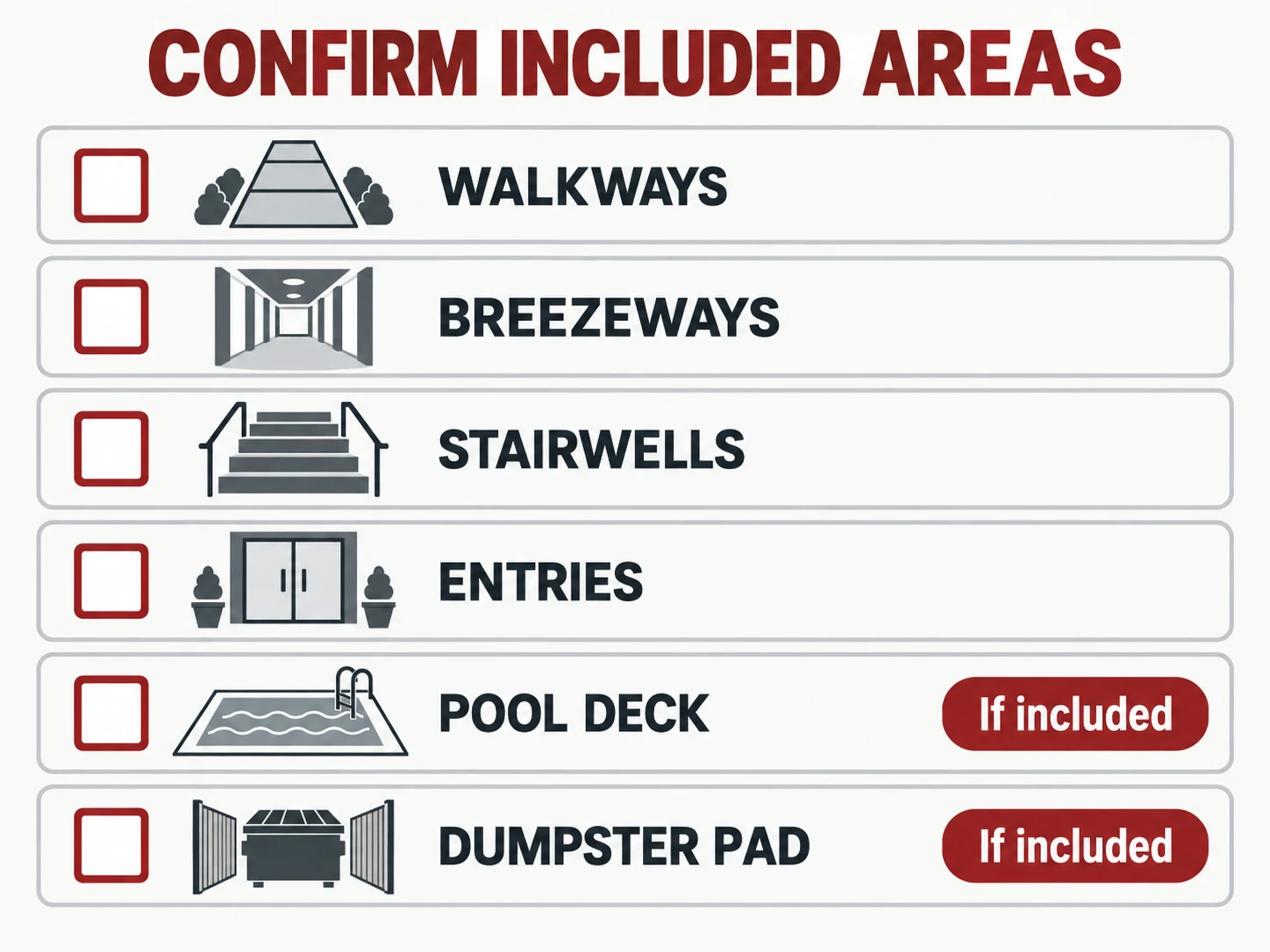
A useful scope names each area, its surface and the result expected from cleaning. "Pressure wash the property" leaves bidders to make different assumptions, so quotes with the same headline description may cover different work.
Walk the property with a site plan and mark the sections residents use most. Note building entries, walkways, breezeways, exterior stairs, pool approaches, parking areas and dumpster pads as separate line items. Identify walls or painted finishes that require a gentler method. For a broader inventory of possible services, see what commercial pressure washing services include.
| Area | Scope detail to record | Planning concern |
|---|---|---|
| Walkways and entries | Surface boundaries and visible staining | Keep an accessible route open |
| Breezeways and stairs | Floors, walls and landings to be cleaned | Manage overspray near doors and belongings |
| Building exteriors | Which elevations and finishes are included | Match the method to the finish |
| Parking areas | Exact sections, curbs and oil-affected spots | Arrange vehicle moves before work begins |
| Pool approaches | Deck material and areas included | Coordinate access with property operations |
| Dumpster pads | Pad boundaries and surrounding drainage | Plan for soil and wash-water handling |
State whether windows, roofs, paver sealing and stain removal are included, excluded or quoted separately. Cleaning can improve the appearance of a surface without removing every permanent stain. A proposal should say what the contractor expects to remain so the board or manager can approve a realistic scope.
Choose a method that fits each surface
The right cleaning method depends on the material and the kind of soil, not on applying the highest available pressure. Flat concrete may tolerate a different approach from stucco, painted walls, sealants or decorative surfaces. Ask bidders to describe their method for each group of surfaces.
This matters especially when a complex has building exteriors in the same proposal as sidewalks. A gentler wash can use a cleaning solution and controlled rinsing on surfaces vulnerable to forceful water. It may require attention to nearby plants, openings and runoff. A faster approach on durable flatwork still needs care around joints, loose material and edges.
Keep roof work separate from the ground-level pressure washing scope. The Asphalt Roofing Manufacturers Association's Algae Discoloration of Roofs bulletin warns that high-pressure washing is likely to damage asphalt roofing and calls for a gentle rinse in its described treatment. If roof cleaning is being considered, request a separate method and scope rather than treating the roof as another building exterior.
Also ask where the wash water will go. The US EPA's 40 CFR 122.34 requires municipal storm sewer permittees to address non-stormwater discharges through illicit-discharge controls. Drain locations, soil and the proposed cleaning process affect what containment or recovery a job may need. The guide to commercial wash-water recovery explains that planning step in more detail.
Send a resident notice tied to the work zones
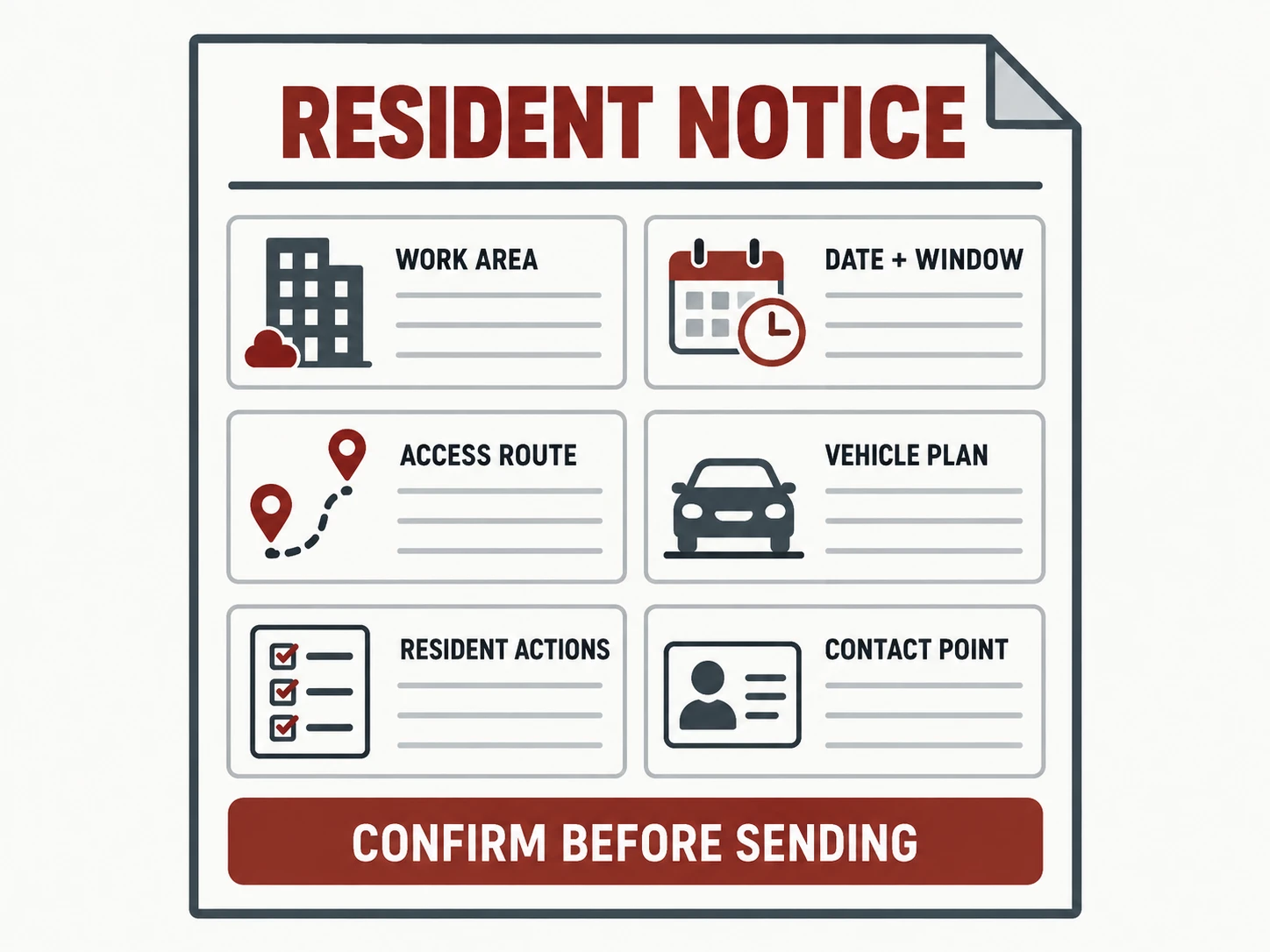
A resident notice should tell people where work will happen, how access will change and whom to contact. Send a notice for each affected zone once the schedule and parking plan are settled, then update it if weather or site conditions change the plan.
A general announcement is easy to overlook because residents cannot tell whether it affects their building. Use building names, a marked map or other property-specific identifiers. Tell residents which entrances and walkways remain open, where vehicles must be moved, and whether patios or balconies in the work zone need to be cleared. Ask them to close nearby doors and windows and secure items that could be affected by spray.
The notice can be short:
Exterior cleaning notice
Work is planned for: [building and common areas]
Scheduled work period: [date and time]
Please move vehicles from: [marked spaces or area]
Please use: [available entrance or walking route]
Please remove items from: [affected patio, balcony or entry]
Questions or access needs: [property contact]
Confirm the parking alternative before sending the notice. If spaces are scarce, a request to move vehicles without a workable destination can delay the job and frustrate residents. Give the cleaning crew the same zone map residents receive so the posted plan and the work on site agree.
Phase cleaning around resident access
Phasing lets a complex clean one access zone while others remain usable. The sequence should follow entrances, walking routes and parking capacity rather than simply moving from one building number to the next.
Start with a site walk that identifies unavoidable pinch points. A stairwell serving occupied units, a single entry path or a parking aisle with no easy substitute needs a specific access plan. Decide where equipment will be staged and where residents can walk without crossing active work or wet surfaces. OSHA's walking-working surface rule, 29 CFR 1910.22, requires covered workplaces to keep those surfaces clean and in safe condition; it is a useful reminder to account for conditions during the work as well as after it.
Separate preparation, cleaning and reopening for each zone. Move vehicles and loose items before cleaning starts. Keep barriers and signs in place while the surface is being worked on, then inspect the route before reopening it. The site plan should also show drains and any areas where wash water needs to be managed.
South Florida weather can change the sequence. NOAA's National Hurricane Center says the Atlantic hurricane season runs from June 1 to November 30, with most activity between mid-August and mid-October. Build room in the resident communications plan for a changed work date rather than assuming every zone will proceed exactly as first announced.
Use per-door budgeting after the scope is priced
A cost-per-door figure is useful for allocating an approved project total across a property. It is a weak way to price the work itself because two complexes with the same number of homes can have very different amounts of exterior surface.
First, obtain an itemized quote based on the actual areas and methods. Then divide the approved total by the number of units if the board needs a per-door budget measure. Label that figure as an allocation for this property and this scope. Do not compare it with a per-door number from a different site unless the included work, frequency and conditions are comparable.
For a recurring program, ask for the building exteriors, routine flatwork and higher-soil areas to be shown separately. That allows the board to decide whether every area needs the same visit schedule. A dumpster pad, for example, may need attention on a different cycle from an exterior wall. The HOA pressure washing budget guide discusses how to bring this kind of scope into association planning.
Keep repairs and unrelated services out of the per-door cleaning figure unless the budget explicitly includes them. A clean allocation makes future bids easier to compare and helps explain a change in spending when the property adds or removes areas from the scope.
Set the cleaning frequency from site conditions
There is no single useful cleaning interval for every surface in an apartment complex. Set a starting schedule from traffic, exposure and the appearance standard the property wants to maintain, then adjust it after observing what returns between visits.
Walkways at entries, shaded breezeways and dumpster pads can soil at different rates. A blanket schedule may spend money on areas that still look acceptable while leaving another area overdue. Record conditions by zone before each planned visit, including staining, algae and areas residents report as troublesome. That record gives a manager a better basis for changing frequency than a calendar alone.
Consider access costs as well as cleaning frequency. Repeatedly closing a busy parking section has an operational cost for residents. It may be more practical to group nearby surfaces into one planned visit, provided the methods and conditions support it. For building exteriors, check whether cleaning is being coordinated with painting, repairs or window work so one project does not interfere with another.
Treat the schedule as a maintenance decision, not a claim that cleaning prevents damage or removes a safety hazard by itself. Inspect surfaces after cleaning and refer defects, drainage problems or persistent slippery conditions for appropriate follow-up.
Compare proposals on the same scope
The best comparison is a line-by-line review of what each proposal includes. Ask bidders to use the same site map and scope checklist, then compare their measured areas, methods, access plan, wash-water approach and exclusions.
A low total can reflect a narrower scope rather than a lower cost for identical work. Check whether stairs, upper elevations, dumpster pads, heavy staining and parking preparation are included. Ask how each bidder handles a newly discovered condition and what would require a scope change. Written assumptions reduce disputes once residents have been notified and work is underway.
Review the proposed sequence with the property team before approving it. The people who manage parking, pool access, deliveries and resident messages may spot conflicts that a contractor cannot see from a surface measurement. If proposals differ materially, ask for revised versions against the same scope before making a decision.
2Clean's commercial and HOA programmes provide a place to discuss a property-specific scope. Its guarantee says the estimate is the price unless the scope genuinely changes, and that the company says up front what will not come out. Those terms make it especially useful to document stains and exclusions during the site review.
For a written price for your property, call or text a photo to (904) 826-9806, or request a property walkthrough. Include the surfaces, location and access requirements so the scope can be reviewed.
Frequently asked questions
How much does it cost to pressure wash an apartment complex?
HomeGuide's commercial price guide (Oct 9, 2025) lists $0.10 to $0.35 per square foot for basic commercial cleaning. That is a planning reference, not a whole-complex quote. The apartment complex pressure washing cost depends on the measured surfaces, their condition, access and which services the proposal includes. Request itemized pricing against a shared scope.
Should a complex be quoted per unit or per square foot?
Ask for a quote grounded in measured work areas and clearly named tasks. A per-unit figure can help an HOA or manager divide an approved total, but unit count does not capture the length of walkways, wall area or number of stairs. Keep the proposal's quantities and exclusions with the budget so future comparisons remain meaningful.
What should I spray on my sidewalk before pressure washing?
Do not choose a chemical from a general recommendation alone. The appropriate cleaner depends on the sidewalk material, the soil being treated, nearby landscaping and where rinse water can flow. Ask the contractor to identify the product and method proposed for your site, including how they will protect adjacent surfaces and manage the wash water.
How to prepare a house for pressure washing?
For an apartment property, prepare the affected building and common areas rather than relying on a house-cleaning checklist. Confirm access, move vehicles from the work zone, remove loose items, close nearby doors and windows, and tell residents which routes remain available. Give the crew a map of sensitive finishes, drains and areas excluded from the scope.
Do residents need notice before common areas are cleaned?
Yes. Residents need enough detail to move vehicles, clear affected belongings and choose an available route. A useful notice names the exact work zone, scheduled period, parking alternative and property contact. If the sequence changes, update the affected residents so they do not rely on an outdated access plan.
Sources
For a quote based on your property's measured areas and access plan, share the scope with 2Clean through its free quote page.
2Clean does not publish a price list: every property is priced individually. For a written price, call or text a photo to (904) 826-9806, or request a quote online.
Custom Commercial & HOA Walkthroughs
Need a scope tailored to your South Florida property?
Every building, plaza, and community has its own surface mix, access windows, and drainage layout. We quote by walkthrough rather than fixed rate sheets so your proposal matches your exact property. Call us directly at (904) 826-9806 or request a written scope online.
Related services & tools
Commercial & HOA by South Florida city: