
Methods, Surfaces & Failure Modes
Salt Air Coastal Corrosion on Miami Building Exteriors
October 17, 2026 · 9 min read
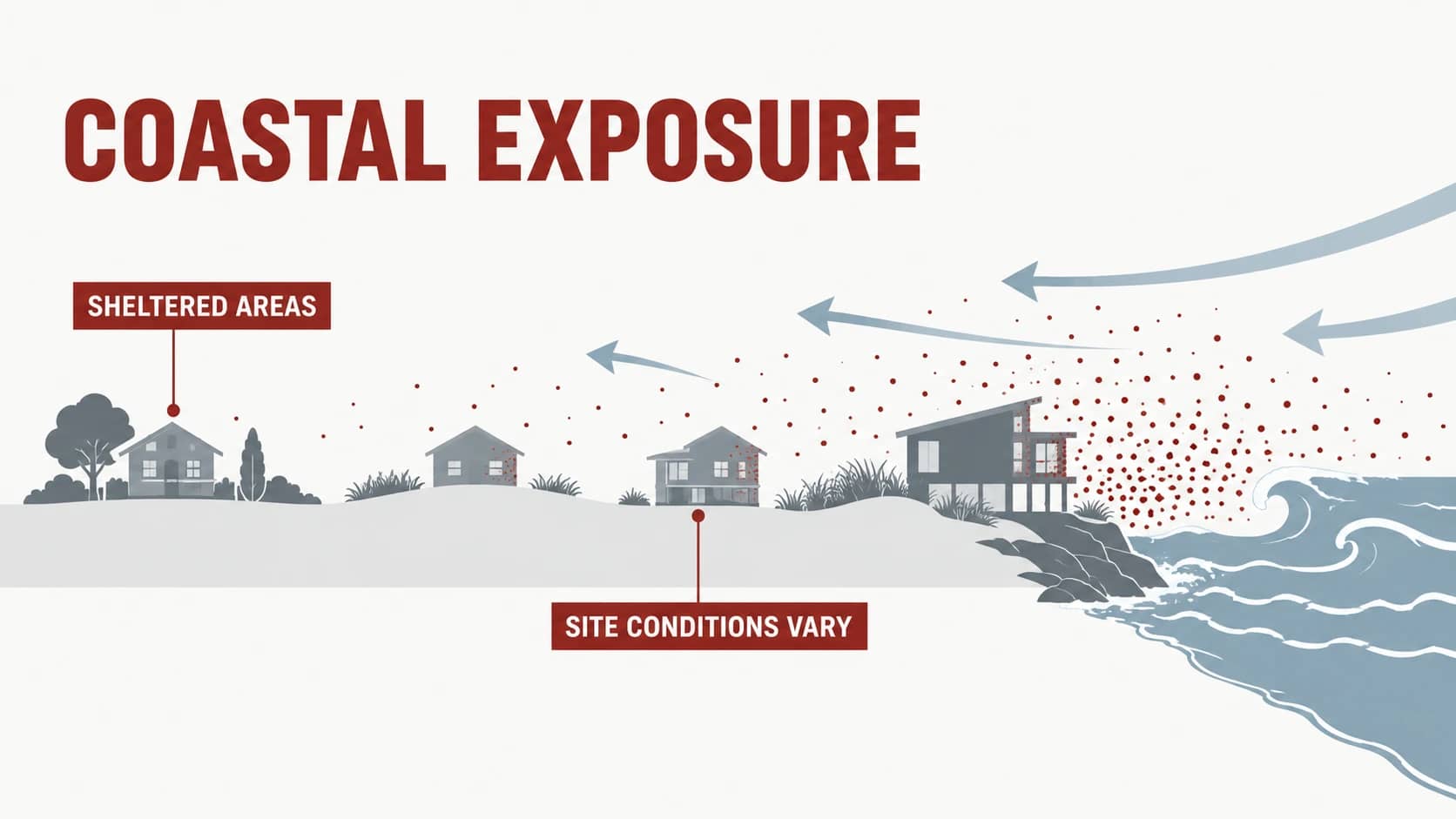
Salt air coastal corrosion begins when airborne salt settles on a building and holds moisture against exposed surfaces. Metals can pit or rust, coatings can lose their protective barrier, and chloride can reach steel inside concrete. The useful response is to remove deposits, inspect vulnerable details, and refer damaged materials for repair.
Salt air coastal corrosion: the exterior-wide pattern
Salt deposits make it easier for moisture to remain on exposed surfaces. Repeated wetting and drying can then concentrate deposits in joints, ledges and sheltered areas where rain does not rinse them away.
The most exposed elevation is not always the one that looks worst. A windward facade may receive more airborne salt, while a recessed frame or covered walkway may retain it longer. Irrigation spray, roof runoff, poor drainage and incompatible metal connections can add to the problem. A useful inspection therefore compares details across the building rather than assigning one condition to every surface.
Salt-related deterioration also has several appearances. White residue may wash off. Orange staining can indicate rust from steel nearby, even when the stained surface is concrete or stone. A chalky coating, blistered paint or rough metal needs closer examination before anyone chooses a cleaner or a repair. For a broader approach to exterior priorities, see the Miami commercial exterior cleaning guide.
How different exterior materials show damage
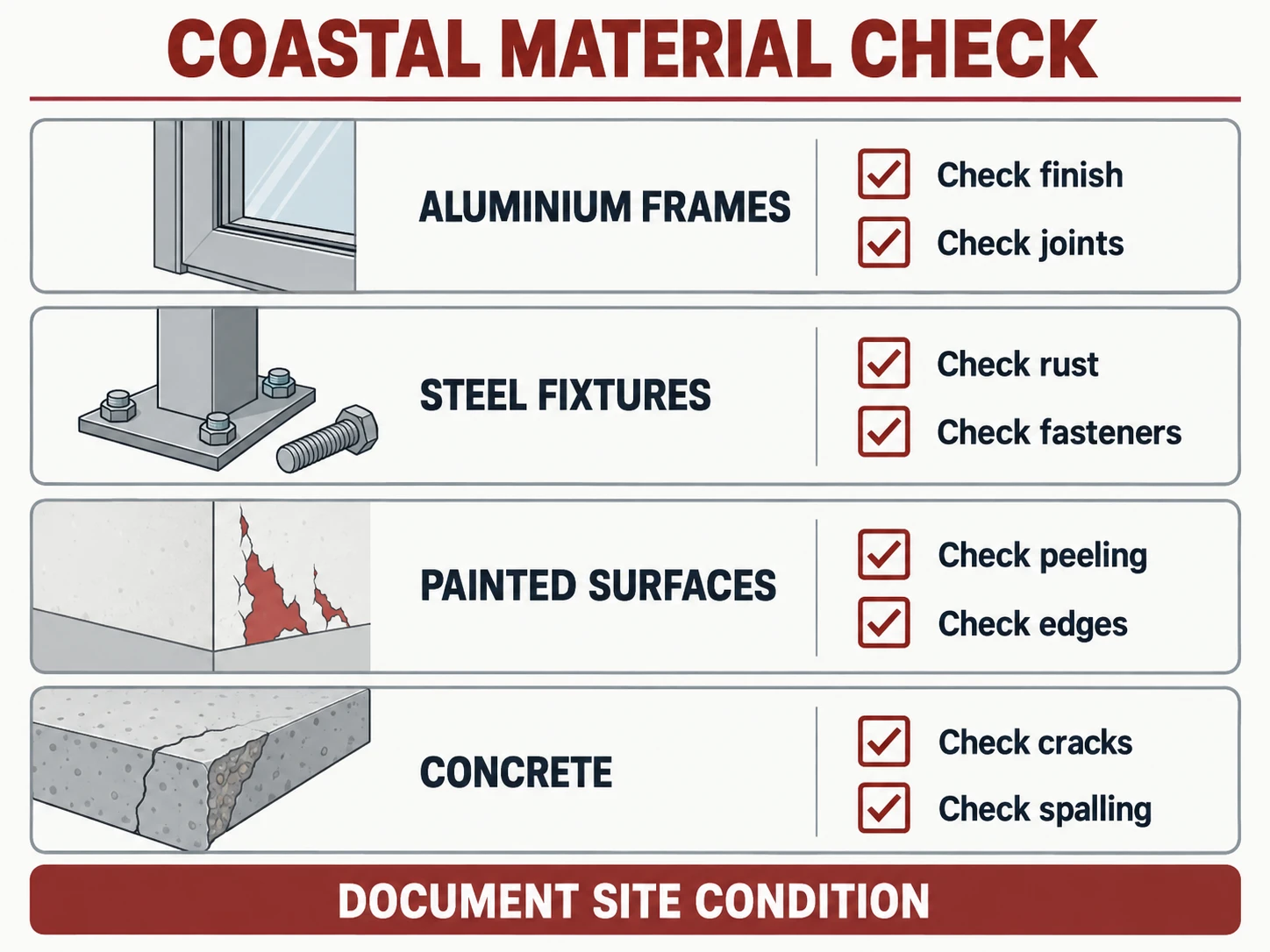
Materials exposed to the same air can fail in different ways. Identify the material and its finish before specifying cleaning, because a treatment that removes a stain may also damage a protective coating.
| Exterior material | What to look for | Appropriate first step | When cleaning is insufficient |
|---|---|---|---|
| Painted steel and steel fasteners | Orange rust, lifting paint, staining below joints | Document the source and remove accessible surface deposits | Rust has spread beneath a coating, or a connection is loose |
| Anodised aluminium | White deposits, dull patches, pits near joints | Use a finish-compatible wash and gentle rinse | Pitting remains after cleaning, or the finish is damaged |
| Stainless steel | Brown surface staining, marks around fasteners | Check the finish and remove deposits with a suitable method | Pitting or damage at a load-bearing connection appears |
| Painted or coated walls | Chalking, peeling, blisters, recurring streaks | Assess coating condition before washing | The coating has lost adhesion or the substrate is exposed |
| Concrete | Cracks, rust stains, delamination, loose patches | Record and refer suspicious areas for assessment | Steel corrosion or concrete distress is suspected |
This is an inspection guide, not a ranking of material lifespans. A stainless fixture can stain while nearby painted steel remains sound; exposure, product selection, installation and maintenance all affect the outcome. Where a finish is intact, routine cleaning may be enough. Where the material itself has deteriorated, specify repair through the relevant contractor.
What to check on aluminium window frames
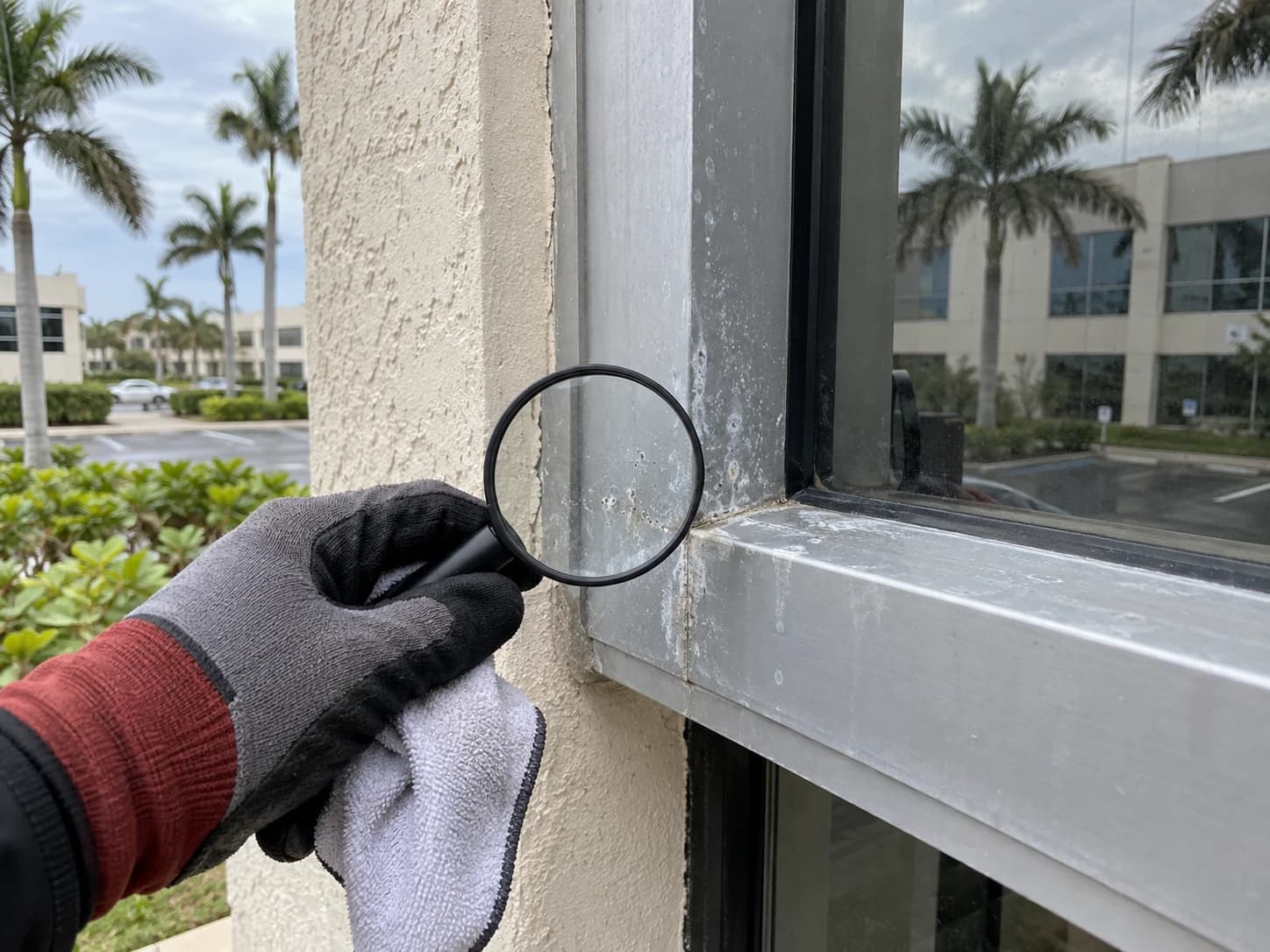
Aluminium does not develop the orange rust associated with iron, but it can corrode. On anodised window frames, distinguish removable deposits from pitting or damaged finish before treating every mark as a cleaning problem.
Inspect horizontal members, corners, fasteners and places where water sits or drains slowly. Salt residue often collects in these details, and aggressive scrubbing can mark the finish. A small, inconspicuous test helps establish whether a mild, finish-compatible cleaning method removes the deposit without changing the appearance of the frame.
If a rough spot remains after cleaning, record its location and check whether it is spreading on later inspections. Loose glazing components, failed seals and persistent leaks call for a window specialist. Window cleaning can address accessible deposits on glass and frames, but it cannot restore a pitted metal surface or repair a leaking assembly.
Glass haze, deposits and apparent etching
A cloudy window is not automatically etched glass. Salt residue, mineral deposits from water and damage to the glass surface can look similar from a distance, but they call for different responses.
Start by noting whether the haze changes after an appropriate cleaning test. Residue that comes away was on the surface. Marks that remain may need closer assessment, especially if runoff repeatedly crosses the same pane or if someone previously used an abrasive tool or unsuitable chemical. Avoid promising that a stronger wash will remove a mark before identifying it.
For property managers, the practical distinction is between a cleaning scope and a restoration decision. Ask a contractor to describe which marks they expect to remove, test a representative area and identify any remaining defects. Documenting that result helps a board compare proposals without treating every cloudy pane as permanent damage.
Railings, fixtures and fasteners
Connections deserve more attention than broad, easy-to-see surfaces. Salt and moisture can linger around railing bases, brackets, screw heads and joints, where a small damaged area may affect a larger assembly.
Look for rust bleeding from a connection, lifting coatings, missing fasteners and movement under normal use. Cleaning can reveal the condition beneath surface deposits, but it should not be used to make a questionable railing look acceptable without an assessment. Isolate an area and seek the appropriate professional evaluation if a component appears loose or materially weakened.
Material choice matters during replacement. A corrosion-resistant finish is useful only if the selected fasteners, connected metals and installation suit the exposure. Ask the repair contractor to specify those details; a cleaning crew should not be asked to decide whether a structural connection remains sound.
Painted surfaces and protective coatings
An intact coating separates its substrate from water and deposits. Once it cracks, peels or loses adhesion, washing may improve appearance but cannot restore that barrier.
Map failures before scheduling a whole-building wash. Note whether peeling follows a joint, whether blisters recur beneath a ledge and whether stains return after rain. Those patterns can point to trapped moisture or runoff that should be addressed before recoating. Pressure, chemistry and dwell time must also suit the existing finish; an already loose coating can be removed by an otherwise reasonable wash.
For stucco, concrete, EIFS and other facade materials, the guide to choosing a commercial building washing method explains why the substrate changes the cleaning approach. If coating failure is widespread, obtain a coating assessment and repair scope rather than relying on repeated washing to conceal it.
Concrete, chloride penetration and rust stains
Concrete can admit moisture and chloride through pores and cracks. If chloride reaches reinforcing steel and corrosion develops, expanding corrosion products can contribute to cracking, delamination and spalling.
A rust streak alone does not establish that embedded steel is corroding. It might come from a surface fixture, irrigation water or another source. Trace the stain before cleaning it; the guide to rust stains on commercial concrete describes why identifying the source matters. Repeated staining from a crack, loose concrete or an exposed bar warrants evaluation by a qualified professional.
Cleaning is useful for visibility and for removing surface deposits, but it does not remove chloride already inside concrete or repair damaged reinforcement. Keep photographs and locations for follow-up, particularly where deterioration could affect an occupied walkway or balcony. For applicable buildings, Florida's milestone inspection statute requires condo and co-op buildings of three or more habitable stories to be inspected by December 31 of the year they reach 30 years of age and every ten years after, and a local enforcement agency may require an earlier 25-year inspection where local circumstances, such as proximity to salt water, warrant it. Routine cleaning records can support maintenance decisions, but they are not a substitute for a required inspection.
How far inland exposure matters
Distance from the shoreline is a useful clue, not a reliable boundary between exposed and unexposed buildings. Wind, building orientation, shelter, rain washing and nearby sources of moisture can produce different conditions across one property.
Do not assume a fixed inland cutoff or apply a replacement timeline based on miles alone. Instead, compare similar components on different elevations and record where deposits return. A protected recess with poor drainage may need closer attention than an open surface that rain rinses regularly.
For a portfolio across Miami-Dade, Broward and Palm Beach, use observed conditions to set site-specific priorities. Photograph representative frames, railings, coated walls and concrete details during regular walks. The record helps distinguish a recurring deposit from a developing defect and gives contractors a clearer scope.
A practical rinsing and inspection plan
Fresh-water rinsing can remove accessible salt deposits before they accumulate. Set its frequency from observed buildup, exposure and the sensitivity of the finish rather than from a universal coastal schedule.
Begin with a survey of surfaces, drainage paths and visible defects. Choose a gentle method compatible with each material, protect openings and adjacent areas, and test uncertain finishes. After cleaning, check whether deposits have gone, which marks remain and whether runoff has revealed a source higher on the building. A wash plan also needs a suitable approach to collecting or directing wash water where required.
Schedule another observation after normal weather exposure. If salt returns quickly in one location, focus on that detail instead of washing the entire property more often by default. If stains or coating failures recur, refer the underlying issue for repair. A multi-year exterior cleaning plan for a condo association can place those cleaning and repair decisions into a broader maintenance schedule.
Frequently asked questions
Will aluminium rust in salt air?
Aluminium does not form iron rust, so orange staining on a frame may come from a nearby steel fastener or another source. It can still corrode, including at damaged finishes, joints and places that retain deposits. Clean a small area with a method suitable for the finish, then inspect any roughness or pitting that remains. Refer loose components or persistent leaks to a window specialist.
How far inland can salt air affect a building?
There is no dependable distance that makes every building safe from salt deposits. Wind, shelter, orientation and how readily rain rinses a surface all influence exposure. Compare similar components around the property and use recurring residue, coating condition and corrosion signs to guide maintenance. Avoid treating a distance band as a prediction of when a material will fail.
Does rinsing stop coastal corrosion?
Rinsing removes accessible salt deposits and can reduce the time they remain against a surface. It cannot undo pitting, restore a failed finish or repair corrosion inside concrete. Use a material-compatible method, inspect the surface afterward and address details that repeatedly collect moisture. Where damage has begun, add a repair assessment to the maintenance plan.
What does a corrosion inhibitor do?
A corrosion inhibitor is intended to slow a corrosion process in a particular application. It is not a universal treatment for exterior walls, window frames, railings and concrete. Its suitability depends on the material, existing finish, exposure and product instructions. For a deteriorated component, ask the repair specialist to identify the cause and specify a compatible treatment rather than applying an inhibitor over visible damage.
Can cleaning remove rust stains from concrete?
Cleaning may remove a surface stain, but the result depends on its source and the concrete's condition. A stain from a nearby fitting can return unless that fitting is repaired. Rust emerging from a crack or accompanied by loose concrete needs assessment before cosmetic work. Document the location and test an appropriate cleaning method on a small area before treating the full surface.
Sources
For a site-specific cleaning scope, 2Clean's commercial and HOA services can help you identify which accessible exterior deposits to address and which conditions to refer for repair.
Custom Commercial & HOA Walkthroughs
Need a scope tailored to your South Florida property?
Every building, plaza, and community has its own surface mix, access windows, and drainage layout. We quote by walkthrough rather than fixed rate sheets so your proposal matches your exact property. Call us directly at (904) 826-9806 or request a written scope online.
Related services & tools
Window Cleaning by South Florida city: