
Methods, Surfaces & Failure Modes
Concrete Sealing Near Me: When Commercial Flatwork Is Worth Sealing
October 17, 2026 · 12 min read
If you are searching for concrete sealing near me, start with the condition of the slab, not the sealer. Sealing can help sound commercial concrete resist water and stains and make routine cleaning easier. It will not repair spalling, stop water entering from below, or correct poor drainage. Those problems need attention before coating the surface.
Concrete sealing near me: what should a commercial quote cover?
A useful quote identifies the surface, the problem to be solved and the product proposed. It should also explain preparation, repairs, access restrictions and how the finished area will be evaluated. A product name alone does not tell a property manager whether sealing is the right work.
Walk the site with the contractor before requesting a final scope. Mark pedestrian routes, ramps, loading areas, places where water stands, and sections with oil, rust or existing coatings. These areas may need different preparation or may have different priorities. Ask the contractor to distinguish staining that can be cleaned from concrete that has lost material.
For a Miami-Dade, Broward or Palm Beach property, the decision also depends on how the area operates. A hotel entry cannot be managed like an unused service pad. Deliveries, guests, residents and rain exposure affect when cleaning can occur, how sections can be closed, and how a treated surface will be kept safe while it dries and cures.
The quote should state which slabs are included, which are excluded and why. It should identify the sealer family, the intended finish, the preparation method and any repairs that must happen first. If the contractor recommends a test area, ask what both parties will look for: appearance, water response, traction under expected conditions and compatibility with existing material.
For a broader maintenance plan, place sealing alongside the cleaning and inspection work in this commercial exterior cleaning guide. Sealing is one task in that plan. It does not replace routine cleaning or a response to new damage.
When sealing pays on commercial flatwork
Sealing is most useful when a sound slab faces recurring water exposure, staining or cleaning demands that the chosen product can address. The benefit is practical: contaminants may be easier to remove before they soak in, and a suitable water repellent can limit surface absorption. The result depends on the concrete, its preparation and the sealer selected.
Consider an entry walk exposed to rain and tracked-in soil. If the concrete is intact and drains properly, sealing may make maintenance more manageable. A service area with frequent oil drips presents a different problem: a water repellent alone may offer little help with oil. The product must match the contaminant, and spills still need prompt removal.
Sealing may also be worthwhile where appearance matters across a large, visible surface. A consistent finish can make an entry or courtyard look more uniform, but it may darken the concrete or highlight patches and repairs. A sample on the actual slab is more informative than a catalogue photo, especially when old and new concrete meet.
Ask what would happen if the property skipped sealing and continued its current cleaning programme. If the slab is sound, stains are manageable and the proposed finish adds little value, sealing may be a low priority. If repeated staining is driving difficult cleanup, a well-matched sealer has a clearer purpose. That comparison makes it easier to judge the work against other maintenance needs.
When to leave concrete unsealed
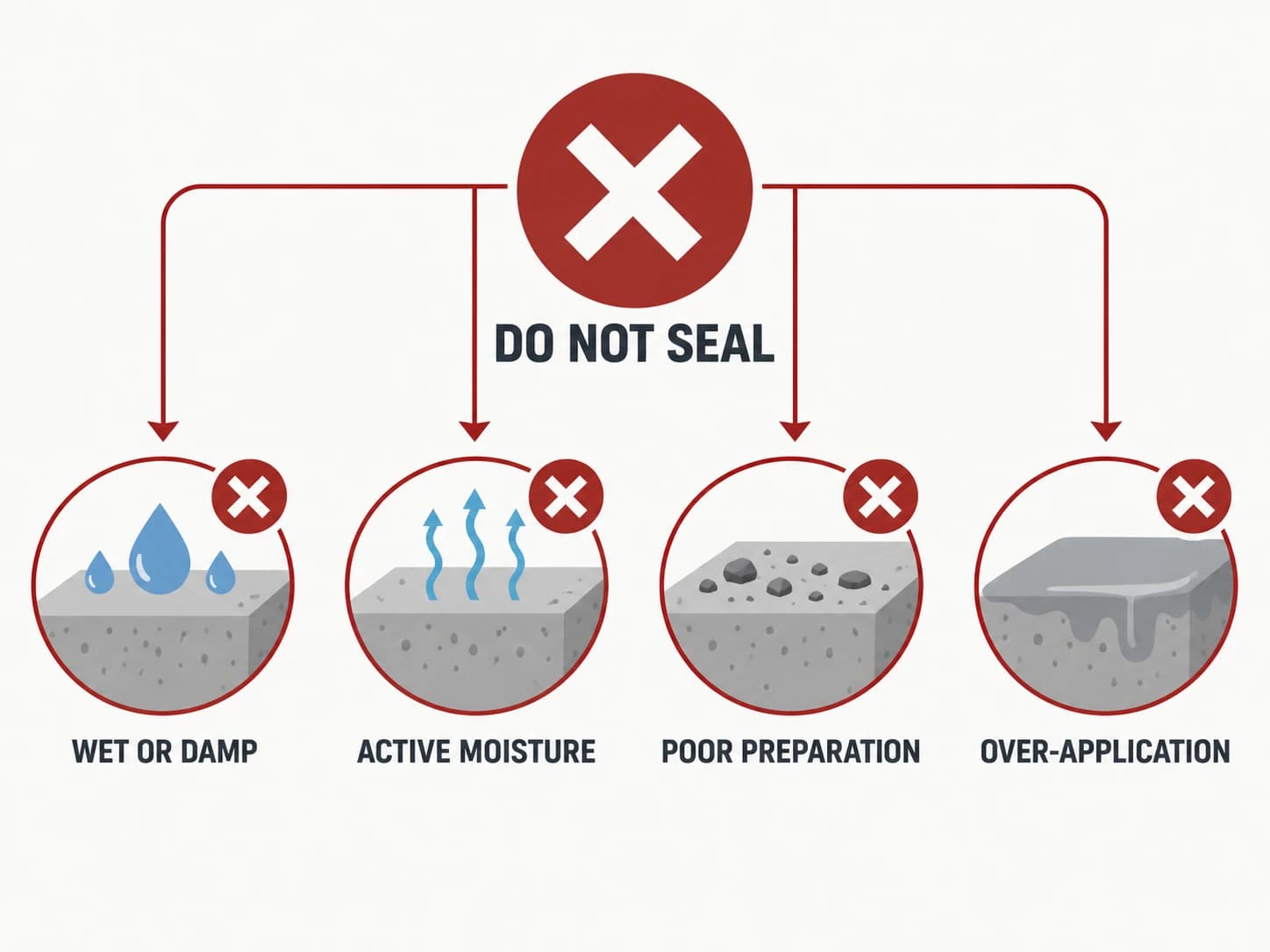
Leave sealing off the immediate work order when the slab is actively deteriorating, persistently damp or still receiving water from a drainage problem. A sealer cannot correct those conditions. Diagnose the cause, repair what can be repaired and then reconsider whether protection is useful.
Peeling coatings, white deposits, dark damp patches and standing water are reasons to investigate before applying another product. They do not all have the same cause. Water can arrive from rain, irrigation, a leak or beneath the slab, and the appropriate response changes with the source. Covering a symptom can make later inspection harder.
Fresh concrete also needs a product and schedule suited to its condition. Do not assume that a clean-looking new slab is ready for every sealer. Ask for the proposed product's application requirements and the contractor's plan for checking that the surface meets them. Existing sealers require a compatibility check as well; applying a new layer over an unknown coating can produce an uneven or poorly bonded finish.
The following decision table helps separate protection work from work that should come first.
| Site finding | Better next step | Why |
|---|---|---|
| Sound slab with recurring water staining | Compare suitable water repellents and test an area | The problem and proposed protection align |
| Sound slab with frequent oil spills | Identify the oil exposure and review product suitability | Water resistance does not establish oil resistance |
| Standing water after rain or irrigation | Correct or manage drainage first | Sealer will not move water off the slab |
| Loose, flaking or spalled concrete | Assess and repair the damaged area | A surface treatment cannot restore lost material |
| Peeling or unknown existing coating | Identify and prepare the old finish | New material may not bond consistently |
| Persistent dampness or recurring white deposits | Investigate moisture movement | A film may fail if the underlying condition remains |
What spalling tells you before you seal
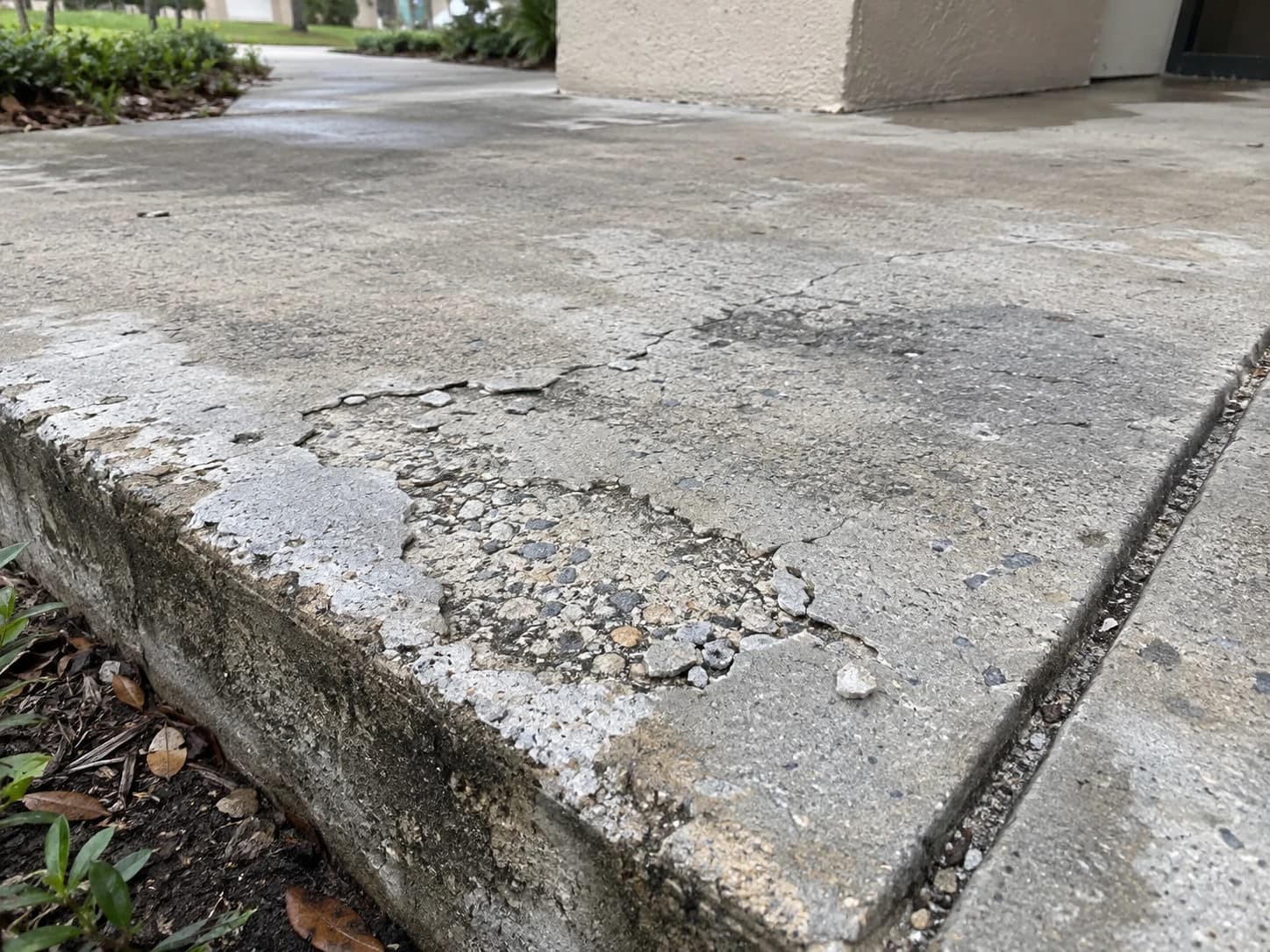
Spalling means the concrete surface is breaking or flaking away. Sealer cannot put that material back or make a loose surface sound. The damaged area needs an assessment and an appropriate repair before anyone decides whether the repaired surface should be sealed.
Map the extent of the damage rather than treating every mark as a coating problem. Note whether the loss is isolated, follows a crack, appears near a joint or sits where water collects. Those observations help the repair contractor investigate the cause. A surface with repeated damage may need more than a cosmetic patch.
The distinction matters for purchasing. A sealing proposal may include cleaning and minor preparation, but it should not quietly imply that a clear finish will solve deterioration. Ask for repair work to be described separately, including which areas can be treated after repair and how the finished patches may differ in appearance.
Stains can also be mistaken for damaged concrete. Rust near irrigation or exposed metal calls for a different investigation than an oily parking bay. The guides to removing rust stains from commercial concrete and removing oil stains from a concrete lot explain those cleaning problems. Clean and inspect the slab before deciding how much concrete needs repair.
Choosing between penetrating and film-forming sealers
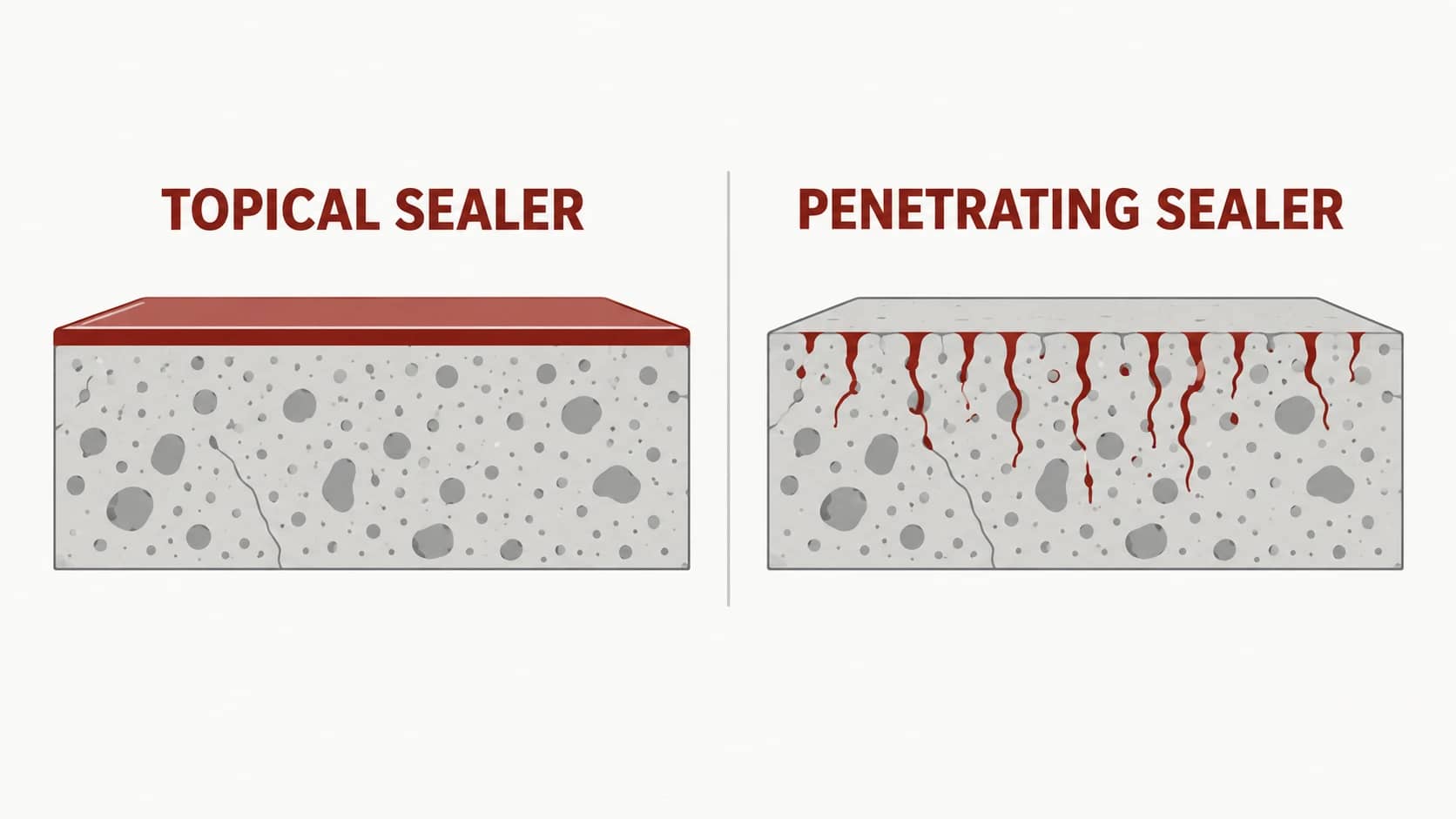
Penetrating sealers are generally chosen when the owner wants water resistance with little visible change. Film-forming sealers are considered when a visible finish or a different type of surface protection is part of the goal. Neither family is automatically the better choice for every commercial walk, plaza or service area.
A penetrating water repellent enters porous concrete rather than forming a prominent surface film. Silane and siloxane products are common examples. They can be a reasonable fit for exterior flatwork where retaining the concrete's appearance matters. Performance still depends on absorption, surface preparation and the specific product; do not assume every penetrating sealer resists oil or every existing coating will allow it to enter.
Acrylic and other film-forming products leave material at the surface. They can change sheen and colour and may be selected for decorative concrete. That visible layer is also exposed to traffic and weather, so its condition needs monitoring. Some systems are intended for settings that differ substantially from an open, rain-wet sidewalk. Product suitability and manufacturer directions matter more than a broad label such as "commercial grade."
| Question | Penetrating water repellent | Film-forming sealer |
|---|---|---|
| What does it usually look like? | Often leaves little visible change | May deepen colour or add sheen |
| Where does it act? | Within accessible pores | As a surface film |
| What needs checking? | Absorption, existing coatings and contaminant resistance | Bond, wear, moisture behaviour and traction |
| What can go wrong? | Uneven uptake or protection that misses the actual contaminant | Peeling, visible wear or an unwanted slippery finish |
The table is a starting point, not a product specification. Ask for the proposed product's technical information and a sample on your concrete. If the site has decorative pavers rather than poured flatwork, discuss that as a separate surface. The preparation, joints and appearance goals in commercial paver sealing can differ from those of a concrete slab.
Slip resistance and public access
A sealer can change how a surface feels underfoot, especially when wet. For public routes, the finish must be considered along with the existing texture, slope, drainage and cleaning routine. A glossy appearance or a claimed additive is not enough to establish that a walkway will remain suitable.
The US Access Board's ADA Standards require floor and ground surfaces to be stable, firm and slip resistant. The standards also apply that requirement to walking surfaces and ramps. OSHA requires workplace walking and working surfaces to be kept free of hazards such as spills and maintained in safe condition. These requirements support checking the finished condition and maintaining it; they do not declare one sealer family safe for every site.
Show the contractor which routes carry pedestrians during rain and which areas are walked on immediately after cleaning. Ask how the proposed finish affects those conditions and whether a test area can be evaluated while wet. If the surface needs more texture, discuss the appearance and cleaning trade-offs before the whole area is treated. Texture can help traction, but it can also hold dirt and change the finished look.
Keep access planning in the scope. Barriers, alternate routes and clear reopening criteria matter at an occupied property. After the job, routine cleaning remains part of managing slip risk. A sealed walk can still become slippery if water, grease, algae or loose debris remains on it.
Surface preparation and the cleaning scope
Preparation determines whether the sealer can reach or bond to the concrete evenly. The contractor should first identify stains, previous coatings, loose material and repairs, then choose cleaning and preparation methods suited to the proposed product. A visually clean slab can still carry residue that interferes with application.
Oil, grease and old coating residues deserve particular attention. A general wash may remove surface dirt without removing the material that prevents absorption or adhesion. Ask how the contractor will check readiness after cleaning and whether heavily contaminated bays should be excluded or treated separately. For oil-prone areas, cleaning plans also need to account for new spills after sealing.
Commercial pressure washing may be part of preparation, but pressure and technique should suit the surface condition. Damaged concrete can be made worse by aggressive cleaning. The pressure washing service page describes that work as a separate maintenance option; the sealing scope should still state what cleaning is included and what condition the surface must reach before application.
Cleaning creates wash water and loosened contaminants. The US EPA's rule for municipal storm sewer permittees requires programmes that effectively prohibit non-stormwater discharges into storm sewers. Ask how the contractor will manage runoff at the property, particularly around drains and stained service areas. The answer should be specific to the site's layout and the cleaning method proposed.
Once the surface is prepared, confirm that repairs and joints have been addressed as specified and that the slab meets the product's application requirements. Document any area the contractor considers unsuitable. An exclusion with a reason is more useful to a board or facilities team than a broad assurance that every square foot can be sealed.
Cure time, reopening and the real cost decision
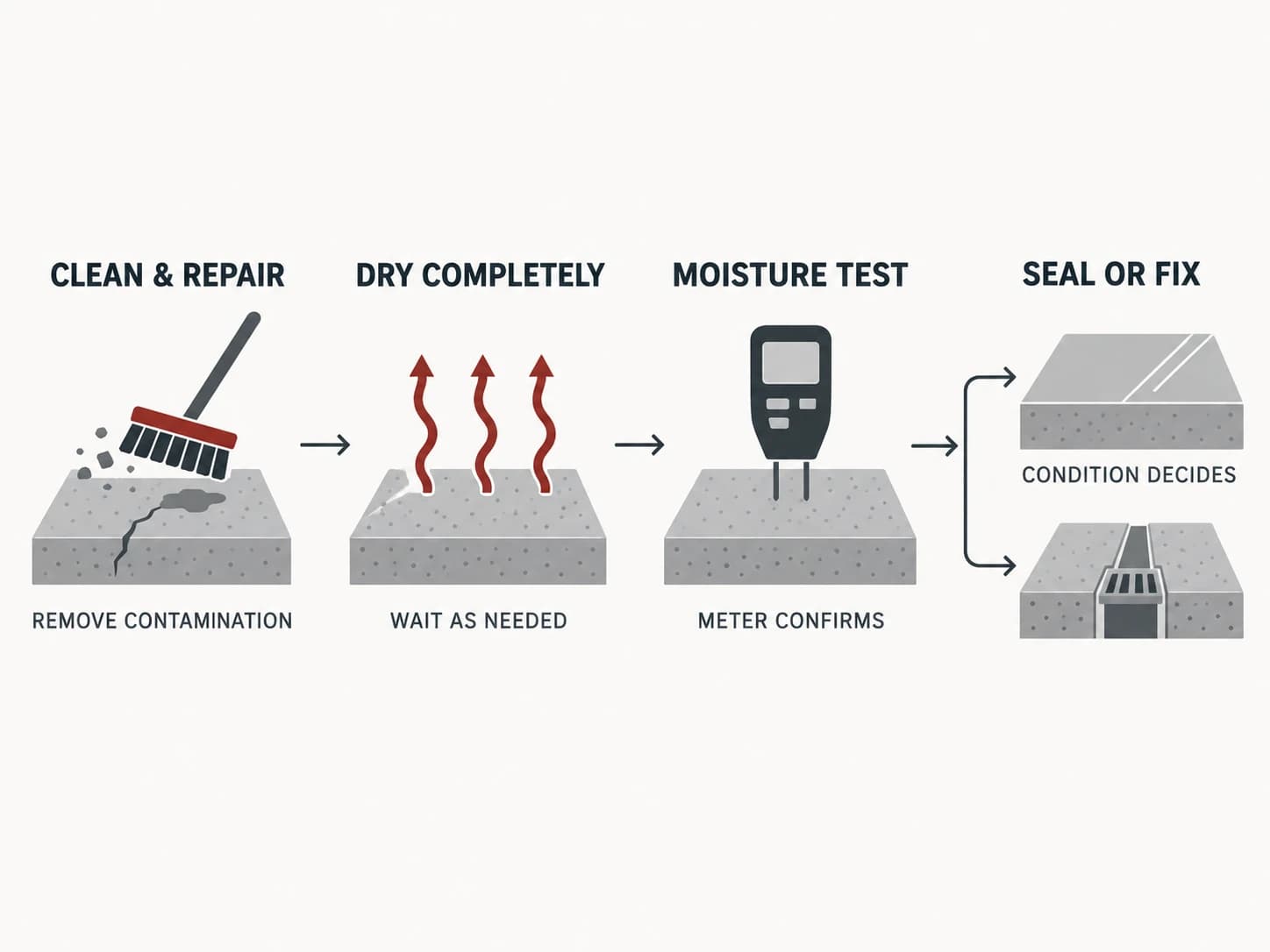
The full cost of sealing includes preparation, repairs and the disruption of keeping people or vehicles off treated areas. A low application price has little value if essential preparation is omitted. Compare proposals by scope and by the time each area will be unavailable.
"Dry to touch" and ready for normal traffic are different decisions. Ask the contractor to provide the manufacturer's requirements for application, drying and return to use for the exact product. Weather, shade and the concrete's condition can affect the schedule. Do not set reopening solely by how the surface looks.
Phasing can reduce disruption at an occupied property. Separate entry walks, accessible routes, parking bays and delivery zones so that each closure has a workable alternative. Agree on the sequence with operations staff before work begins. A plan that protects the sealer during its initial set also helps prevent footprints, tyre marks or uneven wear.
Review each quote against the same questions:
| Scope item | What to ask |
|---|---|
| Existing condition | Which areas are sound, damaged, damp or previously coated? |
| Preparation | How will stains, residues and old coatings be handled? |
| Product | Why is this sealer suitable for this slab and exposure? |
| Appearance and traction | What will the test area show under expected conditions? |
| Access | Which routes close, and what determines reopening? |
| Exclusions | Which problems need separate repair or drainage work? |
| Future care | How should the finish be cleaned and inspected? |
A fixed calendar is a weak basis for resealing. Traffic, sun, rain, cleaning methods and product wear vary across a property. Inspect for changes in appearance, water response and surface condition, then decide whether cleaning, local repair or renewed protection is needed. Reapply only after checking that the old treatment and current slab are suitable for it.
Frequently asked questions
Should commercial concrete always be sealed?
No. Seal sound concrete when there is a clear protection or maintenance benefit and a suitable product can be applied to a properly prepared surface. Investigate spalling, persistent dampness, failing coatings and standing water first. On some slabs, routine cleaning and targeted repair may be a better use of the maintenance budget.
What is a cheap way to seal concrete?
The least expensive application is not necessarily the least expensive completed job. Poor cleaning, an unsuitable product or an early reopening can lead to failure and repeat work. Ask contractors to price the same preparation, product, test area and access plan. That gives you a meaningful comparison without assuming the lowest initial quote will cost least over time.
Can deteriorating concrete be repaired?
Often, but the repair depends on what has failed and why. Loose or spalled material needs assessment before a repair method is selected, especially where damage recurs or follows cracks and joints. Sealer is not a substitute for that work. After a repair, ask whether the repaired material is ready for the proposed sealer and how it may look beside the original slab.
How much concrete sealer for 1000 square feet?
There is no reliable amount based on area alone. Coverage varies by product, concrete porosity, surface texture and the manufacturer's application instructions. Measure the actual treatable area, then have the contractor calculate material from the specified product's coverage guidance and a test area. Ask how waste, exclusions and any required additional application are handled in the quote.
Does concrete sealing make a walkway slippery?
It can change traction, particularly when the surface is wet. The result depends on the existing concrete texture and the exact sealer and finish. Request a test area in a representative location and evaluate it under the conditions pedestrians will encounter. Keep drainage and cleaning in the plan because a suitable finish can still become hazardous when spills or debris remain.
How often should South Florida commercial concrete be resealed?
Inspect the surface and follow the selected product's maintenance guidance rather than using one interval for every slab. Entry traffic, vehicle use, sun, rain and cleaning practices can produce different wear across the same property. If protection appears to be fading, check the concrete and any old coating before approving another application; a damaged area may need repair instead.
Sources
If you are weighing sealing alongside other exterior work, If your flatwork includes pavers, 2Clean's paver sealing service is a place to start; for poured concrete, use the scope checklist above when comparing proposals.
Custom Commercial & HOA Walkthroughs
Need a scope tailored to your South Florida property?
Every building, plaza, and community has its own surface mix, access windows, and drainage layout. We quote by walkthrough rather than fixed rate sheets so your proposal matches your exact property. Call us directly at (904) 826-9806 or request a written scope online.
Related services & tools
Paver Sealing by South Florida city: