
Methods, Surfaces & Failure Modes
Black Streaks on Commercial Buildings Roofs: How to Identify and Remove Them
October 14, 2026 (updated) · 9 min read
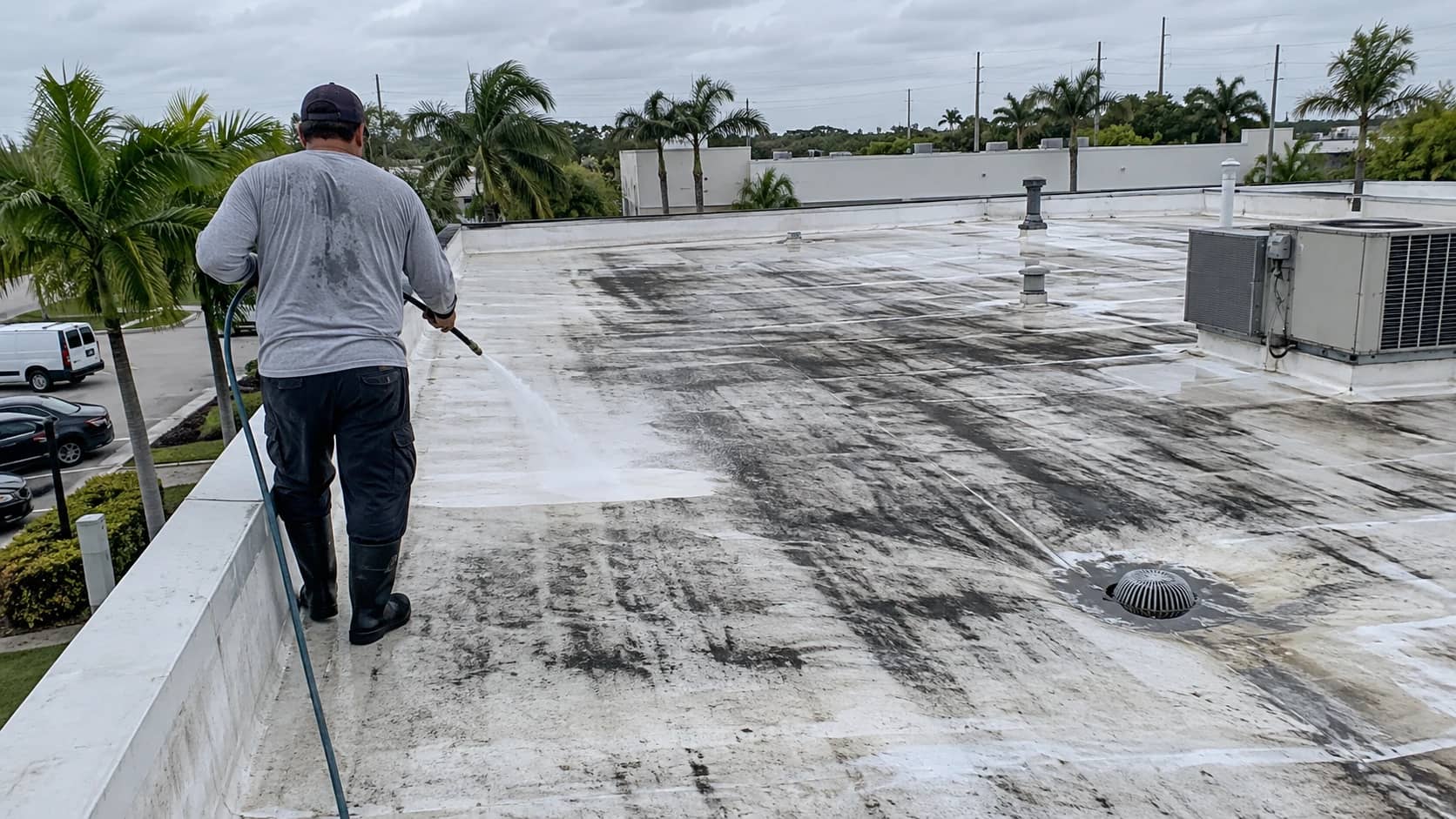
Black streaks on commercial buildings roofs are often algae discoloration, especially on asphalt shingles, where Gloeocapsa magma can cause dark staining. Confirm the roof material and rule out runoff stains or coating problems before cleaning. For asphalt shingles, the Asphalt Roofing Manufacturers Association recommends sodium hypochlorite and a gentle rinse, and warns against power washing or brushing.
What the black streaks mean for a commercial property
A dark roof is not automatically a damaged roof. On asphalt shingles, black streaks commonly point to algae discoloration, while a stain on metal, tile, or a nearby wall may have another cause.
Start with where the marks appear. Broad, dark bands that follow the roof slope suggest a different problem from staining concentrated below equipment, fasteners, drains, or a parapet. Photograph the affected areas from a safe vantage point and compare them with earlier inspection records if you have them. That gives a roofer or cleaning contractor a clearer basis for deciding what to inspect.
The distinction matters because cleaning addresses surface discoloration, not a leak, failed coating, or drainage defect. If water is entering the building, roofing material is loose, or a stain appears to originate at a roof detail, arrange a roof assessment before treating the marks as algae. For a property manager, identifying the source first also makes it easier to explain the proposed work and its limits to a board or facilities team.
Why black streaks on commercial buildings roofs form
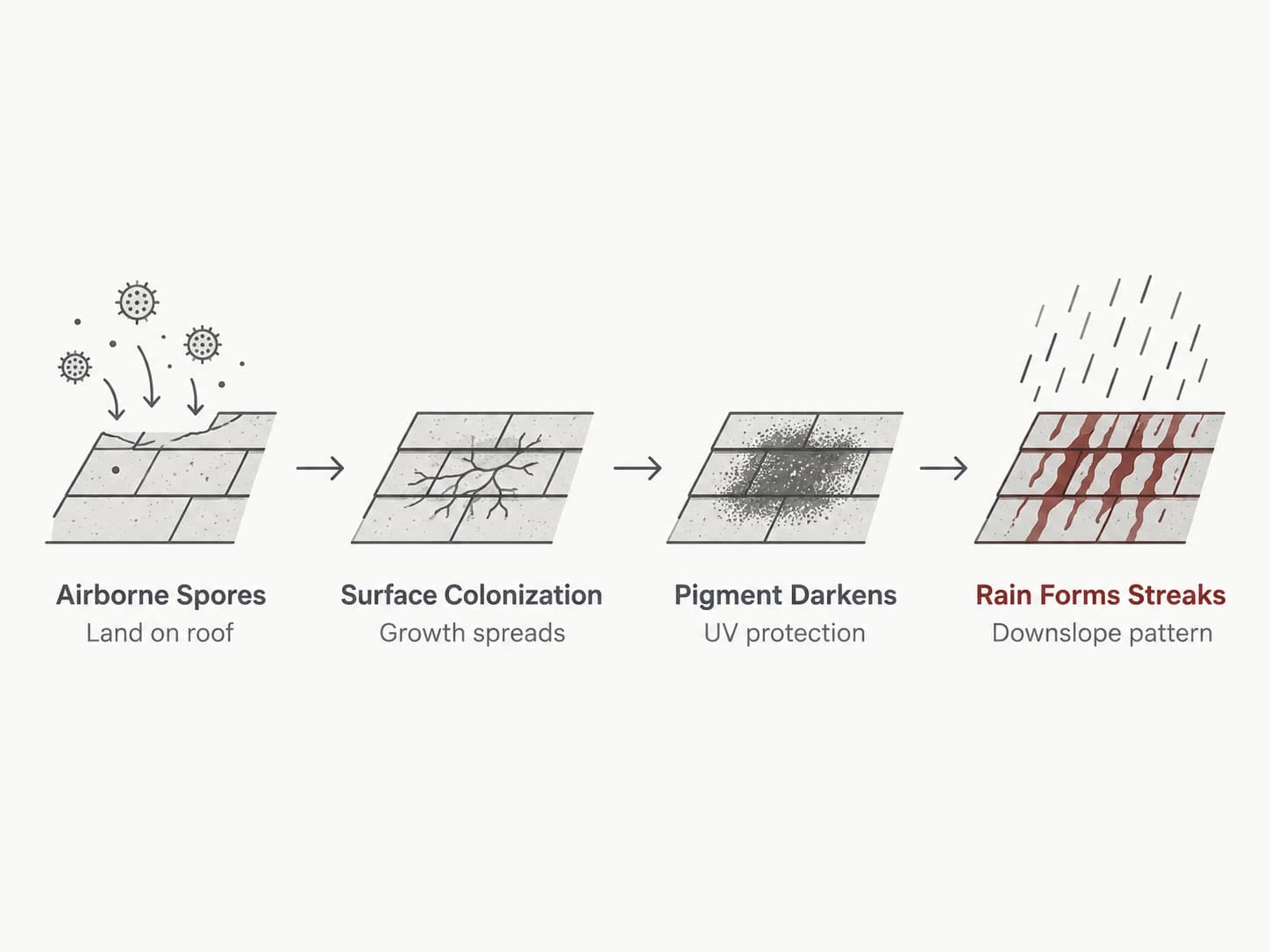
Gloeocapsa magma is the organism ARMA identifies in algae discoloration of asphalt roofs. As growth develops on a roof surface, rain can carry the dark material downslope, making the discoloration appear as streaks rather than isolated spots.
Warm, humid coastal conditions make algae a recurring maintenance concern in South Florida. Shaded areas and places that stay damp after rain deserve attention during routine inspections, although the visible pattern alone cannot prove what is growing there. Compare affected and unaffected roof areas, and note nearby trees, drainage paths, and equipment.
Black streaks on roof shingles can also look different as the roof ages or as dirt collects over existing discoloration. A close inspection should establish whether the marks sit on otherwise sound roofing or accompany missing material, exposed areas, or a drainage problem. Avoid diagnosing a whole commercial roof from a distant photograph, especially when different roof sections have different materials or exposure.
How to distinguish algae from other roof stains
Algae is a plausible explanation for dark streaks on asphalt shingles, but it is not a universal label for black marks. The stain's location, texture, and relationship to roof details help narrow the cause before anyone selects a cleaning solution.
| What you see | What to check | Practical next step |
|---|---|---|
| Dark streaks running down asphalt shingles | Whether the pattern extends across otherwise intact shingles | Ask for an algae assessment and a material-appropriate cleaning plan. |
| Marks directly below metal equipment or fasteners | Whether the stain begins at a specific component | Have the component and runoff path assessed before cleaning. |
| Dark areas around drains or ponding locations | Whether water is collecting or carrying debris | Address the drainage condition before treating the stain. |
| Distinct raised growth or firmly attached patches | Whether the material is moss or lichen rather than a flat stain | Seek roof-specific guidance; aggressive scraping can damage the surface. |
| Discoloration beside peeling or worn coating | Whether the coating itself is failing | Have the coating condition evaluated before washing. |
A cleaning proposal should say what the contractor believes the marks are and what evidence supports that view. If the source remains uncertain, ask for a small, suitable test area or a roofing assessment. That is more useful than a promise that every dark mark will wash out.
The same caution applies to exterior walls. A streak beneath a roof edge may come from runoff rather than growth on the wall itself. The roof and wall may need different methods, as explained in this guide to choosing a commercial building washing method.
Why ARMA warns against power washing asphalt shingles
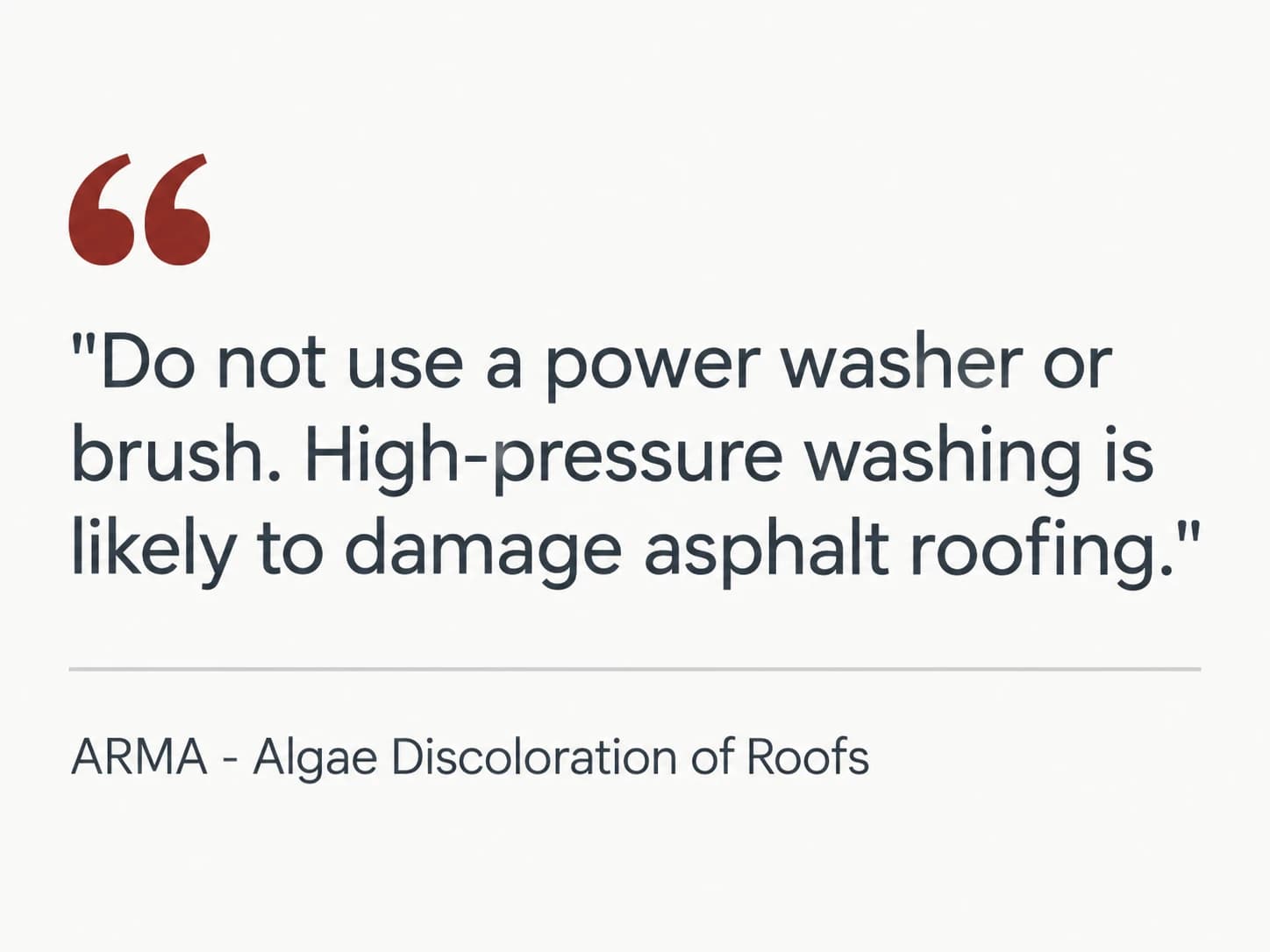
For algae discoloration on asphalt roofing, ARMA recommends sodium hypochlorite followed by a gentle rinse. Its technical bulletin says not to use a power washer or brush because high-pressure washing is likely to damage the roofing material.
The cleaning method must remove the discoloration without stripping or disturbing the surface that protects the roof. More pressure may make a stained area look clean quickly, but that appearance does not justify the risk to asphalt shingles. A contractor should explain how the solution will be applied, how nearby materials will be protected, and how the roof will be rinsed.
Low-pressure application is commonly called soft washing. The phrase describes an approach, not a guarantee that every chemical mix or procedure suits every roof. The roof material, its condition, the chosen product, and the manufacturer's instructions still determine the plan. A soft washing service should be able to explain those choices in terms specific to the property.
ARMA also states that cleaning results are temporary. That does not make treatment pointless: removing the visible growth can improve appearance and make future changes easier to spot. It does mean a maintenance plan should allow for recurrence instead of presenting one wash as a permanent cure.
How the method changes for tile, metal, and coated roofs
Asphalt-shingle guidance should not be applied automatically to every commercial roof. Tile, metal, and coated systems differ in how their surfaces, joints, and finishes respond to cleaning.
The Tile Roofing Industry Alliance says professional low-intensity pressure washing of clay or concrete tile can be done if desired. That guidance does not turn pressure washing into a default for a mixed-material building. The tile's condition, roof details, access, and any applicable manufacturer instructions still need review before work begins.
On metal or coated roofing, identify whether the dark mark is surface growth, runoff from a component, or deterioration of a finish. A cleaning agent that removes algae may not correct a damaged coating, and an unsuitable product could create a new appearance problem. Ask the contractor to identify the roof system and propose a compatible method, with a test area where appropriate.
Commercial buildings may also have adjacent parapets, painted walls, glazing, and walkways below the roof. Those surfaces affect how treatment is staged and where rinse water goes. A roof plan should account for them, even when the visible complaint is confined to the roof.
What to ask for in a commercial roof-cleaning scope
A useful scope identifies the stain, the roof system, the treatment method, and the areas that need protection. It also states which marks may remain because cleaning cannot repair a material defect.
Before approving work, ask for the roof areas to be mapped so everyone agrees on what is included. The proposal should explain access, protection for nearby landscaping and building surfaces, treatment and rinse methods, and how runoff will be managed. For an occupied hotel, retail site, or condo, it should also describe how entrances and pedestrian routes will be handled during the work.
Ask what will happen if inspection reveals a roofing issue. Cleaning should pause at an area that needs repair rather than concealing the problem under a broader wash. If your board or facilities team is comparing contractors, this certificate of insurance guide for exterior work provides a separate checklist for reviewing paperwork.
A clear scope makes the result easier to assess. It lets you compare the finished work with the agreed areas and documented limits, rather than judging it solely from a distant view of the roof. It also gives the next inspection a useful record of where staining had appeared.
Why streaks return and how to slow recurrence
Algae discoloration can return after successful cleaning. ARMA explicitly describes cleaning results as temporary, so the practical goal is to slow visible recurrence and catch changes early.
Keep drainage paths clear and investigate places where water repeatedly collects or runs across the same area. During routine roof reviews, compare shaded sections with exposed ones and record where new discoloration begins. These observations can help distinguish returning algae from a new leak, component stain, or coating problem.
Algae-resistant roofing materials may be worth discussing when replacement is already under consideration. ASTM D3274 is a method for rating how much a surface is disfigured by fungal or algal growth; it is relevant when evaluating resistance claims. A rating does not mean a roof will remain free of staining, and it does not replace normal inspection and maintenance.
For a portfolio of properties, record roof material, stain location, treatment date, and any drainage or repair findings together. That history is more useful than prescribing the same cleaning interval to every building. The broader commercial exterior cleaning guide for Miami property managers can help place roof work alongside wall, pavement, and window maintenance.
When to seek a roof assessment before cleaning
Get the roof condition assessed first when the marks coincide with leaks, loose material, damaged flashing, persistent standing water, or a visibly failing finish. Cleaning may improve the surface appearance, but it will not resolve those underlying issues.
An assessment is also sensible when the roof material is uncertain or several roof systems meet in the stained area. The person specifying the cleaning method needs to know what each surface is and which details could be affected by treatment or rinse water. If marks return quickly in the same location, revisit the source instead of assuming that a stronger wash is the answer.
For a board or property manager, the decision can be framed simply: confirm the source, address repairs or drainage where needed, then clean the surfaces for which a suitable method is established. That sequence avoids paying for appearance work that may have to be repeated after a roof repair.
Frequently asked questions
What are those black streaks on my roof?
On asphalt shingles, dark streaks are often algae discoloration associated with Gloeocapsa magma, the organism named in ARMA's roof guidance. The pattern is a clue, not a complete diagnosis. Check whether the marks follow the roof slope, begin below equipment, or appear beside damaged roofing. A closer inspection can determine whether cleaning, repair, or both are appropriate.
What do streaks on a roof mean?
Streaks show that something has accumulated on or moved across the roof surface. Algae is one possible cause, especially on asphalt shingles, but runoff, debris, or a deteriorating finish can also leave marks. Their meaning depends on the roof material and where the streak begins. Treat stains near leaks, drains, or damaged details as a reason for further assessment.
What is the black stuff on roofs called?
When the marks are algae discoloration on asphalt roofing, ARMA identifies the organism as Gloeocapsa magma. It is commonly discussed as roof algae. That name should not be assigned to every black roof stain by sight alone: a mark from equipment runoff or a failing coating calls for a different response.
How to remove black marks from a roof?
First identify the roof material and likely source of the marks. For algae discoloration on asphalt shingles, ARMA recommends sodium hypochlorite and a gentle rinse, and warns against a power washer or brush. Other roof systems need their own material-appropriate plan. If the marks come from a leak, component, or coating failure, address that cause before cleaning.
Will roof algae come back after cleaning?
It can. ARMA says the results of cleaning algae discoloration are temporary, so a clean roof should still be inspected as part of normal property maintenance. Keep drainage areas clear, note where staining returns, and check whether repeated marks begin at the same roof detail. That pattern may reveal an issue cleaning alone cannot solve.
Sources
ARMA supports the asphalt-roof identification, cleaning, and recurrence guidance above. The Tile Roofing Industry Alliance supports the tile-cleaning distinction, and ASTM describes the surface-disfigurement rating method discussed above.
If you are planning treatment for a commercial property in South Florida, 2Clean's roof-cleaning page is a place to describe the roof material, affected areas, and any known drainage or repair concerns.
Custom Commercial & HOA Walkthroughs
Need a scope tailored to your South Florida property?
Every building, plaza, and community has its own surface mix, access windows, and drainage layout. We quote by walkthrough rather than fixed rate sheets so your proposal matches your exact property. Call us directly at (904) 826-9806 or request a written scope online.
Related services & tools
Roof Cleaning by South Florida city: