
HOA & Condo Board (Florida Statute)
Building multi year exterior cleaning plan condo boards can use
October 14, 2026 · 11 min read
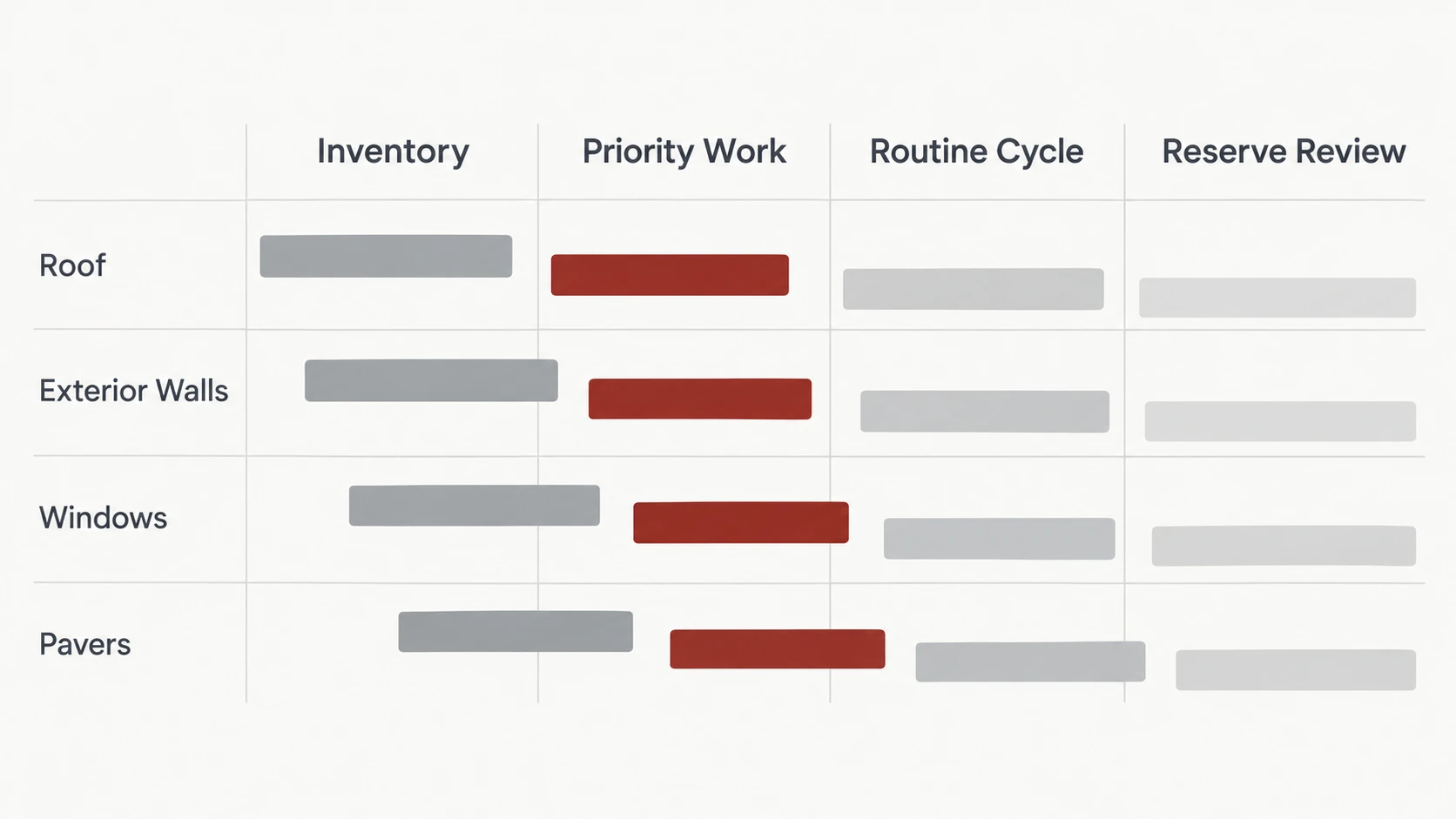
A practical building multi year exterior cleaning plan condo boards can use starts with a surface inventory, a condition record, and the association's budget calendar. Schedule routine cleaning by observed need, phase large work by building or zone, and check the timing against planned repairs. Review the plan each budget cycle.
Building multi year exterior cleaning plan condo boards can approve
A board can approve a useful plan when every proposed task has a location, a reason, a likely budget year, and a way to check the result. Start with the next annual budget, then show how larger cleaning phases and known repair projects fit together over subsequent years.
Use one working schedule for the property rather than separate lists held by the manager, engineer, and cleaning contractor. Identify who will update it after inspections, storms, completed work, and changes to the reserve study. The schedule should make it easy for a new board member to see why a surface is due for attention.
Begin with a walk of the common areas and available maintenance records. Mark recurring stains, shaded walls, roof growth, blocked drainage paths, worn coatings, and areas where residents have reported slippery conditions. Record the surface material and any known restrictions before selecting a cleaning method. Photographs taken from consistent locations will help the board judge change without relying on memory.
For each proposed task, separate the cleaning decision from any repair decision. Washing can remove surface buildup and reveal a condition more clearly, but it does not repair failed waterproofing, damaged roofing, loose material, or a drainage defect. If the condition appears to call for repair, route it to the appropriate professional before placing cleaning on the calendar.
Build a surface inventory and choose review intervals
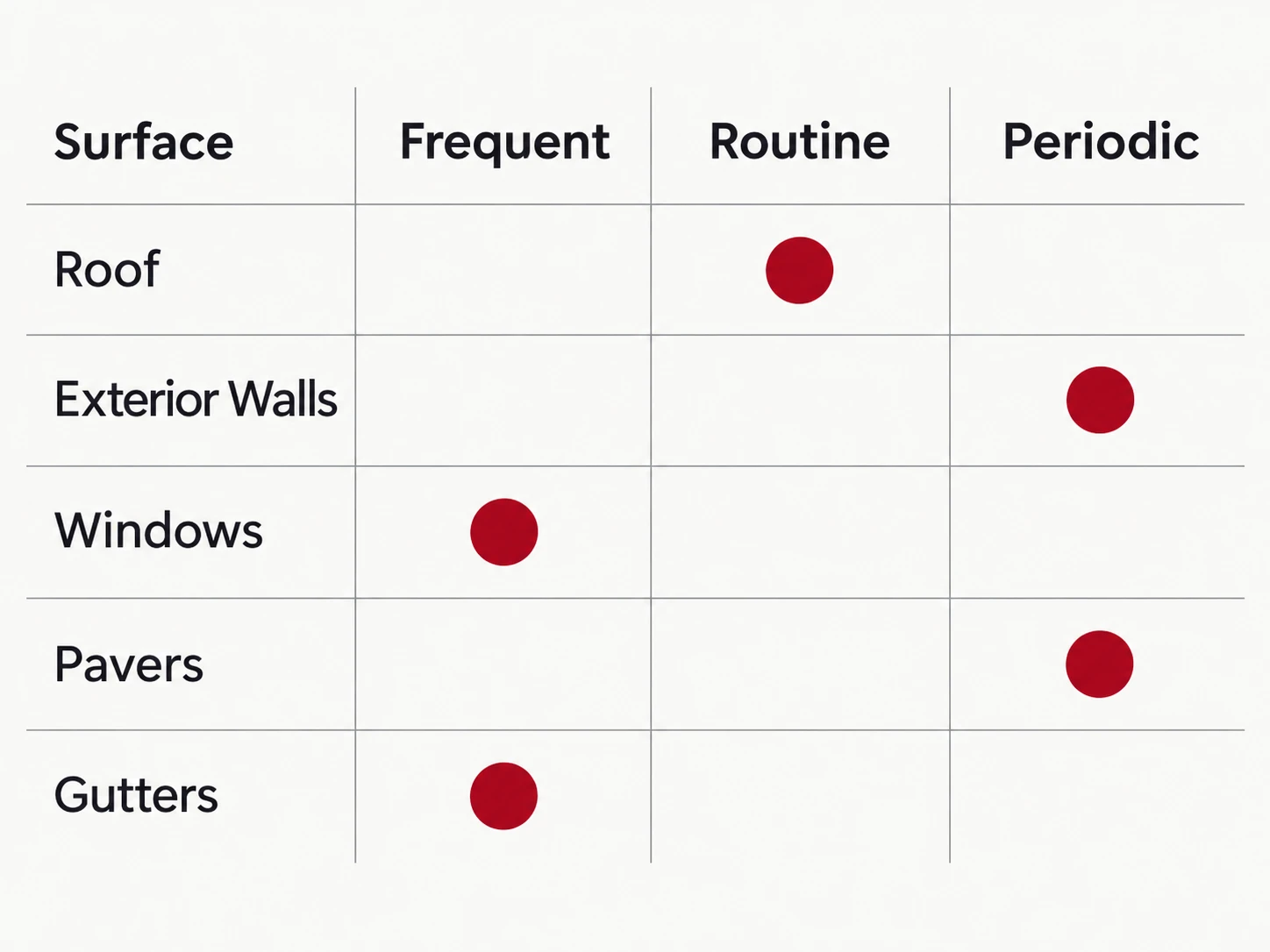
The inventory should tell the board what to review, where to find it, and what would trigger cleaning. A review interval is more useful than a universal cleaning interval because exposure, material, shade, drainage, and resident use vary across one property.
Break a large site into identifiable zones. A tower's shaded side may need attention before its exposed side; a heavily used entrance may need work before a quiet walkway. Note access constraints such as occupied balconies, planted beds, pedestrian routes, and areas that require coordination with other contractors.
| Surface or area | Record in the baseline | Trigger for a cleaning review |
|---|---|---|
| Roof | Material, visible growth, drainage, planned roof work | Growth or debris that warrants a method review |
| Painted or coated walls | Finish, staining, cracks, planned painting | Buildup that cleaning can address without disturbing the finish |
| Windows and glazing | Access, spotting, nearby landscape or irrigation | Reduced appearance or visibility |
| Walkways and entrances | Material, shade, drainage, resident traffic | Buildup or conditions that may affect footing |
| Pavers | Stains, joint condition, prior sealer, drainage | Soiling or a sealing decision after condition review |
| Gutters and drainage points | Debris, overflow reports, access | Obstruction or overflow evidence |
Treat the triggers as prompts to inspect, not automatic instructions to wash. A dark roof mark, for example, calls for identifying the roof material and the cause before a contractor proposes a method. If runoff repeatedly crosses a walkway, cleaning the walkway without addressing that flow may leave the underlying problem in place.
Keep the baseline practical. A marked site plan, a dated photo set, and brief notes about material and condition are enough to make later bids more comparable. Record uncertainty plainly so the board knows where it needs an engineer, roofer, coating specialist, or other qualified advice.
Match the method to the surface
The plan should name the surface and the cleaning outcome before it names equipment. Method matters because the force, chemistry, dwell time, and rinse that suit a paved area may be unsuitable for roofing, painted finishes, or delicate façade materials.
For asphalt roofing, the Asphalt Roofing Manufacturers Association advises a chemical treatment with a gentle rinse for algae discoloration. Its technical bulletin warns that a power washer or brush is likely to damage asphalt roofing and says treatment results are temporary. That makes roof cleaning a condition and material decision, not a task to repeat automatically on a calendar.
On walls, ask bidders to explain how they will protect coatings, joints, adjacent glass, plants, and occupied areas. A gentler wash may be appropriate for a vulnerable finish, while durable flatwork may call for a different approach. The board can use this guide to building washing methods when preparing the scope. For surfaces where a lower-pressure approach is appropriate, the soft washing service page describes that option.
Also plan where wash water will go. Federal MS4 rules require permittees to address illicit discharges to storm sewer systems, and Florida DEP administers the state's MS4 programme. Ask bidders to explain their approach to runoff for the actual site, particularly around drains, parking areas, and landscaped edges. Do not assume water can enter a storm drain because the work is routine maintenance.
Phase large properties without losing coverage
Phasing works when the board assigns each building or zone a place in the schedule and checks that the sequence follows condition. It spreads substantial work across budget cycles while keeping urgent conditions visible.
A useful phase boundary is one that a manager can locate and a contractor can price consistently: a named building, façade elevation, courtyard, parking area, or walkway network. Prioritize areas with a documented condition concern, difficult access that can be combined with another project, or heavy resident use. Appearance can be a consideration, but it should not hide a drainage or surface issue elsewhere.
For an illustrative three-year schedule, the first year might establish the baseline and address the most affected common areas. The second might cover another building or façade group while the manager checks whether the first phase has stayed clean. The third might complete the remaining zones and reset the sequence using what the association learned. These are planning slots, not prescribed cleaning intervals.
Avoid dividing a connected task where it would create extra disruption or leave an inconsistent result. If access equipment is already planned for façade repair or painting, ask whether related cleaning should happen before, during, or after that work. Confirm the sequence with the repair contractor so cleaning does not interfere with coating preparation or finished surfaces.
A phase is complete only when its location, scope, date, and observed result enter the property record. That record lets the next budget cycle respond to actual performance. It also gives bidders clearer information than a request to clean the property "as needed."
Align the schedule with the budget calendar
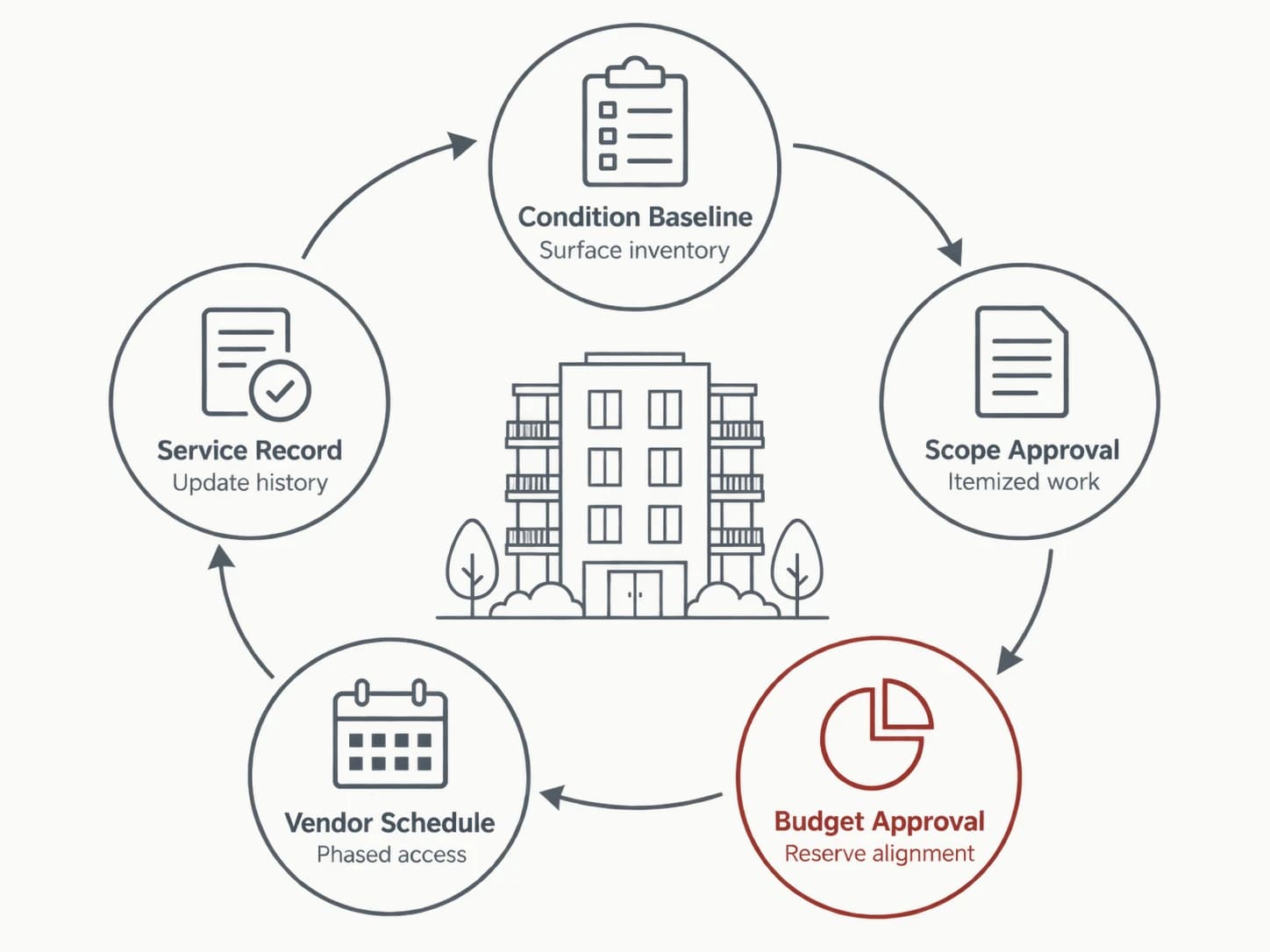
Put the cleaning review ahead of the association's budget decision, with enough time to define scope and request comparable bids. Then place approved work in the budget period when access and other maintenance projects make sense.
Work backward from the association's own budget dates rather than assuming every property follows the same calendar. The manager can bring the board a concise list of completed work, surfaces now due for review, proposed phases, and conditions referred for repair. Where a cost depends on access or hidden conditions, ask bidders to state the assumption instead of burying it in a lump sum.
Keep a distinction between recurring care and major component work. Routine washing may belong in the operating plan, while a reserve study addresses qualifying repair and replacement components. The association's governing documents, budget, study, and professional advice determine how particular costs are handled. A cleaning proposal should not be presented as reserve-funded merely because the same surface appears in the study.
Build room for reordering. A storm, repair project, or newly observed defect can change the sensible sequence without making the entire plan obsolete. NOAA identifies the Atlantic hurricane season as June through November, so a South Florida schedule should leave a clear process for post-storm condition checks. The building exterior hurricane preparation guide can help the manager coordinate that review.
Use the reserve study without confusing its purpose
A structural integrity reserve study, or SIRS, is a funding and condition planning tool for specified building components. It does not set a required washing frequency. The exterior cleaning plan should use its findings to avoid poorly timed work and to flag conditions that cleaning cannot resolve.
Under current Florida condominium law, a SIRS is required every ten years for each qualifying building with three or more habitable stories. Its listed components include the roof, waterproofing and exterior painting, and windows and exterior doors, along with other specified building systems and components. The study's required visual inspection and funding plan have their own professional requirements.
Read the study for planned component work before setting a cleaning phase. If exterior painting is approaching, ask what preparation the painting contractor will perform and whether a separate wash would duplicate it. If roof replacement is planned, decide whether a proposed roof cleaning has a useful purpose beforehand. If a wall shows staining around an apparent water entry point, refer that observation for evaluation rather than treating it as a cosmetic item.
A milestone inspection is a separate process under Florida law. For covered condominium and cooperative buildings, the regular milestone is due by the end of the year the building reaches thirty years, then every ten years. A local enforcement agency may require an earlier inspection at twenty-five years under the statute's conditions; distance from the coast alone is not a fixed trigger. Boards coordinating inspections, SIRS, and exterior work can read the guide to milestone inspections and SIRS.
The board should also check which surfaces are association responsibilities under its declaration. Florida's condominium statute generally assigns common-element maintenance to the association, subject to the declaration's treatment of limited common elements. The Florida condo and HOA maintenance obligations guide provides a starting point for that distinction. Governing documents still matter when the board defines a contractor's scope.
Compare annual and multi-year bids on the same scope
A longer agreement can give the board continuity, while an annual bid can make it easier to change the scope as conditions change. Neither format establishes value by itself. Compare the work described, the adjustment process, and the evidence the contractor will provide after each visit.
Give every bidder the same zone map and baseline notes. Ask for the surface-specific method, exclusions, access assumptions, protection of nearby finishes and landscaping, runoff approach, resident access plan, and completion records. Identify work that may require a separate proposal, such as stain treatment, difficult access, or a newly discovered condition.
For a multi-year agreement, define which tasks are fixed and which require the manager's approval after inspection. Include a way to change the sequence when painting, roof work, or storm repairs move. For an annual bid, preserve the same surface records so a new contractor can price the work without rebuilding the inventory.
Ask what the completion report will show. Dated photos by zone, notes on untreated marks, and observations that need repair review make the next budget discussion more reliable. A clear report also helps the board distinguish a missed scope item from staining that cleaning was never expected to remove.
Keep the plan current
Review the plan during budget preparation and after a material change to the property. A schedule that records completed work, observed conditions, and upcoming repairs remains useful even when individual cleaning dates move.
Assign one person to maintain the inventory and collect reports, then give the board a short decision list. That list should identify work to approve, work to defer with a reason, and conditions sent for professional evaluation. Residents may notice staining first, but the manager should still verify its location, surface, and cause before changing the schedule.
After each phase, compare the outcome with the baseline. Note where buildup returned, where a method was unsuitable, and where access or resident disruption affected the work. Use those observations to revise the next scope rather than repeating language from an old contract.
Frequently asked questions
How far ahead should a condo association plan exterior cleaning?
Plan across the association's upcoming budget cycles and known repair projects, then review the schedule each year. A multi-year view helps the board phase large properties and avoid washing a surface just before painting or replacement. It is a working maintenance schedule, not a statutory cleaning interval or a substitute for the reserve study.
Does a Florida structural integrity reserve study require exterior cleaning?
No. The SIRS statute identifies components that must be studied, including the roof, waterproofing and exterior painting, and windows and exterior doors for qualifying buildings. It does not prescribe washing intervals. Use the study to coordinate cleaning with component condition and planned work, while keeping cleaning scope and funding decisions clear in the association's budget.
What should be checked every year?
Check the surface inventory, prior cleaning reports, resident observations, drainage concerns, and the timing of repairs before approving the next scope. This is a planning review, not a direction to clean every surface annually. A shaded walkway may need attention sooner than a wall that remains in good condition; the recorded condition should drive the decision.
How should a board phase cleaning across several buildings?
Give each building or zone a name, baseline photos, proposed scope, and place in the budget schedule. Sequence the work by condition, resident use, access, and nearby repair projects. After each phase, record what was completed and what remained. That evidence helps the board adjust later phases without losing track of areas still due for review.
Should the association sign an annual or multi-year cleaning contract?
Choose the format that fits how confidently the board can define the work. A multi-year agreement can preserve a consistent schedule if it allows sensible changes when conditions or repair dates shift. Annual bidding offers regular opportunities to revise scope. In either case, compare bids against the same zones, methods, exclusions, access assumptions, and reporting requirements.
Sources
If your board is defining zones, methods, and a phased scope, 2Clean's commercial and HOA exterior care page is a place to start that conversation.
Custom Commercial & HOA Walkthroughs
Need a scope tailored to your South Florida property?
Every building, plaza, and community has its own surface mix, access windows, and drainage layout. We quote by walkthrough rather than fixed rate sheets so your proposal matches your exact property. Call us directly at (904) 826-9806 or request a written scope online.
Related services & tools
Commercial & HOA by South Florida city: