Methods, Surfaces & Failure Modes
How to Remove Rust Stains from Concrete on Commercial Properties
October 14, 2026 (updated) · 8 min read
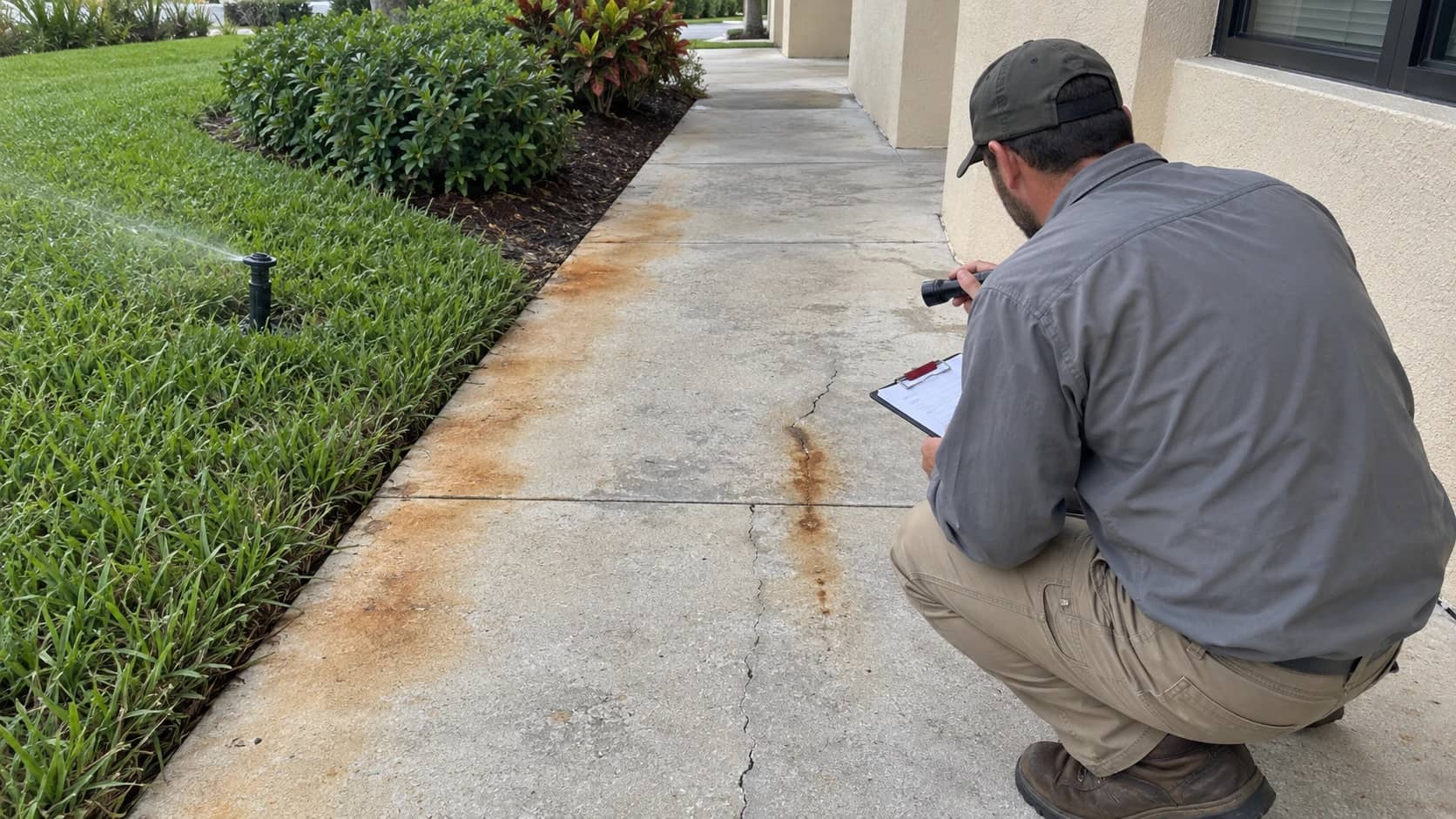
To learn how to remove rust stains from concrete, first find the iron source. Treat surface stains from irrigation or fertiliser with a concrete-compatible rust remover, following its label and testing a small area first. If rust emerges from cracks or damaged concrete, arrange a structural assessment before cleaning: the stain may be a symptom of corroding steel.
Identify the source before cleaning
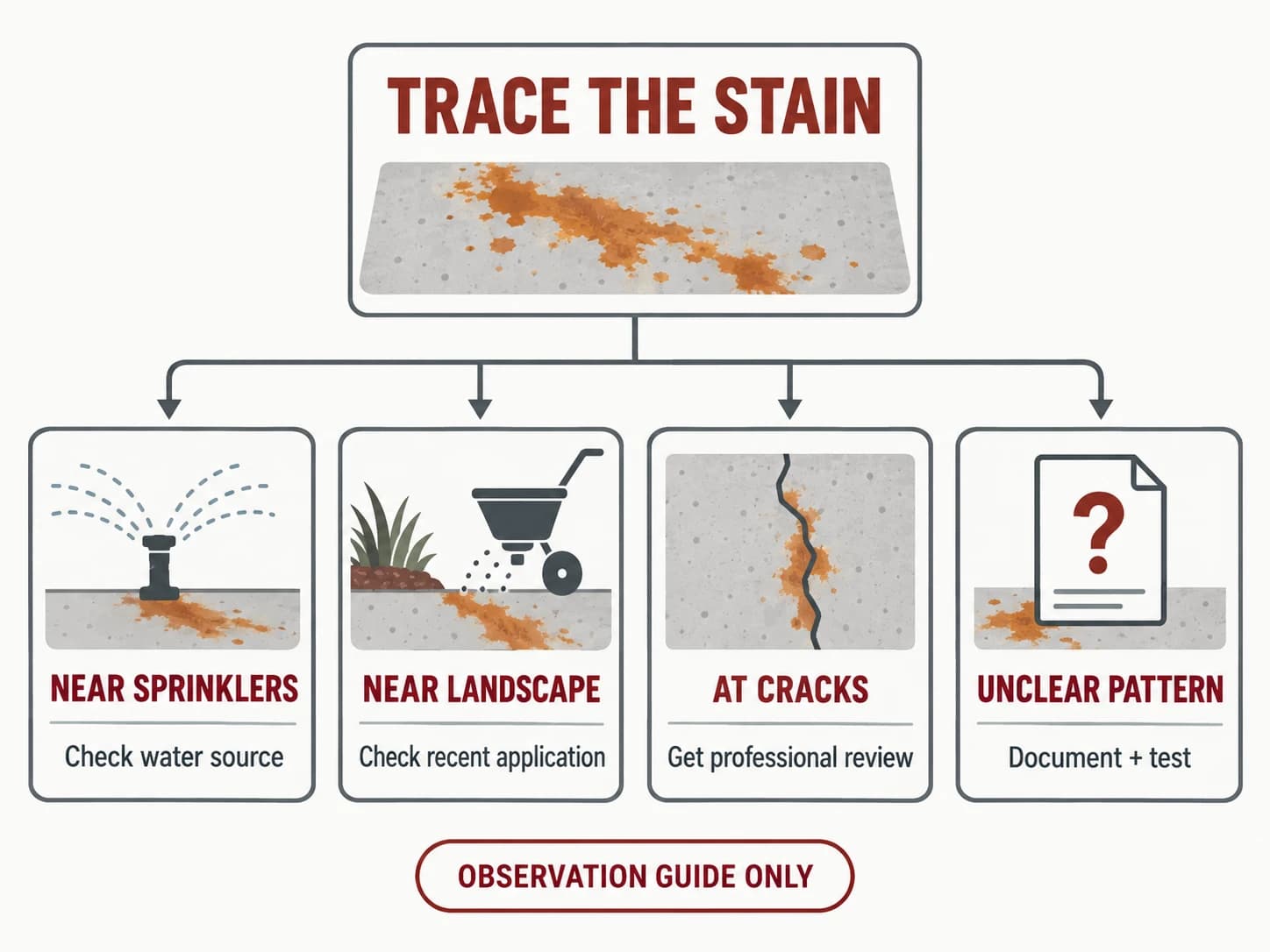
The stain's location and the condition of the concrete usually provide the best first clues. A stain beneath a sprinkler pattern calls for a different response from rust appearing along a crack in a parking deck.
Walk the area after irrigation has run and mark where water lands. Check nearby fertiliser beds, metal furniture, planters, rails and equipment. Then look closely at the concrete itself for cracks, loose patches or exposed steel. Record where the stain starts and whether it returns after cleaning.
| What you see | Likely source | First action |
|---|---|---|
| Orange staining across a sprinkler's reach | Iron in irrigation water | Redirect the spray and assess the water source |
| Small orange spots beside planting beds | Iron-containing fertiliser granules or runoff | Remove remaining granules and review application practices |
| A ring beneath a planter, fixture or metal object | Rust transferring from surface metal | Move or repair the object before treating the stain |
| Rust at a crack, lifted patch or exposed steel | Possible embedded-steel corrosion | Restrict access if the concrete is loose and seek a qualified assessment |
Appearance alone cannot prove the source. Irrigation water may collect at an existing crack, and a surface stain can look darker after repeated wetting. If the cause remains unclear, document it before applying a cleaner that might obscure the evidence.
How to remove rust stains from concrete
For an intact concrete surface with a confirmed surface stain, use a rust remover whose label specifically permits use on concrete. Apply it only after a small test shows acceptable results, then follow the product's directions for preparation, dwell time, agitation and rinsing.
Clear loose debris and move nearby metal objects. Protect planting, adjacent finishes and areas where rinse water could travel. Check the label before pre-wetting: some products call for a damp surface, while others require it to be dry. Do not assume one method works for every formulation.
Apply the product to a manageable area so it does not dry on the surface. A brush suitable for concrete can help work the cleaner into the stain if the label allows it. Rinse as directed, let the surface dry, and judge the result before repeating treatment. Wet concrete can make a remaining stain hard to see.
A pale outline may remain where iron sat in the concrete's pores or where the surrounding pavement has weathered differently. More aggressive cleaning can change the concrete's colour or texture without improving the result. For a plaza or entryway, compare the test area with the surrounding pavement before treating the whole surface.
Irrigation overspray and repeat staining
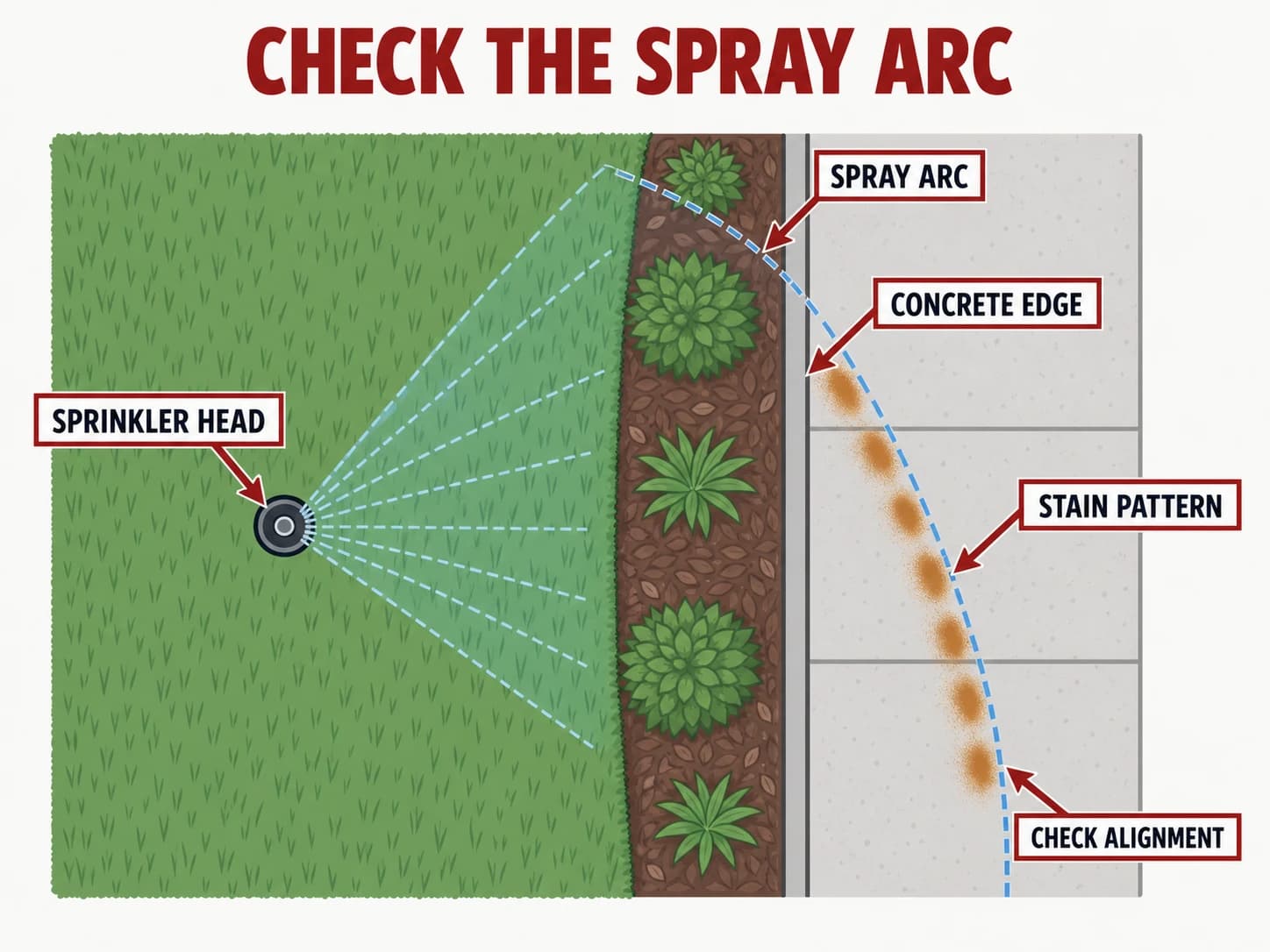
Irrigation stains will return if iron-bearing water keeps landing on the concrete. Cleaning addresses the deposit already there; adjusting the spray pattern or water supply addresses the reason it forms.
Watch a complete irrigation cycle rather than judging the sprinkler heads while they are off. Look for overspray onto sidewalks, entry drives and walls, along with runoff that carries water back across cleaned pavement. A landscape or irrigation contractor can assess head placement and whether treatment of the water source is practical.
Do not assume a standard sediment filter will remove dissolved iron. The appropriate water treatment depends on the water and irrigation setup. For a South Florida site with several stained areas, mapping the sprinkler zones against the stain pattern helps the facilities team decide where to investigate first.
After the water issue is addressed, clean a test section and monitor it through normal irrigation. That sequence makes it easier to tell whether a returning mark is a new deposit or an older stain that was only partly removed.
Fertiliser and surface metal stains
Iron-containing fertiliser and rusting objects can leave localised stains even where irrigation water is clear. Remove the source first, then treat the concrete with a compatible rust remover.
Check the edge of planting beds for stray granules, stained runoff paths and equipment stored on the pavement. Ask the landscape team to keep fertiliser off hard surfaces and clear accidental deposits according to the product label. Metal planters, furniture feet and fixtures may need repair, isolation from the pavement or relocation.
These marks can be concentrated, so a strong cleaner is tempting. Test carefully: an acid-based product may dissolve rust while also altering exposed aggregate, coloured concrete, nearby stone or joint material. If several surfaces meet at the stain, confirm that the product is suitable for all of them or protect the adjoining materials.
Stain type matters as much as surface type. Oil requires a different cleaning approach; the guide to removing oil stains from commercial concrete covers that separate problem.
Rebar corrosion warning signs
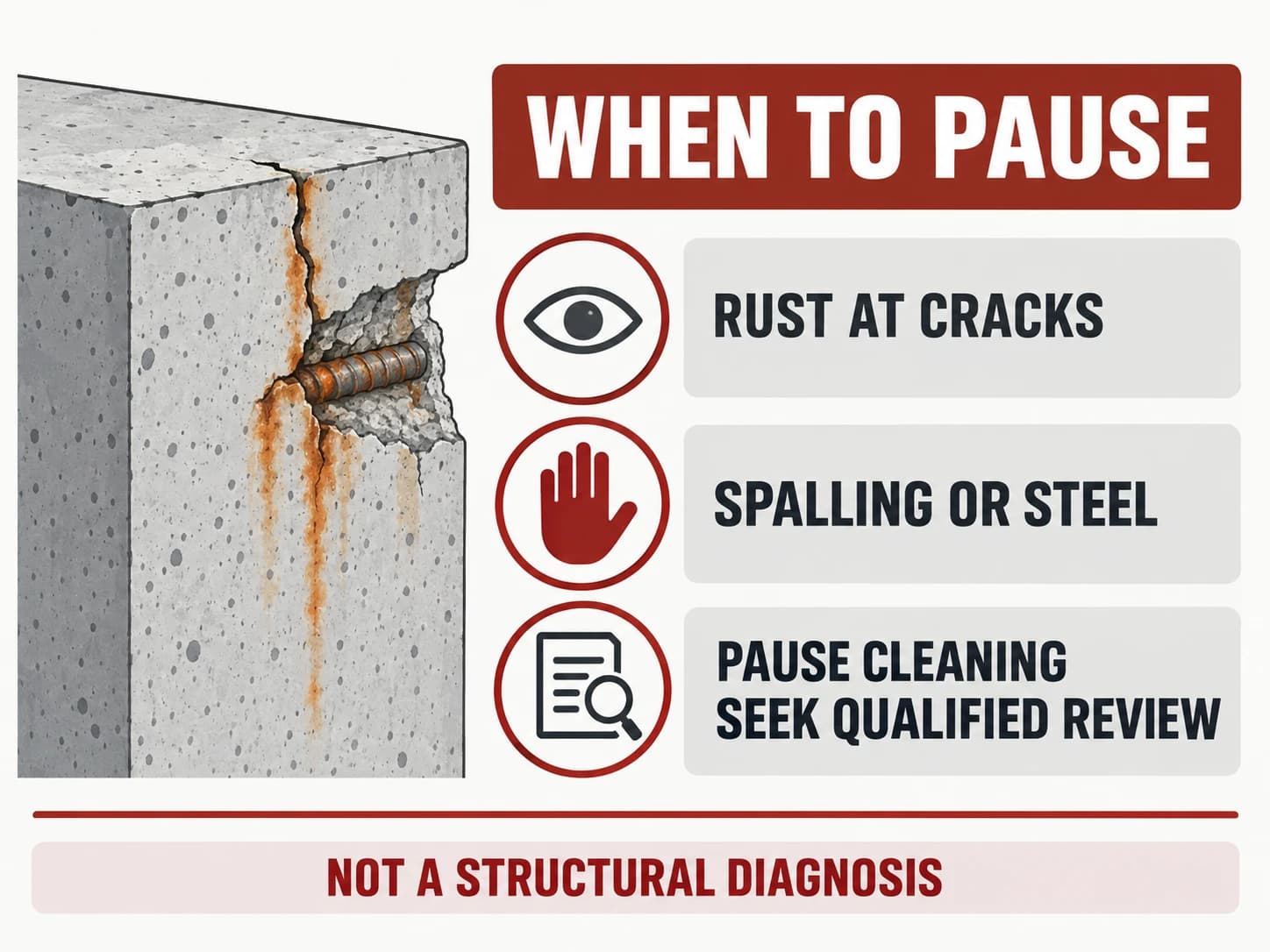
Rust emerging from cracked or spalling concrete needs more than stain removal. Corroding reinforcing steel can expand and damage the surrounding concrete, so cleaning the visible mark does not resolve the underlying condition.
Look for rust tracing a crack, concrete lifting or breaking away, hollow or loose patches, and exposed steel. Photograph the area and note whether it is on a slab, balcony, stair, garage deck or other part of the property. Keep people away from loose material and arrange an assessment by an appropriately qualified professional.
A dark stain by itself does not establish that rebar is corroding. Surface metal or runoff may be responsible. The combination of rust and concrete distress is what changes the decision from routine cleaning to investigation.
Once the cause and repair scope are clear, the property team can plan cleaning around the repair. Treating the stain first may conceal a useful warning sign and create work that must be repeated after damaged concrete is repaired.
Why pressure washing alone often fails
Pressure washing can remove dirt and loose deposits, but a rust stain often remains within the concrete surface. A cleaner formulated to react with iron is usually needed for an intact, stained slab.
Higher pressure is not a substitute for the right chemistry. It can roughen concrete, disturb joints or create an uneven patch that stands out after the rust is gone. Pressure can also spread contaminated rinse water beyond the work area.
Plan where wash water will go before applying cleaner or rinsing. The EPA's municipal stormwater rule requires covered storm sewer operators to address illicit non-stormwater discharges. A contractor should account for the site's drains and applicable local requirements rather than directing chemical rinse water into a storm inlet.
For broader planning across pavements and building finishes, see the commercial exterior cleaning guide. Rust treatment should be scoped as a specific stain-removal task within that work, with a test area and a clear expectation for residual staining.
Preventing stains across a managed property
Prevention depends on stopping iron from reaching the surface or removing the source before it keeps depositing rust. An irrigation check, careful landscape application and inspection of metal fixtures usually offer more lasting value than repeating the same cleaning.
Add stain locations to the property's maintenance notes. Record the likely source, the surface, the product used for a test and the result after the area dried. This helps a board or facilities lead distinguish a new stain from one that never fully cleared.
Keep entry paths usable during cleaning and rinsing. OSHA's walking-working surface rule calls for workplace walking surfaces to be kept clean and maintained in safe condition. Schedule and contain the work so pedestrians do not cross wet cleaner, hoses or residue.
Sealing may make future surface cleaning easier on some concrete, but it will not stop iron-bearing irrigation water from arriving or repair corroding steel. Select any sealer for the actual paving material and site conditions. For paved entries, the commercial paver cleaning and sealing guide explains the separate maintenance decisions involved.
Frequently asked questions
The right answer depends on both the rust source and the surface beneath it. Test a compatible product first, and pause cosmetic work if the concrete shows signs of damage.
Does muriatic acid remove rust?
Muriatic acid may affect rust, but it can also etch concrete and damage nearby materials. It is a poor first choice for a finished commercial walkway where a lighter patch could be as conspicuous as the stain. Use a rust remover labelled for concrete, follow its directions and assess a test spot after it dries.
What dissolves rust without scrubbing?
A concrete-compatible rust remover may reduce the amount of scrubbing needed, but no product can guarantee a scrub-free result on every stain. Performance depends on the iron source, how long it has been there and the surface condition. Follow the label's dwell and rinse directions, then evaluate the dry surface before repeating treatment.
Will CLR remove rust stains from concrete?
Check the current CLR product label for the exact surface and application before using it. Product names cover different formulations, and suitability for one hard surface does not establish suitability for every concrete finish. Test an inconspicuous area, protect adjacent materials and follow the label rather than substituting general rust-removal advice.
How to remove rust stains from block paving?
First identify whether the blocks are concrete, clay or another material, then choose a rust remover labelled for that paving type. Test a single inconspicuous block and watch the joints and nearby planting during rinsing. If irrigation or a metal fixture caused the stain, correct that source or the cleaned paving may stain again.
Can vinegar remove rust stains from concrete?
Vinegar may lighten a small surface mark, but results are uncertain and its acidity can affect some concrete finishes. A labelled, concrete-compatible rust remover gives the facilities team clearer application and rinsing instructions. Test either approach in an inconspicuous place, and do not use a household remedy on cracked or spalling concrete in place of an assessment.
Sources
The cited rules inform wash-water planning and the upkeep of walking surfaces. Product selection and application should follow the chosen cleaner's current label.
For help assessing surface stains and planning commercial concrete pressure washing, contact 2Clean with photos of the stains and the surrounding area.
Custom Commercial & HOA Walkthroughs
Need a scope tailored to your South Florida property?
Every building, plaza, and community has its own surface mix, access windows, and drainage layout. We quote by walkthrough rather than fixed rate sheets so your proposal matches your exact property. Call us directly at (904) 826-9806 or request a written scope online.
Related services & tools
Pressure Washing by South Florida city: