
Industry Verticals
Hotel Resort Exterior Cleaning in Miami Beach: A Guest-Facing Plan
October 14, 2026 (updated) · 11 min read
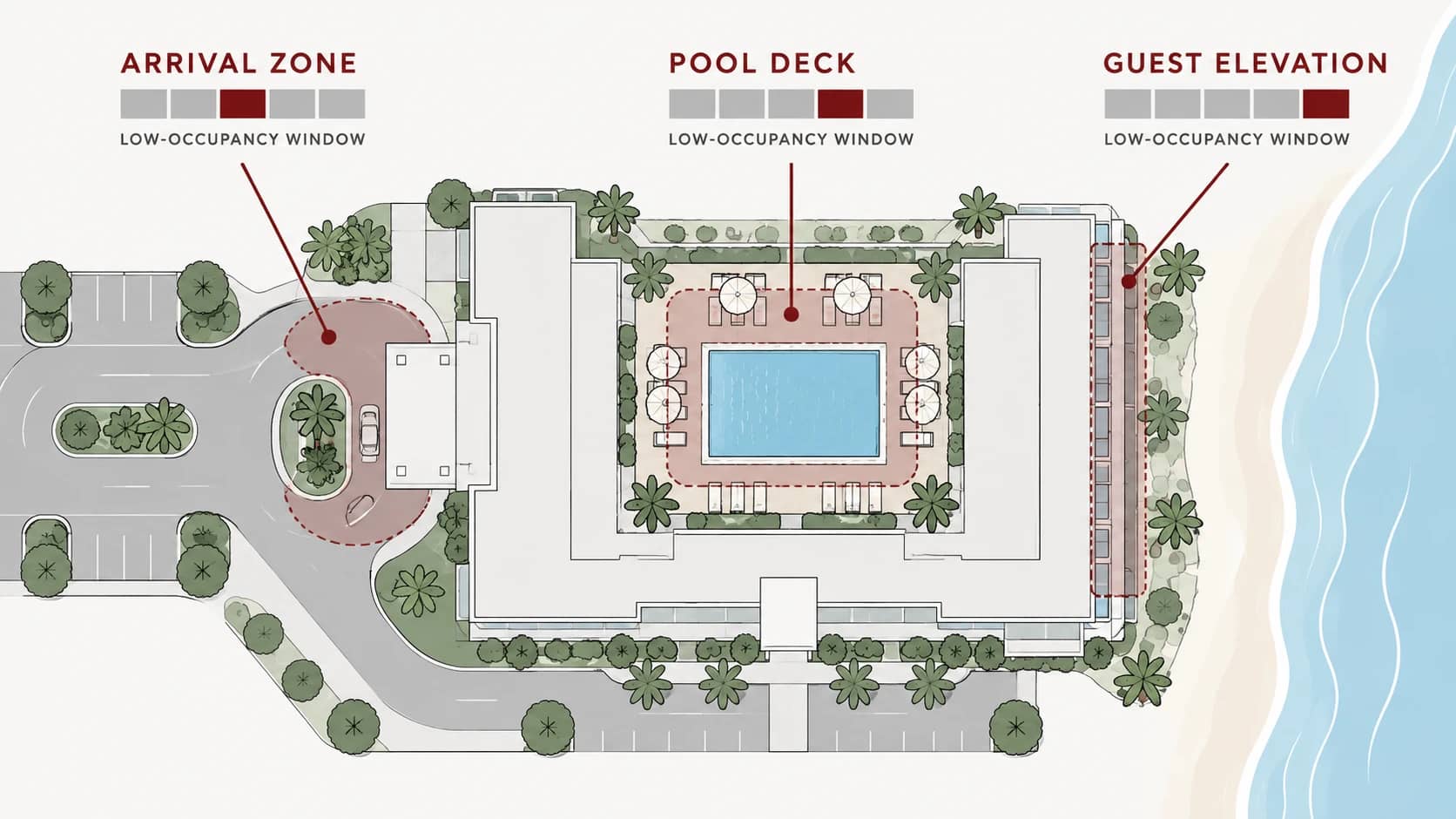
Hotel resort exterior cleaning in miami beach works best as a zone-based plan. Inspect arrival areas, pool decks, balconies, glass and ocean-facing surfaces separately, then schedule each task around its condition and guest use. Choose methods that suit the material, control wash water and reopen walking areas only when they are clean and safe.
Hotel resort exterior cleaning in Miami Beach: where to start
Start with the places a guest sees or uses: the entrance, paths to the lobby, pool surroundings, balcony views and visible elevations. A property-wide wash can improve appearance, but it does not give each of those areas the attention its exposure and use require.
Walk the site with facilities and operations staff. Record the surface material, visible soil, nearby doors and drains, pedestrian flow, and any coating or sealant that needs protection. Note which areas can be closed briefly and which need a maintained route through the work. Photos taken from the arrival drive and common guest viewpoints make it easier to agree on what "clean" means before a contractor prices the scope.
This survey also separates routine care from maintenance concerns. Cleaning may reveal failed sealant, loose fixtures, staining that has entered a finish or corrosion that needs repair. Record those findings for the appropriate trade rather than asking a cleaning crew to treat every mark as removable soil. For a broader property planning framework, see the commercial exterior cleaning guide for Miami property managers.
Build an occupancy-based cleaning schedule
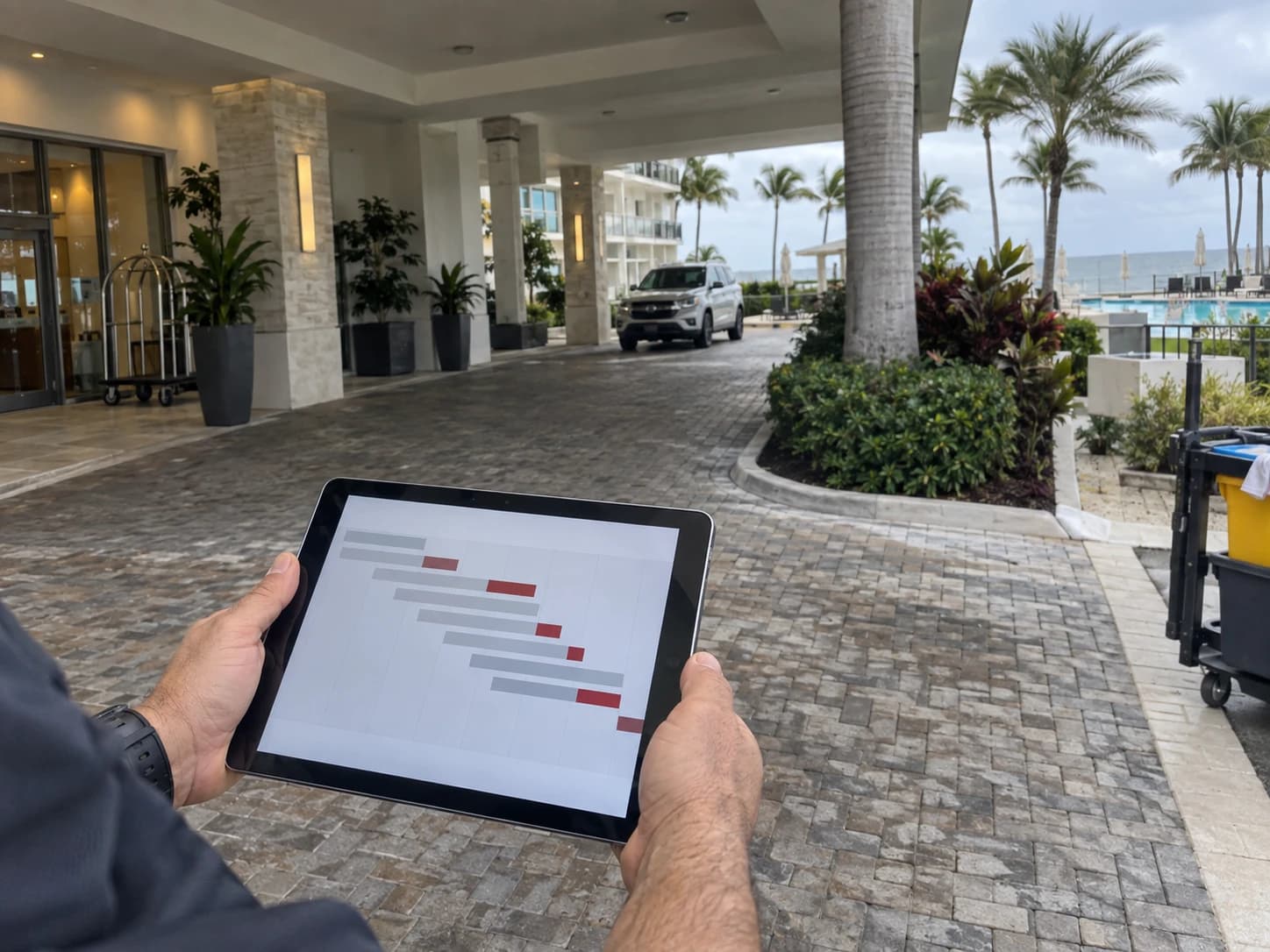
Choose work windows with the hotel team before selecting equipment or closing an area. Occupancy, arrivals, events and pool activity determine when a zone can be cleaned without creating a poor guest experience.
Ask the front desk and operations lead to identify arrival peaks, booked events, outdoor dining periods and rooms affected by balcony or façade work. The resulting schedule may give an entrance a short, repeatable maintenance window while reserving a longer closure for a deck or elevation. Publish the affected routes and reopening conditions to staff who direct guests.
Early morning is not automatically the quietest or least disruptive option. Equipment noise may reach occupied rooms, and a wet entrance may meet departing guests. Late work can present similar noise and lighting problems. Confirm the property's operating rules and applicable local requirements for the proposed location and hours before the window is approved.
Set the next visit by inspection and observed buildup. A sheltered wall may remain presentable longer than the ocean-facing glass beside it. Revisit the plan after busy periods, storms or exterior repairs, when the original work window and cleaning scope may no longer fit.
Map salt exposure across the property
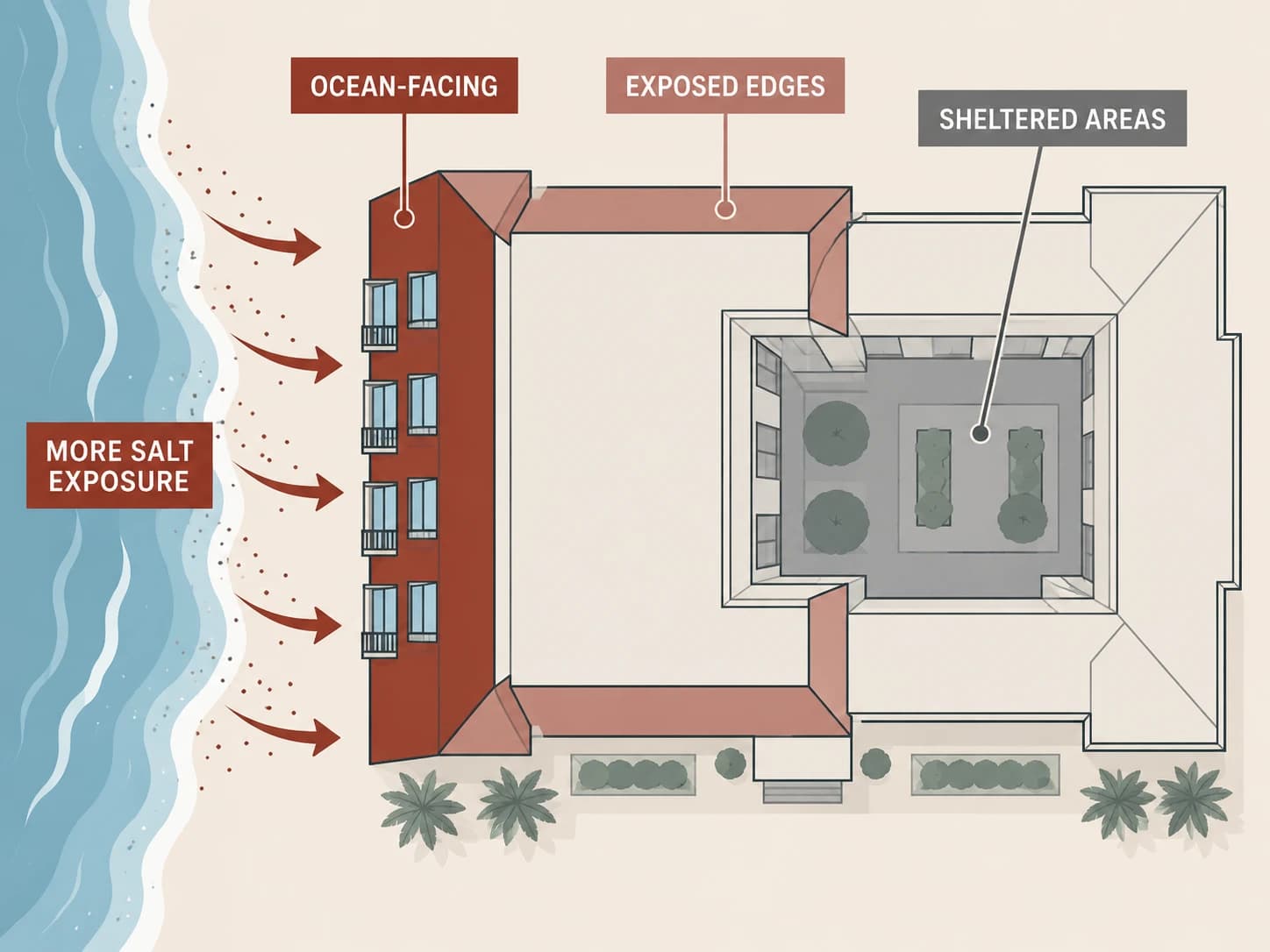
Ocean exposure is uneven, so a single rinse schedule can miss the surfaces that need attention first. Inspect exposed glass, railings, fixtures and balcony edges alongside more sheltered areas, then adjust care to the deposits you find.
Wind direction, overhangs and the shape of the building influence where residue settles. On a walk-through, look for haze on glass, deposits at railing joints and streaks below metal fittings. Check the finish before selecting a cleaner: an abrasive approach that removes residue from robust paving may scratch coated metal or glass.
A rinse can remove loose salt, but it will not correct corrosion or a damaged coating. Where staining persists after an appropriate test clean, document it and ask the facilities team to assess the underlying material. This distinction helps prevent repeated aggressive cleaning of a finish that needs maintenance.
Salt exposure is only one part of the local picture. Rain, shade and nearby landscaping can change where organic growth and dirt appear. The guide to Miami pressure washing conditions explains why neighboring surfaces can need different methods.
Keep the arrival route presentable and usable
The arrival route deserves frequent visual checks because guests encounter it before any other exterior zone. Clean spills and tracked soil promptly, then plan deeper work when staff can direct guests around wet surfaces and equipment.
Break the area into the vehicle approach, porte-cochere paving, entrance glass, doors, columns and nearby seating. Each may need a different method. A controlled wash can suit sound hard paving; hand work may be better beside doors, electrical fittings or delicate trim. Protect adjacent finishes and prevent spray from reaching people or luggage.
Before work starts, agree on barriers, signage and a usable alternate route. The team should know who checks the route after washing, removes hoses and confirms that the surface is ready to reopen. A clean entrance still fails its purpose if guests must cross a wet work area to reach the lobby.
Photograph recurring stains and identify their source. A drip from an overhead fixture or runoff from planting may return quickly after cleaning. Addressing the source can be more useful than repeatedly washing the same spot.
Check pool decks before reopening them
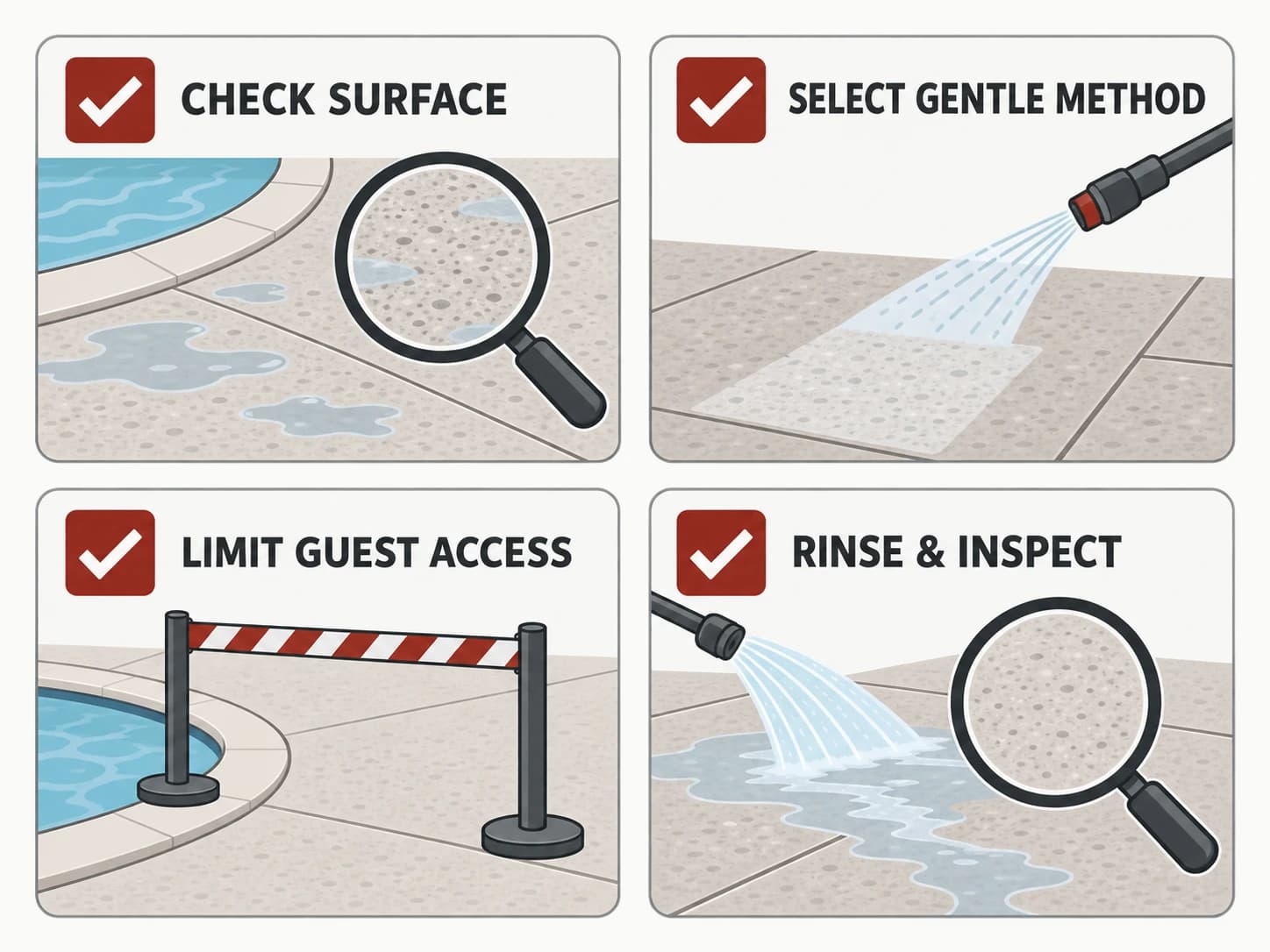
A pool deck needs both cleaning and a careful reopening check. Remove residue with a method suited to its material, then inspect the walking surface, drainage and any remaining slippery or damaged areas before guests return.
Identify the deck finish first. Textured tile, coated concrete and pavers do not respond alike to pressure, chemicals or scrubbing. Test an inconspicuous area, protect pool water and nearby landscaping, and avoid forcing water beneath loose joints or damaged finishes. A sealant should be considered only after the material and its existing coating have been assessed; it is not a substitute for cleaning or repair.
The US Access Board's ADA Standards require accessible floor and ground surfaces to be stable, firm and slip resistant. Its walking-surface and ramp provisions carry that requirement into those parts of an accessible route. OSHA also requires walking-working surfaces to be inspected and maintained in safe condition. These standards support a documented check, but they do not turn a fixed cleaning interval into proof that a deck is safe.
Include shaded edges, steps, transitions and the route from the pool to indoor areas in the inspection. Keep guests out while the work and post-cleaning check are underway. If a section remains slick, loose or uneven, leave it closed and refer the condition for maintenance.
Treat balconies and guest-facing elevations by material
Balconies and visible elevations need a method chosen for their finish, access and proximity to occupied rooms. A gentle approach is often appropriate on painted or coated surfaces, while a sound hard surface may tolerate a more direct wash.
Confirm who controls balcony access and how guests will be notified. Protect doors, glazing, furniture and areas below the work. Water moving from an upper level can reach another balcony, a public path or an entrance, so the work plan should follow its full path rather than stopping at the surface being cleaned.
For façade stains, identify the substrate before choosing chemistry or pressure. Stucco, concrete, EIFS and glazed systems have different vulnerabilities. A small test area can show whether a stain lifts without changing the finish. The exterior building cleaning method guide gives a closer comparison of those materials.
Cleaning also creates an opportunity to note cracked sealant, loose trim or corrosion. Report these observations to facilities staff. They may explain recurring streaks or water marks that another wash will not resolve.
Plan glass, railings and fixtures as separate tasks
Glass, railings and fixtures often need detail work after the surrounding surface is washed. Treating them as one façade task can leave spots, residue in joints or splash marks where guests see them most clearly.
Use a method suited to the glass and its coating, and check the result from common viewing angles. A balcony pane can look clear from the work side while still showing marks from inside a room. Coordinate commercial window cleaning with nearby wall or deck work so later rinsing does not soil finished glass.
At railings, pay attention to bases, joints and nearby paving where deposits collect. Avoid abrasive tools on coated metal and identify corrosion separately from surface dirt. Where fixtures have electrical components or openings, agree on protection and cleaning limits before water is used.
Make the acceptance check specific: clear sightlines through glass, no obvious residue on guest-facing rails and no cleaner left on touch points. Note any permanent staining or finish damage in the handover record.
Match the cleaning method to the surface
Choose pressure, solution and dwell time only after identifying the surface and the soil. Commercial pressure washing can suit durable paving, while lower-pressure methods and controlled application are often better around coatings, sealants and sensitive details.
More force is not always a faster solution. It can drive water into joints, disturb loose finishes or spread dirty runoff into an adjacent zone. A test patch helps establish whether the proposed method removes the stain without leaving a visibly different texture or color. Include rinsing and protection of surrounding materials in that test.
Roofing needs its own assessment. For asphalt shingles affected by algae discoloration, the Asphalt Roofing Manufacturers Association recommends a sodium hypochlorite treatment with a gentle rinse and warns against a power washer or brush because high pressure is likely to damage the roofing. ARMA also says the result is temporary. That guidance should not be applied indiscriminately to other roof materials.
Agree on exclusions before work begins. If a stain is embedded, a coating is failing or an area cannot be reached safely within the planned access, the scope should say so. That gives the hotel a realistic basis for reviewing the result.
Control wash water and protect adjacent areas
Plan where wash water will go before equipment arrives. Drains, planting beds, pool water and public paths can all be affected by runoff from a seemingly small cleaning zone.
The US EPA's stormwater rule requires municipal storm sewer permittees to effectively prohibit non-stormwater discharges into their systems and maintain an illicit-discharge program. Its model ordinance exempts non-commercial vehicle washing, not commercial wash water. The property's team and contractor should therefore identify nearby storm drains and agree on appropriate containment and disposal for the proposed work.
The plan should also cover overspray. Close or protect doors and air intakes as appropriate, move items that can be moved, and identify finishes or plants that need shielding. If cleaning solution is used, its selection and handling should account for the surface, people nearby and the route taken by rinse water.
Check these controls during the job, especially when work moves to another side of the building. A containment plan drawn for the arrival drive may not fit a balcony above a walkway.
Prepare for events and seasonal changes
Inspect guest-facing zones before a major event or busy period, then prioritize defects and visible buildup that can be addressed within the available access window. Focus first on the routes and views guests will use, and give repair items enough time to reach the right trade.
The NOAA National Hurricane Center defines the Atlantic hurricane season as June through November, with a climatological peak in September. That makes weather-aware scheduling useful for exterior work in South Florida. After significant wind or rain, reassess exposed glass, loose debris, drainage and any work that was left unfinished rather than assuming the earlier inspection still describes the site.
For an event, coordinate cleaning with deliveries, staging and outdoor service. Washing a loading-adjacent path before setup is complete may leave it dirty again by opening time. Confirm who will perform the final walk-through and who can approve a closure if a surface is not ready.
Keep a short record of zones cleaned, methods used, access limits and unresolved conditions. It helps the next shift answer guest questions and gives facilities staff a practical starting point for the next inspection.
Use a zone checklist to approve the scope
A written scope should name the surface, expected result, access arrangement and reopening check for each zone. This makes bids easier to compare and gives operations staff a usable schedule.
| Zone | Check during planning | Confirm before reopening |
|---|---|---|
| Arrival and entrance | Guest route, doors, drains and vehicle movement | Surface condition, clear route and removed equipment |
| Pool deck | Material, pool protection, drainage and closure | Clean walking areas and unresolved hazards recorded |
| Balconies | Room access, items below and water path | Residue removed and maintenance findings reported |
| Glass and railings | Coatings, viewing angles and nearby wash work | Visible finish, touch points and remaining stains |
| Ocean-facing elevations | Salt deposits, substrate and access | Rinse result and signs of coating damage or corrosion |
Ask each contractor to describe the method for vulnerable materials, how wash water will be managed and what the quoted scope excludes. The certificate of insurance guide for Florida property managers can help with the document review that accompanies a larger exterior project.
Use the checklist during handover, not only during bidding. Walk the completed zones with the agreed scope, photograph exceptions and assign any repair findings to facilities. The aim is a property that looks ready for guests and has a clear record of what still needs attention.
Frequently asked questions
How often should a hotel exterior be cleaned?
There is no useful single interval for every hotel surface. Inspect guest-facing zones regularly and set cleaning visits from observed buildup, exposure and use. An entrance with constant traffic may need attention sooner than a sheltered elevation. Review the schedule after storms, events or changes to landscaping and drainage.
How do hotels schedule exterior cleaning without disturbing guests?
Start with occupancy, arrivals, events and the location of occupied rooms, then agree on a work window with hotel operations. Tell front desk and guest-facing teams which routes or views will be affected. Provide barriers and an alternate route where needed, and reopen a zone only after equipment is removed and the surface has been checked.
What does salt air do to a beachfront hotel?
Salt deposits can leave haze on glass and residue on exposed fixtures, railings and other finishes. Persistent moisture and deposits can also make corrosion or coating problems more apparent. Inspect ocean-facing and sheltered areas separately, use a method appropriate to each material, and refer damaged finishes for maintenance rather than repeatedly cleaning them harder.
What should be checked before a pool deck reopens?
Check that cleaning residue and equipment are gone, drainage is working and walking areas do not have obvious slippery, loose or uneven spots. Pay particular attention to shaded edges, steps and transitions. Accessible walking surfaces and ramps must meet the applicable stable, firm and slip-resistant requirements. Keep any unresolved area closed for maintenance review.
Can a pressure washer be used on every exterior surface?
No. The surface, finish, joints and nearby areas determine the method. Sound hard paving may suit controlled pressure, while coatings and delicate details often call for gentler work. Asphalt shingle roofs require particular care: ARMA warns that power washing is likely to damage them and recommends a treatment followed by a gentle rinse for algae discoloration.
Sources
These sources support the stormwater, surface safety, roofing and seasonal facts used above. The cleaning plan should still be checked against the property's materials, operating rules and site conditions.
For a property-specific scope, 2Clean's commercial and HOA exterior cleaning programs provide a starting point for discussing guest zones, materials and work windows.
Custom Commercial & HOA Walkthroughs
Need a scope tailored to your South Florida property?
Every building, plaza, and community has its own surface mix, access windows, and drainage layout. We quote by walkthrough rather than fixed rate sheets so your proposal matches your exact property. Call us directly at (904) 826-9806 or request a written scope online.
Related services & tools
Commercial & HOA by South Florida city: