
Industry Verticals
Restaurant Exterior Cleaning in Miami: Grease, Dumpster Pads and Guest Paths
October 14, 2026 (updated) · 9 min read
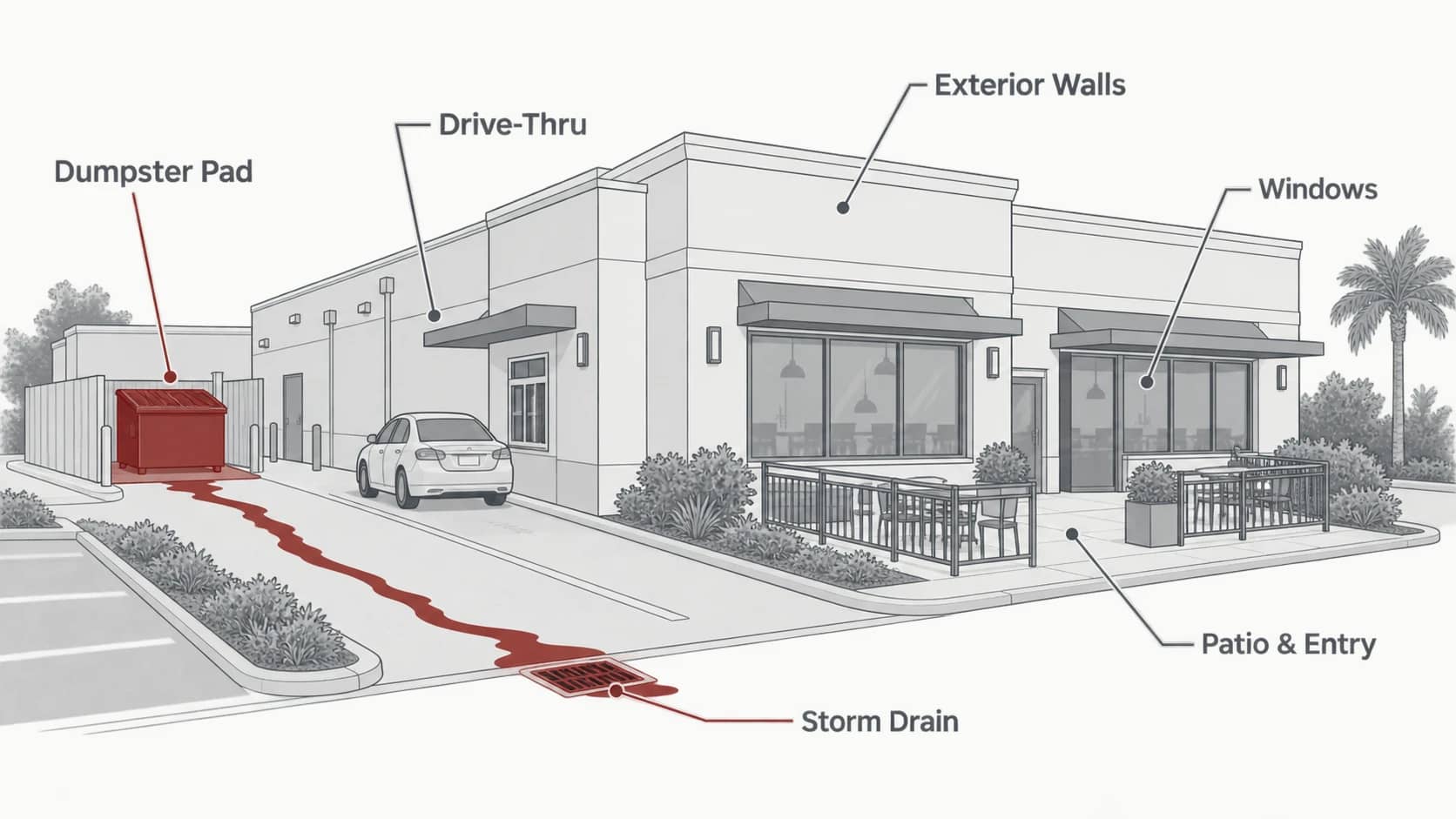
Restaurant exterior cleaning works best as a zone-based routine, not a single property-wide appointment. Check food and grease paths, dumpster pads, guest entrances and drive-thru lanes often enough to catch spills before they spread. Schedule deeper cleaning when buildup appears, and require a wash water plan that keeps greasy runoff out of storm drains.
Why restaurant exterior cleaning needs a zone plan
The service door, dumpster enclosure and front entrance collect different kinds of soil. A useful scope names each zone, its surface, the contamination present and where water will flow during cleaning. That gives a property manager a clearer basis for scheduling and comparing proposals.
Start by following the routes people and waste actually take. Kitchen staff may move refuse through a rear door, across pavement and into an enclosure. Guests may cross the same lot toward a patio or entry, while a drive-thru adds its own queue, spills and tire marks. A stain near one door can therefore affect a wider area than its size suggests.
A zone plan also prevents the least visible area from receiving the least attention. Rear service areas need checks for leaks and residue even when the front of the restaurant looks presentable. For broader site planning, the commercial exterior cleaning guide for Miami property managers explains how to define a scope across shared exterior areas.
How often to check and clean each zone
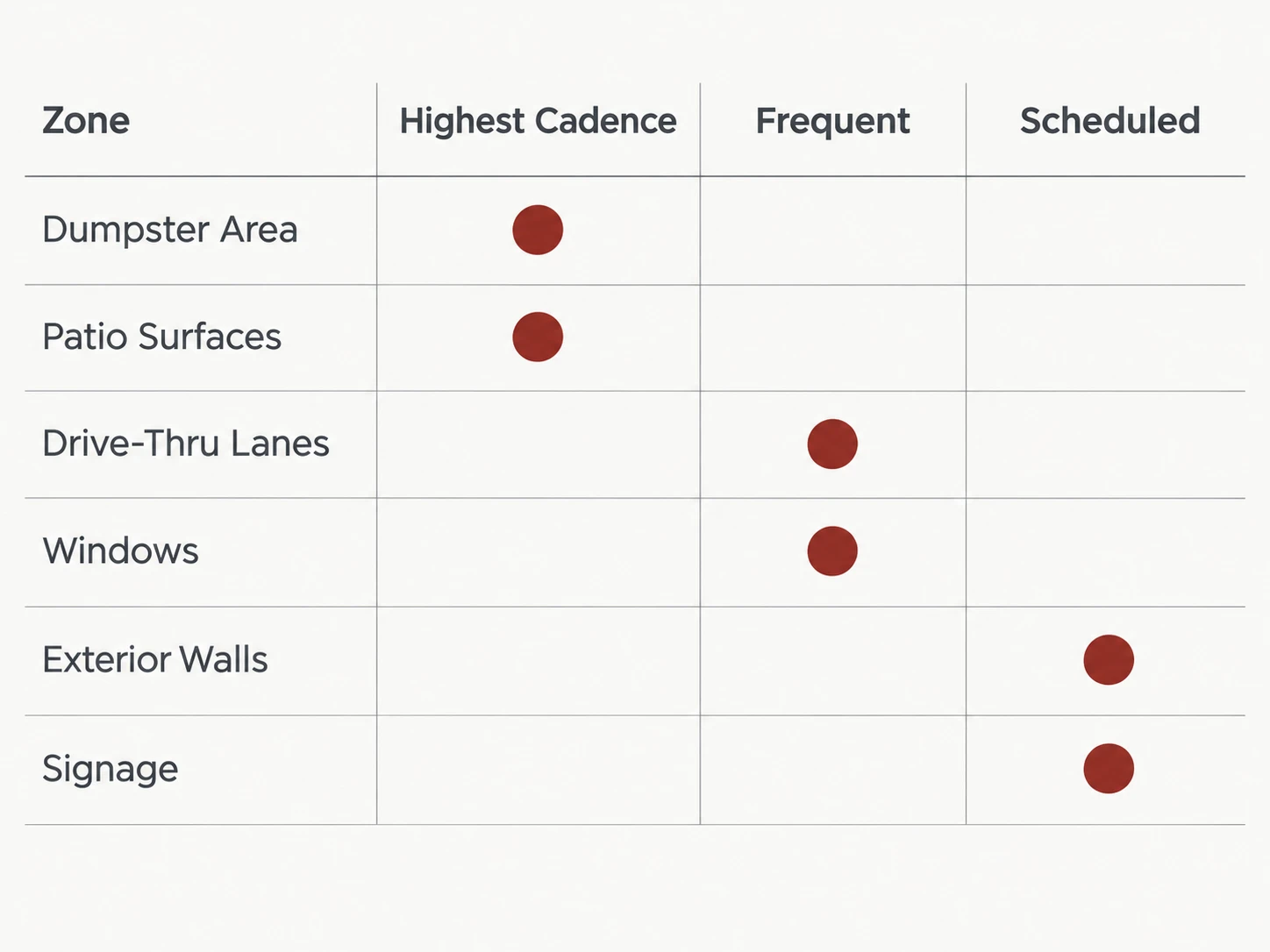
There is no useful cleaning interval that fits every part of a restaurant exterior. Check zones with food waste, grease or heavy foot traffic most often, then set deeper cleaning around observed buildup, operating hours and the surface involved. The matrix below is a planning guide, not a regulatory schedule.
| Zone | What to check | Relative cadence | When to arrange deeper cleaning |
|---|---|---|---|
| Dumpster pad and service route | Leaks, loose waste, grease, odor and pest activity | Most frequent | Residue remains after waste is removed or has spread beyond the pad |
| Entry, patio and guest sidewalk | Food spills, tracked grease, slick patches and standing water | Most frequent | Routine spot cleaning no longer restores the walking surface |
| Drive-thru lane | Spills, grease, tire marks and buildup at stops or turns | Frequent | Staining or residue persists along the lane |
| Walls, doors and signs | Splash marks, organic growth and visible soil | Periodic | The affected surface needs a method suited to its finish |
Use what the walk reveals to adjust the plan. A busy patio may need closer attention than a sheltered wall; an enclosure with a recurring leak needs the leak addressed as well as the pavement cleaned. Miami pressure washing conditions also vary by exposure and drainage, as described in the local conditions guide.
Follow grease from the kitchen door to the lot
Grease near a service door can be carried by shoes, cart wheels or runoff onto adjacent pavement. Map that path before cleaning so the scope covers the source area and the surfaces it reaches. Removing a trail while leaving residue at the door invites the same problem back.
Look at thresholds, loading areas, turns in the service route and low points where liquid collects. Record whether the material is a fresh spill, a recurring leak or an older stain. Those observations help distinguish routine cleaning from a waste-handling or drainage issue that the operator must also fix.
Treat a slick-looking patch as a prompt to assess the walking route promptly. OSHA requires employee walking-working surfaces to be kept clean, orderly and sanitary, free of spills, and maintained in safe condition. The ADA Standards call for stable, firm and slip-resistant walking surfaces. Cleaning removes contamination, but it does not repair broken pavement or correct poor drainage.
Give the dumpster pad its own scope
A dumpster pad needs more than a quick rinse when liquids or food residue have escaped the container. Remove loose waste, identify active leaks and clean the affected pad and enclosure surfaces with wash water control in place. The work should reach edges and collection points where residue tends to remain.
Check the enclosure gate, bin placement and path used to move waste. If a container keeps leaking, washing the pad alone will provide only temporary relief. Coordinate cleaning with waste pickup when practical so crews can reach the pad and assess what remains beneath and around the bins.
Ask a contractor to specify which surfaces are included: the pad, enclosure floor, walls, gates and the route back to the service door may be separate items. This is especially useful on a shopping center site where restaurant waste areas sit near other tenants. The storefront cleaning guide covers the wider guest-facing setting.
Protect the patio, entrance and drive-thru
Guest-facing surfaces need cleaning methods that remove residue without creating a new obstruction. Identify pedestrian routes, seating, nearby doors and vehicles before setting the work area. A patio or drive-thru may need sections closed while a surface is being cleaned and allowed to dry.
On patios and entrances, check for food residue, tracked grease, stains and standing water. Distinguish removable soil from cracked pavers, uneven concrete or failed drainage; cleaning cannot correct a physical defect. Near doors and painted finishes, choose a method appropriate to the material rather than applying high pressure indiscriminately.
Drive-thru lanes collect spills where vehicles stop and turn. Include those points in the scope, along with any adjacent pedestrian crossing. Schedule work around service periods so equipment, hoses and wet pavement do not interfere with guests or staff.
Keep wash water out of storm drains
Grease and detergent in wash water require a disposal plan before cleaning starts. Identify drains and pavement slope, then ask how the contractor will keep runoff from entering the storm system, collect it and dispose of it lawfully. Moving contaminated water away from the visible work area does not solve the problem.
Under 40 CFR 122.34(b)(3), municipal separate storm sewer permittees must run illicit discharge detection and elimination programs and effectively prohibit non-stormwater discharges into their systems. Florida DEP administers the state's stormwater permit program under F.A.C. Chapter 62-624. Miami-Dade County Code section 24-42 also prohibits discharges into county waters that cause pollution or a nuisance.
Those provisions are reasons to plan containment, not a substitute for checking the site's specific requirements. The route for collected water depends on the waste and local rules. Ask for the proposed approach in the written scope, particularly for greasy pads, service routes and areas close to a drain.
Choose the method for the soil and surface
Commercial pressure washing can be useful on suitable hard surfaces where grease and embedded soil need mechanical removal. The trade-off is that pressure, chemicals and water movement must be controlled around joints, finishes, landscaping, doors and drains. More force is not automatically a better result.
For a painted wall or delicate exterior finish, a gentler process may be appropriate. Soft washing relies on a cleaning solution and a lower-pressure rinse, so the proposed chemistry, dwell time and protection of nearby materials matter. Ask which surfaces will receive each method and what staining may remain.
A scope should also separate cleaning from repairs. Persistent discoloration may remain after contamination is removed, and a damaged surface may need maintenance outside the washing job. That distinction helps the manager assess the result fairly and plan any follow-up work.
Build a scope that fits restaurant operations
A workable scope identifies access, timing, surfaces, soil and water handling. It should also say who moves bins or furniture, which doors must remain usable and how the work area will be kept clear. These details matter as much as the cleaning method on an active restaurant site.
Walk the site with the operator before scheduling. Confirm waste pickup, deliveries, patio use and drive-thru demand, then choose a window that allows the area to be isolated and reopened safely. Note nearby tenants or shared sidewalks where water or equipment could affect others.
Request a zone-by-zone description instead of a broad promise to clean the exterior. It should distinguish recurring attention from a deeper visit, identify excluded surfaces and describe how visible misses will be handled. This makes later checks practical and gives the operator clear responsibilities between contractor visits.
Use a pre-inspection exterior walk
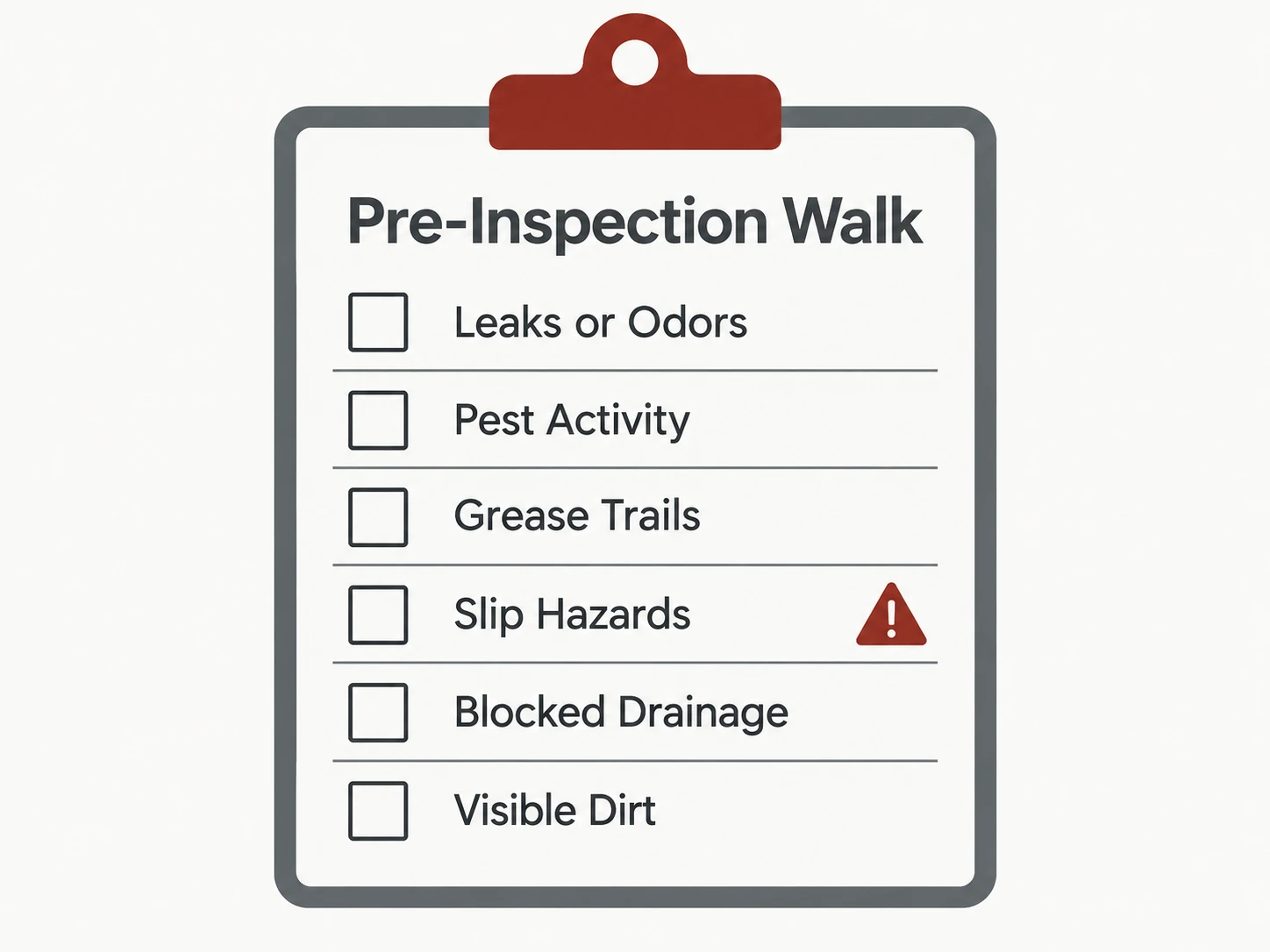
An exterior walk helps the operator find visible waste, spills, pest attractants and access problems before they become routine. It is a property management check, not a claim that an exterior cleaning visit will secure a health inspection result. Record the issue, its location and who will address it.
| Check | Look for | Follow-up |
|---|---|---|
| Service door and waste route | Grease trails, dropped waste and slick patches | Remove the immediate hazard and trace its source |
| Dumpster pad | Leaks, residue outside the bin and blocked access | Address the container or waste issue, then clean the affected area |
| Guest entry and patio | Food spills, standing water and uneven surfaces | Clean contamination and refer physical defects for repair |
| Drive-thru | Spills, residue at stopping points and pedestrian conflicts | Plan cleaning with the lane safely out of use |
| Drains and low points | Waste or wash water paths toward an inlet | Confirm containment before washing |
Keep notes brief enough that staff can use them during normal operations. A photo and location can help a contractor understand the scope, while a separate maintenance request can cover leaks or damaged paving. Repeat the walk after cleaning to check the agreed areas.
Frequently asked questions
How often should a restaurant be cleaned?
Check food waste and guest walking areas as part of normal operations, and arrange deeper exterior cleaning when residue persists or spreads. The right interval depends on traffic, spills, waste handling, weather exposure and the surface. Use separate schedules for the dumpster pad, service route, entry, patio and drive-thru instead of assigning one interval to the whole property.
What should a restaurant exterior cleaning scope include?
List each zone and surface, the soil to be removed, the cleaning method and any access limits. Include the service door route, dumpster pad, guest entrance, patio and drive-thru where present. The scope should also explain who prepares the area, how wash water will be controlled and which stains or repairs fall outside the cleaning work.
Does grease runoff need containment?
Plan to keep greasy wash water out of storm drains and arrange lawful collection and disposal. The contractor should identify drains, slope and low points before work begins, then explain the containment method in the scope. Requirements depend on the site and where collected water will go; a visible drain is never a disposal plan by itself.
Can pressure washing remove grease from concrete?
Pressure washing may help remove grease from suitable concrete when paired with an appropriate cleaning process. Results depend on how long the material has sat, whether it has penetrated the surface and whether the source of the spill has been fixed. Ask how adjacent finishes and drains will be protected, and what staining may remain after cleaning.
What do health inspectors look at outside a restaurant?
An inspector's focus depends on the applicable inspection and conditions found on site, so an exterior cleaning visit cannot guarantee approval. Operators can still use an exterior walk to check waste handling, visible spills, pest attractants and safe access. Document issues that cleaning cannot fix, such as a leaking bin or damaged pavement, and assign them for follow-up.
Sources
For a zone-specific scope, review 2Clean's pressure washing service and identify the restaurant areas, surfaces and runoff concerns you want assessed.
Custom Commercial & HOA Walkthroughs
Need a scope tailored to your South Florida property?
Every building, plaza, and community has its own surface mix, access windows, and drainage layout. We quote by walkthrough rather than fixed rate sheets so your proposal matches your exact property. Call us directly at (904) 826-9806 or request a written scope online.
Related services & tools
Pressure Washing by South Florida city: