
Industry Verticals
Marina Waterfront Commercial Property Cleaning: A South Florida Plan
October 16, 2026 · 10 min read
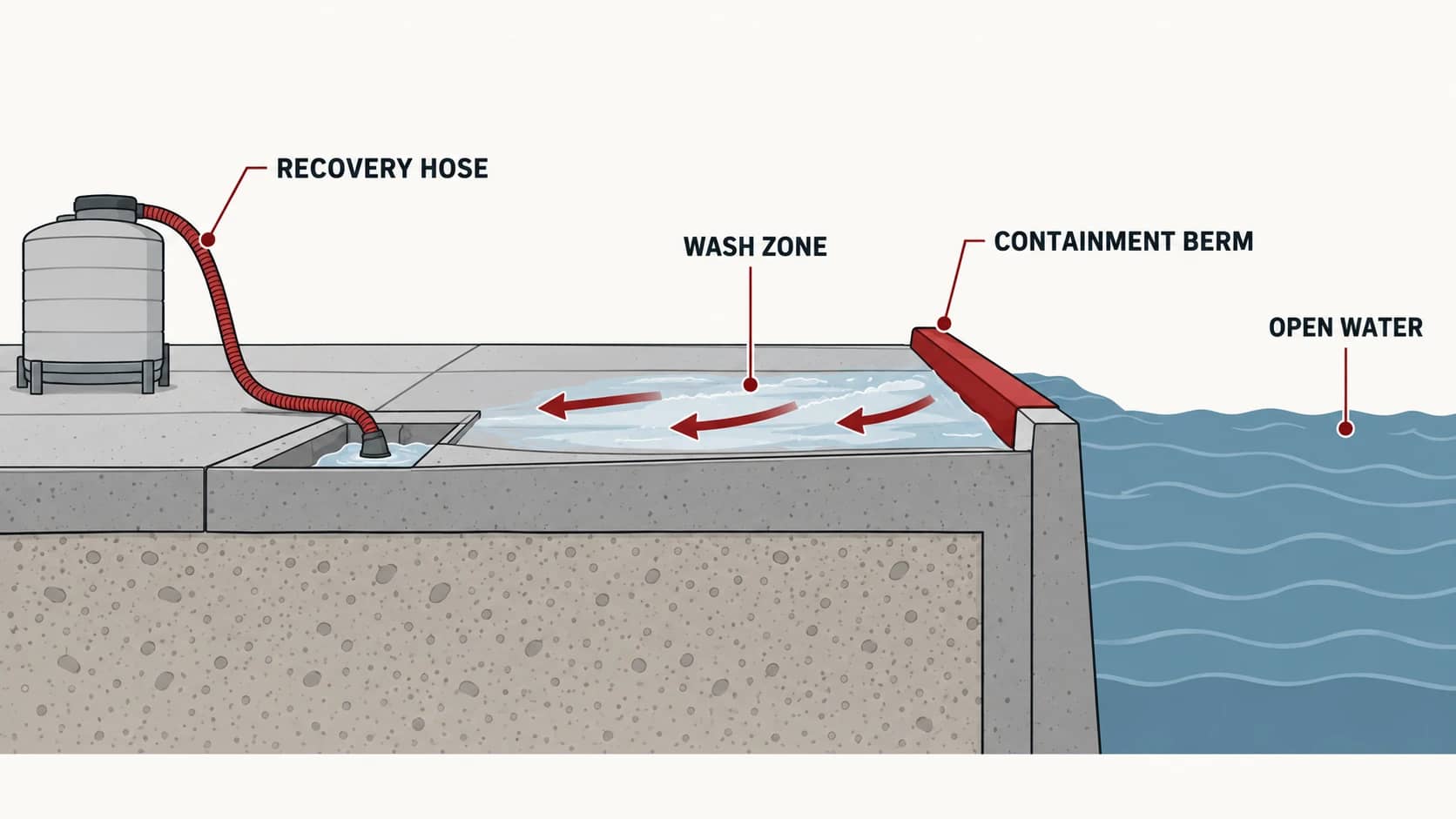
Marina waterfront commercial property cleaning starts by tracing where wash water, loosened dirt and cleaning products could go. A useful plan matches each surface to a gentle effective method, controls runoff before work begins and keeps docks and walkways usable. Near open water, the route from a work area to the water matters as much as the surface being cleaned.
Why marina waterfront commercial property cleaning needs a site plan
Waterfront cleaning has two connected jobs: remove buildup from the property and keep the resulting waste out of the water. A method that works on an inland plaza may need a different work area, less water or a collection plan beside a dock.
A marina can bring several surfaces into one scope, including concrete approaches, pavers, decking, railings, seawalls and building elevations. Their materials and drainage paths differ. Before asking for a sitewide wash, identify which areas receive foot traffic, which are exposed to salt spray and which slope toward a drain or an unprotected edge.
Runoff rules are part of that planning. Under 40 CFR 122.34(b)(3), permits for regulated small municipal storm sewer systems must require programmes to detect illicit discharges and, to the extent allowed by law, effectively prohibit non-stormwater discharges into those systems. Florida DEP administers the state's municipal stormwater permit programme. Miami-Dade County Code section 24-42 also prohibits discharges into county waters that cause water pollution or a nuisance.
Those provisions do not prescribe one cleaning setup for every marina. They make it important to establish the applicable local requirements and a workable route for collecting wash water before cleaning starts. An estimate should describe the work area, surface method, runoff controls and waste handling together, so the board or facilities lead can review the whole plan.
Map the water path before setting the scope
The first site walk should follow the direction water would travel from each proposed cleaning area. At a waterfront property, a short slope, deck opening or seawall edge can matter more than the distance to the nearest visible storm drain.
Mark drains, open edges, low points and places where water may pass beneath fixtures. Check whether a proposed containment boundary can actually hold water on that surface. A barrier across a smooth plaza may be practical; a dock with gaps between boards may call for a much smaller cleaning area or a method that produces less liquid.
The same walk should establish how people use the property. Identify entrances, accessible routes, loading areas, dock gates and guest-facing paths that must remain clear. Wet buildup can make walking surfaces harder to manage, while cleaning itself temporarily creates hoses, damp areas and restricted access. OSHA's walking-surface rule calls for clean, orderly surfaces that are inspected and maintained in safe condition; the ADA Standards call for stable, firm and slip-resistant floor and ground surfaces.
Record any stains that need diagnosis before they are included in a cleaning promise. Salt residue, algae, rust-coloured marks and wear in a coating may look similar from a distance but require different treatment. A site map and a short condition list give contractors a sounder basis for a scope than an area measurement alone.
Surface method matrix for waterfront cleaning
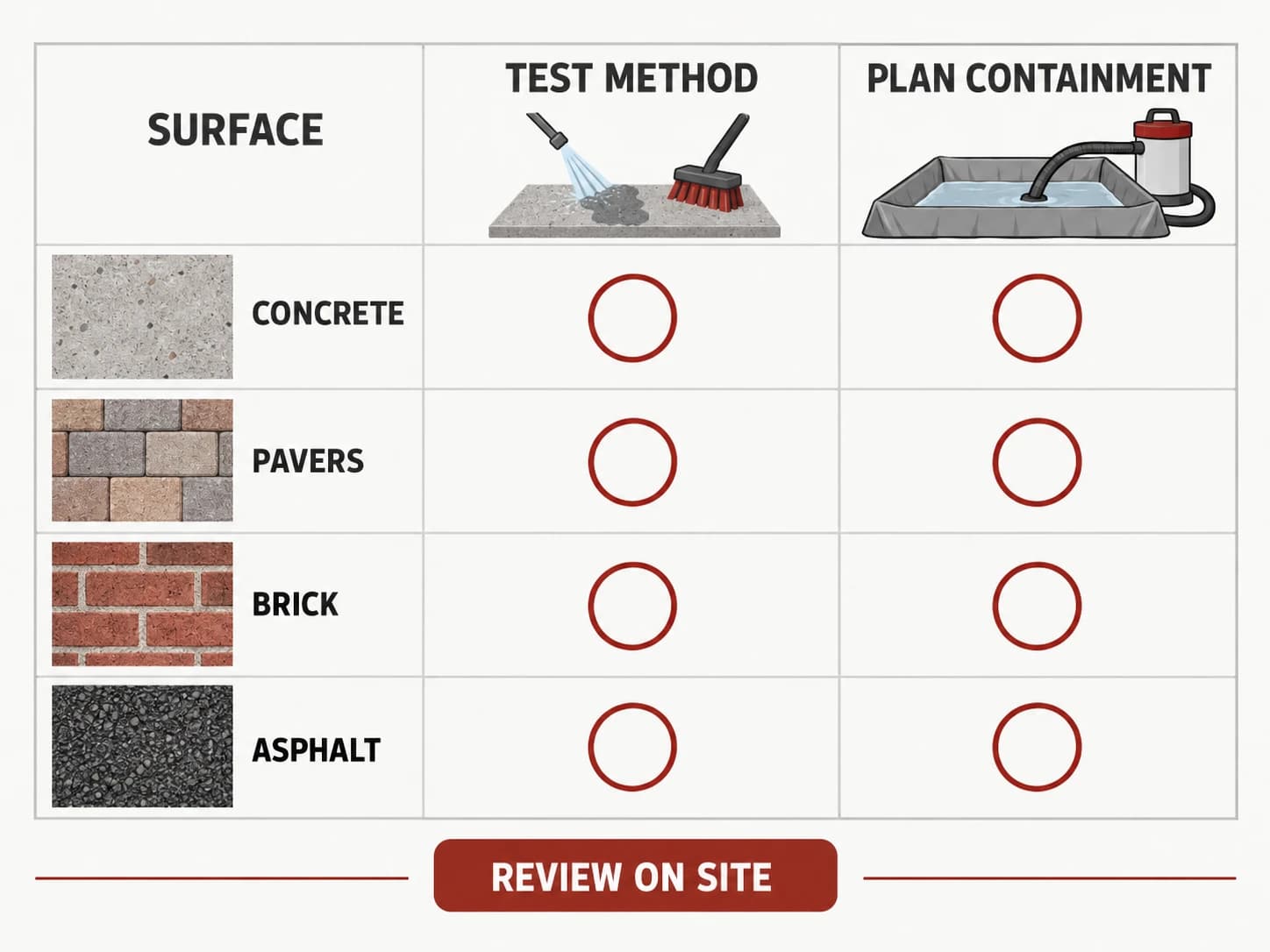
The surface determines how much agitation it can tolerate; the drainage path determines how cleaning water must be controlled. The matrix below is a planning guide for a site walk, not a fixed specification for every material.
| Surface | Method to consider | Main trade-off | Runoff question |
|---|---|---|---|
| Sound concrete approach | Controlled pressure washing or targeted scrubbing | More water can move loosened grit quickly | Can the work area be isolated and wash water collected? |
| Pavers and joints | Gentle washing with spot treatment | Strong spray may disturb joint material | Where will water and displaced sediment settle? |
| Coated railing or painted wall | Tested, low-pressure cleaning | Aggressive pressure may lift a weak finish | Can rinse water be kept away from the open edge? |
| Dock decking | Manual cleaning or carefully controlled low-pressure work | Board gaps can let liquid pass through | Is a liquid-based method workable at this location? |
| Seawall face | Material-specific assessment before cleaning | Access and direct water contact limit options | How will loosened debris be kept out of the water? |
Commercial pressure washing is useful where the substrate is sound and water can be managed. It is a poor default for fragile finishes, open decking or a location where runoff cannot be captured. Likewise, soft washing lowers the force applied to a surface, but a low-pressure method still needs a plan for any solution and rinse water it produces.
Ask for a small test area when a finish, stain or cleaning history is uncertain. It can show whether the chosen method changes the appearance of a coating or removes the targeted buildup. The test does not replace a runoff plan; it helps keep the treatment proportionate to the surface.
Identifying marine growth on waterfront surfaces
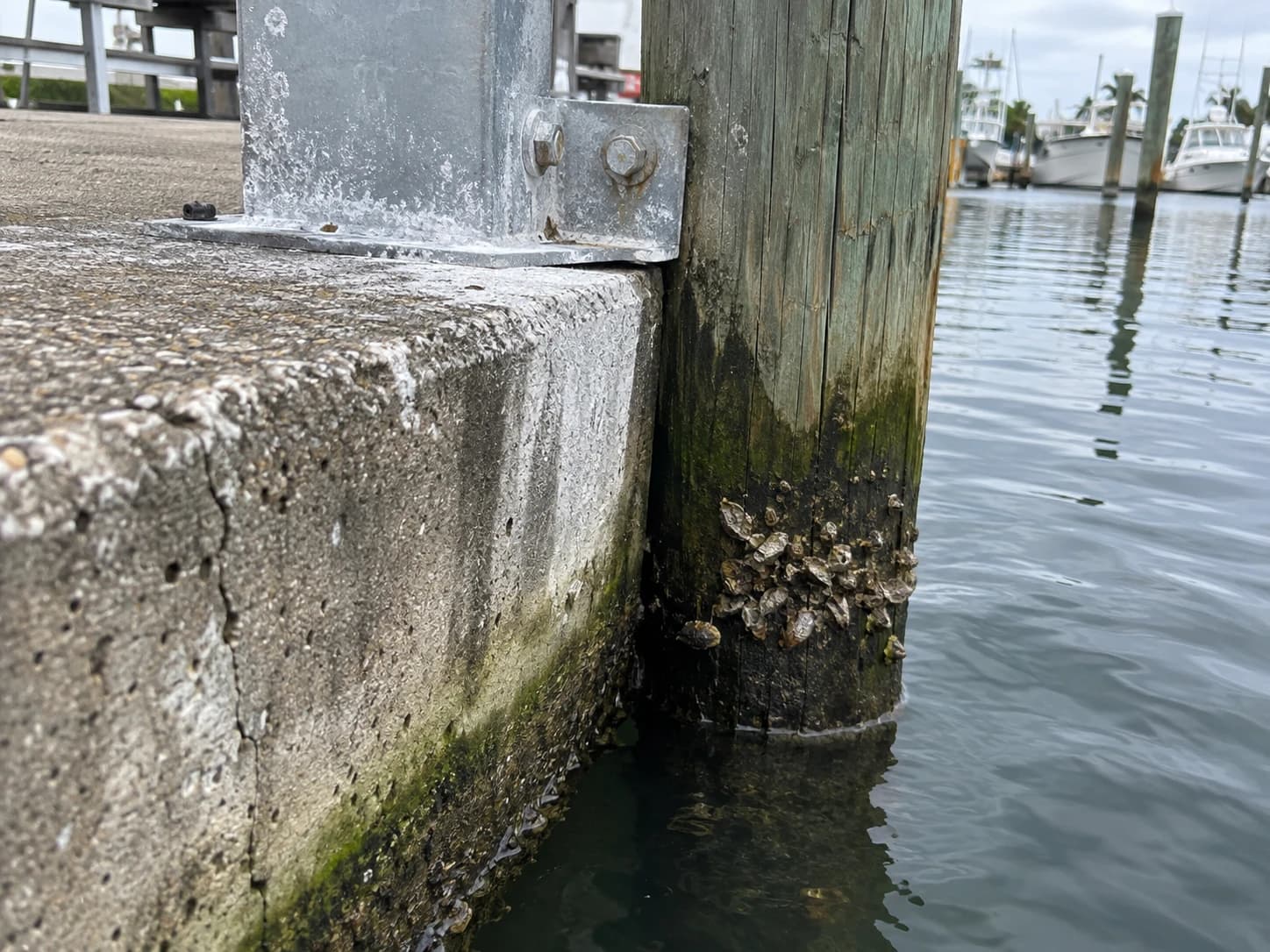
Identify what is growing, where it is attached and whether the surface beneath it is sound before choosing a treatment. A slick film on a walking route, growth along a damp joint and material attached to a seawall present different access and cleaning problems.
On a walkway, the immediate concern is usually the walking surface. Remove loose material in a controlled way, treat the remaining buildup as the material allows and avoid leaving residue that makes the route harder to use. Shaded or persistently damp spots deserve closer inspection because their appearance can change between visits.
Dock boards require particular care. Gaps can let debris and liquid fall through, while strong spray may affect the board surface or hardware. Manual removal may be slower, but it can give better control where the work area cannot be enclosed. If growth extends below the waterline, separate that condition from routine exterior cleaning and have the appropriate specialist assess it.
Salt residue is different from biological growth. It can return with spray and weather, so the aim is to clean accessible surfaces without promising a lasting fix for an ongoing exposure. A useful condition report distinguishes recurring salt deposits from stains that remain after a suitable test clean.
Building elevations, entrances and guest areas
Water-facing walls and entrances need a method chosen for both their finish and what lies below them. Cleaning from above can send water over glazing, landscaping, walkways or an open-water edge, even when the wall itself appears straightforward.
Start with a limited section to assess the finish and the amount of rinsing needed. On painted or coated surfaces, gentler application and controlled rinsing reduce the risk of stripping a weak finish. Mask or protect sensitive fixtures as the scope requires, and plan where runoff will collect at ground level before work moves up an elevation.
Entrances need a separate access plan. Schedule work around the property's actual use, set clear boundaries and reopen each route after equipment and residue have been removed. At a hotel or waterfront retail site, the sequence matters: a clean wall offers little benefit if the adjacent arrival path is left wet or obstructed. The access issues overlap with those in hotel and resort exterior cleaning in Miami Beach.
For a broader comparison of surfaces, priorities and contractor scopes, see the Miami commercial exterior cleaning guide. A waterfront scope adds a close review of the water's edge and every potential runoff route.
Containment and waste handling beside open water
Containment should be designed for the actual flow of water on site. Blocking a drain does little if wash water can cross the seawall first, and a barrier at the edge will not help if water escapes through decking.
A practical sequence is to define a small work area, protect its escape points, use no more water than the method needs and collect liquid and solids before moving on. Depending on the surface, that may involve drain protection, temporary barriers, absorbent material, vacuum recovery or manual collection. The choice depends on slope, surface gaps, the amount of water used and where recovered material can be handled.
Avoid treating "biodegradable" as permission to rinse a product into a drain or waterway. The cleaning product is only part of the waste stream. Rinse water may also carry sediment, biological material or residues lifted from the surface. Review the product directions alongside the site's discharge requirements and decide where captured waste will go before work begins.
A proposal should state what will be contained, how it will be collected and which areas cannot be cleaned by the proposed method. This is especially useful when comparing bids: a low-water manual scope and a broad wash are different jobs, even if both name the same dock or plaza. The local conditions that affect this choice are also covered in commercial pressure washing in Miami.
Set priorities from conditions, not a fixed interval
A waterfront cleaning schedule should respond to what staff can see and document. Foot traffic, shade, salt exposure, drainage and the surface finish all affect where buildup appears first, so one interval across the entire property can waste work or miss a problem area.
Give the highest priority to walking routes, entrances and locations where loose material could wash toward open water. Keep photographs and brief notes showing the surface, the type of buildup and any access concern. That record helps a manager decide whether the next visit calls for spot cleaning, a larger treatment or repair before cleaning.
Plan around weather as well as occupancy. NOAA identifies the Atlantic hurricane season as running from June to November; storms can bring debris and change site conditions. After severe weather, inspect drainage routes and walking areas before applying a routine cleaning plan. A newly damaged finish or blocked outlet may change the method that is appropriate.
A recurring programme can still be useful. Its scope should allow the property manager to adjust work areas after inspections, rather than automatically washing every surface on every visit. That keeps attention on conditions that affect appearance, access and runoff control.
What to request in a waterfront cleaning proposal
A useful proposal should make the work reviewable before it starts. It should name the surfaces, proposed methods, access plan, runoff controls and exclusions in terms a property manager or board can check against the site.
Ask the contractor to identify the intended work areas and the materials they observed. For each area, look for a method that explains the choice of pressure, manual work or a gentler wash. The proposal should also say where a test area is needed and what finding would change the plan.
Then review containment as carefully as cleaning. Where are the open edges and drains? What will stop water from reaching them, and how will collected liquid and debris be handled? If an area cannot be contained with the proposed equipment, it should be treated as a scope decision, not left for the crew to solve after setup.
Finally, check access and handover. The plan should account for residents, guests, vehicles and dock users, then define how the property will be left when each area reopens. These details make it easier to compare bids and to distinguish cleaning work from repairs or specialist marine work.
Frequently asked questions
The questions below address decisions that often come up while scoping waterfront exterior work. Site conditions and local requirements still determine the final method.
How is a marina cleaned without sending wash water into the water?
Start by identifying every path from the work area to open water and storm drains. Then choose a surface method that can be contained at that location, work in manageable areas and collect loosened solids and wash water. Where dock gaps or direct water contact make containment impractical, consider targeted manual work or revise the scope.
Can commercial pressure washing be used beside a marina?
Yes, where the surface can tolerate it and the work area allows runoff to be controlled and collected. Sound concrete may be a reasonable candidate. Open decking, weak coatings and seawall edges call for closer assessment because spray and rinse water can escape quickly. The cleaning method and the containment method should be specified together.
Is a biodegradable cleaner safe to rinse into a marina?
Do not assume so. A product description does not account for the dirt, sediment and other material the rinse water picks up, or for local discharge requirements. Choose the product for the surface, follow its directions and plan to prevent cleaning solution and resulting wash water from entering drains or open water.
How often should docks and waterfront walkways be cleaned?
Set the timing from inspections rather than a universal interval. Watch high-traffic routes for slick buildup, check shaded areas and note where salt or debris returns after weather events. Clean targeted areas when conditions warrant it, and adjust the wider programme using photographs and maintenance notes. Damaged decking or coatings may need repair before cleaning.
What should an HOA or property manager compare in cleaning bids?
Compare the defined surfaces, cleaning methods, runoff controls, access plan and exclusions. A bid that names only a washing method leaves important waterfront work unexplained. Ask how the contractor will manage drains, open edges and recovered waste, and how they will handle a surface that fails a test clean or cannot be contained.
Sources
These references support the regulatory, walking-surface and seasonal planning points above. The surface methods and proposal checklist are practical guidance that still require a site assessment.
For a waterfront property, ask 2Clean to scope the surfaces, access and runoff controls as part of a commercial and HOA exterior care programme.
Custom Commercial & HOA Walkthroughs
Need a scope tailored to your South Florida property?
Every building, plaza, and community has its own surface mix, access windows, and drainage layout. We quote by walkthrough rather than fixed rate sheets so your proposal matches your exact property. Call us directly at (904) 826-9806 or request a written scope online.
Related services & tools
Commercial & HOA by South Florida city: