
Industry Verticals
Miami Pressure Washing Conditions: What Changes on a Commercial Job
October 14, 2026 (updated) · 9 min read
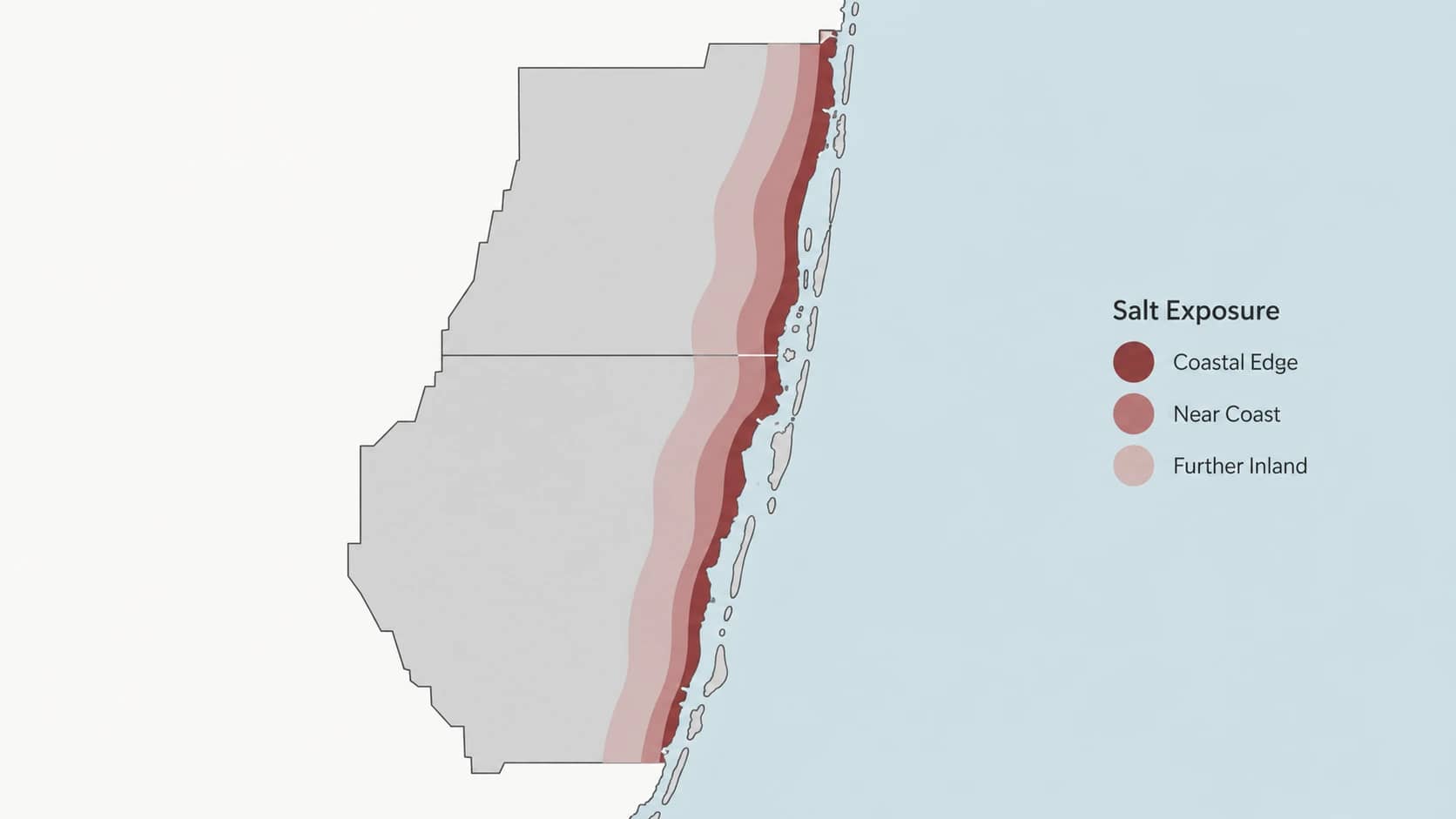
Miami pressure washing conditions change a commercial job in practical ways: coastal salt collects on exposed surfaces, warm and wet weather encourages recurring organic growth, and wash water needs a planned route that protects storm drains. The right scope depends on the surface, its exposure, the material being removed and how people use the property during cleaning.
Miami pressure washing conditions that shape the job
The main local variables are salt exposure, recurring moisture, surface sensitivity and runoff. A useful commercial pressure washing Miami plan records those conditions by work area, because a loading dock, painted facade and guest entrance should not receive the same treatment.
Salt carried by coastal air can leave residue on exposed railings, frames, glass and hard surfaces. Rain may rinse open areas while leaving sheltered bands under overhangs. A site walk should identify both: the areas that repeatedly collect deposits and the areas where water lingers after a storm.
Miami's climate also changes how long a clean surface stays presentable. The National Weather Service publishes climate normals for Miami and other South Florida locations, but those regional records cannot tell a manager exactly when one shaded walkway will need cleaning. Repeat photographs, drainage observations and tenant reports are more useful for setting that site's maintenance cycle.
The final variable is where the water travels. A cleaning method that works on a test patch still needs reconsideration if runoff carries loosened soil, grease or cleaning solution toward a drain. Define the cleaning and water-management steps together, rather than treating runoff as a detail to resolve once equipment is on site.
How property type and neighborhood change the scope
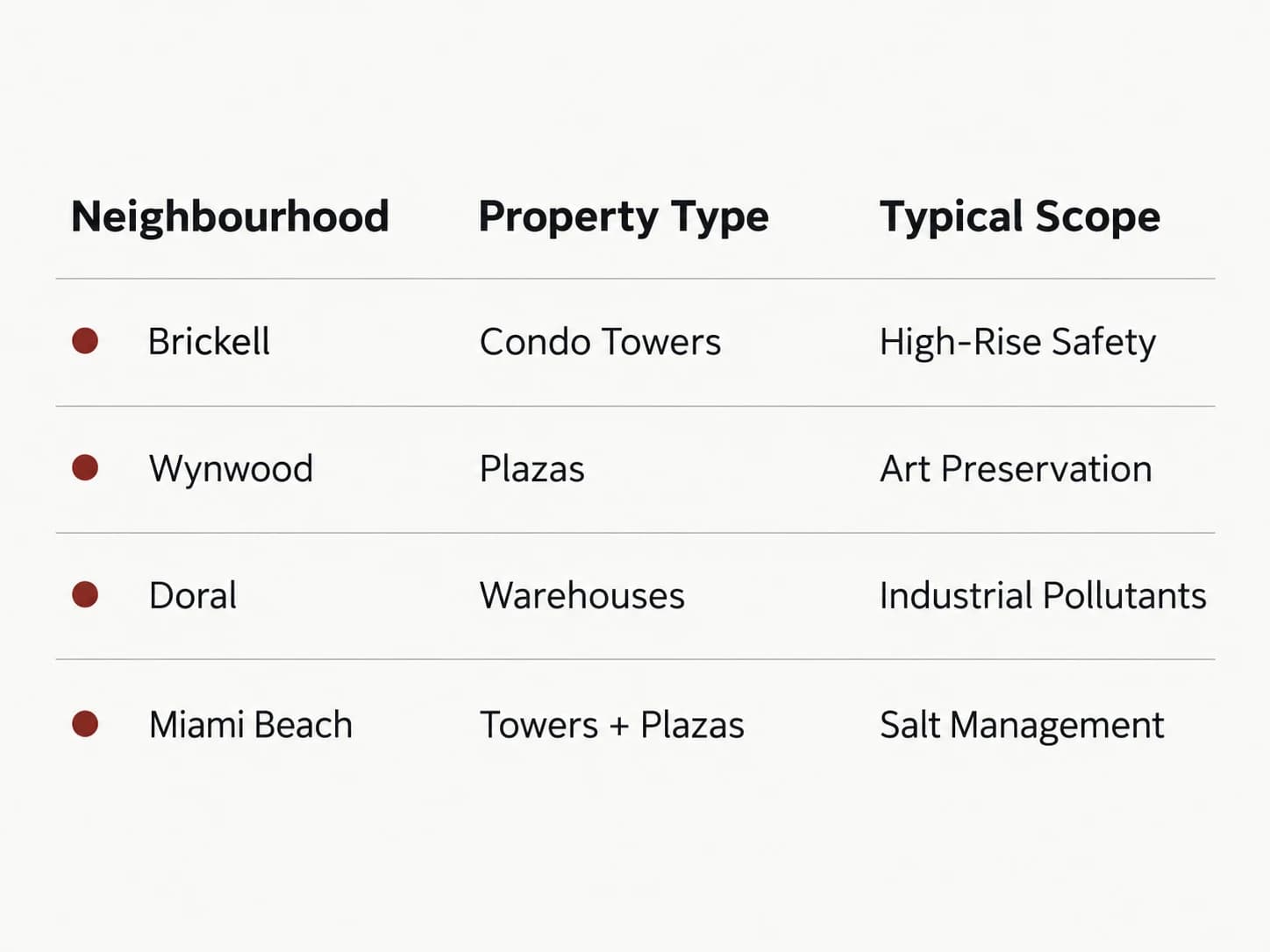
Neighborhood names are useful context, but property layout and exposure determine the work. A Brickell tower, Wynwood storefront, Doral warehouse and Miami Beach hotel may each have a different mix of sensitive surfaces, pedestrian routes and places where wash water can collect.
| Site setting | Conditions to inspect | Scope decision |
|---|---|---|
| Coastal tower or hotel | Salt residue, balconies, glazing, coatings and guest routes | Separate facade care from ground-level flatwork and plan access around occupied areas |
| Retail plaza | Storefront materials, shaded walks, food-service residue and open entrances | Work in sections so entrances remain usable and runoff stays controlled |
| Warehouse or loading area | Traffic soil, dock edges, drains and possible oily residue | Identify contaminants and drainage before selecting equipment or cleaning solution |
| Murals or specialty finishes | Paint condition, adjacent masonry and overspray exposure | Keep the artwork outside a general pressure-washing scope unless an appropriate method is agreed |
These are inspection prompts, not rules for every address in a neighborhood. A sheltered Miami Beach courtyard may retain moisture even when an exposed wall dries quickly. An inland property can still have persistent algae where irrigation wets a shaded entrance.
For a broader view of how managers divide work across a site, see the commercial exterior cleaning guide for Miami properties. The useful question for each area is what must be removed, what could be damaged and what must remain accessible while the crew works.
How salt air and wet weather affect timing
Coastal properties deserve attention to where salt residue actually accumulates. Wind direction, shelter, elevation and nearby openings can create uneven deposits, so distance from the shore alone is a poor cleaning schedule.
Inspect exposed metal, window frames, railings and the edges of coated surfaces for visible residue and changes in condition. Cleaning can remove deposits, but it cannot repair corrosion or a failing coating. If an inspection reveals those problems, record them separately so routine washing is not mistaken for a repair plan.
Wet weather creates a different pattern. Shaded walks, walls beside planting and areas reached by irrigation may show organic growth before open, sunlit paving does. Cleaning frequency should follow that pattern. A calendar date is useful for arranging access, but the condition of the surface should determine whether the planned scope still makes sense.
Weather also affects the workday. Rain can dilute a cleaning solution, move loosened material toward a drain or leave an entrance wet while people are using it. The crew and property contact should agree on a workable window and a way to pause or adjust the affected area if conditions change.
What Miami-Dade discharge rules change
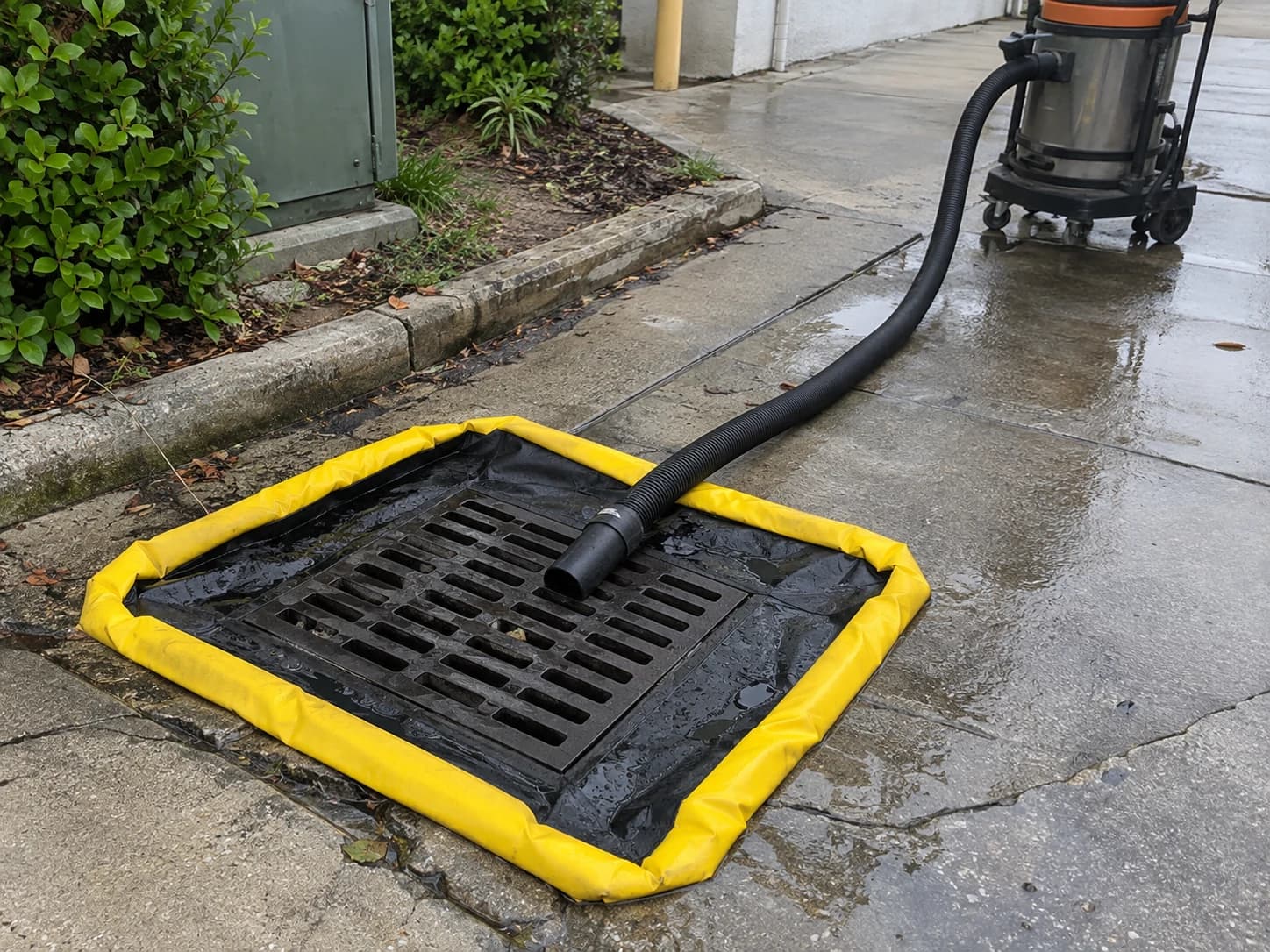
A commercial cleaning plan should show where wash water will go and how pollutants will be kept out of storm drainage. Miami-Dade County Code section 24-42 addresses discharges into county waters that cause water pollution or a nuisance; the site plan must also account for the rules that apply to its drainage system.
Federal rules require regulated small municipal storm sewer system permittees to run illicit-discharge programs and, to the extent allowed by law, effectively prohibit non-stormwater discharges into those systems. Florida's Department of Environmental Protection administers the state's stormwater permit program. These requirements concern system operators and applicable discharges; they do not mean every property manager personally needs an MS4 permit to arrange a washing job.
For the property team, the practical step is to trace the route from the work surface to the nearest drain, inlet or landscaped area. Note what the water may carry, including sediment, grease, paint debris or cleaning solution. Then ask the contractor to specify the appropriate controls for that area, such as blocking a flow path, collecting wash water or changing the cleaning method.
A product described as biodegradable does not settle the runoff question. Water can still carry soil and other material lifted from the surface. Put the agreed water-management approach in the scope so the property contact can review it before work starts.
Choosing pressure washing or a gentler method
Match the method to the material and the soil, not the size of the machine. Pressure washing can be appropriate for sound, durable hard surfaces, while a gentler application and rinse may give a cleaner result on a facade without forcing water into joints or disturbing a finish.
Begin with the surface condition. Loose paint, cracked sealant, aging coatings and damaged grout can change what is safe to clean. A small test area helps reveal how the material responds, but it should be placed where the result can be inspected before the full area is treated.
Next, identify the deposit. Loose dirt, algae staining, grease and salt residue do not call for the same approach. More pressure may remove visible buildup while creating a new problem on a delicate finish. A suitable cleaning solution, time to work and a controlled rinse can reduce that risk, provided runoff is managed.
Keep roof surfaces out of a general pressure-washing scope. The Asphalt Roofing Manufacturers Association warns that high-pressure washing is likely to damage asphalt roofing. Roof work should be assessed as its own task with a method suited to the roofing material. The commercial soft-washing guide explains where lower pressure changes the surface plan.
What a site-ready Miami job looks like
A site-ready job has a defined work area, a surface-specific method and a plan for people and water. Photos can help a manager mark recurring stains and compare conditions later, but they do not replace a walk-through of drains, access points and fragile finishes.
Before work begins, identify entrances that must stay open, places where pedestrians cross the cleaning area and areas where spray could reach vehicles, landscaping or neighboring surfaces. At a hotel or retail site, the time of day and the order of work may matter as much as the cleaning method. At a warehouse, loading movements and the condition of the dock area may drive the sequence.
Wet walking surfaces need attention throughout the job. OSHA's walking-working surface rule calls for surfaces to be kept clean and orderly, inspected and maintained in safe condition. The ADA Standards require applicable floor and ground surfaces to be stable, firm and slip resistant. A work plan should therefore address temporary access and leave a usable route as sections are cleaned and allowed to dry.
Setting a maintenance schedule without guessing
Use visible recurrence and site operations to set the interval. A fixed citywide schedule cannot account for an ocean-facing entrance, an irrigated courtyard and an inland loading area, even when all belong to the same property.
Start by recording the condition of each priority area after cleaning. At later inspections, note where staining returns, whether it appears after rain or irrigation, and whether it affects a walking route or a guest-facing surface. Those observations show which areas need attention sooner and which can wait.
Separate routine work from exceptional work. A restaurant's grease-prone exterior area may need its own method and runoff controls, while an adjacent storefront may need only a lighter wash. The retail plaza cleaning guide covers the access and presentation concerns of shared shopping sites.
Seasonal planning should also leave room for weather changes. NOAA identifies the Atlantic hurricane season as running from June through November, with activity concentrated around its climatological peak. That is a reason to keep inspection and scheduling flexible, not a reason to assume every property needs the same pre-storm washing visit.
What to put in the commercial scope
A useful scope lets the manager compare proposals and check the finished work against the same expectations. It should identify the surfaces, method, access needs and runoff plan for each work area, along with any conditions that require a decision before cleaning continues.
| Scope item | Question to settle before work |
|---|---|
| Work boundaries | Which elevations, walks, entries and service areas are included? |
| Surface condition | Which coatings, joints, artwork or damaged areas need protection or separate review? |
| Cleaning method | What method is proposed for each material, and where will it be tested? |
| Water management | Where can wash water travel, and how will affected drains and flow paths be addressed? |
| Occupied access | Which routes must remain available, and how will wet areas be managed? |
| Completion review | Who will review the work, and how will any agreed exclusions be documented? |
The scope should distinguish removable buildup from staining or material damage that cleaning may not correct. Clear exclusions help a board or facilities lead judge the result fairly and plan any repair work separately.
For a property with several building types or recurring work areas, the Miami commercial pressure-washing service page provides the service context. The site-specific scope should still be based on an inspection rather than a neighborhood label.
Frequently asked questions
How often should a Miami commercial property be pressure washed?
Set the schedule by area and by how quickly the condition returns. Coastal exposure, irrigation, shade, foot traffic and food-service residue can make parts of the same property age differently after cleaning. Inspect and photograph priority areas, then adjust the next visit based on visible buildup, safe access and the property's operating needs.
Can I pressure wash without a license?
Licensing and permit questions depend on the work, equipment, access method and location, so a general article cannot establish what a particular job requires. Ask the contractor and the relevant local authority about the planned scope before work begins. Also review how wash water will be handled; permission to perform work does not resolve discharge requirements.
What are the OSHA requirements for pressure washing?
No single OSHA rule defines every pressure-washing task. OSHA's walking-working surface rule requires covered surfaces to be kept clean and orderly, inspected and maintained in safe condition. For a commercial site, review wet walking areas, pedestrian routes and the work setup with the contractor as part of the job plan.
Can commercial wash water enter a Miami storm drain?
Do not assume it can. Wash water may carry soil, grease, chemicals or other material into a drainage system. Federal MS4 rules call for programs addressing illicit non-stormwater discharges, and Miami-Dade's code addresses discharges that pollute county waters or cause a nuisance. Identify the drain route and agree on appropriate controls before cleaning.
Does a coastal building always need more frequent cleaning?
No single distance from the water determines an interval. Salt residue depends on exposure and shelter, while growth and staining also depend on moisture, shade and irrigation. Inspect the surfaces that collect deposits, document how quickly they change after cleaning and schedule those areas accordingly. An exposed elevation may need a different plan from a protected courtyard.
Sources
If you are planning exterior work across a commercial property, request a site-specific quote that identifies the surfaces, access needs and wash-water approach before scheduling.
Custom Commercial & HOA Walkthroughs
Need a scope tailored to your South Florida property?
Every building, plaza, and community has its own surface mix, access windows, and drainage layout. We quote by walkthrough rather than fixed rate sheets so your proposal matches your exact property. Call us directly at (904) 826-9806 or request a written scope online.
Related services & tools
Pressure Washing by South Florida city: