
Industry Verticals
Post Construction Cleaning for South Florida Exterior Handover
October 14, 2026 (updated) · 11 min read
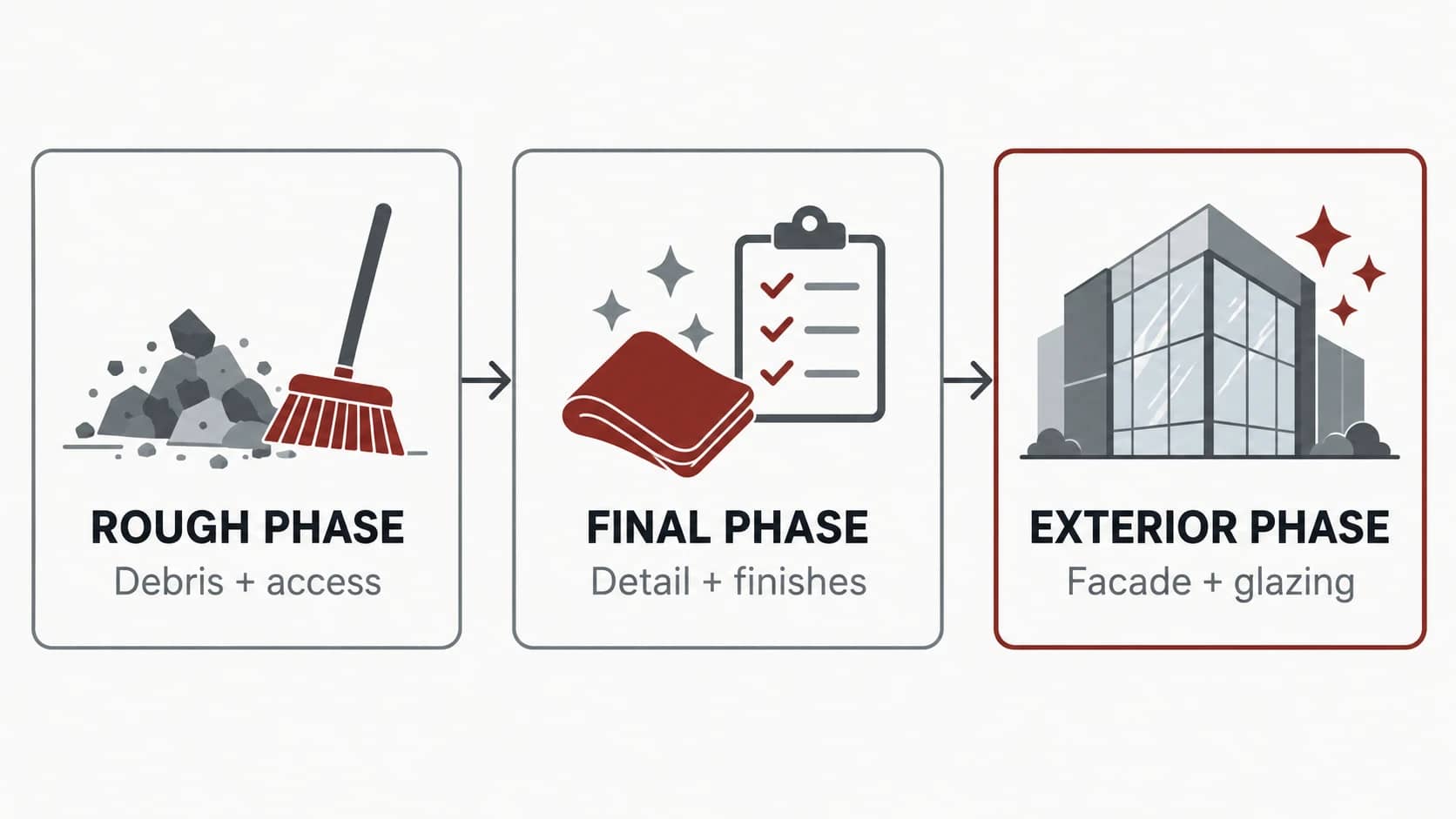
Post construction cleaning prepares a building for inspection and handover by removing construction debris, dust and residue. On a South Florida exterior, that means identifying what is on each surface, choosing a compatible cleaning method, protecting new finishes and checking the work after nearby trades have finished.
What exterior post construction cleaning includes
Exterior post construction cleaning removes debris and trade residue from the building envelope and the areas people use to approach it. The scope should name the surfaces, the contamination on each one and the condition expected at handover.
For a commercial building or condo, that scope may cover glazing, frames, facade panels, stucco, stone, metal, entries, walkways and pavers. It may also include accessible ledges and other places where construction dust settles. Each area needs a separate assessment: dust on a walkway calls for a different method than cured material on glass or residue beside a newly painted finish.
The distinction matters during bidding. "Clean the exterior" leaves room for disagreement about adhesive on windows, splatter above an entry or soil left by landscaping. A useful scope identifies those conditions, notes surfaces that need special care and separates cleaning from repair. A stain that has penetrated a finish, for example, may remain visible after its surface residue is removed.
South Florida sites also have practical constraints. A busy retail entrance may need access maintained while work proceeds; a condo may need residents directed around wet walkways. For broader maintenance planning after handover, a Miami commercial exterior cleaning guide can help distinguish recurring care from construction cleanup.
Match the residue to the method
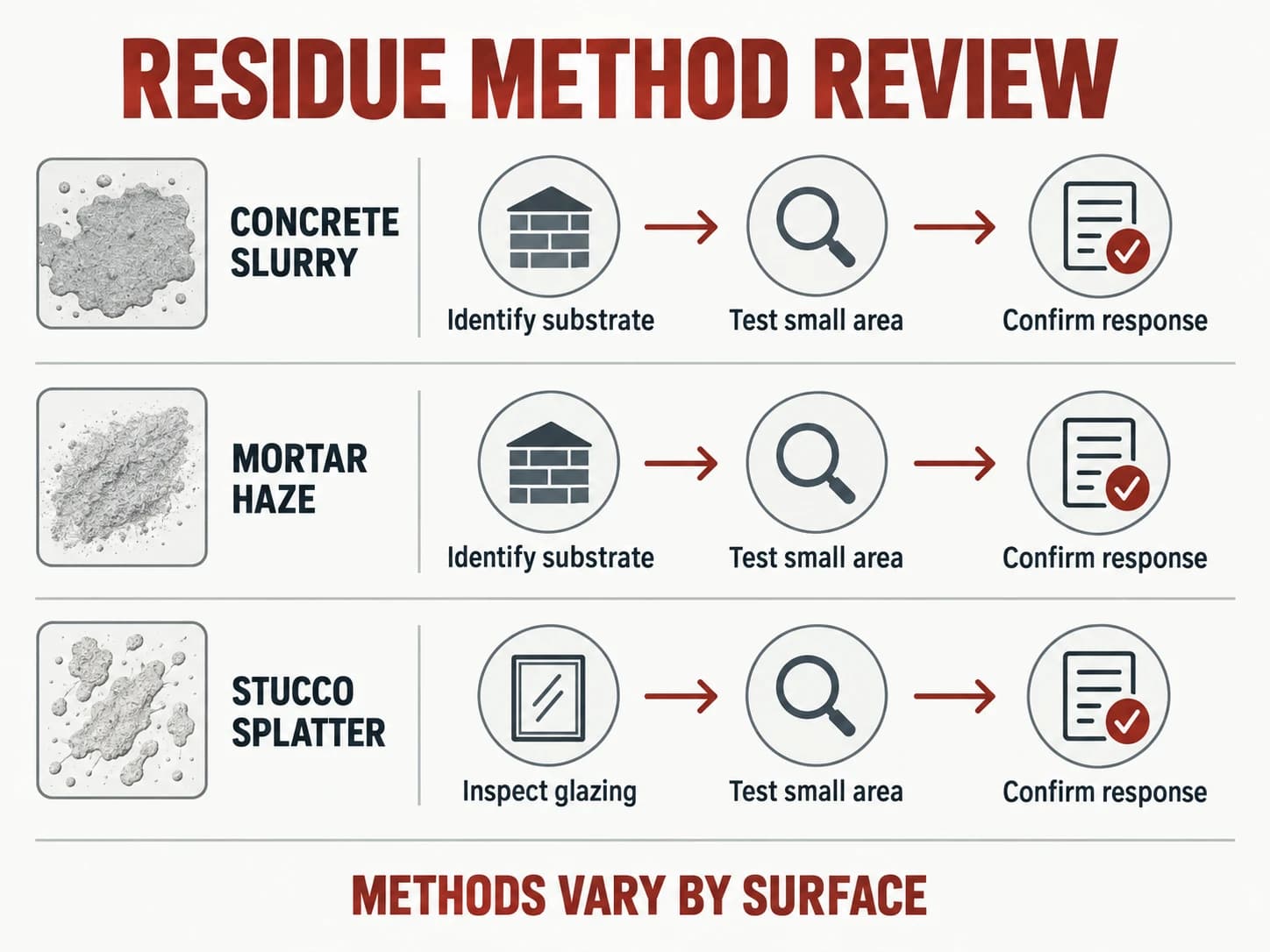
Start with what the residue is attached to, then choose the least aggressive method likely to remove it. A cleaner or tool that works on one material can scratch, discolor or loosen a neighboring finish.
| Condition found | Starting approach | Main trade-off to check |
|---|---|---|
| Loose dust and grit | Remove dry debris before washing | Grit dragged across glass or coated metal can scratch it |
| Mortar haze or cement residue | Identify the substrate and test a compatible product in a small area | A product suited to masonry may damage adjacent finishes |
| Stucco or paint splatter | Check the finish beneath the splatter before using a removal tool or solvent | Scraping can mark glass or coatings; solvents can affect frames and seals |
| Adhesive or protective film residue | Check the surface and product guidance, then test a suitable remover | Heat or solvent can affect finishes and nearby materials |
| Soil on hardscape | Remove loose material, then clean with a method suited to the surface | Excess force can disturb joints or push dirty water into other areas |
The table is a planning aid, not a chemical specification. The site team should inspect representative areas and agree on a small test before treating a broad facade. That test should reveal whether the residue lifts, whether the underlying finish changes and whether adjacent materials need shielding.
Commercial pressure washing can be useful on suitable hard surfaces when loose soil is the problem. It is a poor default for delicate glazing, fresh coatings or a residue that needs controlled chemical treatment. Miami pressure washing conditions provide further context for planning work around local exposure and site use.
Plan the rough clean, detailed clean and return visit
These are useful scheduling stages, although the general contractor may use different names. The rough clean clears access, the detailed clean addresses surface residue, and a return visit resolves contamination or missed items found near handover.
During the rough clean, crews remove loose debris and make the work area accessible for inspection. This is when a property manager can see which deposits are ordinary dust and which may need specialist attention. Removing grit early also reduces the chance of dragging it over glass, coated metal or finished paving during later work.
The detailed clean should follow the trades most likely to create exterior dust, splatter or runoff. Glass, facade details, entries and hardscape can then receive the method selected during the surface assessment. Nearby finishing work should be checked before the crew starts, since a clean surface can be soiled again within the same work period.
The return visit is for defined punch-list items, not an assumption that every trade has stopped working. Record who is responsible for a new deposit after cleaning and which areas remain open to construction traffic. This keeps the cleaning scope clear while giving the general contractor a workable path to handover.
Remove cement residue without damaging new finishes
Mortar haze, concrete slurry and similar deposits need a surface-specific assessment before removal. Their appearance alone does not establish that an acid-based cleaner, scraper or high-pressure rinse is suitable.
Ask what the affected surface is made of and what finish was specified. A deposit on bare masonry presents a different problem from the same deposit on coated metal, natural stone or glass. New materials may also have manufacturer care instructions that the cleaning plan should respect.
Where a chemical cleaner is appropriate, the contractor should test it in a small, inconspicuous area and protect nearby materials. The test should include the full process, including application, agitation and rinsing. A product that loosens the residue but leaves discoloration or damages an adjacent frame has not passed that test.
Avoid treating pressure as the solution to a stubborn deposit. More force can move slurry into joints, damage a finish or spread contaminated water. If the deposit has altered the surface beneath it, document that condition for the general contractor instead of repeatedly working the area in pursuit of an appearance cleaning cannot restore.
Detail glass, frames and protective film
Post construction window cleaning includes more than making the center of each pane clear. The scope should address accessible glass, edges, frames, sills and remaining labels or film, with a separate method for any stuck splatter.
Before removing material from glass, inspect the pane and ask for any applicable manufacturer guidance. Grit should be cleared before wiping. A removal tool that seems effective on one pane may be unsuitable for a coated or otherwise sensitive surface, so the method should be tested before it is used across the building.
Protective film deserves attention at the same inspection. Residue may remain around frame edges after the film is pulled, and an unsuitable solvent can affect surrounding finishes. Record any film that another trade must remove or any sealant work that must cure before cleaning can proceed.
View finished glazing from the approaches occupants will use, as well as from close range. That catches visible haze and edge residue without turning every reflection or pre-existing glass defect into a cleaning item. A defined commercial window cleaning scope helps carry the same expectations into routine care after handover.
Control wash water and protect access
An exterior cleaning plan should identify where water will go before washing starts. It should also keep walking routes usable and prevent cleaning activity from creating a new hazard at an entrance.
Water carrying construction dust or cleaning products should not simply be directed toward a storm drain. US EPA rules for municipal storm sewer permits require permittees to address illicit discharges. The practical site question is how the contractor will contain or manage wash water for the planned work.
Also review nearby planting, finished surfaces, door thresholds and active pedestrian routes. Shielding an adjacent material may be simpler than trying to clean a second surface after runoff reaches it. At entrances, plan cleaning in sections so the property team can manage access and inspect each area.
OSHA's walking-working surface rule calls for surfaces to be kept clean and in safe condition. The ADA Standards also require floor and ground surfaces to be stable, firm and slip resistant. Those requirements support a close look at wet walkways, remaining grit and routes used during the work, rather than judging the job only by facade appearance.
Fit cleaning into the general contractor's schedule

The best time for the detailed exterior clean is after the nearby work likely to recontaminate it. The general contractor should give the cleaning team access dates, trade milestones and a clear point for final inspection.
Ask specifically about stucco and paint touch-ups, glazing work, landscaping, paving and material deliveries. These activities can put splatter, soil or dust back on finished areas. If some must continue, divide the exterior into zones and state which zones are ready for final cleaning.
Access is part of the schedule. Lifts, hoses, barriers and runoff controls may affect loading areas, guest arrivals or resident paths. A hotel facilities lead, for example, may need a different work sequence around an active entrance than a vacant building would. The method can remain the same while the order of work changes.
The schedule should include time to inspect after surfaces dry and to address recorded misses. It should also identify who can approve a change if a trade soils an area that was already accepted. Written zone handoffs make those conversations easier than a single vague "final clean" date.
Use a handover checklist that separates cleaning from repair
A useful punch list names a location, a visible condition and the person responsible for the next action. It should distinguish removable residue from a damaged or unfinished surface so the right trade receives each item.
| Handover check | What to record |
|---|---|
| Glass and frames | Remaining haze, splatter, labels or adhesive, with the affected location |
| Facade and details | Residue on panels, stucco, trim, ledges or metalwork |
| Entries and hardscape | Loose grit, soil, staining, pooling or blocked access |
| Adjacent finishes | Any change noticed after a test or full cleaning |
| Open trade work | Areas likely to be soiled again and who will request a return clean |
Walk the same route an owner, resident or guest will use. Then inspect close-up conditions where residue is harder to see from the ground. Photos tied to locations help the general contractor assign work and let the property team verify what was corrected.
Agree on acceptance before the final walkthrough. For example, the team can decide how it will handle an existing stain, a chipped finish or a new deposit left after cleaning. The handover record should note those decisions and any care instructions supplied for new surfaces.
For ongoing work, a board or manager may also want to review a contractor's certificate of insurance requirements. Keep that procurement review separate from whether the construction cleaning itself has passed inspection.
Estimate scope and duration from the site conditions
A reliable exterior estimate starts with an inspection of surfaces, residue, access and schedule. Area alone cannot show how much detailed work is needed or how often a cleaned zone may be exposed to active trades.
Ask the bidder to state what is included for glass, facade, entries and hardscape. The proposal should identify difficult residues, required access equipment, water management and any test area. It should also say which conditions need a separate decision if the test shows that cleaning could harm a finish.
Duration depends on the same factors. A building with clear access and loose dust follows a different sequence from one with adhered splatter, active landscaping and limited entry routes. Weather and trade progress can affect when a zone is ready to clean or inspect, so the schedule should leave room for those decisions without inventing a fixed completion time.
If a proposed method is unclear, ask why it suits the material beneath the residue. That question is more useful than comparing proposals by the word "wash" alone. For appropriate hard surfaces, the pressure washing service describes one part of the available exterior work; the site assessment determines where it belongs in a post construction scope.
Frequently asked questions
These answers address common scope and handover questions. The specific method still depends on the surface, residue and manufacturer guidance at the property.
What does post construction cleaning include?
It includes removing construction debris, dust and residue so a property can be inspected and prepared for use. On the exterior, that may involve glass, frames, facade materials, entries and hardscape. A clear scope names each area and its expected condition, then identifies items that belong to a repair or finishing trade.
What is the difference between a rough clean and a final clean?
A rough clean removes loose debris and makes areas accessible for further work and inspection. A final clean addresses remaining surface dust and residue after the relevant trades have finished. If work continues nearby, the general contractor should identify which areas are ready for acceptance and which may need a later return visit.
What is the best way to clean tile floors after construction?
Start by removing loose grit so it cannot be dragged across the tile. Then identify the tile, grout and any remaining residue before choosing a product or tool. Test the full method in a small area and follow applicable manufacturer guidance. An exterior tiled entry also needs a safe walking route while it is wet.
How is paint or stucco splatter removed from windows?
First identify the glass and surrounding finishes, then clear loose grit and test a method suited to the deposit. Some splatter may need careful work with a removal tool or product, but neither should be assumed safe for every pane, coating, frame or seal. Record material that cannot be removed safely for the general contractor.
When should the exterior be cleaned before handover?
Schedule detailed cleaning after nearby work that creates dust, soil or overspray, and allow time to inspect the result. If landscaping, painting or deliveries will continue, agree on zones with the general contractor. The final walkthrough should identify remaining residue, new contamination and any surface damage as separate items.
Sources
These sources support the article's statements about wash water, walking surfaces and accessible routes. Cleaning methods described here still require a site assessment and any applicable material guidance.
For a site-specific exterior cleaning scope, share the surfaces, residue and handover schedule with 2Clean through its free quote page.
Custom Commercial & HOA Walkthroughs
Need a scope tailored to your South Florida property?
Every building, plaza, and community has its own surface mix, access windows, and drainage layout. We quote by walkthrough rather than fixed rate sheets so your proposal matches your exact property. Call us directly at (904) 826-9806 or request a written scope online.
Related services & tools
Pressure Washing by South Florida city: