
Methods, Surfaces & Failure Modes
How to Remove Oil Stains from Concrete Lots and Garage Decks
October 14, 2026 (updated) · 12 min read
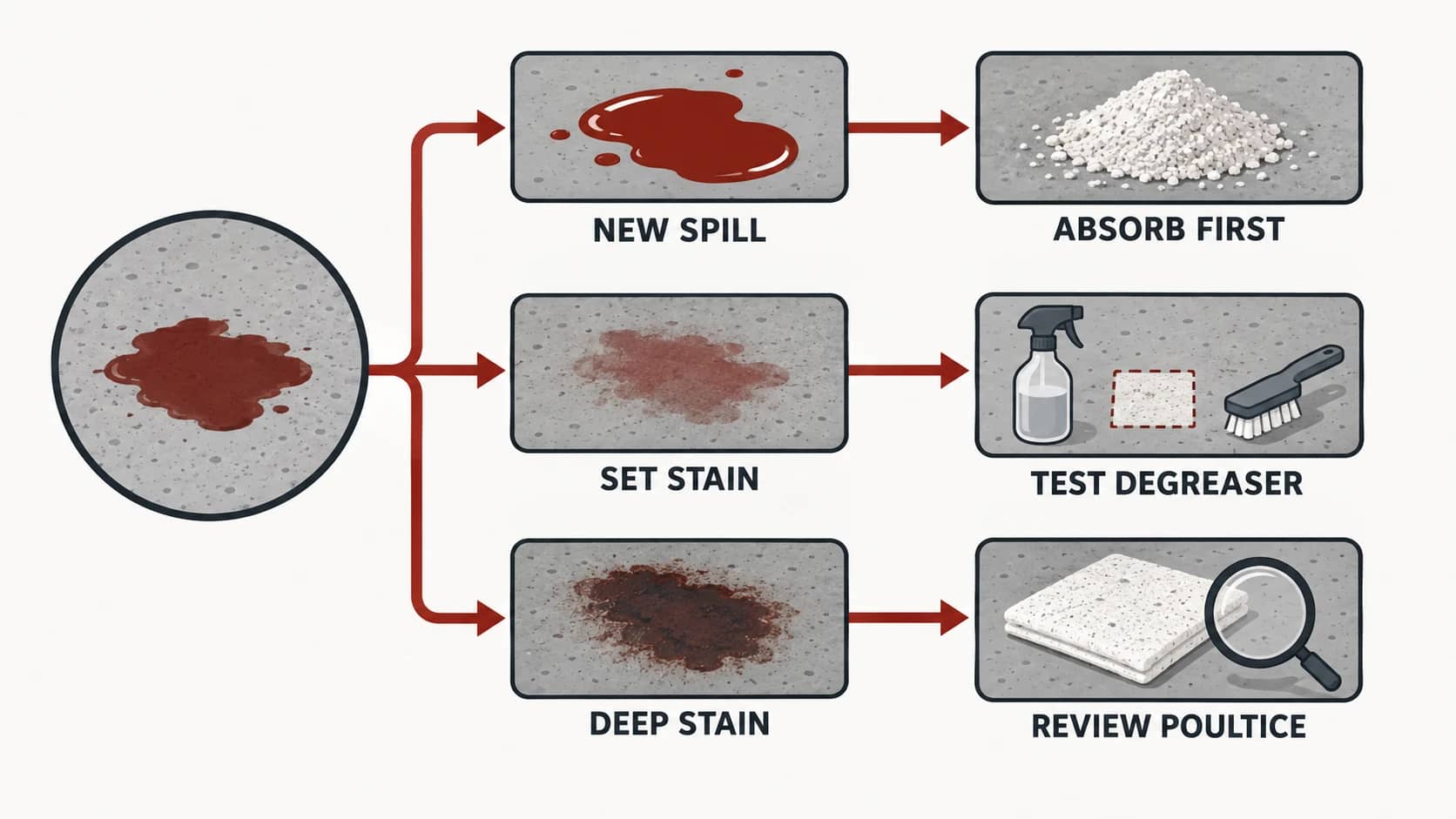
To learn how to remove oil stains from concrete, start by absorbing any fresh oil, then apply a concrete-compatible degreaser, scrub, and recover the residue. Older stains may need repeat treatment or a poultice. On a commercial lot or garage deck, plan where the oily wash water will go before rinsing.
How to remove oil stains from concrete: the method
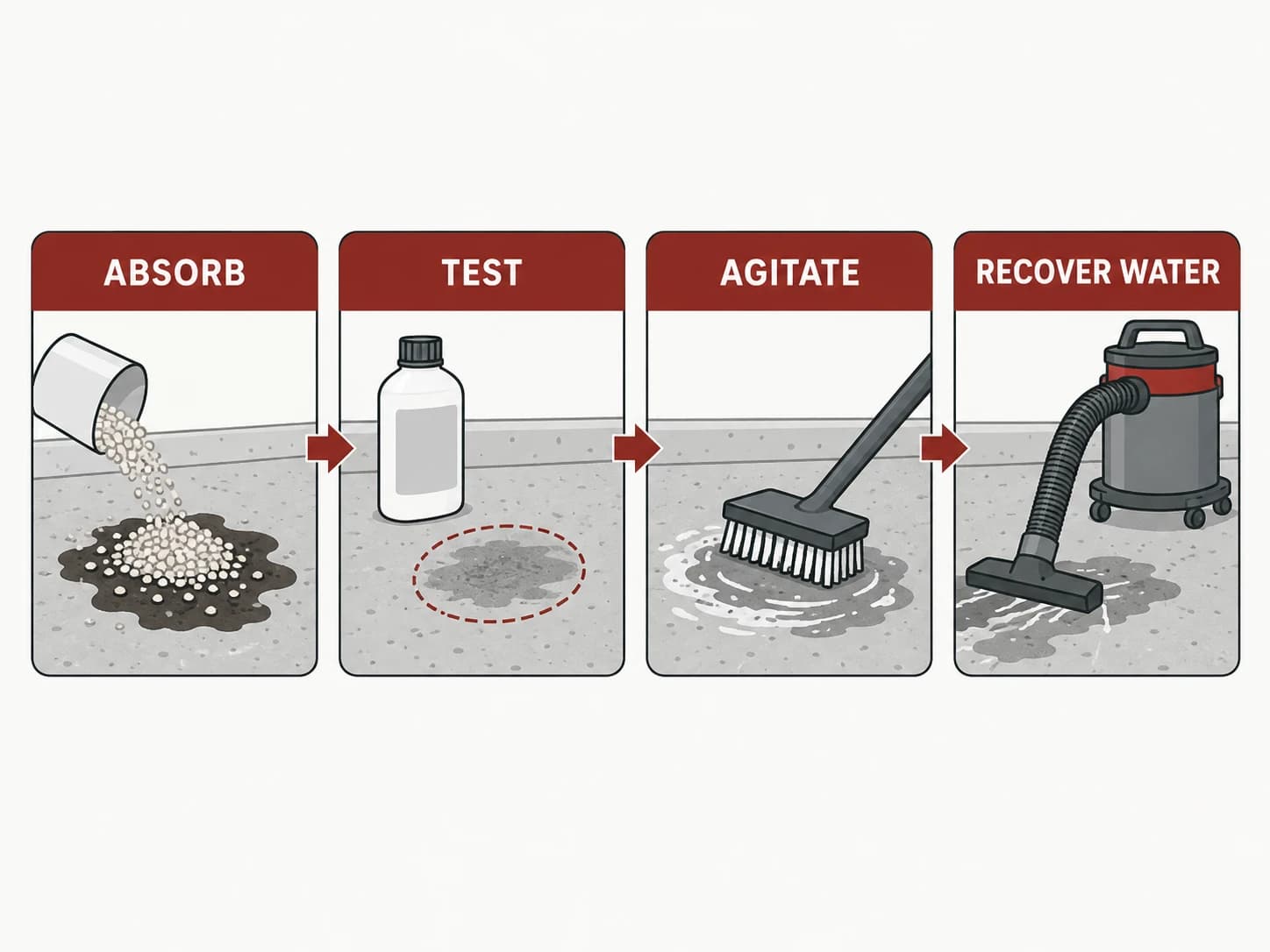
The basic method is to remove loose oil, apply a suitable degreaser, scrub the affected concrete, and recover the dirty solution. A controlled rinse can then remove loosened residue, provided the wash water stays within the work area and is collected.
First, identify the source and stop an active leak if possible. Place absorbent material on fresh oil and collect the saturated material before wet cleaning begins. This keeps a small spill from becoming a larger oily film across a parking bay, loading area, or traffic lane.
Next, check the cleaner's label for the concrete finish and the type of oil involved. Test it in an inconspicuous spot, especially where the slab has a coating, sealer, decorative finish, or previous repairs. Follow the product's directions for dilution, contact time, and protective equipment; a longer soak is not automatically a better treatment.
Work the cleaner into the stain with a brush or scrubber suited to the surface. Keep the area wet with the cleaning solution as directed, then collect the loosened oil and cleaner. If rinsing is appropriate, use only as much water and pressure as the surface needs, while recovering the resulting wash water.
Let the concrete dry before judging the result. Wet concrete can hide a remaining dark patch, while a clean but permanently discolored area may look like active oil until it dries. If the mark remains, decide whether another degreaser pass, a poultice, or an appearance repair fits the surface and the property's standard.
For a large site, the same sequence applies, but the work area needs a boundary and a recovery plan. That is where a commercial pressure washing plan differs from simply sending a washer across the lot.
Choose the treatment by stain condition
Fresh oil is mainly a collection problem; older oil is usually a penetration problem. Treating both with the same amount of water and pressure wastes effort and can spread contamination.
| What you see | First treatment | What may follow |
|---|---|---|
| Wet oil or a recent spill | Stop the source, absorb the liquid, and collect the used absorbent | Degrease and scrub any remaining mark |
| A dry, localized dark stain | Test a concrete-compatible degreaser and scrub | Repeat after the slab dries if oil remains |
| An old stain that persists after cleaning | Check whether the surface is sealed or coated, then test a poultice where suitable | Repeat selectively or consider an appearance repair |
| A broad oily film across traffic areas | Divide the surface into containable work zones | Mechanically scrub, recover wash water, and reassess after drying |
| A stain that returns in the same location | Inspect for a continuing leak or spill pattern | Fix the source before further cleaning |
This table is a starting point, not a promise of complete removal. Concrete porosity, previous coatings, the oil involved, and the time it has spent on the slab all affect the result. A test area gives a property manager a clearer basis for approving the full scope.
For a single parking space, localized treatment is usually easier to contain and less disruptive than washing the surrounding deck. Where many spaces have the same oily film, a zone-by-zone treatment may give more consistent results. The choice should follow the actual contamination, access needs, and available drainage controls.
Avoid choosing a stronger chemical solely because a stain looks dark. A dark mark may be old oil, another contaminant, or discoloration left after oil has been removed. Testing a small area and checking it after drying helps distinguish those outcomes.
Why degreaser, scrubbing, and rinsing have different jobs
A degreaser helps release oil from the concrete so it can be collected. Scrubbing brings the cleaner into contact with the stained surface, while rinsing removes the loosened residue after it has been contained.
Pressure alone may remove surface dirt and some loose oil, but it gives little control over where the contamination goes. Water can carry an oily film into adjacent clean areas, joints, drains, or lower levels of a deck. Pretreatment makes the rinse more purposeful and reduces the temptation to keep increasing pressure on a stubborn mark.
Hot water may help with greasy residue when the surface, cleaner, and equipment allow it. It is an aid to the process, not a substitute for the right cleaner or runoff recovery. A cool-water treatment with good agitation can be more useful than a hot-water rinse that spreads oil beyond the work zone.
Match the brush or scrubber to the finish. Aggressive abrasion can change the texture or appearance of a polished, coated, or decorative surface even when the stain improves. Where the concrete is part of a pedestrian route, the finished area should also be free of slippery cleaning residue. OSHA's walking surface rule requires applicable walking-working surfaces to be kept free of spills and maintained in safe condition.
What to do with old oil stains from concrete
Old oil stains often need repeated, localized treatment because the oil has had more opportunity to enter the concrete's pores. Start with a test of the least disruptive suitable method, then assess the slab after it dries before expanding the work.
Apply a concrete-compatible degreaser according to its label, scrub, and collect the residue. If the surface improves but remains dark, another pass may be worthwhile. If cleaning makes no visible difference, continuing to wash the same spot may add runoff without improving the outcome.
A poultice is an absorbent material used with a compatible cleaning agent to draw contamination from a porous surface. It can be useful on a persistent, localized stain where the concrete finish permits it. Follow the chosen product's instructions, test first, and collect the spent material for appropriate disposal.
Do not assume that a poultice or degreaser will return aged concrete to a uniform color. Oil may have left lasting discoloration, and the surrounding slab may have weathered differently. The practical goal is to remove accessible contamination, then decide whether the remaining appearance is acceptable for that location.
Etching is a poor default answer to an old stain. It changes the concrete surface and may leave a visibly different patch without resolving oil below it. On a coated deck, it may also create a repair problem beyond the original mark.
Check the surface before choosing equipment
Bare concrete, sealed concrete, polished floors, and coated garage decks should not receive an identical treatment. The finish determines which cleaners, agitation, water volume, and pressure are appropriate.
On uncoated concrete, a compatible degreaser and mechanical scrubbing are often sensible first steps. Porous areas may hold oil below the visible surface, so a second treatment or poultice can be considered after the first result dries. Joints and cracks deserve attention because they can hold both oil and wash water.
A sealed or coated surface needs a compatibility check before cleaning. A cleaner that works on bare concrete may dull a finish or affect a coating, while a strong spray can expose weak areas. Ask for a small test patch when the finish is unknown or when a uniform appearance matters.
Polished concrete calls for particular care with abrasion and chemistry. A pumice stone or harsh scrubber can leave a lighter, rougher patch that is more noticeable than the original stain. Use the surface manufacturer's care instructions when available and begin with a compatible, low-impact method.
On a garage deck, account for slopes, floor drains, expansion joints, painted markings, and occupied spaces. The treatment plan should show how those features will be protected and how vehicles and pedestrians will move around the work. For broader decisions about exterior surfaces, see the commercial exterior cleaning guide.
Contain and recover oily wash water
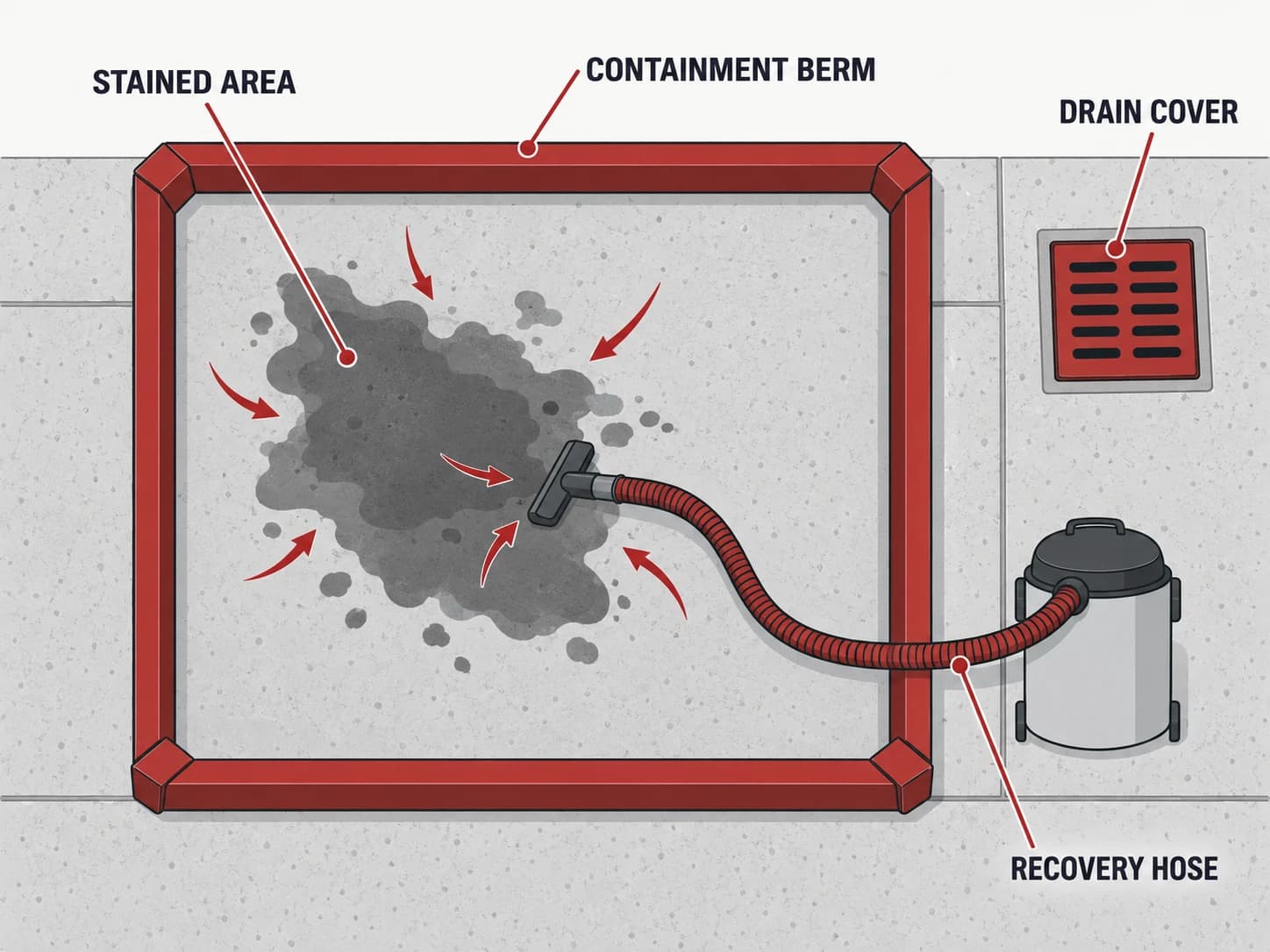
Oily wash water needs a destination before cleaning starts. Isolate nearby drains, keep the liquid within a manageable work zone, recover it, and arrange disposal through an appropriate route for the site and the material collected.
The federal MS4 rule requires municipal storm sewer permittees to effectively prohibit non-stormwater discharges and run an illicit discharge detection and elimination programme. Florida DEP administers the state's MS4 programme. These rules make storm drain protection a central part of planning a commercial wash, rather than a detail to address after rinsing.
The EPA's Model Illicit Discharge Ordinance identifies an exemption for non-commercial vehicle washing, not commercial wash water. Miami-Dade County Code section 24-42 also prohibits discharges into county waters that cause water pollution or a nuisance. Site conditions and local requirements should guide the final containment and disposal plan.
In practice, a crew may use temporary barriers, drain protection, and recovery equipment to keep the dirty water from leaving the work area. The exact setup depends on the deck slope, drain locations, volume of water, and whether the work is inside or outside. A filter alone should not be assumed to make oily water suitable for a storm drain.
Ask how the cleaning area will be bounded, where the liquid will be collected, and where the recovered material will go. These questions are especially useful on garage decks with several drainage paths or on lots where a small change in grade sends water toward a catch basin. A clear plan also helps avoid closing more parking or pedestrian space than the job requires.
Spot treatment or a wider cleaning zone
Treat isolated stains as spots when the surrounding concrete is sound and relatively clean. Choose a wider work zone when oil has spread through traffic lanes, several spaces share the same film, or localized cleaning would leave conspicuous clean patches.
Spot work limits chemical use, water, and disruption. It also makes it easier to contain residue around a known stain. Its weakness is visual: a thoroughly cleaned patch can stand out against weathered concrete, even when the stain itself is gone.
Zone cleaning can produce a more even appearance across a row of spaces or a loading area. It requires more planning for access, runoff, and the amount of recovered water. The larger scope should be justified by the contamination and the desired finish, not assumed to be better for every property.
For a board or facilities lead, a test area can settle this decision before the full job. Review it after drying and compare stain removal, surface appearance, and the edge between cleaned and uncleaned concrete. If the property is budgeting a larger exterior project, the commercial pressure washing cost guide explains the scope factors to discuss with a contractor.
When cleaning does not make the stain disappear
A stain that remains after suitable treatment may be deep contamination or lasting discoloration. Repeated cleaning is useful only while it continues to improve the result without harming the surface or creating unnecessary runoff.
Let the test area dry and compare it with an untreated section. If the mark lightened, another targeted application may help. If it did not change, ask whether a different compatible method has a reasonable chance of working before approving more passes.
For a highly visible entrance or parking area, an appearance repair may be more predictable than endless cleaning. Options depend on the surface and can include a compatible coating or localized concrete repair. Those choices need their own preparation and maintenance plan, particularly where vehicle traffic or an existing deck coating is involved.
Do not describe a remaining dark patch as a structural problem based on color alone. If the slab is cracking, spalling, or otherwise deteriorating, have the condition assessed separately. Cleaning can address surface contamination, but it does not diagnose the concrete beneath it.
Prevent oil stains from returning
The best prevention is to stop recurring leaks and collect new spills promptly. Cleaning and sealing can reduce the work needed later, but neither replaces control of the oil source.
Keep absorbent supplies where vehicle or equipment leaks are likely, and make the cleanup process clear to staff or tenants. Used absorbent should be collected rather than washed across the concrete. A maintenance log can show whether the same bay keeps staining and needs attention at the source.
A compatible sealer may make future spills easier to clean because it limits contact with the concrete pores. Its suitability depends on the surface, traffic, existing finish, and maintenance expectations. Test the proposed finish and consider how it will look beside untreated areas before applying it broadly.
Schedule routine inspections of parking spaces, loading areas, and equipment zones. They help distinguish a new spill from an old mark that needs a different treatment. Where other stains are present, identify them separately; the method for rust stains on commercial concrete is different from oil removal.
Frequently asked questions
The right answer depends on the stain and the finish beneath it. These answers cover common choices, but a test area is the best way to set expectations for a particular lot or deck.
How to remove big oil stains from concrete?
Stop the source and absorb any free oil before wet cleaning. Divide the stained area into sections that can be contained, then apply a concrete-compatible degreaser, scrub, and recover the residue. A broad stain may need more than one pass, but keep the runoff plan in place throughout the work. Judge the result after the concrete dries.
Can you use pumice stone on concrete?
Pumice can abrade concrete, so it is a poor first choice for an oil stain. It may leave a lighter or rougher patch, particularly on polished, sealed, or decorative surfaces. Start with a compatible cleaner and suitable scrubbing instead. If abrasion is being considered for bare concrete, test a small, inconspicuous area and assess the dry finish.
What is the strongest degreaser for concrete?
There is no single best strength for every concrete surface. The right product must suit the oil, the surface finish, and the way the residue will be collected. A stronger cleaner may affect a coating without removing oil held deeper in the slab. Check the label, test a small area, and follow its use and disposal directions.
How to use oil eater overnight stain remover?
Follow the product label for surface compatibility, preparation, application, removal, and disposal. Test it first, especially on sealed, polished, or coated concrete. Keep the treatment and any residue away from drains, and assess the area only after it has dried. If the stain remains, decide whether another application is worthwhile before treating a larger area.
Does pressure washing remove oil stains from concrete?
Pressure washing can help rinse away oil that a degreaser and scrubbing have loosened. Used alone, it can move oily residue into adjacent areas and create wash water that must be recovered. Select pressure for the concrete finish, protect nearby drains, and contain the rinse. Old stains may still need repeat treatment or a poultice.
Sources
These sources support the stormwater and walking surface requirements discussed above. Cleaning method choices should still be checked against the product instructions and the property's surface conditions.
For a lot or garage deck with recurring or widespread oil stains, request a 2Clean quote with the stained areas, surface finish, and drainage points identified. That gives you a concrete scope to review before work begins.
Custom Commercial & HOA Walkthroughs
Need a scope tailored to your South Florida property?
Every building, plaza, and community has its own surface mix, access windows, and drainage layout. We quote by walkthrough rather than fixed rate sheets so your proposal matches your exact property. Call us directly at (904) 826-9806 or request a written scope online.
Related services & tools
Pressure Washing by South Florida city: