Cost & Budget
Paver Sealing Cost for Commercial Plazas and Entry Drives
October 14, 2026 · 10 min read
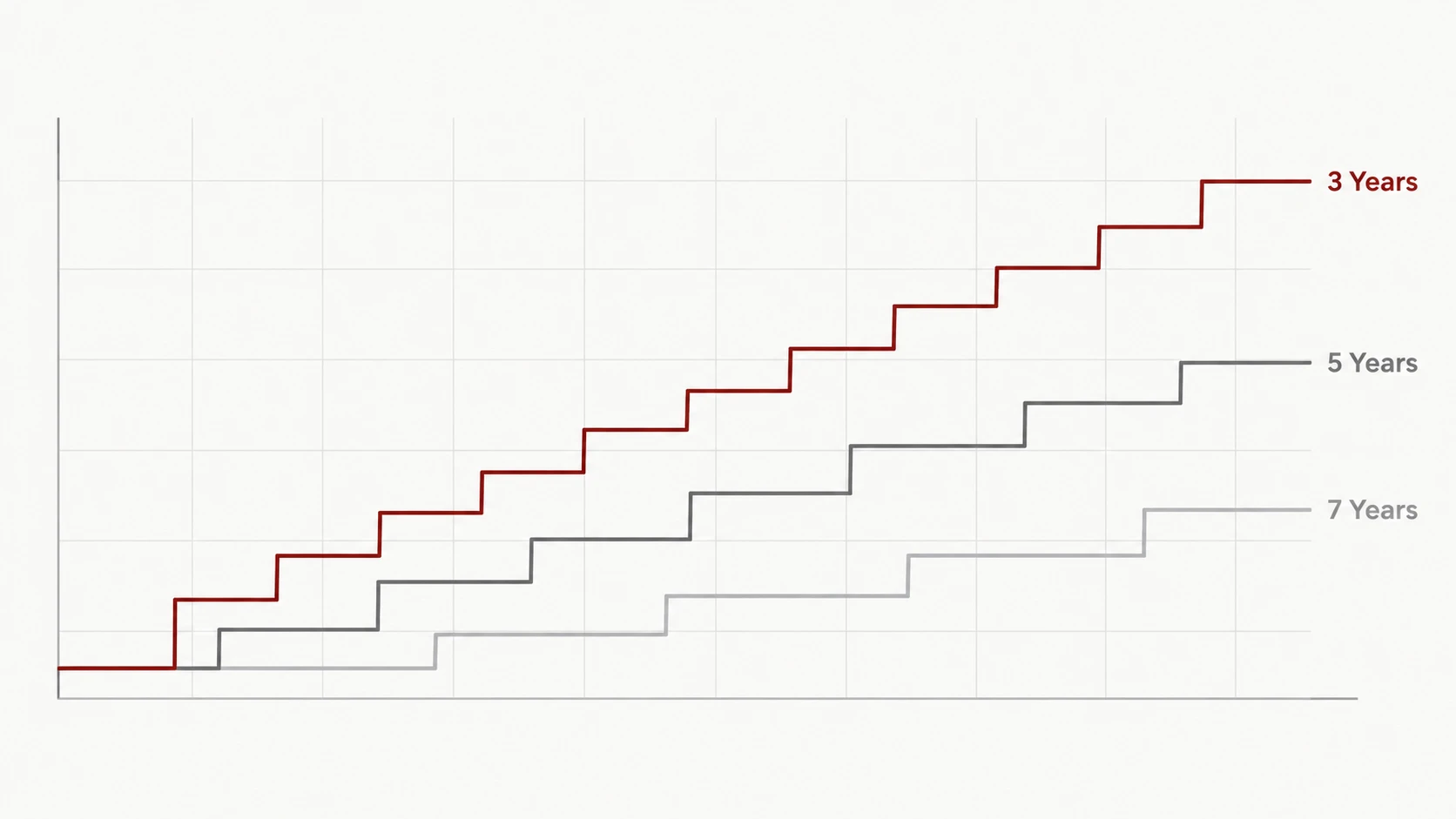
Paver sealing cost starts with the scope: cleaning, joint sand and sealer may be priced together or separately. HomeGuide's paver cost guide (Aug 16, 2024) lists $1.50 to $3.25 per square foot for cleaning, sanding and sealing. A commercial plaza needs a site-specific bid because repairs, failed sealer, access and work hours can change that scope.
Paver sealing cost per square foot for commercial sites
Published paver sealing cost per square foot is a useful starting point, but it is not a commercial quote. The closest published size comparison helps with budgeting; the measured area and required preparation determine what a bidder can actually price.
HomeGuide's paver cost guide (Aug 16, 2024) lists $1.50 to $2.20 per square foot for cleaning, sanding and sealing projects over 2,000 square feet. That is a general project-size figure, not a South Florida commercial rate. It does not establish what a hotel entrance, retail walkway or condo drive will cost.
Before applying any published figure to a budget, confirm what its scope includes. A proposal for sealing an already clean, sound surface cannot be compared directly with one that includes stain treatment, replacement joint sand and removal of a failing coating. The same square footage may require very different work.
For a preliminary budget, map the pavers by use and condition. Separate pedestrian routes from vehicle areas, and mark sections with staining, loose units, missing joint sand or a cloudy old coating. This gives contractors a common basis for measuring the work and lets a board see which conditions are driving the estimate.
HomeGuide's paver cost guide (Aug 16, 2024) also lists $0.35 to $0.80 per square foot for pressure washing pavers alone. That figure is for cleaning, not a clean, sand and seal package. Ask each bidder to label the work clearly so a lower cleaning-only figure does not appear to cover sealing.
What changes a commercial paver sealing cost
Surface condition and preparation usually explain more of the difference between bids than square footage alone. Access, scheduling and the selected finish also matter because they change how the crew can complete the work.
| Cost driver | What to check on site | What to request in the bid |
|---|---|---|
| Area and layout | Measured paver sections, narrow paths, edges and obstacles | Area measured and priced, with excluded sections marked |
| Existing condition | Stains, weeds, loose pavers and failed sealer | Preparation steps and separately identified repairs |
| Cleaning | Soil level and surfaces beside the pavers | Cleaning method, stain-treatment scope and protection for adjoining surfaces |
| Joint sand | Missing sand and unstable joints | Sand type, where it will be replaced and when it will be installed |
| Sealer | Desired appearance and compatibility with the existing surface | Product, finish, application plan and any required test area |
| Access and work window | Deliveries, guests, parking and essential routes | Phases, closures and conditions for reopening |
| Water and runoff | Available water and nearby drains | Water supply, containment and disposal plan |
A square-foot rate can hide exclusions. For example, one contractor may treat failed sealer as preparation, while another may quote stripping separately after seeing the site. Have both describe the condition they observed and the work their price assumes.
Material choice deserves the same clarity. Concrete and natural stone can respond differently to cleaning products and sealers, and an existing coating may limit the options. Ask for a small test area when appearance or compatibility is uncertain, then agree on the finish before the full application.
Cleaning, joint sand and sealing belong in separate scope lines
Cleaning prepares the surface; joint sand addresses the spaces between pavers; sealer is the finish applied afterward. A bid can package these tasks into one price, but it should still say which tasks are included and how they will be performed.
Cleaning over a large, open plaza may be straightforward until the work reaches planters, storefront thresholds or stubborn stains. A contractor should identify stains that need separate treatment and say up front which marks may remain. That makes the expected appearance clear before anyone approves the work.
Joint sand matters because cleaning can remove loose material from the joints. Ask whether the proposal includes replacing it, what material will be used and how the contractor will keep it off adjacent finishes. Where pavers have shifted or sunk, adding sand is not a substitute for repairing the underlying problem.
Sealer should be specified by product and finish rather than described only as "premium." Ask what appearance it is intended to produce, how the surface will be prepared and what conditions must be met before application. The paver sealing service page provides a starting point for discussing the scope with 2Clean.
Phasing a plaza or entry drive
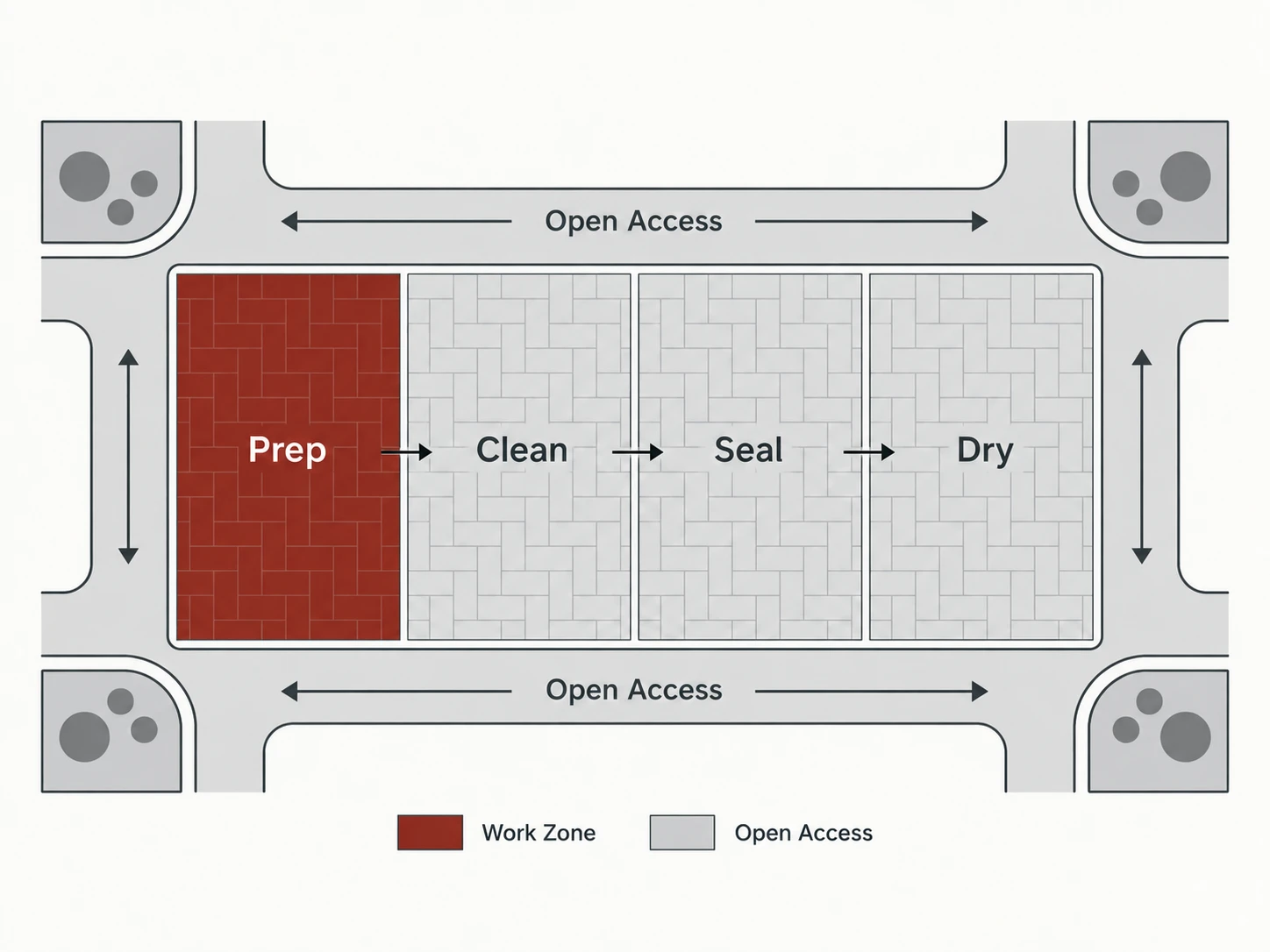
Phasing keeps a usable route open while other pavers are cleaned and sealed. It can also add setup and coordination work, so ask bidders to price the same closure plan.
Start with the routes the property cannot lose: accessible entrances, emergency access, deliveries and the paths residents or guests use most. Draw work zones around those routes and show where people will be redirected. A diagram is more useful than a general request to "minimize disruption," because every bidder can plan against the same constraints.
Each phase needs space for equipment and a period when people and vehicles stay off the treated surface. Ask the contractor what determines reopening for the proposed product and site conditions. Put responsibility for barriers, signs and coordination with tenants or residents in the written scope.
Off-hours work may solve an access problem, but it can introduce lighting, noise and staffing needs. Compare an off-hours plan with a daytime sequence before assuming either is preferable. For a retail property, the operational issues overlap with those in the storefront cleaning guide.
Weather belongs in the schedule as a decision point, not a promised completion date. NOAA's hurricane climatology identifies June 1 to November 30 as the Atlantic hurricane season. Ask how the contractor will handle rain before application, during curing or between phases, and who will communicate a revised access plan.
Sealer grade and finish
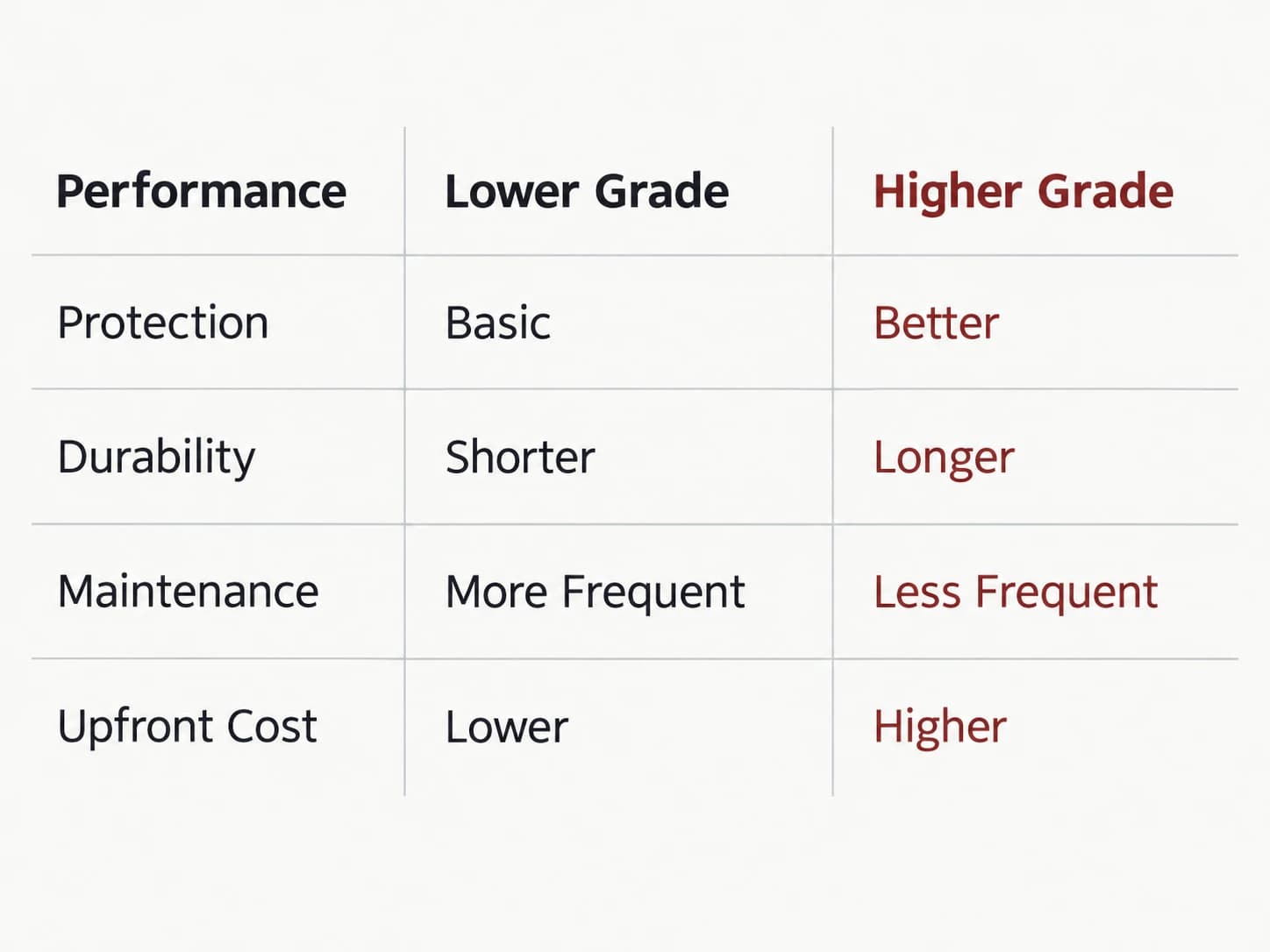
The best sealer is the one that suits the paver, existing coating, traffic and appearance the property wants to maintain. A higher product price alone does not show that it will perform better on a particular site.
Request the proposed product name and its technical instructions. The contractor should explain surface preparation, compatibility with any old coating, intended finish and conditions for application. If a product requires more preparation or a longer closure, include those effects in the comparison.
Appearance is a practical choice for shared spaces. A finish that changes color or sheen can make a repaired section more noticeable, while a finish selected for a sample may look different across weathered pavers. Agree on a representative test area where those differences matter.
Ask how the proposed finish will be maintained and what would trigger a future recoat or removal. That discussion is more useful than an unsupported promise that a named "grade" will last for a fixed period. Record the selected product and test-area approval with the project documents so the next maintenance team knows what was applied.
How to get comparable bids
Comparable bids begin with one written scope sent to every contractor. Give bidders the same measurements, site conditions and access requirements, then ask them to list assumptions and exclusions instead of filling gaps differently.
| Give every bidder | Ask every bidder to return |
|---|---|
| A plan showing the paver areas and excluded surfaces | Measured area and a marked scope |
| Photos of stains, repairs and old sealer | Preparation method and any separate restoration work |
| Required entrances, deliveries and work windows | Phasing plan, closures and reopening conditions |
| Desired appearance and any existing product information | Proposed sealer, finish and test-area approach |
| Water access and known drainage points | Water, runoff and disposal plan |
| The same request for cleaning, sand and sealing | An itemized scope with assumptions and exclusions |
Walk the property with bidders when conditions vary across sections. Point out repairs that the board plans to handle separately and ask each contractor to identify anything that could change the quoted scope after work starts. A written allowance or a clearly excluded area is easier to evaluate than a vague promise to address problems later.
Ask how wash water will be managed near drains. EPA's rule for municipal storm sewer permittees requires programmes that effectively prohibit non-stormwater discharges into the storm sewer system. The site plan should identify drainage points and explain containment and disposal rather than leaving that decision to the day of cleaning.
Compare bids line by line: area, cleaning, stain treatment, joint sand, sealer, repairs, phasing and access. If a proposal is much lower, check its exclusions before judging the price. A broader commercial exterior cleaning guide can help a manager coordinate this work with other property maintenance.
Budget for maintenance after the first application
The initial quote is only part of the property's paver budget. Future cleaning, spot repairs and eventual resealing depend on traffic, drainage, exposure, the existing surface and how well the selected system performs.
Avoid setting a fixed resealing date from a generic claim. Instead, keep a record of the product used and inspect representative high-traffic and exposed sections during routine property walks. Changes in appearance, staining or coating condition can then prompt a contractor assessment before the board commits to another full-site project.
A useful comparison asks each bidder what routine care the product needs and what preparation a future recoat would require. A finish that is simpler to maintain may be preferable even if its first application is not the lowest bid. Conversely, a product with a higher initial price needs a clear site-specific reason, not just a claim of longer life.
For an association, record the expected work as a maintenance planning item and revisit it after inspections. The HOA pressure washing budget guide covers the broader process of planning exterior cleaning across shared property. Keep paver repairs and sealing identifiable so their scope is not lost inside a general cleaning budget.
Frequently asked questions
Published ranges help start a budget, but the answers below depend on what is being cleaned and sealed. Use them to make the scope clearer before comparing commercial proposals.
How much does commercial paver sealing cost?
HomeGuide's paver cost guide (Aug 16, 2024) lists $1.50 to $2.20 per square foot for cleaning, sanding and sealing projects over 2,000 square feet. That published size band is a reference, not a commercial quote. A plaza bid should identify its measured area, preparation, repairs, product, access plan and exclusions before the property uses it for approval.
Is cleaning included in a paver sealing quote?
It depends on the proposal. Some quotes cover a complete clean, sand and seal sequence; others price cleaning or restoration separately. Ask for an itemized scope even when the contractor offers one package price. Confirm stain treatment, joint-sand replacement and removal of any failed old sealer, since each can materially change the work.
Is stripping failed sealer included in a standard sealing price?
Do not assume it is. A cloudy, peeling or uneven old coating may require a separate removal process before a new product can be applied. Ask bidders to inspect the affected areas, state whether stripping is needed and price or exclude it explicitly. A test area can help establish the required preparation and expected appearance.
How often does a paver patio need to be sealed?
There is no reliable interval that fits every patio or commercial walkway. Traffic, weather exposure, drainage, cleaning practices and the product already on the surface all affect its condition. Keep the product record, inspect the pavers during routine maintenance and seek an assessment when the finish shows wear or no longer performs as intended.
What is the best product for sealing pavers?
Choose a product after identifying the paver material, existing coating, desired appearance and maintenance needs. Ask the contractor to explain why the proposed product is compatible with the prepared surface and to show the result on a representative test area. For an occupied commercial site, include application conditions and reopening requirements in that decision.
How should a board compare paver sealing bids?
Send each bidder the same site plan and requested scope. Compare measured area, cleaning, repairs, sand, sealer, drainage plan, phasing and exclusions before comparing totals. If bids describe different work, request revisions against the shared scope. That gives the board a clearer record of what it is approving and what could cause a later change.
Sources
The published prices and external guidance cited above come from the sources below. Their figures provide context for budgeting and do not replace a site-specific commercial proposal.
For a proposal based on your property's pavers, access and maintenance goals, request a site-specific quote.
2Clean does not publish a price list: every property is priced individually. For a written price, call or text a photo to (904) 826-9806, or request a quote online.
Custom Commercial & HOA Walkthroughs
Need a scope tailored to your South Florida property?
Every building, plaza, and community has its own surface mix, access windows, and drainage layout. We quote by walkthrough rather than fixed rate sheets so your proposal matches your exact property. Call us directly at (904) 826-9806 or request a written scope online.
Related services & tools
Paver Sealing by South Florida city:
Commercial property scopes: