
Industry Verticals
Warehouse Pressure Washing: A South Florida Exterior Cleaning Guide
October 14, 2026 (updated) · 9 min read
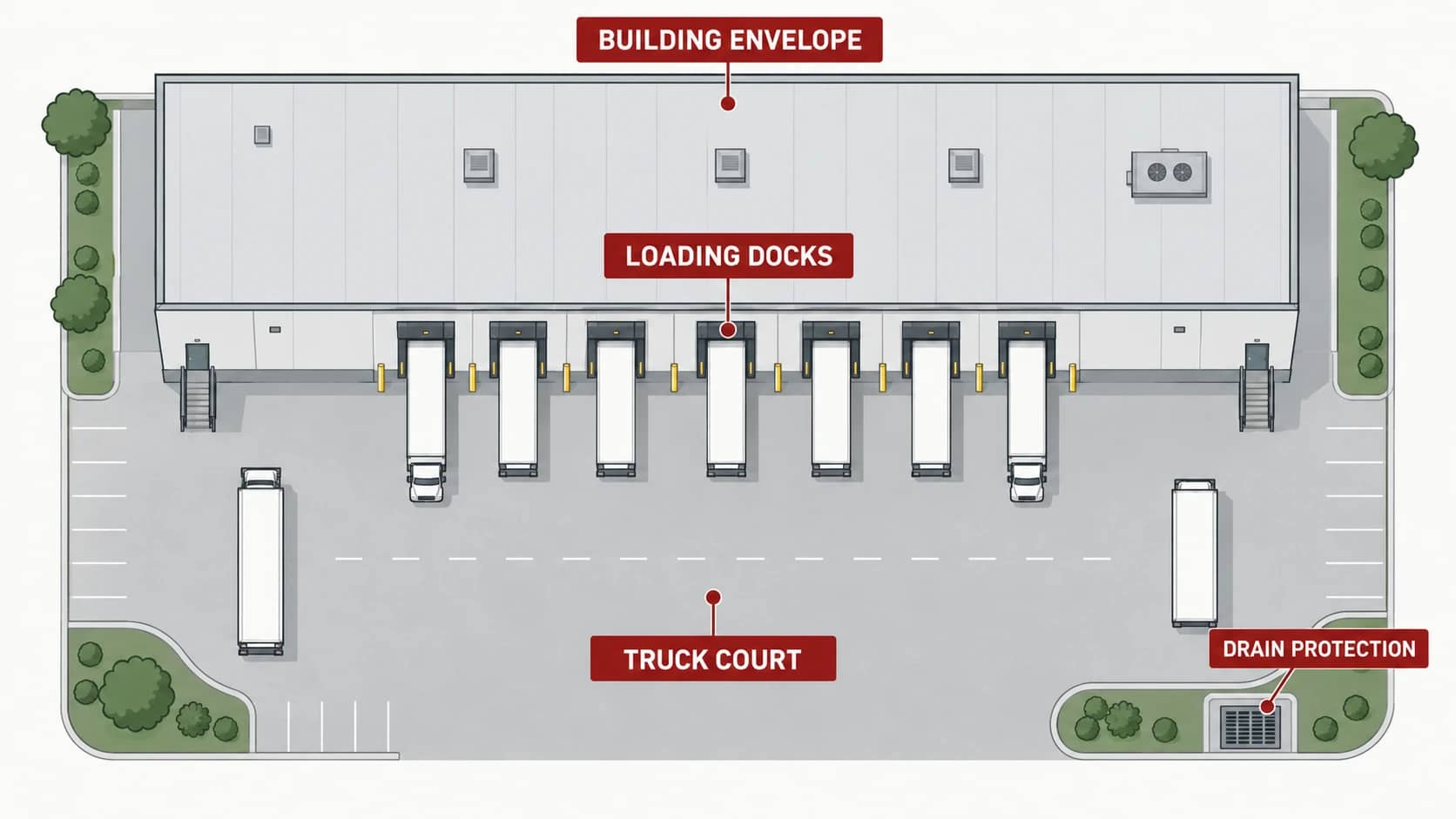
Warehouse pressure washing cleans durable exterior surfaces such as truck courts, loading aprons and concrete walkways. A useful plan also covers wall materials, active dock doors, fuel or spill areas, and where wash water will go. In South Florida, choose the method by surface and soil, then schedule work around freight movement and drainage.
Warehouse pressure washing starts with a site plan
A warehouse exterior is a set of different surfaces and operating areas, so one washing method rarely fits the entire property. Begin with a walk-through that identifies the material in each zone, what needs removing, nearby openings, traffic patterns and drainage.
Mark dock doors, pedestrian routes, truck queuing areas, equipment yards, landscaped edges and every visible inlet. Note where runoff from each work area would travel. A drain outside the wash zone may still receive water flowing across a sloped truck court.
Identify the soil before specifying a method. Loose road dust on a wall calls for a different approach from oily buildup at a loading apron. Dark streaking can also come from several sources, so a small test area is more useful than assuming every stain will respond to the same cleaner.
Record vulnerable finishes and access limits during the same walk-through. These may include coated metal, wall joints, exterior electrical equipment, dock seals and areas where water could enter the building. The result should be a zone-by-zone scope that a property manager can review with operations staff and a cleaning provider.
Match the method to each exterior zone
Industrial pressure washing is useful where durable pavement holds embedded grime or tire marks. Lower-pressure washing may be a better fit for coated walls and other surfaces where a concentrated spray could damage a finish or drive water into a joint.
The table is a planning guide, not a fixed specification. Confirm the condition of each surface and test the proposed method before cleaning a large area.
| Zone | Typical concern | Starting approach | Check before work |
|---|---|---|---|
| Truck courts and loading aprons | Tire marks, tracked dirt, localized oil | Controlled pressure washing where the pavement can tolerate it | Drainage, active vehicle routes and spill history |
| Metal wall panels | Dust, streaking and surface growth | Low-pressure application and rinse suited to the coating | Coating condition, seams, penetrations and manufacturer guidance |
| Tilt-up concrete walls | Dirt, organic growth and staining | Method selected after a small test area | Paint, sealers, joints and previous repairs |
| Walkways and entries | Tracked soil and slippery buildup | Surface-appropriate cleaning with pedestrian controls | Accessibility, adjoining doors and drying time |
| Fuel and equipment areas | Petroleum residue or sensitive equipment | Site-specific containment and cleaning plan | Spill response procedures and permitted wash-water destination |
A provider should explain the proposed method for each zone and what the test area shows. A wider, gentler spray can reduce the chance of surface damage, but it may need more dwell time or a suitable cleaning solution. More pressure can remove some buildup faster while increasing the risk to coatings, joints and nearby equipment.
For a broader look at how South Florida conditions affect commercial sites, see the guide to commercial pressure washing in Miami.
Clean metal panels without forcing water into seams
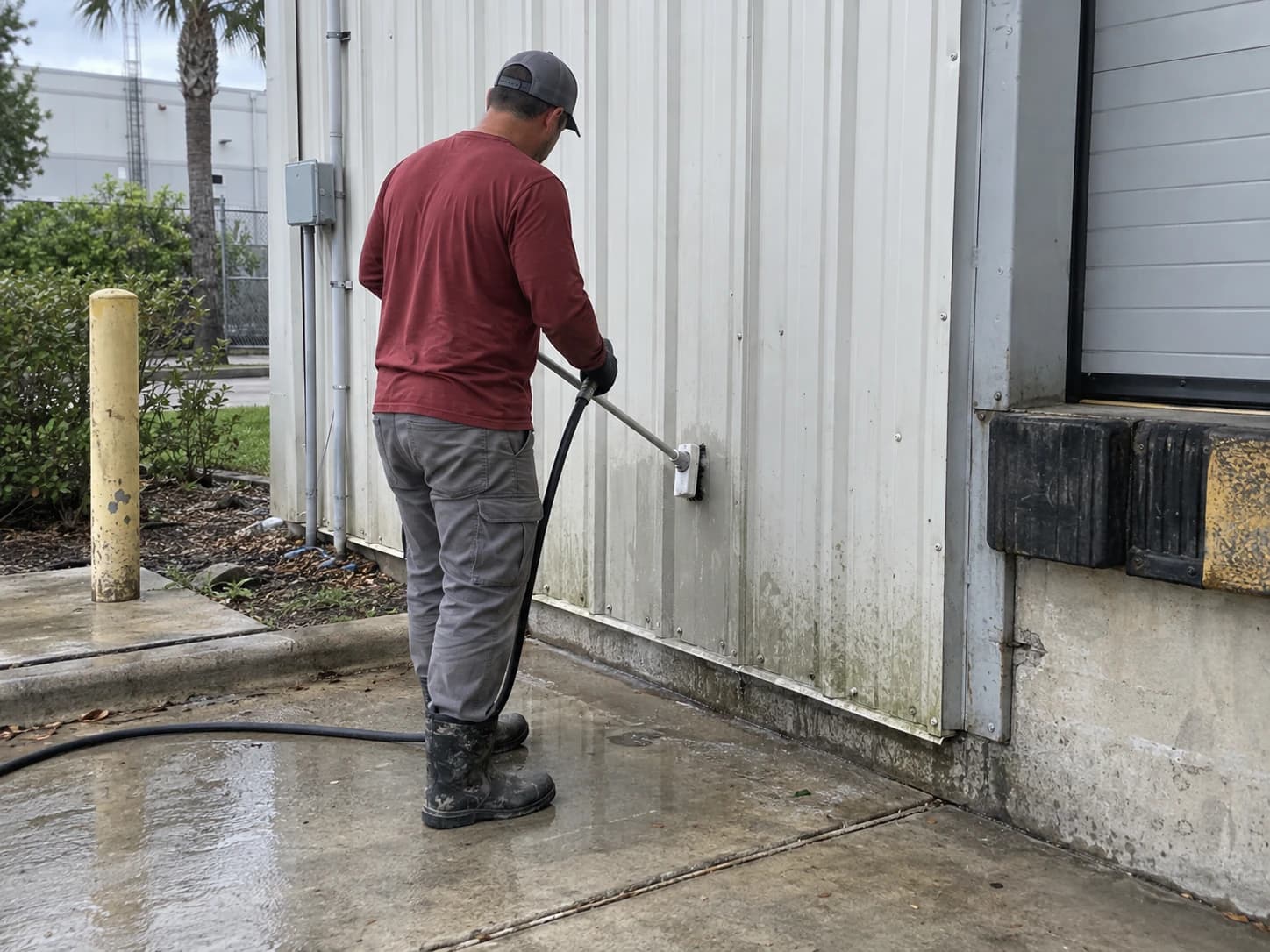
Metal panels need a method that cleans the coating while limiting water entry at laps, fasteners and openings. Start by checking the panel finish and the direction of its seams, then test a small area with a compatible cleaner and a gentle rinse.
A warehouse wall may look uniform from the ground but contain faded coating, patched panels and worn sealant. Concentrated spray can mark a finish or push water through a weak joint. Give extra attention to louvers, lights, doors and other penetrations where water could reach equipment or interior space.
Work from a stable access plan and protect anything below the wash area that could be affected by runoff. If a stain remains after a reasonable test, identify it before increasing pressure. Some discoloration reflects coating wear or material below the surface and will not wash away.
Tilt-up concrete needs its own assessment. Bare, sound concrete may tolerate a different method from painted or sealed concrete. Existing repairs, joint sealants and stained sections can respond unevenly, so a test area helps set an honest expectation for the finished appearance. The guide to commercial building washing methods explains how surface material changes the cleaning choice.
Plan loading docks and truck courts around movement
Loading areas need cleaning that accounts for trucks, forklifts, pedestrians and open dock doors. Agree on which bays will be unavailable, how vehicles will be routed and when each area can be returned to use before equipment is set up.
Truck courts collect tracked soil and tire residue, while loading aprons can hold spills and debris near drains. Remove loose material first so washing does not simply move it toward an inlet. Treat an unidentified spill as a separate issue for the site's operations or environmental team rather than washing it across the pavement.
At dock doors, protect seals, bumpers, controls and nearby goods from spray. Keep water away from a raised leveler or an open door where it could enter the warehouse. Exterior cleaning should not be presented as maintenance or repair of a dock leveler; damaged equipment needs the appropriate service team.
Pedestrian routes deserve the same coordination as vehicle routes. OSHA's walking-working surface rule requires these surfaces to be kept clean and free of spills, inspected regularly and maintained in a safe condition. Use a route plan that keeps people away from active washing and from surfaces that are still wet.
Decide where wash water will go
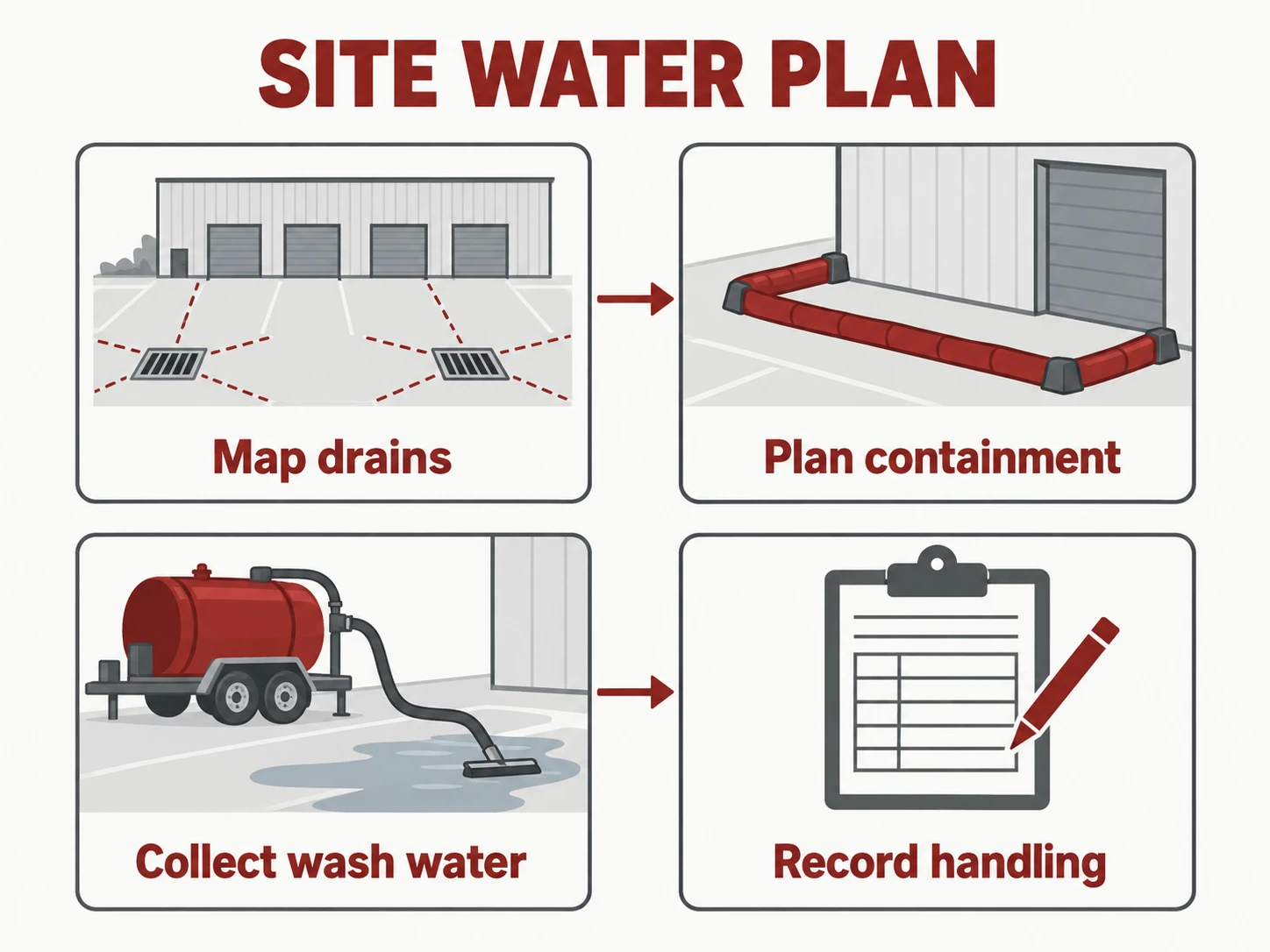
A wash-water plan should be settled before warehouse exterior cleaning begins. Identify storm drains, the slope of the work area, the contaminants likely to be present and a suitable way to keep cleaning water from reaching an unintended discharge point.
Pressure washing can mobilize oil, sediment, cleaning solution and other residue. Calling a cleaner biodegradable does not establish that the resulting wash water can enter a storm drain. The contents of the water and its destination still matter.
Depending on the site and work, the plan may involve isolating an inlet, collecting water or arranging another approved destination. The property manager and cleaning provider should check applicable permit terms and local requirements rather than assume one disposal method works everywhere. If a fuel point or spill area is involved, bring the site's environmental lead into that decision.
Put the agreed approach in the work scope. Include the areas to be cleaned, the drains to protect, the party responsible for containment and what happens if an unexpected substance is uncovered. That gives the crew a practical instruction and the property team a clear basis for review.
Separate site permits from storm-sewer duties
An industrial property's stormwater obligations and the local storm-sewer operator's obligations are related, but they are not interchangeable. Check the property's own permits and drainage arrangements while also identifying the rules that apply to the system receiving runoff.
Under 40 CFR 122.34(b)(3), covered municipal separate storm sewer system operators must effectively prohibit non-stormwater discharges into their systems and operate an illicit discharge detection and elimination program. That provision addresses the MS4 operator. It does not, by itself, tell a warehouse manager which permit the property holds or authorize a wash-water discharge.
Florida DEP's MS4 guidance explains the state's administration of the program. For a particular warehouse, review the site's permit documents and ask the relevant environmental contact or authority where uncertainty remains. Do not classify a property by its tenant's industry or assume that every commercial site has the same stormwater obligations.
In Miami-Dade, county code section 24-42 prohibits discharges into county waters that cause water pollution or a nuisance. A drainage review is therefore part of planning the job, especially where a paved yard leads toward an inlet or canal.
Set a schedule based on use and exposure
A useful cleaning schedule follows observed buildup and the way each zone operates. Review high-traffic pavement, entries and dock areas more often than a sheltered wall that stays relatively clean, then adjust after inspections show how quickly conditions return.
Avoid applying a single frequency to the entire warehouse. Truck activity, nearby construction, trees, prevailing weather and the type of material handled can change what accumulates. A receiving apron may need attention when tracked residue begins affecting its use, while a wall may be scheduled around visible growth or a planned property review.
Choose work windows with the logistics lead, not just the property calendar. Ask about deliveries, shift changes, trailer staging, maintenance and access to dock doors. A plan may divide a large court into sections so trucks can keep using unaffected areas, provided the traffic route and wash-water controls still work.
After cleaning, inspect the zones with the site contact. Note any stain that did not respond, any finish that limited the method and any drainage issue that should change the next visit. These observations make the following scope more accurate than a standing schedule alone.
Write a scope that can be checked
A clear scope tells the property team what will be cleaned, how access will work and how the result will be assessed. Name the zones and surfaces, identify exclusions and state the wash-water approach before comparing proposals.
Ask for a site map or marked photographs where the boundaries could be unclear. List active loading areas, doors that must stay closed, equipment to protect and the contact who can release each work zone. If some staining appears permanent during testing, record that limitation before the full job begins.
Keep the completion record practical: work areas, date, method used, observed exceptions and any drainage or spill concern referred back to the site team. These notes support future maintenance decisions. They do not replace permit records or establish compliance on their own.
For a wider property planning framework, the commercial exterior cleaning guide for Miami property managers covers how to organize exterior work across multiple building areas.
Frequently asked questions
What is the best way to clean a warehouse?
Divide the exterior into zones and choose a method for each surface and type of buildup. Durable pavement may suit controlled pressure washing, while coated panels often call for a gentler approach. Before work starts, identify drains, protect openings and equipment, and coordinate access with warehouse operations. Test uncertain surfaces and stains so the scope reflects what cleaning can achieve.
What should be included in a warehouse pressure washing quote?
The quote should identify the surfaces and boundaries of the work, the proposed method for each zone, access arrangements and wash-water handling. It should also state what is excluded or may not come out, such as a stain that remains after testing. Those details make proposals easier to compare than a description that says only "wash building and pavement."
Can warehouse wash water go into a storm drain?
Do not assume it can. Wash water can carry sediment, oil or cleaning chemicals, and the applicable rules depend on the site and where the water would discharge. Identify the receiving drain and review the property's permit documents and local requirements before work begins. Agree on containment and an appropriate destination for the collected water when the site plan calls for it.
How often should loading docks and truck courts be cleaned?
Use inspections and actual buildup to set the interval. A busy loading apron may collect tracked residue faster than a lightly used truck court, and spills need separate attention when they occur. Review the condition of each zone with operations staff, then schedule cleaning when bays and vehicle routes can be controlled. Adjust the plan after each visit.
Is soft washing suitable for a warehouse exterior?
It can suit coated wall panels and other surfaces that need a gentler application and rinse. The cleaner must be compatible with the finish, and a test area should confirm the result. Soft washing is not a substitute for a wash-water plan: the used solution and loosened soil still need an appropriate destination. See 2Clean's soft washing service for the method.
Sources
For a zone-by-zone exterior cleaning scope, review 2Clean's pressure washing service with your site map, access needs and drainage details in hand.
Custom Commercial & HOA Walkthroughs
Need a scope tailored to your South Florida property?
Every building, plaza, and community has its own surface mix, access windows, and drainage layout. We quote by walkthrough rather than fixed rate sheets so your proposal matches your exact property. Call us directly at (904) 826-9806 or request a written scope online.
Related services & tools
Pressure Washing by South Florida city: