
Methods, Surfaces & Failure Modes
Gum Grease Traffic Film: Cleaning Commercial Entrances
October 19, 2026 · 10 min read
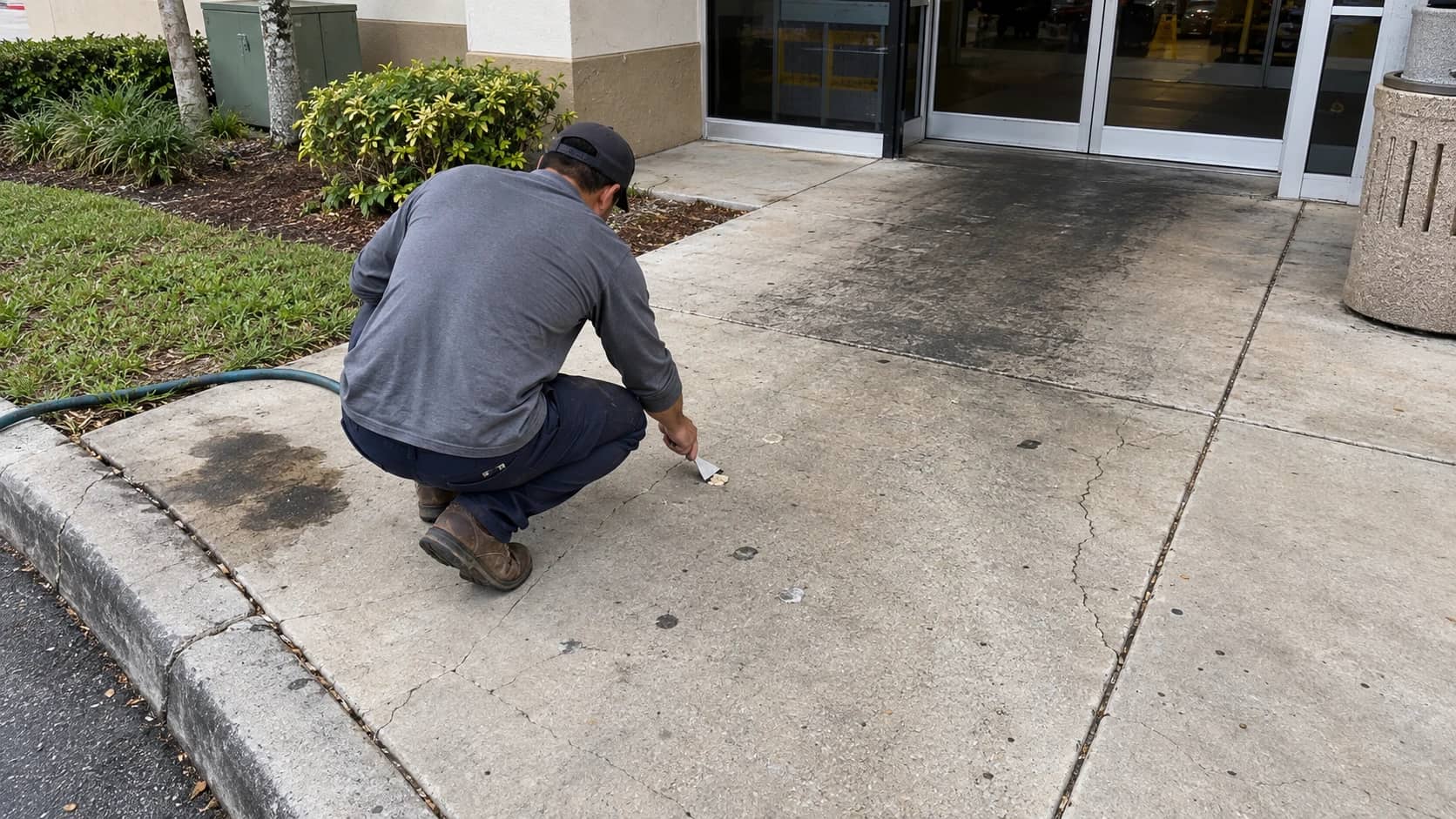
Cleaning gum grease traffic film from a commercial entrance starts with identifying each soil and the surface beneath it. Soften and lift gum locally, break down grease before rinsing, and clean traffic film across the affected walking area. Test the method first, control wash water, and inspect the entrance after it dries.
Gum grease traffic film: match the method to the soil
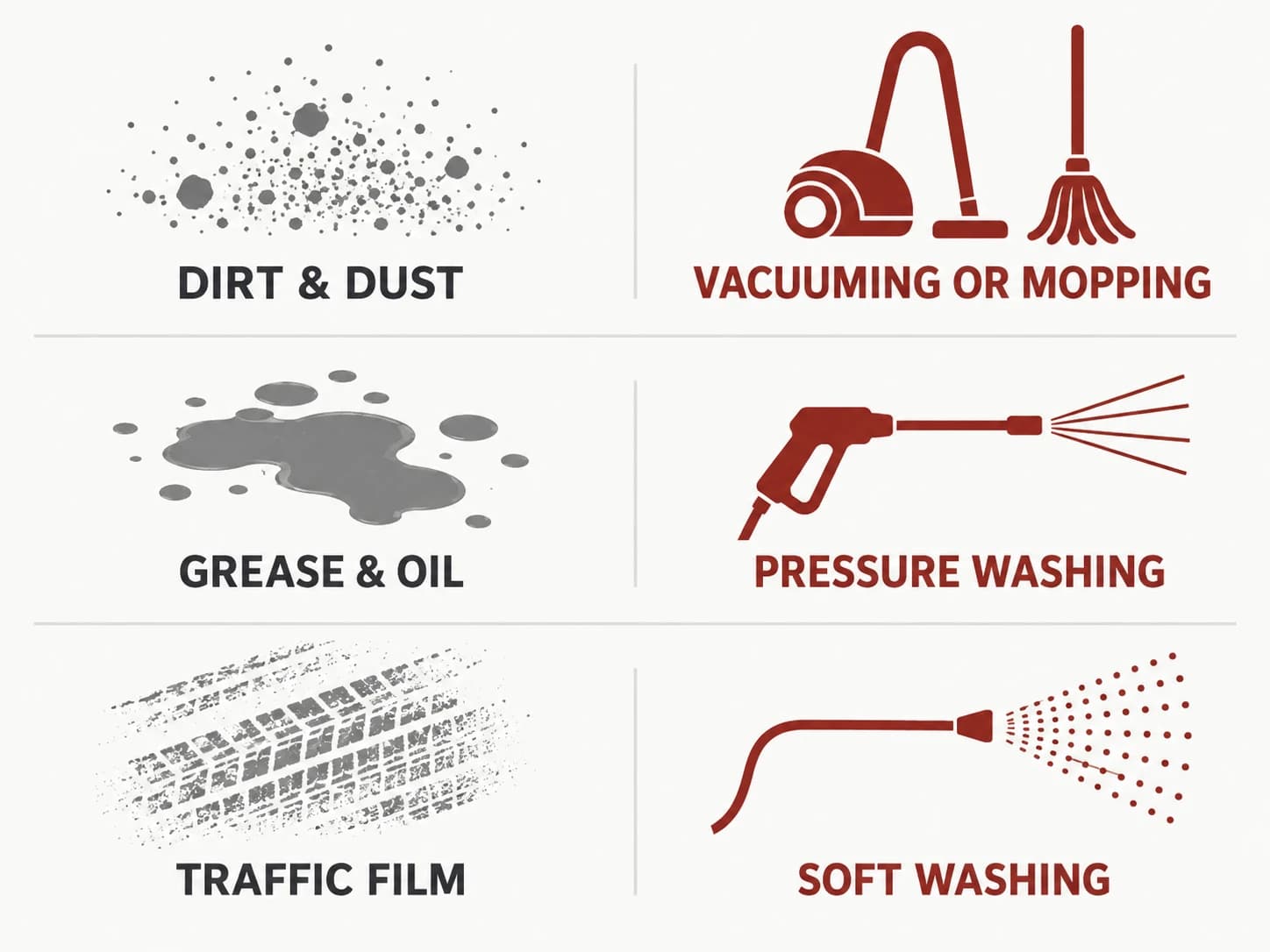
An entrance may have bonded gum, oily deposits, and a broad dark walking path at the same time. Treating all of them with a stronger spray can leave gum behind, spread grease, or wear the surface finish. Identify the soil first, then choose a method that can remove it without creating another problem.
| What you see | Likely soil | Starting method | Check before cleaning |
|---|---|---|---|
| Raised, sticky spots | Gum | Soften and lift individual spots | Coatings, sealers, joints, and nearby finishes |
| Dark patches near food service or vehicle access | Grease or oil | Apply a compatible degreaser, agitate, then rinse with control | Whether the stain has penetrated the surface |
| A broad, dull path along the walking route | Traffic film | Pre-treat and clean the full affected area evenly | Surface texture and the risk of a visible clean patch |
| Green or slick growth in shaded, damp areas | Organic growth | Identify and treat it separately | Whether the substrate tolerates the proposed cleaner |
This is a starting guide, not a product recipe. A test area shows whether the soil releases, whether the finish changes, and whether more cleaning would help. If a mark remains after the removable soil is gone, further pressure may only damage the surface.
Remove gum without gouging the walkway
Gum is usually a spot treatment rather than a reason to wash the entire entrance. Softening it makes removal easier, but the product and tool must suit the concrete, paver, tile, or coating beneath it.
Lift loose material first. Apply a gum remover according to its label, allow it to work as directed, then use a suitable plastic scraper to lift the softened gum. Avoid digging into joints or using a sharp metal edge on decorative and coated surfaces. Rinse or wipe away the residue so the treated spot does not remain sticky.
Heat or steam can help with stubborn gum, but nearby sealers, coatings, adhesives, and sensitive finishes may limit their use. Test an inconspicuous area before treating a visible entrance. If gum has left a dark mark, check whether it is remaining residue or discoloration within the surface before repeating the treatment.
For property managers, a simple spot-removal routine can be more useful than waiting until gum covers the walking route. Record recurring spots near seating, bins, and door queues. That tells a cleaning provider where targeted visits will do more than a broad wash.
Break down grease before rinsing
Grease needs chemistry and agitation because water alone may move it across the pavement without removing it. A compatible degreaser helps release the oil, while a controlled rinse carries the loosened soil away from the walking surface.
Start by identifying where the grease comes from. Food service doors, waste handling areas, and routes from parking can produce different deposits. Remove loose debris, test the cleaner on the surface, and follow its label for application and dwell. Agitate where needed, then collect or direct the rinse water as the site plan requires.
Hot water may help with heavy oily deposits, but it is not automatically the right choice for every entrance. Surface finish, nearby materials, and runoff control still determine the method. The guide to hot water vs cold water pressure washing explains when heat changes the cleaning decision.
A dark patch can remain after surface grease has been removed because oil has penetrated porous concrete. That calls for a different expectation and possibly a separate treatment, rather than repeated high-pressure passes. For deeper stains, see how to remove oil stains from concrete.
Understand the dark path called traffic film
Traffic film is a layer of tracked-in dirt and other residue that builds along the route people use most. On a commercial entrance, it can include fine grit, oily material, and soil carried from parking or landscaping. Its shape often follows foot traffic rather than a drain or isolated spill.
The term also appears in vehicle detailing, where it describes road residue on paint. An entrance needs a different cleaning decision: the walking surface may be porous, textured, sealed, or adjacent to doors and landscaping. A vehicle cleaner should not be assumed suitable for those materials.
Pre-treat the affected area, agitate if the finish allows it, and rinse evenly. Cleaning only the darkest strip can leave a conspicuous boundary beside older soil. If the path still looks dark when dry, inspect for worn coating, embedded staining, or a change in surface texture before ordering a stronger repeat wash.
Broad film is a useful signal for maintenance planning. It shows where mats, routine debris removal, or a change in cleaning coverage may reduce the soil returning to the entrance.
Read the entrance zone before setting a schedule
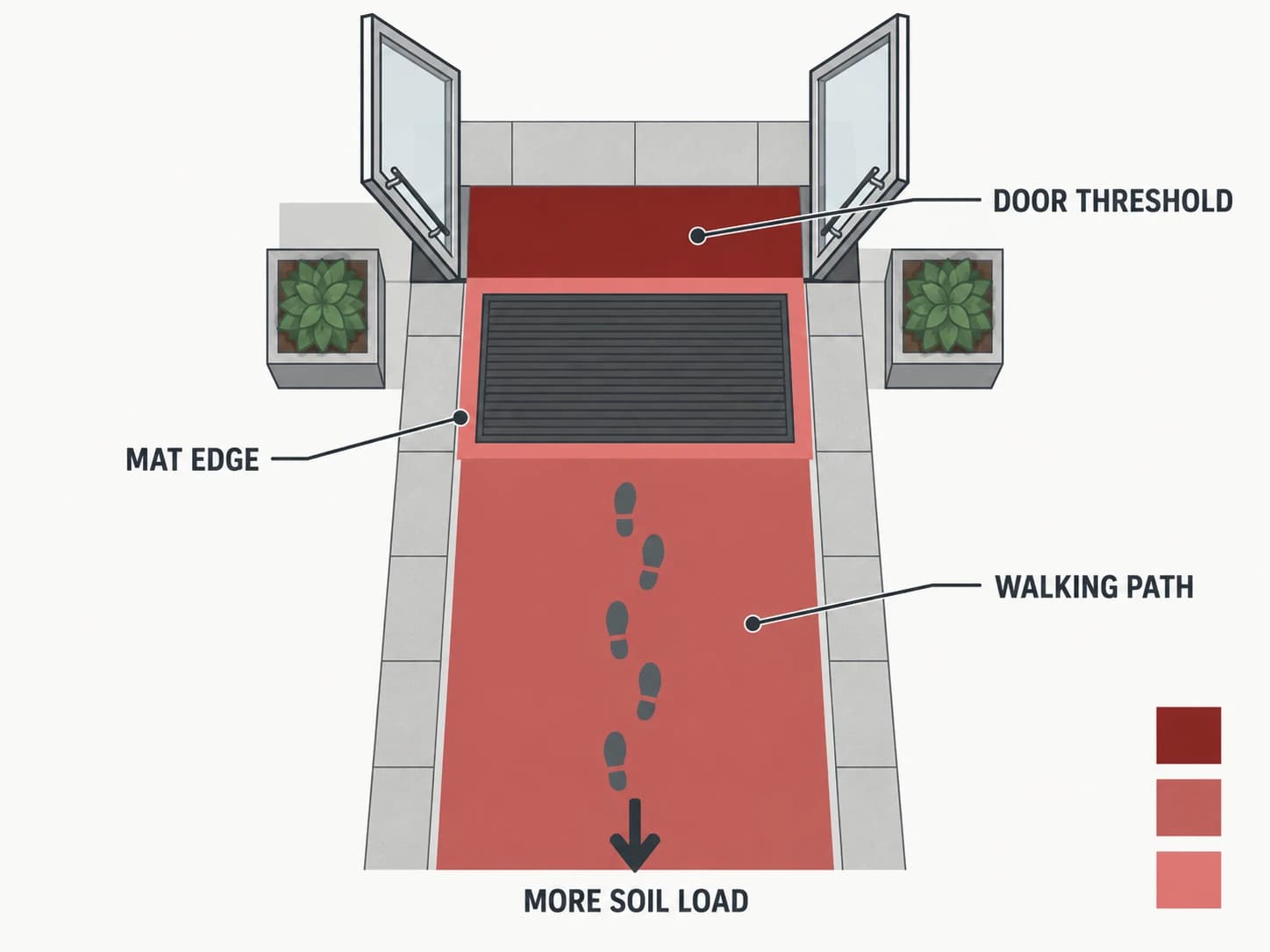
Soil rarely builds at the same rate across an entire frontage. The approach from parking, the door threshold, queue areas, and nearby food or waste routes often need different attention. Map those zones during inspections so the cleaning scope follows the way people actually use the site.
Start with the path visitors take in wet conditions. Note where grit collects, where mats end, and whether water or residue crosses the door line. Then check sheltered corners and shaded edges for growth that may need a separate method from traffic film.
An entrance mat helps intercept tracked-in dirt only while it is secure, clean, and suited to the doorway. A saturated or curled mat creates its own access problem. Include mat condition in routine inspections rather than treating installation as a permanent fix.
Use photographs taken from the same viewpoint to compare repeat inspections. They can show whether soil is returning in a small problem zone or across the whole entrance. That distinction helps you request targeted spot work or a broader clean without relying on a fixed calendar alone.
Choose pressure and chemistry for the surface
The surface sets the limits of the cleaning method. Broom-finished concrete, decorative pavers, coated walkways, and tile can react differently to the same cleaner or spray. Test both the chemical and the rinse method before treating a prominent area.
On textured concrete, controlled pressure and suitable agitation may remove embedded soil. On coatings and some pavers, excessive pressure can strip finish or disturb joint material. A low-pressure application may protect a sensitive surface, but it still needs the right cleaner, adequate agitation where appropriate, and a thorough rinse.
Ask the provider to identify the substrate and any sealer before work begins. If the finish is unknown, a small test area should establish what can be removed and whether the appearance changes when dry. A stain that has penetrated a porous surface may remain visible even after its slippery surface residue has been cleaned away.
The wider commercial pressure washing guide covers how entrance work fits into an exterior cleaning plan. For an HOA or condo board, the same surface assessment should be included in the scope for shared walks and building approaches.
Manage slip risk and wash water
A clean-looking entrance is not necessarily a safe one. Grease, loose gum, wet residue, and unevenly rinsed cleaner can affect footing, while cleaning itself temporarily wets the route. Keep people away from the active work area and inspect the surface again after it dries.
OSHA 29 CFR 1910.22 requires employers to keep walking-working surfaces clean and free of hazards such as spills, and to inspect and maintain them as necessary. The US Access Board's ADA Standards call for stable, firm, and slip-resistant floor and ground surfaces, including walking surfaces and ramps. Neither source supplies a universal cleaning interval for a commercial doorway.
Plan the rinse path before applying a cleaner. Identify drains, planting beds, doors, and lower areas where dirty water could collect. Federal MS4 permit requirements require permittees to address illicit discharges to storm sewers; the site's wash-water plan should account for where commercial cleaning water will go.
If a surface remains slick or a cleaner has not rinsed fully, keep the affected route out of use until the condition is corrected. A dry inspection is also the right time to separate remaining staining from soil that still needs removal.
Set frequency from what returns
A useful cleaning schedule starts with inspections, not a footfall number. Entrances with food service, exposed approaches, or recurring gum may need more spot work than a sheltered office doorway. The right interval is the one that keeps visible soil and hazardous residue from accumulating between visits.
Have staff note new gum, oily patches, dark walking paths, and slippery areas during ordinary property rounds. After a cleaning, record when each type returns and where. If grease repeatedly appears beside a service door, address that source and zone rather than increasing the frequency across every walkway.
Weather and site use can change the pattern. Rain can carry grit through a doorway, while an event can concentrate traffic in a queue area. Inspections after those changes give a better reason to add cleaning than a generic monthly or quarterly rule.
For larger properties, separate routine debris removal, gum spot treatment, and periodic deep cleaning in the maintenance plan. This makes the work easier to specify and lets a board or facilities lead see which task is solving which problem.
Write a scope a cleaning provider can price
A clear scope names the surface, the soil, and the boundaries of the work. It should also state how the entrance will stay accessible, where rinse water will go, and what the finished surface should be checked for. Those details make proposals easier to compare.
Include the approach from parking or sidewalks, thresholds, queue areas, adjacent walls, and any sensitive landscaping or finishes. Mark gum clusters, grease patches, and the full extent of traffic film on a site photo. Ask for a test area where a sealer or coating is uncertain.
The scope should distinguish removable residue from staining or wear that cleaning may not fix. Request a plan for protecting doorways and managing pedestrian movement during the work. Ask how the provider will check for leftover cleaner, pooled water, and conspicuous patching once the area dries.
If the property includes shared walks and several entrances, commercial and HOA exterior care can provide context for grouping the work. Keep each entrance's problem zones in the scope so a broad programme does not overlook the spots that need regular attention.
Frequently asked questions
Gum, grease, and traffic film can look similar from a distance, but their removal differs. These answers address the questions that usually affect an entrance cleaning scope.
What is a traffic film?
Traffic film is a broad layer of tracked-in dirt and other residue that darkens a frequently used path. At a commercial entrance, it can contain grit and oily soil carried from nearby pavement. The term is also used for road grime on vehicles, but vehicle cleaning products and methods should not be assumed suitable for a walkway.
How do you remove gum from a concrete sidewalk?
Soften the gum with a product suitable for the concrete and follow its label. Lift it with a tool that will not gouge the finish, then remove the remaining residue. Test first if the concrete is decorative, coated, or sealed. A dark mark left afterward may be staining rather than gum that needs more scraping.
Can pressure washing remove grease from an entrance?
Pressure washing can rinse away grease after a suitable cleaner has broken it down. Water pressure alone may spread oily soil or leave a slippery film. The cleaner, agitation, water temperature, and pressure should match the surface. A deeply penetrated stain may remain visible after the removable grease is gone.
Why does the entrance still look dark after cleaning?
The dark area may contain embedded soil, a stain within porous material, or a worn finish. Inspect it when dry and compare it with a small test area. If further treatment does not improve that test, repeating a stronger wash across the entrance may change the surface texture without improving its appearance.
How often should a high-traffic entrance be cleaned?
Inspect it routinely and clean when gum, grease, film, or slippery residue begins to return. Spot treatment may be needed more often than full-area cleaning. Use records from the same problem zones to set the interval, and revisit it when weather, tenant activity, or pedestrian routes change. There is no single schedule that fits every entrance.
Sources
The safety and runoff points above draw on the following official sources. Cleaning methods and scheduling guidance are practical recommendations based on the soil and surface conditions described.
For help scoping an entrance clean, see 2Clean's pressure washing service and share the surfaces and problem zones you want assessed.
Custom Commercial & HOA Walkthroughs
Need a scope tailored to your South Florida property?
Every building, plaza, and community has its own surface mix, access windows, and drainage layout. We quote by walkthrough rather than fixed rate sheets so your proposal matches your exact property. Call us directly at (904) 826-9806 or request a written scope online.
Related services & tools
Pressure Washing by South Florida city: