
Methods, Surfaces & Failure Modes
Mould Mildew Algae Lichen: Identifying Growth on Florida Buildings
October 17, 2026 · 9 min read
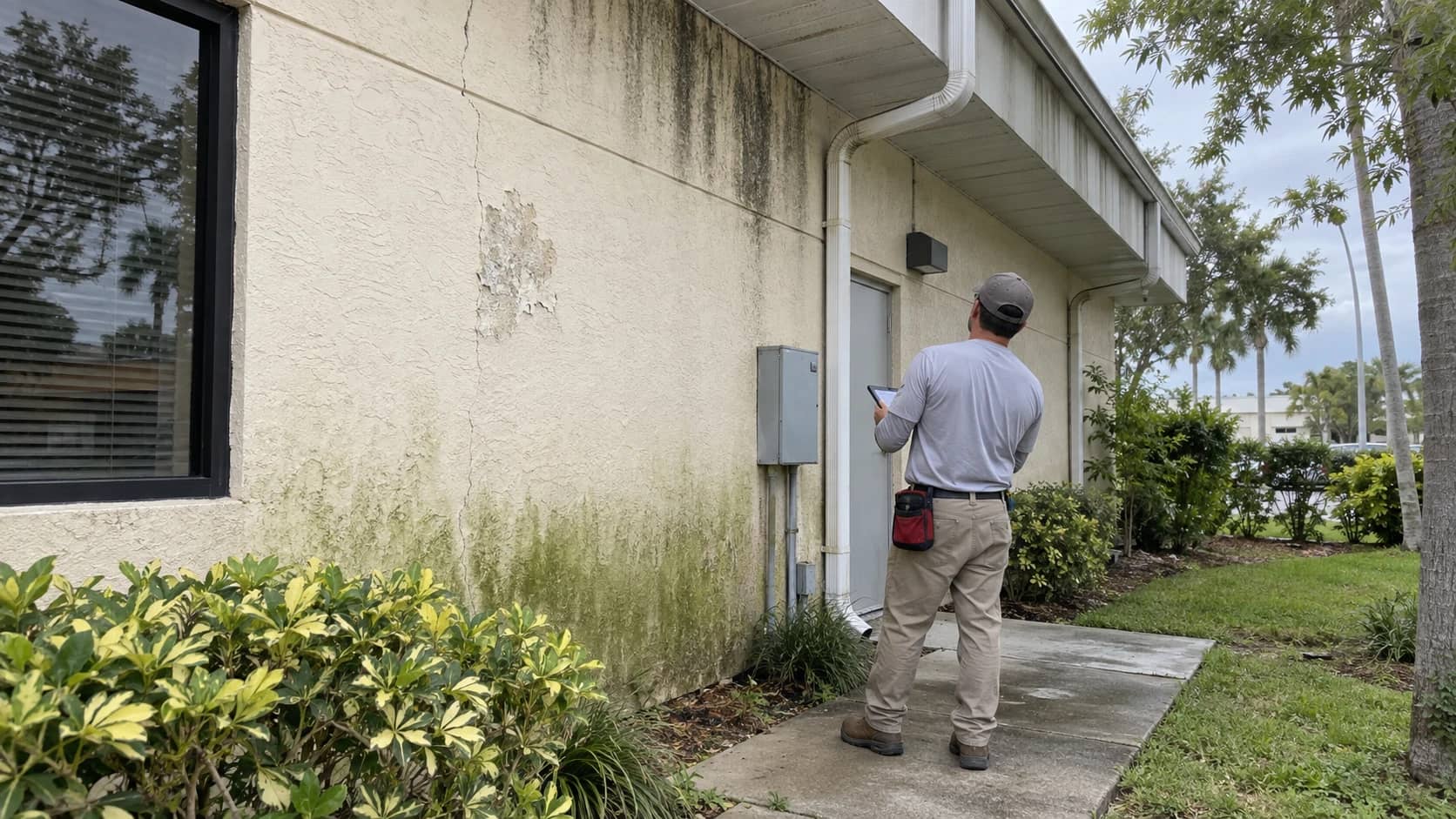
To tell mould mildew algae lichen apart on a South Florida building, check the growth's texture, pattern and surface before choosing a cleaner. A thin film suggests algae, a crust attached to the surface suggests lichen, and growth beside a persistent moisture problem warrants closer investigation for mould. Color alone cannot confirm any of them.
Mould mildew algae lichen: a field guide
These names describe different kinds of growth, but appearance alone gives you a working identification, not a laboratory result. For a property manager, the useful first decision is whether the mark is a removable surface film, a firmly attached crust or a sign of a moisture problem that cleaning will not solve.
| What you see | Possible explanation | Where to look next | Why it matters |
|---|---|---|---|
| Green or dark, thin film that follows a wet or shaded area | Algae | Nearby irrigation, drainage and areas that stay damp | It may make a walkway slippery and will return if moisture persists. |
| White, gray or dark superficial spotting on a damp finish | Mildew, a common name for surface fungal growth | Condensation, sheltered corners and the condition of the finish | Cleaning may remove the mark, but a recurring moisture source needs attention. |
| Fuzzy or irregular growth beside a leak or on damp building material | Possible mould | The material behind the finish and the source of water | A cleaning crew should not treat a suspected building moisture problem as a stain alone. |
| Raised, crusty or leaf-like patches attached to masonry, stone or roofing | Lichen | Whether the surface is sound beneath and around the patch | Forceful removal may take part of a fragile finish with it. |
Treat the table as a way to decide what to inspect, not as a promise that every dark mark is biological. Dirt, rust, runoff and failing coatings can resemble growth from a distance. Photograph the area when it is dry, note where water travels after rain or irrigation, and check the surface up close before setting the cleaning scope.
Follow the identification decision tree
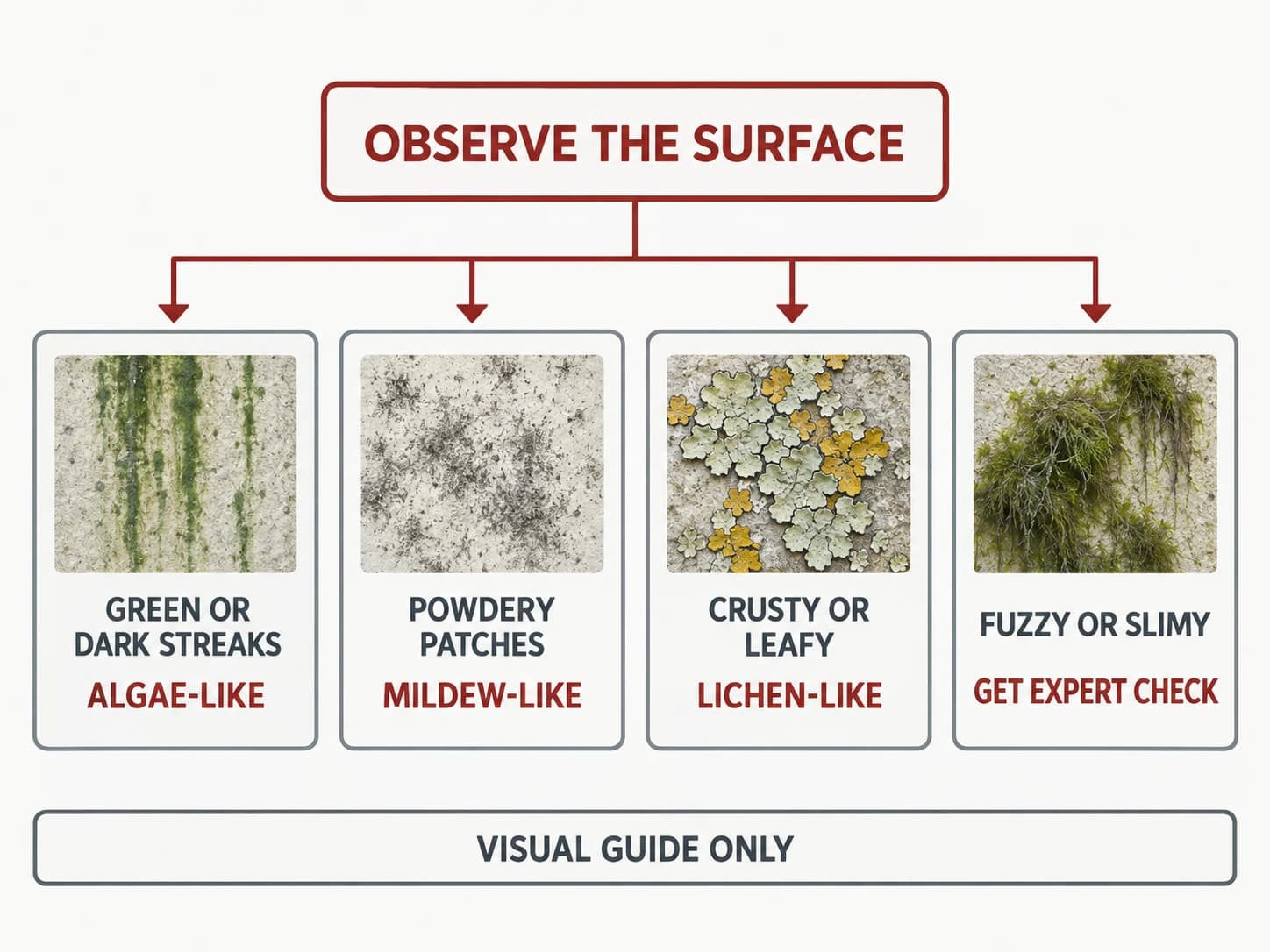
Start with the surface, then the pattern, then the texture. That order keeps a dark roof streak from being treated as proof of indoor mould and keeps a crust on a delicate finish from being mistaken for a film that will rinse away.
On an asphalt roof, dark streaks may be algae discoloration caused by Gloeocapsa magma, the organism identified in the Asphalt Roofing Manufacturers Association's guidance. The same visual label should not be carried over automatically to a concrete path or painted wall. Our guide to black streaks on commercial buildings and roofs addresses that roof-specific pattern in more detail.
On a wall, look for a film or spotting that follows shade, condensation or runoff. On stone or masonry, look for a patch with visible edges and a crust that appears fixed to the surface. If growth sits beside a leak, softened material, peeling finish or indoor dampness, investigate the water source before ordering an exterior wash.
Mold and algae on concrete walkways
Mold on concrete and algae on concrete can look similar, especially when dirt has collected in the surface texture. On a walkway, the immediate operational concern is a wet or slimy film underfoot; the longer-term question is why that section remains damp.
Green film is a useful clue for algae, but dark growth is harder to name by sight. Concrete can hold dust, leaves and other debris that support growth, while irrigation overspray, poor drainage and shade keep the area wet. A patch that returns in the same place after cleaning points toward a site condition worth correcting.
Walk the route while the problem is visible and note entrances, ramps, turns and places where people step from a dry area onto a wet one. OSHA's walking-surface rule calls for surfaces to be kept clean and maintained in safe condition. The US Access Board's ADA Standards call for walking surfaces to be stable, firm and slip resistant. Neither source lets a manager identify an organism by color, but both make the condition of a walkway relevant to the cleaning plan.
For sound, exposed concrete, pressure washing may remove a surface film and accumulated debris. Pressure still needs to suit the concrete and adjacent joints: excessive force can roughen a finish, disturb loose material or drive dirty water toward a doorway. If the growth is persistent, cleaning may also need an appropriate treatment and dwell time, followed by a controlled rinse.
Where the patch is beside a leak, look for staining or dampness that extends beyond the exposed concrete. Do not label a dark area "toxic mould" from a photograph or assume washing the path resolves a hidden moisture issue. If the concern extends into occupied space or damaged building material, have the moisture problem assessed on its own terms.
Cleaning changes the walking surface; it does not change the path of irrigation water or runoff. If the concrete is being considered for coating, the discussion in concrete sealing for commercial flatwork helps separate a sealing decision from the need to correct moisture and keep the surface clean.
Compare the effect on each surface
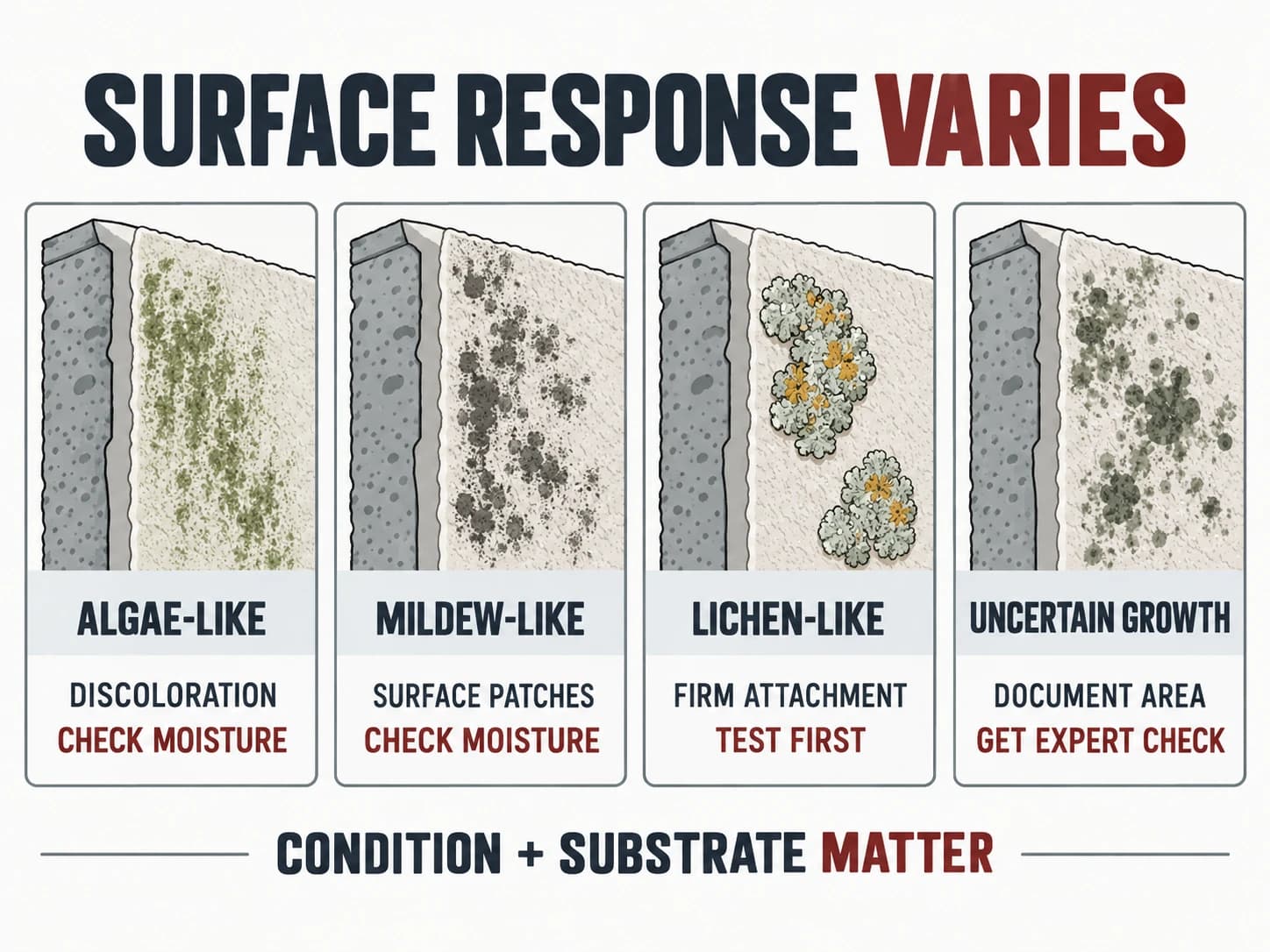
Growth does not affect every material in the same way. The condition of the roof, coating, joint or concrete matters as much as the name of the organism when deciding how much cleaning force the surface can tolerate.
Algae is often a discoloration or surface film. On a walkway, that film can affect footing when wet; on an asphalt roof, dark algae streaks are a different problem with a different cleaning method. A stain's appearance alone does not establish that the material beneath has been structurally damaged.
Lichen attaches more firmly than a thin film. On sound masonry it may be possible to loosen and remove it gradually, but scraping a weathered coating or fragile surface can remove finish with the growth. Inspect a small area first and accept that a remaining mark may be preferable to damaging the substrate.
Fungal growth associated with persistent dampness deserves a different inspection. If a wall finish is peeling, wood is soft or material remains wet, cleaning the visible mark does not establish that the assembly is dry or sound. Record that condition separately from the exterior cleaning scope so the cause can be addressed.
Match the cleaning method to the material
Choose the method after identifying both the likely growth and the surface's condition. The goal is to remove the deposit without creating a larger repair, then deal with the water conditions that allow it to return.
| Surface and condition | Sensible approach | Main trade-off |
|---|---|---|
| Sound concrete walkway with a surface film | Remove debris, select a suitable cleaner, allow it to work and rinse with controlled pressure | Cleaning improves the surface, but shade or overspray may bring the film back. |
| Painted wall with superficial spotting | Test a small area and use a low-pressure cleaning approach suited to the coating | A weak or failing coating may lift even with careful cleaning. |
| Asphalt roof with algae streaks | Follow roof-specific manufacturer guidance and use a gentle rinse | The result is temporary if conditions continue to favor growth. |
| Firmly attached lichen on masonry or stone | Test a small area, allow suitable treatment to loosen growth and use gentle removal | Complete removal may risk the finish underneath. |
| Growth beside leaking or damaged material | Investigate and correct the moisture source before treating the visible mark as a cleaning job | The work may require a building repair beyond cleaning. |
For exterior walls and other suitable finishes, soft washing uses a cleaning solution and low-pressure rinse. The solution does much of the work, so the operator does not have to rely on force to strip a film. Compatibility and runoff still matter: test the finish, protect nearby materials and plan where the rinse water will go.
Avoid making "stronger" the default response to lichen. Scraping and aggressive pressure can leave a cleaner-looking patch surrounded by a damaged finish. If a test area shows the coating or surface coming away, revise the scope and explain the likely limit before cleaning the full elevation.
Treat roof streaks as a roof-specific problem
Dark streaks on an asphalt roof may be Gloeocapsa magma algae, according to the Asphalt Roofing Manufacturers Association. ARMA advises a sodium hypochlorite solution followed by a gentle rinse and says not to use a power washer or brush because high pressure is likely to damage asphalt roofing.
That guidance concerns asphalt roofing. It should not become a universal recipe for tile, painted walls or concrete paving. Identify the roof material and its condition before choosing a process, and keep the roof scope distinct from walkway or facade cleaning. ARMA also describes the cleaning result as temporary, so a return of discoloration does not by itself show that the original wash failed.
Plan for recurrence in South Florida
Growth returns where the conditions that supported it remain. A maintenance plan should therefore record the pattern of dampness as carefully as it records the stain.
Check irrigation aim, clogged drains, splashback, runoff tracks and shaded corners. On a concrete route, note where water lingers after cleaning; on a facade, look for a repeatable path from a ledge, joint or roof edge. A leak or failing finish needs its own repair decision.
Inspection frequency should follow what happens at the property rather than a fixed claim that every building needs the same wash interval. A shaded path with overspray may need closer attention than an exposed wall that dries readily. For managers coordinating multiple exterior surfaces, the commercial exterior cleaning guide provides a broader way to organize the work.
When requesting a scope, identify the material, the affected locations and any areas that remain wet. Ask how the contractor will test the method, protect adjacent finishes, handle runoff and report signs of damage or moisture that cleaning cannot fix. That makes the estimate easier to compare and gives the board or facilities team a clearer record of what the cleaning is meant to accomplish.
Frequently asked questions
Where does lichen typically grow?
Lichen can attach to surfaces such as stone, masonry, roofing and tree bark. On a building, look for a crusty or leaf-like patch with a defined edge rather than a thin, even film. Its presence does not identify a leak by itself, but the surface and its condition should be checked before removal.
Is lichen the same as mold?
No. Lichen is a partnership involving a fungus and a photosynthetic partner, while mould refers to fungal growth. On a building, the practical difference is often texture and attachment: lichen tends to form a firmly attached patch. Neither should be identified with certainty from color alone, and suspected moisture damage needs a separate inspection.
What's the difference between algae and lichen?
Algae often appears as a thin green or dark film or discoloration, while lichen commonly forms a raised, crusty or leaf-like patch. That difference affects cleaning: a film may release with a suitable treatment and rinse, but forcing an attached crust off can harm a fragile finish. Check the substrate before selecting pressure or tools.
What is the definition of lichen?
A lichen is a partnership between a fungus and an organism that makes food through photosynthesis, such as an alga or cyanobacterium. On building surfaces, it may appear as a crust or leafy patch. The definition helps distinguish it from a simple algae film, but it does not tell you whether a particular surface can withstand removal.
Is a dark patch on a concrete walkway mold?
It might be fungal growth, algae, dirt or a mixture of deposits. Color alone cannot settle the question. Note whether the patch feels like a surface film, whether it follows irrigation or drainage, and whether nearby material stays damp or appears damaged. Address a slippery walking surface promptly while investigating any recurring moisture source.
Sources
If you are scoping growth removal across walkways, walls or roofing, share the surfaces and recurring moisture areas with 2Clean through the free quote page.
Custom Commercial & HOA Walkthroughs
Need a scope tailored to your South Florida property?
Every building, plaza, and community has its own surface mix, access windows, and drainage layout. We quote by walkthrough rather than fixed rate sheets so your proposal matches your exact property. Call us directly at (904) 826-9806 or request a written scope online.
Related services & tools
Soft Washing by South Florida city: