Methods, Surfaces & Failure Modes
Pressure Washing Damage: Stucco, Pavers, Roofs and Glass
October 16, 2026 · 9 min read
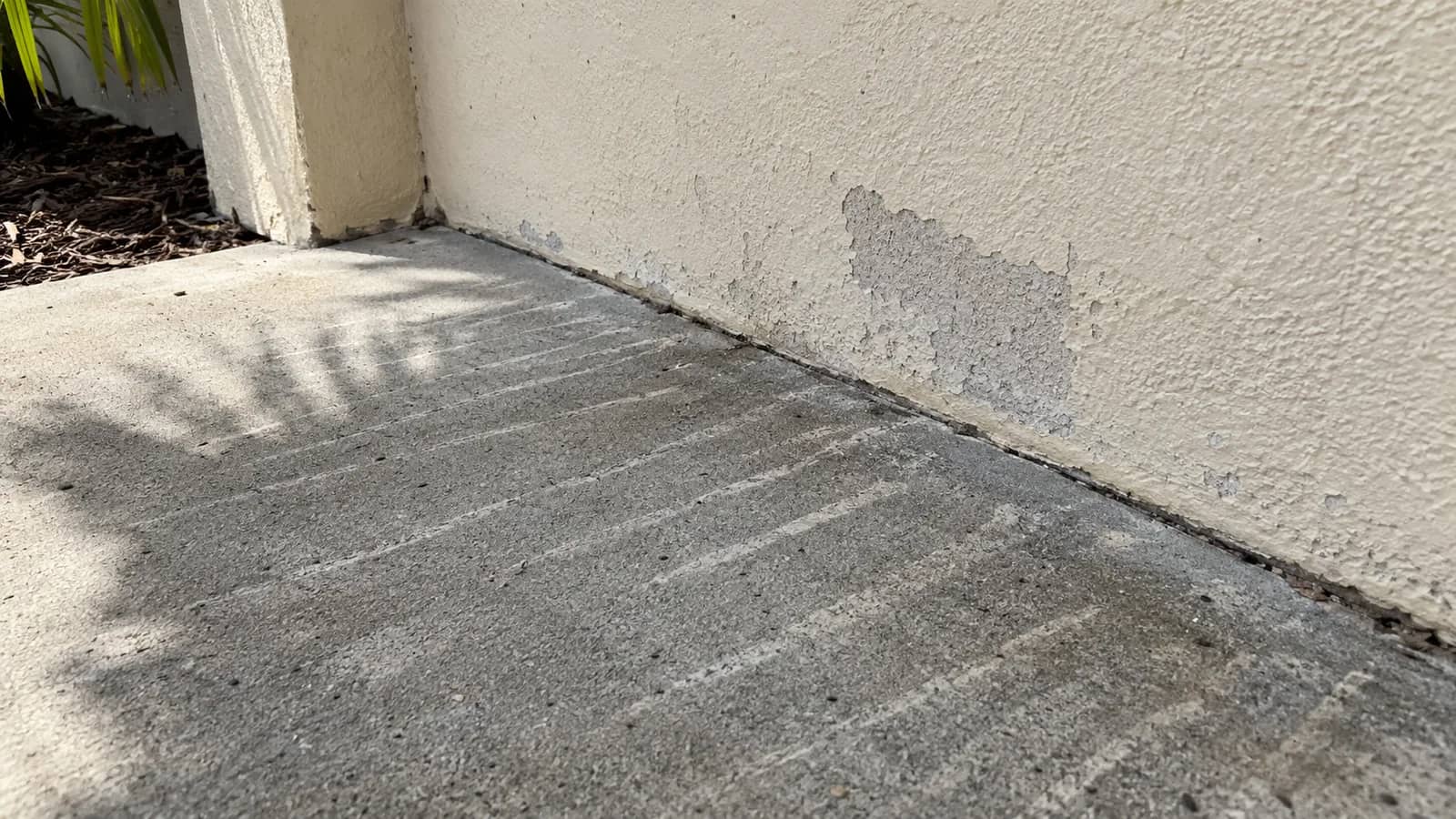
Pressure washing damage happens when a spray removes more than dirt: it can cut into stucco, displace paver joint sand, strip roof surfaces, or mark glass and its coatings. The safer method depends on the material, its condition, and the stain. A clean-looking result is not proof that the surface was unharmed.
How pressure washing damage starts
Pressure washing damage usually starts with concentrated force applied to a surface that cannot tolerate it. A narrow spray, close working distance, or repeated pass can turn routine cleaning into material removal, even when the operator intended only to clear staining.
The distinction matters on a commercial property because the surface is rarely uniform. A painted stucco wall may include patched areas, failed caulk, and exposed edges. A paver walkway may have stable sections beside joints already losing sand. The same pass can clean one area and worsen the next.
Water can also travel where the spray is pointed. Driving it upward beneath roof materials, into a window assembly, or through a gap in exterior finish creates a different problem from a visible spray mark. For that reason, a useful cleaning plan names both the material to be cleaned and the adjacent materials to protect.
Pressure is only one part of the decision. Spray pattern, distance, angle, cleaning solution, dwell time, and rinsing all affect the result. Soft washing uses an appropriate cleaning solution and a gentler application to address biological growth on suitable surfaces, but it still requires care around plants, finishes, and runoff.
Which method fits stucco, pavers, roofs, and glass
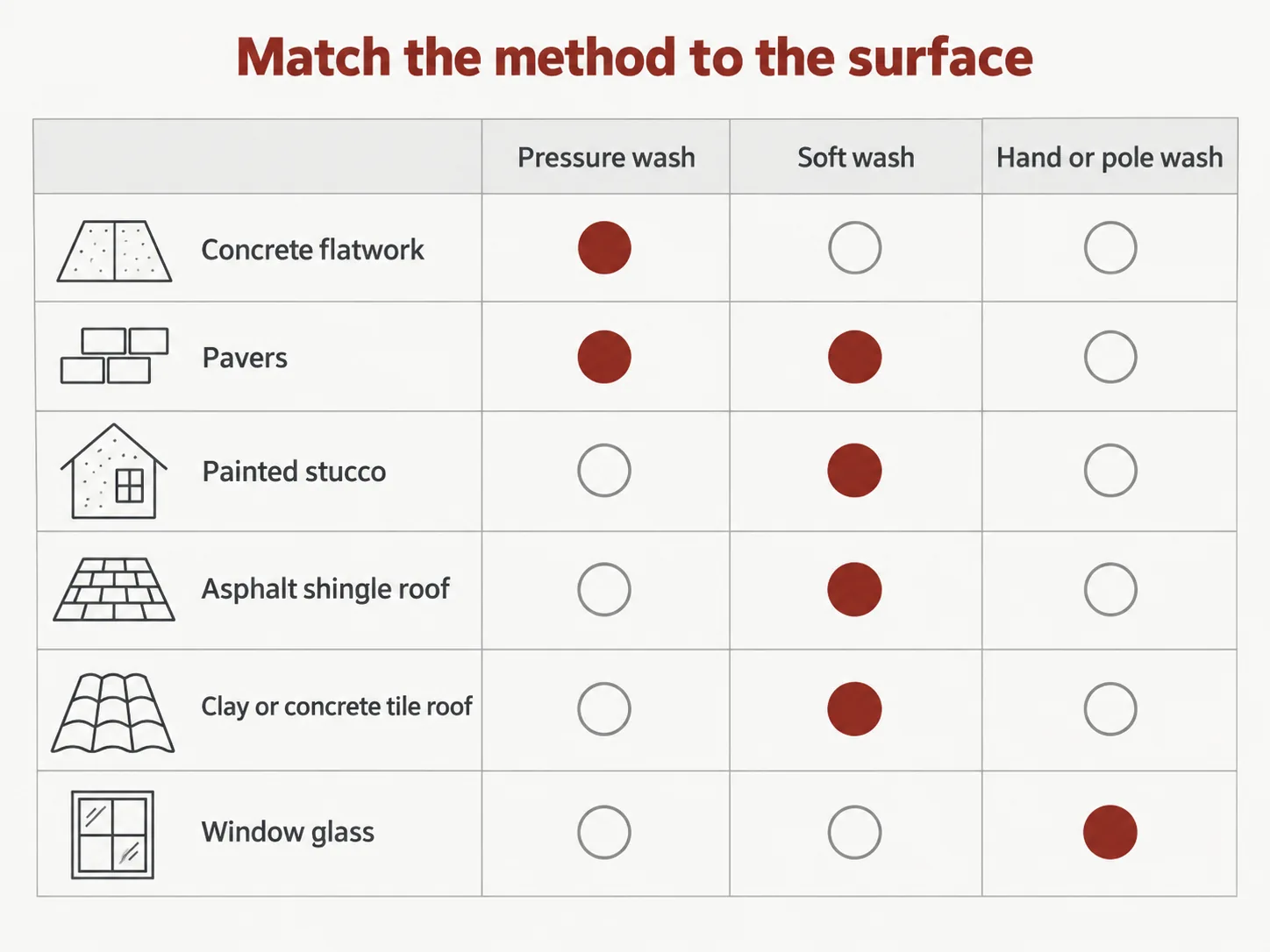
There is no single safe setting for a mixed-material building. The practical choice is to identify the surface and finish, test an inconspicuous area where appropriate, then use the least aggressive method that will address the soil without changing the material.
| Surface | What excessive force can do | Better starting approach |
|---|---|---|
| Painted or coated stucco | Cut visible lines, lift weak paint, or force water through cracks and edges | Inspect the finish and openings, then use a suitable low-pressure wash with controlled rinsing |
| Concrete pavers | Remove joint sand, disturb loose units, or leave unevenly cleaned strips | Check joint condition first; clean without concentrating the spray at joints |
| Asphalt shingles | Dislodge surface granules and damage the roofing | Follow the asphalt roofing manufacturer guidance for algae treatment and a gentle rinse |
| Clay or concrete roof tile | Affect coatings, vulnerable joints, or already damaged areas | Assess the tile and roof condition; use a roof-specific method suited to that system |
| Glass and window assemblies | Scratch glass if grit is dragged across it, or drive water toward seals and frames | Remove loose grit and use a glass-appropriate cleaning method with controlled water |
Stucco: clean the finish without cutting into it
Stucco often carries paint or another finish that determines how it should be cleaned. A sharp spray can produce pale tracks that look like stubborn dirt until the wall dries and the changed texture becomes obvious. A patch can react differently from the surrounding wall, so matching the result across a facade takes more than consistent nozzle movement.
For a property manager, the useful question is what is holding the stain. Surface soil, algae, and failing paint call for different work. Cleaning can remove soil; it cannot restore a coating that has already lost adhesion. A contractor should identify cracks, loose finish, and openings before washing, then explain which marks may remain.
Pavers: protect the joints as well as the face
Pavers are hard, but the installation includes joints and bedding that deserve care. A close spray can excavate joint sand or push loose debris across the surface. It may also produce conspicuous clean stripes if passes overlap unevenly, especially on a large entrance or courtyard.
Cleaning and sealing are separate decisions. A sealer can change appearance and maintenance needs, but it will not correct unstable pavers or replace proper joint repair. Ask for the condition of the joints and any existing sealer to be assessed before specifying a cleaning method. That prevents a simple wash from becoming an accidental surface-preparation job.
Roofs: distinguish asphalt from tile
The Asphalt Roofing Manufacturers Association says not to use a power washer or brush on asphalt roofing because high-pressure washing is likely to damage it. Its guidance for algae discoloration uses a sodium hypochlorite solution and gentle rinsing, and notes that the result is temporary. Roof stains therefore call for treatment planning, not a stronger spray.
Tile needs a separate assessment. The Tile Roofing Industry Alliance says professional low-intensity pressure washing of concrete tile can be done if desired. That is not a blanket instruction to pressure wash every tile roof: tile condition, coatings, vulnerable details, and safe access still matter. For roof staining, see the guide to black streaks on commercial buildings and roofs.
Glass: consider the whole window assembly
A window is more than its pane. Glass may carry a coating, and water aimed at a frame can reach seals, joints, or nearby finishes. Grit on the surface can scratch when moved under a tool, so cleaning should begin by identifying what is on the glass and how it will be removed.
This is especially relevant where a facade combines glass curtain wall, painted framing, stucco, and nearby pavement. Each material may need a different approach within the same work area. The guide to choosing a commercial building washing method explains how to plan for those transitions.
How to tell damage from a stain that remains
A surface that still looks dirty has not necessarily been damaged. Damage from power washing is more likely when the mark follows the spray path, changes the surface texture, exposes a different layer, or appears only after drying. Photograph the area in even light before deciding that another pass will fix it.
On stucco, look for sharp lines, lifted paint, or a patch with a newly rough face. On pavers, check whether joint sand has been displaced and whether clean strips differ from neighboring areas. On roofs, have the roof material and the suspected damage assessed before further cleaning. On glass, first determine whether a line is residue on the pane or a mark in the surface or coating.
Some stains need a treatment matched to their chemistry; others are signs of a material problem. More force is a poor diagnostic tool. If the stain remains after an appropriate test, ask what it is and what result the proposed method can reasonably achieve. That answer should be recorded before a full facade, walkway, or roof is cleaned.
What a commercial scope should settle before work begins
A useful scope states which surfaces will be cleaned, how the method will change between them, and what conditions may limit the result. It should also identify nearby doors, windows, landscaping, occupied routes, and drainage points. Those details give a manager a way to compare proposals beyond a general promise to wash the property.
Ask the contractor to walk the site and flag loose paint, cracked stucco, failing seals, unstable pavers, and roof concerns before cleaning starts. Agree on a small test area where the finish or stain is uncertain. Document existing marks and decide who will review the result after the surface dries, since wet material can hide uneven cleaning.
Water handling belongs in the scope too. US EPA regulations for municipal storm sewer permits require permittees to address illicit non-stormwater discharges. The property team should know where wash water will go and whether it needs to be contained or recovered for the specific job. Do not assume that a nearby drain is an acceptable destination.
For entrances and paths, plan pedestrian access during cleaning and while surfaces remain wet. OSHA's walking-working surface rule calls for surfaces to be maintained in a safe condition. A clear work sequence helps avoid reopening a route before it is ready for use.
Why South Florida changes the plan
South Florida's wet season generally runs from May through October, so exterior growth and tracked-in soil can return after a good cleaning. Salt air can also leave deposits on coastal facades and nearby metal. These conditions favor a maintenance plan that treats recurring soil and checks vulnerable finishes, rather than a more forceful wash each time marks reappear. See the guide to salt air and coastal corrosion for related building concerns.
The National Hurricane Center identifies June 1 through November 30 as Atlantic hurricane season. For managers, that makes scheduling and site condition important: cleaning should not conceal loose material, and access plans should account for changing weather. A post-storm inspection may reveal repairs that need attention before washing.
Condo and HOA work adds another layer of responsibility. Florida law assigns condominium common-element maintenance to the association, subject to the declaration's treatment of limited common elements. Confirm which areas fall within the association's scope, who can approve work, and how residents will be notified about access. The commercial exterior cleaning guide for Miami property managers covers the broader planning process.
Frequently asked questions
Is pressure washing your house hard?
Operating the equipment is only part of the job. The harder judgment is recognizing which finish can tolerate a directed spray, where water may enter, and when a stain needs treatment instead of force. On a commercial building, those choices extend across multiple surfaces and occupied areas. A site-specific method and a small test area are more useful than one setting for everything.
How much PSI will cut skin?
A pressure-washer stream can injure skin, and a safe injury threshold cannot be determined from a single PSI figure. No one should use a hand or foot to test the spray or clear a nozzle. Keep people out of the work area and follow the equipment's safety instructions. If a spray causes an injury, seek medical attention even if the wound looks small.
Can pressure washing damage concrete pavers?
Yes. The paver face may tolerate cleaning while the joints do not. A concentrated spray can remove joint sand, move loose material, and leave visibly uneven strips. Before cleaning, check for loose units, missing sand, and an existing sealer. The method should address the stain while protecting the installation around it.
Should a stained roof be pressure washed?
The roof material determines the answer. The Asphalt Roofing Manufacturers Association warns against power washing asphalt roofing because high pressure is likely to damage it, and recommends a treatment with gentle rinsing for algae discoloration. Tile guidance differs, so a tile roof needs its own condition assessment. A dark streak is a reason to identify the stain and roof system before selecting a method.
Will higher pressure remove a stain that survived the first pass?
Sometimes a remaining mark is bonded soil, but it may also be a coating defect, discoloration within the material, or a stain requiring a different treatment. Increasing pressure without identifying it raises the chance of removing sound material. Ask for the stain to be assessed and for the expected result to be explained before repeating the pass.
Sources
The manufacturer, trade, regulatory, and climate guidance cited above supports the material-specific and site-planning advice in this article.
For a mixed-surface property, ask 2Clean to review the areas you want cleaned and explain the method for each surface: pressure washing for durable flatwork, and soft washing for roofs and painted finishes, which 2Clean does not pressure wash.
Custom Commercial & HOA Walkthroughs
Need a scope tailored to your South Florida property?
Every building, plaza, and community has its own surface mix, access windows, and drainage layout. We quote by walkthrough rather than fixed rate sheets so your proposal matches your exact property. Call us directly at (904) 826-9806 or request a written scope online.
Related services & tools
Soft Washing by South Florida city: