
Methods, Surfaces & Failure Modes
Hot Water vs Cold Water Pressure Washing: When Heat Is Worth Using
October 15, 2026 · 8 min read
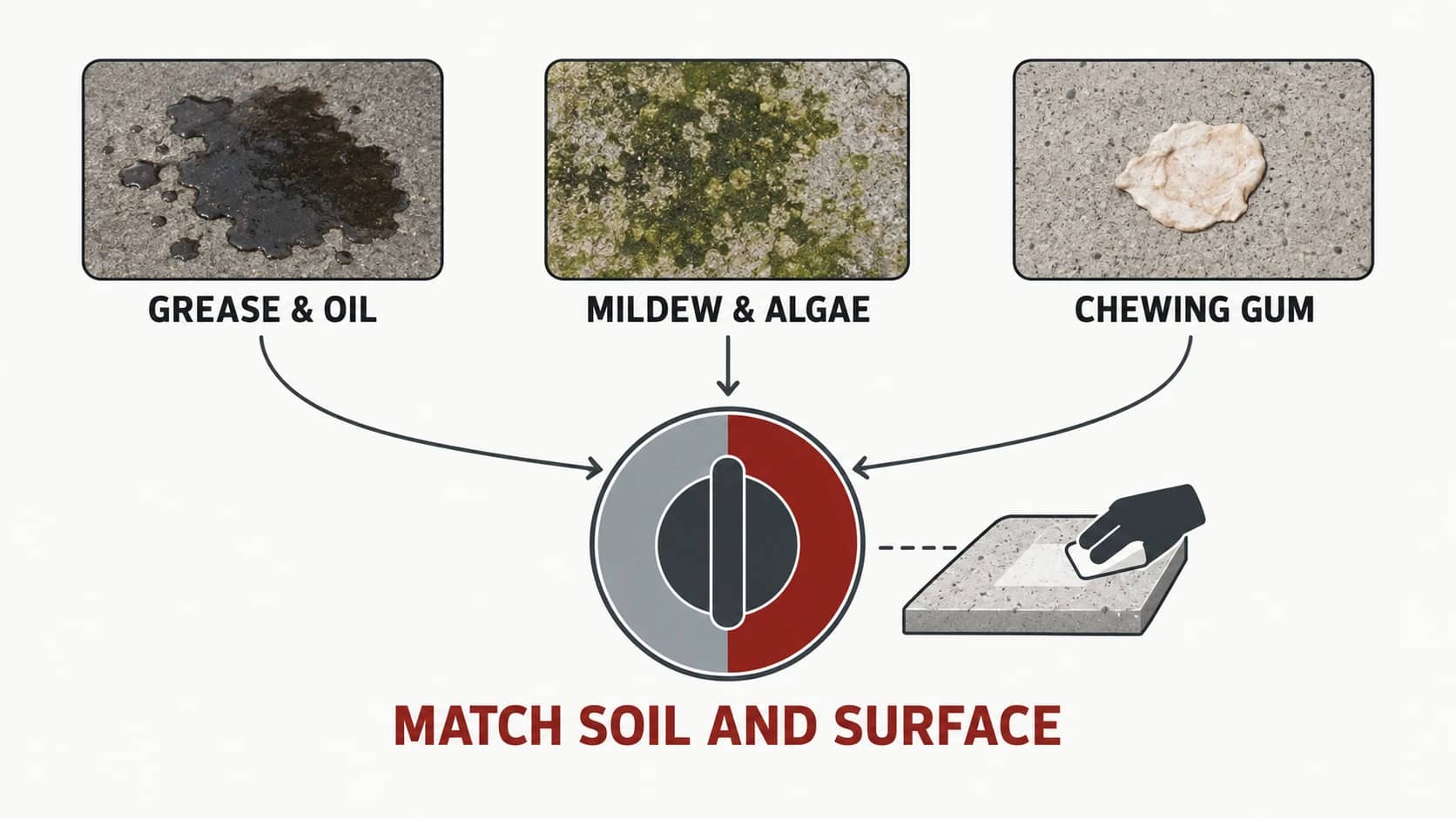
Hot water vs cold water pressure washing is mainly a decision about the soil, not the size of the property. Heat helps loosen grease, oil, food fats, and some adhesive residue. Cold water, paired with the right cleaner and technique, usually handles ordinary dirt and organic growth. The surface and wastewater plan matter either way.
Hot water vs cold water pressure washing: the quick decision
Start with the material you need to remove. Hot water is most useful when heat helps a cleaner release oily soil; cold water is often enough when the soil can be loosened and rinsed without it.
| Soil or task | Starting approach | What could change the decision |
|---|---|---|
| Dust, mud, sand, and loose debris | Cold water and a suitable rinse | Staining beneath the loose material may need a separate treatment |
| Algae or mildew on appropriate exterior surfaces | Cold water with a suitable cleaner and controlled application | Surface sensitivity may call for soft washing |
| Cooking grease or oily traffic residue on sound concrete | Cleaner and a small test area, then hot water if needed | Old absorbed stains may remain after surface residue is removed |
| Chewing gum on sound pavement | Test a suitable removal method; heat may help soften the residue | The pavement condition may limit the method |
| Rust staining | Identify and treat the stain | More heat or pressure does not address the cause |
| Paint or graffiti | Identify the coating and substrate before testing removal | Heat alone may spread residue or damage the finish |
This is a starting guide, not a temperature schedule. The same walkway can contain loose sand, algae, gum, and oil, each calling for a different treatment. A contractor who identifies those areas before quoting can explain where heated equipment earns its added cost.
For broader planning across façades, entrances, and flatwork, see the commercial exterior cleaning guide. It helps place the washing method within the full property scope.
How heat helps release grease and oil
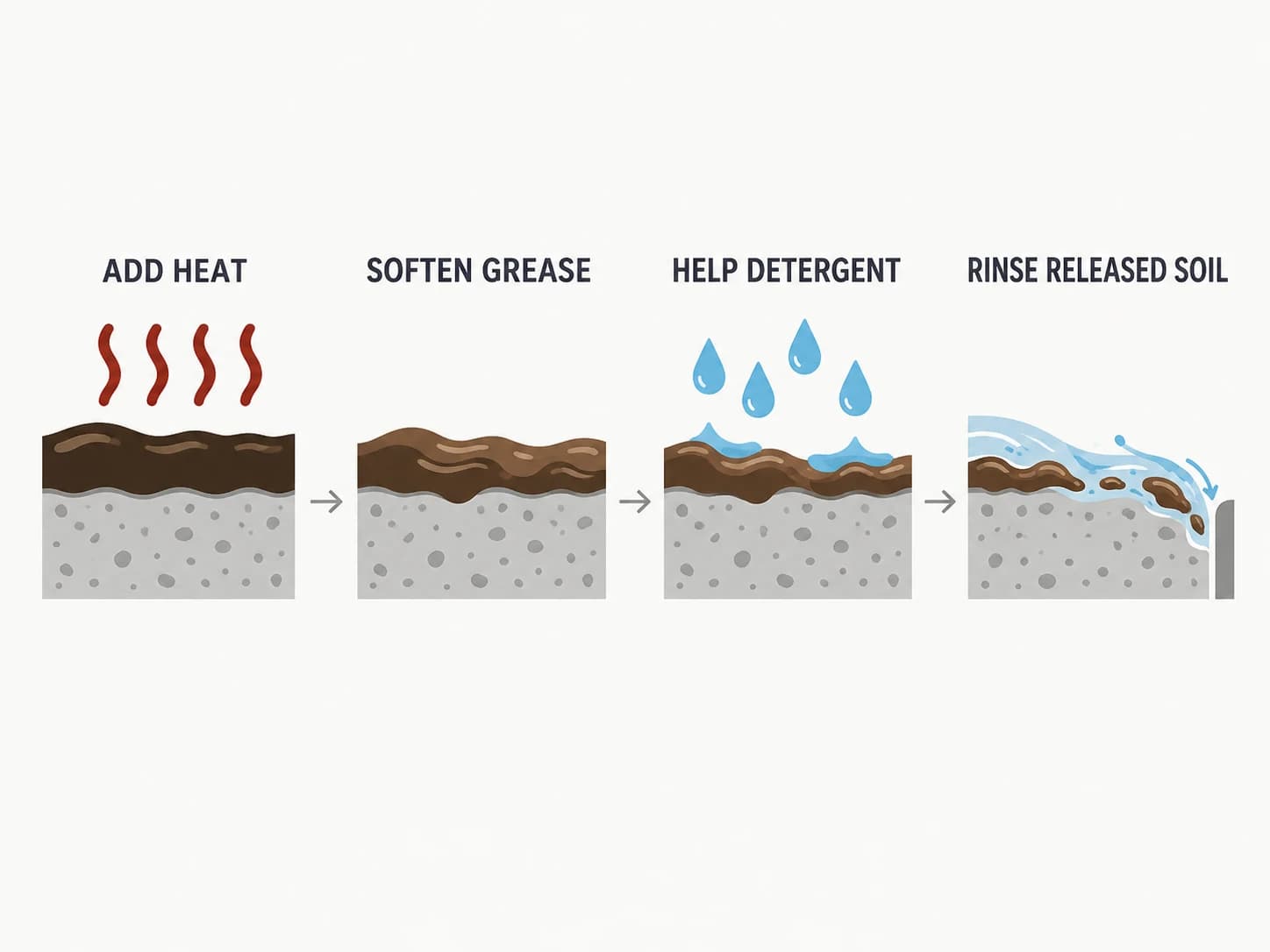
Heat can soften greasy deposits and help detergent work through them, making the loosened residue easier to rinse and collect. That benefit is most noticeable on food-service pavement, loading areas, and other sound surfaces with persistent oily buildup.
Water temperature does not, by itself, determine cleaning pressure. A heated unit still needs suitable flow, pressure, detergent, dwell time, and a nozzle matched to the surface. More pressure can remove material from the surface along with the soil, so it is a poor substitute for choosing the right cleaning method.
Heat also cannot reliably erase oil that has penetrated concrete. If a garage deck or parking area has an old dark stain, ask bidders to distinguish removable surface oil from discoloration that may remain. The guide to removing oil stains from commercial concrete explains why the stain's age and depth affect the result.
Where cold water is usually sufficient
Cold water is a sound starting point for loose soil, routine rinsing, and many non-oily deposits. Its effectiveness still depends on the cleaner, contact time, agitation where appropriate, and a thorough rinse.
On South Florida walkways, windblown grit and ordinary grime may come off without heating the water. Algae and mildew are different from grease: an appropriate cleaning solution and controlled application generally matter more than heat. A rinse that removes visible growth without addressing the remaining film may produce a short-lived result.
Cold water does not mean indiscriminate high pressure. Pavers can lose joint material, weak mortar can erode, and water can be driven into openings around a building. The operator should adjust the method to the condition of each surface and protect adjacent materials.
For roofs, temperature is not the central choice. The Asphalt Roofing Manufacturers Association advises against power washing asphalt roofing because high pressure is likely to damage it. Roof cleaning requires its own material-specific approach, and the presence of dark streaks does not justify adding heat or pressure.
Match the method to the surface and failure mode
The right temperature can still produce a poor result if the surface is misidentified. Before approving a method, ask what is soiled, what lies underneath, and what damage the proposed application could cause.
Concrete flatwork can tolerate methods that would be unsuitable for siding or roofing, but its condition varies. On a greasy service lane, a test area can show whether a cleaner and cold water will work or whether heat improves removal. On a cracked or deteriorated slab, the contractor should account for vulnerable edges and joints.
Pavers and brick need attention to joint material, mortar, and existing wear. Heat is rarely the deciding factor for ordinary dirt. A controlled cleaning method and a plan for displaced debris matter more than simply selecting the hotter machine.
Painted finishes, awnings, and other sensitive assemblies call for material-specific cleaning. Pressure washing a painted finish risks removing or marking the coating; fabric and illuminated signage have their own vulnerabilities. For those areas, ask for a separate method rather than including them in a blanket pavement-washing instruction.
Graffiti and rust also need separate diagnoses. Graffiti removal depends on the marking material and substrate, while rust calls for identifying the source and selecting an appropriate treatment. Neither problem is solved by specifying hot water alone.
Finally, inspect what cleaning leaves behind. A walkway can look better while retaining slippery residue or scattered debris. OSHA's walking-surface rule calls for surfaces to be kept clean and free of spills, which makes the condition after rinsing part of the job, not an afterthought.
What hot water changes in the cost
Heated washing can cost more because heating equipment uses fuel or energy and adds operating and maintenance demands. The relevant comparison is the cost of achieving the specified result, including labor, cleaner, wastewater handling, and any repeat work.
Heat may be worthwhile on a heavily greased area if it releases soil faster or produces a cleaner result in a test area. It may add little on a dusty parking deck that rinses clean with cold water. Ask bidders to identify the heated portions of the scope so you can compare like work with like work.
Avoid asking for hot water across an entire property merely because one loading bay needs it. Separate the greasy areas from routine sidewalks and building surfaces. That makes the bid easier to evaluate and gives the contractor room to use a gentler method where the material requires one.
How to write a useful scope of work
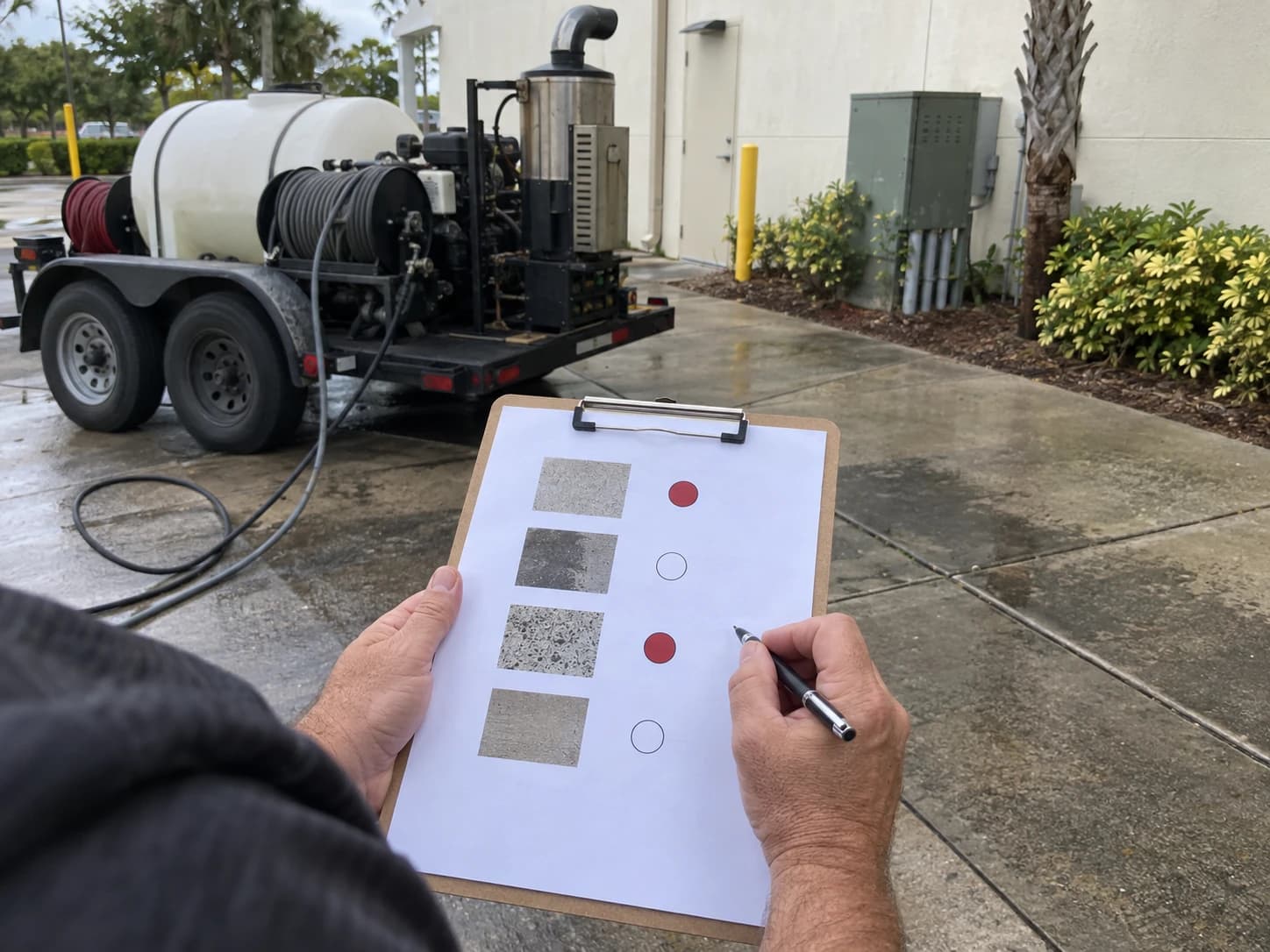
A useful scope names the soil, surface, and acceptable result, then identifies where a heated method may be needed. It also requires a test area and a plan for protecting adjacent finishes and managing wash water.
For a grease-affected concrete area, language such as this gives bidders a clear task:
Clean the identified concrete service area to remove loose debris and removable surface grease. Test the proposed cleaner and washing method in an inconspicuous area. Use heated water where the test shows a meaningful improvement, protect adjacent finishes, and describe how wastewater and loosened residue will be collected or managed. Identify any absorbed staining expected to remain.
For routine walkways, the scope can instead request removal of loose soil and visible organic buildup using a method appropriate to the pavement and nearby materials. That states the desired result without forcing heat onto areas that do not need it.
Do not prescribe a universal temperature or pressure for every stain. The original surface condition, coating, drainage, and soil all affect the choice. Require the contractor to flag exclusions and expected limitations before work begins so the board or facilities team can assess the proposed result.
Plan for runoff before cleaning starts
A wash plan should account for where water, detergent, grease, and loosened soil will go. This matters especially at service areas and garages, where the residue being removed should not simply be pushed toward a drain.
Ask bidders to identify nearby drains, the likely flow path, and the proposed collection or containment method. Also ask how they will keep pedestrians away from wet work areas and leave walking surfaces free of residue. A hotter wash does not remove the need for those steps.
Requirements vary with the site and the discharge route. For the regulatory context behind pressure washing wastewater regulations, review the property's drainage plan and the applicable local requirements before finalizing the scope.
Frequently asked questions
Is hot water pressure washing better than cold water?
It is better for some soils, particularly grease, oil, and food fats on suitable surfaces. For loose dirt and many routine exterior washes, cold water with an appropriate cleaner can achieve the required result. Compare methods on a small representative area when the answer is unclear, and judge the finish as well as the time needed to reach it.
Why is hot water pressure higher than cold water?
Hot water is not inherently delivered at higher pressure. Water temperature and operating pressure are separate equipment settings and specifications. Heated washing may seem more forceful because oily soil releases more readily, but that improvement comes from the combined cleaning method. Increasing pressure without considering the surface can cause damage without improving the underlying treatment.
Can I wash everything on cold?
Cold water can handle a wide range of exterior cleaning, but it will not be the most efficient choice for every greasy deposit. Some stains also need a specific cleaner or a separate removal process rather than a change in temperature. Decide by soil and surface, then check the proposed method on a test area.
Can I run hot water through my cold water pressure washer?
Do not assume a cold-water machine can accept heated inlet water. Its pump, seals, hose, and other components have manufacturer operating limits. A contractor should check the equipment instructions and use a machine intended for the proposed temperature. Sending water beyond a component's rating can damage the equipment and create a safety problem.
Does hot water kill mold and algae during pressure washing?
Do not treat a hot-water rinse as proof of disinfection or lasting control. Exterior organic growth is usually addressed through a surface-appropriate cleaner, adequate contact time, and a careful rinse. The surrounding conditions and any remaining film can affect how quickly it returns. Ask for a cleaning outcome rather than an unsupported sanitizing claim.
Sources
For a property-specific method and scope, review 2Clean's pressure washing service and request an assessment of the surfaces and soils you need cleaned.
Custom Commercial & HOA Walkthroughs
Need a scope tailored to your South Florida property?
Every building, plaza, and community has its own surface mix, access windows, and drainage layout. We quote by walkthrough rather than fixed rate sheets so your proposal matches your exact property. Call us directly at (904) 826-9806 or request a written scope online.
Related services & tools
Pressure Washing by South Florida city: