
Maintenance Scheduling
The South Florida Commercial Property Exterior Maintenance Checklist
September 16, 2026 · 9 min read
A commercial exterior maintenance checklist includes pressure washing, soft washing, roof cleaning, paver sealing, and window cleaning. This article will cover the essential items, divided by frequency, and tailored to South Florida's unique conditions.
Direct answer: the checklist in brief
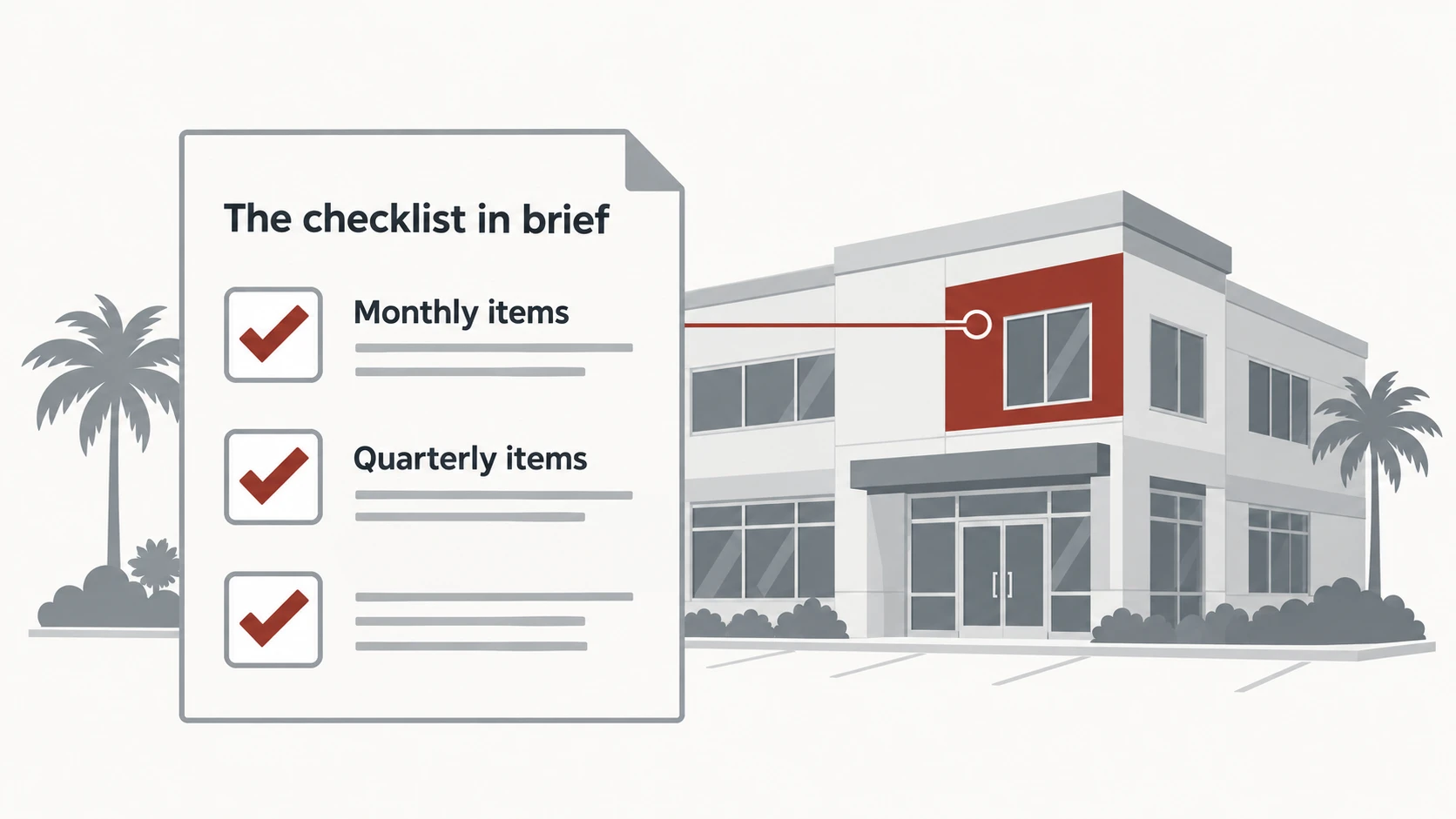
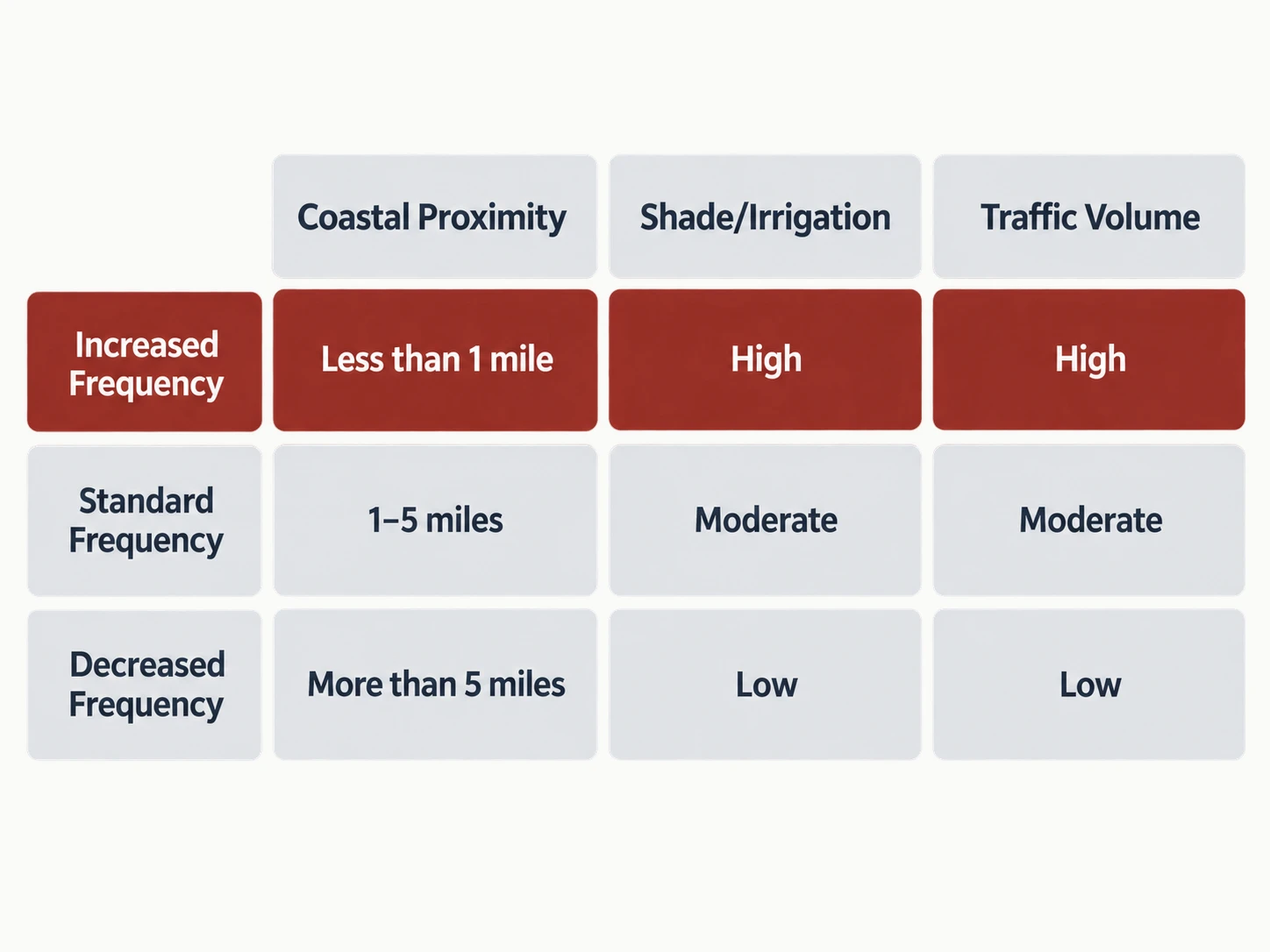
A comprehensive commercial exterior maintenance checklist for South Florida includes monthly, quarterly, semi-annual, and annual tasks. These tasks are adjusted based on three key variables: coastal proximity, shade/irrigation exposure, and traffic volume. Each building's maintenance schedule is customized to ensure optimal performance and longevity.
The checklist covers:
- Monthly: Inspections, debris removal, and minor repairs.
- Quarterly: Pressure washing, soft washing, and general cleaning.
- Semi-Annual: Roof inspections, paver sealing, and window cleaning.
- Annual: Comprehensive roof cleaning, deep paver sealing, and detailed window cleaning.
Monthly items
Monthly maintenance is crucial for preventing small issues from becoming major problems. These tasks ensure that your property remains clean and functional, reducing the risk of damage and extending the lifespan of exterior surfaces.
- Inspection and Debris Removal: Regularly inspect the property for any signs of wear, damage, or debris. Remove leaves, branches, and other debris from gutters, downspouts, and walkways. This prevents clogs and reduces the risk of water damage.
- Minor Repairs: Address any minor issues such as loose tiles, cracked pavers, or damaged window seals. Prompt repairs can prevent more extensive and costly repairs in the future.
- Pressure Washing (Light Areas): Light pressure washing can be done in areas with less exposure to coastal elements, shade, and traffic. This helps maintain a clean appearance without the need for more intensive cleaning.
Quarterly items
Quarterly tasks are designed to maintain the overall cleanliness and functionality of your property. These tasks are more involved than monthly inspections and can help prevent the buildup of dirt, algae, and other contaminants.
- Pressure Washing: Conduct thorough pressure washing in areas with moderate exposure to coastal elements, shade, and traffic. This helps remove dirt, grime, and algae buildup, which can degrade the appearance and lifespan of surfaces.
- Soft Washing: Use soft washing techniques for areas with more delicate surfaces, such as wood or painted surfaces. Soft washing is gentler and less likely to cause damage while still effectively cleaning the surface.
- General Cleaning: Perform a general cleaning of all exterior surfaces, including walls, fences, and patios. This includes removing stains, mildew, and other contaminants that can affect the appearance and integrity of the property.
Semi-annual items
Semi-annual tasks are more comprehensive and focus on areas that require deeper cleaning and maintenance. These tasks are essential for maintaining the structural integrity and aesthetic appeal of your property.
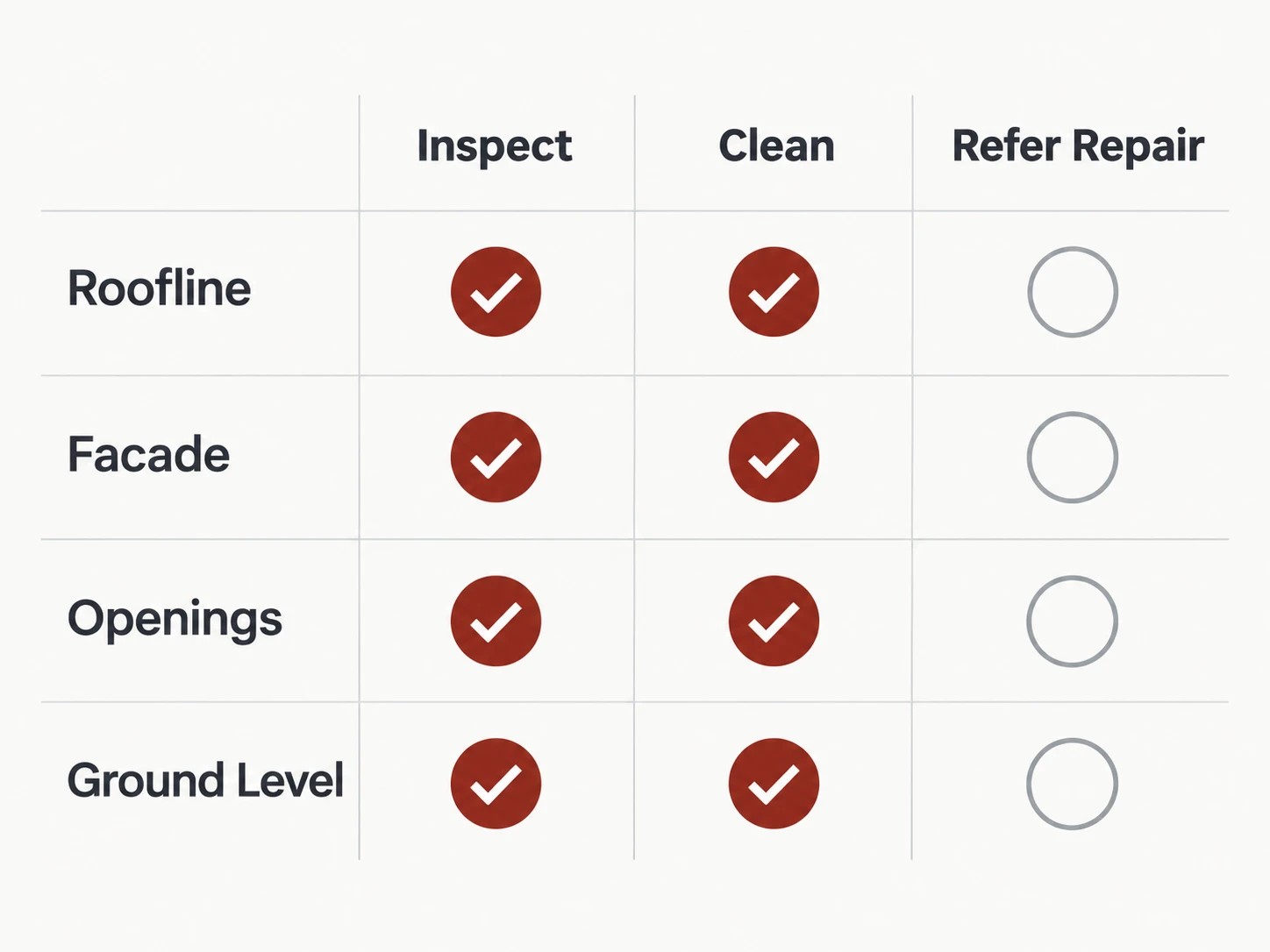
- Roof Inspections: Conduct thorough inspections of the roof to check for any signs of damage, leaks, or algae growth. Pay special attention to areas around vents, chimneys, and skylights. Address any issues promptly to prevent water damage and structural issues.
- Paver Sealing: Apply a new coat of sealer to pavers in areas with high traffic or exposure to the elements. Sealing helps protect pavers from stains, cracks, and other damage, extending their lifespan and maintaining a uniform appearance.
- Window Cleaning: Clean windows thoroughly to remove dirt, grime, and other contaminants. Use a high-quality cleaner and appropriate tools to ensure a streak-free finish. This task not only improves the appearance of your property but also enhances visibility and safety.
Annual items
Annual tasks are the most comprehensive and are designed to address any issues that have developed over the year. These tasks ensure that your property remains in top condition and are essential for long-term maintenance.
- Comprehensive Roof Cleaning: Perform a deep cleaning of the entire roof, including areas that are difficult to reach. Use the methods recommended by the Asphalt Roofing Manufacturers Association (ARMA) to address algae growth without damaging the roof. ARMA's technical bulletin Algae Discoloration of Roofs advises using sodium hypochlorite with a gentle rinse and not using a power washer or brush, as high-pressure washing can damage asphalt roofing.
- Deep Paver Sealing: Apply a deep-sealing treatment to all pavers, regardless of their exposure. This ensures that all pavers are protected from the elements and maintains a consistent appearance throughout the property.
- Detailed Window Cleaning: Conduct a detailed cleaning of all windows, including the frames, sills, and hardware. Use appropriate tools and cleaners to ensure a thorough and professional finish. This task is crucial for maintaining the aesthetic appeal and functionality of your windows.
The intervals below are a starting point. The sections after them cover how coastal proximity, shade and irrigation, and traffic volume move each one for a specific property.
How coastal proximity changes intervals
Coastal proximity significantly influences the frequency of exterior maintenance tasks. Salt spray, higher humidity, and stronger winds accelerate the degradation of building materials and surfaces, necessitating more frequent cleaning and maintenance. Structures closer to the coast require more attention to prevent damage and maintain appearance.
Salt-laden air and wind-driven moisture can cause corrosion, staining, and biological growth on buildings. Metal components, such as railings and window frames, are particularly susceptible to rust. Masonry and concrete can develop efflorescence, a white, crystalline deposit that forms when water-soluble salts are brought to the surface. These issues are more pronounced within a mile of the shore.
To mitigate these effects, property managers should schedule more frequent inspections and cleanings. For example, pressure washing and roof cleaning might need to be done twice a year instead of annually for properties within a mile of the coast. Additionally, using corrosion-resistant materials and sealants can help extend the intervals between maintenance tasks.
How shade and irrigation change intervals
Shade and irrigation exposure play crucial roles in determining the frequency of exterior maintenance. Areas with more shade and regular irrigation tend to experience faster growth of moss, algae, and other biological contaminants. These factors can significantly impact the appearance and longevity of building exteriors.
Shaded areas retain moisture longer, creating an ideal environment for biological growth. This is especially true for surfaces that receive regular irrigation, such as landscaping near buildings. Moss and algae can discolor and deteriorate surfaces, leading to more frequent maintenance needs.
For properties with extensive shaded areas and irrigation, property managers should consider increasing the frequency of cleaning tasks. For instance, soft washing to remove biological growth might need to be done every six months instead of annually. Regular inspections can help identify and address issues before they become severe.
Hurricane season adjustments
Hurricane season in South Florida runs from 1 June to 30 November, with the peak activity around 10 September. During this period, property managers must take additional steps to prepare and protect their buildings. High winds, heavy rain, and potential storm surges can cause significant damage to exteriors, making pre- and post-storm maintenance critical.
Before hurricane season, it is essential to conduct thorough inspections and address any vulnerabilities. This includes checking and cleaning gutters, securing loose items, and ensuring that windows and doors are properly sealed. Post-storm, immediate attention should be given to cleaning up debris, assessing damage, and making necessary repairs.
Regular maintenance tasks such as pressure washing and roof cleaning should be scheduled outside of hurricane season to avoid complications. For example, if a property is due for a roof cleaning in August, it might be better to schedule it in May or wait until November to ensure the roof is in optimal condition for the storm season.
Who does what: in-house vs contracted
Deciding whether to handle exterior maintenance tasks in-house or contract them out depends on several factors, including the complexity of the job, the availability of skilled staff, and budget constraints. In-house teams can be more responsive and cost-effective for routine tasks, while specialized companies offer expertise and equipment for more complex jobs.
For routine tasks such as window cleaning and minor pressure washing, an in-house team with the right training and equipment can often handle the work efficiently. However, for more specialized tasks like roof cleaning, paver sealing, and comprehensive pressure washing, it is often more practical to contract a professional service. Companies like 2Clean have the expertise and specialized equipment to ensure the job is done safely and effectively.
When considering in-house vs. contracted services, property managers should also factor in the potential risks. For example, high-pressure washing can cause damage if not performed correctly. Professional companies are trained to avoid such issues and can often provide warranties or guarantees for their work.
The downloadable checklist
To help you manage the exterior maintenance of your South Florida property, we have created a downloadable checklist. This checklist is tailored to the specific needs of commercial properties in the region, taking into account coastal proximity, shade and irrigation exposure, and traffic volume. Use it to plan and schedule your maintenance tasks efficiently.
Master checklist by interval
| Task | Annual | Semi-Annual | Quarterly | Monthly |
|---|---|---|---|---|
| Pressure Washing | X | X | ||
| Soft Washing (Biologicals) | X | |||
| Roof Cleaning | X | |||
| Paver Sealing | X | |||
| Window Cleaning | X | |||
| Gutter Cleaning | X | |||
| Inspections | X | X |
Interval adjustment by exposure factor
| Exposure Factor | Coastal Proximity | Shade/Irrigation | Traffic Volume |
|---|---|---|---|
| Increased Frequency | <1 mile | High | High |
| Standard Frequency | 1-5 miles | Moderate | Moderate |
| Decreased Frequency | >5 miles | Low | Low |
For more information on our commercial exterior cleaning services, visit our commercial HOA services page or explore our Miami service area.
Sources
Frequently asked questions
What should be on a commercial property maintenance checklist?
A commercial property maintenance checklist should include regular inspections of the roof, windows, doors, gutters, and exterior walls. It should also cover the cleaning of vents, HVAC units, and parking areas, as well as landscaping and pest control.
What goes on a commercial exterior maintenance checklist?
A commercial exterior maintenance checklist includes regular inspections and cleaning of the roof, windows, doors, gutters, and exterior walls. It also covers the maintenance of parking areas, landscaping, and exterior lighting.
How often is each item done?
The frequency of each maintenance task varies. Roof inspections and cleaning should be done annually, while window and door checks are typically done bi-annually. Gutters and downspouts should be cleaned at least twice a year, and parking areas and landscaping need regular attention, often monthly or as needed.
What is different in a humid climate?
In a humid climate, additional attention is required for mold and algae growth, particularly on roofs and exterior walls. Regular inspections and cleaning are crucial to prevent damage and maintain the appearance of the property. Humidity can also accelerate the deterioration of building materials, so more frequent maintenance may be necessary.
Who performs each item?
Each maintenance task can be performed by different professionals. Roof inspections and cleaning are typically handled by roofing contractors, while window and door maintenance can be done by building maintenance staff. Landscaping is usually managed by groundskeepers, and pest control is often the responsibility of licensed pest control services.
How often overall?
Overall, a comprehensive commercial exterior maintenance checklist should be reviewed and updated at least annually. However, some tasks, such as cleaning gutters and checking for pest infestations, may need to be done more frequently, such as bi-annually or quarterly, to ensure the property remains in good condition.