
Maintenance Scheduling
Hurricane Preparation Building Exterior Checklist for South Florida
October 14, 2026 (updated) · 9 min read
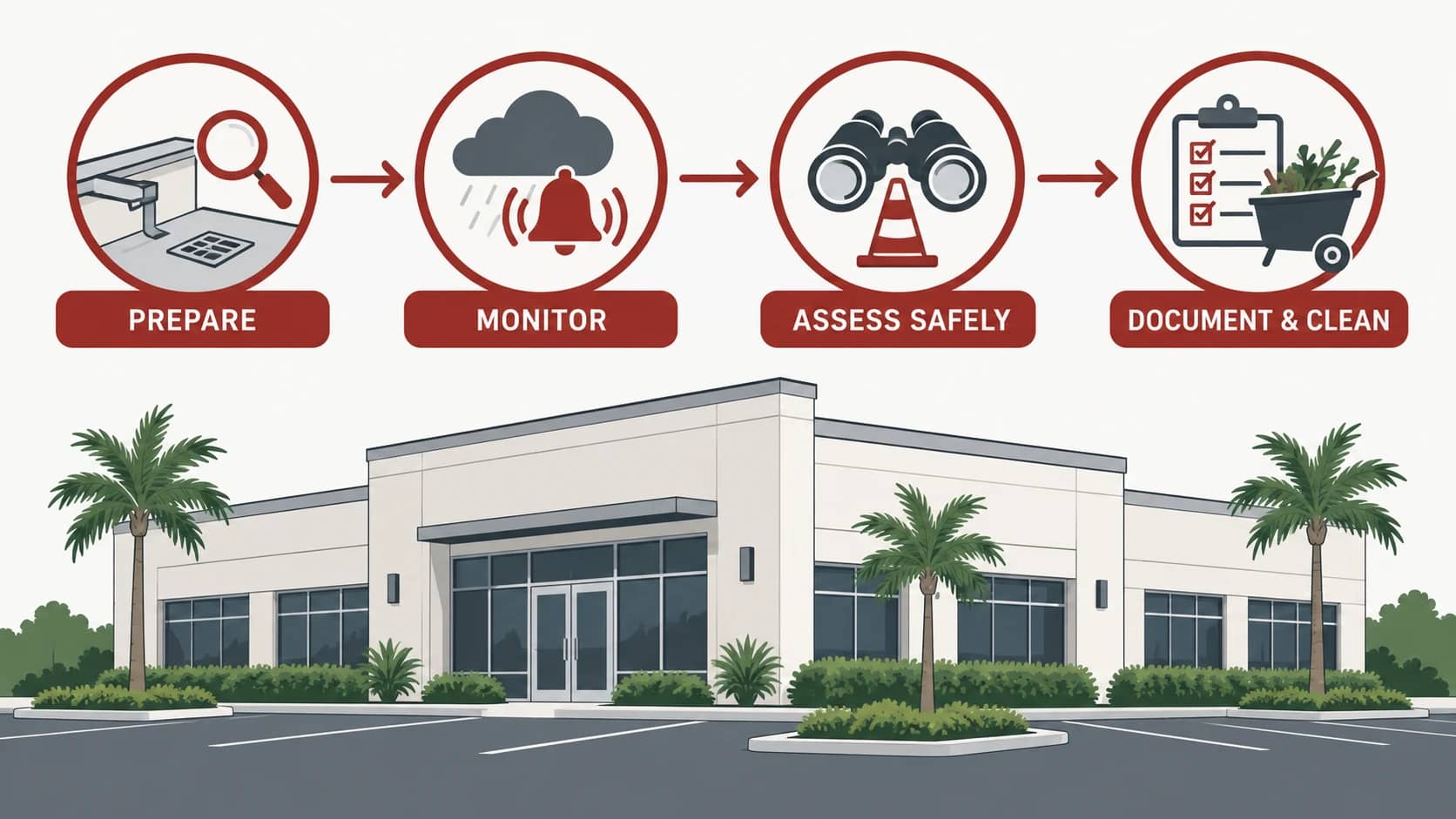
Hurricane preparation for a building exterior starts before June: inspect drainage, the roof, openings and grounds; repair known defects; secure loose items; and photograph existing conditions. After a storm, wait for safe access, document new damage, clear blocked drainage, then choose cleaning methods that suit each surface. Keep repair and cleaning scopes separate.
Hurricane preparation building exterior checklist
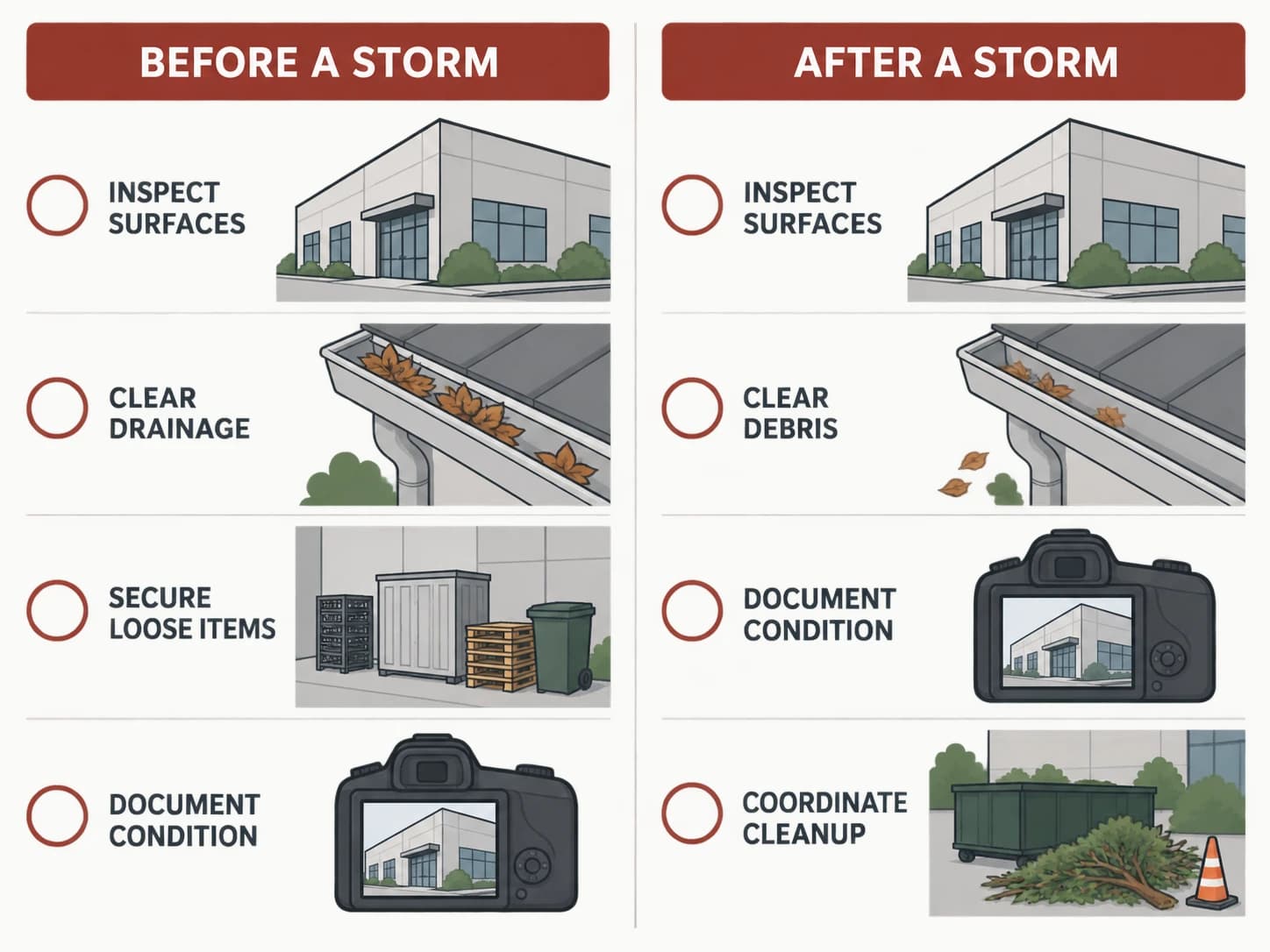
The useful split is between work you can schedule before June and decisions that depend on what a storm leaves behind. This checklist gives a property manager or board a sequence to assign, inspect and record.
| Exterior area | Before the season | After a storm, once access is safe |
|---|---|---|
| Roof and openings | Arrange condition checks and repairs for visible defects. | Record displaced materials, broken glazing and signs of water entry; refer damage for qualified assessment. |
| Gutters, downspouts and site drainage | Clear debris and confirm visible outlets are open. | Photograph blockages, then clear accessible debris without sending it into drains. |
| Signs, furniture and loose materials | Set a plan to secure or store movable items. | Account for displaced items and check nearby surfaces for impact damage. |
| Walls, paving and windows | Photograph existing stains, cracks and finish conditions. | Photograph changes before cleaning; select a method for each sound surface. |
| Vendor coordination | Confirm contacts, access rules, scope and documentation needs. | Authorize work after safety and damage checks establish what is needed. |
NOAA places the Atlantic hurricane season from June 1 to November 30 and its climatological peak on September 10. Most activity falls between mid-August and mid-October. Those dates help set a maintenance calendar, but they do not make an early or late storm harmless.
For a larger property, assign each row to a responsible party and keep the record with the property's exterior maintenance checklist. A board, facilities team, roofer and cleaning contractor may each own a different task. Clear assignments reduce the chance that a blocked outlet or damaged opening is noticed but never addressed.
Before June: inspect drainage, roofs and loose items
Start with paths that move water away from the building and components that keep it outside. Cleaning a gutter helps only if the downspout and its outlet can also carry water away; a clear roof drain does little good if debris blocks the next visible point in the route.
Walk the accessible grounds and review gutters, downspouts, roof drains, scuppers and surface drains with the people responsible for them. Note standing water, recurring debris and outlets that are difficult to reach. Arrange appropriate maintenance or repair rather than treating a recurring blockage as a cleaning task alone.
Have the roof and building envelope assessed by the appropriate trades where you see loose materials, damaged flashing, failing seals, cracked finishes or water marks. Record the location and the action assigned. A cleaning crew may uncover a defect, but washing cannot restore a failed roof detail, window seal or wall assembly.
Review outdoor furniture, planters, signs, temporary displays and stored materials. Decide what can be moved, what needs a secure storage location and who will handle it when the property activates its storm plan. Include loading areas, balconies and other spaces that may fall outside a routine grounds walk.
Take dated photos from repeatable viewpoints before work begins. Include wide shots that identify each elevation and close views of existing defects or staining. The Miami commercial exterior cleaning guide can help define routine cleaning scope, while the storm plan should name who handles repairs, access and damage decisions.
Choose cleaning methods by surface and condition
Pre-season cleaning is useful when it clears drainage routes, removes buildup from walkways or makes defects easier to see. It does not make a building wind resistant. Inspect first, then clean sound surfaces with a method that fits their material and finish.
Concrete and some other durable flatwork may tolerate controlled pressure washing. Painted finishes, delicate coatings, sealants and assemblies that can admit water call for a gentler approach or an assessment before cleaning. The guide to washing stucco, concrete, EIFS and glass explains why one method should not be applied across every elevation.
Roof material matters as well. The Asphalt Roofing Manufacturers Association warns that high-pressure washing is likely to damage asphalt roofing and recommends a gentler cleaning approach for algae discoloration. Its guidance also says the cleaning result is temporary. Arrange roof cleaning as a separate scope that identifies the roof type, condition and suitable method; refer defects for repair before cleaning.
Treat slippery entrances and walkways as a maintenance priority, particularly where storm debris may add to the hazard. OSHA requires walking and working surfaces to be kept clean and maintained in safe condition, and the ADA Standards call for stable, firm, slip-resistant walking surfaces. Cleaning may remove buildup, but a damaged or uneven surface needs its own remedy.
After a storm: document and triage before cleaning
Begin with a safety and damage check, then decide what can be cleared or washed. Wait until the property is accessible under local guidance and keep people away from unstable materials, exposed electrical equipment, broken glass and areas with suspected structural damage.
Photograph each affected area before debris is moved. Use wide views to show location and close views to show damage, staining or blocked drainage. Keep the date, location, inspection notes, work authorization and vendor records together. This gives the board or facilities team a clearer basis for repair decisions and any insurance submission, without assuming a particular claim outcome.
Separate the work into hazards, water management, repairs and cleaning. A damaged opening or active water entry needs assessment ahead of cosmetic washing. Clear accessible drainage obstructions when safe, and have the appropriate trade assess displaced roofing, failed seals or damaged cladding before water is applied nearby.
Give the cleaning contractor a marked scope showing surfaces approved for cleaning and areas to avoid. Note fragile finishes, open joints, electrical fixtures and locations where wash water could carry sediment or residue. If the original condition is uncertain, record it before work starts rather than guessing whether a stain or crack is new.
Debris and staining on exterior surfaces
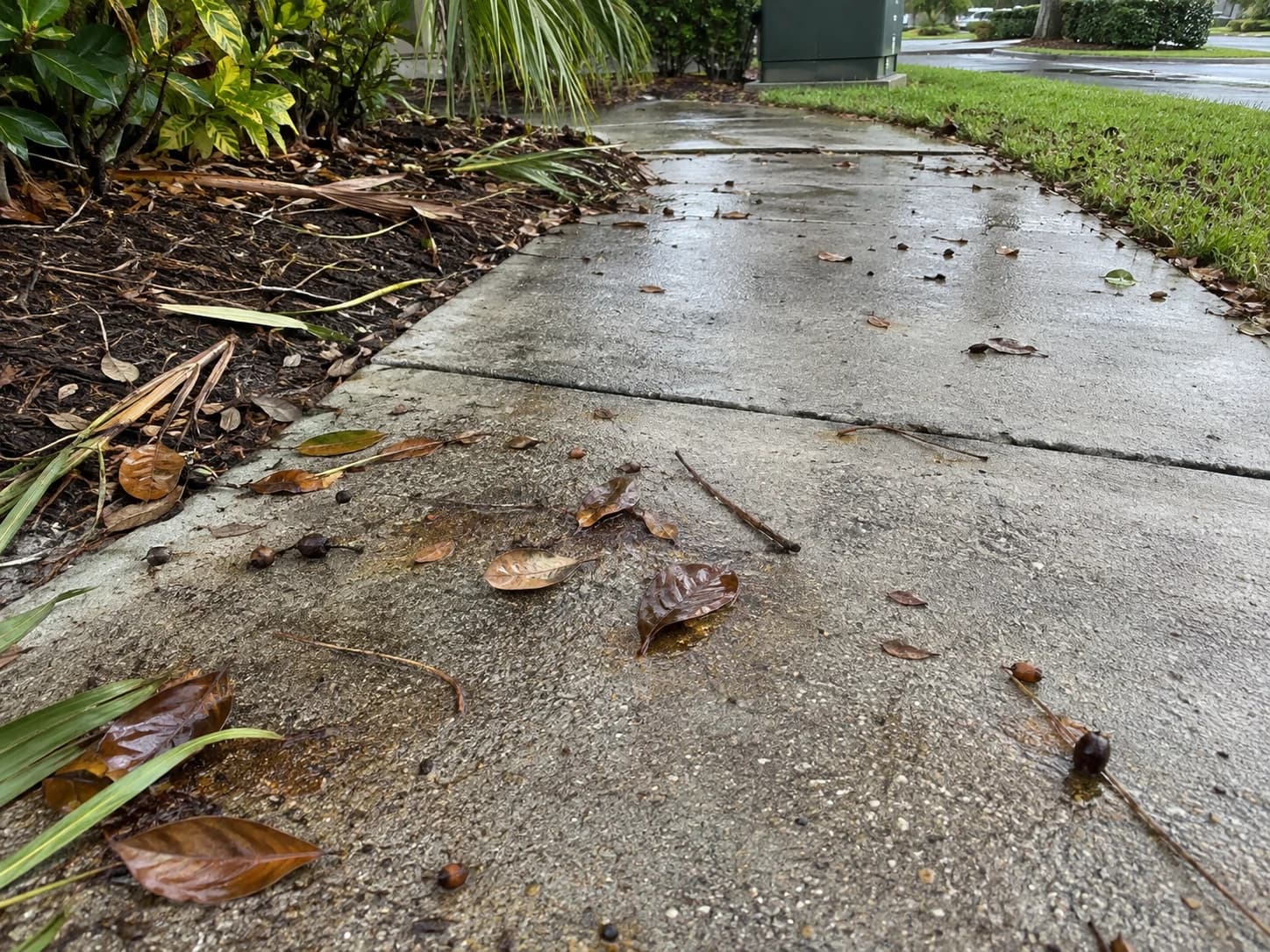
Leaves, branches, mulch and dirty runoff can leave visible marks on paving, walls and other exterior surfaces. Remove loose debris and document the affected area first; then test a cleaning method suited to the material and the mark. A stain that remains after cleaning may need a different treatment or a repair assessment.
Organic material can transfer color to porous paving as it sits wet. Mud may leave sediment in joints or textured finishes. These marks do not all call for the same chemical or pressure. On a delicate wall finish, a low-pressure method may protect the coating; on sound flatwork, controlled mechanical cleaning may be appropriate.
Avoid promising that every discoloration will come out. Existing weathering, porous materials and previous treatments can affect the result. A small test area helps show what cleaning can achieve before the full surface is treated, especially when the property needs consistent appearance across a prominent entrance or walkway.
Keep staining records distinct from evidence of damage. A dark mark beneath a new crack, displaced trim or water entry point may warrant investigation before washing. Once repairs are resolved, soft washing may suit certain vulnerable exterior finishes, provided the method and products are appropriate for the surface.
Salt, runoff and wash water after coastal storms
Coastal spray can leave salt residue on windows, metal and other exposed surfaces. Note where it appears, inspect for damaged coatings or corrosion concerns, and use a surface-appropriate cleaning plan. Salt residue alone does not tell you whether an underlying material has been damaged.
Avoid a blanket instruction to use acid or high pressure on salt deposits. The finish, sealant, nearby metal and manufacturer's care guidance determine the method. A gentle rinse may suit some intact surfaces, while others need specialist review. If the storm damaged an opening or coating, address that condition before washing it.
Plan where cleaning water will go. The US EPA's municipal storm sewer rule requires permittees to address illicit discharges, and Florida DEP administers the state's stormwater program. Ask a contractor how they will contain or direct wash water and debris at your site, particularly near storm drains. Do not assume that water carrying cleaning products or storm residue can simply enter a drain.
Put a standby agreement into the maintenance schedule
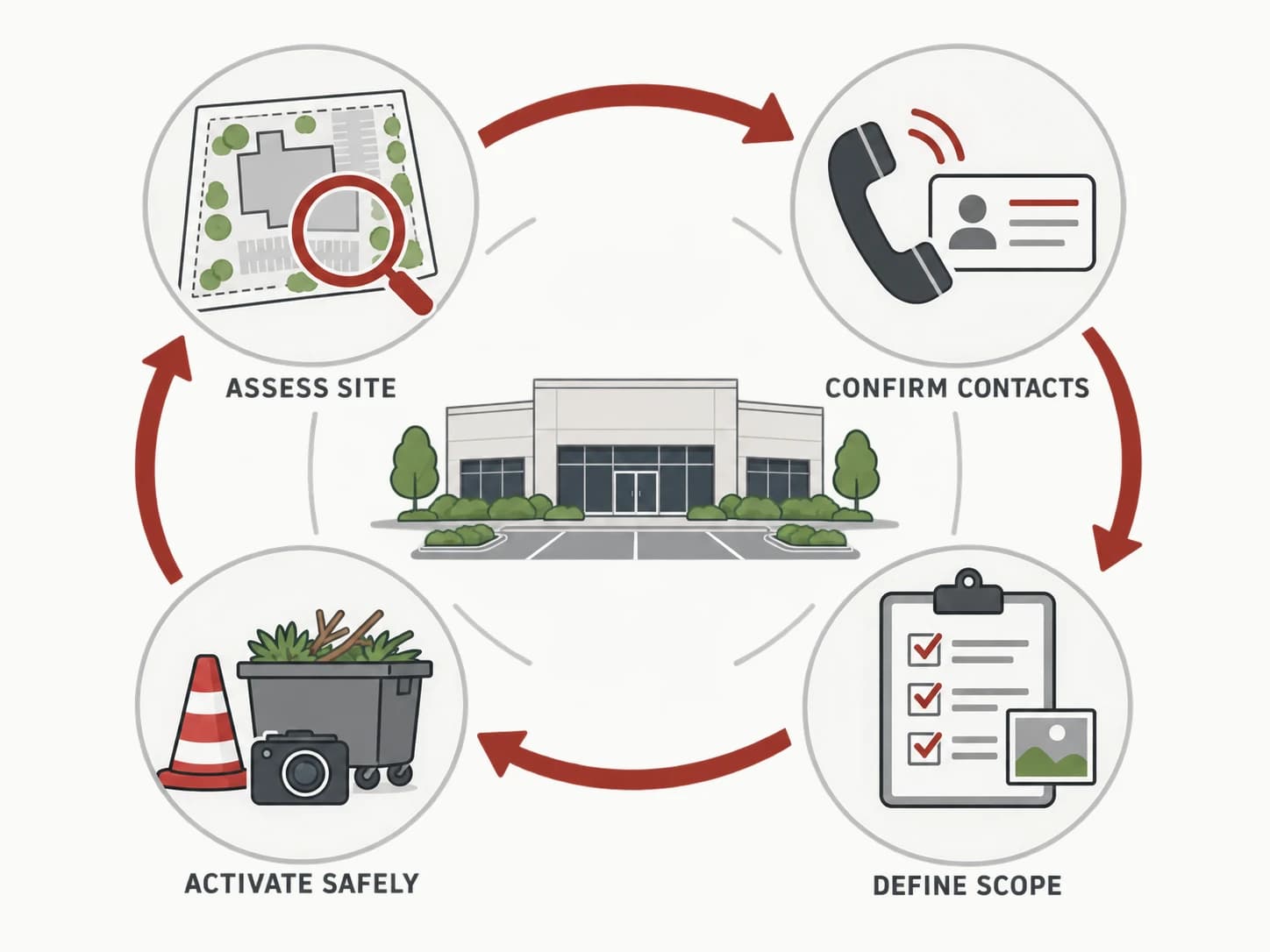
A pre-season agreement is most useful when it defines how work will be assessed and approved after a storm. It should identify contacts, site access, covered services, exclusions, documentation and how a new scope is priced. An agreement alone cannot establish which surfaces will be safe to clean after an event.
Review the vendor's proposed scope with the property team before the season. Ask who can authorize work, which areas require escort or shutdown, where equipment may be staged, and how photos and completion notes will be delivered. Keep repair trades and exterior cleaning responsibilities clear so a cleaning authorization is not mistaken for approval of structural work.
Confirm the contractor documentation your association or organization requires. The certificate of insurance guide for Florida boards and property managers provides a useful review framework. Add the agreed contacts and procedures to the property's maintenance calendar, then revisit them when site conditions or responsible people change.
Frequently asked questions
What are 5 ways to prepare for a hurricane?
For a commercial building exterior, inspect drainage, arrange roof and opening repairs, secure movable items, photograph existing conditions, and confirm who will authorize post-storm work. These actions give the property team a practical sequence before June. Keep the plan tied to named people and actual site conditions, since a checklist is useful only when someone can carry out each task.
What month is worst for hurricanes?
There is no month when every property will face its worst storm. NOAA identifies September 10 as the climatological peak of Atlantic hurricane activity and says most activity occurs between mid-August and mid-October. The official season runs from June 1 to November 30, so complete planned exterior work before it begins and keep the response plan usable throughout the season.
What buildings can withstand hurricanes?
A building's performance depends on its design, construction, condition and the storm it encounters. No visual cleaning inspection can establish that a building will withstand a hurricane. Property managers should use the appropriate design, inspection and repair professionals to assess roofs, openings and structural concerns, while maintaining drainage, securing loose items and documenting visible exterior conditions.
How should commercial properties prepare exteriors for hurricane season?
Hurricane prep for commercial buildings should cover water paths, roofs, openings, grounds and vendor coordination. Clear and inspect accessible drainage, arrange repairs for known defects, plan to secure loose materials and photograph existing conditions. Assign each task to the property team or appropriate trade, then set rules for safe access, damage documentation and cleaning authorization after a storm.
What should be cleaned after a storm?
Once access is safe and damage has been recorded, clear accessible debris from drainage routes and walking areas. Inspect walls, paving, windows and other exposed surfaces for sediment, organic staining and coastal residue. Choose cleaning methods by surface condition, and keep washing away from damaged openings, loose materials or other areas awaiting repair assessment.
Sources
For help planning exterior cleaning before or after storm season, review 2Clean's commercial and HOA services and request a scope suited to your property.
Custom Commercial & HOA Walkthroughs
Need a scope tailored to your South Florida property?
Every building, plaza, and community has its own surface mix, access windows, and drainage layout. We quote by walkthrough rather than fixed rate sheets so your proposal matches your exact property. Call us directly at (904) 826-9806 or request a written scope online.
Related services & tools
Commercial & HOA by South Florida city: