
Maintenance Scheduling
Night After Hours Exterior Cleaning: When the Premium Pays
October 15, 2026 · 7 min read
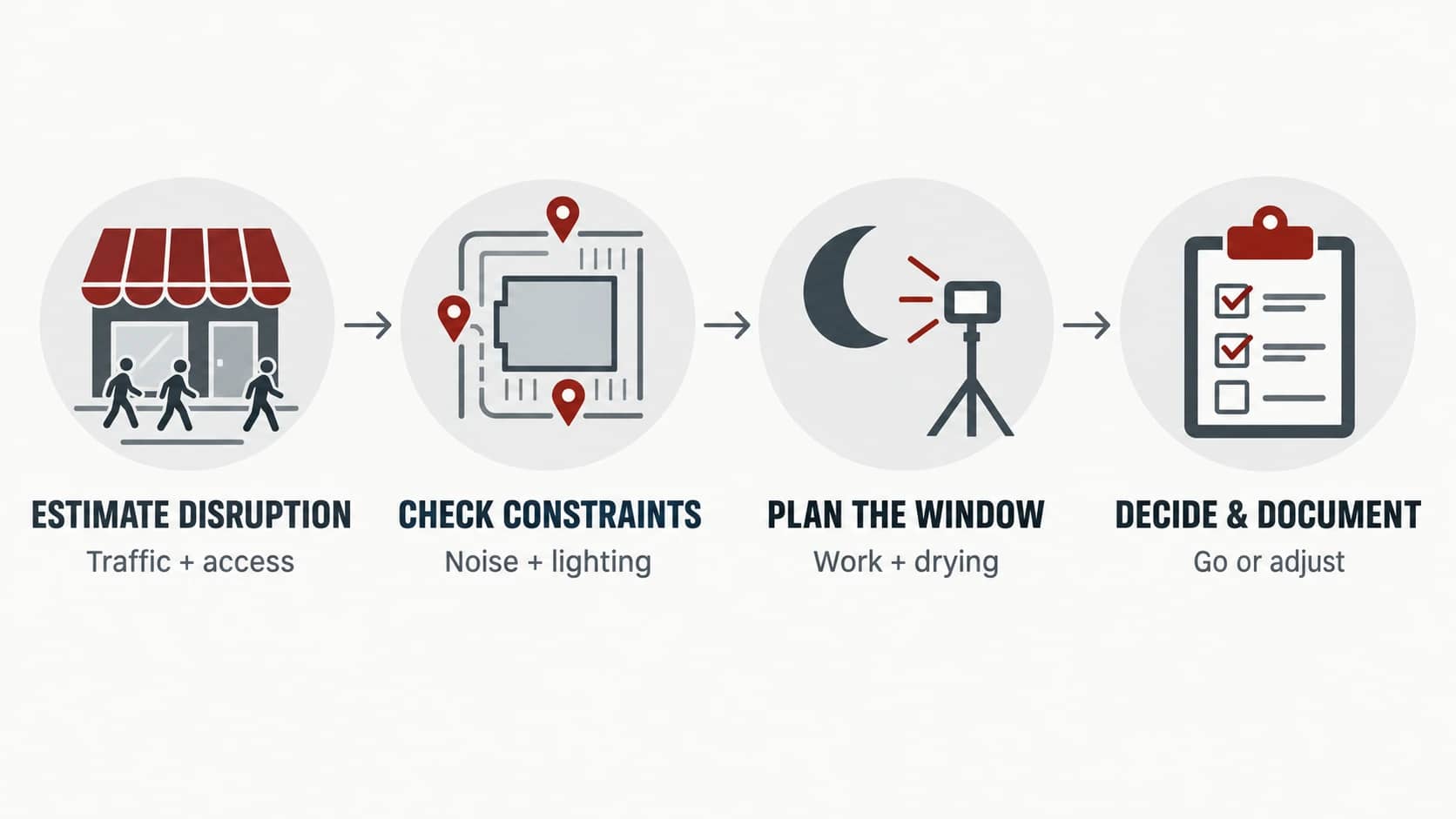
Night after hours exterior cleaning is worth considering when daytime work would block important access, disrupt guests or tenants, or leave wet surfaces in use. Compare the added night-work cost with the disruption you can avoid, then confirm that local noise rules, safe lighting, wash-water controls, and reopening plans make the schedule workable.
When night after hours exterior cleaning makes sense
Night work makes sense when cleaning during business hours would interfere with the people who need to use the property. The strongest case is usually a specific access problem, such as a retail entrance, hotel arrival area, or busy garage route that cannot be closed conveniently during the day.
Start by identifying the area that must stay open and the hours when it matters most. A crew may be able to clean a rear service area during the day while scheduling the main entrance after hours. That split schedule can limit both disruption and the amount of work requiring night access.
Treat the decision as a comparison between workable plans, not a blanket preference for nighttime. Ask what each plan requires in closures, tenant notices, security coverage, and reopening checks. The broader Miami commercial exterior cleaning guide can help place that choice within a property-wide scope.
Compare the night premium with daytime disruption
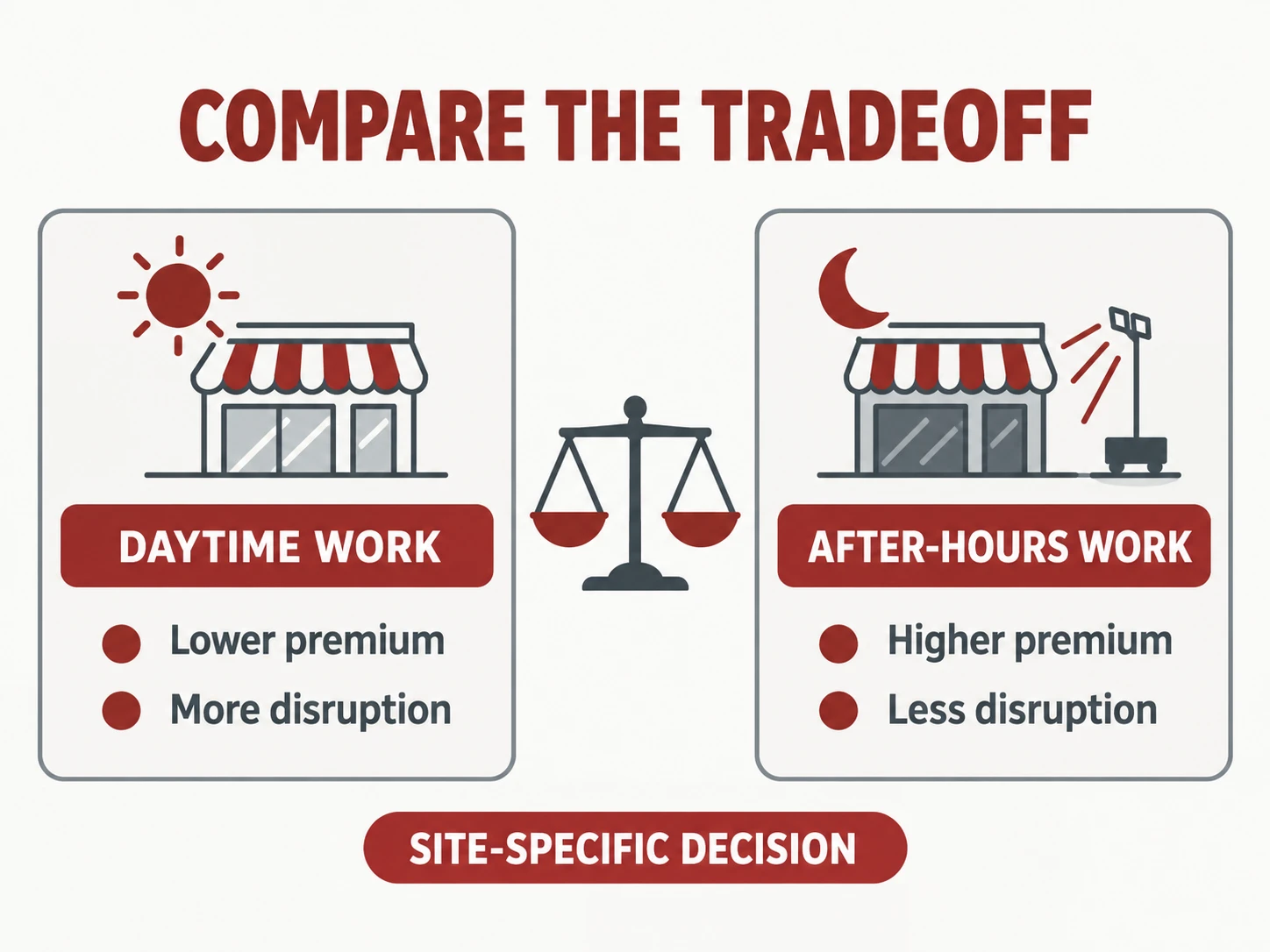
The premium is justified when the disruption avoided is more valuable than the added cost of the after-hours plan. Get both options priced against the same cleaning scope, then compare the access and coordination each one requires.
The added cost can reflect off-hours labor, lighting, supervision, security coordination, or work that takes longer because the crew must move around occupied areas. Those factors vary by property and method. A quote that separates them gives you a more useful decision than an unexplained night-work surcharge.
Put the operational effects beside the quote. Note which entrances or parking spaces would close, who would need notice, whether deliveries would be affected, and whether a daytime crew could work in sections. If the daytime plan leaves essential access open, its disruption may be modest. If it blocks a critical route, an after-hours plan may be easier to justify.
Check municipal noise windows before booking night work
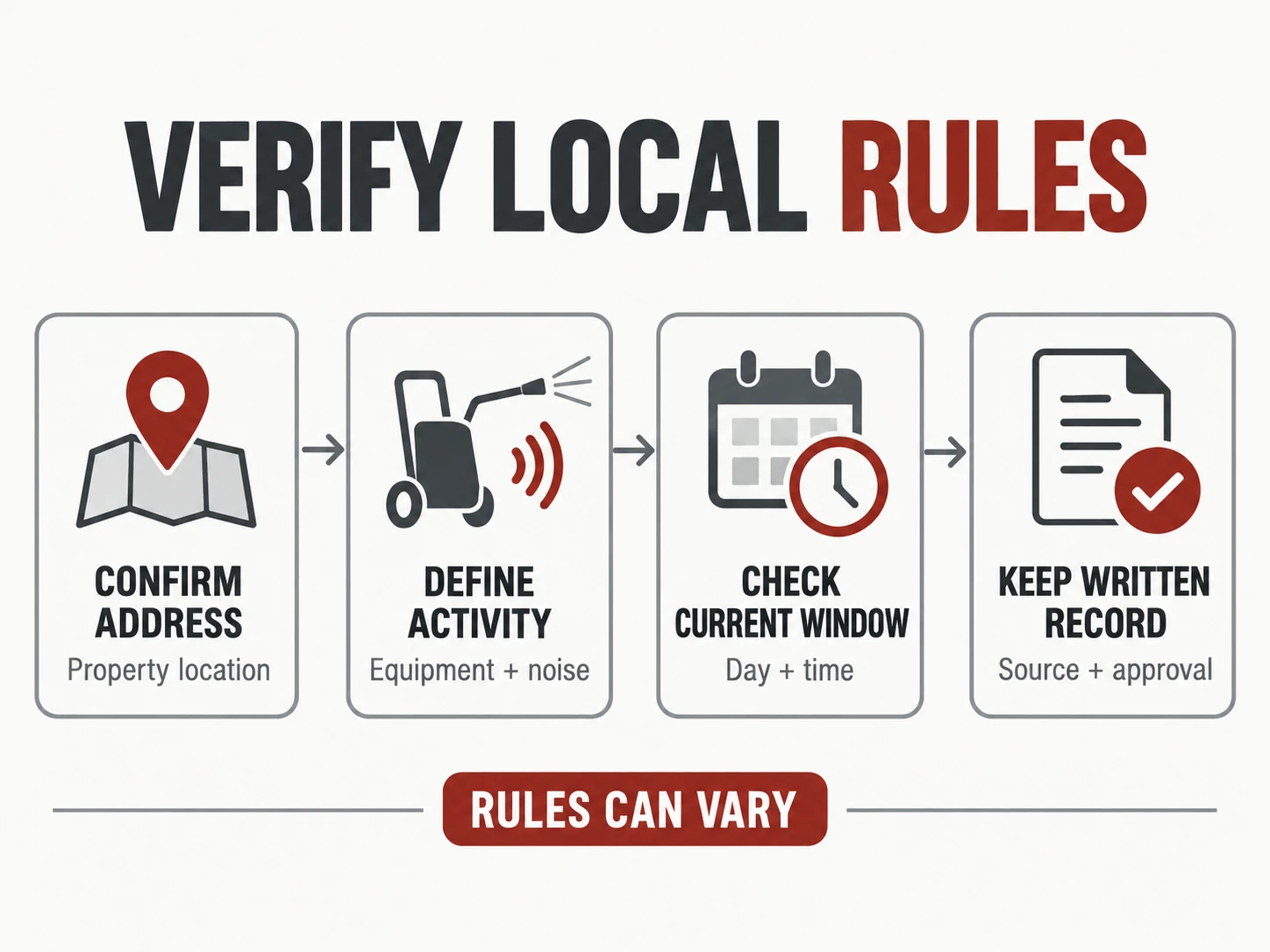
An empty property at night does not automatically make noisy cleaning permissible. Check the current rules for the municipality where the work will occur, along with any building, association, or lease restrictions that apply to the site.
The diagram is a planning reference, not a substitute for the applicable code. Confirm how the local rule treats the proposed equipment and activity, especially near residences or hotel rooms. Ask the contractor which tasks create the most noise so you can assess the actual scope instead of assuming every exterior cleaning method has the same impact.
If the available window is too narrow, consider a quieter method where suitable, a daytime closure in sections, or a different date. For a medical property, quiet-hours planning for healthcare campuses covers the additional coordination those sites may need.
Plan for lighting, pedestrian safety, and wash water
A workable night schedule needs more than access to a gate or loading area. The scope should show how crews will see the work, keep people out of the work zone, and manage water before it reaches public paths or drainage.
Identify pedestrian routes, vehicle movements, changes in level, and areas where temporary lighting could affect occupants. Set barriers and alternate routes before cleaning begins, then assign someone to check the area before reopening. OSHA's walking-working-surface rule calls for surfaces to be kept free of spills, inspected, and maintained in a safe condition. The ADA Standards also require floor and ground surfaces to be stable, firm, and slip resistant.
Ask where wash water will go, particularly around parking lots, loading areas, and entrances. EPA's MS4 rule requires permittees to effectively prohibit non-stormwater discharges into storm sewer systems. Miami-Dade County Code section 24-42 addresses discharges that cause water pollution or a nuisance in county waters. Confirm the containment and disposal plan for the site rather than treating a nearby drain as an outlet.
Match the window to the surface and cleaning method
The right window depends on what is being cleaned and how people use it afterward. A walkway needs a more deliberate reopening plan than a wall that people cannot touch, while work above an entrance may require the area below it to remain closed.
| Area or task | Why an after-hours window may help | What to confirm before reopening |
|---|---|---|
| Retail or hotel entrance | Keeps the primary route available during busy periods | The route is clear, safe to walk, and free of equipment |
| Garage or drive lane | Reduces conflict with vehicles and pedestrians | Barriers are removed and the route is ready for traffic |
| Building facade or windows | Limits interference with occupants and deliveries | Areas below the work are clear and accessible |
| Walkways and plazas | Allows a planned closure while surfaces are wet | Surface condition has been checked on site |
Method matters too. Commercial pressure washing may suit durable hard surfaces, while a more delicate exterior may call for a different approach. Specify the material, nearby finishes, runoff route, and access constraints before choosing equipment or a work window.
Allow for drying and a real reopening check
An overnight booking does not guarantee that every surface will be ready by morning. Reopening depends on the material, cleaning method, weather, drainage, and whether the work leaves a treatment or coating on the surface.
Avoid a fixed drying-time promise in the schedule. Instead, identify which areas must reopen first and which can remain closed if conditions require it. Have the contractor explain how the crew will assess the surface and who has authority to remove barriers.
This matters most where guests, residents, or customers could reach a treated walkway as soon as a door opens. The scope should cover the handoff between cleaning and normal operations, including security or building staff who may arrive after the crew leaves.
Put access and communication in the scope
After-hours work runs more smoothly when the site contact and contractor agree on access before the crew arrives. The work order should name the areas, permitted window, entry point, water and power arrangements, security contact, and any spaces that must stay open.
A short planning checklist helps expose gaps:
| Confirm before scheduling | Why it matters |
|---|---|
| Approved work areas and closures | Keeps the crew within the access plan occupants received |
| Municipality and property restrictions | Shows whether the proposed window is available |
| Lighting and barriers | Protects workers and people moving through the site |
| Wash-water plan | Accounts for drains and nearby waters |
| Reopening responsibility | Establishes who checks and releases each area |
Send notices that describe the affected routes and practical impact, rather than simply saying that cleaning is scheduled. If the work is part of recurring care, add the timing decision to your commercial property exterior maintenance checklist. That makes the next scheduling decision easier to review.
Frequently asked questions
Night cleaning is a scheduling choice, not a separate cleaning method. These answers address the decisions property managers most often need to make before approving it.
Can commercial pressure washing be done at night?
It can be scheduled at night if the applicable municipality and property rules allow the proposed activity. The plan also needs suitable lighting, controlled access, a wash-water approach, and a way to assess surfaces before reopening. Confirm those conditions for the specific site and equipment before committing to the window.
Is after-hours exterior cleaning always more expensive?
It may cost more because the schedule can require additional coordination, lighting, security access, or off-hours labor. The useful comparison is a daytime and after-hours quote for the same scope. Ask what changes between them, then weigh that difference against the closures and operational disruption each plan creates.
Which properties benefit most from night cleaning?
Properties with busy entrances, vehicle routes, or guest-facing areas often have the clearest reason to consider it. The benefit still depends on whether work can be divided into sections during the day and whether nighttime noise is acceptable at the site. A lightly used service area may have little reason to move after hours.
How soon can an area reopen after exterior cleaning?
There is no reliable reopening time that covers every surface and method. Weather, drainage, treatments, and the condition of the surface all matter. Keep the area controlled until someone responsible for the handoff has checked it and confirmed that barriers and equipment can be removed safely.
What should an after-hours cleaning quote include?
It should identify the surfaces and method, work window, access arrangements, closures, lighting, wash-water controls, and reopening responsibilities. Ask the contractor to show any cost tied specifically to the after-hours schedule. That gives the board or facilities team a clear basis for comparing it with daytime work.
Sources
These sources support the safety and water-management points above. Confirm current local noise requirements with the municipality responsible for the property.
If you are comparing daytime and after-hours options for a South Florida property, request a scope for commercial and HOA exterior care that identifies the access, cleaning method, and reopening plan.
Custom Commercial & HOA Walkthroughs
Need a scope tailored to your South Florida property?
Every building, plaza, and community has its own surface mix, access windows, and drainage layout. We quote by walkthrough rather than fixed rate sheets so your proposal matches your exact property. Call us directly at (904) 826-9806 or request a written scope online.
Related services & tools
Commercial & HOA by South Florida city: