Environmental Compliance & Liability
Pressure Washing Water Reclamation for Commercial Sites
October 14, 2026 (updated) · 8 min read
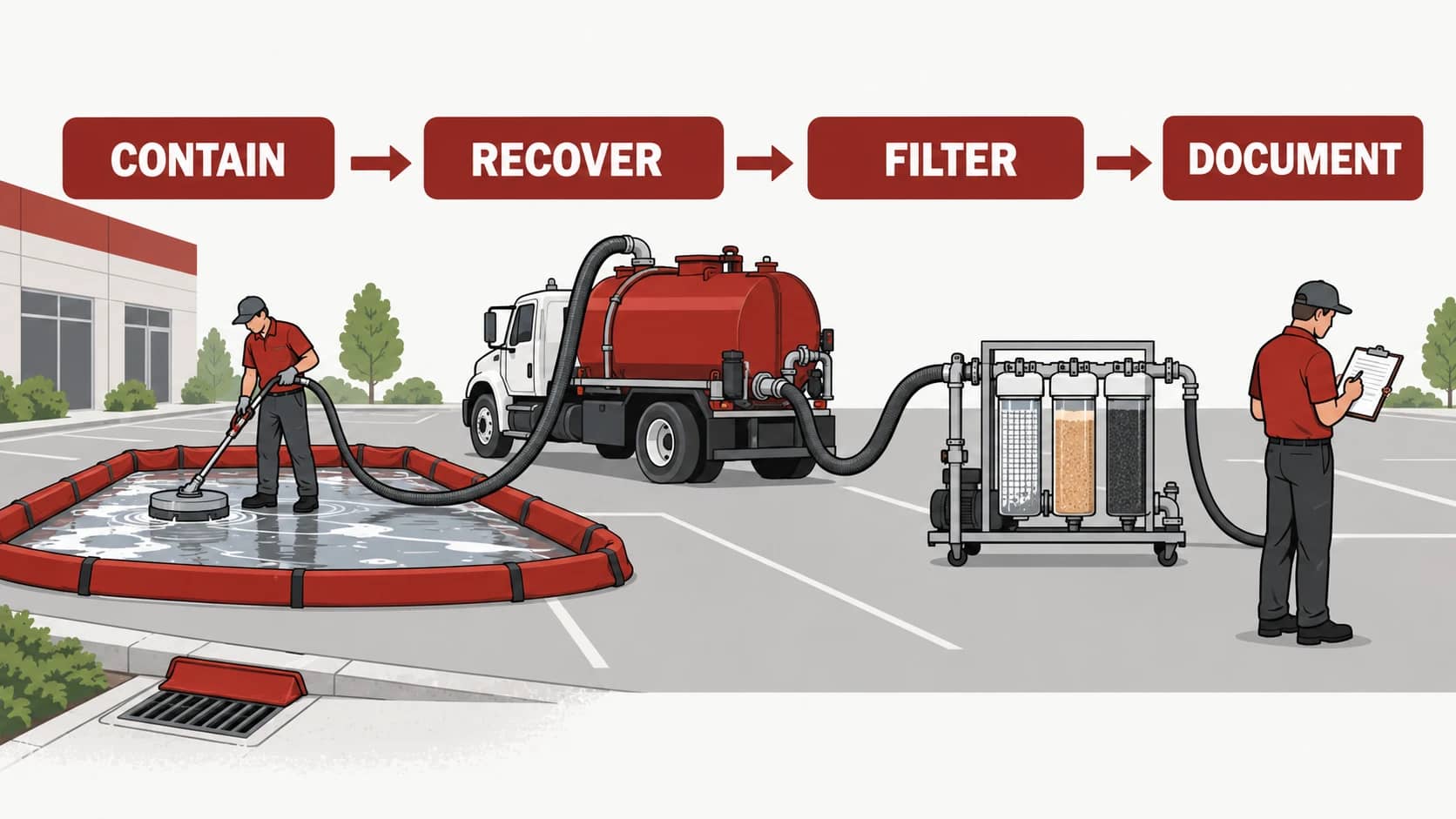
Pressure washing water reclamation means controlling wash water before it reaches a drain, collecting it from the work area, and sending it to a disposal or reuse route suitable for what the water contains. For a commercial property, the practical test is whether the contractor can explain that route and document what happened.
Pressure washing water reclamation: the site decision
The recovery plan starts with where water would flow if no one intervened. A contractor should inspect the work area, identify storm drains and low points, and decide how to keep runoff within a collection area.
That decision matters on South Florida properties with connected drive lanes, garage ramps, loading docks, and landscaped edges. Water can leave the visible work zone before the crew finishes a section. A drain cover at the nearest inlet may help, but it does little if water can reach another inlet downhill.
The wash water also matters. Garage runoff may carry oil and grit; a storefront walkway may carry soil, detergent, or residue from nearby activity. Those differences affect collection, handling, and the proposed destination. For a broader view of scheduling and scope, see the commercial exterior cleaning guide.
Equipment setup for containment and recovery
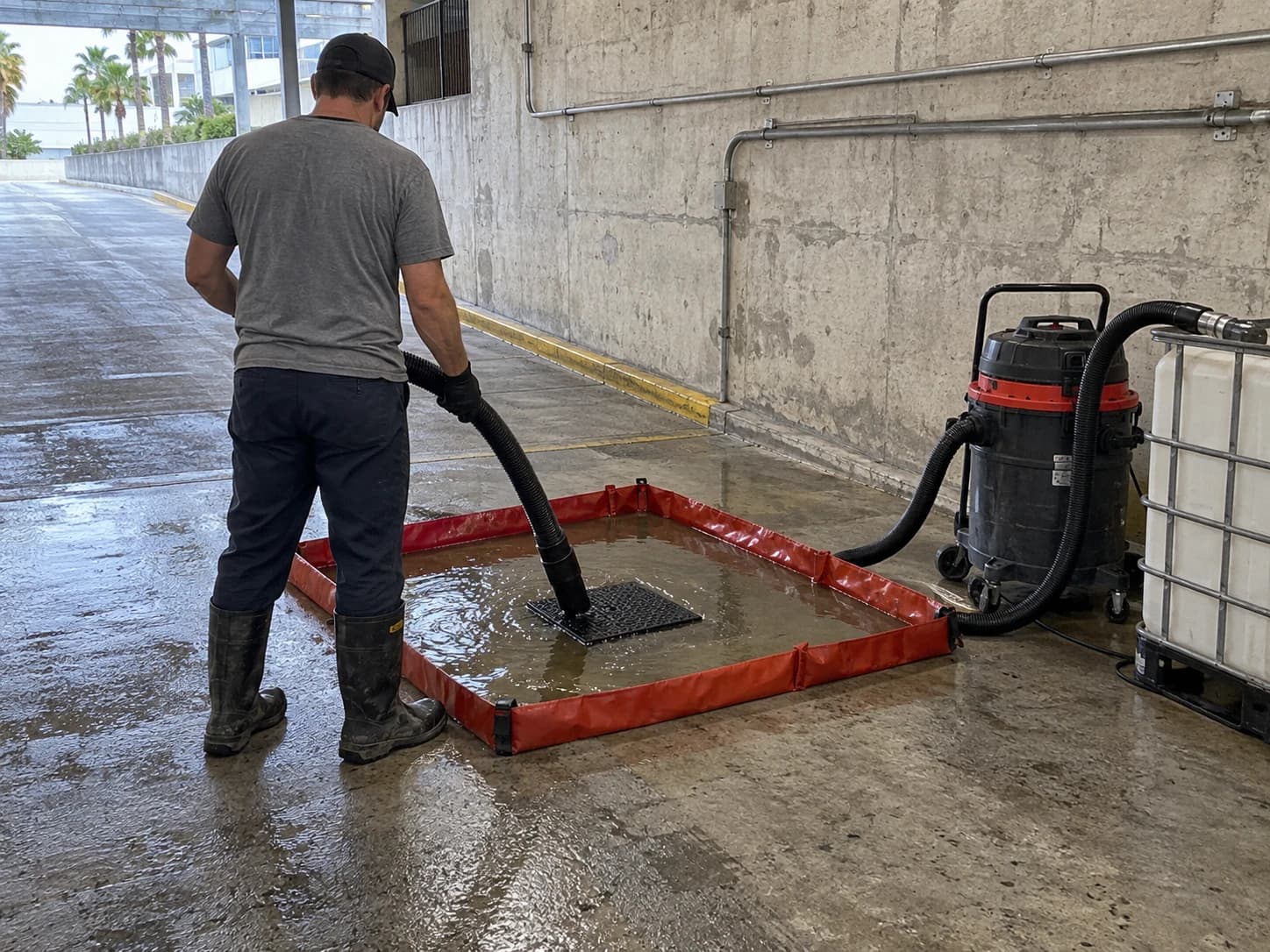
A workable setup places barriers where water could escape and positions the collection point where water will gather. The equipment may include drain covers, temporary berms, a vacuum unit, hoses, and a holding tank, depending on the surface and runoff path.
On sloped pavement, a berm can redirect water toward the vacuum pickup. On an uneven surface, several collection points may work better than one. Drain covers provide another layer of control, but the crew still needs to watch for water bypassing the cover or moving around a barrier.
The order of work affects recovery. Washing a section that drains toward the collection point makes water easier to capture than washing across an open area and trying to chase the flow afterward. A property manager can ask the contractor to show the planned wash direction and collection point during the site walk.
Containment needs supervision throughout the job. Foot traffic, vehicle movement, accumulated debris, or a change in water flow can undermine an otherwise sound setup. The crew should be able to pause and adjust the barriers before runoff leaves the controlled area.
How collection and treatment work
Wash water recovery usually moves through collection, holding, and any treatment needed for its intended destination. A vacuum takes up water and suspended debris from the contained area, then transfers them to a tank or other controlled vessel.
Screens or filters can remove solids that might clog equipment. Separation may help manage oil or other material when the system is designed for it. These steps serve different purposes, so a contractor should describe what its equipment actually removes rather than calling every process "filtration."
Filtered water is not automatically suitable for a drain, sewer, or reuse. The remaining contaminants and the rules of the receiving system still govern the route. Reuse on the job can reduce the amount of water hauled away, but it requires a system and work conditions suited to reuse. If the water cannot be reused appropriately, the plan must account for its removal.
Site type requirement matrix
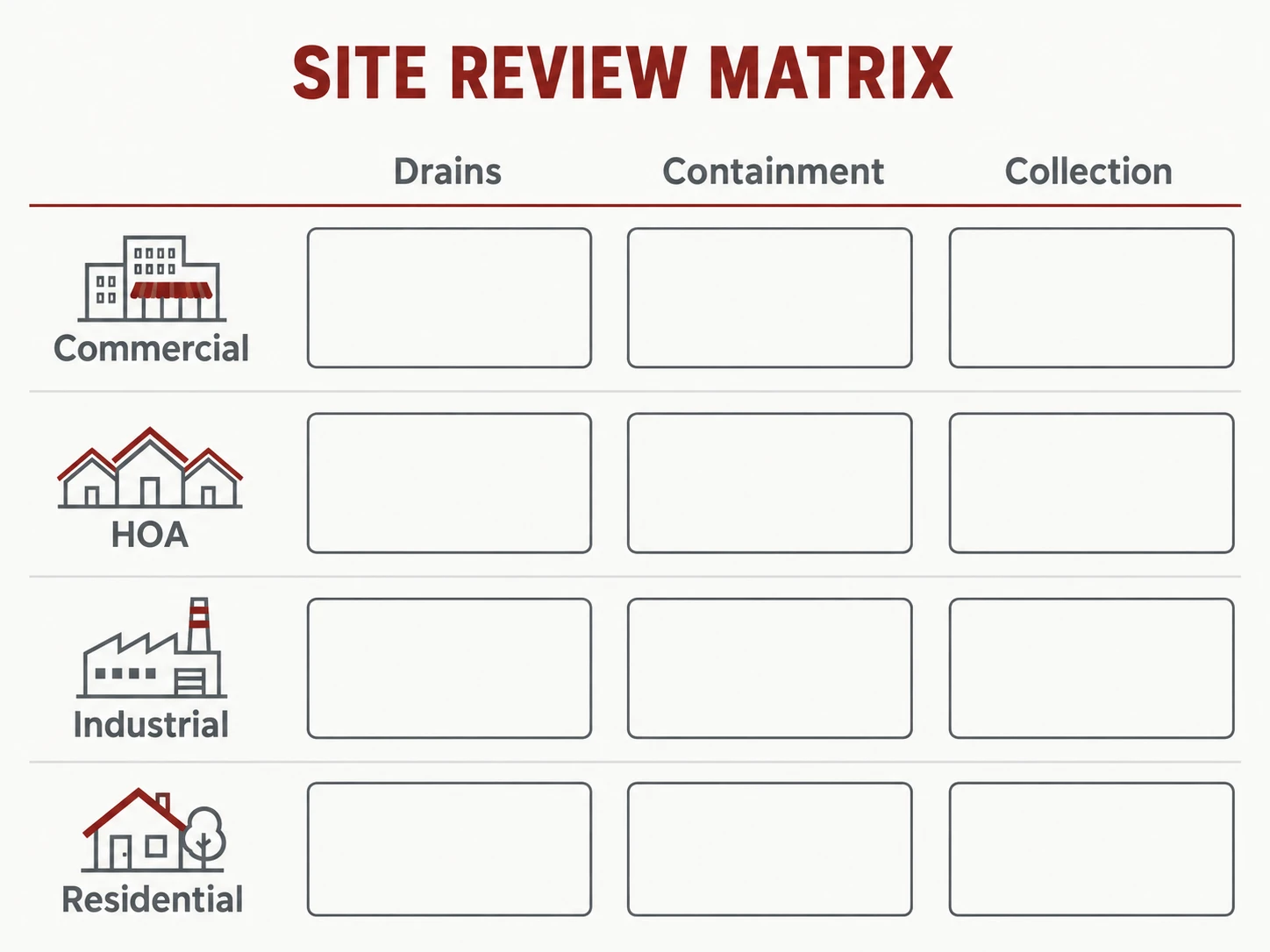
The property type helps identify likely runoff paths and contaminants, but it does not dictate one universal recovery method. Use this matrix to guide the site walk, then confirm the controls and destination for the actual job.
| Site area | Check before washing | Likely planning focus |
|---|---|---|
| Parking garage | Ramps, floor drains, oil residue, and vehicle access | Direct water to controlled pickup points and plan for the material collected |
| Retail walkway | Storm inlets, storefront thresholds, pedestrian routes, and landscaping | Keep runoff within the work zone while maintaining safe access |
| Hotel entry or drive | Traffic flow, nearby drains, and occupied entrances | Sequence work around access and prevent water from crossing into open lanes |
| HOA or condo common area | Connected paths, shared drains, and landscaped edges | Confirm who controls the area and where wash water can travel |
| Loading or service area | Grease, spills, stored materials, and drain connections | Identify contaminants before choosing treatment and disposal |
A garage drain is especially worth checking rather than assuming where it leads. Its presence does not tell you whether it connects to a storm system, a sanitary system, or another destination. Ask the property team for available drainage information and have the contractor account for uncertainty in the plan.
For sites with several surface types, the recovery method may change within the same project. A contained garage bay and an exposed sidewalk have different flow paths. The scope should name those differences instead of applying a single equipment list to the whole property.
Where recovered wash water can go
The destination must be chosen for the water collected, not simply for convenience. Possible routes include approved reuse, an authorized wastewater receiving system, or transport to a facility that accepts the material. The contractor should confirm acceptance and any conditions before work begins.
The federal MS4 rule directs permittees to effectively prohibit non-stormwater discharges into storm sewers and maintain an illicit discharge detection and elimination program. Florida DEP administers the state's NPDES stormwater program, while Miami-Dade County Code section 24-42 prohibits discharges into county waters that cause pollution or a nuisance. These are reasons to investigate the route, not a substitute for checking the requirements that apply to a particular site and discharge. The Miami-Dade pressure washing wastewater rules guide explains that regulatory context in more detail.
A sanitary sewer connection should not be treated as automatic permission to discharge. The receiving utility or facility may set conditions based on what is in the water. Likewise, hauling water away only completes the plan when the receiving facility accepts it and the transfer can be documented.
Ask where solids, sludge, or separated material go as well. A plan that accounts for liquid water but leaves collected residue on site has an obvious gap.
Documentation example for wash water recovery
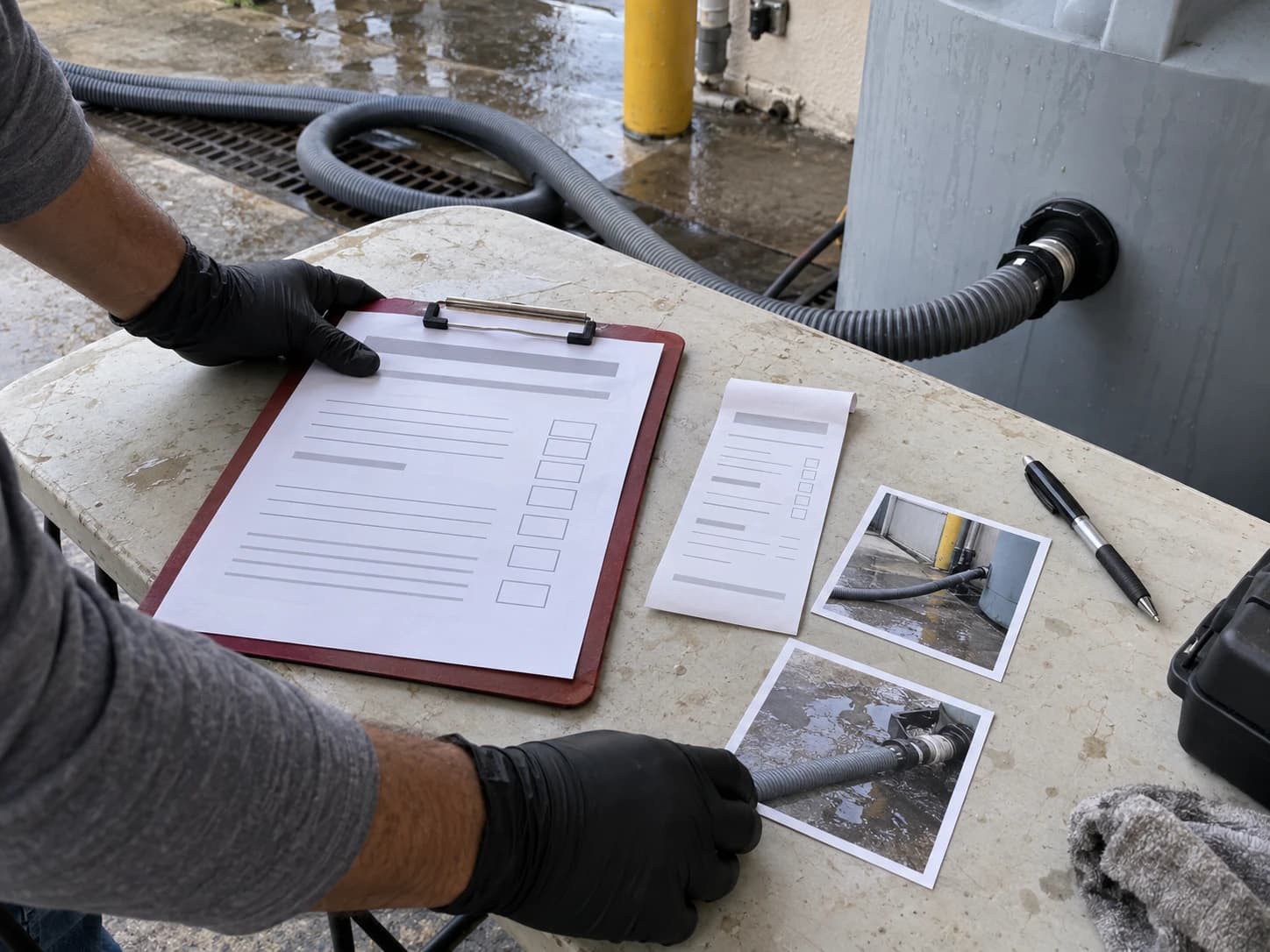
Useful documentation connects the approved plan to what happened on site. It should identify the work area, the controls used, the collection method, and the destination of water or residue that left the property.
Before the job, keep the contractor's written recovery and disposal approach with the scope. During the job, record material changes, such as a newly found drain or a revised pickup location. Afterward, request the relevant disposal receipt or receiving record when water was hauled away. A volume record can help reconcile collection and transfer where one is available.
Do not accept a generic "compliant disposal" line as the whole record. It does not show where the water went or whether the receiving route suited the material. The level of paperwork should fit the job, but the destination should be clear enough for the property team to answer a later question without reconstructing the work from memory.
When comparing contractors, include this documentation question alongside equipment and access questions. The commercial pressure washing buyer's checklist can help structure that review.
What recovery changes in the scope and cost
Recovery adds work because the crew must set controls, collect water, manage the equipment, and complete the chosen disposal route. How much it changes a proposal depends on the layout, contaminants, water volume, access, and receiving requirements.
Request an itemized explanation of the method rather than assuming every proposal includes the same work. One scope may allow controlled collection close to the wash area; another may require longer hose runs, more containment, or transport off site. A lower cleaning price is hard to compare if the recovery plan is missing.
The commercial pressure washing cost guide covers other factors that shape a quote. For this decision, ask what is included for drain protection, vacuum collection, handling of solids, transport, and documentation. That makes differences between proposals visible without assuming one method fits every property.
Questions to settle before approving the work
A short site walk can resolve most recovery questions before equipment arrives. Ask the contractor to explain the plan at the actual drains and low points, then make sure the written scope reflects it.
| Ask the contractor | What a useful answer identifies |
|---|---|
| Where will the water flow? | The work area, slopes, drains, and places runoff could escape |
| How will it be contained and collected? | Barrier locations, pickup points, equipment, and adjustments for traffic |
| What could be in the water? | Surface residue, cleaning products, and any site-specific contamination |
| Where will water and solids go? | The proposed reuse or receiving route and how acceptance will be confirmed |
| What record will we receive? | The work record and any applicable transfer or disposal documentation |
If the route remains uncertain, resolve it before washing that area. This is especially useful on mixed-use properties where a garage, entrance, and service yard may drain differently. For commercial and association properties, the pressure washing service scope is a starting point for discussing the surfaces involved.
Frequently asked questions
What is a water reclamation facility?
In this context, a water reclamation facility is a place that receives and treats wastewater for an approved outcome, which may include reuse. The phrase does not tell you whether that facility accepts pressure washing waste. Ask the contractor to identify the proposed receiving facility and confirm that it accepts water with the contaminants expected from your site.
Do pressure washer companies bring their own water?
Some contractors can supply water, while others use an approved on-site source. The water supply and the wastewater route are separate parts of the plan: bringing clean water to a property does not resolve where used water goes. Confirm the supply connection, expected use, collection method, and disposal route in the scope.
How is pressure washing water collected?
The crew contains runoff with barriers suited to the surface, directs it toward a pickup point, and uses a vacuum or another collection system to move it into controlled storage. The setup depends on slope, drains, traffic, and the material being washed away. Ask how the crew will notice and correct water escaping the contained area.
Can filtered wash water go into a storm drain?
Filtration by itself does not establish permission to use a storm drain. A filter may remove visible solids while other pollutants remain in the water. The contractor needs to identify the receiving system and confirm the applicable requirements before proposing any discharge. Where that cannot be established, the scope should provide another controlled route.
What is the cost of pressure washing with water reclamation?
There is no useful single price without the site and recovery scope. Containment, vacuum collection, access, expected water volume, contaminants, and transport can all change the work required. Ask each bidder to state how wash water will be handled and which related tasks are included, so you can compare proposals on the same basis.
Sources
If you are planning exterior cleaning for a South Florida property, share the surfaces and drainage concerns when you request a quote.
Custom Commercial & HOA Walkthroughs
Need a scope tailored to your South Florida property?
Every building, plaza, and community has its own surface mix, access windows, and drainage layout. We quote by walkthrough rather than fixed rate sheets so your proposal matches your exact property. Call us directly at (904) 826-9806 or request a written scope online.
Related services & tools
Pressure Washing by South Florida city: