Procurement & Vendor Selection
Pressure Washing Contract Template for Commercial Properties
October 14, 2026 (updated) · 12 min read
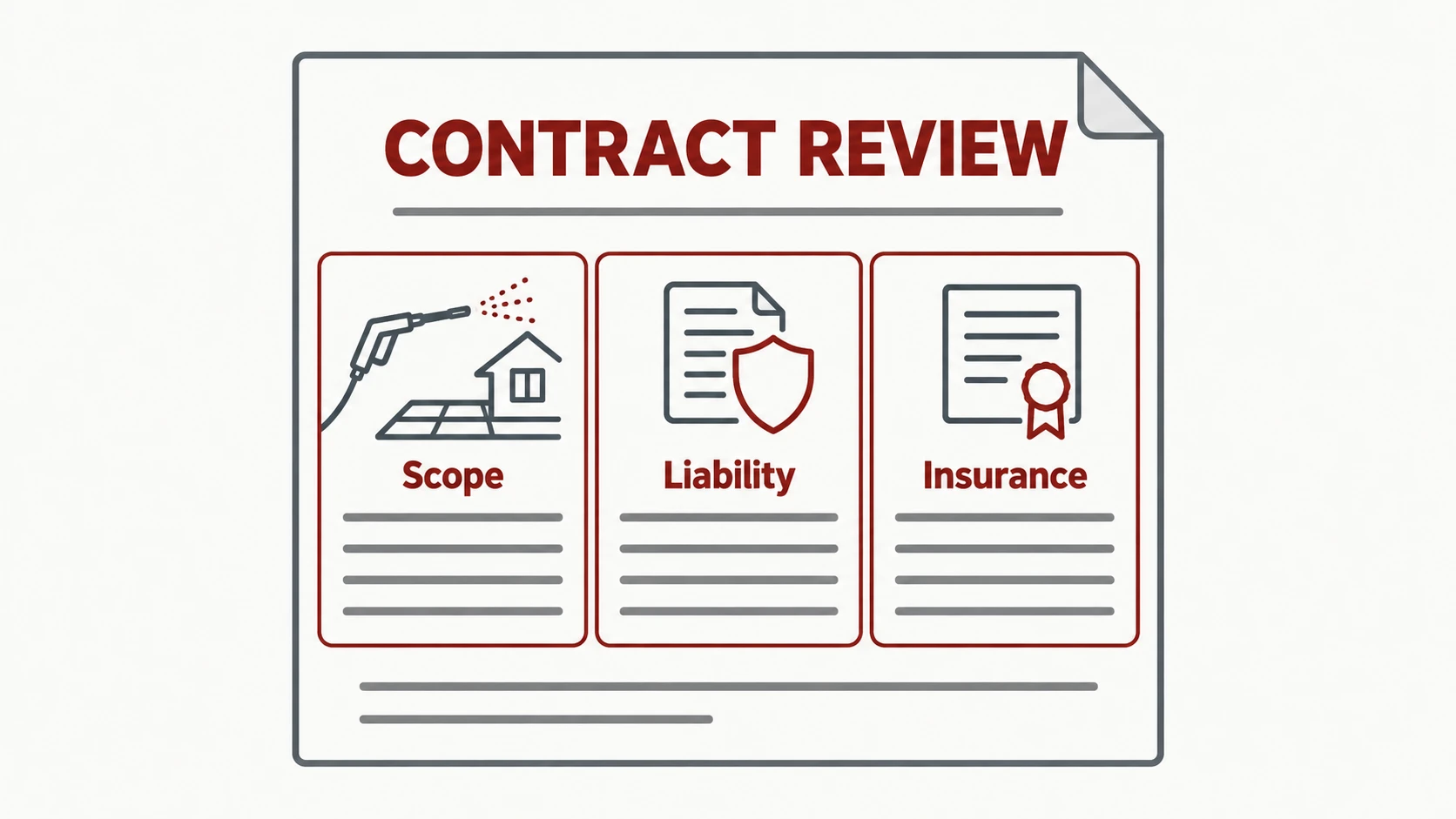
A pressure washing contract template for a commercial property should identify the parties and site, list each surface and cleaning method, set access and scheduling rules, explain the price and approval process, and assign responsibility for damage, insurance, and wash water. It should also state how work is inspected, corrected, renewed, or canceled.
Pressure washing contract template clause checklist
A useful template gives a property manager enough detail to compare bids and manage the work after award. Use this checklist as the contract's working outline, then attach the site-specific scope and have the final terms reviewed for your property.
- Parties and site: Name the contracting entity, contractor, billing contact, service address, and person authorized to approve changes.
- Scope and exclusions: Identify each surface, its location, the expected cleaning result, and anything outside the price.
- Methods and products: State where pressure washing, soft washing, or another method will be used, including protection for sensitive finishes and nearby landscaping.
- Schedule and access: Set the service window, frequency, access arrangements, tenant or guest notices, and weather rescheduling process.
- Wash water: Identify drains and runoff paths, then assign containment, collection, disposal, and documentation duties.
- Damage and insurance: Define condition records, reporting, repair responsibility, required policies, and any additional-insured requirement.
- Price and changes: Show the fixed scope price or pricing basis, payment trigger, and written approval process for added work.
- Inspection and correction: Identify who accepts the work, how a missed area is reported, and what happens before final payment.
- Term and exit: State the start and end dates, renewal rule, notice method, cancellation rights, and treatment of work already completed.
The attached surface schedule is as important as the main agreement. Without it, a general promise to "clean the exterior" leaves bidders to make different assumptions about sidewalks, loading areas, walls, parking surfaces, and access. A cleaning scope of work template can help turn a site walk into a comparable schedule.
Annotated contract excerpt: define the scope and method
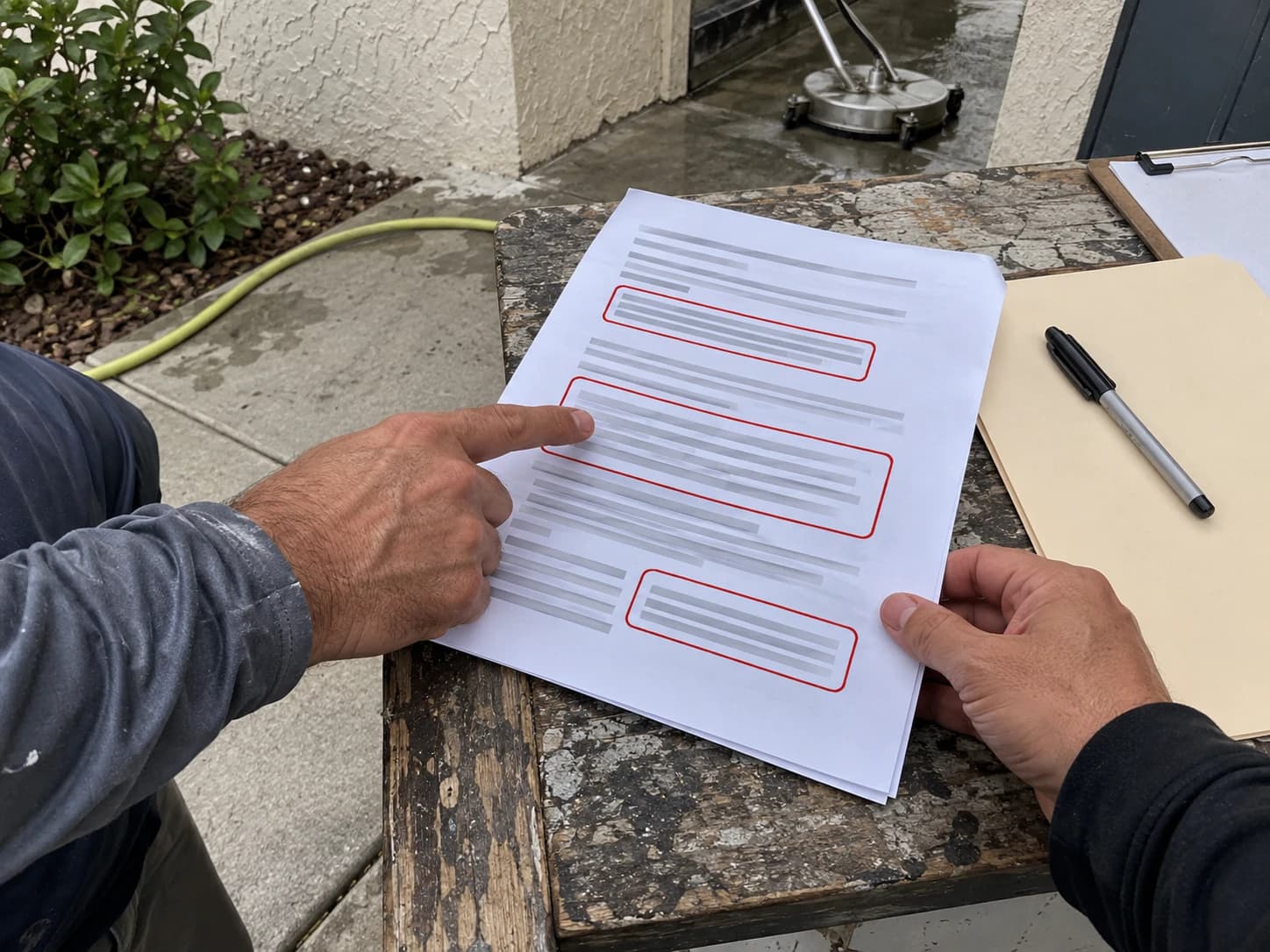
The scope clause should connect each location to a surface, method, and expected result. That lets the manager confirm what was priced and gives the crew clear instructions at the site.
For a retail center, "sidewalks" may mean the storefront walk, the path to parking, or both. For a condo, "common areas" may include entry paving but leave private balconies outside the association's approved work. Identify the areas on a marked plan or schedule when a name alone could be read more than one way. Florida's condominium maintenance statute places responsibility for common elements on the association, subject to the declaration's treatment of limited common elements. The agreement still needs to identify the areas this contractor has actually been hired to clean. Florida Statutes section 718.113 provides that distinction.
Describe the result without promising a surface will look new. A workable description might call for removal of ordinary surface soil and visible organic buildup from identified paving, with existing stains, worn coating, or material defects recorded before work. If a test area is needed to judge whether a stain can be removed safely, say who approves the test and how any added work will be priced.
Pair the schedule with a site walk. Note existing cracks, loose pavers, deteriorated joints, exposed wiring, damaged sealant, and finishes that need protection. Photos agreed before work help both sides distinguish a pre-existing condition from new damage. The same record also helps resolve a dispute without relying on memory.
If bidders receive the same schedule, their proposals are easier to compare. Our guide to reading a commercial cleaning proposal explains how to spot exclusions and assumptions before they become change requests.
Match the cleaning method to the surface
The contract should name a method for each surface rather than authorize high pressure across the property. The reason is practical: durable flatwork and delicate finishes can require different treatment, and the safer method may take a different amount of preparation or dwell time.
Concrete paving may suit pressure washing after the contractor checks its condition and nearby drainage. Painted finishes, screen enclosures, roofing, and other sensitive areas need separate instructions or an explicit exclusion. A method clause should also address runoff toward doors, electrical equipment, planted beds, and occupied spaces. This is more useful than saying only that the contractor will use "industry-standard methods."
For areas assigned to soft washing, describe how the contractor will protect adjacent materials and rinse as appropriate. If the property has several surface types, avoid a single method line for the entire site. The soft-washing service page describes that option; the contract should still specify where it applies on your property.
Include a stop-work and approval step for unexpected conditions. If a crew finds loose coating or a surface that reacts poorly during a test, the agreement should allow work on that area to pause while the parties agree on a revised method. That protects the property and keeps a field decision from silently changing the scope.
Set access, timing, and inspection rules
A commercial pressure washing contract should tell the contractor when areas can be closed, who provides access, and how work will be checked. These details affect cost and disruption as much as the cleaning method.
At a hotel, guest routes and entrances may need to stay usable. At a retail property, deliveries and storefront access may limit the work window. At an HOA or condo, the manager may need to arrange notices or moveable property before the crew arrives. Put those responsibilities in the agreement so a missed access arrangement does not become an informal charge or a disputed delay.
State how weather or an unavailable area will be rescheduled. For recurring work, list the surfaces and frequency in a schedule that can be updated by written agreement. Avoid language that lets either party assume every visit covers the full property when the budget covers selected areas.
Name the person who can inspect the work and request correction. An acceptance process should distinguish an overlooked area from a permanent stain or pre-existing defect documented during the site walk. If the parties disagree, require them to refer to the schedule and condition record before treating the issue as a new job.
Assign damage responsibility and document conditions
The damage clause should say how damage is reported, investigated, and repaired. It should also allocate responsibility according to what caused the loss, rather than making the owner accept every risk associated with work on its property.
Ask the contractor to record visible pre-existing damage before cleaning starts and to report new damage promptly. The owner or manager should have a clear contact for incidents affecting paving, fixtures, doors, landscaping, vehicles, or neighboring property. The clause should explain who selects a repair approach and how the parties handle a dispute over cause or cost.
Read exclusions carefully. A reasonable agreement can distinguish damage caused by the contractor's work from a failure of an already deteriorated surface. A blanket statement that the contractor is never responsible for damage to paint, joints, or other listed materials is much broader. If a surface is too fragile to clean safely, identify it as excluded or require a test and written approval.
Indemnity and hold-harmless language need the same attention. These clauses can shift the cost of a third-party claim even when the damage procedure appears fair. Ask counsel to review any clause requiring the property owner to defend the contractor for claims arising from the contractor's own work.
Verify insurance beyond the certificate
Insurance terms should identify the coverage required for the job and the documents needed before work begins. A certificate is useful evidence of reported coverage, but it does not by itself rewrite a policy or establish every right the owner expects.
Ask for current evidence of general liability and workers' compensation coverage appropriate to the proposed work. If the agreement requires the association or property owner to be an additional insured, specify the relevant policy and request the endorsement or other policy evidence that supports that status. The parties should also decide how subcontractors will be handled before they enter the site.
Check that the named insured matches the contracting business and that the work description does not conflict with the planned methods or surfaces. If a policy expires during a recurring term, the agreement should require updated evidence. Our certificate of insurance guide for Florida boards and property managers gives a more detailed review path.
Insurance does not replace a sound scope or damage clause. A claim can still turn on the policy's terms, the facts of the incident, and what the contract says each party was responsible for doing. Keep the site condition record and incident procedure alongside the insurance documents.
Specify wash-water control and disposal
The environmental clause should identify where wash water may travel and who will control it. On a paved South Florida site, runoff can move quickly toward a storm inlet, so a generic promise to "follow all laws" gives the manager little operational guidance.
Under 40 CFR 122.34(b)(3), regulated small municipal storm-sewer permits must address illicit discharges and, to the extent allowed by law, effectively prohibit non-stormwater discharges through an ordinance or other mechanism. Florida DEP's MS4 program administers municipal stormwater permitting in the state. Those rules are a reason to plan wash-water handling, but the applicable site requirements and disposal route still need to be checked for the job.
Have the contractor identify nearby inlets, the expected flow path, and the proposed containment or collection method before work. The agreement should assign responsibility for obtaining any required disposal authorization and for keeping records if the manager needs them. Detergent use, accumulated dirt, and contaminants already on a surface can affect how water must be managed.
Avoid a clause that simply makes the owner responsible for "all environmental compliance" while the contractor controls the equipment and runoff. The owner can provide site information and access; the contractor should explain the work method it proposes and how it will manage the water that method creates. Put any site-specific limits in the scope attachment.
Make pricing and changes easy to audit
The price clause should connect the quoted amount to the attached scope and a clear payment event. If surfaces, access, or frequency are uncertain, resolve those points before comparing bids.
State whether the proposal covers a defined visit, a recurring schedule, or separate line items. Identify who supplies water and access, and whether the price assumes that vehicles, furniture, or stored materials will be moved. If the contractor encounters an unexpected condition, require a written description and price for the proposed change before extra work begins.
A price escalation clause deserves close reading in a recurring commercial cleaning contract. It should name the trigger, the notice process, and how the revised price will be accepted. Language allowing a unilateral increase for any rise in operating costs makes budgeting difficult and leaves little room to compare alternatives.
Tie final payment to the agreed inspection process, while stating how undisputed completed work will be handled if one area needs correction. For market context while evaluating a bid, see the commercial pressure washing cost guide for Miami. The contract price itself should come from the property-specific scope and proposal.
Set a clear term, renewal, and cancellation process
The agreement should state when it starts, when it ends, and what happens if neither party acts at the end of the term. An automatic renewal is manageable when its notice deadline, delivery method, and renewed price are easy to find.
For recurring work, specify whether the schedule continues unchanged or must be confirmed for the next term. A board may approve a service plan based on a particular budget and set of common areas. If either changes, the contract should call for written approval rather than assume the old authorization covers new work.
Define cancellation for convenience and termination for a material failure to perform. Explain the notice address, any opportunity to correct a failure, and payment for work properly completed before the agreement ends. If a visit has already been scheduled, state how the parties will handle committed costs. These details reduce disputes without requiring either side to guess what "reasonable notice" means.
Strike-list checklist: clauses to revise before signing
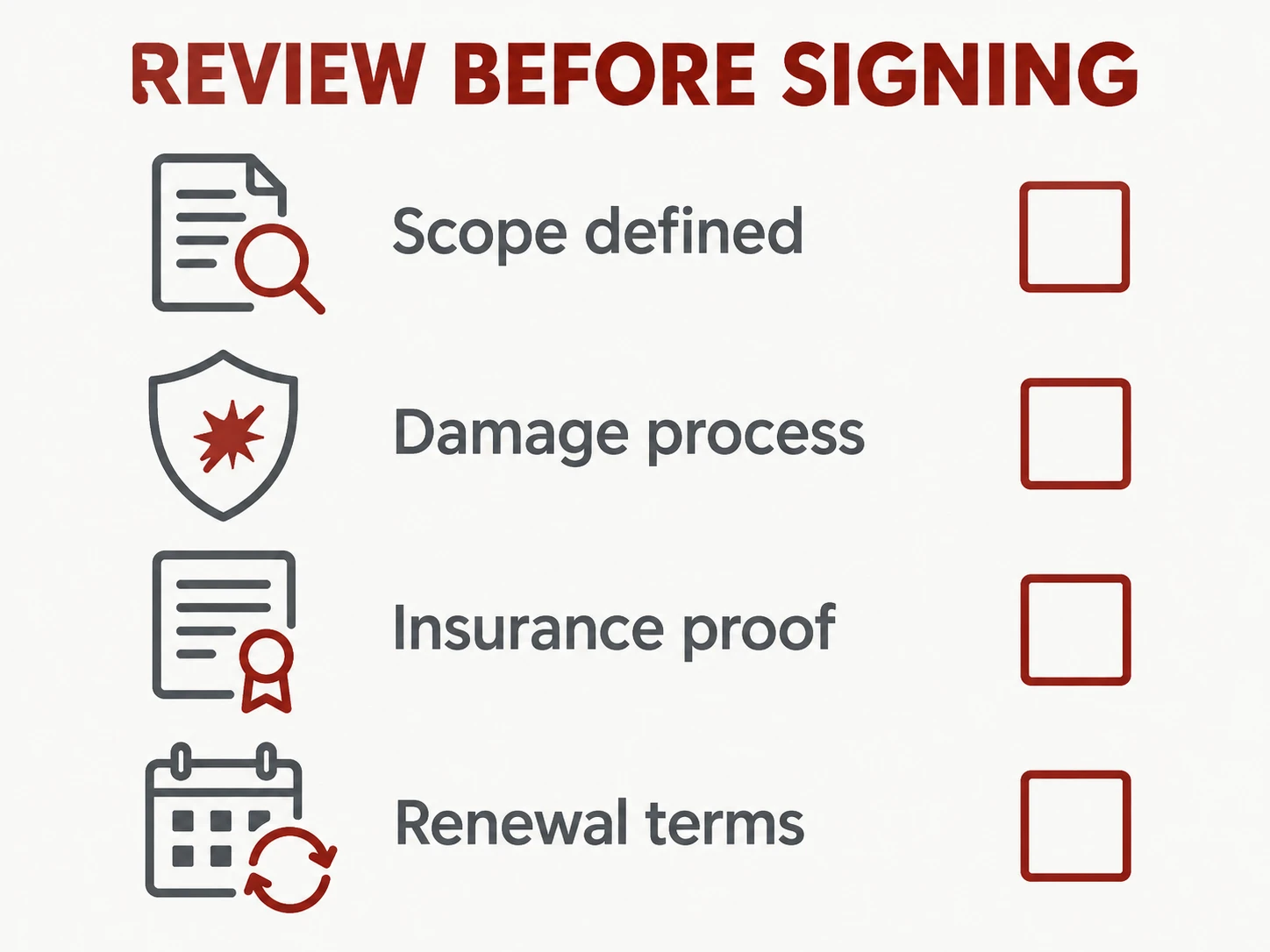
Review the clauses that can shift an undefined cost or decision to the property owner. The goal is to replace vague language with a duty, approval point, or limit that both sides can administer.
| Contract wording to question | Why it creates risk | Better direction |
|---|---|---|
| "All exterior surfaces included" | The parties may picture different areas and methods. | Attach a location and surface schedule with exclusions. |
| "Owner assumes all damage risk" | It can erase the contractor's responsibility for its own work. | Allocate responsibility by cause and use condition records. |
| "Owner indemnifies contractor for any claim" | It may shift claims arising from the contractor's conduct. | Have counsel align indemnity with each party's acts and obligations. |
| "Current certificate of insurance is sufficient" | The certificate may not establish requested additional-insured rights. | Specify the policy evidence and endorsement required. |
| "Contractor may adjust price as needed" | The owner cannot budget or approve a defined change. | Require a stated trigger, notice, and written acceptance. |
| "Agreement renews automatically" | A missed notice can extend a schedule or price the board has not reviewed. | Make the renewal date, notice method, and new terms explicit. |
Also check subcontracting and change orders. If subcontractors are allowed, require the contractor to remain responsible for their work and provide any insurance evidence the agreement calls for. If added areas are requested on site, identify who can approve them; a tenant or front-desk employee may be able to provide access without having authority to increase the contract price.
Use the table as an editing aid, not as a substitute for reviewing the complete agreement. A clause can be reasonable in one contract and unsuitable in another because the surfaces, access, and allocation of duties differ.
Frequently asked questions
The questions below address the decisions that commonly remain after a manager receives a proposed agreement. Check the actual contract and property documents before treating any answer as a term of your deal.
What should a pressure washing contract include?
It should identify the parties and service address, attach a surface-by-surface scope, state the methods and schedule, and explain price, changes, inspection, and payment. It should also assign responsibility for existing conditions, new damage, insurance evidence, wash water, renewal, and cancellation. A site plan and condition photos make those clauses easier to apply.
How to get a pressure washing contract?
Start with a written scope that every bidder can inspect and price. Ask each contractor for a proposal and proposed agreement, then compare exclusions, methods, insurance evidence, wash-water plans, and change-order terms alongside price. Before signing, attach the final scope and confirm that the person signing for the property has authority to approve the work.
Who is liable for damage under a pressure washing contract?
The answer depends on the agreement, the cause of the damage, and any applicable law. A well-written clause distinguishes pre-existing defects from harm caused during the work, sets a reporting process, and explains how repairs will be assessed. Avoid assuming that insurance alone decides liability; a policy and a contract serve different purposes.
What is a hold-harmless clause?
A hold-harmless clause allocates certain losses or claims between the parties. Its effect depends on its exact wording and the surrounding contract. For a property owner, the key question is whether it requires the owner to absorb claims arising from the contractor's work. Have counsel review broad language before accepting it.
Can I cancel a recurring contract?
Look at the signed term, renewal clause, notice method, and any cancellation charges. A recurring agreement may permit cancellation at the end of a term, for convenience, or after a specified failure to perform, with different conditions for each. Send notice in the form the agreement requires and keep a record of delivery.
Sources
These sources support the article's statements about condominium common elements and stormwater permitting. The contract checklist and sample wording are practical drafting guidance, not quotations from those sources.
If you are preparing a scope for a South Florida property, review 2Clean's pressure washing service and share the site details for a property-specific proposal.
Custom Commercial & HOA Walkthroughs
Need a scope tailored to your South Florida property?
Every building, plaza, and community has its own surface mix, access windows, and drainage layout. We quote by walkthrough rather than fixed rate sheets so your proposal matches your exact property. Call us directly at (904) 826-9806 or request a written scope online.
Related services & tools
Pressure Washing by South Florida city: