Procurement & Vendor Selection
Commercial Cleaning Proposal: How to Compare Bids and Spot Gaps
October 14, 2026 (updated) · 12 min read
A commercial cleaning proposal is ready to compare when it identifies the areas and tasks covered, service frequency, cleaning methods, exclusions, total price, and conditions that could change that price. Read each bid against the same property requirements. If a detail is missing, ask for a written clarification before treating the bids as equivalent.
Commercial cleaning proposal completeness checklist
A useful proposal lets you identify what the contractor plans to clean, where, how often, by which method, and for what price. It also makes exclusions and assumptions visible. If those points are scattered across an email chain or left to a future walkthrough, the proposal is incomplete for comparison.
| Check | What to find in the proposal | Clarification to request if missing |
|---|---|---|
| Property and areas | The site, included buildings, surfaces, and boundaries | Which entrances, elevations, walkways, or shared areas are included? |
| Tasks and frequency | Work assigned to each area and when it occurs | Is the task recurring, seasonal, or a separate visit? |
| Method and protection | The proposed approach for each relevant surface | How will sensitive finishes, landscaping, and occupied areas be protected? |
| Access and timing | Work hours, access needs, and operational restrictions | Who provides access, water, and space for equipment? |
| Price | The base price and what it covers | Which work is optional or priced separately? |
| Changes | Circumstances that require a revised price | What must be documented and approved before extra work begins? |
| Supporting information | Insurance evidence and a plan for relevant site risks | What documents or explanations can the bidder provide? |
Use the checklist as a reading tool, not a demand for a longer document. A concise bid can be clear if its attachments identify the work. A polished presentation can still leave a critical area out.
For a South Florida property, compare the proposal with what you saw during the walkthrough. An entry drive, shaded facade, pool deck, and storefront glass have different cleaning needs. A single line for "all exterior surfaces" gives you too little information to judge whether the proposed work fits the site.
Check the work described, not just the service names
The work description should connect each task to a specific area and frequency. "Pressure washing" or "window cleaning" names a service, but does not tell a board or facilities lead which surfaces are included. Read the proposal with a site map or your walkthrough notes beside it.
Look for boundaries that matter operationally. If the bid covers building entrances, does that include adjacent walkways? If it covers a facade, are signs, awnings, and glass included or excluded? If it describes a recurring programme, can you tell which tasks happen on every visit and which happen only when requested?
Frequency needs similar care. "As needed" may mean the contractor will decide when to perform a task, or it may mean the property must request and pay for another visit. Ask which interpretation applies, who makes the decision, and whether the quoted price includes that work. The answer should appear in the proposal or an attached clarification.
You do not need to draft a new work specification to review a bid. If the board is still defining its requirements, a separate cleaning scope of work template can help establish a common request before contractors price it. For the proposal already in hand, your immediate job is to identify what each bidder has actually offered.
Decode vague proposal language
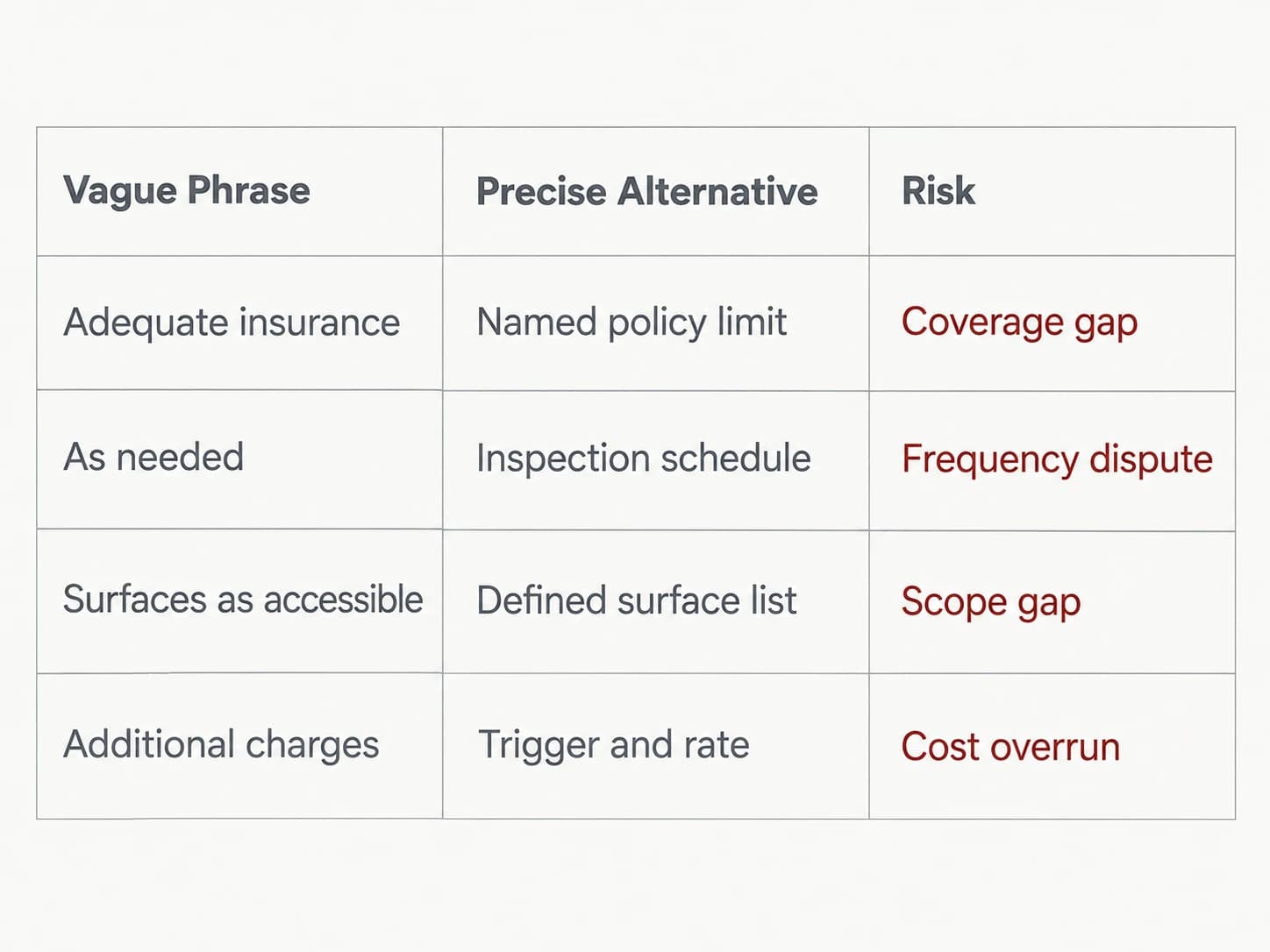
Vague language matters when it changes the amount of work, the method, or the price. Ask the bidder to explain the phrase against a real part of your property. You are looking for an answer that another board member could read and understand without joining the walkthrough.
| Proposal phrase | What remains unclear | Useful question |
|---|---|---|
| "As needed" | Who triggers the work and whether it is included | What condition triggers it, and is another charge involved? |
| "Accessible surfaces" | Where the access boundary falls | Which named areas are excluded because of access? |
| "Standard cleaning" | Which tasks and methods are assumed | What work is performed on each listed surface? |
| "Additional work may apply" | What causes a price change | What conditions require a revised quote before work proceeds? |
| "All common areas" | Whether the bidder inspected every shared space | Can the included areas be identified on a site list or map? |
Read qualifications and footnotes as closely as the main service description. A bid may appear to cover a plaza while a note excludes stain treatment, furniture movement, or water access. Those exclusions may be reasonable, but they affect the comparison and should be visible to everyone approving the spend.
Avoid replacing one vague phrase with an arbitrary technical number. For example, a specified pressure setting does not, by itself, show that a method suits painted finishes, pavers, glass, or roofing. Ask the contractor to explain its approach to the surface and the safeguards it intends to use.
Review method, surface fit, and site protection
A proposal should show that the bidder has selected methods for the surfaces present, rather than applying one method across the property. Read the method description alongside any exclusions and preparation requirements. The trade-off is often between removing the visible soil and protecting a finish, adjacent materials, or occupied areas.
For an exterior programme, ask how the contractor distinguishes surfaces that can tolerate pressure washing from those needing a gentler approach. Soft washing uses cleaning solution and a lower-pressure application where forceful rinsing could damage a surface. The proposal should make the choice understandable for the actual facade, entry, roof, or paved area being priced.
Roofing is a useful test of whether the language is specific. The Asphalt Roofing Manufacturers Association advises against power washing asphalt roofing because high pressure is likely to damage it. A proposal that simply says "pressure wash roof" deserves clarification about the roof material and intended method. The building washing method guide explains the surface differences in more detail.
Site protection also affects whether the price is complete. Ask how the work will account for nearby planting, open storefronts, pedestrian routes, and materials that should not receive cleaning solution. A bidder may need access restrictions or preparation by the property. If so, those assumptions belong in the written offer because they affect operations and cost.
Read the price against what it includes
A lower total is meaningful only when the bids cover comparable work. Check the unit of pricing, the included visits or areas, optional items, and any assumptions about site conditions. Then ask what would cause the contractor to submit a revised quote.
For recurring care, distinguish the regular service price from occasional work. A proposal may include routine walkway cleaning but price stain treatment or a larger restoration separately. For a one-time project, check whether preparation, cleanup, and disposal are part of the total. Neither structure is inherently better; the important point is knowing what the quoted amount buys.
Look for allowances or provisional items. If the contractor cannot confirm a condition until work starts, ask how it will document the finding and price the additional work before proceeding. That gives the property manager or board a decision point instead of an unexplained charge afterward.
Do not assume the most detailed cost breakdown represents the best value. A line-by-line list can help you find omissions, but it does not prove that the hours, method, or result fit the property. Compare the total price with the stated work and any exclusions. Record a clarification when a bidder includes something another bidder treats as an extra.
Compare bids side by side
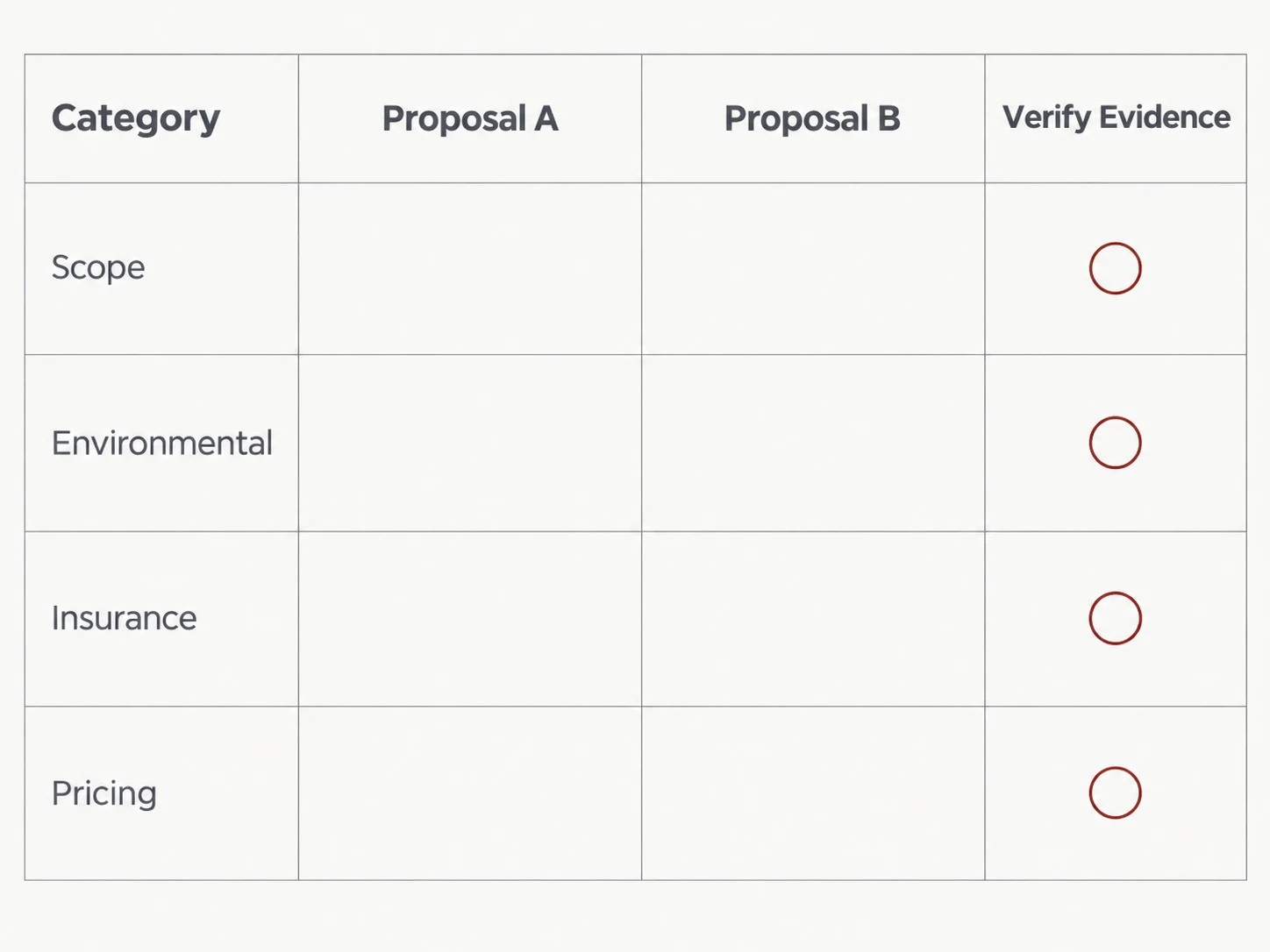
Put each proposal into the same comparison worksheet before deciding which price is lower for equivalent work. Use the property's actual requirements as the rows, and enter each bidder's written answer. Mark missing information as "not stated" rather than assuming it is included.
| Comparison point | Bid A | Bid B |
|---|---|---|
| Areas and boundaries | Record the stated areas | Record the stated areas |
| Tasks and frequency | Record what happens and when | Record what happens and when |
| Surface methods | Record the method by surface | Record the method by surface |
| Access and disruption | Record the assumptions | Record the assumptions |
| Wash water handling | Record the stated approach | Record the stated approach |
| Base price and optional work | Record both | Record both |
| Exclusions and possible changes | Record each condition | Record each condition |
| Insurance evidence | Record what was supplied | Record what was supplied |
The worksheet exposes differences a total price can hide. One bidder might include upper elevations but exclude storefront glass. Another might include the glass but assume the property will clear the work area. Neither bid can be evaluated fairly until those differences are visible.
Send the same unanswered question to every affected bidder. If one contractor clarifies an item that changes the amount of work, give the others enough information to confirm what their prices include. Keep the written answers with the bids so a later reviewer can follow the decision.
Your choice can account for more than price. A clear method, workable schedule, and well-defined exclusions reduce uncertainty for an occupied property. The worksheet makes that reasoning visible without pretending that every difference can be converted into a price adjustment. For broader vendor screening, use the commercial pressure washing company checklist alongside the bid comparison.
Check wash water and operational risks
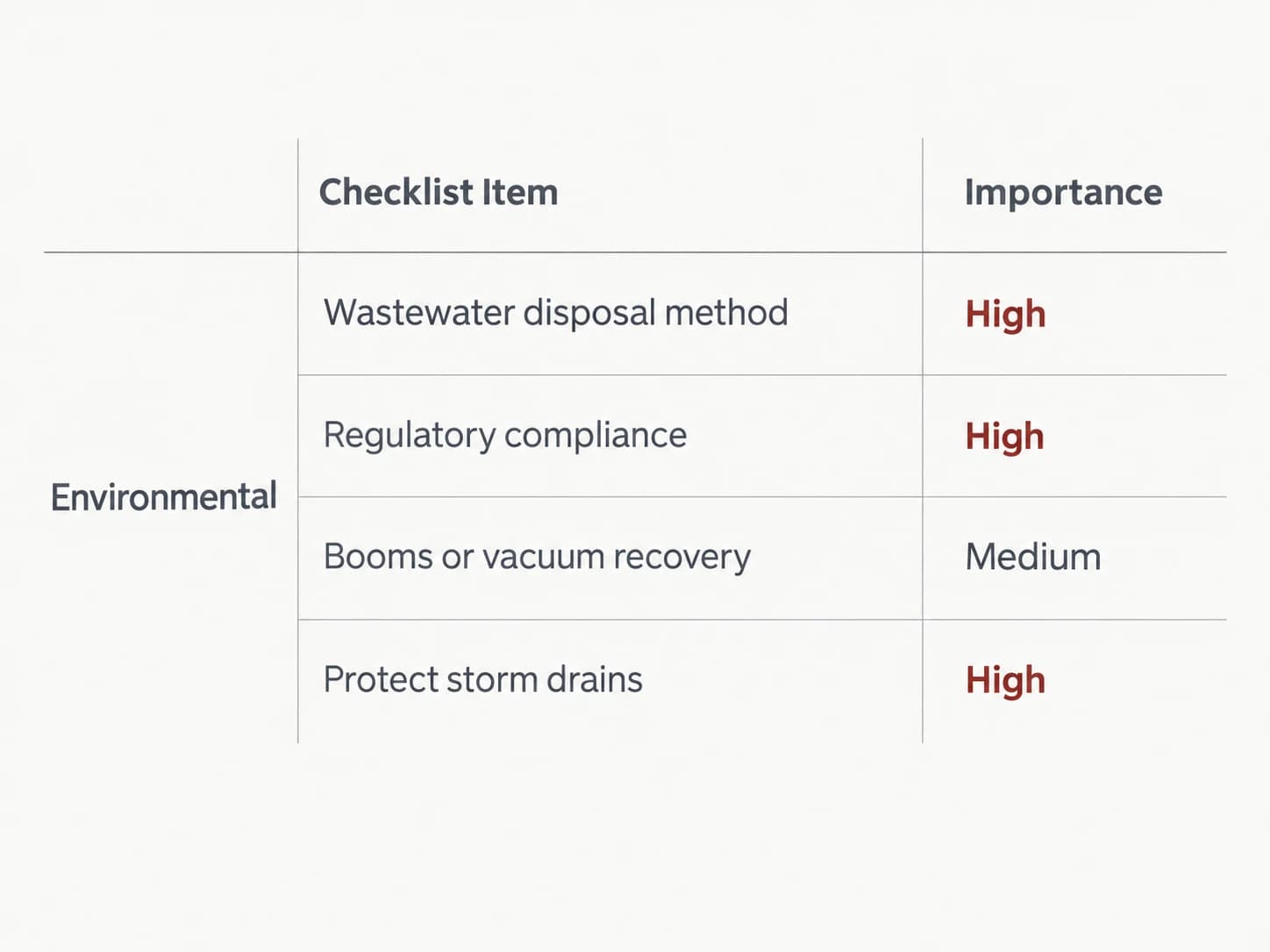
If the proposed work produces wash water, ask how the contractor will keep it from entering storm drains and where it will go. A statement such as "disposal as required" does not explain the plan for your site. The answer may depend on drain locations, the work area, and the cleaning method.
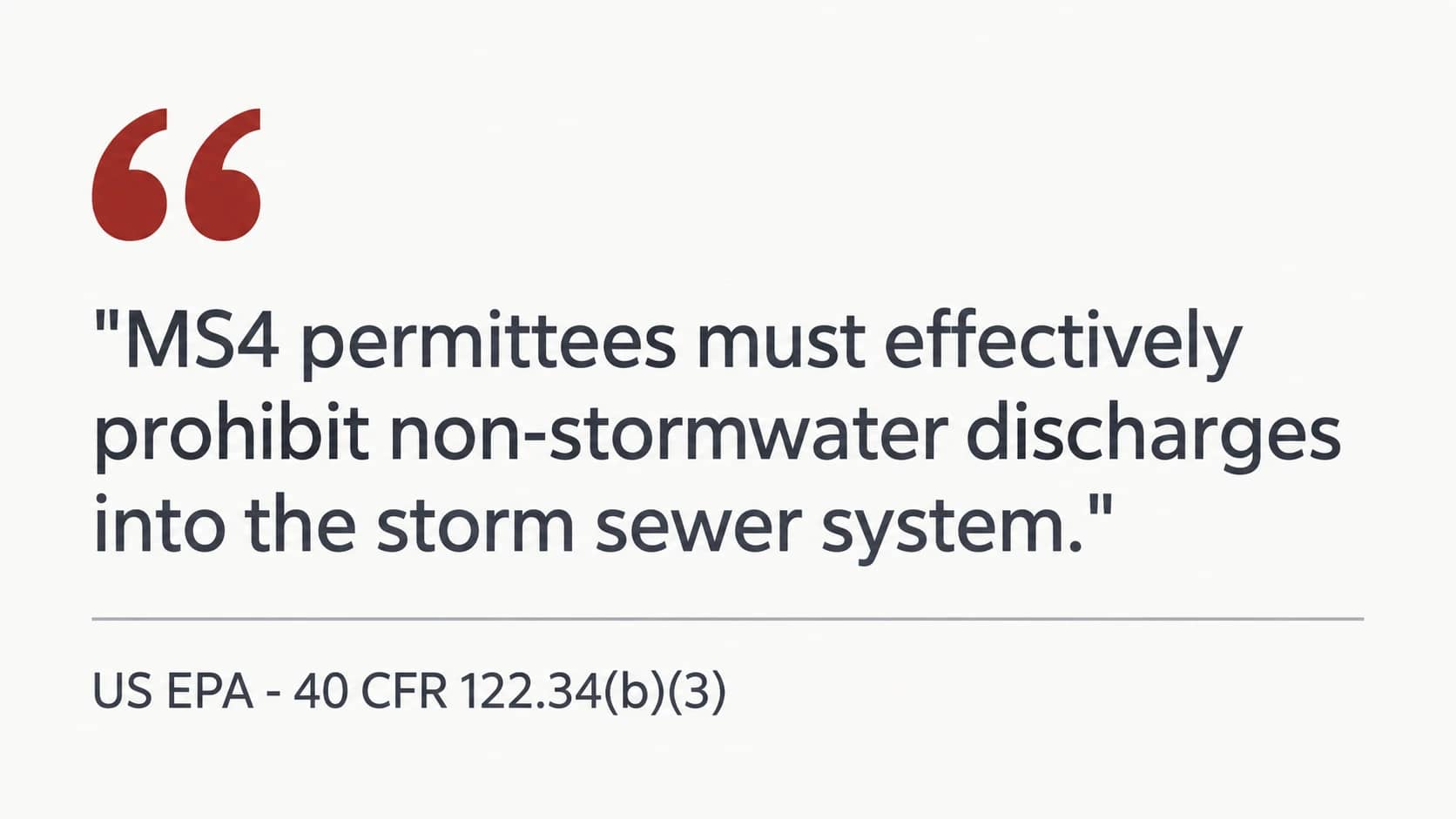
The federal rule in US EPA, 40 CFR 122.34(b)(3), requires municipal storm sewer permittees to effectively prohibit non-stormwater discharges and run an illicit discharge detection and elimination programme. That is a reason to ask about wash water controls during exterior cleaning, rather than assume runoff can be directed to a nearby drain. The proposal should describe the intended approach clearly enough for the property to assess it.
Operational risks deserve the same attention. Ask when entrances or walkways may be wet, how access will be managed, and who will coordinate with occupants. OSHA's walking-working surface rule requires covered workplace surfaces to be maintained in a clean and safe condition. For a hotel, retail site, or busy association property, a bid that addresses pedestrian movement may be easier to approve and schedule.
Verify supporting information before approval
A proposal can describe the work well and still leave supporting information to be checked. Request the insurance evidence your property requires and make sure it relates to the proposed work and period. If the bid promises to provide a document later, record that as an open item rather than treating the promise as the document.
For a board or property manager, the relevant question is whether the evidence meets the property's requirements. Do not infer coverage from a general statement that a contractor is "fully insured." The certificate of insurance guide for Florida boards and property managers covers what to review in the certificate itself.
Check qualifications in the same practical way. Ask who will coordinate access, how site concerns will be communicated, and how the bidder will identify work it cannot complete as described. Those answers help you evaluate how the proposed service will operate at your property. They should support, rather than substitute for, a clear description of the work and price.
If the proposal names products or equipment, read those details for their relevance to the site. A product list is useful when a finish requires special care or occupants need to know what will be used. It is less useful as a substitute for explaining how the contractor will clean the areas you need covered.
Make the decision from the clarified proposals
Choose from the final written versions of the bids, including any clarifications and revised prices. Confirm that each bidder has priced the same areas and that the remaining differences are understood. Then document why the selected offer fits the property's work, schedule, and budget.
A short decision note can identify the selected bid, the work it includes, important exclusions, and any items that must be resolved before work begins. This is particularly helpful when a board approves a project but a manager will coordinate it later. The note keeps the reason for the choice tied to the proposal everyone reviewed.
If the bids remain too different to compare, narrow the unanswered issue and ask for a revision. You may find that the property needs to settle an access window, define a disputed area, or decide whether optional work belongs in the base request. Once that point is clear, the proposals can be compared on more equal terms.
Frequently asked questions
These questions come up when a proposal looks complete at first glance but leaves the buyer unsure about the work or price. Use the written bid and any clarifications as the basis for your decision.
What should a commercial cleaning proposal include?
It should identify the property, areas and tasks covered, frequency or project schedule, proposed methods, exclusions, access assumptions, and price. For exterior work, look for an explanation of how sensitive surfaces and wash water will be handled. The level of detail can vary, but you should be able to tell what is included and what would require a revised quote.
How do I compare cleaning proposals with different scopes?
Start with a list of the areas and tasks your property needs. Enter what each bidder includes beside each item, and mark anything unstated or excluded. Ask for written clarification where a difference affects the work or price. Compare totals only after you understand which services are equivalent and which would need to be added separately.
What does "as needed" mean in a cleaning proposal?
The phrase has no dependable meaning without a trigger. Ask what condition prompts the work, who decides it is needed, and whether the quoted price includes it. For example, a contractor might mean it will perform the task during a scheduled visit, while a property manager might expect a separate visit. Have the bidder state its meaning in writing.
How do you write a good proposal example?
From a buyer's perspective, a useful example ties each service to a named area, a frequency or schedule, and a price. It explains method choices, exclusions, and conditions that could change the quote. If you are reviewing an example supplied by a bidder, check whether those details describe your property. Generic sample wording cannot confirm what the bidder inspected or priced.
Why are two commercial cleaning bids so different?
The bidders may have priced different areas, frequencies, methods, access conditions, or levels of preparation. One may include work the other lists as optional, and one may have left an item unstated. Put the bids side by side and ask each contractor to explain material gaps. A price difference is easier to judge once the work behind each total is clear.
Sources
The sources below support the specific roofing, stormwater, and workplace surface points cited in this article. The proposal review checklist and comparison questions are practical guidance for evaluating the bids you receive.
If you are comparing proposals for exterior care in South Florida, you can describe your property and the work you need through the 2Clean quote page.
Custom Commercial & HOA Walkthroughs
Need a scope tailored to your South Florida property?
Every building, plaza, and community has its own surface mix, access windows, and drainage layout. We quote by walkthrough rather than fixed rate sheets so your proposal matches your exact property. Call us directly at (904) 826-9806 or request a written scope online.
Related services & tools
Commercial & HOA by South Florida city: