
Procurement & Vendor Selection
How to Choose a Commercial Pressure Washing Company in Miami: A Buyer's Checklist
September 15, 2026 · 9 min read
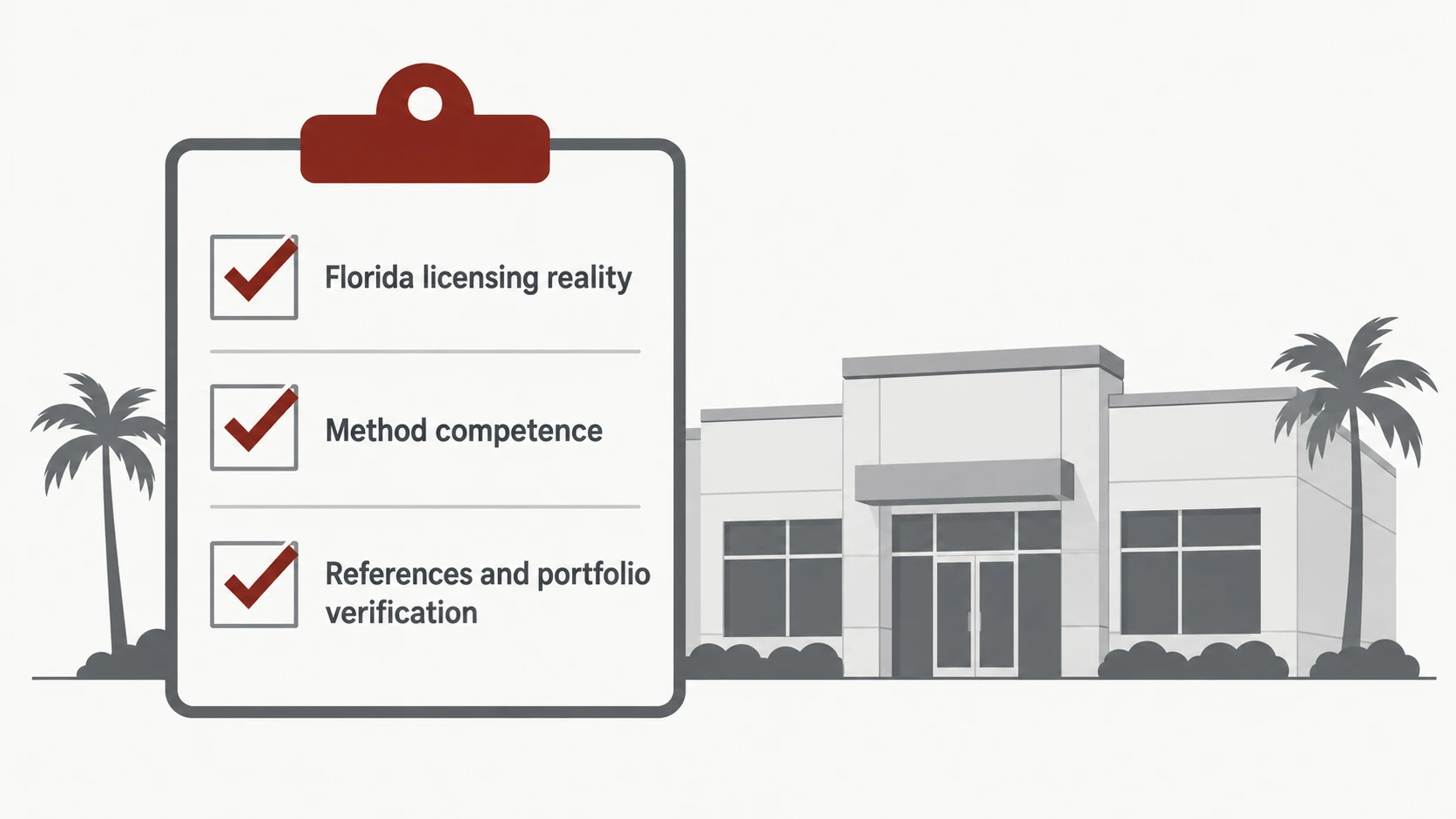
To vet a commercial pressure washing contractor, check their insurance, licensing, environmental compliance, references, and scope completeness. This article will guide you through a detailed checklist to ensure you select a reliable and professional service provider.
Direct answer: the five things that matter
When choosing a commercial pressure washing company, focus on these five critical areas: insurance, licensing, environmental compliance, references, and scope completeness. Each of these factors plays a crucial role in ensuring the job is done safely, legally, and to your satisfaction.
Insurance is the first line of defense against liability. A reputable company will provide a Certificate of Insurance (COI) that covers general liability, workers' compensation, and property damage. This protects you from financial repercussions if an accident occurs on your property.
Florida's licensing requirements for pressure washing are not as stringent as you might think. However, a company that holds relevant certifications from organizations like Power Washers of North America (PWNA) demonstrates a commitment to professional standards and best practices.
Environmental compliance is non-negotiable. The company must adhere to local and federal regulations, particularly those related to stormwater management and wastewater disposal. Ask detailed questions to ensure they are up to date and compliant.
References and reviews provide insights into the company's track record. Contact previous clients or check online reviews to gauge their satisfaction and the quality of work.
Finally, the scope of work should be comprehensive and tailored to your specific needs. A detailed proposal that outlines the methods, materials, and timeline shows that the company is thorough and professional.
Insurance: what a COI must show
A Certificate of Insurance (COI) is essential for protecting your property and your business from financial risks. The COI should clearly show the following:
- General Liability: This coverage protects against property damage, bodily injury, and personal injury claims. Set the minimum limit yourself, in the scope of work, at a level your own insurer or counsel considers appropriate for the height and access method the job needs, and check that the certificate matches it.
- Workers' Compensation: This insurance covers medical expenses and lost wages for employees injured on the job. It is crucial for safeguarding your business from lawsuits.
- Property Damage: This coverage protects against damage to your property caused by the contractor's negligence. It ensures that any accidental damage is covered.
When reviewing a COI, verify that the policy is current and that the coverage limits meet or exceed your requirements. If the COI is not up to date or the limits are insufficient, consider it a red flag.
Florida licensing reality
Florida does not require a specific license for pressure washing contractors. However, this does not mean that any company can perform the job. A lack of licensing requirements means you must rely on other indicators of professionalism and competence.
One such indicator is certification from reputable organizations like Power Washers of North America (PWNA). PWNA offers certification in various areas, including house washing, roof cleaning, flatwork, and fleet washing. These certifications indicate that the company has undergone training and adheres to industry standards.
Additionally, look for companies that have undergone OSHA and environmental training. This shows a commitment to safety and compliance, which are critical in a service that involves the use of high-pressure water and chemicals.
Environmental compliance questions to ask
Environmental compliance is a critical aspect of pressure washing, especially in South Florida, where water management and stormwater regulations are stringent. Here are some key questions to ask:
- Stormwater Management: How does the company manage wash water and prevent it from entering the storm sewer system? The US EPA, under 40 CFR 122.34(b)(3), mandates that MS4 permittees "effectively prohibit" non-stormwater discharges into the storm sewer system. This means the company must have a plan to contain and properly dispose of wash water.
- Wastewater Disposal: What methods does the company use to treat and dispose of wastewater? Ensure they follow best management practices (BMPs) and have the necessary permits for wastewater disposal.
- Chemical Use: What chemicals does the company use, and how are they applied and disposed of? Look for environmentally friendly options and ensure the company complies with local and federal regulations for chemical use and disposal.
- Regulatory Compliance: Is the company familiar with and in compliance with the federal Clean Water Act and local environmental regulations? The UAMCC works with municipalities and agencies to establish BMPs for adherence to these regulations. A knowledgeable company will be familiar with these standards.
By asking these detailed questions, you can ensure that the pressure washing company you choose is committed to environmental stewardship and regulatory compliance. This not only protects your property but also helps maintain the health of the local ecosystem.
Compliance answers are also a useful proxy for everything else. A contractor who can explain containment without being prompted is usually the one who can explain method selection too.
Method competence: the questions that expose a guesser
A competent pressure washing company understands the specific methods required for different surfaces and conditions. They should be able to explain why they choose a particular method and how it benefits your property. A guesser will give vague answers and may not understand the technical aspects of the job.
When evaluating a potential vendor, ask detailed questions about their methods. For example, ask why they use a particular nozzle or chemical for a specific surface. A knowledgeable company will explain the science behind their choices, such as the pressure and angle needed to clean without damaging the surface. They should also be able to discuss the environmental impact of their methods, particularly in relation to local regulations.
Another key area is their approach to different types of stains and materials. For instance, a company that can articulate the difference between pressure washing and soft washing, and when each is appropriate, shows a level of expertise that a guesser cannot match. They should also be able to explain how they handle unique challenges, such as cleaning around landscaping or dealing with hard-to-reach areas.
Finally, ask about their safety protocols and training. A company that invests in ongoing education, such as certifications from Power Washers of North America, demonstrates a commitment to best practices and safety. This is particularly important when it comes to working at heights or using powerful equipment.
Scope completeness and apples-to-apples bids
A complete and detailed scope of work ensures that you are comparing apples to apples when evaluating bids. A thorough scope should include all the necessary tasks, timelines, and specifications to complete the job to your satisfaction. A vague or incomplete scope can lead to hidden costs and delays.
When reviewing bids, look for the following elements:
- Task List: A detailed list of all tasks to be performed, including surface types, areas to be cleaned, and any special requirements.
- Equipment and Materials: A list of the equipment and materials to be used, along with their specifications. This helps ensure that the company is using the right tools for the job.
- Timeline: A clear timeline for the project, including start and end dates, and any milestones or checkpoints.
- Safety Protocols: Information on the safety measures that will be in place, including any necessary permits or inspections.
- Warranty and Guarantee: Details on what is covered in the company's warranty or guarantee, and how to file a claim if needed.
A complete scope also includes a breakdown of costs, so you can see what you are paying for. This should include labor, materials, and any additional fees. A detailed cost breakdown helps you identify any potential red flags, such as unusually low or high prices that might indicate a problem.
To ensure you are comparing bids fairly, ask each vendor to provide a scope of work that matches your requirements. If a bid is significantly lower than others, investigate why. It could be that the vendor is cutting corners or has misunderstood the scope.
References and portfolio verification
References and a verified portfolio are crucial for validating a vendor's claims and ensuring they have the experience and capability to deliver the results you need. A reputable company should be able to provide a list of satisfied clients and examples of their work.
When checking references, ask the following questions:
- Satisfaction Level: How satisfied were they with the quality of work? Were there any issues or delays?
- Communication: How was the communication throughout the project? Were they responsive to questions and concerns?
- Pricing: Did the final cost match the initial estimate? Were there any unexpected charges?
- Safety and Compliance: Did the company follow all safety protocols and comply with local regulations?
For portfolio verification, request before-and-after photos of similar projects. This will give you a clear visual of the company's capabilities and the quality of their work. If possible, visit a site where the company has recently completed a job to see the results firsthand.
A company that hesitates to provide references or a portfolio may be hiding something. Trustworthy vendors are proud of their work and are happy to share it with potential clients.
The vendor scorecard
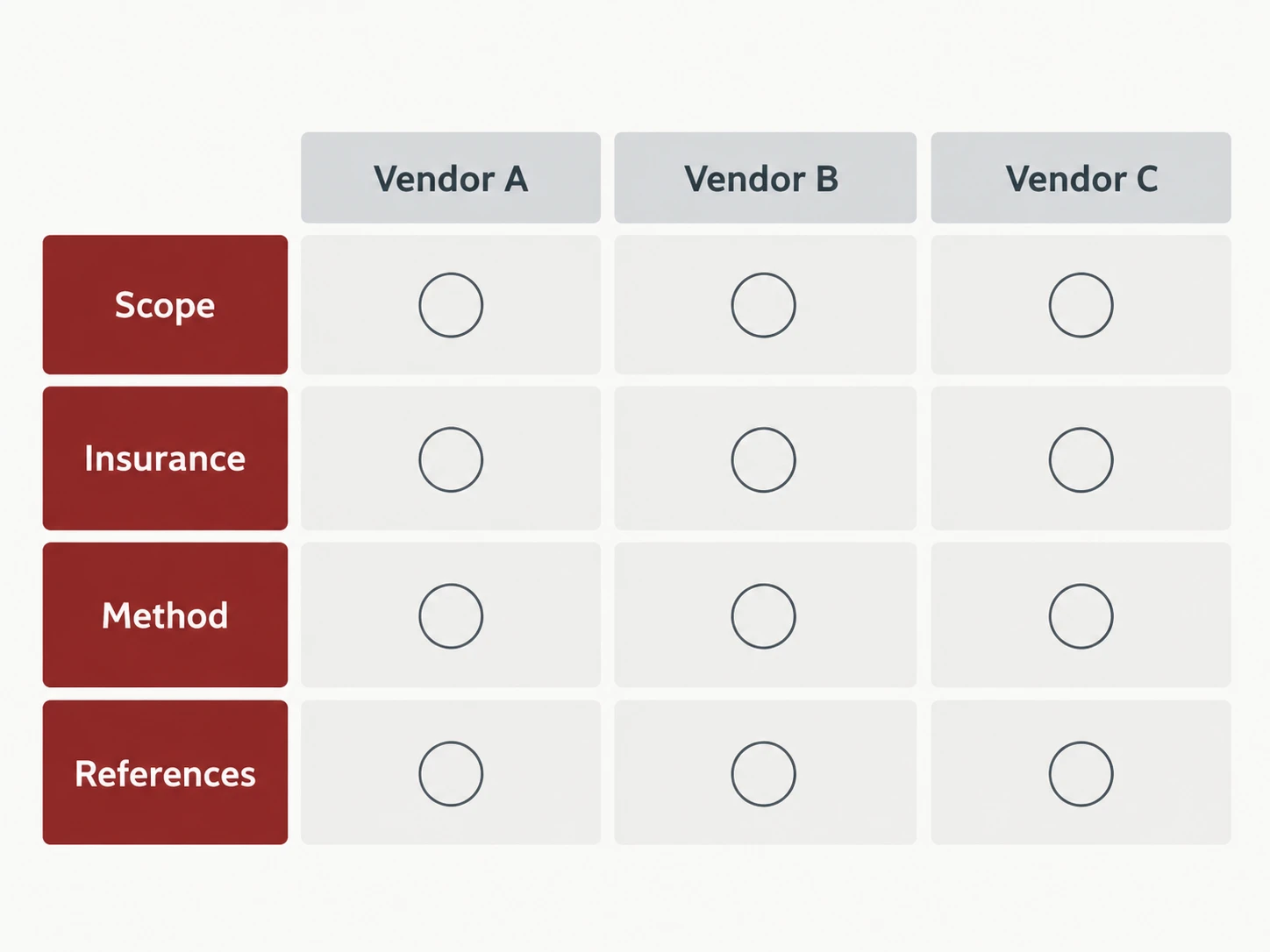
A vendor scorecard is a valuable tool for objectively evaluating and comparing potential pressure washing companies. It helps you make an informed decision based on a comprehensive set of criteria, rather than just price or a single factor.
Vendor scorecard
| Criteria | Weight | Vendor A | Vendor B | Vendor C |
|---|---|---|---|---|
| Insurance and Compliance | 20% | |||
| Method Competence | 20% | |||
| Scope Completeness | 20% | |||
| References and Portfolio | 20% | |||
| Customer Reviews | 10% | |||
| Warranty and Guarantee | 10% |
COI requirement checklist
| Item | Required | Vendor A | Vendor B | Vendor C |
|---|---|---|---|---|
| General Liability Insurance | Yes | |||
| Workers' Compensation Insurance | Yes | |||
| Commercial Auto Insurance | Yes | |||
| Certifications (e.g., PWNAC) | Yes |
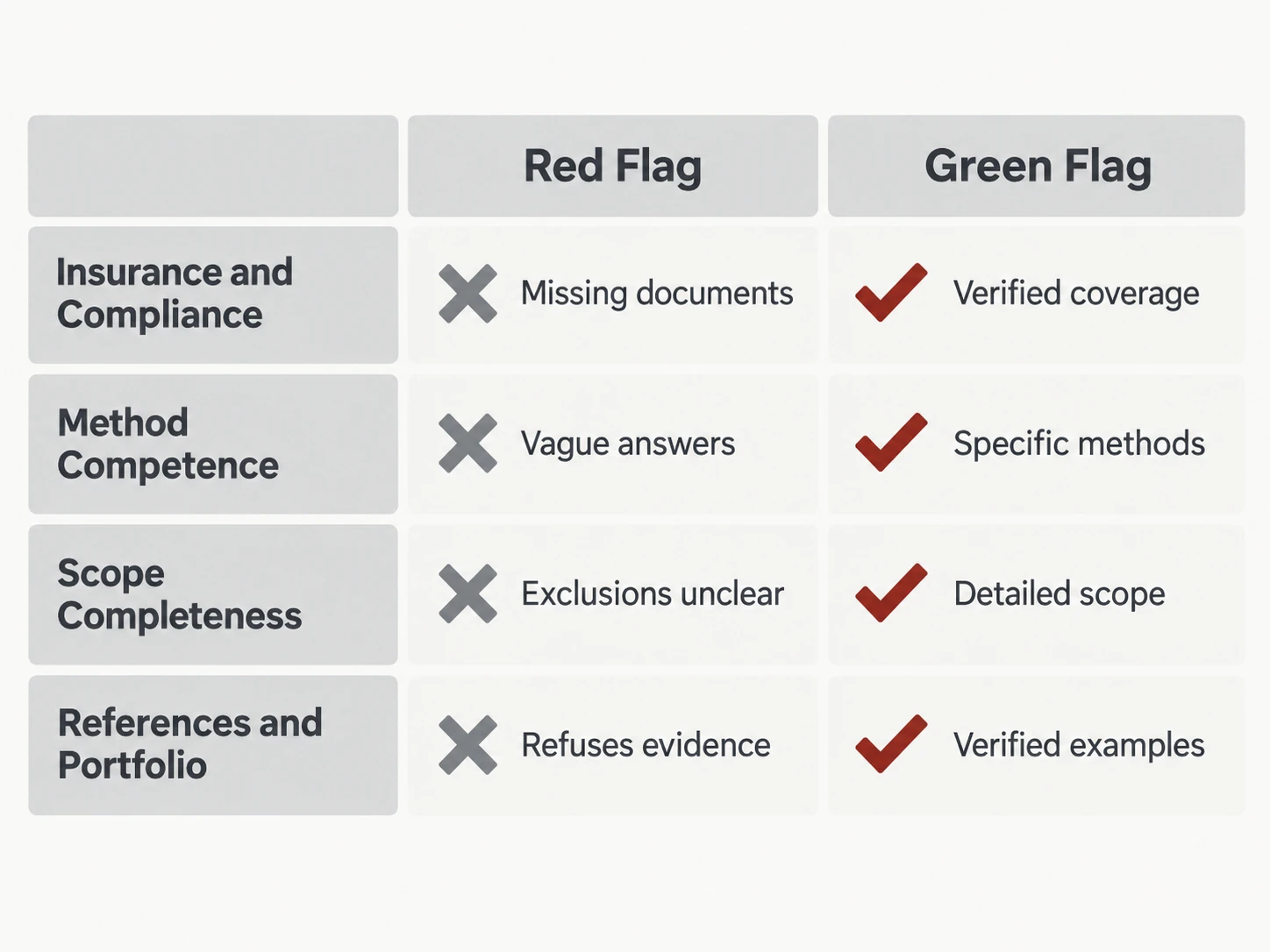
Red-flag vs green-flag comparison
| Criteria | Red Flag | Green Flag |
|---|---|---|
| Insurance and Compliance | Missing required insurance or certifications. | All required insurance and certifications in place. |
| Method Competence | Vague or incorrect explanations of methods. | Detailed and scientifically sound explanations of methods. |
| Scope Completeness | Vague or incomplete scope of work. | Detailed and thorough scope of work. |
| References and Portfolio | Unwilling to provide references or portfolio. | Provides multiple positive references and a verified portfolio. |
| Customer Reviews | Negative or mixed reviews. | Consistently positive reviews. |
| Warranty and Guarantee | Limited or unclear warranty terms. | Comprehensive and clear warranty and guarantee. |
Using a vendor scorecard, you can assign a score to each criterion based on your evaluation. This helps you see at a glance which vendor is the best fit for your needs. For more information on our commitment to quality and compliance, visit our about page or read what our satisfied clients have to say on our reviews page. If you're ready to get started, request a free quote today.
Sources
Frequently asked questions
How do I choose a reliable pressure washing company?
Look for a company with a proven track record, positive reviews, and a commitment to environmental compliance. Ensure they have the necessary licenses and insurance, and ask about their training and certifications.
How do I vet a commercial pressure washing contractor?
Check their references, verify their insurance and licensing, and review their safety and environmental compliance practices. Ensure they have experience with commercial properties and can provide detailed job estimates and timelines.
What insurance should they carry?
They should carry general liability insurance and workers' compensation insurance to protect against accidents and injuries on the job.
What licences are required in Florida?
In Florida, pressure washing companies should have a valid business license and any required local permits. They must also comply with state and federal regulations, including those related to stormwater management.
How many bids should I get?
Get at least three bids to ensure you are getting a fair and competitive price for the services you need.
How many bids?
Get at least three bids to ensure you are getting a fair and competitive price for the services you need.