Cost & Budget
HOA Pressure Washing Budget: Costs, Bids and Reserve Planning
October 14, 2026 · 11 min read
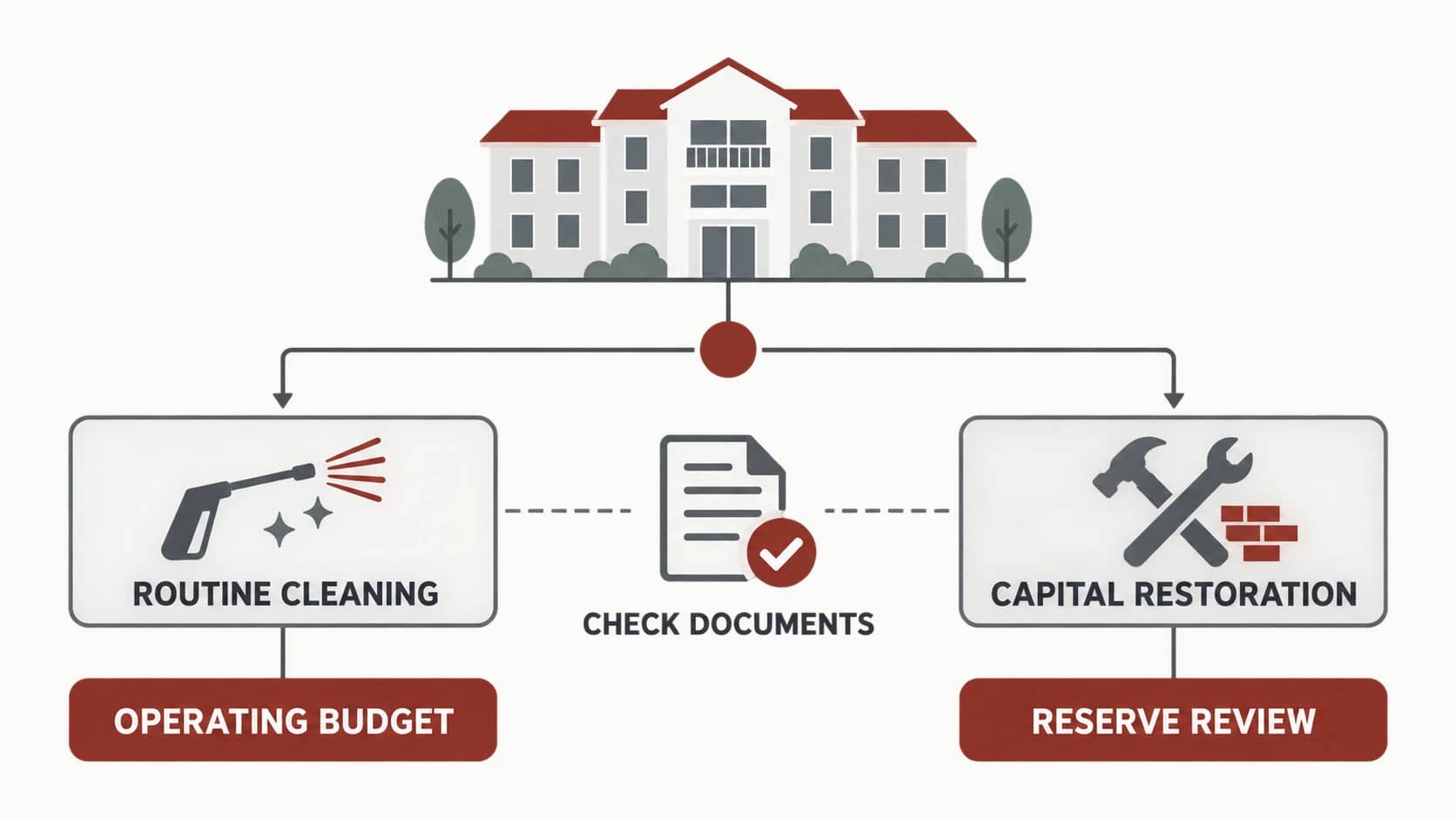
HomeGuide's commercial pressure washing guide (Oct 9, 2025) lists basic work at $0.10 to $0.35 per square foot. For an HOA pressure washing budget, treat that as an outside benchmark, then seek bids for your actual surfaces, access needs, cleaning frequency, and runoff plan. Routine cleaning generally belongs in the operating budget.
What should an HOA pressure washing budget cover?
An HOA pressure washing budget should cover a defined set of surfaces and a realistic cleaning schedule, rather than a single allowance for the whole property. Separate routine walkways and entries from building exteriors, parking areas, and unusually soiled locations. That lets the board adjust frequency without losing sight of what each change buys.
HomeGuide's commercial pressure washing guide (Oct 9, 2025) lists basic commercial cleaning at $0.10 to $0.35 per square foot and intensive work involving grease or graffiti at $0.40 to $1.00 per square foot. Those categories are useful for checking whether a proposal deserves a closer look. They are not a quote for a South Florida association: the measured area, soil, access, and scope still have to match.
For another point of reference, Hydro Wash 360's Jacksonville vendor estimate (May 11, 2026) puts annual HOA pressure washing at $3,000 to $6,000 for communities under 75 units, $6,000 to $15,000 for 75 to 200 units, and $15,000 to $25,000 or more for communities above 200 units. The vendor does not provide supporting bid data. Unit counts alone cannot tell a Miami-Dade, Broward, or Palm Beach board how much pavement, wall area, or difficult access it has.
Start with a property walk and a marked site plan. Record the surfaces the association maintains, where staining returns, and which areas can be cleaned while residents continue to use the property. A board can then request a base bid for recurring work and separate options for less frequent or condition-dependent work.
Which factors change HOA pressure washing costs?
The largest cost changes usually come from the area being cleaned, the treatment each surface needs, and how easily crews can reach it. A low, open sidewalk is a different job from a building facade above landscaping or an occupied entry that must stay accessible. Ask bidders to show these differences in their scope.
| Cost driver | What to show bidders | Why it affects the bid |
|---|---|---|
| Measured surface area | A site plan with walkways, entries, walls, parking areas, and other requested surfaces marked separately | Clear quantities make proposals easier to compare and later changes easier to price. |
| Surface and condition | Concrete, pavers, stucco, painted finishes, algae, grease, staining, and damaged areas | The appropriate method and expected result differ by material and soil. |
| Height and access | Upper walls, enclosed courts, narrow paths, landscaping, and areas with limited equipment access | Access can change equipment, labor, and the work sequence. |
| Water and runoff | Available water connections, drains, slopes, and areas where wash water could collect | Bidders need to plan water use and containment where required. |
| Work window | Resident access, deliveries, parking restrictions, and quiet hours | Staging and interruptions can change the time needed. |
| Frequency | Areas needing recurring attention and areas that can be assessed less often | A recurring scope may cost differently from a large, one-time reset. |
South Florida's weather can make damp or shaded areas look dirty sooner than exposed areas. Walk the property after cleaning and again before the next budget cycle to see where buildup actually returns. The Miami commercial cleaning conditions guide explains why location and exposure matter, while the commercial pressure washing cost guide gives broader context for comparing commercial scopes.
Use the right method for the material. Hard concrete may suit pressure washing, while a delicate exterior may need soft washing and a different cleaning solution. For asphalt shingles, the Asphalt Roofing Manufacturers Association warns that high-pressure washing is likely to cause damage. Keep roof work in its own scope rather than folding it into a pavement price.
How do boards get comparable bids?
Comparable bids begin with one written request sent to every bidder. Give each contractor the same surface list, approximate measurements, access information, and desired result. Then require a line-item response so a lower total does not conceal omitted work.
| Ask every bidder to state | What the board can compare |
|---|---|
| Surfaces and measured quantities | Whether each proposal covers the same physical area |
| Cleaning method by surface | Whether the method fits the material and condition |
| Included preparation and protection | How landscaping, nearby finishes, vehicles, and resident routes will be handled |
| Water supply and wash-water plan | Who supplies water and how runoff will be managed |
| Schedule and access needs | Closures, parking coordination, work hours, and likely disruption |
| Exclusions and optional work | Stains that may remain, repairs, sealing, and additional areas |
| Price by scope item | The effect of removing or changing a service |
Ask for a walk-through when plans and photographs cannot show the condition clearly. Have bidders identify existing damage and distinguish ordinary dirt removal from stain treatment or restoration. A proposal should also say how an added area or a changed scope would be approved and priced before work begins.
Review contract terms alongside the number. The commercial pressure washing contract guide covers scope and acceptance details, and the contractor insurance certificate guide helps boards review the documents they request from bidders. Follow the association's purchasing and approval rules when selecting a contractor.
How should the board set a cleaning schedule?
Set frequency by surface condition, use, and the standard the association wants to maintain. An entry that becomes slick or visibly stained may need more attention than an upper wall that still looks clean. A single schedule for every surface can waste funds in some places and leave other places neglected.
Ask the manager to keep a simple condition log with photographs and notes from routine walks. Note where standing water, shade, irrigation overspray, grease, or heavy foot traffic appears to speed buildup. Use that record to decide what belongs in the recurring base scope and what can be quoted as an option.
Coordinate work around residents and site operations. A bidder should know which paths must remain open, where vehicles need to move, and which areas can be temporarily closed. For mixed surfaces, soft washing may be appropriate where high pressure could harm a finish. The scope should name the method so a board is not left to infer it from the word "washing."
Wash-water handling belongs in this discussion too. Federal rules require municipal storm sewer permittees to address illicit non-stormwater discharges, and Florida's Department of Environmental Protection administers the state's municipal stormwater program. Tell bidders where drains are located and ask how they will manage runoff for the proposed work. Do not assume water can simply be directed into a storm drain.
Build a multi-year exterior cleaning budget
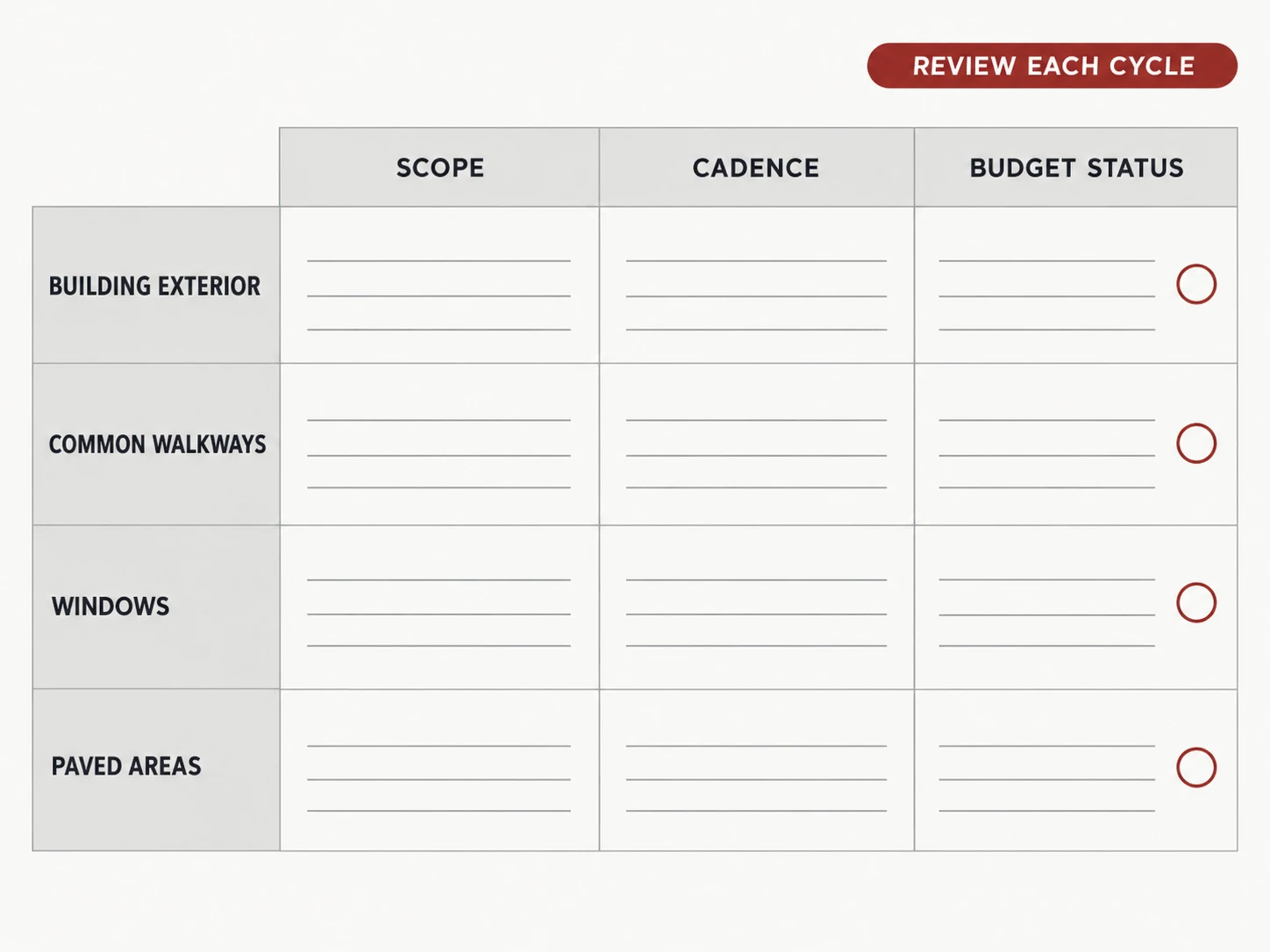
A multi-year plan should show the recurring cleaning line, the surfaces it covers, and the point when the board will reassess it. Keep uncertain projects as separately priced options until their condition and scope are known. This makes annual budget changes explainable to owners.
| Budget line | Scope to define | Planning approach |
|---|---|---|
| Routine pavement cleaning | Named walkways, entries, and other common concrete | Obtain a recurring bid and review condition after service. |
| Building exterior cleaning | Listed elevations and materials | Confirm method, access, and whether every elevation needs the same frequency. |
| Parking and service areas | Specific levels, bays, pads, or drive lanes | Price these separately if access or soil differs from pedestrian areas. |
| Roof cleaning | Roof material and areas proposed for treatment | Get a separate method and scope review; do not assume pressure washing is suitable. |
| Paver cleaning or sealing | Measured paver areas and the requested finish | Separate cleaning from joint work and sealing so the board can evaluate each decision. |
Enter the selected bid amount in the current operating budget, then document the next review date and the assumptions behind the schedule. For later years, revisit measurements, property condition, and contract scope before carrying a figure forward. A roof, facade, or paver project can be discussed alongside routine cleaning, but it should not disappear inside the same undifferentiated line.
The board should also record who maintains each area. Florida condominium law places common-element maintenance with the association, except for limited common elements assigned to owners by the declaration. HOA and condominium documents can allocate responsibilities differently, so check the declaration before budgeting owner-controlled surfaces.
Is pressure washing an operating expense or a reserve item?
Routine HOA pressure washing is generally an operating expense because it recurs as ordinary upkeep. Reserve treatment depends on the association's governing documents, adopted budget, and applicable law, not on calling a cleaning project "major." Ask the reserve-study professional or association counsel about an unusual project before moving it into reserves.
For a Florida HOA, section 720.303(6) addresses budgets and reserves for deferred maintenance. Its required warning says underfunding reserves "MAY RESULT IN SPECIAL ASSESSMENTS." That warning is a reason to present reserve funding clearly; it does not make every exterior cleaning invoice a reserve expense.
A condominium board has a separate statutory framework. Under section 718.112(2)(g), qualifying condominium buildings require a structural integrity reserve study covering specified components, including waterproofing and exterior painting. The study helps plan work on those components. Routine surface washing is not itself named as a required study component, so boards should avoid treating the phrase "exterior work" as an automatic reserve classification.
Where a project combines cleaning with repair, painting, or restoration, request separate prices and descriptions. The cleaning portion may be routine upkeep, while the other work may connect to a reserve component or a planned capital project. That separation gives the board a sounder basis for its budget decision and for explaining the expense to owners.
What does Florida law say about common-element maintenance?
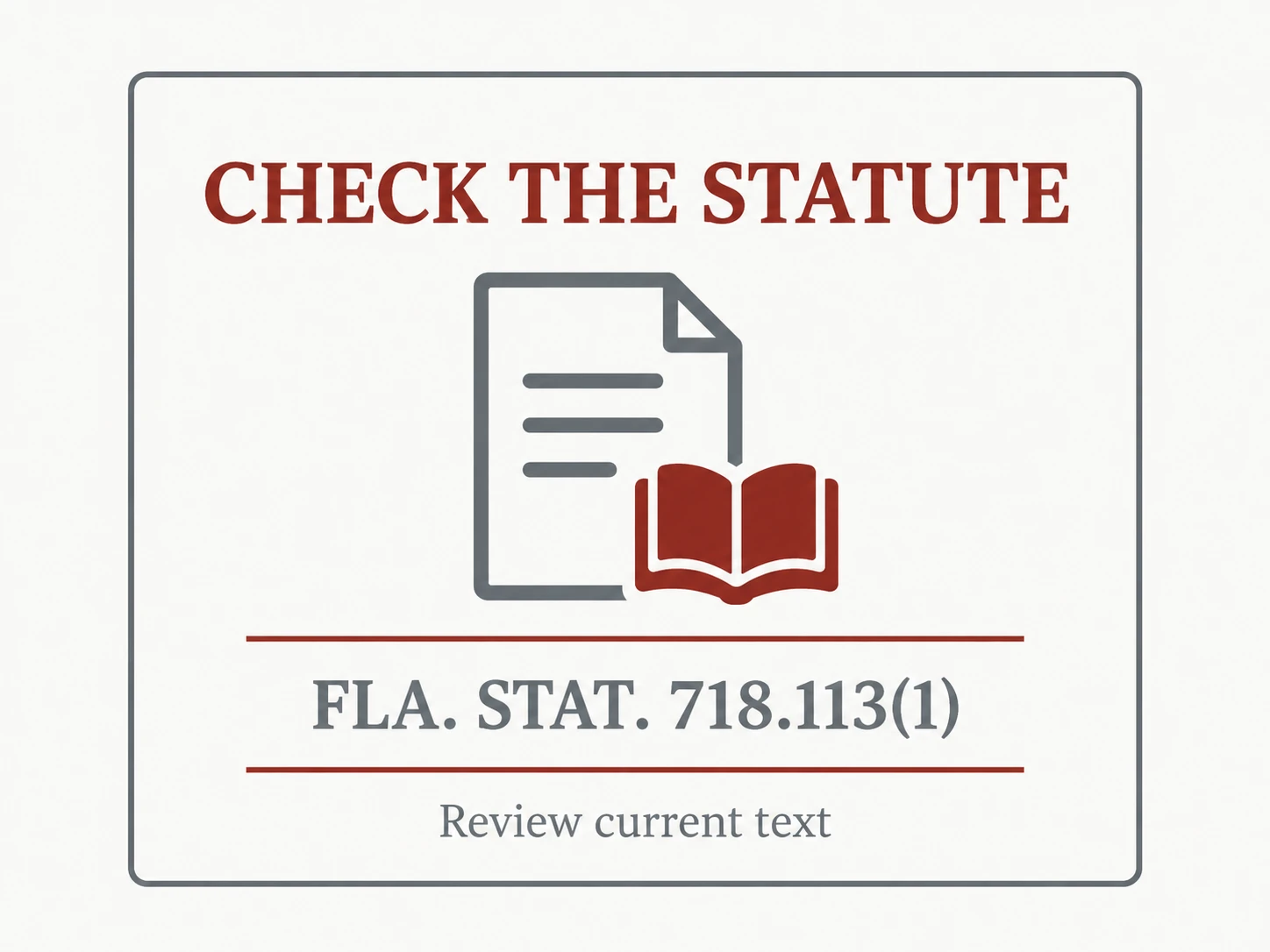
Florida Statute 718.113(1) generally makes a condominium association responsible for maintaining common elements, with an exception for limited common elements assigned to owners by the declaration. It does not prescribe a pressure washing schedule. The board still needs to decide what cleaning is appropriate for its property and confirm the declaration's allocation of responsibility.
Do not turn the statute into a blanket rule that an association must wash every roof or owner-assigned area. Read the governing documents, identify the actual surface, and distinguish maintenance from a demand that an owner correct a condition. If responsibility is disputed, get advice tied to the association's documents before issuing a directive.
Legal duties and cleaning methods are separate questions. A board may be responsible for maintaining a surface while still needing a gentler treatment, a repair, or no cleaning at all. A useful proposal names the surface condition and intended result so the board can approve a suitable method rather than approving pressure washing by default.
When should the board request and approve bids?
Request bids early enough to inspect the site, resolve scope differences, and place the selected amount in the budget before work is due. The exact lead time depends on the association's meeting calendar, purchasing rules, and access needs. Set the bid deadline by working backward from those dates.
Before approval, give the board a comparison that flags exclusions, methods, and schedule as well as price. If proposals are far apart, ask bidders to confirm measurements and omitted areas in writing. A revised common scope is more useful than voting on totals for different jobs.
After selection, keep the approved scope, site plan, and any agreed changes with the contract. At completion, compare the work with that scope before approving payment. The same records will make the next budget cycle easier because the board can see what was cleaned and what was deferred.
Frequently asked questions
How much does it cost to pressure wash a 2500 sq ft house?
HomeAdvisor's pressure washing cost guide (updated Jun 17, 2026) lists general work at $0.10 to $0.50 per square foot. That residential benchmark does not establish an HOA price: a community may have separate pavement, building, parking, and access requirements. Ask contractors to measure the surfaces in the association's scope rather than multiplying a house's floor area by a published rate.
What should an HOA budget for pressure washing?
Budget from a written scope and comparable site-specific bids. Include routine common-area surfaces, the planned frequency, access arrangements, and any runoff controls the work needs. Keep roof treatment, sealing, stain removal, and other uncertain work as separate lines or options. Review the schedule against the property's observed condition before renewing it.
Does an HOA reserve study include pressure washing?
Routine washing is generally planned as an operating cost, while a reserve study addresses the components and expenditures within its scope. Florida's structural integrity reserve study requirements for qualifying condominiums name components such as waterproofing and exterior painting, but do not name routine pressure washing. Ask the study professional how cleaning relates to a planned component project before assigning its cost to reserves.
Can an HOA require an owner to clean an exterior surface?
The answer depends on the association's governing documents, the surface involved, and whether it belongs to the owner or is maintained by the association. For condominiums, Florida Statute 718.113(1) assigns common-element maintenance to the association except for limited common elements assigned to owners by the declaration. Check that allocation before sending a cleaning notice.
Is power washing a house worth it?
Cleaning can improve an exterior's appearance when the surface is sound and the method suits the material. More pressure is not always better: the Asphalt Roofing Manufacturers Association warns against high-pressure washing of asphalt roofing because it is likely to cause damage. For an association, decide surface by surface whether cleaning, gentler treatment, or repair addresses the condition.
Sources
If your board has a surface list and a target schedule, 2Clean's commercial and HOA services can help turn them into a site-specific exterior cleaning scope.
2Clean does not publish a price list: every property is priced individually. For a written price, call or text a photo to (904) 826-9806, or request a quote online.
Custom Commercial & HOA Walkthroughs
Need a scope tailored to your South Florida property?
Every building, plaza, and community has its own surface mix, access windows, and drainage layout. We quote by walkthrough rather than fixed rate sheets so your proposal matches your exact property. Call us directly at (904) 826-9806 or request a written scope online.
Related services & tools
Commercial & HOA by South Florida city: