
HOA & Condo Board (Florida Statute)
SIRS Inspection: Florida Condo Requirements and Exterior Maintenance
October 14, 2026 (updated) · 11 min read
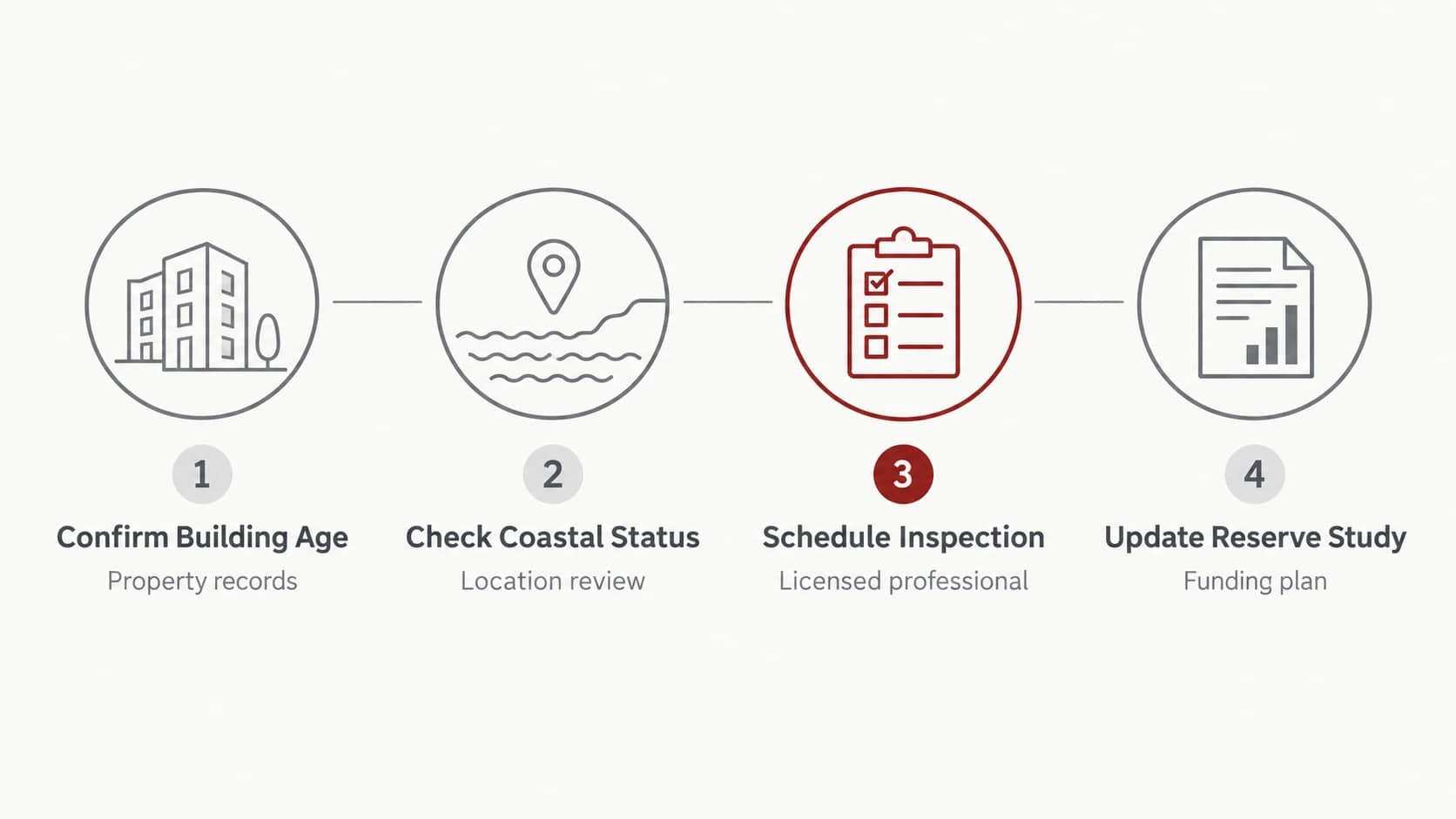
A SIRS inspection is the visual assessment behind a Florida condominium's Structural Integrity Reserve Study. The study estimates the remaining life and repair or replacement costs of required building components, then sets out a reserve funding plan. Exterior cleaning is not a required SIRS item, but its records can help the board track conditions affecting waterproofing and exterior paint.
What a SIRS inspection tells a condo board
A Structural Integrity Reserve Study, or SIRS, connects a visual assessment of specified building components to a funding plan. For a South Florida board, its practical value is a documented basis for deciding what work may be needed, when it may be needed, and how the association plans to pay for it.
Under Florida Statute 718.112(2)(g), a residential condominium association must obtain a SIRS at least every 10 years for each building with three or more habitable stories. The study must identify the items visually inspected, estimate their remaining useful life and replacement or deferred maintenance costs, and recommend a reserve funding schedule. Its baseline plan must keep the projected reserve cash balance above zero.
The entire study, including its visual inspection, must be performed or verified by a Florida-licensed engineer or architect, a Community Associations Institute reserve specialist, or an Association of Professional Reserve Analysts professional reserve analyst. A cleaning contractor's observations may be useful maintenance records, but they are not a substitute for that professional assessment.
Boards should also distinguish a SIRS from a general reserve study. The SIRS has a statutory component list tied to structural integrity and safety. A broader budget may contain other reserve accounts, including pavement resurfacing, without making every routine maintenance expense a SIRS item.
How SIRS items connect to exterior maintenance
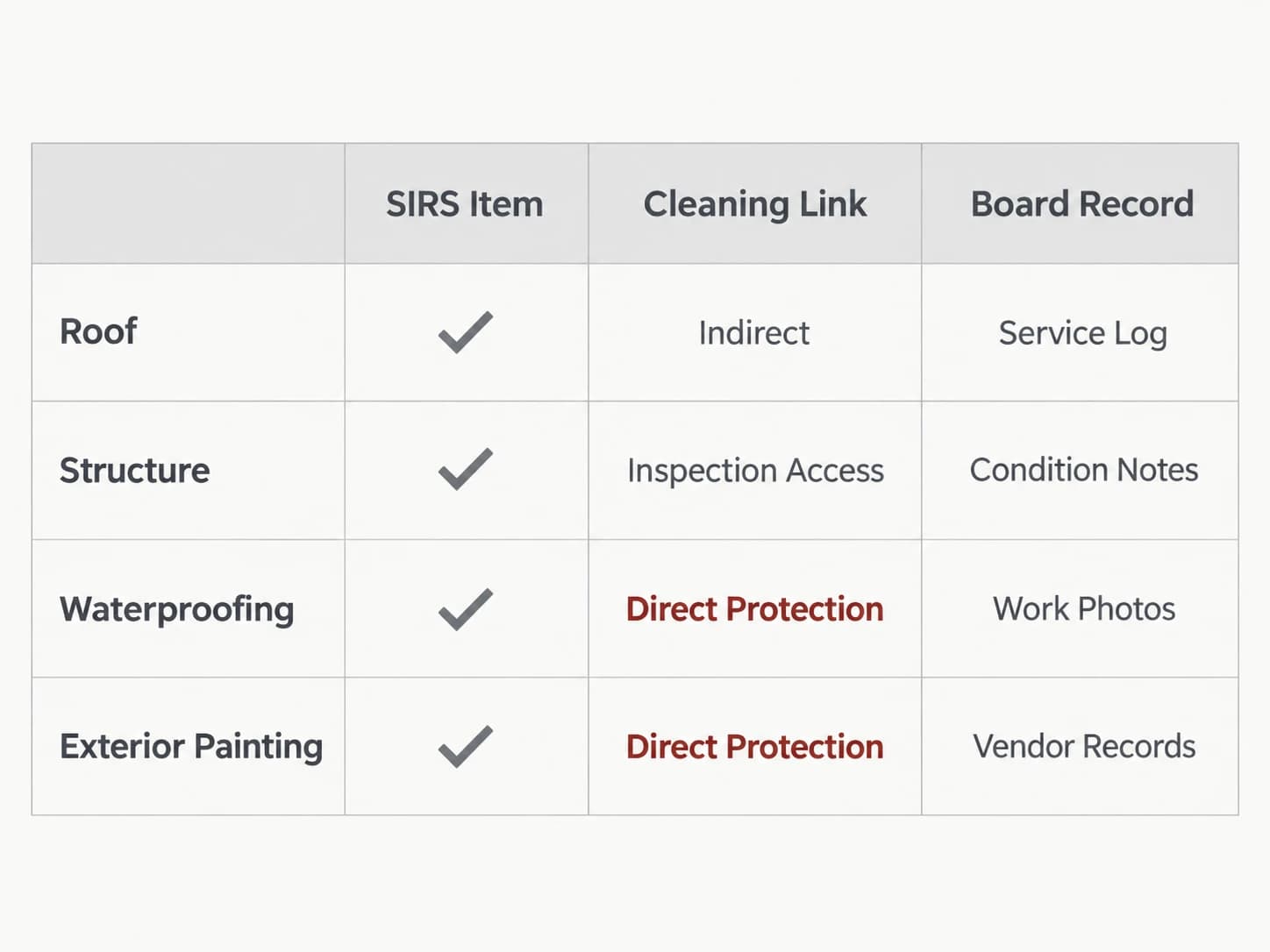
The SIRS list includes waterproofing and exterior painting, windows and exterior doors, and the roof. Exterior cleaning can support care of those surfaces by removing buildup and making visible defects easier to notice, but the study's qualified professional determines condition and remaining useful life.
| SIRS component | Useful exterior maintenance record | Boundary to keep clear |
|---|---|---|
| Waterproofing and exterior painting | Surface condition before and after cleaning; visible staining, peeling, or suspected leakage | Cleaning cannot repair a failed coating or waterproofing detail. |
| Windows and exterior doors | Accessible frame and surrounding wall conditions observed during washing | A cleaner cannot determine whether an assembly meets the study's requirements. |
| Roof | Visible staining and any condition that warrants referral | Cleaning cannot replace a roof assessment or repair. |
| Structure and fire protection systems | Any visible concern reported to the manager for professional review | Routine washing is not a structural or fire protection inspection. |
A photograph of staining is evidence of what was visible on a particular date, not proof of its cause. If a crew finds peeling paint, recurring moisture marks, cracked sealant, or an area that remains wet, the useful next step is to record the location and refer it to the association's appropriate professional. The board can then keep the finding with its maintenance history and decide whether the SIRS professional needs to review it.
The statute also includes fireproofing and fire protection systems, plumbing, electrical systems, and certain other items above its cost threshold whose failure would affect the listed components. That scope explains why a SIRS cannot be reduced to a facade washing plan.
When building age triggers a Florida milestone inspection
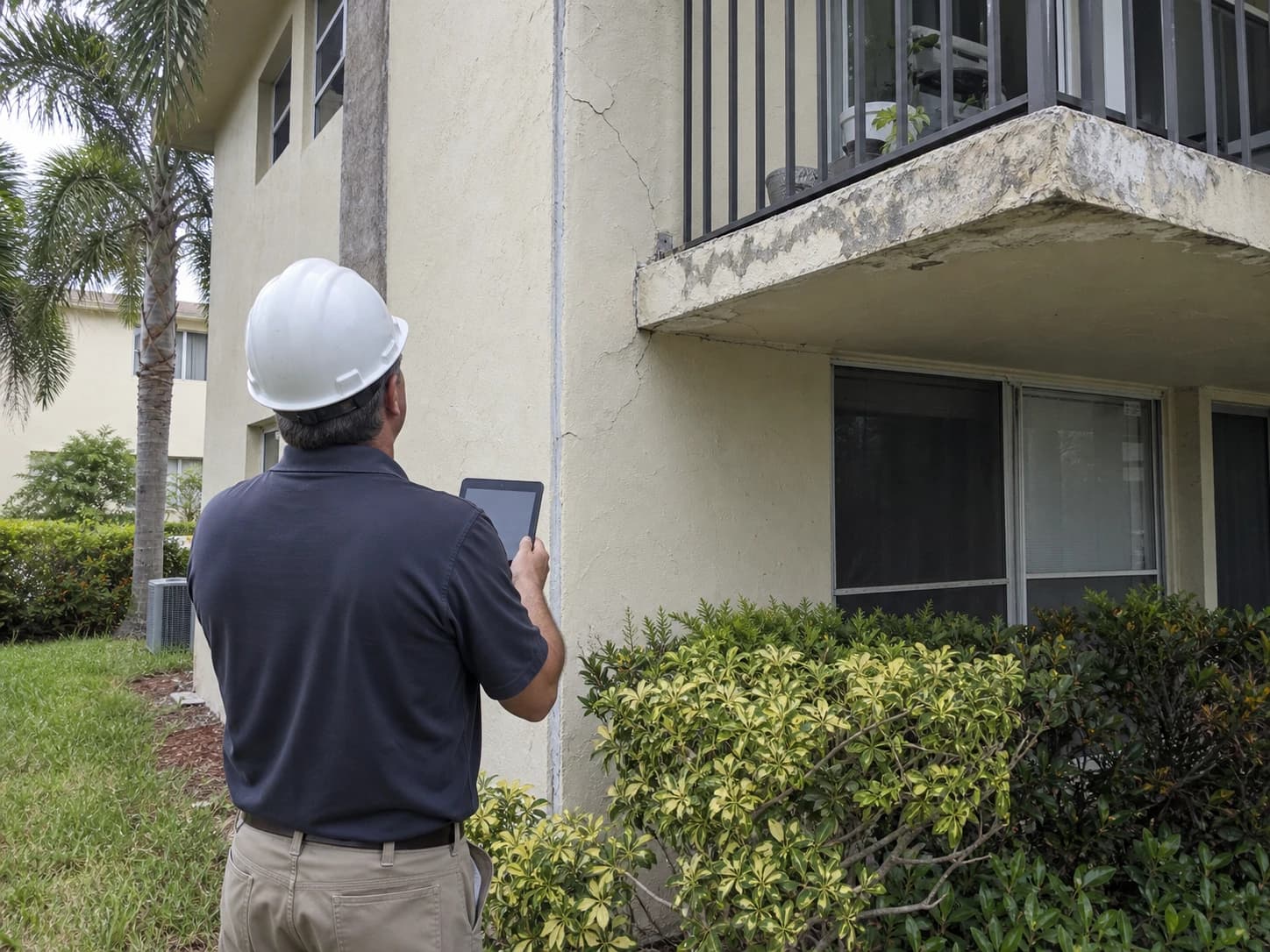
A covered Florida building generally needs its first milestone inspection by December 31 of the year it reaches 30 years of age, measured from its certificate of occupancy, and every 10 years afterward. The local enforcement agency may instead require an inspection in the year it reaches 25 years when local circumstances, including proximity to salt water, warrant it.
| Building record or condition | Board action |
|---|---|
| Certificate of occupancy shows the building is approaching 30 years | Confirm the inspection year and coordinate with the local enforcement agency. |
| Local enforcement agency has set a 25-year trigger | Use the agency's requirement for that building; do not assume a statewide coastal distance rule. |
| Certificate of occupancy date is unavailable | Ask the local building official about the occupancy date evidenced in its records. |
| A prior report was accepted or an extension was granted | Confirm the resulting deadline with the local enforcement agency. |
Section 553.899 applies to buildings with three or more habitable stories that are wholly or partly under residential condominium or cooperative ownership. It excludes one to four family dwellings with three or fewer habitable stories. A board should check the building's ownership, height, occupancy record, and local notice before putting a date on its calendar.
The inspection begins with a visual phase performed by a Florida-licensed architect or engineer. A second phase is required if the first identifies substantial structural deterioration. Keeping exterior surfaces accessible and recording existing defects can help the association prepare, but washing does not establish that a building will pass an inspection.
What Florida statutes and HB 913 actually require
Florida's SIRS and milestone rules address related decisions through separate statutes. Section 718.112(2)(g) governs the condominium reserve study, while section 553.899 governs the structural milestone inspection.
HB 913, enacted as chapter 2025-175, changed several SIRS and inspection provisions. It raised the threshold for additional SIRS items from $10,000 to more than $25,000, adjusted for inflation by the division, where failure of the item would negatively affect a listed component. The bill also requires a baseline funding plan that maintains a reserve cash balance above zero.
The laws allow some coordination. A qualifying milestone or similar local inspection performed within the past five years may replace the visual inspection portion of a SIRS. After completing a milestone inspection, an association may delay a required SIRS for no more than the next two consecutive budget years to focus resources on recommended repairs. Those provisions do not make the milestone report itself a complete reserve study.
For associations existing on or before July 1, 2022 and controlled by unit owners, the statutory initial SIRS deadline was December 31, 2025. If a milestone inspection is required by December 31, 2026, the association may complete the two together, but the SIRS cannot be completed after December 31, 2026. Boards with an outstanding study should confirm their building's circumstances rather than treating the later date as a general extension.
What happens after the reports arrive
Receiving a report starts a set of board decisions; it does not finish the work. The manager should route findings to the board, separate urgent professional recommendations from routine maintenance, and track the notices and funding steps required by the relevant statute.
For a milestone inspection, the architect or engineer submits the report and a separate summary to the association and local building official. Under section 553.899, the association must distribute the inspector's summary to owners within 45 days after receiving the report, post it on the property, and publish the full report and summary on its website if a website is required. If a second phase finds substantial structural deterioration, local ordinances must set a repair timeline, and repairs must commence within 365 days after the agency receives that report.
For a SIRS, an officer or director must sign an affidavit acknowledging receipt. Within 45 days after receiving the study, the association must send owners either a copy or notice that it is available for inspection and copying. It must also report completion and owner availability to the state division using its form. The DBPR SIRS reporting page explains the electronic reporting process.
A useful board record pairs each report recommendation with a responsible decision maker and its current status. Cleaning can be listed where it is genuinely maintenance work. A repair recommendation should remain identified as a repair, even if the affected surface will also be cleaned.
How SIRS funding differs from a cleaning budget
Required SIRS reserves are based on the study's findings and funding plan. Routine exterior cleaning is normally an operating maintenance decision, so boards should avoid presenting a washing contract as though it satisfies a required reserve contribution.
For budgets adopted on or after December 31, 2024, associations required to obtain a SIRS generally cannot vote to waive or reduce reserves for SIRS components. Section 718.112 permits funding through regular assessments, special assessments, lines of credit, or loans; the latter three require approval by a majority of the association's total voting interests.
There is a limited repair-related pause. For budgets adopted on or before December 31, 2028, an eligible association that completed a milestone inspection within the previous two calendar years may, with the required majority approval, pause or reduce reserve contributions for up to two consecutive annual budgets to fund recommended repairs. The statute places conditions on that option, including a new SIRS before contributions resume after a pause. A board should evaluate it against the actual report and budget, not assume it applies automatically.
A cleaning scope can still help the operating budget become more predictable. Identify the surfaces, access needs, method, and how the contractor will report visible concerns. The separate guide to HOA pressure washing budgets discusses planning that expense without confusing it with statutory reserves.
Choosing a cleaning method around inspected surfaces
The method should follow the material and its condition. A painted facade, delicate finish, or roof calls for a different approach from durable flatwork; aggressive pressure can damage a surface or conceal the condition the board needs to understand.
For painted finishes and areas around waterproofing, a controlled soft washing approach may be more appropriate than forceful rinsing. The contractor should account for coating condition, nearby openings, runoff, and any areas already flagged by the engineer or architect. If a coating is loose or water intrusion is suspected, document and refer the issue before washing over it.
On roofs, the material matters. The Asphalt Roofing Manufacturers Association warns that power washing is likely to damage asphalt roofing and describes gentler algae removal guidance. Cleaning may remove visible growth, but it should not be used to imply that the roof's remaining life has changed.
The board's scope should also protect the inspection trail. Ask for dated condition photographs, locations of observed defects, and a clear distinction between work completed and issues referred for evaluation. For more detail on matching methods to facade materials, see the guide to commercial building washing.
Building a useful maintenance record
A useful record shows what was observed, what work was performed, and what remains unresolved. It gives the manager and the SIRS professional a way to compare conditions over time without treating a cleaning invoice as an engineering opinion.
For each exterior service, retain the scope, date, surface and method, photographs where practical, and notes on visible concerns. Keep repair recommendations and completion records alongside them. If the same stain or peeling area returns, the history helps the board recognize a recurring condition that deserves professional review.
Schedule decisions should respond to the building's actual surfaces and reports, not an invented interval for how often every South Florida condominium must wash. Salt exposure, shade, drainage, coating condition, access, and resident use can affect what a manager sees. None of those observations changes a statutory inspection date or a qualified professional's estimate in the SIRS.
For the broader division of responsibility between an association and owners, see Florida condo and HOA exterior maintenance obligations. That distinction matters when a cleaning or repair scope crosses common elements, limited common elements, and owner-maintained areas.
Frequently asked questions
A board can answer most initial questions by separating the reserve study, the safety inspection, and routine maintenance. The building's governing documents, professional reports, and local enforcement notice supply the details for a particular property.
What is a SIRS report in real estate?
A SIRS report is a condominium association's Structural Integrity Reserve Study. It assesses specified components through a visual inspection, estimates remaining useful life and repair or replacement costs, and recommends a funding plan. Buyers and owners may use it to understand anticipated building expenses. It is not a guarantee that every defect has been found or that future costs will match the estimates.
When is a milestone inspection required in Florida?
For a covered condominium or cooperative building, the standard deadline is December 31 of the year it reaches 30 years from its certificate of occupancy, followed by inspections every 10 years. A local enforcement agency may require the first inspection at 25 years based on local circumstances. The building's notice and local records should guide the board's calendar.
Who is required to conduct building inspections in Florida?
The milestone inspection under section 553.899 must be conducted by a Florida-licensed architect or engineer authorized to practice in the state. A SIRS, including its visual portion, must be performed or verified by a Florida-licensed engineer or architect, a CAI reserve specialist, or an APRA professional reserve analyst. A cleaning crew does not fill either statutory role.
How long does a condo inspection usually take?
Florida's cited statutes set process deadlines, but they do not provide a standard number of hours or days for an individual inspection. Building size, access, records, observed conditions, and whether a second milestone phase is needed affect the work. Ask the qualified professional for a schedule covering the site visit, report, and any follow-up so owner notices can be planned.
Is exterior cleaning a required SIRS item?
No. Section 718.112(2)(g) lists components such as waterproofing and exterior painting, windows and exterior doors, and the roof; it does not list routine exterior cleaning as its own SIRS component. Cleaning may support maintenance and reveal visible concerns. The board should budget it according to its actual scope and leave condition assessments and reserve estimates to the SIRS professional.
Sources
If your board is planning exterior upkeep alongside its inspection and reserve work, 2Clean's commercial and HOA services can help define a cleaning scope around the surfaces and conditions your building actually has.
Custom Commercial & HOA Walkthroughs
Need a scope tailored to your South Florida property?
Every building, plaza, and community has its own surface mix, access windows, and drainage layout. We quote by walkthrough rather than fixed rate sheets so your proposal matches your exact property. Call us directly at (904) 826-9806 or request a written scope online.
Related services & tools
Commercial & HOA by South Florida city: